Paul Adams

7K posts

Paul Adams banner
Paul Adams

Paul Adams

@BBCPaulAdams

BBC Diplomatic Correspondent. Previously in Washington, Middle East and Balkans. Now a lot of Ukraine.

London Katılım Ocak 2010
3.5K Takip Edilen18.4K Takipçiler
Paul Adams retweetledi
Michelle Wiese Bockmann
Michelle Wiese Bockmann@Michellewb_·
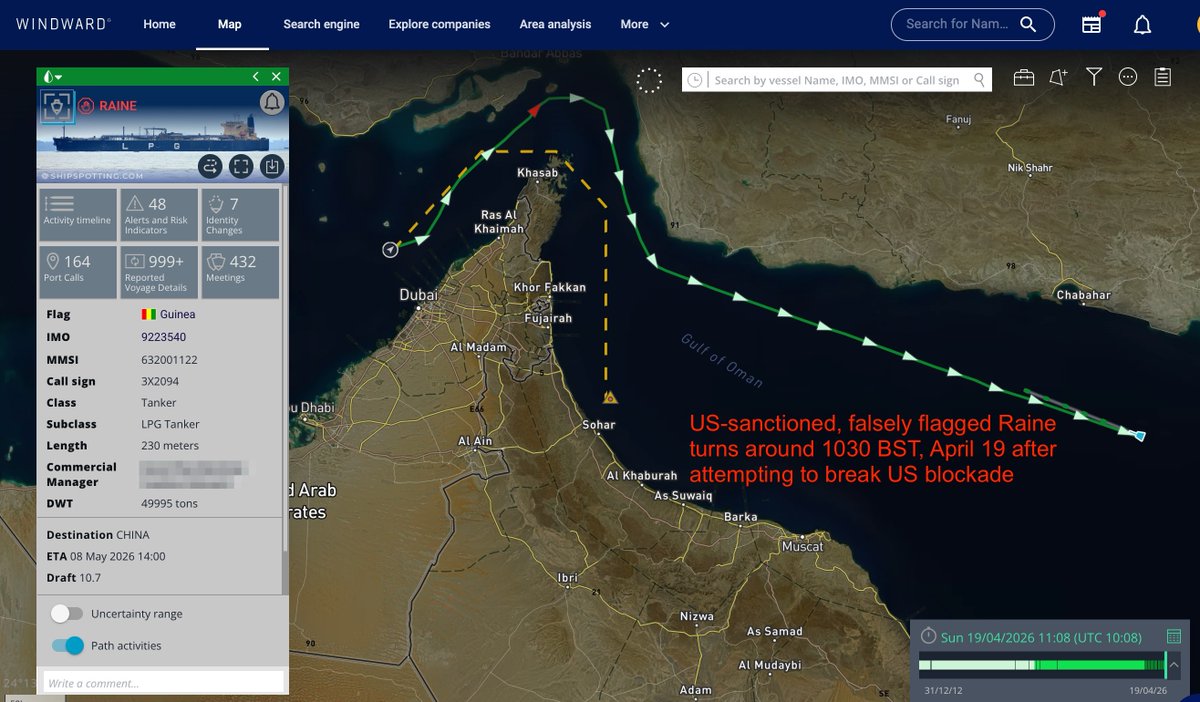
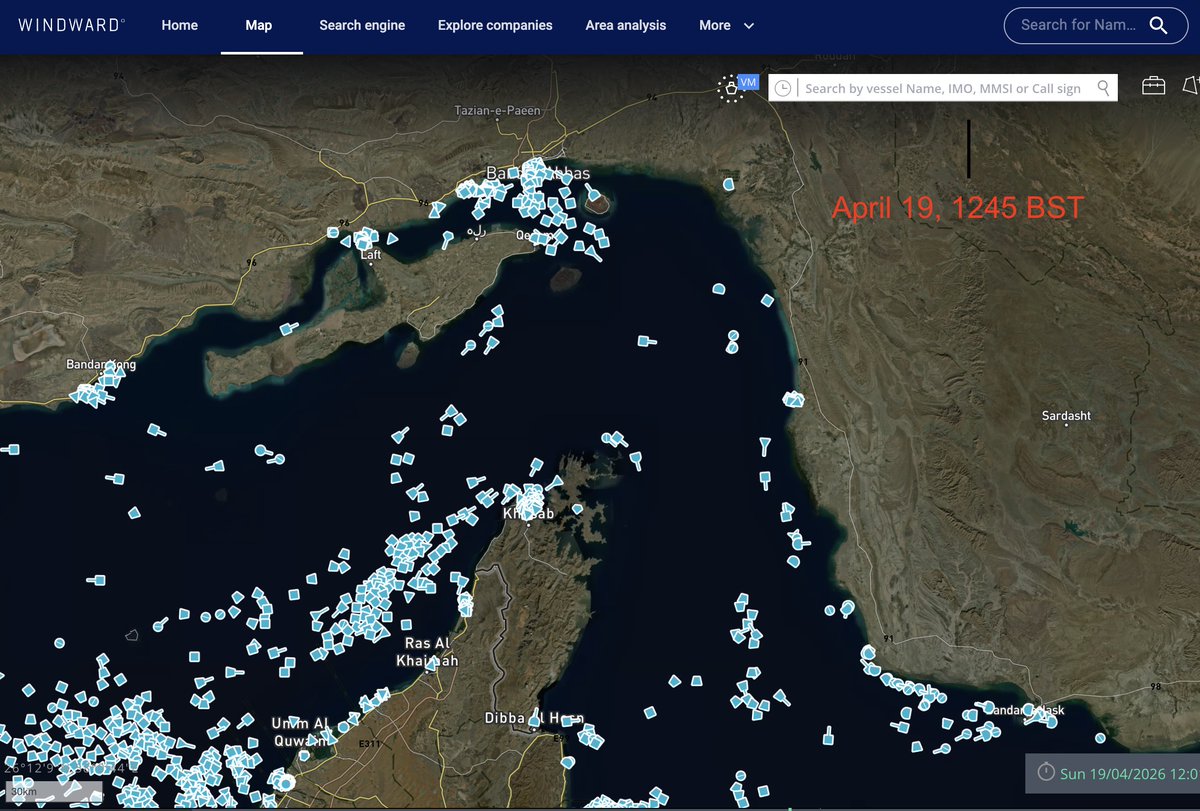
Amongst the strangest Hormuz passages yesterday, and re-routed through Iran's territorial waters via the new IRGC-controlled corridor, was a 'zombie' LNG carrier. Listed as 'broken up' in Equasis and the IMO number no longer in the IMO database (as of 21/3) this 26-year-old ship came back from the dead on March 13, seemingly materialising at the Hamriyah anchorage after being sent to Alang, India, to die last October. Now the vessel is shown on the @WindwardAI platform transiting through on March 20, destination unknown. Whether it's the same ship that's come back to life, or another ship entirely is unclear. I also noticed another ship (a small India-flagged vehicle carrier) making the transit that was apparently broken up when Panama-flagged back in 2020. This one appears to have had a steady trading intra-MEG history, suggesting that it after it was sold for scrap, somebody thought there was more life in the 25-year-old ship after all and put it out to pasture here. Another noteworthy transit was a bulk carrier (westbound) signalling "cargo food for Iran", again using that Iranian-controlled corridor I identified at the beginning of last week. Iran is allowing bulk carriers to enter and exit to keep agricultural supplies flowing to Iman Khomeini port, along with select energy commodities for Pakistan/India and of course oil for China (now temporarily un-sanctioned!!!) That must have been happy news for Barbados-flagged, OFAC-sanctioned North Star (IMO 9299563), which also made it through the new permission-led corridor as well on Friday. Less than a month after being sanctioned, its cargo is now subject to an oil waiver, issued last night.
Michelle Wiese Bockmann tweet mediaMichelle Wiese Bockmann tweet mediaMichelle Wiese Bockmann tweet mediaMichelle Wiese Bockmann tweet media
English
0
17
48
4.6K
Paul Adams
Paul Adams@BBCPaulAdams·
Extraordinary resignation letter. Joe Kent on the siren voices that he says deceived Trump into believing Iran posed an imminent threat. nytimes.com/interactive/20…
English
0
3
9
837
Paul Adams retweetledi
Javier Blas
Javier Blas@JavierBlas·
Iran has started a new phase of its oil war: Tehran is clearly going after the Strait of Hormuz bypass route, with Fujairah (UAE) coming under attack. But so far, the Saudi pipeline bypass hasn't been attacked (and neither the Yemeni Houthis have tried to close the Red Sea).
Javier Blas tweet media
English
125
958
3K
997.6K
Paul Adams
Paul Adams@BBCPaulAdams·
"The only oil moving through Hormuz is oil that does not touch the dollar." Really important analysis from @shanaka86
Shanaka Anslem Perera ⚡@shanaka86

Goldman Sachs confirms Hormuz oil flows have collapsed from 19.5 million barrels per day to 0.5 million. Net disruption after pipeline rerouting: 17.2 million barrels per day offline. Two independent vessel trackers recorded zero oil tankers crossing the Strait on 12 March. The largest energy chokepoint on Earth is not closed by a navy. It is closed by a spreadsheet. Seven major P&I clubs cancelled war-risk coverage for the Persian Gulf effective 5th March under Solvency II protocols. Premiums for remaining voyage cover surged 300 to 1,000%, reaching 1% of hull value: $2 to $3 million per VLCC on a seven-day renewable basis. The $20 billion DFC reinsurance facility backed by Chubb has limited uptake because it excludes full P&I liability. Lloyd’s still offers single-voyage cover. Nobody is buying because the premium assumes the mines, and the mines are on the seabed. The Strait is open. The insurance is not. And without insurance, no vessel moves. While 19 million barrels per day sit stranded on either side of the chokepoint, one category of vessel continues transiting: Chinese shadow fleet tankers carrying Iranian crude settled in yuan through CIPS. Kpler confirms 11.7 to 16.5 million barrels have reached China since 28 February. These tankers do not carry Western insurance. They do not need Western insurance. They operate under Chinese state-backed coverage, Iranian IRGC safe passage, and yuan settlement through a payment system that processed $24.5 trillion in 2025 at 43% year-on-year growth. The only oil moving through Hormuz is oil that does not touch the dollar. This is the moment the petrodollar system was designed to prevent. In 1974, Saudi Arabia agreed to price oil exclusively in dollars in exchange for American military protection. That agreement created a world where every barrel required dollars, every central bank held dollar reserves because energy demanded them, and American financial hegemony rested on the simple proposition that oil equals dollars. For fifty-two years, the equation held. The 2026 war is breaking it not through policy but through physics: the insurance architecture that enabled dollar-denominated oil transit has collapsed, and the only transit still functioning operates in yuan. The dollar’s share of global reserves has fallen from 71% in 2000 to 59% today. Yuan global payments remain at 2.89%. No single event kills the petrodollar. But the Goldman data reveals what the contrarians miss: the war has created a live demonstration of a post-dollar energy system operating at scale. Chinese tankers transit. Yuan settles. CIPS clears. Iranian oil reaches Chinese refineries at $9 to $12 below Brent while Western buyers pay $96.72. The system works. It is working now. And every day the Strait remains closed to dollar shipping is another day the alternative proves it does not need the original. President Trump’s multinational warship call is the response: send navies, reopen the Strait, restore dollar-denominated traffic, and kill the yuan alternative before it scales. If the coalition succeeds, dollar pricing survives. If it fails or fragments, the war that was launched to destroy Iran’s nuclear programme will have accidentally created the conditions for the multipolar energy order the dollar was designed to prevent. The IEA has released 400 million barrels of strategic reserves, the largest coordinated draw in history. It covers 23 days of the 17.2 million barrel daily shortfall. The war is sixteen days old. The reserves are finite. The insurance cancellations are not. Nineteen million barrels per day reduced to half a million. Zero tankers on 12th March. Yuan tankers the only vessels moving. And the fifty-two-year-old system that priced every barrel in dollars is watching its replacement operate in real time through the waterway it can no longer transit. Full analysis here - open.substack.com/pub/shanakaans…

English
1
3
3
1.4K
Paul Adams
Paul Adams@BBCPaulAdams·
When places become a warzone, it's always good to know what they looked like beforehand. Last night is probably not the last we'll hear of Kharg. #fpstate=ive&vld=cid:a1fd807a,vid:lyf8nAlIvCk,st:0" target="_blank" rel="nofollow noopener">google.com/search?q=how+t…
English
5
1
2
723
Paul Adams retweetledi
Javier Blas
Javier Blas@JavierBlas·
Saudi Aramco is loading simultaneously 5 crude oil tankers in Yanbu and Al Mujjaiz terminals on the Red Sea coast. I don’t think that’s happened ever before.
English
137
1.1K
6.9K
1.2M
Paul Adams retweetledi
Dmitri Alperovitch
Dmitri Alperovitch@DAlperovitch·
A 3-day moving average of Iranian ballistic missile launches and drones. Clearly trending in the right direction on missiles. Drone launches ticking up though Credit to @MarioLeb79 for aggregation of raw data
Dmitri Alperovitch tweet media
English
120
398
1.6K
565.2K
Paul Adams
Paul Adams@BBCPaulAdams·
And now the Marines. The US is sending troops to the Gulf. As many as 5,000. A small force but enough to seize a strategic target like Kharg Island? wsj.com/livecoverage/u…
English
1
1
3
835
Paul Adams
Paul Adams@BBCPaulAdams·
Excellent explanation from @JavierBlas of the two bypass pipelines that will ease, but not solve the problem of the closure of the Strait of Hormuz (closed to all but tankers exporting Iranian oil, of course).
Javier Blas@JavierBlas

VIDEO EXPLAINER: The most important map of the Third Gulf War — the oilfields, the Strait of Hormuz, and the bypass pipelines. Plus a look at how, two weeks into the war, Iran is still exporting lots of its oil, and most of it, via the strait. @opinion

English
0
0
2
922
Paul Adams
Paul Adams@BBCPaulAdams·
Wow. A powerful, anguished statement from a leading Gulf figure.
English
0
0
1
787
Paul Adams retweetledi
Javier Blas
Javier Blas@JavierBlas·
COLUMN: Iran’s strategy is by now clear: Impose an intolerable economic cost on President Trump. One of the last lines of defence is a couple of oil pipelines offerign a partial (**emphasis on partial**) bypass of the Strait of Hormuz. Link: bloomberg.com/opinion/articl… @Opinion
Javier Blas tweet media
English
132
626
2K
430.3K