Bali Deepak

612 posts

Bali Deepak

Bali Deepak

@BDeepak110

Professor, Center for Chinese and South East Asian Studies, Jawaharlal Nehru University, New Delhi

New Delhi, India Katılım Aralık 2014
1.8K Takip Edilen3.2K Takipçiler
Bali Deepak
Bali Deepak@BDeepak110·
In this op-ed, I outline eight lessons the PLA and other analysts draw from the US-Israel–Iran war and examine China’s strategic posture. I argue that Beijing has adopted calibrated restraint and strategic opportunism—avoiding direct involvement while letting other powers bear the costs of confrontation and preserving its own flexibility. sundayguardianlive.com/opinion/chinas…
Bali Deepak tweet media
English
1
12
37
2.4K
Bali Deepak
Bali Deepak@BDeepak110·
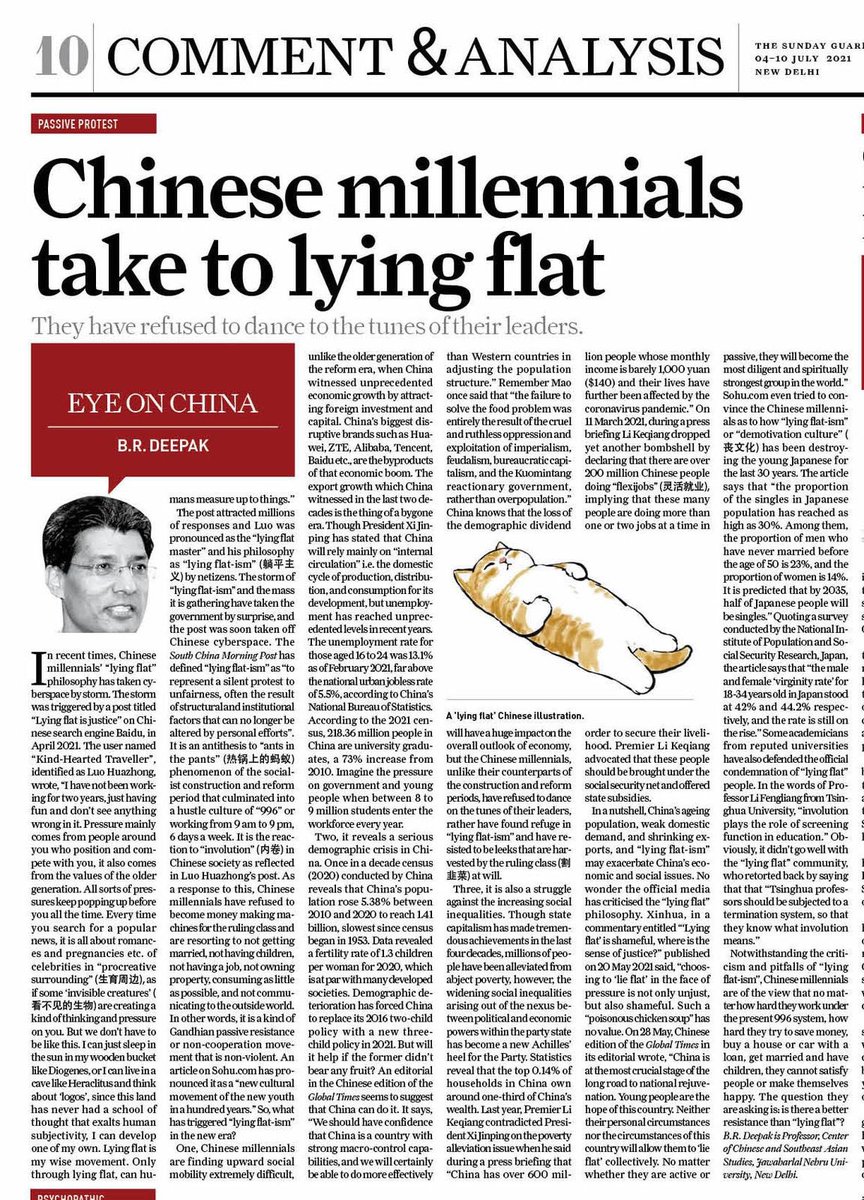
Three days ago, China’s Ministry of Public Security stated that “Numerous cases show that anti-China hostile forces, while waving the banner of ‘lying flat,’ are actively working to erode the thinking of Chinese youth.” The Ministry also called upon young people, emphasizing that they “need not force themselves into the false binary choice of ‘involution or lying flat.’ Instead, they should seek opportunities based on their own realities and steadily accomplish each task at their own pace.” Given this background sharing an article I wrote in 2021!
Bali Deepak tweet media
English
2
2
5
191
Bali Deepak
Bali Deepak@BDeepak110·
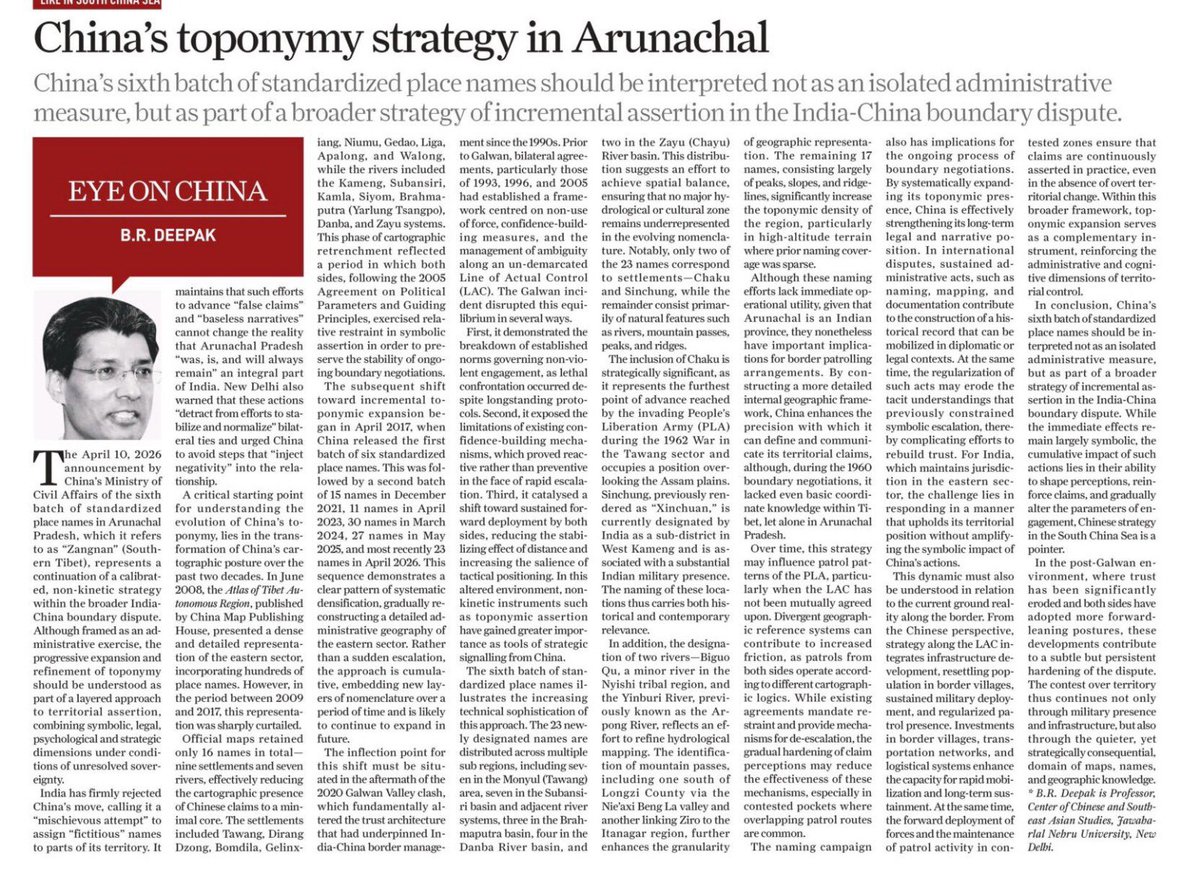
In today's op-ed I argue that after Galwan, India–China border management shifted as trust and confidence-building frameworks eroded, exposing agreement limits and prompting sustained forward deployments. In this context, China’s expanded toponymic assertions, evident in its sixth batch of standardised place names, enhance territorial signalling, cartographic precision, and legal positioning. Though largely symbolic, these measures may intensify patrol friction, complicate negotiations, and gradually harden competing claims along the unsettled Line of Actual Control. sundayguardianlive.com/opinion/chinas…
Bali Deepak tweet media
English
7
23
95
5.8K
Bali Deepak
Bali Deepak@BDeepak110·
@Siamii_Guite Very much so, this is in sync with the strategy. For example, Tibet word no where appears in the discourse, it is Zangnan now, and on the long run people will forget Tibet the way they have forgotten Eastern Turkistan and call it by Chinese name Xinjiang
English
1
0
1
39
Manthiansiam
Manthiansiam@Siamii_Guite·
@BDeepak110 Loved this new piece! I'm curious Professor, do you see this linguistic renaming as a form of psychological warfare aimed at shifting the mental perception of locals over time?
English
1
0
0
17
Bali Deepak
Bali Deepak@BDeepak110·
@veer_krishnaa Build capacities, leverages and above all your economic prowess to start with, which unfortunately we have not been able to build. As a result, our trade deficit with China is way larger to our defence budget.
English
1
0
2
92
Krishnaveer Singh
Krishnaveer Singh@veer_krishnaa·
@BDeepak110 Sir, how do you think India should respond to these claims by China? Surely, denial does not deter China and given our increasing trade deficit with China, it seems India does not have a strategy to thwart China’s claims and influence.
English
2
0
0
166
Bali Deepak
Bali Deepak@BDeepak110·
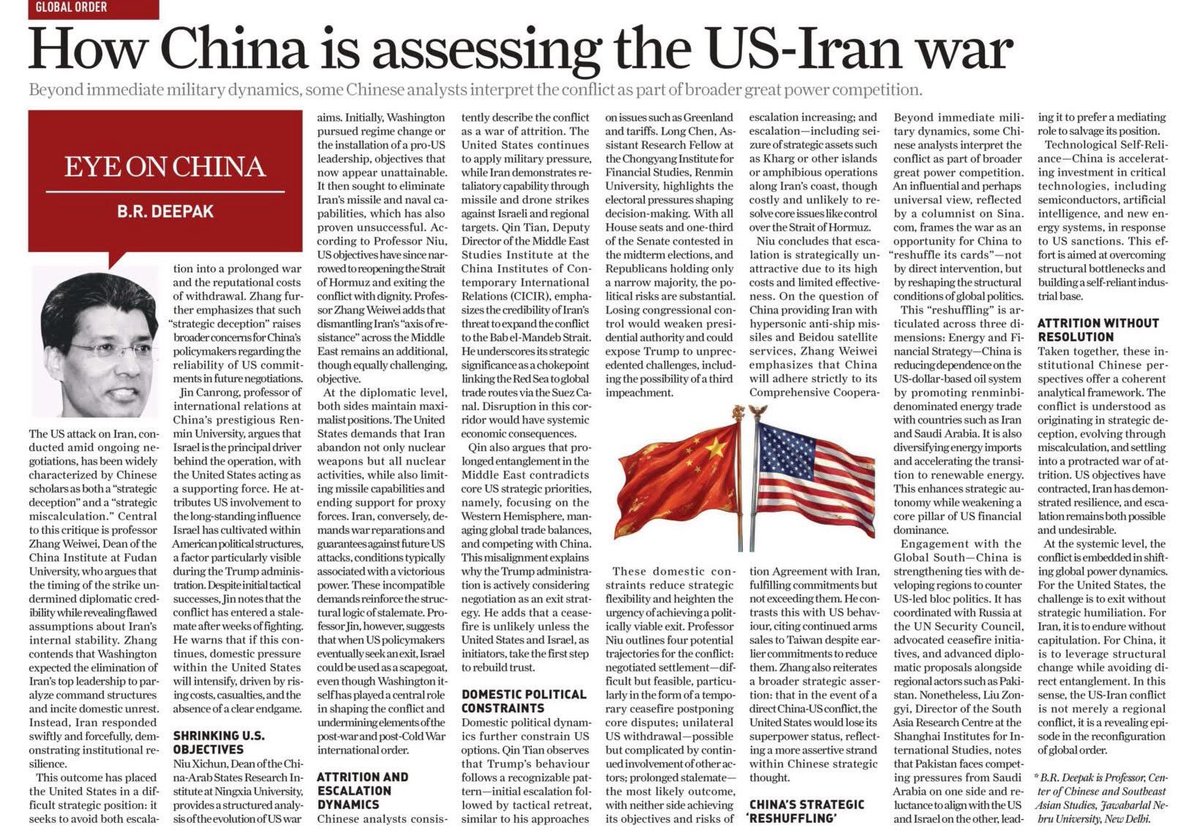
In today’s op-ed, I examine how Chinese academia perceives the US–Iran conflict. Beyond the immediate military objectives of the United States, Iran, and Israel, many analysts situate the conflict within broader shifts in global power dynamics. For the United States, the central challenge is to disengage without incurring strategic humiliation. For Iran, it is to endure without capitulating. For China, the task is to capitalize on structural changes while avoiding direct entanglement. In this sense, the US–Iran conflict is not merely a regional confrontation, but a revealing episode in the ongoing reconfiguration of the global order. sundayguardianlive.com/opinion/how-ch…
Bali Deepak tweet media
English
7
86
286
17.9K
Bali Deepak
Bali Deepak@BDeepak110·
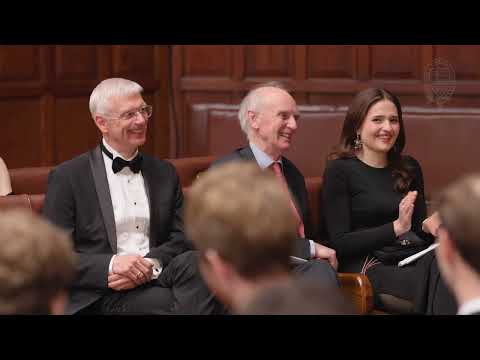
Watch one of Hans's debates at the Oxford Union Society! He was the winner! ऑक्सफ़ोर्ड यूनियन सोसाइटी में हंस दीपक की एक बहस! youtube.com/watch?si=hr9sg…
YouTube video
YouTube
1
0
8
848
Bali Deepak
Bali Deepak@BDeepak110·
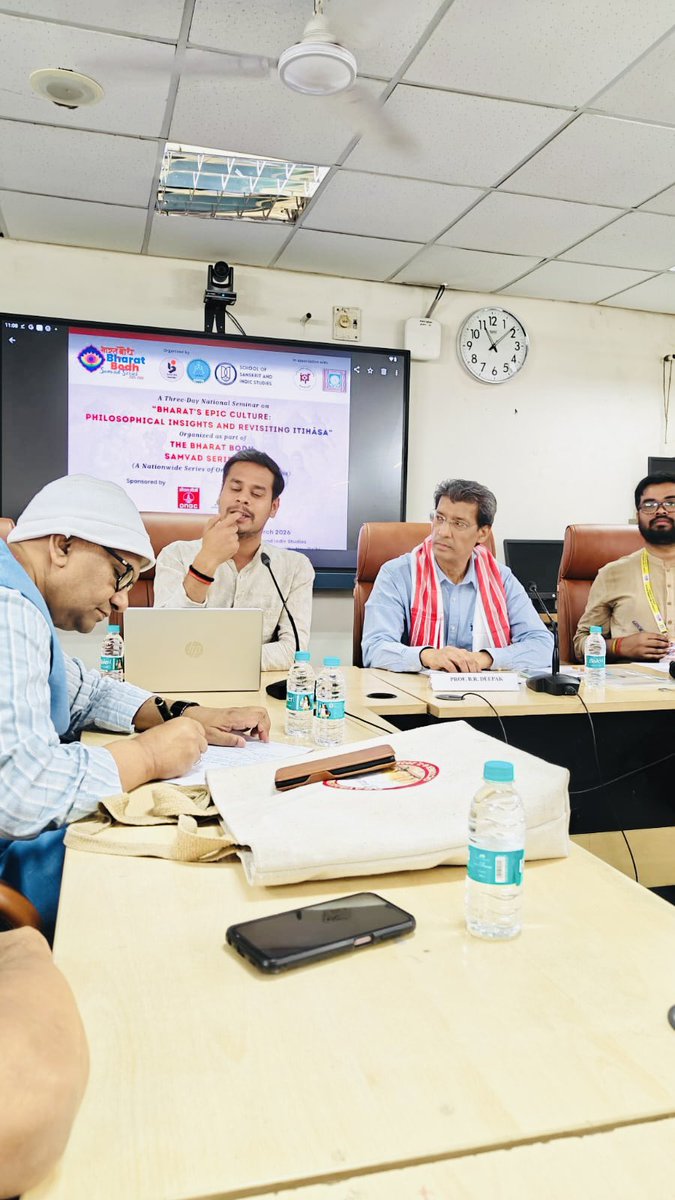
Today, had the privilege of presiding over a session of a three-day seminar on “Bharat’s Epic Culture: Philosophical Insights and Revisiting Itihasa”, organized by the Special Centre for Sanskrit and Indic Studies, JNU. Engaging presentations were delivered by Dagyung Jung, Irfan Ahmed, and Sanjiv Mishra. I also shared my reflections on the dissemination of the Indian epics, particularly in the context of historical communication routes linking India with East and Southeast Asia. Photo courtesy Irfan Ahmed
Bali Deepak tweet media
English
0
0
4
319
Bali Deepak
Bali Deepak@BDeepak110·
Dear friends, I am pleased to share Ambassador Xu Feihong’s remarks from his speech yesterday on the translation of Chinese classics and contemporary works by myself, which were released during the Centre’s Spring Festival celebrations 2026. Following works were released: चीनी शास्त्रीय ज्ञान भंडार हिंदी-चीनी संस्करण में प्रकाशित कन्फ़्यूशीवाद के चार ग्रंथ (《大中华文库:四书》, Beijing: Zhonghua Book Company2025); History of Chinese Literature (2025), translated from Chinese into English by Wang Hanbing (New Delhi: Pentagon Press); महिम शिक्षा और माध्यमिक सिद्धांत (2025), a Hindi translation of Wang Wenjin’s 《大学中庸译注》 (Panchkula: Aadhar Prakashan); तुनह्वाङ बौद्ध कला: इतिहास, रेशम मार्ग, चीन और पश्चिमी क्षेत्रों के बीच सांस्कृतिक संवाद (2025), translated from Yang Qi’s 《敦煌艺术入门十讲》 (New Delhi: Prakashan Sansthan); and बौद्ध धर्म: भारत-चीन सांस्कृतिक संवाद (2025), translated from Sun Changwu’s 《佛教:文化交流与融合》 (Tianjin: Tianjin Education Press Co. Ltd.).
English
0
0
17
567
Bali Deepak
Bali Deepak@BDeepak110·
On the occasion of our Centre’s Spring Festival celebrations, several of my books were formally released by Xu Feihong, Ambassador of the People’s Republic of China to India. These include चीनी शास्त्रीय ज्ञान भंडार हिंदी-चीनी संस्करण में प्रकाशित कन्फ़्यूशीवाद के चार ग्रंथ (《大中华文库:四书》, Beijing: Zhonghua Book Company); History of Chinese Literature (2025), translated from Chinese into English by Wang Hanbing (New Delhi: Pentagon Press); महिम शिक्षा और माध्यमिक सिद्धांत (2025), a Hindi translation of Wang Wenjin’s 《大学中庸译注》 (Panchkula: Aadhar Prakashan); तुनह्वाङ बौद्ध कला: इतिहास, रेशम मार्ग, चीन और पश्चिमी क्षेत्रों के बीच सांस्कृतिक संवाद (2025), translated from Yang Qi’s 《敦煌艺术入门十讲》 (New Delhi: Prakashan Sansthan); and बौद्ध धर्म: भारत-चीन सांस्कृतिक संवाद (2025), translated from Sun Changwu’s 《佛教:文化交流与融合》 (Tianjin: Tianjin Education Press Co. Ltd.). On this significant occasion, the Centre also formally adopted its new name, the Centre for Chinese Studies, fulfilling a long-standing aspiration.
Bali Deepak tweet mediaBali Deepak tweet media
2
2
19
737
Bali Deepak
Bali Deepak@BDeepak110·
In today's op-ed I argue that China’s economic transition is not just quantitative but a qualitative shift reshaping global industrial geography, supply chains, and technological leadership. The US share of global manufacturing has fallen below 17%, while China could reach 45% of industrial output by 2030. In 2025, its “Three New” sectors—solar, EVs, and batteries—drove over a third of growth and 90% of new investment. Clean energy investment hit $1 trillion, far surpassing fossil fuels. Yet demographic pressures, employment challenges, and financial risks amid global uncertainty may constrain China’s long-term economic momentum and structural transformation. sundayguardianlive.com/editors-choice…
Bali Deepak tweet media
English
0
1
4
291
Bali Deepak retweetledi
CRF India
CRF India@ChintanResearch·
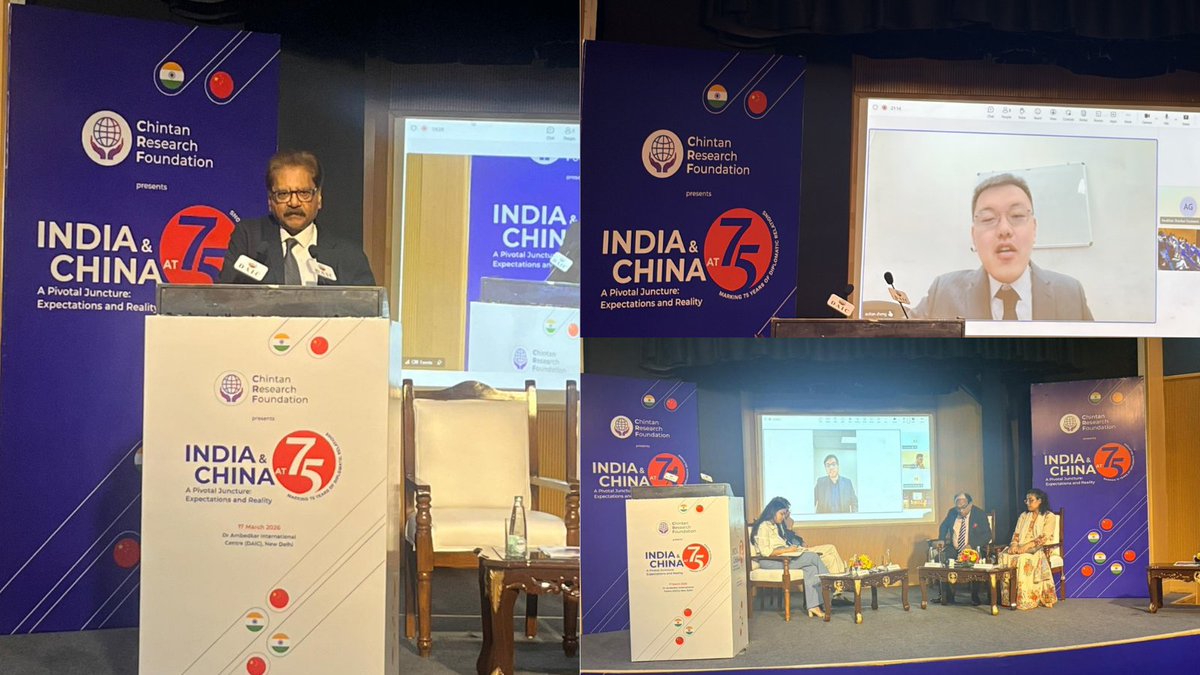
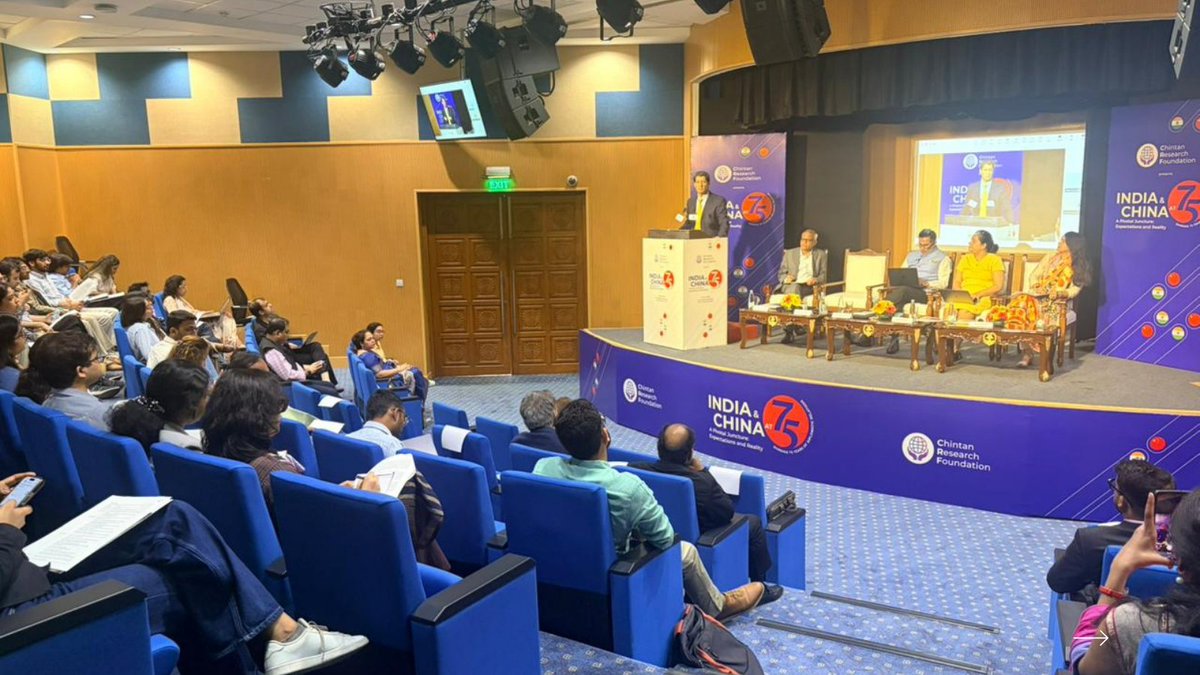
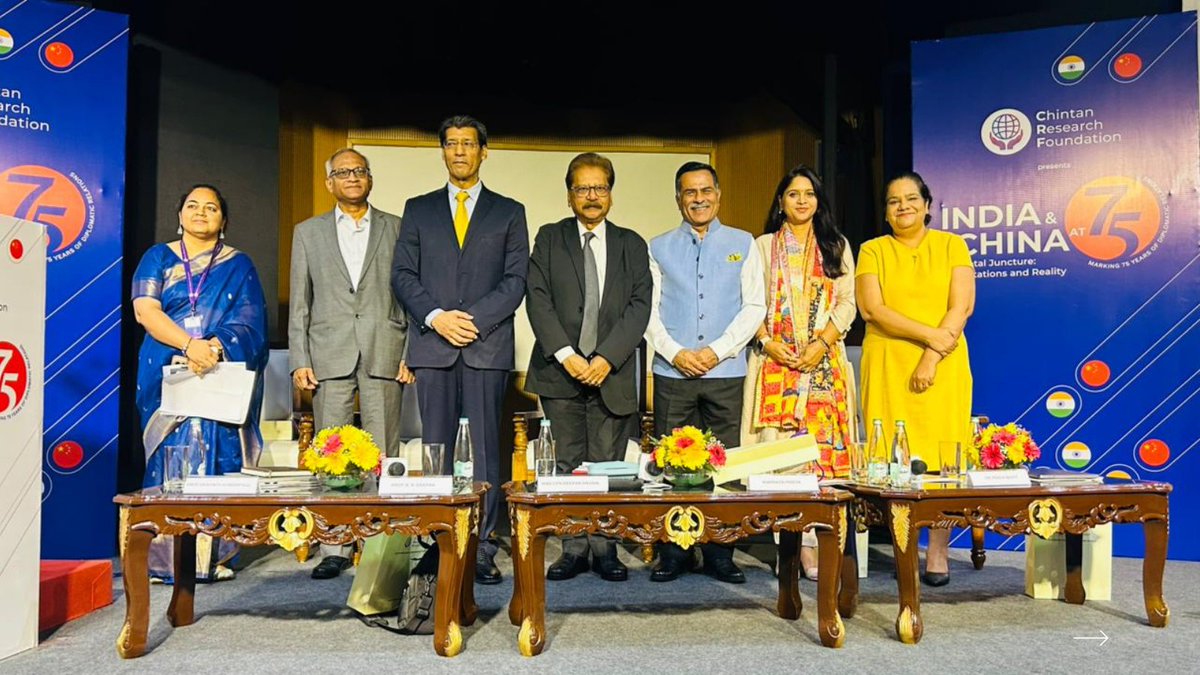
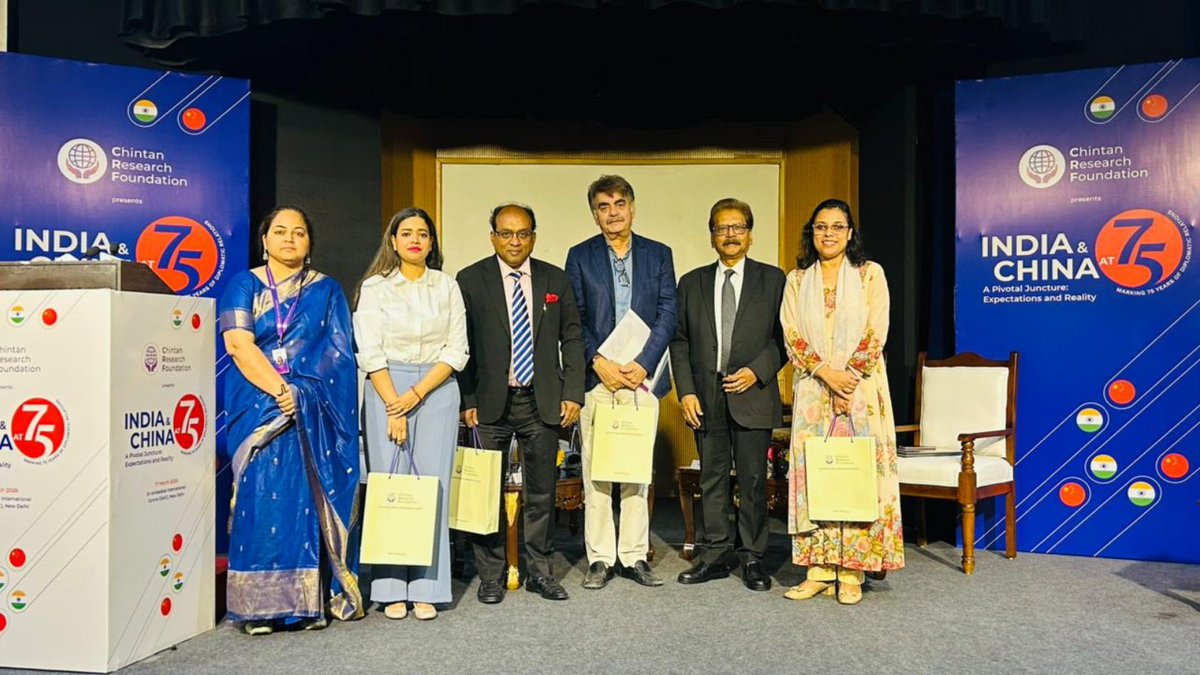
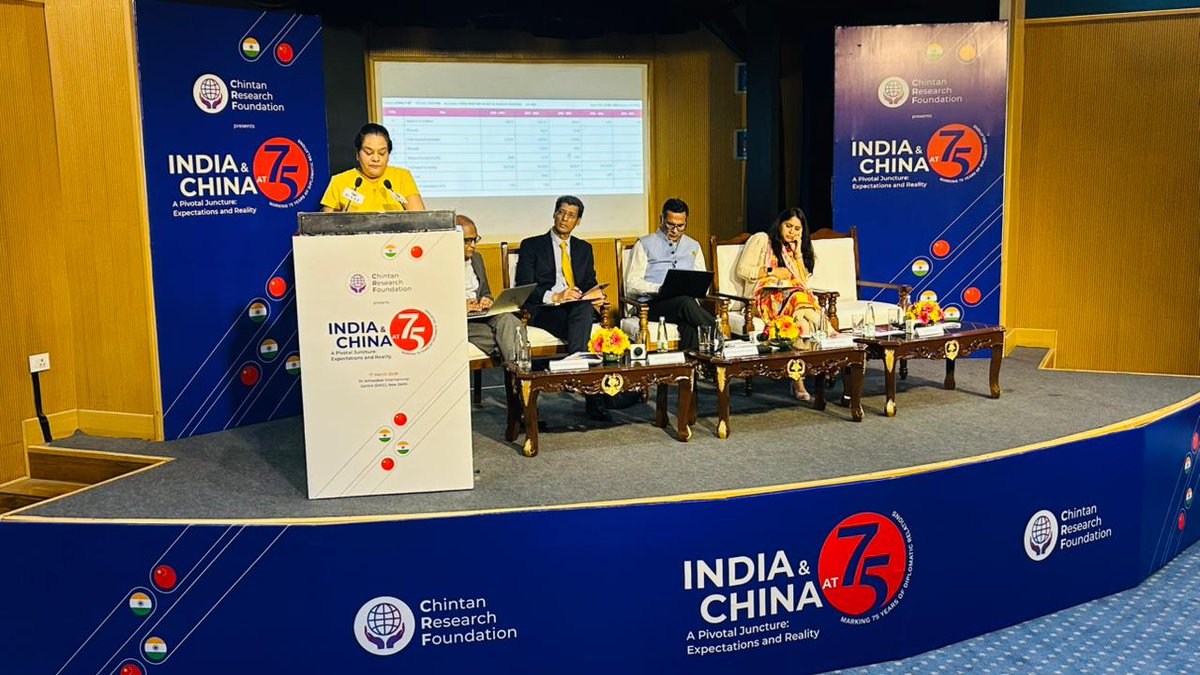
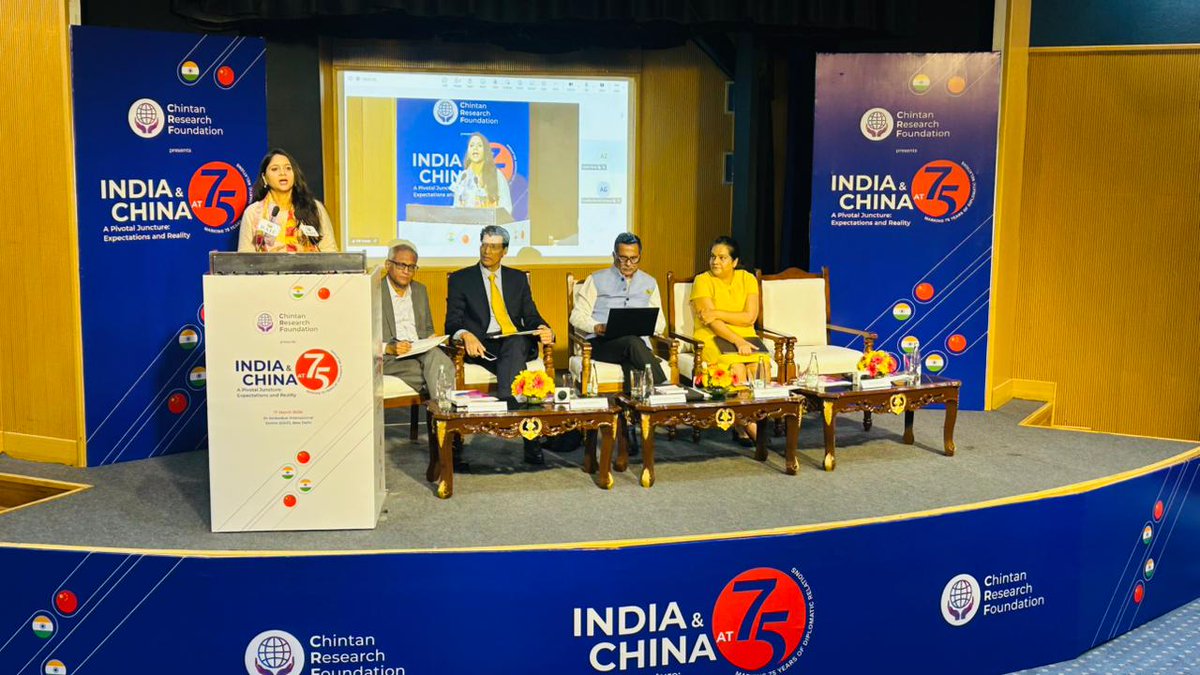
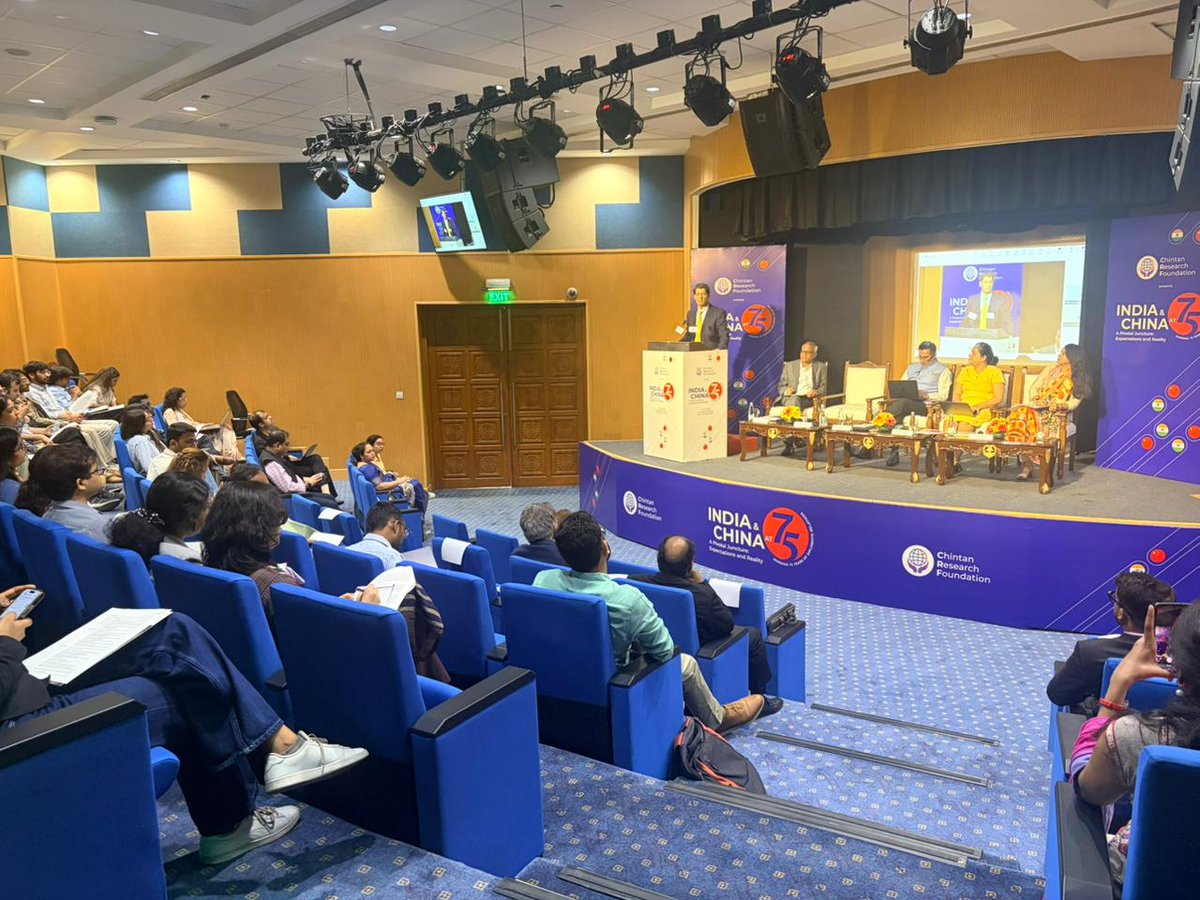
India-China relations are not just about competition. They are about managing coexistence in a rapidly shifting #GlobalOrder. As both countries mark 75 years of diplomatic relations, the conversation is no longer binary. It is shaped by strategic caution, economic interdependence, and emerging opportunities. Chintan Research Foundation convened a conference on “India and China at 75: A Pivotal Juncture: Expectations and Reality,” bringing together leading experts to examine this evolving relationship. Key insights: • India and China share a regional destiny, but structural tensions persist • India remains cautious of #BRI, particularly #CPEC due to sovereignty concerns • Border stability after #Galwan remains central to normalisation • Maritime cooperation, blue economy, and anti-piracy offer pragmatic avenues for engagement in the Indo-Pacific Stabilisation in ties may enable pragmatic economic and tech re-engagement, though trade imbalances persist • Interdependence continues without a level playing field, highlighting the need for stronger competitiveness in India • China’s economy faces “triple pressure”: shrinking demand, supply shocks, and weak expectations • Evolving nuclear doctrine and dual-capable systems raise concerns over blurred conventional-nuclear thresholds As India and China navigate competition and cooperation, the choices they make today will shape not just bilateral ties but the strategic future of Asia and the global order. @mjamshedcs80 | @BDeepak110 | @hasijanamrata | @CCASDELHI | @ciasjnu | @CGIIthinktank |@scepticcryptic | @tm_saqib | @IPCSNewDelhi |@SaheliD53348551 | @antaragsingh #CRFConference #IndiaChinaRelations #Geopolitics #ForeignPolicy #IndoPacific #StrategicAffairs #GlobalPolitics #ChintanResearchFoundation
CRF India tweet mediaCRF India tweet mediaCRF India tweet mediaCRF India tweet media
English
0
4
4
596
Bali Deepak retweetledi
Bali Deepak
Bali Deepak@BDeepak110·
印度尼赫鲁大学教授狄伯杰:印度和中国不能彼此忽视 ftchinese.com/story/001109011 via @FTChinese Sharing with you my recent interview on India-China relations in the Financial Times Chinese version !
中文
1
3
9
559
Bali Deepak retweetledi
CRF India
CRF India@ChintanResearch·
#CRFLive Conference on “India and China at 75: A Pivotal Juncture: Expectations and Reality” Session I: Dragon-Elephant in South Asia: From Tango to Musical Chairs Key takeaways: - India and China share a regional destiny, but structural tensions persist - India remains cautious of #BRI, particularly #CPEC, due to sovereignty concerns - Border stability after Galwan remains central to normalisation - Maritime cooperation, blue economy, and anti-piracy offer pragmatic avenues for engagement in the Indo-Pacific - India–China relations are shaped by both cooperation and constraints, influenced by five key Chinese actors: the Communist Party, the Foreign Ministry, the People’s Liberation Army, commercial lobbies, and elite opinion, including academics and think tanks @RakshaUni | @BDeepak110 | @hasijanamrata | @CCASDELHI | @ciasjnu | @bhavnasingh984 #CRFEvent #IndiaChinaRelations #Geopolitics #ForeignPolicy #IndoPacific #StrategicAffairs #ChintanResearchFoundation
CRF India tweet mediaCRF India tweet mediaCRF India tweet mediaCRF India tweet media
English
0
2
3
363
Bali Deepak
Bali Deepak@BDeepak110·
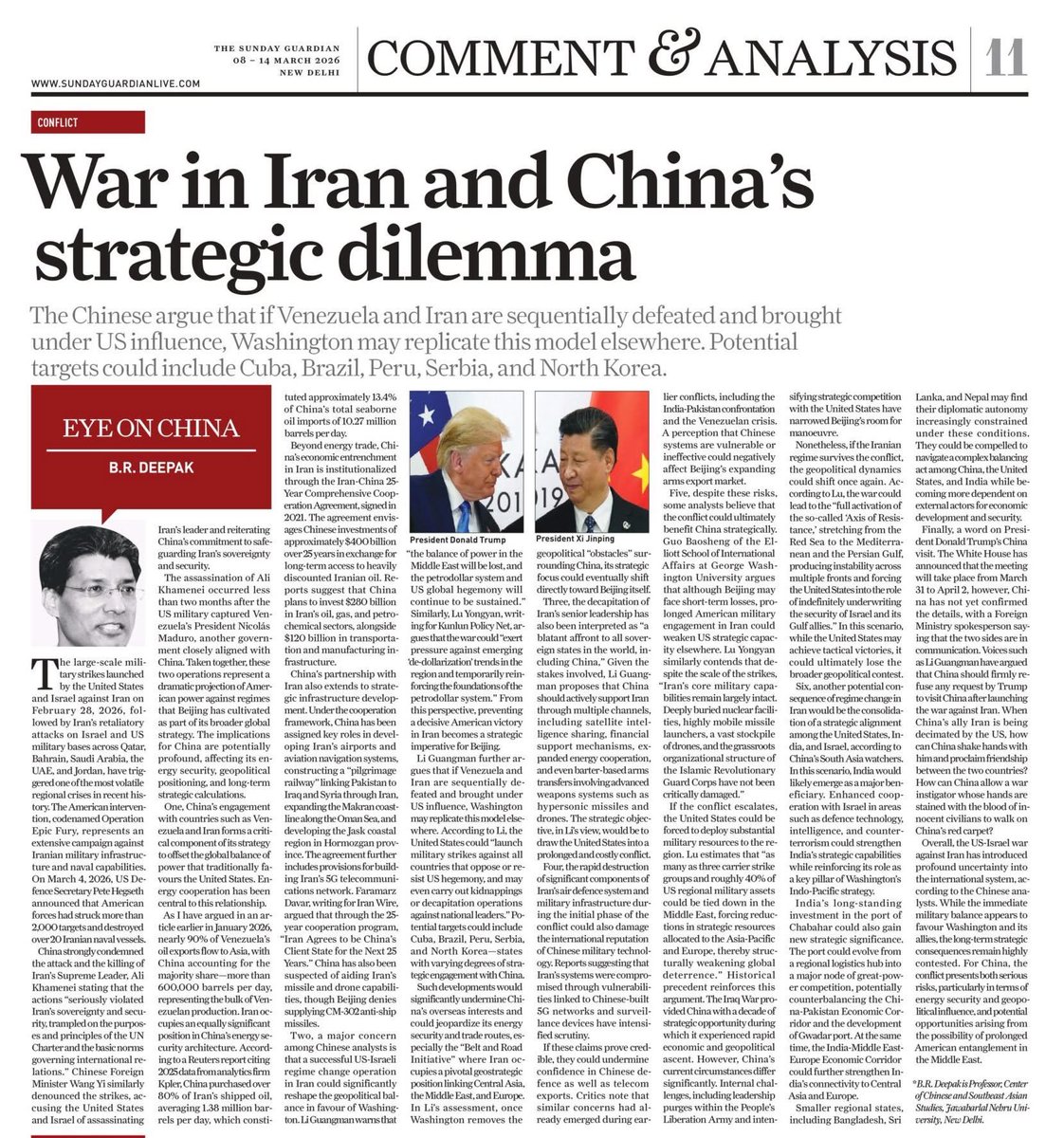
In this op-ed, I examine how China is viewing the ongoing US–Israel–Iran war, what implications the conflict may hold for Beijing, and why some Chinese South Asia analysts believe India could emerge as a beneficiary of the crisis. sundayguardianlive.com/opinion/war-in…
Bali Deepak tweet media
English
2
2
10
551