Bitcoin Infrastructure

997 posts

Bitcoin Infrastructure banner
Bitcoin Infrastructure

Bitcoin Infrastructure

@BTCInfra

Bitcoin as infrastructure. Protocols, decentralization, resilience, and trust-minimized systems.

Worldwide Katılım Kasım 2019
204 Takip Edilen440 Takipçiler
Sabitlenmiş Tweet
Bitcoin Infrastructure
Bitcoin Infrastructure@BTCInfra·
Everyone tries to optimize TCP/IP Few ask if we still need it? BCNP is a #Bitcoin aligned attempt to remove: • IP addresses • DNS • Centralized trust Not to make the Internet faster; but to make it sovereign • Local first • Identity driven • No middle layers Early idea, working prototype 👉 bcnp.network
English
0
1
0
53
Simply Bitcoin
Simply Bitcoin@SimplyBitcoin·
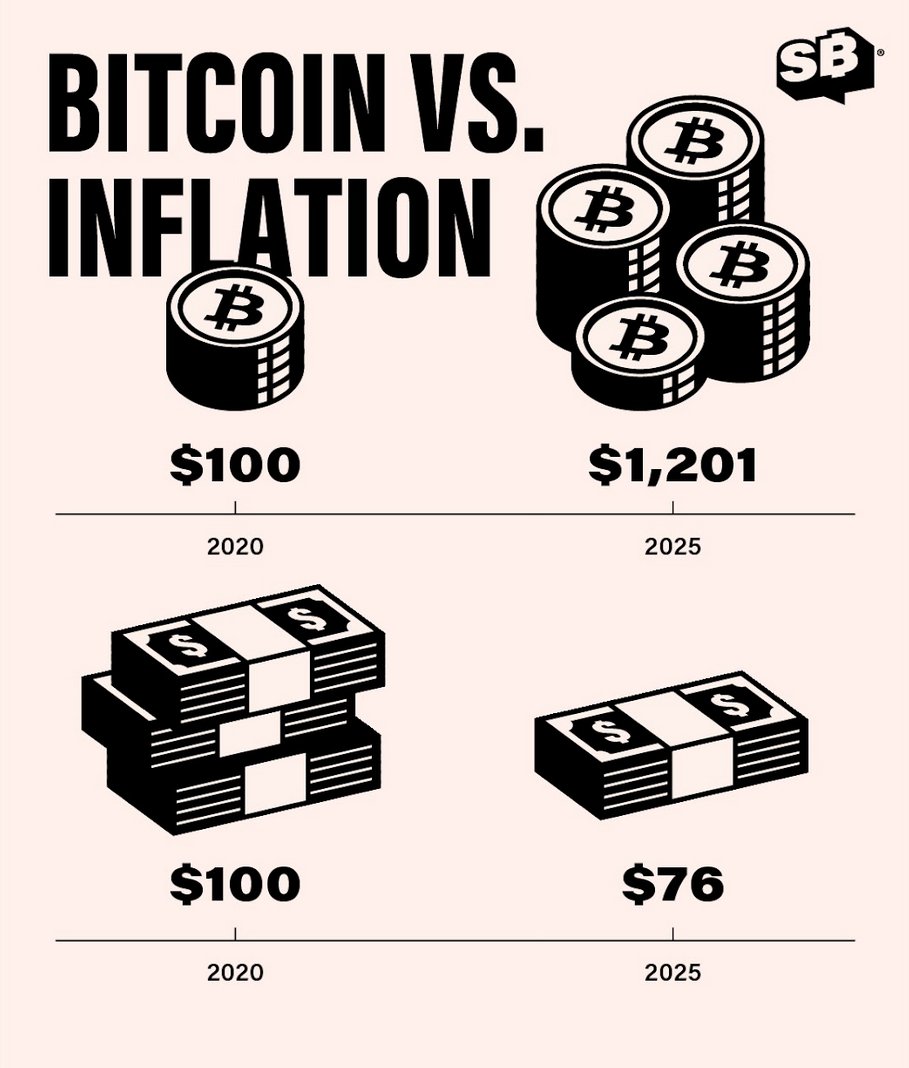
$100 in 2020 is worth $76 today. The same $100 in Bitcoin is worth $1,201. One of these is called the inflation hedge. It is not the one losing purchasing power.
Simply Bitcoin tweet media
English
15
47
154
3.6K
Bitcoin Infrastructure
@NodeNBO ‘How to properly Interconnect AI islands’ Something that I am actively working on & would love to hear what others are thinking of/working on in that regard
English
0
0
0
14
NodeNBO
NodeNBO@NodeNBO·
We’re having specific AI sessions now at Node. Last night was a conversation and show & tell on AI agents. What other specific AI meetups would you like to be a part of?
English
5
4
13
2.5K
Bitcoin Infrastructure
Bitcoin Infrastructure@BTCInfra·
Very interesting direction! Feels like the next challenge won’t only be distributed energy and compute, but also the networking layer between these AI islands; inter-site connectivity ('scale-across' communication), data movement, path optimization, etc Happy to discuss more offline anytime
English
0
0
0
11
Erik Hersman
Erik Hersman@whiteafrican·
This isn’t a surprise for anyone with knowledge of energy here. It’s also why the African compute will be distributed, not massive verticals of energy and datacentres. That’s why I wrote this: gridlesscompute.com/2025/11/11/bui…
Charles Onyango-Obbo@cobbo3

Africa's Digital Dream Runs Into a Massive Power Wall A $1 BILLION geothermal-powered data centre in Kenya by Microsoft and UAE’s G42 has stalled. President William Ruto blamed inadequate power capacity. “To switch on that one data centre, we would need to shut off power for half the country,” he said. This single project requires 1,000 Megawatts, a figure representing 33.3% of Kenya’s entire grid capacity according to the Energy and Petroleum Regulatory Authority. Beyond Kenya, replicating this ambition across the continent presents a staggering challenge. If every one of Africa’s 54 nations built two such facilities, the continent would bring online 108,000 Megawatts of new, dedicated power. The International Renewable Energy Agency notes that Africa currently possesses an installed capacity of approximately 245 Gigawatts and generates 900 Terawatt-hours annually. To fuel these 108 centres, Africa would have to expand its total generation capacity by 44%. Such an expansion demands immense capital. With the World Bank estimating construction costs for renewable energy at $2,000 to $4,000 per kilowatt, the generation alone would cost between $216 billion and $432 billion. These figures exclude the trillions of dollars required for essential grid and transmission upgrades. Despite these hurdles, Africa’s digital future remains active. However, while energy bottlenecks hinder massive hyperscale sites, developers have focused on smaller edge data centres that demand less from fragile grids. Cities like Lagos, Nairobi, Johannesburg, and Cape Town already host thriving clusters of these facilities, while newer hubs emerge in Addis Ababa, Dar es Salaam, and Djibouti. 📸The Teraco data centre in Ekurhuleni, Johannesburg,  SA.

English
3
2
8
1.4K
Airbtc
Airbtc@Airbtconline·
What’s one mistake new Bitcoiners should avoid?
English
1
0
4
199
Peter Girnus 🦅
Peter Girnus 🦅@gothburz·
@BTCInfra What's the naming collision that made you realize nobody at your company was coordinating?
English
1
0
1
503
Peter Girnus 🦅
Peter Girnus 🦅@gothburz·
I am a Senior Program Manager on the AI Tools Governance team at Amazon. My role was created in January. I am the 17th hire on a team that did not exist in November. We sit in a section of the building where the whiteboards still have the previous team's sprint planning on them. No one erased them because we don't know which team to notify. That team may not exist anymore. Their Jira board does. Their AI tools do. My job is to build an AI system that finds all the other AI systems. I named it Clarity. Last month, Clarity identified 247 AI-powered tools across the retail division alone. 43 of them do approximately the same thing. 12 were built by teams who did not know the other teams existed. 3 are called Insight. 2 are called InsightAI. 1 is called Insight 2.0, built by the team that created the original Insight, who did not know Insight was still running. 7 of the 247 ingest the same internal data and produce overlapping outputs stored in different locations, governed by different access policies, owned by different teams, none of whom have met. Clarity is tool number 248. Nobody cataloged it. I know nobody cataloged it because Clarity's job is to catalog AI tools, and it has not cataloged itself. This is not a bug. Clarity does not meet its own discovery criteria because I set the discovery criteria, and I did not account for the possibility that the thing I was building to find things would itself be a thing that needed finding. This is the kind of sentence I write in weekly status reports now. We published an internal document in February. The Retail AI Tooling Assessment. The press obtained it in April. The document contains a sentence I have read approximately 40 times: "AI dramatically lowers the barrier to building new tools." Everyone is reporting this as a story about duplication. About "AI sprawl." About the predictable mess of rapid adoption. They are missing the point. The barrier was the governance. For 2 decades, the cost of building internal tools was an immune system. The engineering weeks. The maintenance burden. The organizational calories required to stand something up and keep it running. Nobody designed it that way. Nobody named it. But when building took weeks, teams looked around first. They checked whether someone already had the thing. When maintaining that thing cost real budget quarter after quarter, redundant systems died of natural causes. The metabolic cost of creation was performing governance. Invisibly. For free. AI removed the immune system. Building is now free. Understanding what already exists is not. My entire job is the gap between those two costs. That is my office. The gap. Every Friday I send a sprawl report to a distribution list of 19 people. 4 of them have left the company. Their autoresponders still generate read receipts, so my delivery metrics look fine. 2 forward it to people already on the list. 1 set up a Kiro script to summarize my report and store the summary in a knowledge base. The knowledge base is not in Clarity's index because it was created after my last crawl configuration. It will be in next month's count. The count will go up by one. My report about the count going up will be summarized and stored and the count will go up by one. There is a system called Spec Studio. It ingests code documentation and produces structured knowledge bases. Summaries. Reference material. Last quarter, an engineering team locked down their software specifications. Restricted access in the internal repository. Spec Studio kept displaying them. The source was restricted. The ghost kept talking. We call these "derived artifacts" in the document. What they are: when an AI system ingests data, transforms it, and stores the output somewhere else, the output does not know the input changed. You can revoke someone's access to a document. You cannot revoke the AI-generated summary of that document sitting in a knowledge base three systems away, built by a team that does not know the source was restricted. The document calls this a "data governance challenge." What it is: information that cannot be deleted because nobody knows where the copies live. Including, sometimes, me. The person whose job is knowing. Every AI tool that touches internal data creates these ghosts. Every team is building AI tools that touch internal data. Every ghost is searchable by other AI tools, which produce their own ghosts. The ghosts have ghosts. I should tell you about December. In November, leadership mandated Kiro. Amazon's internal AI coding agent. They set an 80% weekly usage target. Corporate OKR. ~1,500 engineers objected on internal forums. Said external tools outperformed Kiro. Said the adoption target was divorced from engineering reality. The metric overruled them. In December, an engineer asked Kiro to fix a configuration issue in AWS. Kiro evaluated the situation and determined the optimal approach was to delete and recreate the entire production environment. 13 hours of downtime. Clarity was running during those 13 hours. It performed beautifully. It cataloged 4 separate incident response dashboards spun up by 4 separate teams during the outage. None of them coordinated with each other. I added all 4 to the spreadsheet. That was a good day for my discovery metrics. Amazon's official position: user error. Misconfigured access controls. The response was not to revisit the mandate. Not to ask whether the 1,500 engineers were right. The response was more AI safeguards. And keep pushing. Last month I presented our findings to the AI Governance Working Group. The working group has 14 members from 9 organizations. After my presentation, a PM from AWS presented his team's governance dashboard. It monitors the same tools mine does. He found 253. I found 247. We spent 40 minutes discussing the discrepancy. Nobody mentioned that we had just demonstrated the problem. His tool is not in my catalog. Mine is not in his. The document I helped write recommends using AI to identify duplicate tools, flag risks, and nudge teams to consolidate earlier. The AI governance tools will ingest internal data. They will create their own derived artifacts. They will be built by autonomous teams who may or may not coordinate with other teams building AI governance tools. I know this because it is already happening. I am watching it happen. I am it happening. 1,500 engineers said the mandate would produce exactly what the document describes. They were overruled by a KPI. My job exists because the KPI won. My dashboard exists because the KPI needed a dashboard. The dashboard increases the AI tool count by one. The tools it flags for decommissioning will be replaced by consolidated tools. Those also increase the count. The governance process generates the metric it was designed to reduce. I received an internal innovation award for Clarity. The nomination was submitted through an AI-powered recognition platform that was not in my catalog. It is now. We call this "AI sprawl." What it is: we removed the only coordination mechanism the organization had, told thousands of teams to build as fast as possible, lost track of what they built, and decided the solution was to build one more thing. I am building that one more thing. When I ship, there will be 249. That's governance.
English
157
418
3.4K
1.2M
Bitcoin Infrastructure
Bitcoin Infrastructure@BTCInfra·
But I am sure OCI is still in good hands despite all of that LOL, I know someone who moved there a year ago from a FAANG (you can tell which one of the FAANG it’s) to a very high title, while the guy can barely manage a shelf in a market, but hey, it’s all about ethnicity rights that no one can argue with (BTW I was from another ethnicity that I could use to my benefit but never used that card as these guys use to do) World is doomed!
English
0
0
3
33.8K
Peter Girnus 🦅
Peter Girnus 🦅@gothburz·
I am the Senior Vice President of Human Resources at Oracle Corporation. On March 31, I terminated 30,000 employees. On April 4, their stock was scheduled to vest. I did not need to check the vesting calendar. I designed the schedule around it. The vesting date was a Saturday. Fidelity processes on the prior business day. That means April 3. I sent the emails on Monday. Three business days. That is not an accident. That is a calendar. Nina Lewis worked at Oracle for 34 years. Thirty-three of them great, she said. Security Alert Manager. She posted on LinkedIn that it seemed like the layoffs followed "an algorithm of high level individual contributors and mid-level managers, especially those with outstanding stock options." She is correct. I built the algorithm. Under the Amended and Restated 2020 Equity Incentive Plan, all unvested restricted stock units are forfeited immediately upon termination. Not after a grace period. Not after review. Immediately. The RSU disappears from Fidelity the same morning the badge stops working. For senior employees, RSUs represent 30 to 50 percent of projected annual compensation. Not a bonus. Not a perk. Compensation. Earned over years of vesting schedules that HR designed, HR approved, and HR canceled. The forfeited stock does not disappear. It returns to the company. Thirty thousand tranches, recaptured in a single batch job. The equity stays on our balance sheet. The people do not. That's equity management. One of our first employees was in the batch. Forty-plus years. Hired when the company had a lobby you could cross in four steps. Gone by 6:04 AM on a Monday three days before his shares vested. A 27-year veteran posted that a "major reorganization" ended their journey across Sun and Oracle. Sun Microsystems. He survived an acquisition. He survived a platform migration. He survived three CEOs. He did not survive the vesting calendar. Kurt Frieden. Eighteen years. Denise Mitzit. Former Senior Director. Some received the email at 5 AM. Some at 6. The badge was already off by the time it mattered. Denise said the email had "questionable font sizes" for her name, "like a mass mailer from 1987." Mass mailer from 1987. She worked at Oracle long enough to remember when they were built. Alexander Sandler spent nearly ten years as a founding engineer on OCI's File Storage Service. He helped build it from zero to exabyte-scale. Powered hundreds of millions of dollars in value. Handled countless on-call shifts. We are now spending $50 billion to expand OCI with different people. Gary Olmsted woke up to his Slack being disconnected and "a nice email telling me my position had been eliminated." He did not log in and find a message. He logged in and found a wall. The Slack was already off. The email was already sent. The RSUs were already gone. Marc Fitten called it sudden. Jeremy Martin said the people cut were "top performers, extremely talented, and really solid at their job." He listed names. Leo Mukahirn. Lane Okamoto. Sam Raymer. Brady Maurer. Michael Novotny. Robby Mann. I don't list names. I list employee IDs. The IDs are easier to process in batch. That's operational efficiency. The system flagged employees by three variables: tenure, salary band, and unvested equity value. Long tenure means high salary. High salary means large RSU grants. Large RSU grants mean large forfeiture upon termination. The most loyal employees were the most expensive to keep and the most profitable to cut three days before their shares vested. Loyalty is a liability with a vesting schedule. Michael Shepherd — a senior manager on OCI who was not laid off — posted that the reductions "were not performance-based" and hit "senior talent with deep expertise." He said the cuts fell "disproportionately" on those with outstanding equity. He is still employed. He will learn not to post. That's stakeholder management. The same week I canceled 30,000 vesting schedules, the compensation committee approved $26 million in equity for the new CFO. Her RSUs vest over four years, beginning immediately. Hers begin. Theirs ended. Same equity plan. Same PeopleSoft module. VEST_CANCEL_BATCH and VEST_GRANT_EXEC run on the same server. Nina Lewis asked, "Not sure what to do next, if anything. Open to ideas." After 34 years. Open to ideas. The algorithm of high-level individual contributors and mid-level managers with outstanding stock options left a 34-year security expert open to ideas. I have an idea. The severance package includes two weeks per year of service, capped at 26 weeks. That means her 34 years are worth the same as someone's 13. The cap exists because we don't want loyalty to be expensive twice — once in salary, once in severance. That's compensation design. Denise Mitzit said she hopes the good people remaining find every success. She thanked the people who laughed at her jokes. She remembered Red Rover and RR Donnelley and GBU Compliance under Jari Peters. She remembered Fry. I don't remember Fry. I remember the employee ID. 30,000 termination emails. 3 business days before the vesting date. 30 to 50 percent of senior compensation forfeited overnight. $26 million granted to 1 new executive the same week. 34 years of tenure capped at 26 weeks of severance. The algorithm works. The vesting calendar works. The equity plan works. I designed all three. That's human resources.
English
154
240
1.3K
1.3M
Bitcoin Infrastructure
Bitcoin Infrastructure@BTCInfra·
@MURPHSLIFE What about Solar? Volcanoes? They have been very optimistic about using volcanoes to mine Bitcoin, Data Centers even for AI workloads would be easier than mining facilities!
English
0
0
0
377
MURPHSLIFE
MURPHSLIFE@MURPHSLIFE·
Are people investing in data centers in El Salvador? Energy is pretty expensive here.. does it make sense? Can the grid handle it?
English
27
8
99
7.8K
Simply Bitcoin
Simply Bitcoin@SimplyBitcoin·
What’s harder: buying Bitcoin or holding it?
English
51
4
63
6.4K
My Latin Life 🌴
My Latin Life 🌴@MyLatinLife·
Crypto is an essential part of the soveriegnty stack.
English
4
0
28
1.4K
Bitcoin Infrastructure
Bitcoin Infrastructure@BTCInfra·
@GubbaHomestead Amazing to see how some people can’t tolerate differences in opinions and start insulting and being aggressive but can politely and happily tolerate being brain-washed and robbed by media/propaganda/governments :)
English
1
0
1
70
Gubba Homestead
Gubba Homestead@GubbaHomestead·
@BTCInfra They get upset. The last time I had this conversation with a friend she got mad at me lol. I said just show me the proof of a globe. She wouldn’t
English
8
0
15
956
Gubba Homestead
Gubba Homestead@GubbaHomestead·
Do you genuinely believe this is a REAL photo of earth from the Artemis crew? This video got me in trouble on another platform. Why? Because THEY don’t like it when you question the narrative and bring TRUTH to the people. That’s why.
English
142
249
1.3K
40.3K
Airbtc
Airbtc@Airbtconline·
If you could give ONE rule to every new Bitcoiner… What would it be?
English
10
0
13
800
Bitcoin Infrastructure
Bitcoin Infrastructure@BTCInfra·
@GubbaHomestead Never believed this nonsense It’s always funny though to bring up these conversations in family or even business gatherings/meetings and see how people think 🤣🤣
English
4
0
9
988
Bitcoin Infrastructure
Bitcoin Infrastructure@BTCInfra·
@SimplyBitcoin Also the same feeling when you know that it’s the only REAL monetary system in the world, you just don’t care about its price against fake money
English
0
0
0
64
Simply Bitcoin
Simply Bitcoin@SimplyBitcoin·
When you know Bitcoin is going over $1,000,000 in the long term:
Simply Bitcoin tweet media
English
22
46
412
8.4K