Satoshi

945 posts

Satoshi

Satoshi

@BTC_Only_

Katılım Mayıs 2016
44 Takip Edilen38 Takipçiler
Satoshi
Satoshi@BTC_Only_·
@BellaBaddie__ You wait until the version on that phone has a vulnerability
English
0
0
0
31
Bella
Bella@BellaBaddie__·
If someone dies and nobody knows their password, how do they unlock their phone?
English
481
163
9.2K
1.4M
Satoshi
Satoshi@BTC_Only_·
@ShaykhSulaiman Tuesday morning, Ramadan. Unfollowed you. Lots of fake news you post recently.
English
0
0
0
94
Sulaiman Ahmed
Sulaiman Ahmed@ShaykhSulaiman·
TOURIST SAYS HIS HOTEL RESORT IN DUBAI IS NEXT TO EMPTY AFTER ATTACKS IN DUBAI
English
135
1.6K
7.8K
401K
Vineer
Vineer@vineerpasam·
My friend’s company blocked access to all AI platforms like ChatGPT and Claude. So they have to write code manually… every single line. He told me he writes around 200 lines of code a day. Something simple like building a form takes them 2 days. Meanwhile on X it feels like everyone is shipping apps in a weekend with AI. Crazy to think both worlds exist in 2026.
English
374
88
3K
303.6K
The White House
The White House@WhiteHouse·
OPERATION EPIC FURY: 1. Destroy the Iranian regime's missiles 2. Annihilate their Navy 3. Ensure their terrorist proxies can no longer destabilize the world 4. Ensure Iran can NEVER obtain a nuclear weapon America will win. The terrorist Iranian regime will be defeated.
English
6.6K
11.4K
64K
2.5M
Sulaiman Ahmed
Sulaiman Ahmed@ShaykhSulaiman·
JUST IN: DUBAI HOTEL WHEN ITS HIT BY IRANIAN MISSILE
English
71
164
846
71.9K
Satoshi
Satoshi@BTC_Only_·
@ivanburazin Now add calls that could have been a simple message. Even more selfish.
English
0
0
0
3
Ivan Burazin
Ivan Burazin@ivanburazin·
Voice messages should die. I hate everyone who sends them. When someone sends me a voice note, I don't look at it for days. It's the most selfish form of communication. You're offloading your typing time onto my listening time. You get convenience and I get locked into your pace. Can neither skim thru nor reference them later.
English
615
290
3.5K
326.7K
ThePrimeagen
ThePrimeagen@ThePrimeagen·
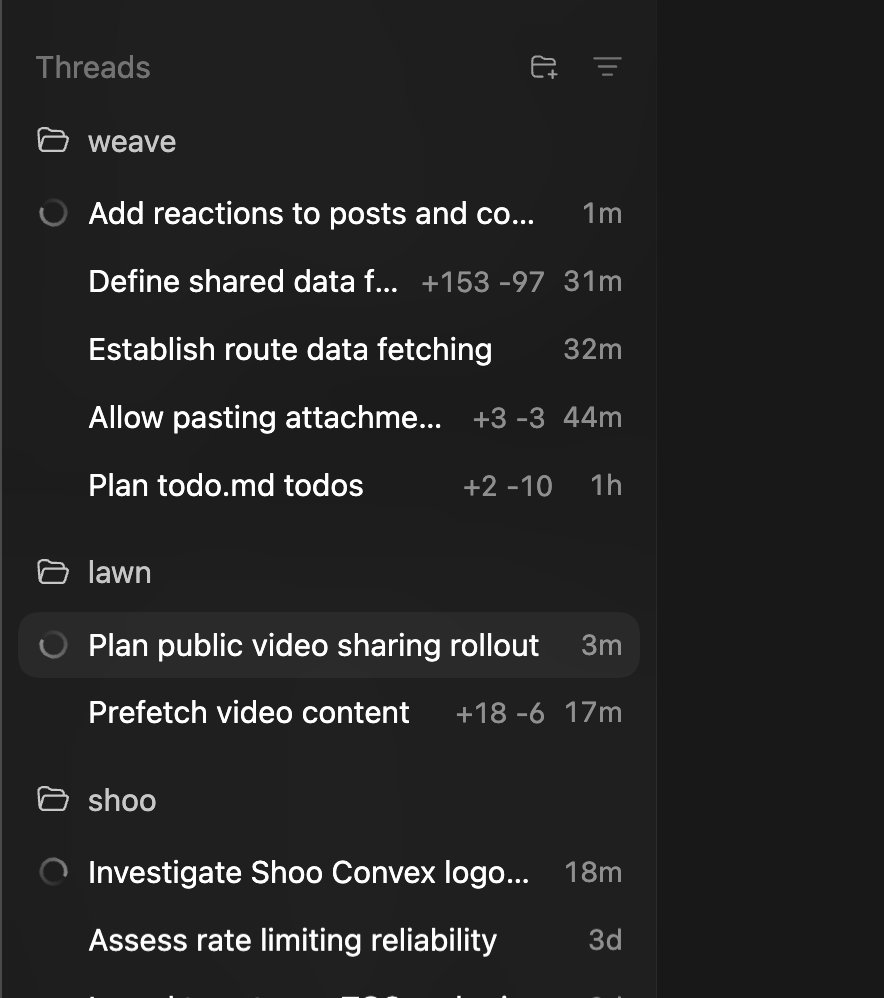
its crazy... what the hell is happening to me i feel guilty for not vibe coding. i could be _producing_ so much more if i did... this token anxiety is real
English
226
55
3.1K
142K
Satoshi
Satoshi@BTC_Only_·
@scaling01 Only use Sonnet with Pro plan, it's good enough. Use Opus on Max plan.
English
0
0
0
95
Lisan al Gaib
Lisan al Gaib@scaling01·
Got Claude Pro today to support Anthropic but blasted through the 5 hour limit with Opus in like 20 messages
English
157
49
3.8K
263K
Emanuele Di Pietro
Emanuele Di Pietro@emanueledpt·
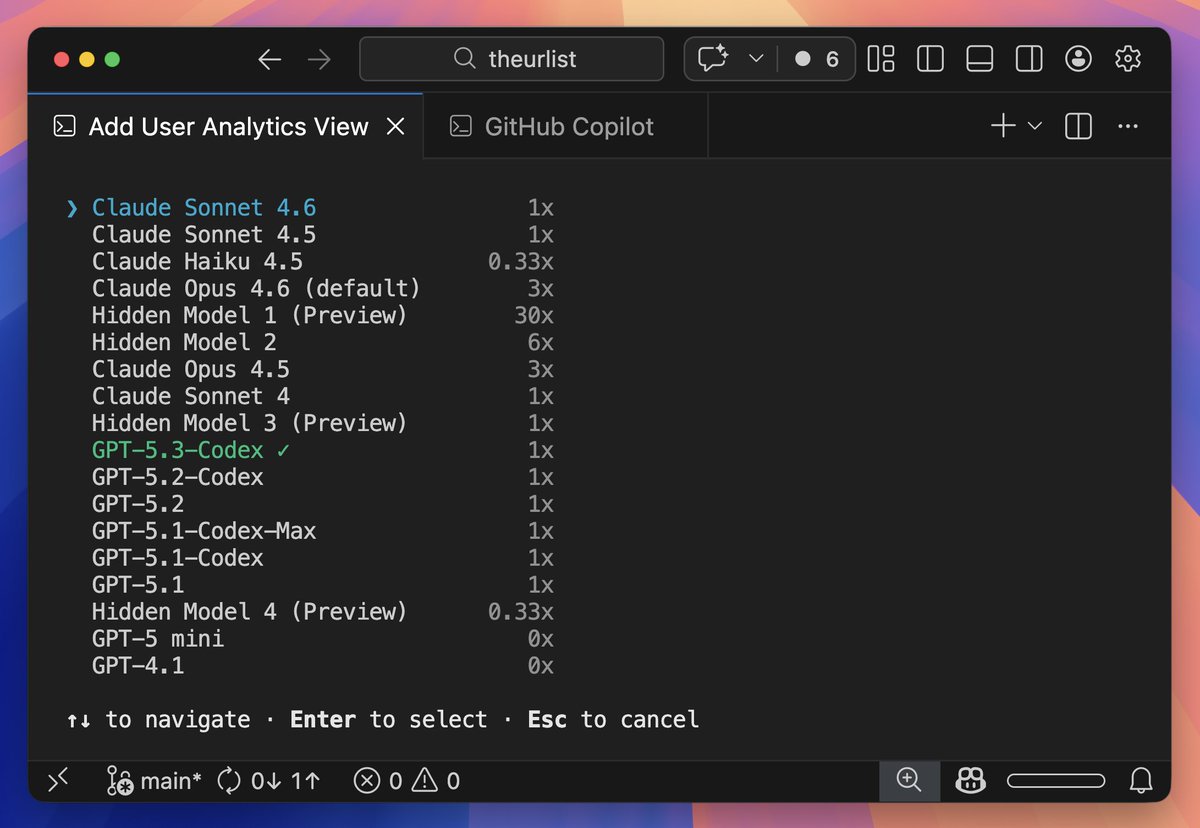
I’ve been having a bug since 9pm it’s now 3:40am Claude credits are done Codex can’t fully solve it Gemini is even worse I’m fucked
Emanuele Di Pietro tweet media
English
731
20
875
72.7K
Burke Holland
Burke Holland@burkeholland·
Wait Y'all aren't copying and pasting from CC into Codex just so you can have both models, right? Right?!? RIGHT?!?!
Burke Holland tweet media
English
24
2
83
15K
Satoshi
Satoshi@BTC_Only_·
@_simonsmith You have to use Sonnet for the $20 plan. Opus is only usable on MAX plan.
English
0
0
0
21
Simon Smith
Simon Smith@_simonsmith·
I’m a long-time ChatGPT user for both work and personal uses, and have literally never hit a usage limit. I had 11 conversations with Claude today in my paid account and capped out. And I can’t switch to a lower tier model, I just can’t use it without paying per use or upgrading? I’m not used to this. For all its flaws, ChatGPT definitely has a more generous and user-friendly usage policy.
Simon Smith tweet media
English
167
15
695
116K
Satoshi
Satoshi@BTC_Only_·
@slopwareindy @corbin_braun That’s why I use OpenCode, because I’m on neovim. I would do anything to get cursor tab completion in neovim
English
1
0
2
773
Slopware Indy Engineer
Slopware Indy Engineer@slopwareindy·
Honestly. Cursor is done. They bet on the wrong horse. Nobody wants their bloated vscode running all day. Anybody who is editing code by hand is already doing it with terminal editors like neovim. Vibe coders don't edit code. Real engineers don't want their bloatware eating up 10gb of memory. Cursor should have been codex app model from the start. Either they commit to it and drop their shit vscode fork wrapper or they die. And no, just hiding the VS code UI behind their own is decidedly not the move. Furthermore, anything clumsy, bulky cursor can come up with, any qualified engineer could create a leaner, more optimized, performant and efficient version theirself with existing agent harnesses. And lastly, nobody wants to pay their 20% markup on every token that they need to make their business viable. Cursor. Is. Done. They are not signal. You must be an investor.
English
7
0
41
6.3K
corbin
corbin@corbin_braun·
honestly. by the way, people are not even reacting to this new Cursor drop tells me two things: 1) 90% of devs don’t even pay attention / don’t care. let me just get my next paycheck. 2) If you are at the edges of new tech, you have a significant competitive edge. This drop is just mind boggling. Your canary in the coal mine for people who talk in tech is if they identify this as a big deal.
English
70
8
415
62.8K
Ryan Carniato
Ryan Carniato@RyanCarniato·
Of course frontend has a concept of architecture. The short version is we learned what you are suggesting doesn't work well in this space. The history of web development answers your question. There is a category of data, we refer to as "state", that is ephemeral. Now we can define ephemeral in different ways since everything persists somewhere but the key is that the ownership of this state is very much tied to the User Interface. Focus, selection state, as so on are shallow examples of this, but you can also think of this in terms of projections of those too. This category only gets larger as things become more interactive. Early web development did not exactly understand this. And when our life began on the server we'd lose this information between actions. POST a form, bye bye state. Now we wised up to that and started serializing it back and forth. ASP.NET had it's ViewState and so on. But we hit a fork in the road in mid 2000s because keeping ephemeral UI state on the server didn't scale great. We wanted RESTful backends, so we could spin up microservices. MVC became king. Its simple model fit: Model (persistent data), View (projection of that data), Controller (singleton that wires it up). What is missing is this non-persisted state. This worked pretty well for simple things. But sort of ignored the problem. Which was ok because people wanted quicker interactivity so more and more started moving to the client. Dawn of SPAs recognized that a more structured approach needed to be taken on the client. So what did we do? We tried to bring our MVC there. Angular, Backbone, Ember, these frameworks followed it. But a pattern started emerging.. we had this thing that had no place. Singleton controllers didn't cut it. `$scope` in angular is the most obvious. And as any early Angular dev will attest became a huge mess, but Ember also started adding all these new concepts, It was more like MVC(insert 12 more letters here). But this was the problem. In fact the misery that was Angular.js => Angular 2 was IMO motivated almost entirely because of this unreconcilable gap in design. React wasn't the first to realize this though. MVVM frameworks like Knockout.js replaced Controller singletons with per View (or per Model) instance wrappers as a natural place to hold this ephemeral state. The VM standing for View Models. But I'd say React was the first to consolidate on a pattern that was already happening in the wild. For better or for worse VMs did much more tightly couple things. Pretending these things weren't coupled just made traceability very difficult. React owned it and was like there is a natural split between the Model and the VM but the VM and the V are not benefiting from the seperation. And thus Components were born. But people early days still really liked their separation. So we built really complicated stores. So we could model all but the most ephemeral state as a sort of hoisted Client model. Early attempts were really awkward because synchronization became really buggy. So work went into making this predictable, singular so that state couldn't get out of sync. Redux comes to mind. But there was this tension. Lifecycles were clearly tied to the UI, so there was this constant issue around either holding too much state that was unnecessary or needing to like register/unregister. Obviously things like Angular had services and DI as their approach. But the problems were the same. Around the mid 2010s... thanks largely to GraphQL it became better understood that except for where the user was the source we could basically view state as derived from the server. When people started using it, the need for Client side stores shrunk considerably. This evolved eventually into things like React Query. Now even though the sources no longer needed management, we still have this derived state graph running through our components. It might not be as obvious because of say the way React re-runs components. But by 2018 with the introduction of Hooks you could start seeing it right in front of you. An irony not lost on me because it was like looking at 2010 Knockout.js code. The result while not realized completely mechanically is an acknowledgement that State and UI are not easily separable, they overlap. Modeling Component === state like early React might have oversimplified things, but something like MVC categorically misses. A lot of the progress in the last 5 years around Signals is based on preserving these 2 graphs(UI, State) ability to co-exist in a way that is natural. As projects get larger it is the only sane approach to modularity. It's arguable that patterns around strict contracts/regions should be solidified into concepts, and to be fair boundaries around errors and loading(Suspense) do contain these things. We have natural boundaries around nested route sections (tied to URL subpaths). But each graph has their own mostly homogenous primitives so those coordination points are extra concepts, and because of the fluidity of this relationship being too strict here will cause you great pain later. So architecture is very much at the top of mind of those designing these systems and tools. However, frontend web is also the most accessible platform. So I don't expect every bootcamp dev to know, understand, or appreciate these things. The structure we have created to allow this modularity and co-location can also be greatly abused. Partially because new devs can be "productive" within their small slice. Which is by design and generally beneficial. But doesn't bestow the same sort of architectural purity and rigor one might expect to find in such large complex systems. To me this is more cultural than an engineering. The information is out there. We're living in it, but who needs to know? It's hard because people who know a bit more keep respinning on the same expectations of what doesn't work and take few steps in before they realize it. And I think a lot of engineers outside of frontend have no appreciation for it.
Lewis Campbell@LewisCTech

Why do frontend devs put all their logic in "components"? I came up in the winform desktop all days and knew back then, as juniors, that it was an anti pattern to couple business logic and UI so tightly. How does frontend still not have a concept of architecture?


English
36
71
850
77.7K
Satoshi
Satoshi@BTC_Only_·
@burkov False, never hit any limits on Codex 5.3 High. No idea what you are coding to hit those generous limits that fast.
English
0
0
4
267
BURKOV
BURKOV@burkov·
Codex on the $20/month Plus plan lasts for ~1.5 days of work and then blocks you for 3 days. And you have to be a complete idiot to pay for the $200/month Pro plan for Codex instead of the $100/month Max plan for Claude Opus.
English
189
20
866
191.7K
ThePrimeagen
ThePrimeagen@ThePrimeagen·
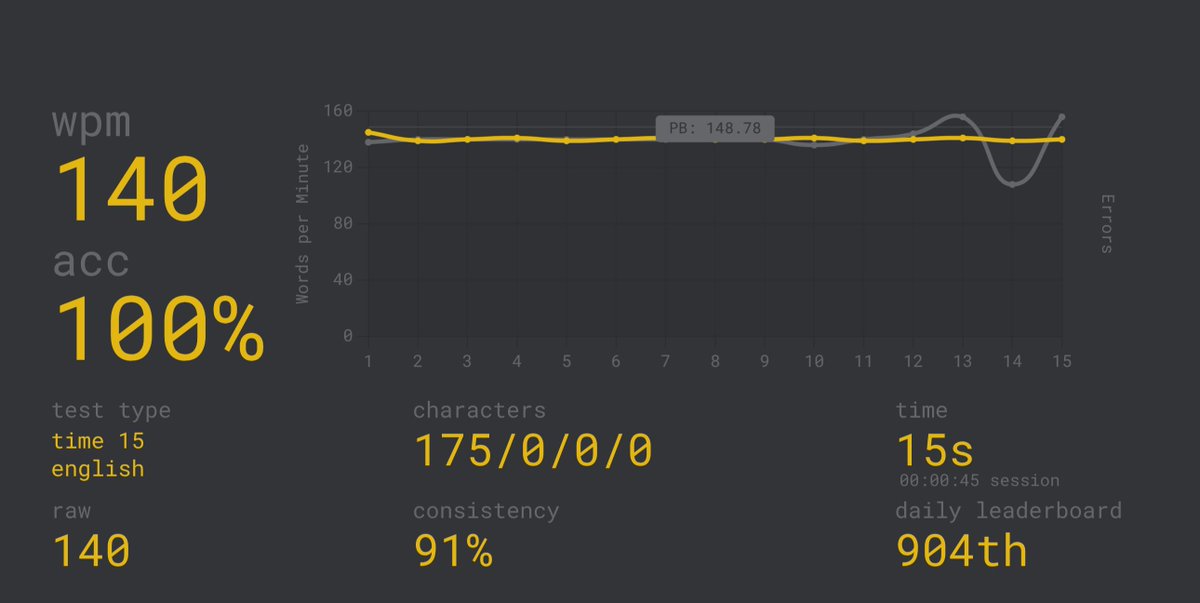
most consistent typing speed ever
ThePrimeagen tweet media
English
64
7
785
39.6K
Satoshi
Satoshi@BTC_Only_·
@theo Yes, Claude limits are absurd.
English
0
0
0
10
Theo - t3.gg
Theo - t3.gg@theo·
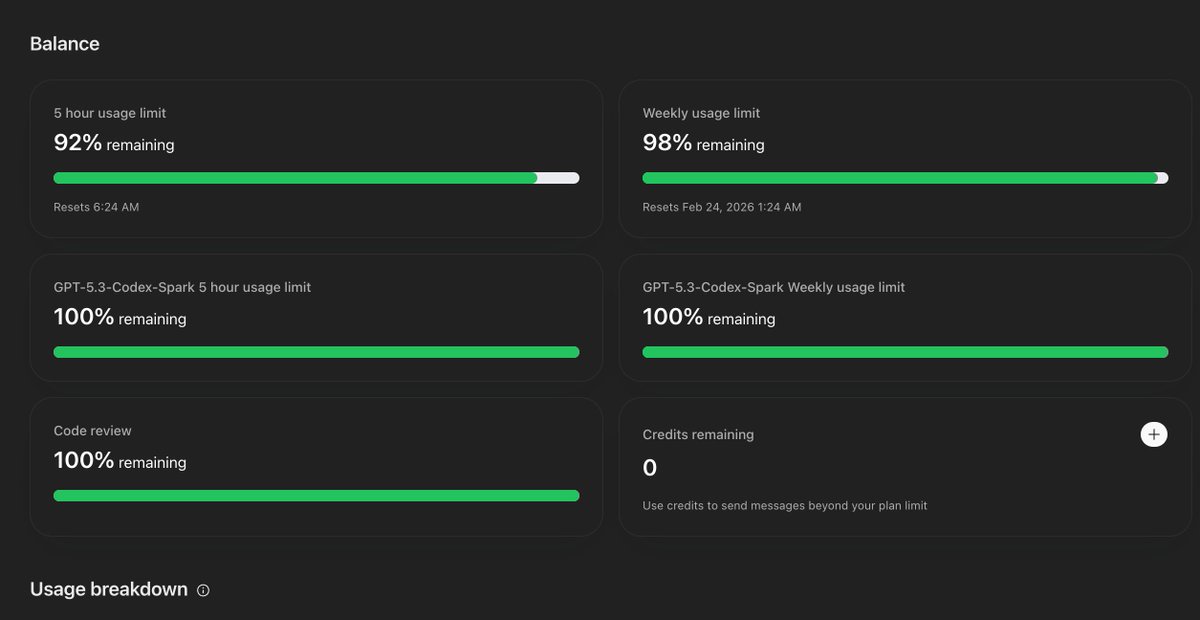
I've had 3 or more agents running in parallel with Codex for 2+ hours. I've used 8% of my 5-hour window. 2% of my weekly. I am literally trying to hit the limits and still can't.
Theo - t3.gg tweet mediaTheo - t3.gg tweet media
English
324
49
2.8K
270.6K
Satoshi
Satoshi@BTC_Only_·
@theo Same experience. Both are good. Had codex running in loops not figuring out the problem. Opus found the issue. And vice versa
English
0
0
0
9
Theo - t3.gg
Theo - t3.gg@theo·
Had a big migration that Codex absolutely bombed. Couldn’t even make the code compile. Opus one shot it. Both good models. Both far from perfect. You should use both and push their limits.
English
182
32
2.1K
105K
Rotimi Best
Rotimi Best@rotimi_best·
@thallescomumh @theo SSR is great to avoid client side spinners and because your SSR app is closer to your API/DB
English
3
0
1
1.3K
Theo - t3.gg
Theo - t3.gg@theo·
Just had another outage because of SSR. I've never been so SPA pilled in my life.
English
97
8
1.2K
169.3K
Mark Ronsini
Mark Ronsini@Luckismyfriend·
@sashahodler Never got that question ansered. Do you get a refund if there is a year the market declines?
English
1
0
4
623
Sasha Hodder
Sasha Hodder@sashahodler·
Dutch House of Representatives just passed a 36% unrealized gains tax. What happens when markets crash and people already paid tax on fake gains? This is incredibly reckless.
English
104
69
1.3K
49.4K