Brian de Francesca

873 posts

Brian de Francesca banner
Brian de Francesca

Brian de Francesca

@B_defrancesca

Passionate about a lot - from #Dubai 🌍 #pinksocks

Dubai, United Arab Emirates Katılım Kasım 2011
350 Takip Edilen261 Takipçiler
Brian de Francesca retweetledi
P.S. I Love ME
P.S. I Love ME@ps_ilove_me·
🚨In 1990s, Stanford researcher Dr. Robert Sapolsky discovered something that should have broken the internet by now. He was studying dopamine pathways in primates and found that the brain doesn't just adapt to repeated stimulation. It actively fights back. When you flood dopamine receptors consistently, the brain deploys what neuroscientists call "opponent processes." For every artificial high you create, your nervous system generates an equal and opposite neurochemical low. Not eventually. Immediately. The system is designed to maintain balance, so it starts producing compounds that directly counteract dopamine while you're still experiencing the dopamine hit. This means every notification, every scroll, every digital reward doesn't just give you a high followed by a return to baseline. It gives you a high followed by a crash below baseline. You end up in neurochemical debt. Tech companies never publicized this research. They probably never read it. They were too busy discovering that variable ratio reinforcement schedules could keep users engaged for hours. They built addictive systems by accident, then refined them into addiction machines once they realized what they'd stumbled onto. Your phone delivers an average of 80 dopamine hits per day. Your ancestors got maybe 5. Each hit triggers opponent processes that create a corresponding low. By the end of a typical day of normal phone usage, your baseline dopamine is running in negative territory. You feel flat, restless, vaguely unsatisfied, and hungry for stimulation because your brain chemistry is literally below zero. You think you're bored. You're chemically depressed by artificial highs. The opponent process theory explains why nothing feels interesting anymore. Your brain isn't broken. It's precisely calibrated to maintain neurochemical balance, and you keep throwing that balance off with artificial intensity. Every Instagram hit requires an equal Instagram crash. Every TikTok high gets paid for with a TikTok low. Every notification rush gets balanced with notification emptiness. Your reward system is running a neurochemical deficit that grows larger every day. Sapolsky's research revealed something even more disturbing: opponent processes don't just create temporary lows. They become permanent changes to your baseline dopamine production. Chronic overstimulation doesn't just make you tolerant to digital rewards. It makes you insensitive to natural rewards. The sunset that would have captivated your great-grandfather becomes invisible to you not because sunsets got worse, but because your dopamine system needs intensity levels that sunsets can't provide. A good conversation becomes boring not because conversations got less interesting, but because your brain requires the rapid-fire stimulation of social media to register engagement. You've accidentally trained your reward system to ignore everything that isn't artificially amplified. This connects to research from Dr. Anna Lembke at Stanford, who found that people who undergo complete digital fasting for just 30 days show measurable increases in dopamine receptor density. Their brains literally regrow sensitivity to natural rewards. Food tastes better. Music sounds more complex. Social interactions become genuinely engaging again. But there's a catch that nobody talks about: the first two weeks of dopamine detox feel like clinical depression. Your brain has been chemically dependent on artificial stimulation for years. Removing that stimulation creates actual withdrawal symptoms. Restlessness, anxiety, inability to focus, emotional flatness, and desperate cravings for digital input. Most people interpret these symptoms as evidence that they need their phones. Actually, they're evidence that they've been neurochemically dependent on their phones without realizing it. The withdrawal period isn't a bug. It's proof the reset is working. What happens after week three is remarkable. Colors become more vivid. Conversations become genuinely absorbing. Simple pleasures like hot coffee or cool air become satisfying in ways you forgot were possible. Your brain rediscovers that reality contains enough complexity and beauty to hold your attention without artificial amplification. You don't need more interesting content. You need more sensitive reward systems. The solution isn't better apps or more engaging entertainment. The solution is restoring your brain's factory settings for what constitutes a worthwhile experience. Sapolsky's opponent process research suggests this can happen faster than anyone expected. Every day you don't artificially spike your dopamine, your baseline moves a little higher. Every natural reward you pay attention to rebuilds receptor density. Every moment of boredom you endure without reaching for stimulation strengthens your capacity for sustained focus. Ancient humans lived in a world that provided exactly the right amount of stimulation to keep their reward systems healthy. Enough challenge to stay engaged, enough calm to stay balanced, enough novelty to stay curious, enough routine to stay stable. We built a world that provides 10 times too much stimulation and wonder why nothing feels rewarding anymore. Your brain is not the problem. Your environment is the problem. Change the environment, and the brain heals itself automatically.
P.S. I Love ME tweet media
Darshak Rana ⚡️@thedarshakrana

x.com/i/article/2042…

English
144
2.7K
8.8K
1.1M
Smart💡
Smart💡@capt_ivo·
@jacksonhinklle Vietnam is wise, sitting on the fence in terms of diplomatic relations. Vietnam is a strategic partner to both the U.S. and China at the highest diplomatic level. I wonder what Vietnam does if the US presents its own partnership proposal in AI and Tech.
English
13
2
59
19.6K
Jackson Hinkle 🇺🇸
Jackson Hinkle 🇺🇸@jacksonhinklle·
🚨🇨🇳🇻🇳 BREAKING: China says they are ready to work with Vietnam to "strengthen high-level exchanges, enhance strategic mutual trust, deepen connectivity, expand practical cooperation in areas such as sci-tech innovation, digital transformation and artificial intelligence, strengthen cultural and people-to-people exchanges, and continuously promote the building of a China-Vietnam community with a shared future."
Jackson Hinkle 🇺🇸 tweet mediaJackson Hinkle 🇺🇸 tweet media
English
215
256
1.7K
188.7K
Brian de Francesca
Brian de Francesca@B_defrancesca·
Work” needs to be done - and it will be done by humans and machine - based on who is best at what. And the “the atomic steps” are foundational.
English
0
0
0
5
ArchaeoHistories
ArchaeoHistories@histories_arch·
Sumerians of Mesopotamia worshipped the Anunnaki, a group of powerful sky-connected deities they believed shaped their civilization. These gods were linked to writing, agriculture, kingship, and the order of the world, appearing throughout early texts such as Epic of Gilgamesh. Later interpretations suggested that the Anunnaki might have been visitors from another world, pointing to ancient descriptions of heavenly beings and advanced knowledge recorded on clay tablets. These ideas focus on the possibility that early Sumerian achievements — from timekeeping to mathematics — may have been influenced by something beyond ordinary human development. Thousands of Sumerian tablets remain untranslated, and much about their beliefs is still being uncovered, leaving room for many interpretations of who the Anunnaki were and why they held such an important place in Sumerian history. #archaeohistories
ArchaeoHistories tweet media
English
87
197
984
50.1K
God of Prompt
God of Prompt@godofprompt·
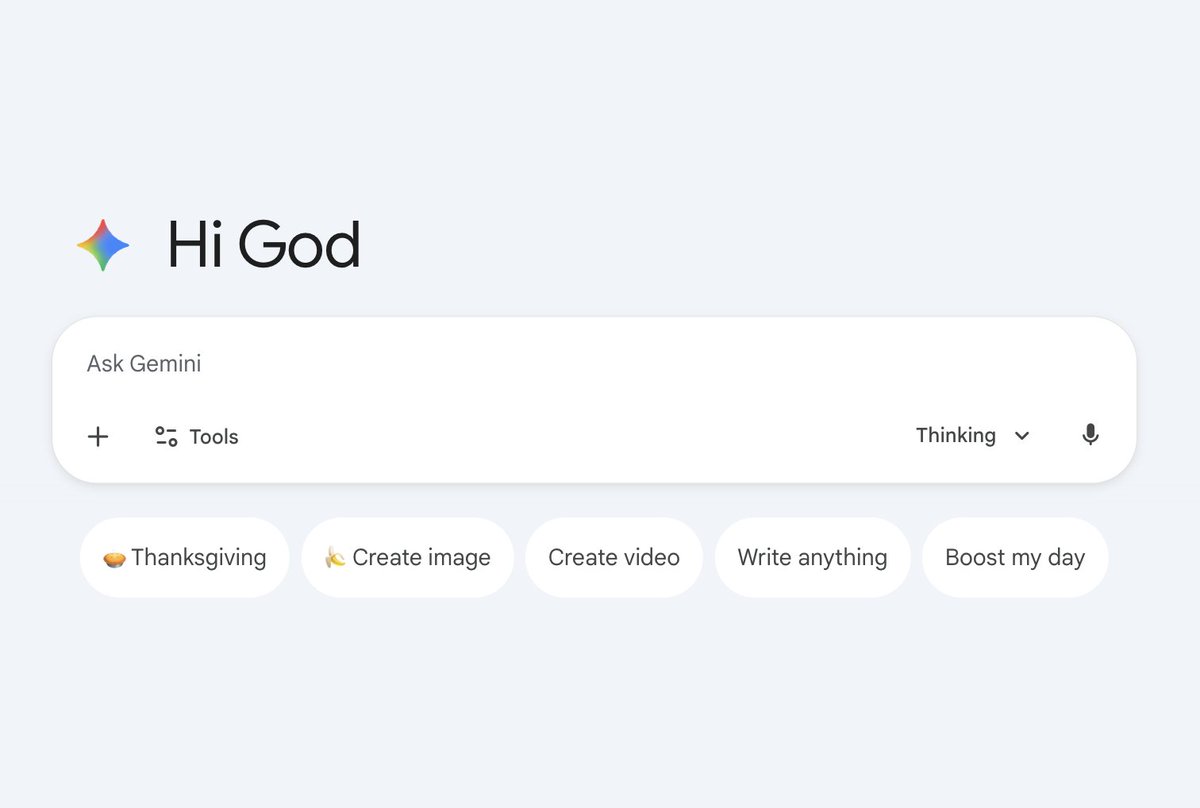
You don’t need Midjourney. You don’t need Runway. You don’t need ChatGPT. Gemini replaced all of them for me. Here are 10 tasks it can automate for you right now easily 👇 (Comment "Gemini" and I'll also DM you a complete guide on prompting)
God of Prompt tweet media
English
1K
296
2.3K
396.6K
DP
DP@DawneyNP·
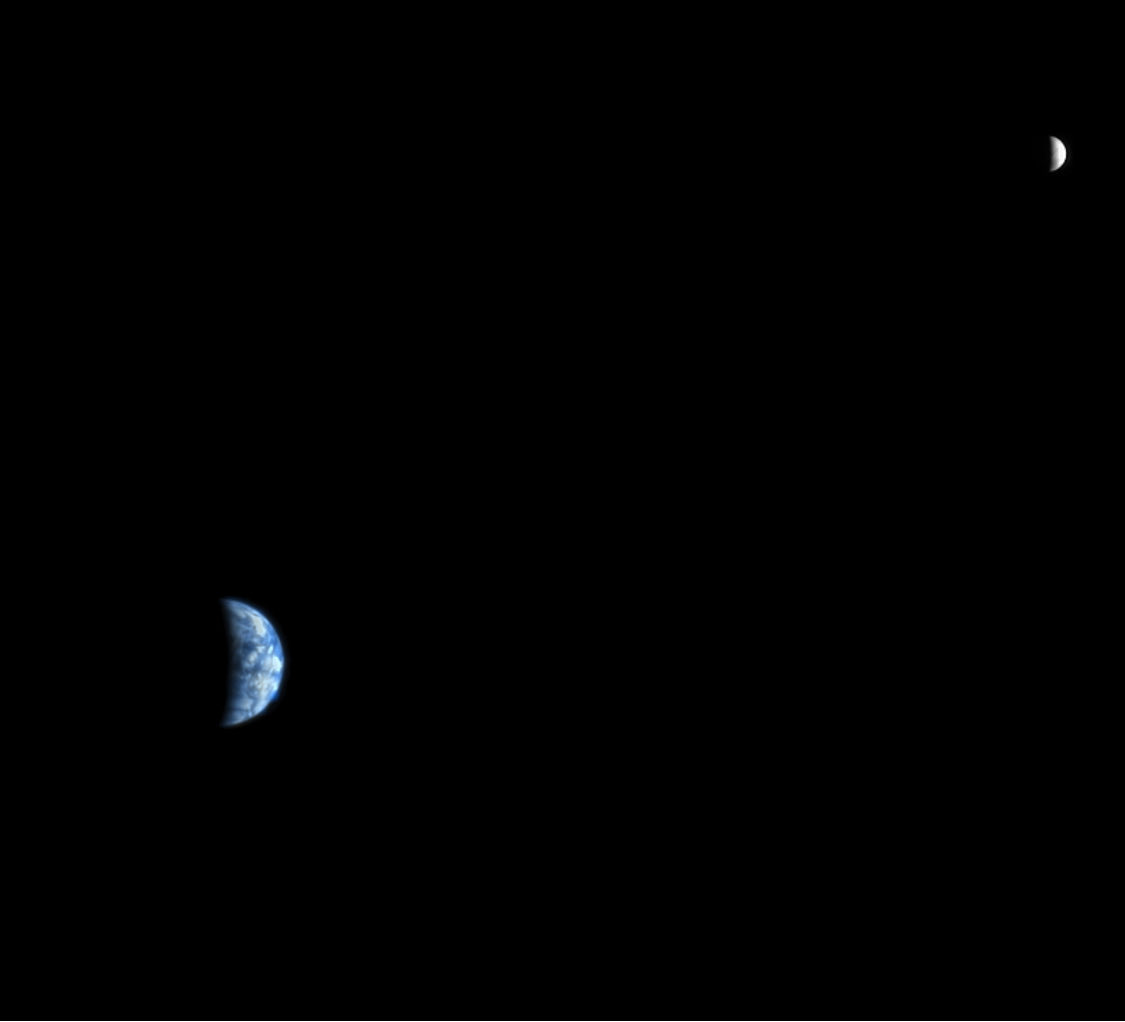
@NASASolarSystem This is an image of Earth and the Moon, acquired at 5:20 a.m. MST on 3 October 2007 at a range of 142 million kilometers, which gives the HiRISE image a scale of 142 km/pixel and an Earth diameter of about 90 pixels and a Moon diameter of 24 pixels. The phase angle is 98 degrees
DP tweet media
English
3
0
22
1.2K
NASA Solar System
NASA Solar System@NASASolarSystem·
❓Why so blurry❓ Lots of reasons…but in short, it’s not what these spacecraft were designed to do. As comet 3I/ATLAS swooped by, we jumped on the opportunity to turn our instruments its way and see what we could get. Take HiRISE as an example.👇 The left is what it was designed to take: images of the Martian surface which is bright, close, and stable. The right is what it was able to capture of the faint, distant, fast-moving comet 3I/ATLAS. True, it’s not magazine cover material – but it is very useful scientifically!
NASA Solar System tweet mediaNASA Solar System tweet media
English
450
216
1.4K
251.7K
Brian de Francesca
Brian de Francesca@B_defrancesca·
People keep talking about AI automating human roles, when it actually automates individual tasks that are subset components of roles. The math doesn’t work linearly: automating 40% of tasks doesn’t mean 40% fewer people—it means everyone’s job changes, often unpredictably.
English
0
0
0
9
Brian de Francesca
Brian de Francesca@B_defrancesca·
@elonmusk @xai We should plan and design hospitals like “SpaceX” rockets - not like “hotels.”
English
0
0
0
12
Elon Musk
Elon Musk@elonmusk·
The @xAI MACROHARD project will be profoundly impactful at an immense scale 😉 Our goal is to create a company that can do anything short of manufacturing physical objects directly, but will be able to do so indirectly, much like Apple has other companies manufacture their phones.
DogeDesigner@cb_doge

Elon Musk is literally painting MACROHARD on the roof of the Colossus II supercomputer cluster in Memphis. Here’s what it’s going to look like:


English
8.3K
10.2K
75.9K
18.6M
Brian de Francesca
Brian de Francesca@B_defrancesca·
Halfway into Day 2 of TEDAI Vienna. Tremendously exceeding expectations.
Brian de Francesca tweet media
English
1
0
1
38
The Three-Body Universe
The Three-Body Universe@3bodyuniverse·
📍 YOU ARE INVITED. The Three-Body 4D Experience opens today in Beijing, China.
English
3
11
48
4.2K
Liu Cixin 刘慈欣
Liu Cixin 刘慈欣@liu_cixin·
I'm afraid I was too cryptic. I'm quitting Twitter/X.
English
15
4
55
4.9K
Brian de Francesca
Brian de Francesca@B_defrancesca·
AI is not a “software purchase.”
English
0
0
0
18
Brian de Francesca
Brian de Francesca@B_defrancesca·
Automating (doing AI) a broken process - will just make it worse.
English
0
0
0
21
Brian de Francesca
Brian de Francesca@B_defrancesca·
I have one friend who uses AI to automatically create and post on LinkedIn, and another who uses AI to read posts and generate comments. 😂🧐
English
0
0
0
17
Brian de Francesca
Brian de Francesca@B_defrancesca·
Studying problems and problem solving is gold
English
0
0
0
18
Brian de Francesca
Brian de Francesca@B_defrancesca·
Artificial Intelligence is a form of non-human intelligence that processes information and performs tasks traditionally requiring human capabilities—while simultaneously developing new approaches that differ fundamentally from human thinking
English
0
0
0
75
Brian de Francesca
Brian de Francesca@B_defrancesca·
Ai success is about people and processes. Oh - and then some tech.
English
0
0
0
22