yongqin wang

677 posts

yongqin wang

yongqin wang

@Bach1081

Katılım Ekim 2018
765 Takip Edilen27 Takipçiler
yongqin wang retweetledi
Ihtesham Ali
Ihtesham Ali@ihtesham2005·
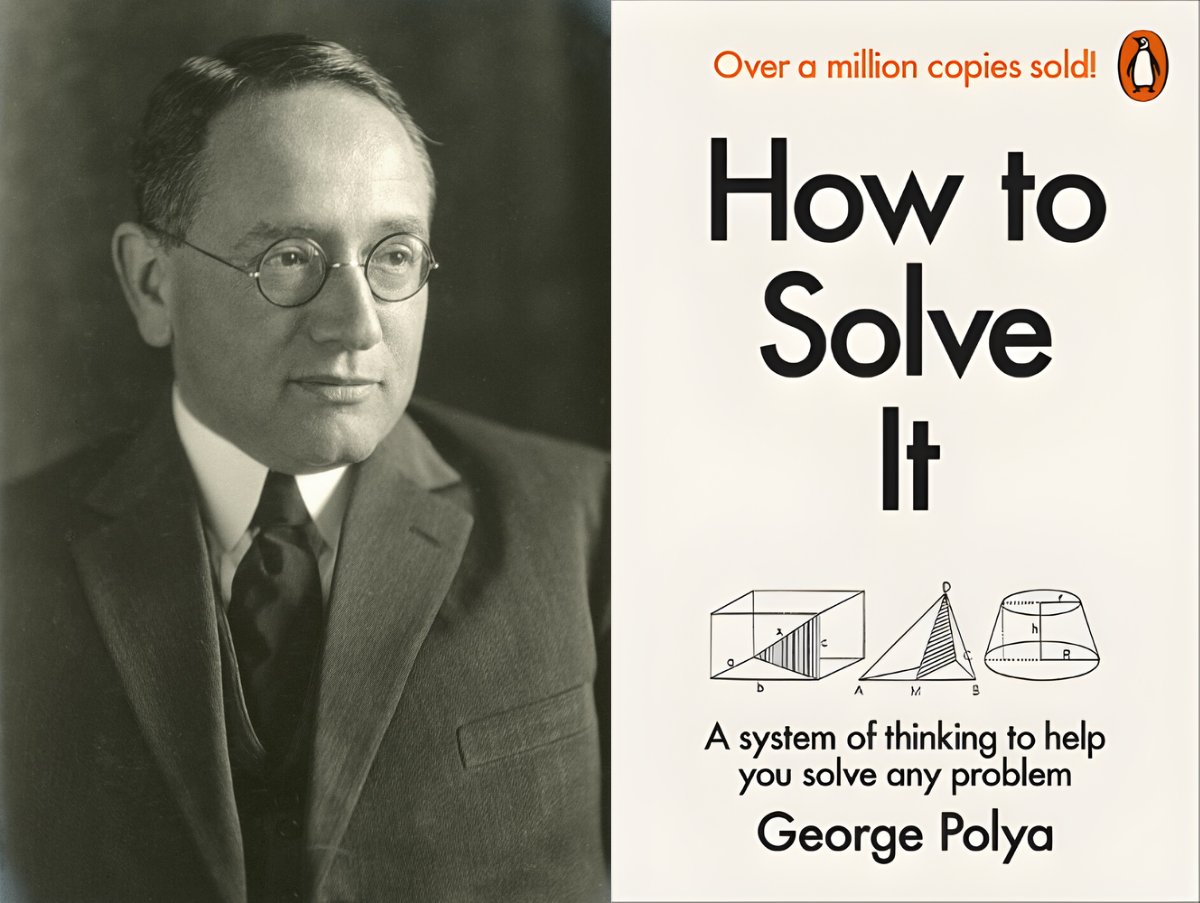
A Stanford mathematician spent 40 years watching brilliant students freeze in front of hard problems. Not because they lacked intelligence. Because nobody had ever taught them what to do before they started solving. His name is George Pólya, and the book he wrote in 1945 has never gone out of print. It has sold over a million copies. Marvin Minsky, the man who built the first neural network machine at MIT, said publicly that everyone should know this work. Engineers, mathematicians, and computer scientists treat it as scripture. Most people have never heard of it. Here is the framework buried inside it that changed how I think about every hard problem I face. Pólya watched the same failure repeat itself across decades of students. A problem would be presented. The student would stare at it for a moment, feel the first wave of anxiety, and immediately start calculating. Not because calculating was the right next step. Because calculating felt like doing something, and doing something felt better than sitting with the discomfort of not knowing what to do. The calculation was almost always wrong. Not because the student lacked the skill to execute it. Because they had not yet understood what they were being asked. Pólya called this the most neglected step in all of problem solving, and he spent the rest of his career trying to make people take it seriously. Step one is to understand the problem. Not skim it. Not assume you know what it is asking because you have seen something similar before. Understand it. Completely. He gave students a specific set of questions to force this: What is the unknown? What are the given conditions? Can you draw a figure? Can you restate the problem in your own words without looking at it? That last one is the filter. If you cannot restate a problem in your own words, you do not understand it. You have only read it. Most people skip this entirely and wonder why they get stuck. Step two is to make a plan. Not to execute. To plan. Pólya documented every heuristic he could observe in successful problem solvers, and one pattern appeared more than any other. When a problem feels impossible, find a simpler version of it and solve that first. Not because the simpler version is the goal. Because solving it gives you a foothold, a method, a partial structure you can carry back to the original problem and build from. He phrased it with precision: if you cannot solve the proposed problem, try first to solve some related problem. Could you imagine a more accessible related problem? That question alone is worth more than most problem-solving courses. Step three is to carry out the plan. This is the step everyone thinks is the whole game. It is not. It is the third of four. And Pólya spent the least time on it because it is the most obvious. Once you understand the problem and have a plan, execution is mostly patience. Step four is the one almost nobody does. Look back. Not to check the arithmetic. To ask a different set of questions entirely. Can you verify the result by a different method? Can you use this result or this method to solve a different problem? What would you do differently next time? This is where the real learning lives and almost no one goes there. The look-back step is not about the problem you just solved. It is about building a library of methods that transfers to the next problem, and the one after that. Every expert problem solver Pólya studied had this habit. Every struggling student skipped directly from the answer to the next question on the page, carrying nothing forward, starting from zero every time. Pólya's deepest insight was not a technique. It was a diagnosis. The reason most intelligent people feel bad at problem solving is not that they lack the ability to reason. It is that they conflate understanding a problem with having read it. They conflate having a method with starting to work. They conflate getting an answer with having learned anything. These are not the same things. They never were. The students who get genuinely good at hard problems are not the ones who practice more. They are the ones who slow down at the beginning and the end, at the two moments every instinct tells them to rush. The problem is almost always not as hard as it looks at the start. You just haven't understood it yet.
Ihtesham Ali tweet media
English
75
1.2K
5.9K
289.7K
yongqin wang retweetledi
Rene Sellmann
Rene Sellmann@ReneSellmann·
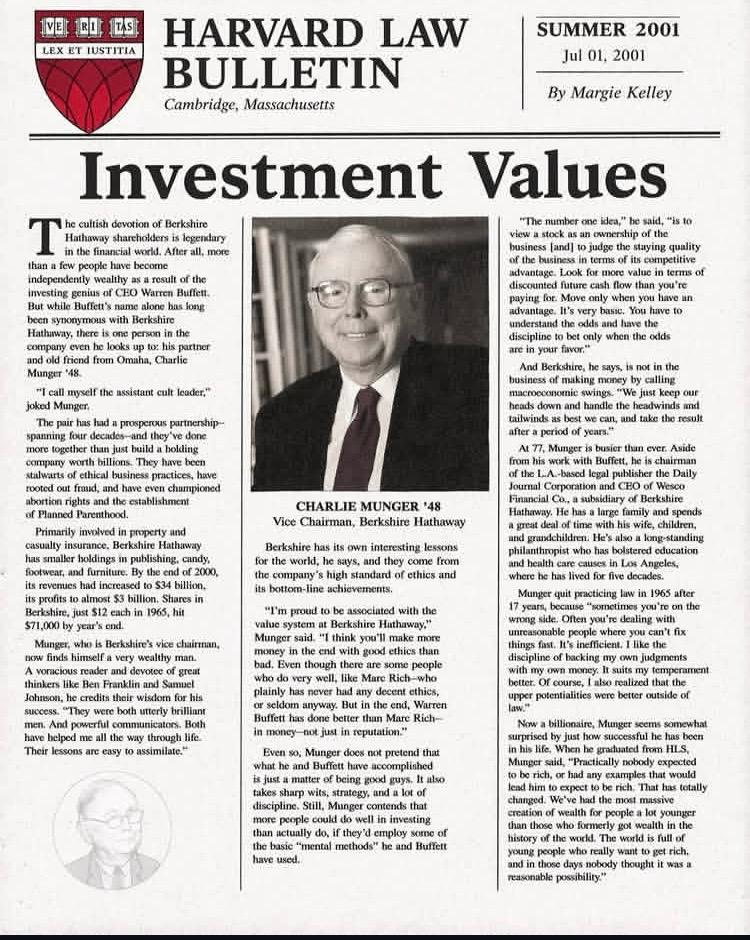
“You’ll make more money in the end with good ethics than bad.” – Charlie Munger A timeless reminder from this 2001 profile: High standards aren't just a moral choice; they are a long-term competitive advantage. While others look for shortcuts, the greats look for character.
Rene Sellmann tweet media
English
4
75
349
16.8K
yongqin wang retweetledi
Ivan Werning
Ivan Werning@IvanWerning·
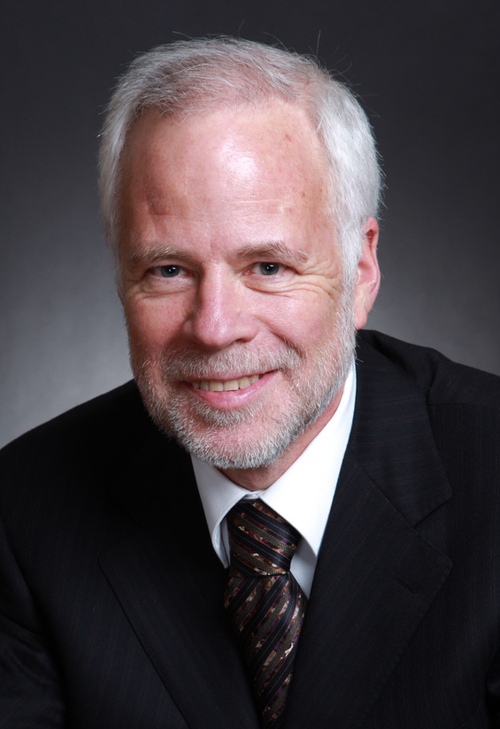
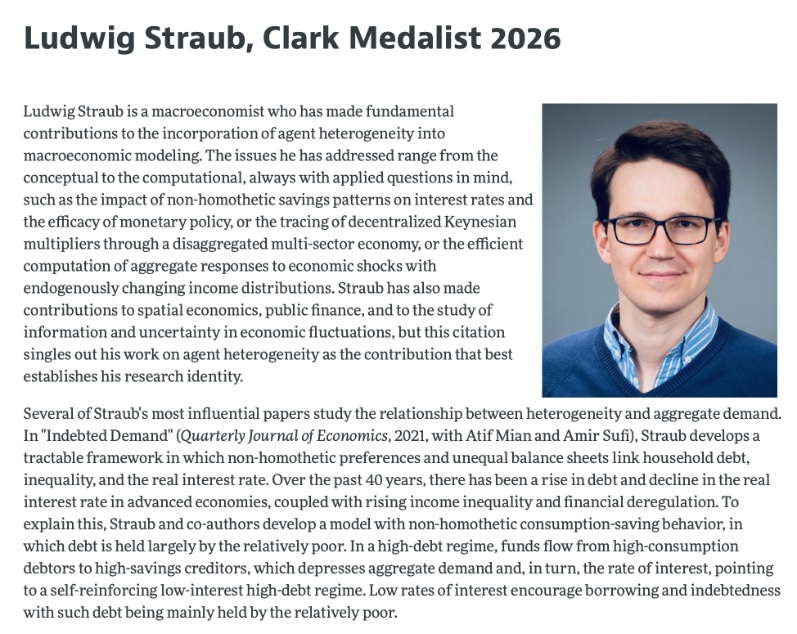
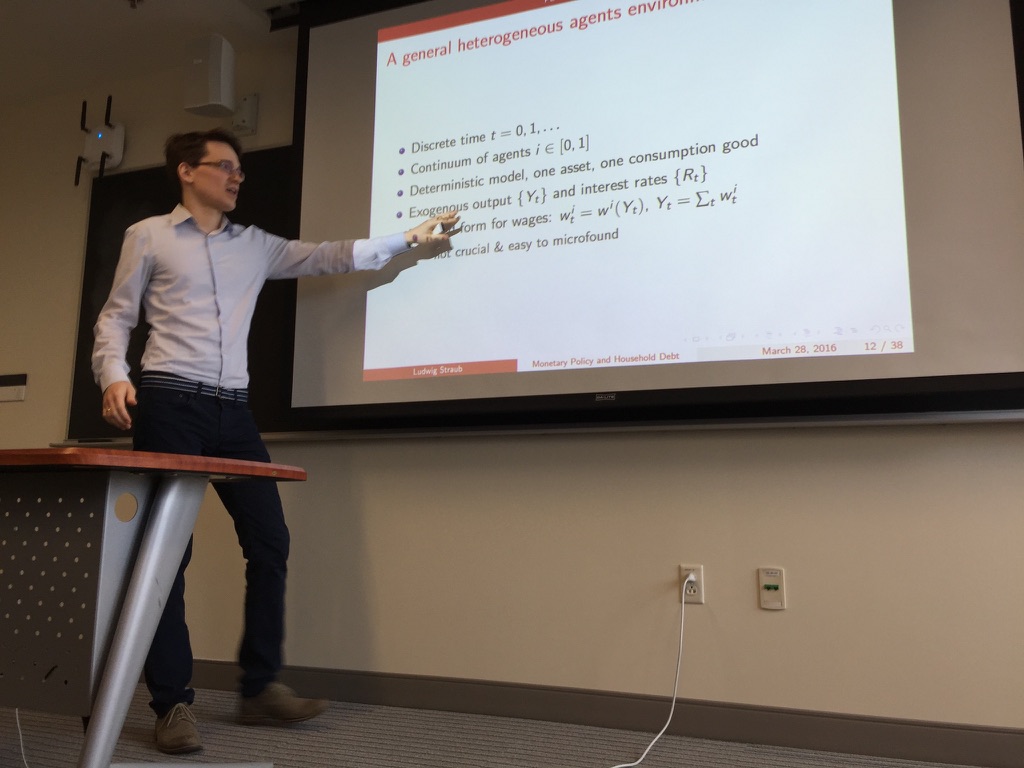
Congratulations to Ludwig! Extremely well deserved. Very happy for him and a testament to all his great coauthors. Here he is as a 3rd or 4th year student presenting in our macro student lunch at MIT.
Ivan Werning tweet mediaIvan Werning tweet media
English
5
77
608
80K
yongqin wang retweetledi
International and Monetary Economics Network
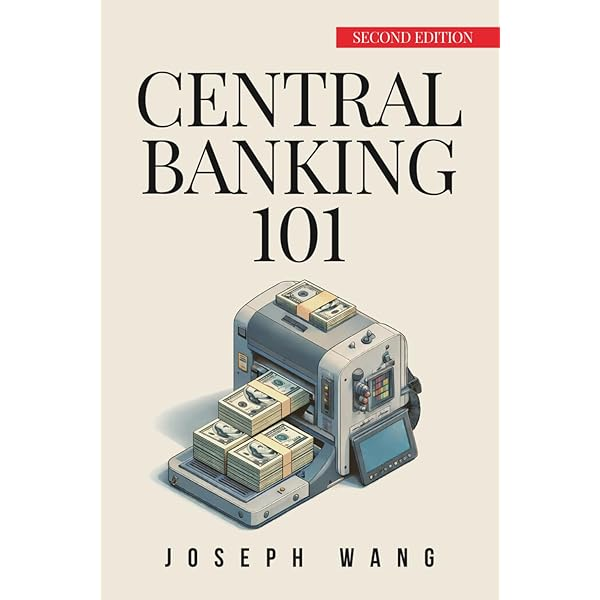
Super interesting! "Central Banking 101" by Mr. Joseph Wang. "Central banking is magic. With a few words, the Fed can lift the stock market out of desperation and catapult it towards euphoric highs. With a few keystrokes, the Fed can conjure up trillions of dollars and fund virtually unlimited Federal spending. And with a few poor decisions, the Fed can plunge the entire world into a recession. The Federal Reserve is one of the most powerful institutions in the world, and also one of the most difficult to understand. The Fed acts through its Open Markets Desk, which sits at the heart of the global financial system as the world’s ultimate and limitless provider of dollars. On behalf of policy makers, the Desk gathers market intelligence from all the major market participants, sifts through reams of internal data, and works behind the scenes to keep the financial system intact. ...Joseph Wang spent five years studying the monetary system as a trader on the Desk. From that vantage point, Joseph saw firsthand how the Fed operates and how the financial system really works. This book is a distillation of his experience that aims to educate and demystify." amzn.to/3O1BVuT
International and Monetary Economics Network tweet media
English
4
80
428
15.7K
yongqin wang retweetledi
Robin Wigglesworth
Robin Wigglesworth@RobinWigg·
Please prepare yourself for months of shameless self-promotion, mute me on socials, feel free to avoid me in public etc, because my next book — A Fabulous Debt: The Epic Story of How Bonds Built the Modern World — is now officially available for pre-orders.
Robin Wigglesworth tweet media
English
77
173
1.7K
112K
yongqin wang retweetledi
Hanno Lustig
Hanno Lustig@HannoLustig·
Japan runs a risky sovereign wealth on borrowed money. The Japanese public sector funds this SWF at below-market rates through the issuance of bank reserves at the BoJ. Japan's foray into QE and YCC is really a market-friendly continuation of its low-rate financial repression policies after it "liberalized" its capital markets and the government was about lose access to cheap, below-market-rate funding. In Japan, the fiscal magic happens not because ropen.substack.com/pub/thetwocent…
English
9
27
126
59.3K
yongqin wang retweetledi
J. P. Mayall
J. P. Mayall@jpmayall·
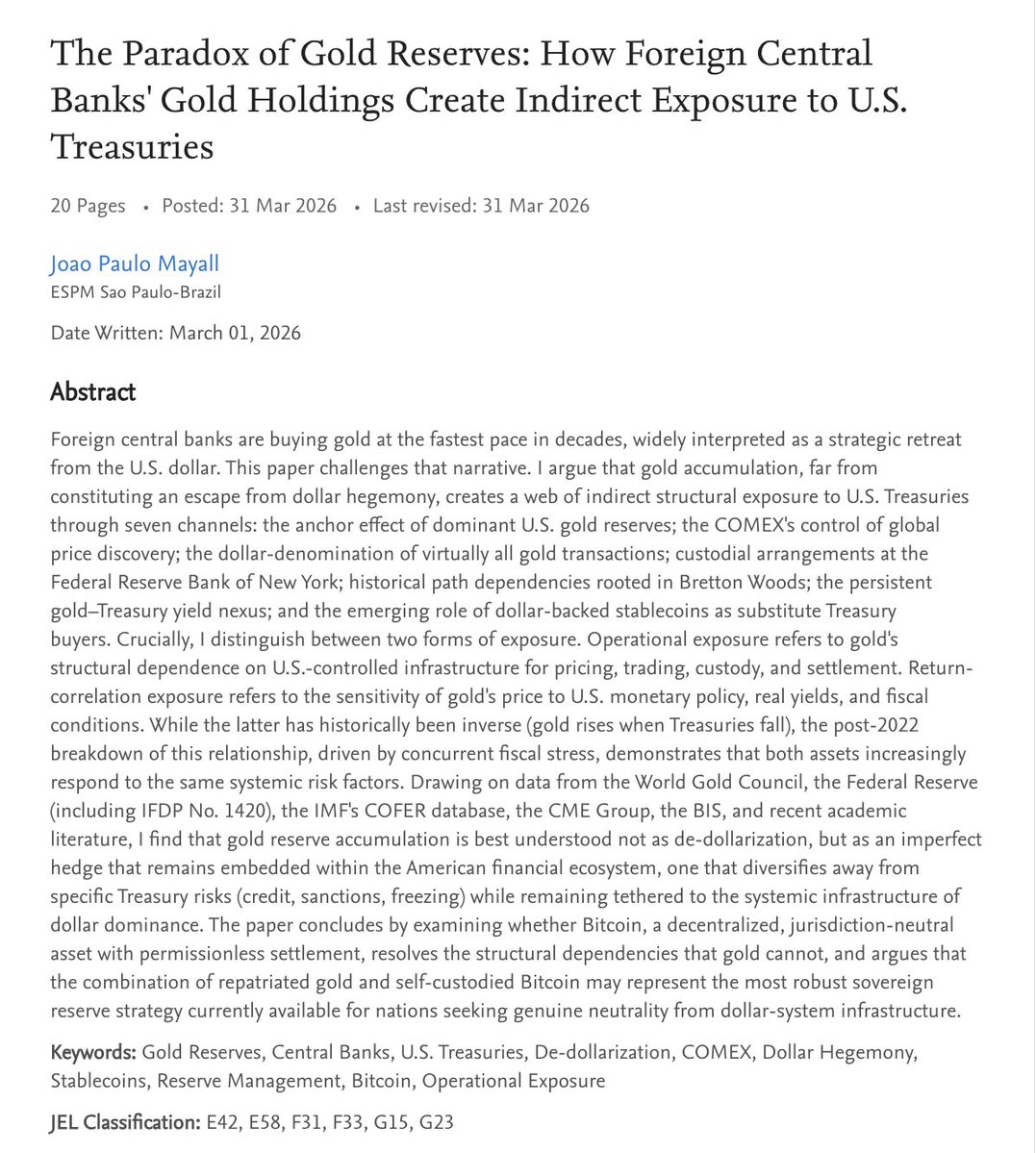
New paper: "The Paradox of Gold Reserves: How Foreign Central Banks' Gold Holdings Create Indirect Exposure to U.S. Treasuries" Foreign central banks are buying gold at the fastest pace in decades. The consensus view: de-dollarization. I argue the opposite. Gold accumulation doesn't reduce exposure to the dollar system. It restructures it. The paper identifies 7 channels of indirect structural exposure to U.S. Treasuries through gold: 1. Anchor effect: U.S. holds 8,133t, 23% of above-ground supply; 2. COMEX price discovery: 74% of global exchange volume; 3. Dollar denomination: >90% of transactions in USD 4. Fed custody: 6,331t at the NY Fed for 36 central banks; 5. Bretton Woods path dependency; 6. Gold–Treasury yield nexus (post-2022 structural break); 7. Stablecoin substitution: $190B+ in Treasuries replacing official sellers. I distinguish between operational exposure (pricing, trading, custody, settlement) and return-correlation exposure (sensitivity to Fed policy and fiscal conditions). The paper also examines what gold DOES successfully diversify (counterparty risk, sanctions, freezing) and what it doesn't. Central banks that sell Treasuries and buy gold haven't exited the dollar system. They've changed their position within it. 20 pages, 30+ sources including Fed IFDP No. 1420.
J. P. Mayall tweet media
English
16
58
270
32.3K
yongqin wang retweetledi
CEPR
CEPR@cepr_org·
Global imbalances are back at the centre of economic debat. What does this mean for financial stability and trade? Join @helene_rey, @bweder & @jzettelmeyer, with chapter authors Ravi Balakrishnan, Takeo Hoshi, Yiping Huang, @IsabelleMejean, Gian Maria Milesi-Ferretti, and Maurice Obstfeld, for the launch of The 4th Paris Report: The New Global Imbalances. 📅 13 April 2026 ⏰ 15:00 CEST Online 🔗 Register: ow.ly/Xz2R50YBCaO
CEPR tweet media
English
0
12
25
5.4K
yongqin wang retweetledi
Thibault Schrepel
Thibault Schrepel@ProfSchrepel·
1/ Forthcoming in Econometrica: a paper that flips a common intuition about growth. It shows that economic development is not just about better average firms, it is about the expansion of the top firms. Growth thickens the right tail.
Thibault Schrepel tweet media
English
11
110
491
43.7K
yongqin wang retweetledi
Noam Gidron
Noam Gidron@NoamGidron·
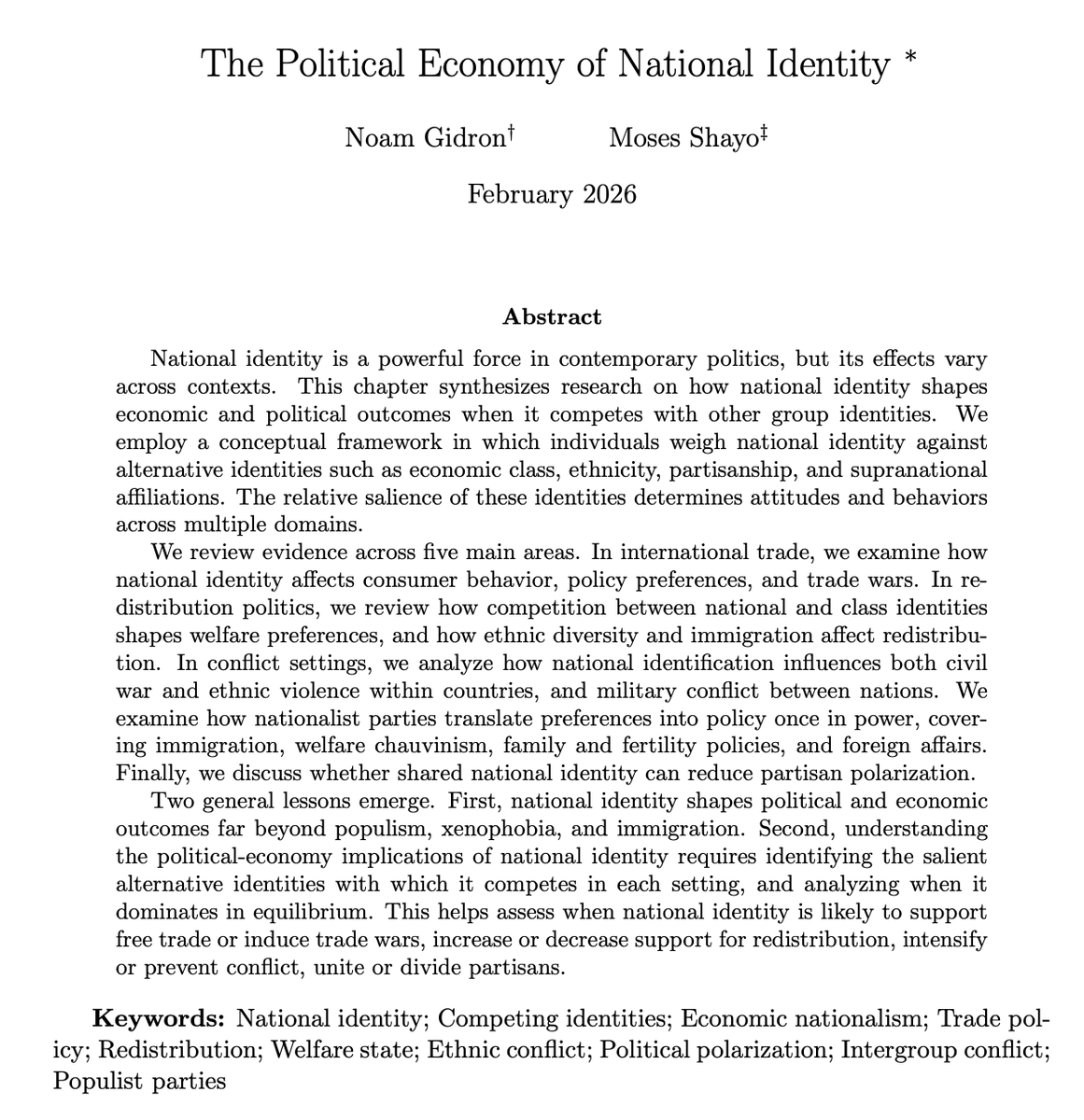
The Political Economy of National Identity: a chapter with @moseshayo for the Handbook of the Economics of Identity. We review econ & pol‑sci research on how national identities shape trade, welfare policy, conflict, and polarization. papers.ssrn.com/sol3/papers.cf…
Noam Gidron tweet media
English
1
41
223
17.2K
yongqin wang retweetledi
Andrea Ghiselli
Andrea Ghiselli@AGhiselliChina·
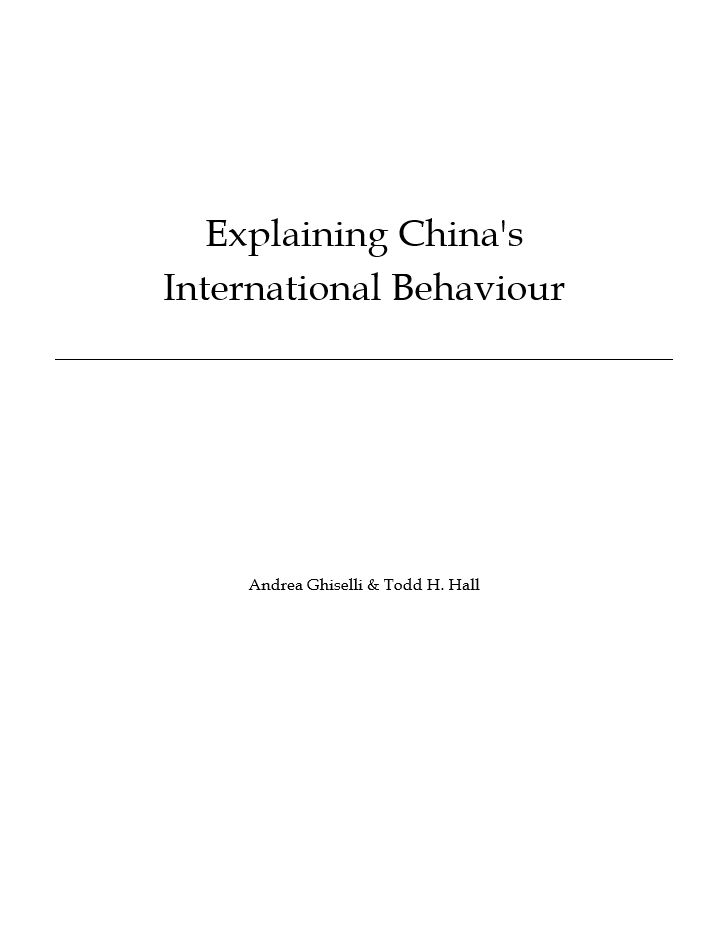
I am delighted to share that Cambridge University Press has accepted the manuscript that Todd H. Hall and I prepared for publication in the Global China series of the Cambridge Elements. The work will be published in open access and will therefore be freely available to all.
Andrea Ghiselli tweet media
English
17
75
417
20.6K
yongqin wang retweetledi
Nicholas Decker
Nicholas Decker@captgouda24·
We prefer things now to things later. But do we do so in a consistent, coherent way? It is difficult to think so. People consume 15% fewer calories at the end of a month compared to the beginning, which implies a preposterously high rate of discounting the future. 1/
Nicholas Decker tweet media
English
9
10
214
17.2K