Bad_school_parent 💙📚🤦🏻

23.1K posts

Bad_school_parent 💙📚🤦🏻

Bad_school_parent 💙📚🤦🏻

@BadSchoolparent

Vehemently supportive, but it doesnt make sense viewed from here. A parody-ish. The thoughts of many. Just a parent. Not a blogger, campaigner or teacher.

Katılım Haziran 2017
2.9K Takip Edilen2.5K Takipçiler
Sabitlenmiş Tweet
Bad_school_parent 💙📚🤦🏻
Bad_school_parent 💙📚🤦🏻@BadSchoolparent·
Sometimes I ‘like’ that it has been said. A ‘like’ doesn’t always signify that I agree with the sentiment expressed.
English
5
5
33
0
Bad_school_parent 💙📚🤦🏻
@ick_real No one is obligated. You aren’t obligated to pay, similarly they aren’t obligated to drive you. If you skip paying, you can’t complain if they skip offering you a lift.
English
0
0
0
7
`
`@ick_real·
If a coworker has a car and lives near my house, and drives me to work every day, am I obligated to chip in for gas?
English
10.5K
485
20.6K
4.3M
Adam Robbins
Adam Robbins@MrARobbins·
@adamboxer1 If you tell a sob story that explains why you have loads of kids doing btec they like it 🤷‍♂️
English
3
0
4
2.3K
Adam Boxer
Adam Boxer@adamboxer1·
This is not a sentence I can get my head around
Adam Boxer tweet media
English
7
2
26
16.6K
Bad_school_parent 💙📚🤦🏻
@SecretBusMgr @Rory_Gribbell I think you have twice as many parents than there are. You’ve assumed two parents for every kid, but haven’t considered the prevalence of siblings. If you assume every kid is one of two siblings, there would be circa 8M parents.
English
0
0
0
24
Secret School Business Manager
Secret School Business Manager@SecretBusMgr·
The Law of Large Numbers Doesn’t Save This Survey There’s a common argument being thrown around to justify the YouGov/Ofsted survey: “Well, 1,090 parents is a statistically valid sample. Trust the data. The Law of Large Numbers (LLN) has got this.” But let’s be very clear: it hasn’t. The LLN tells us that as the sample size increases, the sample mean will tend to get closer to the true population mean — but only under specific conditions. Critically, LLN does not apply meaningfully to small, unrepresentative, or biased samples — especially when dealing with complex, context-heavy topics like school accountability, trust in regulators, and the far-reaching consequences of Ofsted grading. Let’s break down why this survey doesn’t meet the bar. 1. LLN requires the sample to be genuinely representative. A sample of 1,090 might sound reasonable on the surface. But in reality: The survey was taken from YouGov’s online panel — people who have voluntarily opted in to take surveys, often incentivised by points or rewards. This isn’t a random or balanced cross-section of parents — it’s a group skewed toward the opinionated, not necessarily the informed. Critically, 49% of respondents said they knew little or nothing about Ofsted. Let that sink in. Almost half of the respondents were either uninformed or completely unfamiliar with the very body they were being asked to judge. In any serious policymaking process, that would immediately call the validity of the feedback into question. Then, there’s no meaningful breakdown of how these parents were selected — no clear weighting for: * Geographic region (urban, rural, coastal, inner-city) * Socioeconomic background * Educational experience * SEND or pupil premium involvement Yet these factors fundamentally shape how parents experience the school system — and Ofsted itself. A flat sample of 1,090 cannot reflect the diversity of England’s 16 million parents or 30,000 schools. 2. The survey confuses design preference with support for the system. Let’s not pretend this was an open consultation on what parents really want. Respondents were: * First shown an example of the new Ofsted report card, * Then asked whether they preferred it to the old one. This is classic framing bias. If you show someone a sleeker, more colourful version of a product and then ask, "Do you prefer this to the old one?", of course they’ll say yes. That’s not endorsement of the system — it’s a comment on aesthetics. When parents say the new card is “clearer” or “more visual,” that doesn’t mean they support single-word judgments, ranking systems, or Ofsted’s overall role. It just means they liked the design they were shown first. There was no space to explore alternatives — no narrative report-only model, no formative feedback framework, no community-driven accountability ideas. Just old vs new, in a tightly defined binary. That’s not public consultation. It’s user testing dressed up as consensus. 3. LLN doesn't make a small sample valid for high-stakes policy. Statistical reliability on simple consumer questions — like “Do you prefer Coke or Pepsi?” — is one thing. But we're not talking about soft drinks. We're talking about: * School accountability * Public trust in national regulators * Teacher workload and wellbeing * Parental decision-making * School funding, recruitment, and reputation These are complex, high-impact policy areas that demand: * Contextual understanding * Informed judgment And most importantly, deliberate, inclusive dialogue Yet here, 49% of the sample admitted to not understanding the subject. And still, their feedback is being used to justify sweeping structural change on a report card developed on the status quo. 4. Statistical confidence ≠ democratic legitimacy. Yes, you can make an argument that a sample of 1,090 gives you a +/- 3% margin of error. But that’s not the point. A policy affecting: * 8.2 million pupils, * 16 million parents, * and over 30,000 schools …requires far more than mathematical precision. It demands broad engagement, genuine public conversation, and sector-wide consultation on all stakeholders, including parents of all key phases. This wasn’t that. This was a marketing test — limited in scope, skewed in execution, and now being leveraged as a mandate for reform. 5. There are deeper questions we’re not even asking. This survey assumes the purpose of Ofsted is to provide consumer-style information to parents — as if choosing a school is like browsing Amazon reviews. But that’s a narrow framing. We could (and arguably should) ask parents: * Should Ofsted’s role be sector oversight, not defacto consumer reporting? * Do grades help or hinder improvement? * What is the impact on staff morale, curriculum narrowing, and risk aversion? * How does this system affect teacher recruitment and retention, especially in struggling areas? * What are the economic ripple effects — on local house prices, school admissions, and resource allocation? None of this fits inside a 10-minute online systemic bias survey. But it’s central to understanding the true cost — and value — of Ofsted’s system. In short: The LLN doesn't justify a small or unrepresentative sample. It’s a theoretical principle from probability — not a blank cheque to push top-down policy change based on a micro-slice of the population. This isn’t convergence on truth. It’s appears to be the amplification of a skew, packaged as legitimacy to drive a already decided upon policy change.
English
9
18
46
19.1K
Rory Gribbell
Rory Gribbell@Rory_Gribbell·
No - this is not about manufacturing consent. “They only surveyed 1090 parents, how can that possibly be representative…!” Can I suggest this Wikipedia page on the law of large numbers: en.m.wikipedia.org/wiki/Law_of_la…
Secret School Business Manager@SecretBusMgr

A lesson (education) in how to manufacture consent! Let's put this survey in context. 🔹 The number of parents surveyed was just 1,090. According to the Office for National Statistics, there are over 8.2 million pupils in English schools — which conservatively equates to over 16 million parents. This means the sample size represents less than 0.007% of the parent population. That’s barely a drop in the ocean — hardly representative enough to reshape how schools are inspected or judged. 🔹 Of those 1,090: 49% had only heard a little or knew nothing about Ofsted 1 in 4 had never even read an Ofsted report Yet we’re supposed to believe this same group can confidently endorse a fundamental overhaul of the inspection framework? 🔹 The survey methodology itself raises red flags. Respondents were first shown the new report card and only then asked which they preferred — of course people will lean toward the one they were primed to like. That’s classic survey design bias. There was no neutral framing or opportunity to weigh whether grading itself is appropriate before being guided through the polished “new” version. 🔹 Worse still, parents weren’t asked the real question first and fully: Do you think schools should even be graded on a single-word judgment at all? That conversation — about the human impact, about teacher and student wellbeing — was entirely absent. Irrespective of your position on Ofsted and inspection framework it appears that this isn’t about genuine consultation or improvement. This is about manufacturing consent. @educationgovuk @Ofstednews @UKLabour @SchoolsWeek @tes @bphillipsonMP @cjayanetti @PaulGarvey4 @johncosgrove405


English
4
0
3
11.6K
Bad_school_parent 💙📚🤦🏻
Connections Puzzle #1016 🟨🟨🟩🟨 🟦🟨🟨🟨 🟪🟦🟪🟩 🟨🟨🟨🟨 🟦🟦🟦🟦 🟩🟪🟪🟩too hard
English
0
0
0
44
Amelia
Amelia@Amelia558rs·
No way you know what this is, unless you're rocking some serious vintage memories.
Amelia tweet media
English
1.8K
91
1.7K
46.1K
Bad_school_parent 💙📚🤦🏻
In @costacoffee a motorway services. Order drink with oat milk - is that an allergy or a preference? - sorry? - is that an allergy or a preference? - sorry? You need my medical information to allow me to buy a drink? - it’s because of our sanitation….. ….not sure that helps.
English
12
1
5
12.5K
Bad_school_parent 💙📚🤦🏻 retweetledi
Lyle Culpepper
Lyle Culpepper@ShutupLyle·
My daughter is interested in getting into smoking cigarettes (for weight loss) does anybody have any recommendations for beginner cigarettes that won’t make her cough too much? She hasn’t been taking to the Marlboro Reds. She’s 11
English
2.7K
1.7K
41.4K
3.3M
Bad_school_parent 💙📚🤦🏻
Connections Puzzle #1015 🟦🟦🟦🟦 🟪🟨🟨🟨 🟩🟩🟩🟩 🟨🟨🟨🟪 🟨🟨🟨🟪 🟨🟨🟨🟨 🟪🟪🟪🟪
English
0
0
1
52
Bad_school_parent 💙📚🤦🏻 retweetledi
Autism care and share
Autism care and share@autcareandshare·
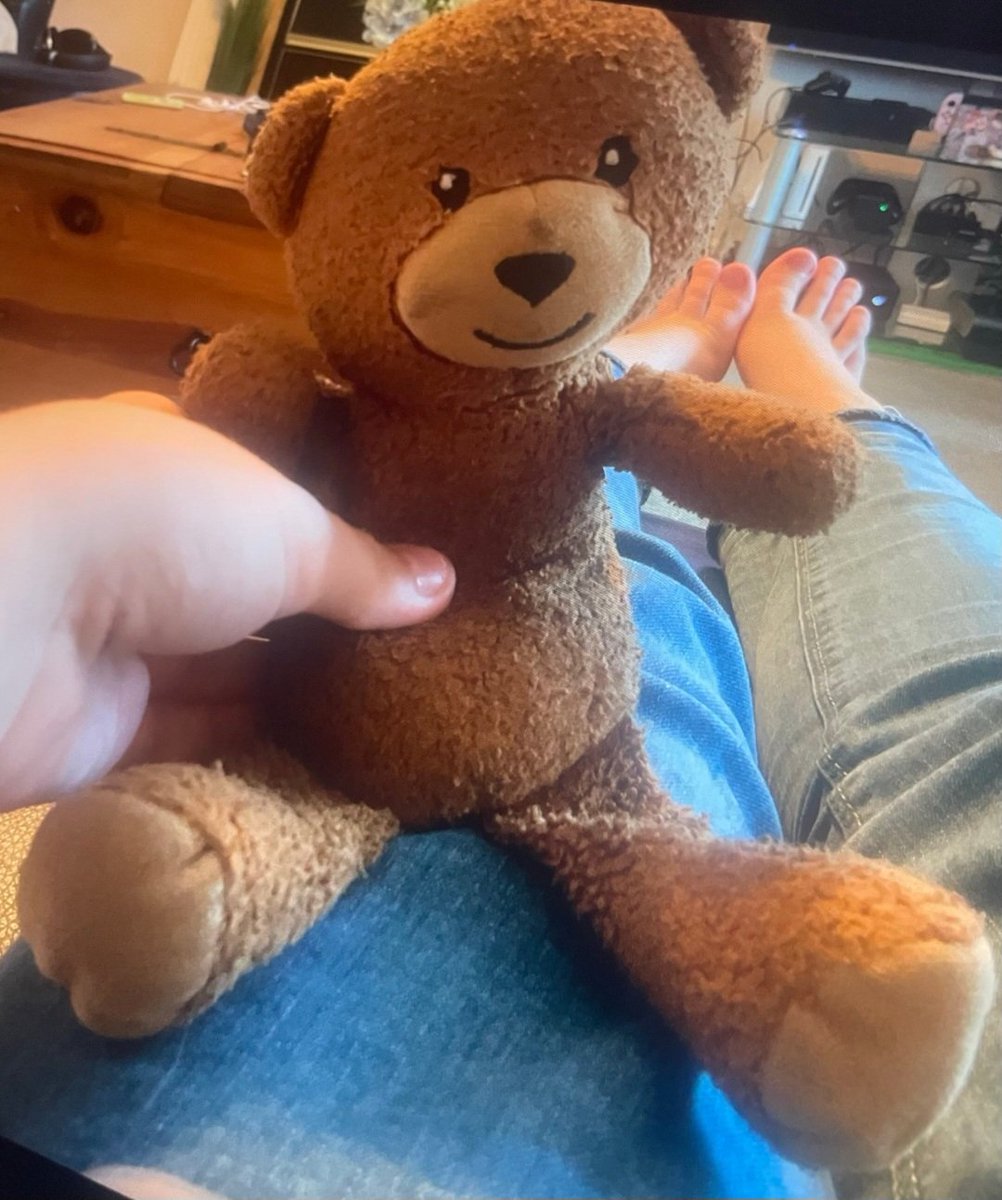
Good morning everyone, I've got a big favour to ask. I’ve been contacted by a mum of an autistic girl asking for help. As a family they are having a pretty tough week. Their dog has sadly had major eye surgery resulting in the loss of them both. On top of this she has lost her little bear who is her best friend and comfort. Mum has tried everything to find a replacement bear, but can’t find this particularly one ‘Abbie’ anywhere. You can buy other bears of this type online. Could I please kindly ask if anyone knows where mum can find another bear, The bears name is Abbie and is a Snuggle Friends Hunter price bear, can I kindly ask that you retweet so that we can hopefully find a new bear for this little girl.
Autism care and share tweet media
English
57
759
997
39.3K
JENNI MCDONOUGH
JENNI MCDONOUGH@suchfun57·
@ScottishSuffra1 It's RE, not RI...world of difference. 🙄 Read the curriculum laid down by law before ya go all Rab C at the school gate.
English
1
0
4
302
Scottish Suffragette🏴󠁧󠁢󠁳󠁣󠁴󠁿🎗
My grandson came home yesterday and told his mum that they had a lesson on muslims, and their religion in school that day. Today, my family decided that as Christians, catholics, and with Jewish relatives as well as women's rights activists aplenty within our family, this was not appropriate, needed, or wanted. Monday, the head teacher will have a complaint she never imagined, she will never forget and will never wish repeated.
English
1.7K
1K
7.4K
457.5K