Savoirs Rapides 🧠
3.1K posts

Savoirs Rapides 🧠
@BassalkaK
🧠Savoirs utiles en santé, science & longévité • Résumés rapides des dernières découvertes • Ce qui change vraiment ta vie 🗺🌍
Katılım Nisan 2021
912 Takip Edilen944 Takipçiler
Sabitlenmiş Tweet

@NeuralSpace_ On protège souvent les animaux les plus impressionnants… alors que les plus indispensables à la vie humaine sont parfois les plus petits.
Sans les abeilles, notre monde changerait radicalement.
Français

If this agreement holds, it could save countless lives on both sides of the border.
In a region where every exchange of fire risks a wider conflict, a lasting ceasefire is worth far more than any military victory.
The real test begins now: turning a promise to stop shooting into a peace that actually lasts.
English

@PopBase Toy Story shaped a generation. Taylor Swift shaped another.
Putting them together was almost guaranteed to become one of the most talked-about releases of the week.
English

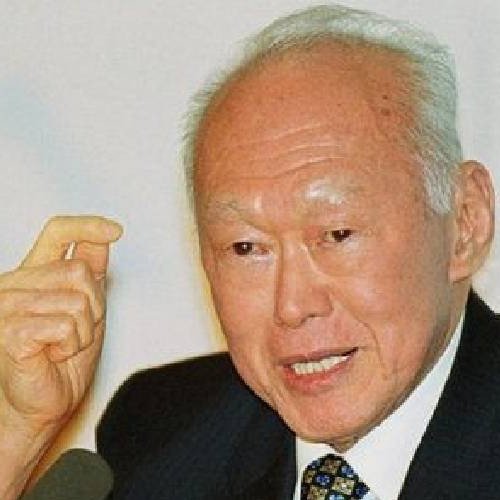
Lee Kuan Yew a démontré une réalité souvent oubliée :
La prospérité n'est pas seulement une question de ressources naturelles, mais aussi d'institutions solides, de discipline collective et de vision à long terme.
Singapour n'avait ni pétrole, ni eau, ni vaste territoire. Son principal atout était une gouvernance capable de transformer le capital humain en richesse nationale.
La vraie question est donc : combien de pays pauvres manquent de ressources, et combien manquent surtout d'institutions efficaces ?
Français

🇸🇬 ⚖️📈 Il a INTERDIT le chewing-gum et verbalisé ceux qui ne tiraient pas la chasse d’eau : sa vision stricte a TRANSFORMÉ une île sans eau potable en l’un des pays les plus prospères du monde.
En 1965, Singapour était un PETIT PORT SALE, sans ressources naturelles, sans eau potable (qu’il fallait importer de Malaisie), sans armée, rongé par le chômage, la CORRUPTION et les émeutes raciales. Beaucoup PENSAIENT que cette nation était vouée à disparaître.
Mais Lee Kuan Yew a choisi l’ordre plutôt que la popularité. Il a imposé des lois extrêmement STRICTES : interdiction de la vente de chewing-gum, AMENDES LOURDES pour tout déchet jeté par terre, coups de canne pour vandalisme et peine de mort pour le trafic de drogue. Il a lancé la LUTTE contre la corruption par le sommet : même un ministre corrompu finissait en prison, tandis qu’il offrait aux dirigeants des salaires parmi les plus élevés du monde pour les décourager de voler.
Il a également INVESTI massivement dans l’éducation, l’apprentissage de l’anglais et le logement social de près de 80% de la population. Aujourd’hui, Singapour fait partie des pays les PLUS RICHES et les plus sûrs du monde, avec l’un des PIB par habitant les plus élevés de la planète. De 500$ en 1965, il est passé à plus de 90 000$.
(World Economic Forum)


Français

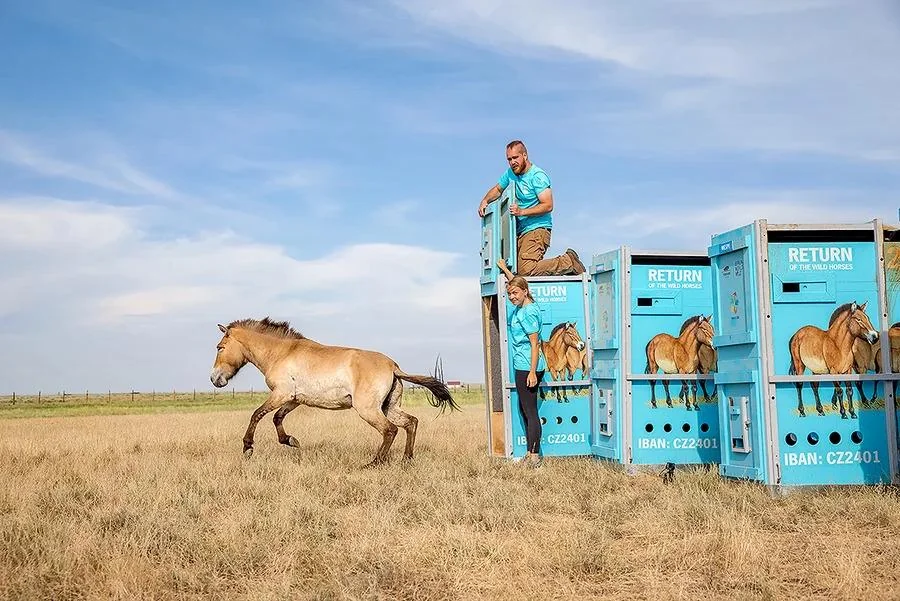
One of conservation’s greatest success stories.
A species declared extinct in the wild just decades ago is now galloping across its ancestral homeland once again.
The return of the Przewalski’s horse proves that extinction isn’t always the final chapter—when science, long-term commitment, and international cooperation come together, nature can make a remarkable comeback.
English

A Przewalski's horse released into the Steppe of Kazakhstan: Arguably the last breed of wild horses in the world, they went extinct in the wild by the 1960s. The Prague Zoo's conservation effort kept the species alive and in recent years, the animals are gradually returning to their natural habitat

English

The Strait of Hormuz isn’t just Iran’s leverage — it’s one of the world’s economic pressure points.
If this threat becomes reality, the impact won’t stop in the Middle East. Oil prices, inflation, shipping routes, and global markets could all feel the shock within days.
Diplomacy may be slow, but history shows that when strategic waterways become weapons, everyone pays the price.
English

@NightSkyToday Quantum physics or just a comforting theory? Drop the proof. 🔬🤔
English

@SmartScience Reversing Alzheimer’s in mice to young adult levels is absolutely insane. Huge breakthrough. 🧠🔥
English

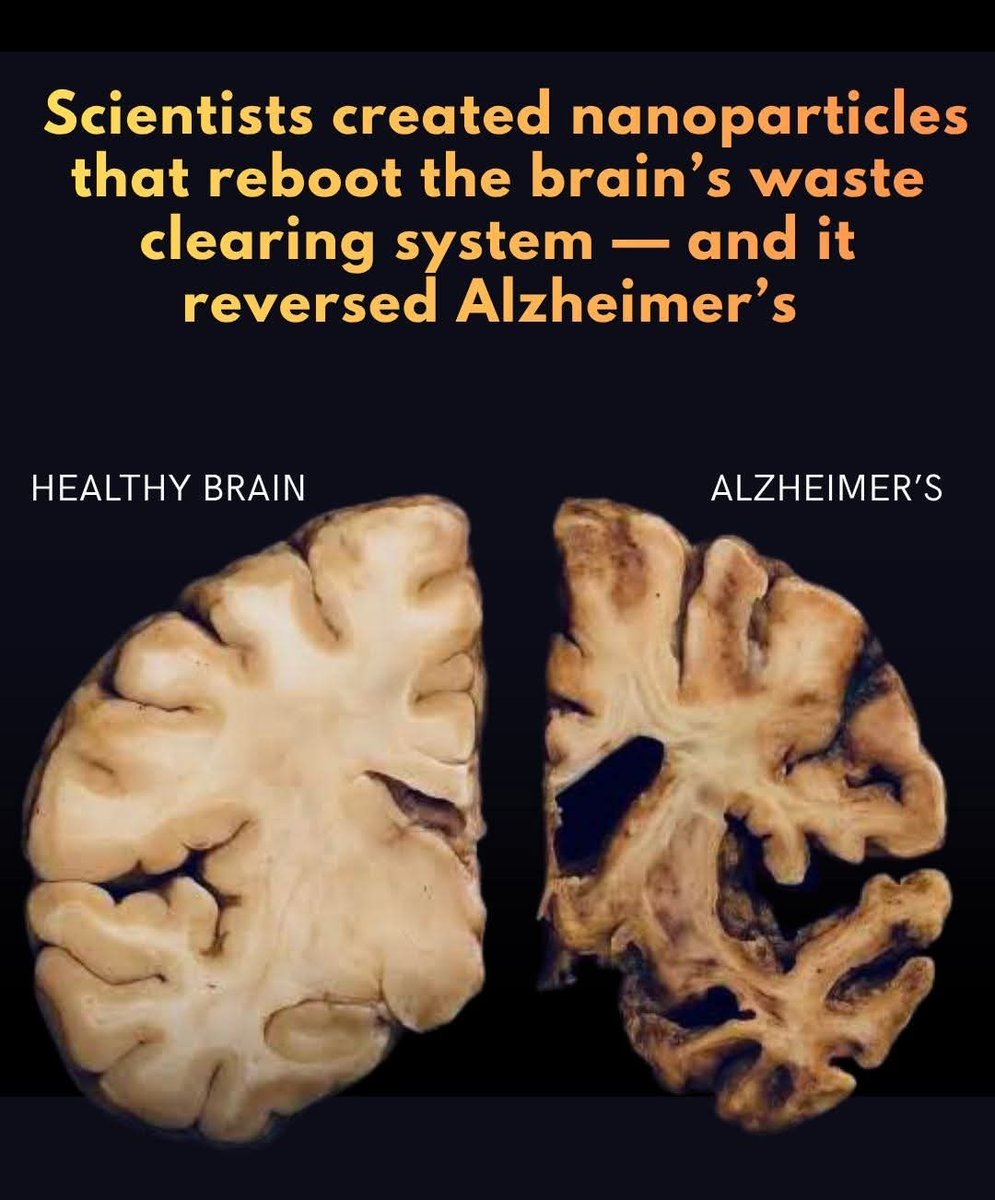
🚨 A new drug stops dementia, restoring the brain’s natural cleanup system.
An international research team led by the Institute for Bioengineering of Catalonia has unveiled a nanotechnology breakthrough that reverses Alzheimer’s symptoms by rebooting the brain’s waste-clearing system.
These "supramolecular drugs" are tiny, engineered particles that repair the blood-brain barrier—the protective shield that often breaks down as dementia progresses. Rather than simply delivering medicine, the nanoparticles themselves act as agents to reset transport proteins, enabling the brain to naturally flush out the toxic amyloid-beta plaques that cause cognitive decline.
The experimental results were staggering: toxic protein levels dropped by up to 60% within just one hour of treatment. In long-term tests, elderly mice equivalent to 90-year-old humans regained the cognitive performance of healthy young adults after receiving just three doses. By shifting the focus from attacking brain plaques to repairing the brain's vascular plumbing, this approach offers a radical new strategy that could potentially move beyond slowing Alzheimer's to actively restoring lost mental function.
source: Chen, J., Battaglia, G., et al. (2026). Nanotechnology Reverses Alzheimer’s in Mice via Blood-Brain Barrier Restoration. Signal Transduction and Targeted Therapy.

English

@giveashitnature "Just one shell" for us is a matter of survival for them. Leave them on the beach. 🐚💔
English

On beaches around the world, shells have declined by 60-70% over the last few decades. Hermit crabs are left to live in our trash.
A 30-year study in southwest Florida documented the shell loss as tourism rose 300%. Researchers found no other factor that could explain the drop. The cause was tourists, picking up one shell at a time.
30% of wild hermit crabs are already wearing shells that are too small for them. In spring, when crabs grow fastest, that number jumps to 60%. Crabs without proper shells get killed by predators, can't reproduce, or fight each other for the few good shells left.
Collecting shells, rocks, and driftwood is illegal in US National Parks and most state beaches. The reasoning is what the data shows: at the scale of millions of visitors, "just one" becomes the whole beach.
Take the photo. Leave the shell. Somebody's looking for a house.

English

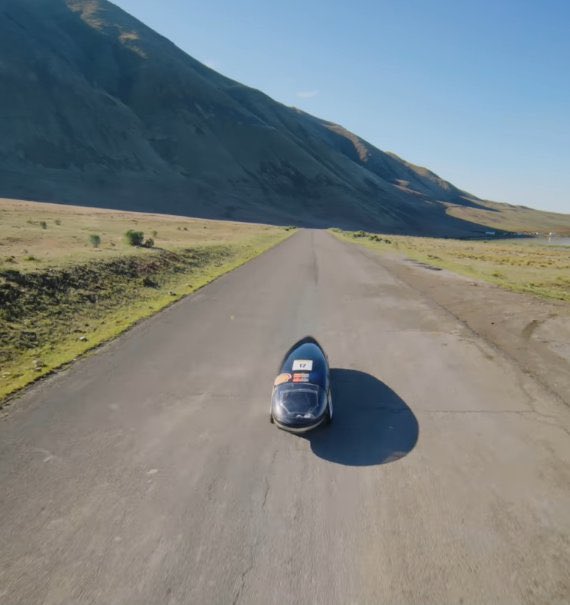
@NeuralSpace_ 3400 km avec un gallon mais interdit aux plus de 1m62. Le futur est miniature ! 🏎️
Français

@antonioguterres We cannot build a sustainable global economy when 10% of humanity is left behind. Addressing the heavy debt burdens on developing nations isn't just charity—it's a macroeconomic necessity to unlock global growth and stabilize supply chains. 📉🌱
English

800 million people still live in extreme poverty. Their plight is made worse by conflicts, the climate crisis, deepening inequalities & heavy debt burdens.
We need to shape economies that put people first, and continue our fight to reduce & #EndPoverty.
English

@earthcurated This looks straight out of a science fiction movie. The contrast between human engineering and the raw, frozen power of a six-month eruption is absolutely breathtaking. Iceland never fails to look completely out of this world. 🚙🛰️
English

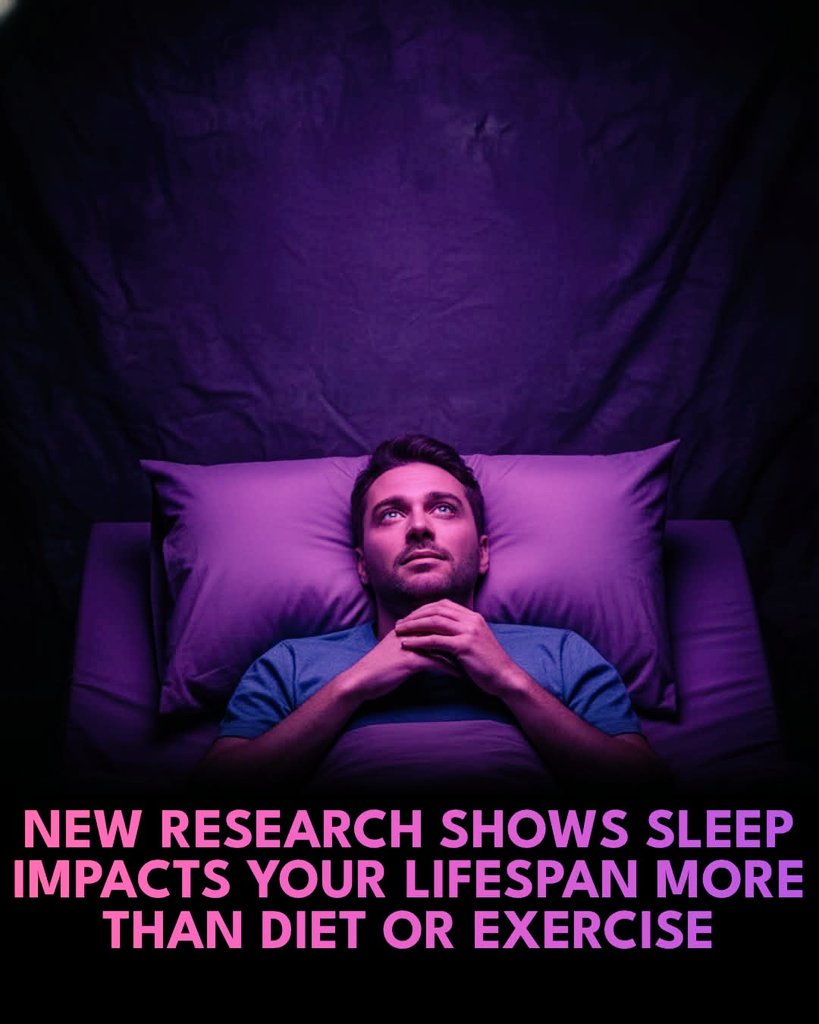
🚨 Research shows getting 7+ hours of sleep is more important to health than diet and exercise.
New research from Oregon Health & Science University suggests that getting enough sleep may be more critical for longevity than diet, exercise, or social connection, ranking second only to smoking as a lifestyle predictor of life expectancy.
Using a large national database, researchers linked county-level life expectancy data with detailed Centers for Disease Control and Prevention survey responses from 2019 to 2025.
They found that adults who regularly obtained at least seven hours of sleep per night—a threshold aligned with recommendations from the American Academy of Sleep Medicine and the Sleep Research Society—tended to live longer than those who slept less. The association between sufficient sleep and longer life was consistent across most U.S. states and over multiple years.
The study did not pinpoint exactly why inadequate sleep appears to shorten lifespan, but the authors note that sleep has well-established effects on cardiovascular health, immune function, and brain health. The strength of the correlation surprised even sleep specialists, reinforcing the idea that sleep should be treated as a core pillar of health rather than an optional luxury. The researchers argue that public health efforts and personal habits should prioritize sleep on the same level as nutrition and physical activity, emphasizing that consistently getting seven to nine hours of sleep can not only improve day-to-day well-being, but may also meaningfully extend life expectancy.
Reference:
McAuliffe, K. E., Wary, M. R., Pleas, G. V., Pugmire, K. E. S., Lysiak, C., Dieckmann, N. F., Shafer, B. M., & McHill, A. W. (2025). Sleep insufficiency and life expectancy at the state-county level in the United States, 2019–2025. SLEEP Advances.

English

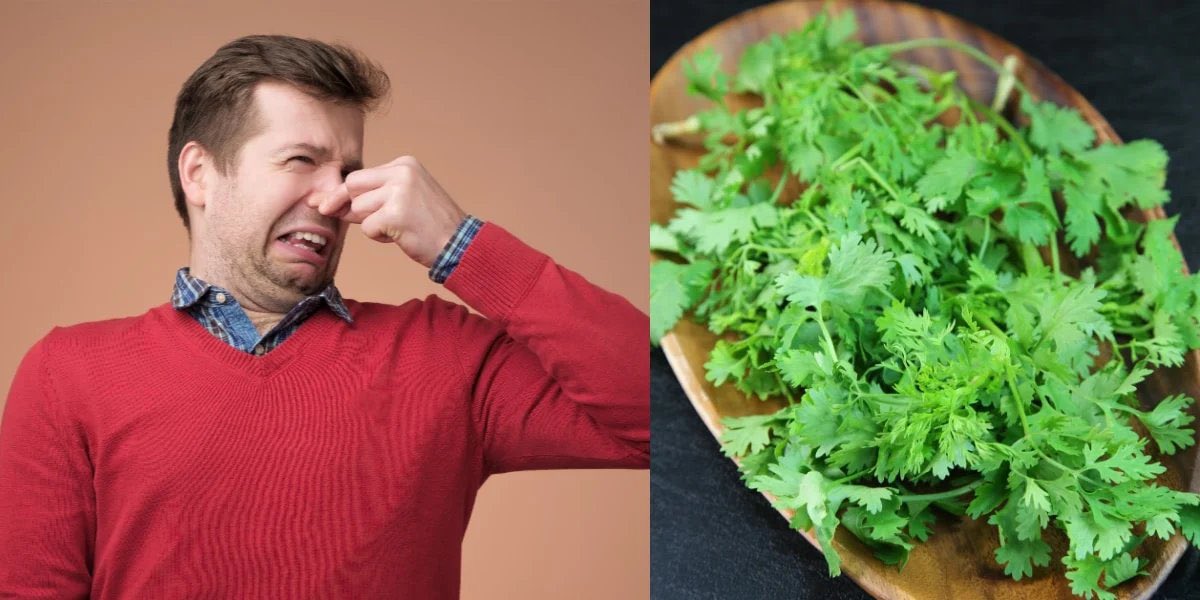
@BassalkaK @NeuralSpace_ Je doute que ça parle de punaises de lit 😅
C’est plutôt ce genre de punaise verte, type punaise des bois, celle qui lâche une odeur bien immonde quand on la touche ou qu’on l’écrase 🤢

Français

"Life glows even without external illumination." What a beautiful perspective on human biology. Even though this biophoton emission is completely invisible to the naked eye BBC Science Focus, knowing that our cellular metabolism literally fills a dark room with a faint shimmer is mind-blowing. Nature is full of hidden magic. ✨🌍
English


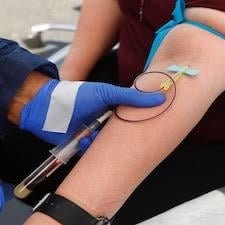
Being "compatible only with yourself" is biologically mind-blowing but medically terrifying Scientific American. If she ever needs an emergency transfusion, standard blood banks are useless Scientific American. This reality highlights why advanced research into genetically modified lab-grown blood is so critical for personalized medicine The Conversation. 🧪
English

@NightSkyNow We are a Type 0.72 civilization trying to build Type 2 technology (AI, fusion) while still relying on Type 0 energy (fossil fuels). It’s a wild cosmic paradox. We’re basically toddlers playing with matches in a library, but the potential is mind-blowing. 🧠🔥
English

🚨 Humanity calls itself “advanced,” but the universe disagrees.
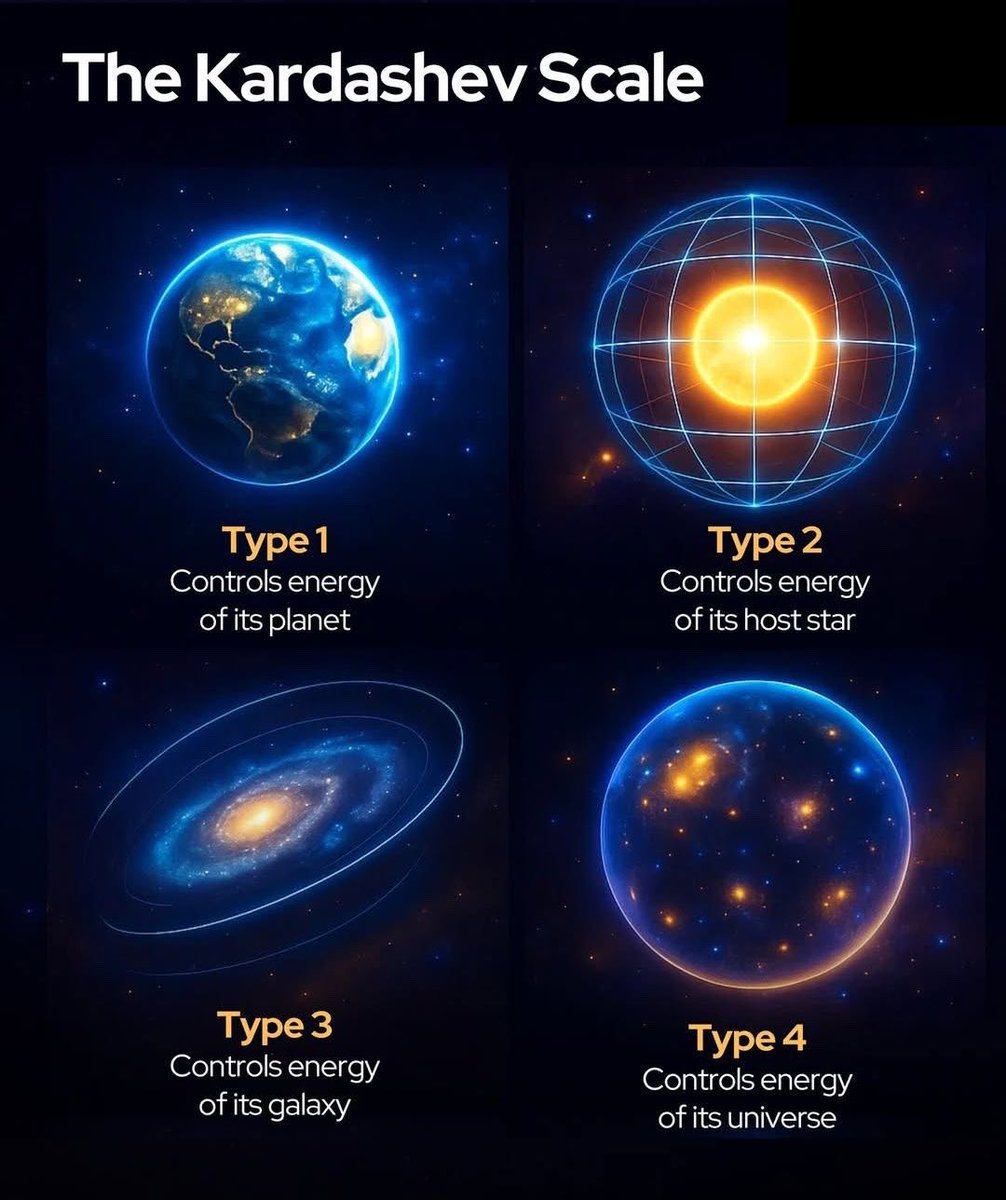
Here's where our civilization ranks on the Kardashev Scale.
Even with rovers on Mars, global AI systems, and instant worldwide communication, humanity hasn’t yet reached Type 1 on the Kardashev Scale — a system devised in 1964 by astrophysicist Nikolai Kardashev to measure a civilization’s technological progress by its energy use.
A Type 1 civilization can fully harness all the energy of its home planet.
Type 2 captures the energy of its star (think Dyson Sphere), and Type 3 commands the energy of an entire galaxy.
Higher levels—Types 4 and 5—operate on cosmic and even multiversal scales.
At 0.72, we’re still learning to use Earth’s natural energy efficiently. Reaching Type 1 could take another century or two, with higher stages possibly stretching millions of years.
Critics say the scale overemphasizes control over nature instead of harmony with it, while others argue it’s still a fascinating lens for imagining our future. Whether we ever reach the next level—or choose not to—remains a profound question about what it truly means to be “advanced.”

English