André M. Bastos

400 posts

André M. Bastos banner
André M. Bastos

André M. Bastos

@BastosLabNeuro

Leading the Cognition, Computation, and Consciousness Lab at Vanderbilt University

Nashville, TN Katılım Kasım 2021
342 Takip Edilen1.3K Takipçiler
André M. Bastos retweetledi
Kenneth D Harris
Kenneth D Harris@kennethd_harris·
Introducing the International Brain Lab AI Agent: an experimental tool that helps researchers analyze neural activity across the mouse brain using AI coding agents. Please try it — we would love your feedback! github.com/int-brain-lab/…
Kenneth D Harris tweet media
English
1
31
109
13.7K
André M. Bastos retweetledi
Rui Xu
Rui Xu@ruix_mit·
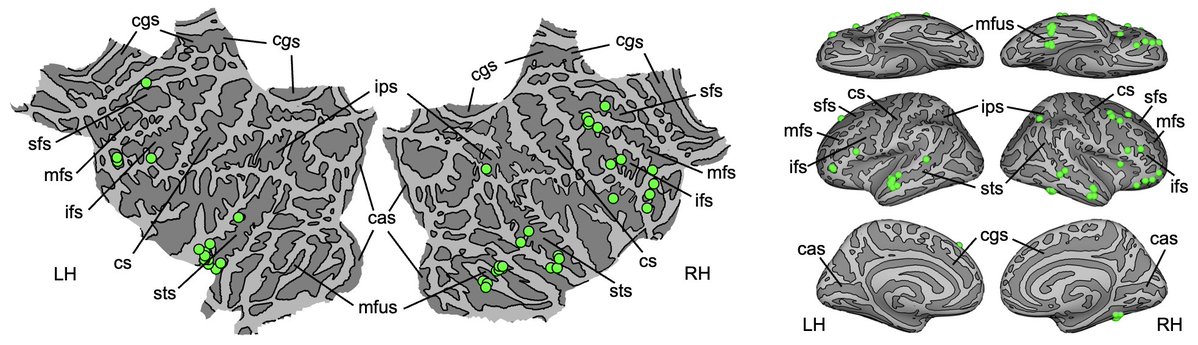
New preprint: "Monosynaptic connections link functionally similar regions in human cortex." We use electrical stimulation + fMRI in epilepsy patients to map whole-brain monosynaptic connectivity at 42 cortical sites. doi.org/10.64898/2026.… 1/n
Rui Xu tweet media
English
2
26
75
8.5K
André M. Bastos retweetledi
Milk Road AI
Milk Road AI@MilkRoadAI·
Jensen Huang just told Stanford to their face that their compute problem is their own fault. And then he explained exactly how to fix it. This was the complaint: independent researchers, startups, universities across America can't get enough compute. AI is transforming science but the people doing science can't access the tools they need. Jensen pushed back hard on one part. It's not that Nvidia isn't delivering. It's that nobody is placing the orders. You can't show up expecting a billion dollars of compute to be sitting on the shelf. But the deeper problem is structural. Universities stopped building centralized compute decades ago. Every department raises its own grants, controls its own budget and nobody shares. "Stanford's not alone. You don't have a budget for a billion-dollar compute. It doesn't exist." His prescription: Stanford has a $40 billion endowment. Cut $1 billion, give it to a cloud provider and give every student and researcher on campus access to AI supercomputers. The same logic applies everywhere. The institutions that figure out how to pool compute and make it available to their best researchers will produce the next generation of breakthroughs. The ones that keep running on laptops and individual grants will fall behind.
English
12
18
112
13.5K
André M. Bastos retweetledi
Richard Sutton
Richard Sutton@RichardSSutton·
The bitter lesson in 26 words: Don’t be distracted by human knowledge, as AI has been historically. Instead focus on methods for creating knowledge that scale with computation, like search and learning.
English
137
970
7.4K
563.6K
André M. Bastos
André M. Bastos@BastosLabNeuro·
@LocasaleLab Hi @LocasaleLab , are you out of your mind? What's the data that backs up your assertion? In scientific output and discovery, they continue to lead... I get it that you are upset at some aspects of academia that merits critique. But don't throw out the baby with the bath water
English
0
0
0
22
Jason Locasale
Jason Locasale@LocasaleLab·
MIT gave up on merit a long time ago and has been surviving on brand inertia. It is not the institution I attended 20 years ago. The remnants of what many people still imagine MIT to be now exist largely in marketing websites and media campaigns. The institution itself has been hollowed out by bureaucracy, political agendas, and leadership corruption. Look no further than who it appointed as president, the hires it has made over the past decade, and the treatment of its best scientists who were marginalized, pushed aside, or even fired.
Jake Wintermute 🧬/acc@SynBio1

If an institution like MIT existed in Guangzhou or Xi'an, it would be China's pride and joy. This news story would be reporting a 1000% increase in funding. If the history books end up with a chapter titled "Why America Lost and China Won" - this is on the first page

English
17
10
147
36.6K
André M. Bastos retweetledi
Science Magazine
Science Magazine@ScienceMagazine·
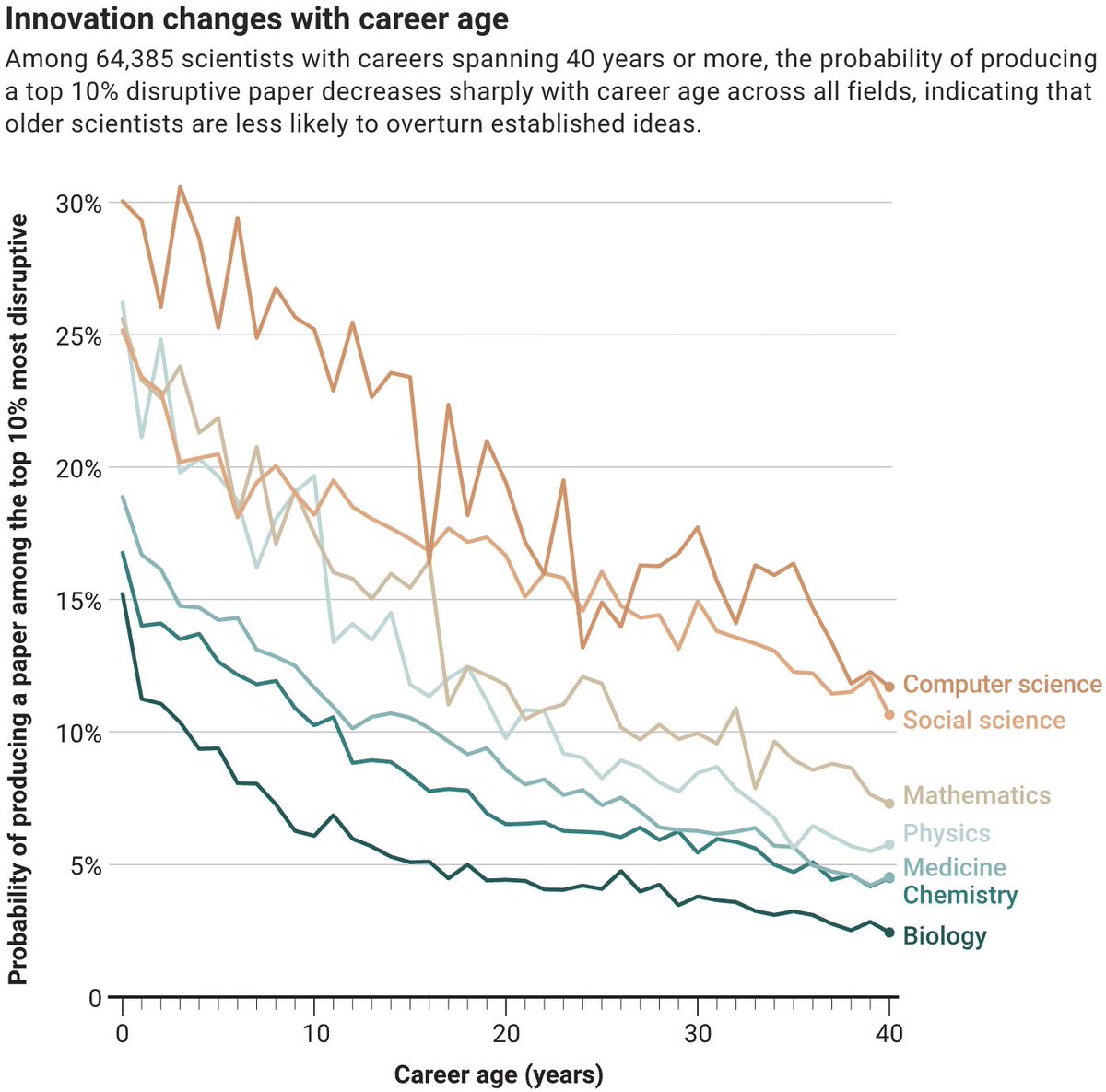
Drawing on a large-scale dataset of more than 12 million scientists, a new #SciencePolicyArticle reports that early-career scientists may be more inclined toward transformative breakthroughs, whereas seasoned researchers excel at synthesizing and extending existing knowledge. scim.ag/4wi7emp
Science Magazine tweet media
English
5
22
70
15.3K
André M. Bastos retweetledi
Demis Hassabis
Demis Hassabis@demishassabis·
I’ve always believed the No.1 application of AI should be to improve human health. That work started with AlphaFold, and now at @IsomorphicLabs with the mission to reimagine drug discovery and one day solve all disease! We are turbocharging that goal with $2.1B in new funding.
English
704
2.7K
21.3K
3.1M
André M. Bastos retweetledi
Vanderbilt University
Vanderbilt University@VanderbiltU·
How can you live a more meaningful life? In his Graduates Day address to the Class of 2026, @arthurcbrooks challenged students to consider their quest for happiness. 💛🎓
English
4
7
32
3.1K
André M. Bastos retweetledi
André M. Bastos
André M. Bastos@BastosLabNeuro·
@LocasaleLab You are doing a great disservice to the NSF, holders of the CAREER award, and the American taxpayer with your empty rhetoric here. There are incredible examples of these NSF awards leading to breakthrough science and discovery. Just open your eyes. Your words ring false.
English
0
0
0
76
Jason Locasale
Jason Locasale@LocasaleLab·
If you want evidence of ideology, activism, and bureaucratic takeover in STEM, look no further than the NSF CAREER award. This is a roughly $500K award given to junior faculty and is treated as a major criterion that universities use for tenure in the sciences. Getting this award and thus tenure basically means you are skilled at two things: (1) you promote DEI through what they brand as “broader impacts” in ways that outcompete your colleagues’ promotion of DEI, and (2) you learned to navigate bureaucratic mazes - meaning you write a 50+ page single spaced application multiple times, pay lip service to program officers and review panels each time, and repeatedly revise an application in response to reviewer comments that have little to do with the actual science. The result is that the faculty selected for success in universities are those who have mastered these two skills - ideological signaling and bureaucratic navigation - rather than those producing the best science.
Dr. Ashley T. Rubin@ashleytrubin

PSA: Stop assuming the STEM fields are safe from ideological capture. Some of the obvious examples of the politicization of STEM: -Professional associations' political statements -Non-meritocratic criteria in fellowships/prizes and even grants (see also the blinding/unblinding of grant applicants and what happened before/after and earlier DEI requirements for NSF grants in recent years before the current admin) -Different standards used for minority (esp female) students/faculty evaluation -Support for "decolonizing" science and refusing certain methodologies (from bio to astro) -Efforts to change the practice of science to be more "inclusive" (read toxically feminine), incl resistance to debate/disagreement, to pressure to follow deadlines, or to actually producing rather than having meetings about producing, etc. (These are in addition to non-political considerations like metric hacking, lack of blinded analyses, etc.)

English
4
12
99
12.1K
André M. Bastos retweetledi
Steve W. C. Chang
Steve W. C. Chang@stevewcchang·
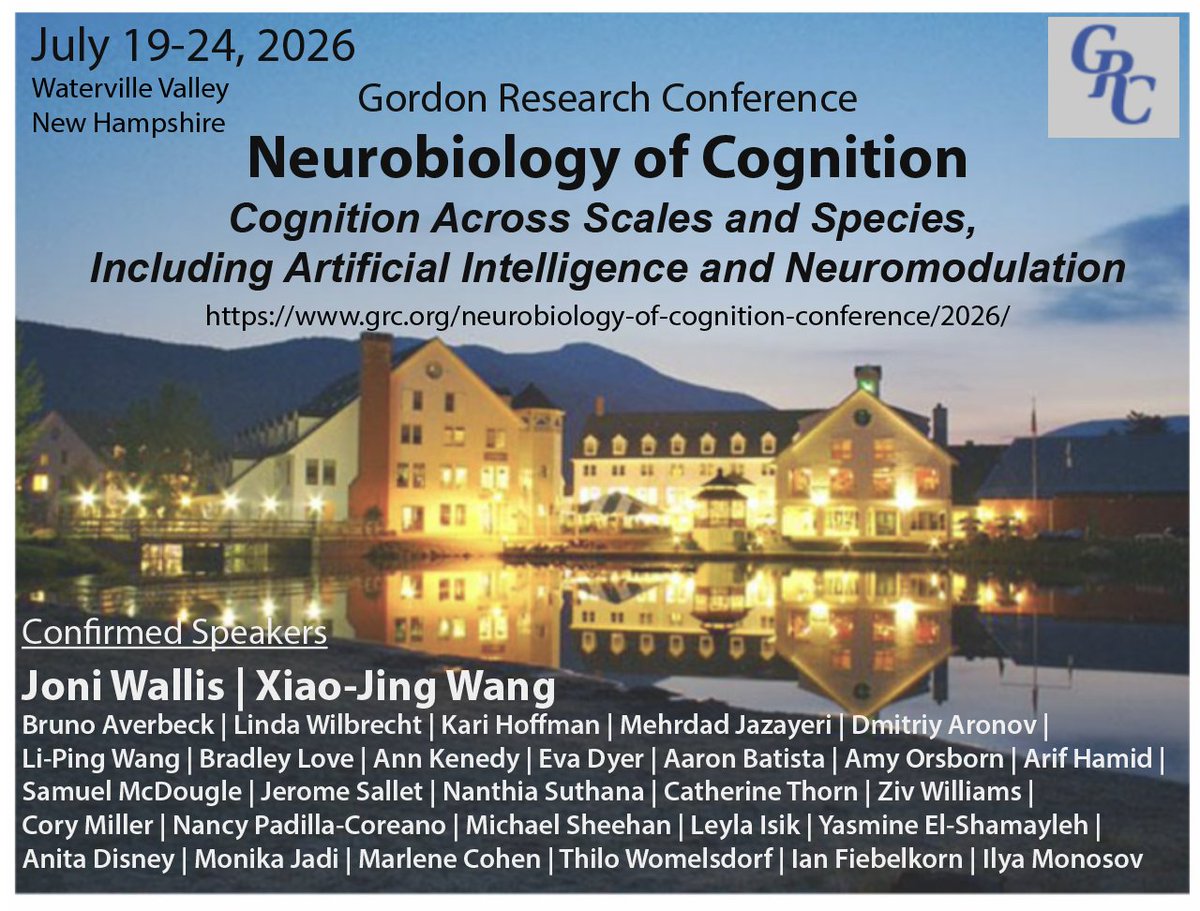
The deadline for the Neurobiology of Cognition Gordon Conference is coming soon. We have an awesome lineup of speakers. We will begin assigning fellowships in mid May, so don't delay, apply now! Spread the word! 🧪 🧠 #neuroscience #cognition grc.org/neurobiology-o…
Steve W. C. Chang tweet media
English
0
8
47
3.9K
André M. Bastos retweetledi
Zechen Zhang
Zechen Zhang@ZechenZhang5·
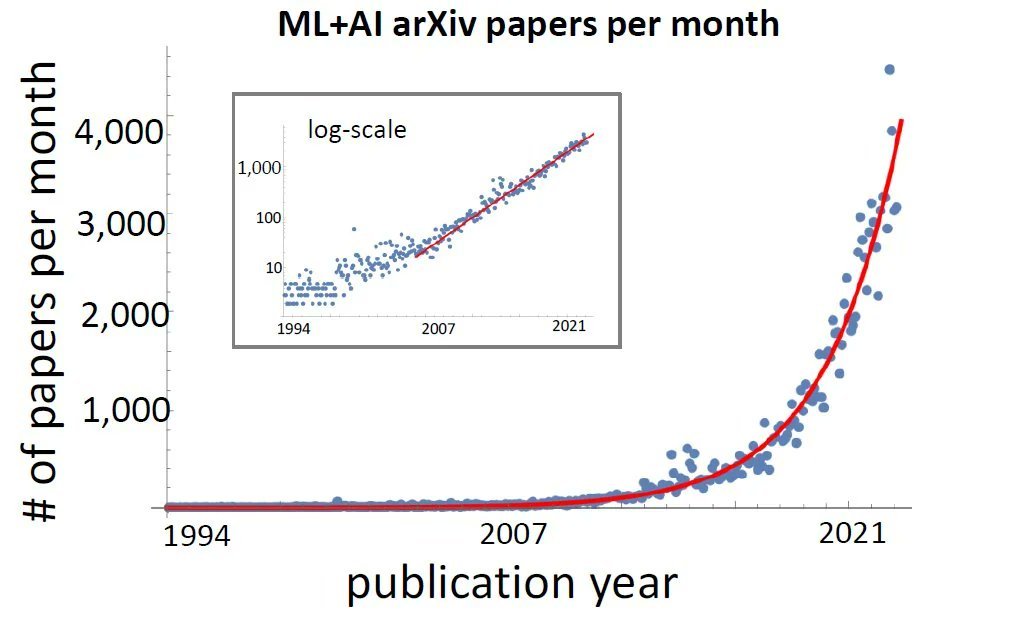
2/ Millions of papers a year, growing faster every year. Most aren't reproducible. Peer review is buckling. And every paper is a lossy compression of the work behind it — months of dead ends, judgment calls, and configuration tricks flattened into a clean story. The format was designed for a world where every reader was human. That world is ending.
Zechen Zhang tweet media
English
1
12
98
8.4K
André M. Bastos retweetledi
SP Arun
SP Arun@sparuniisc·
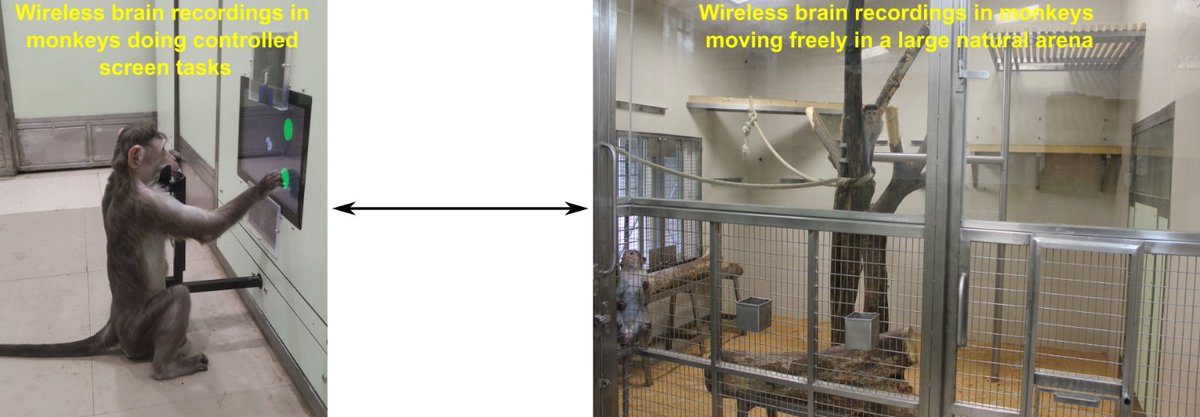
Preprint alert! We've done the first ever wireless brain recordings from the high-level visual & motor regions (IT/PMv/PFC) in monkeys engaged in natural behaviors as well as during controlled screen-based tasks. Read below for a lay summary and the link for details! 1/8
SP Arun tweet media
English
2
22
102
5.7K
André M. Bastos retweetledi
Yasir Ai
Yasir Ai@AiwithYasir·
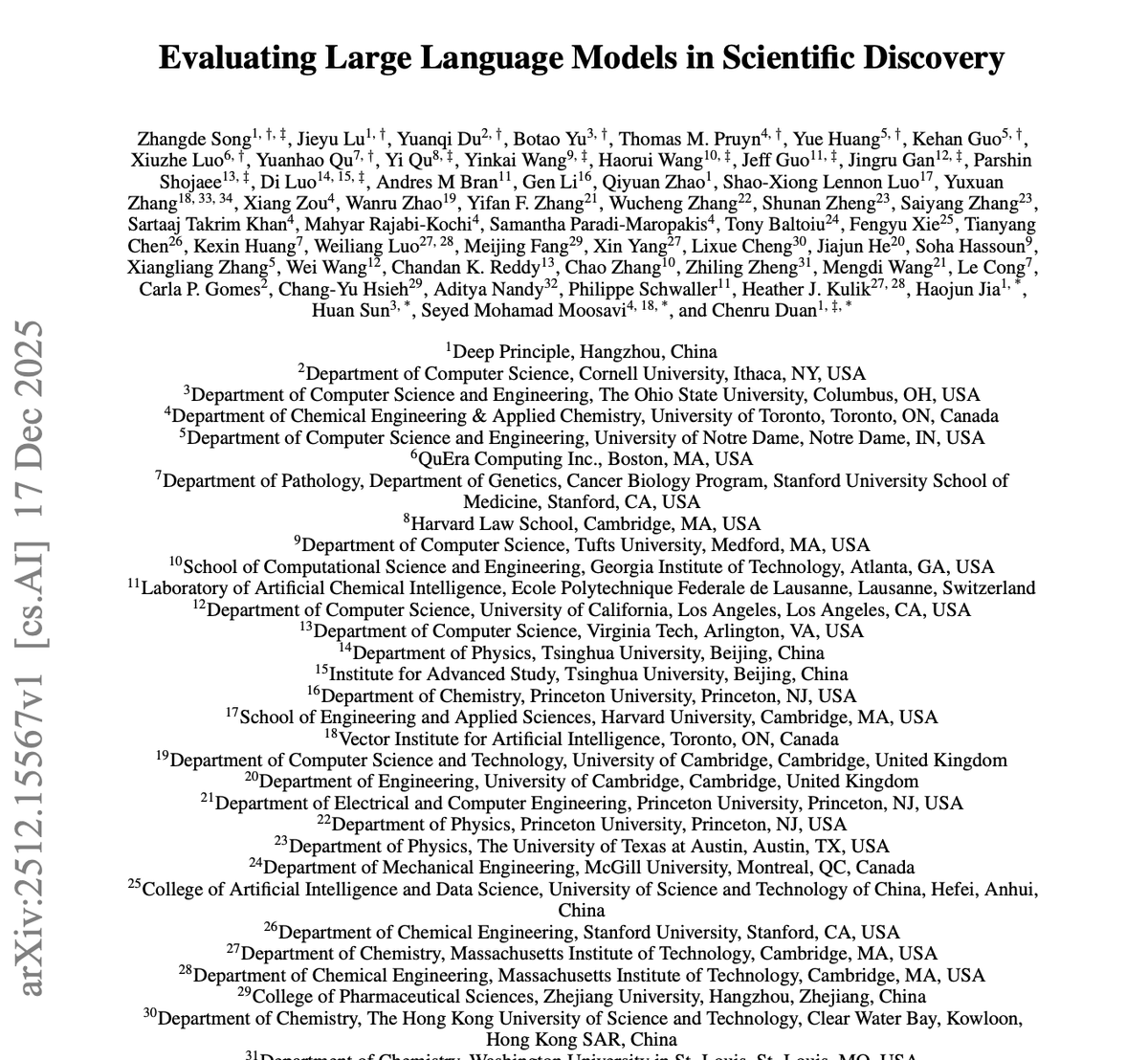
This paper from Harvard and MIT quietly answers the most important AI question nobody benchmarks properly: Can LLMs actually discover science, or are they just good at talking about it? The paper is called “Evaluating Large Language Models in Scientific Discovery”, and instead of asking models trivia questions, it tests something much harder: Can models form hypotheses, design experiments, interpret results, and update beliefs like real scientists? Here’s what the authors did differently 👇 • They evaluate LLMs across the full discovery loop hypothesis → experiment → observation → revision • Tasks span biology, chemistry, and physics, not toy puzzles • Models must work with incomplete data, noisy results, and false leads • Success is measured by scientific progress, not fluency or confidence What they found is sobering. LLMs are decent at suggesting hypotheses, but brittle at everything that follows. ✓ They overfit to surface patterns ✓ They struggle to abandon bad hypotheses even when evidence contradicts them ✓ They confuse correlation for causation ✓ They hallucinate explanations when experiments fail ✓ They optimize for plausibility, not truth Most striking result: `High benchmark scores do not correlate with scientific discovery ability.` Some top models that dominate standard reasoning tests completely fail when forced to run iterative experiments and update theories. Why this matters: Real science is not one-shot reasoning. It’s feedback, failure, revision, and restraint. LLMs today: • Talk like scientists • Write like scientists • But don’t think like scientists yet The paper’s core takeaway: Scientific intelligence is not language intelligence. It requires memory, hypothesis tracking, causal reasoning, and the ability to say “I was wrong.” Until models can reliably do that, claims about “AI scientists” are mostly premature. This paper doesn’t hype AI. It defines the gap we still need to close. And that’s exactly why it’s important.
Yasir Ai tweet media
English
88
216
562
39.6K
André M. Bastos
André M. Bastos@BastosLabNeuro·
It's a wonderful project to be a part of and will be transformative for our understanding of predictive coding in the brain. When we put our brains together, amazing new ideas are born. Thank you for your leadership in such an open and inclusive way, @LecoqJerome
Jérôme Lecoq@LecoqJerome

Exactly one year later after sharing this gigantic review with the world arxiv.org/abs/2504.09614, we just shared 56TB of data with the world: Entirely new experiments described in the review. And more is coming...

English
0
0
12
1.2K
André M. Bastos retweetledi
VarunWadia
VarunWadia@WadiaVarun·
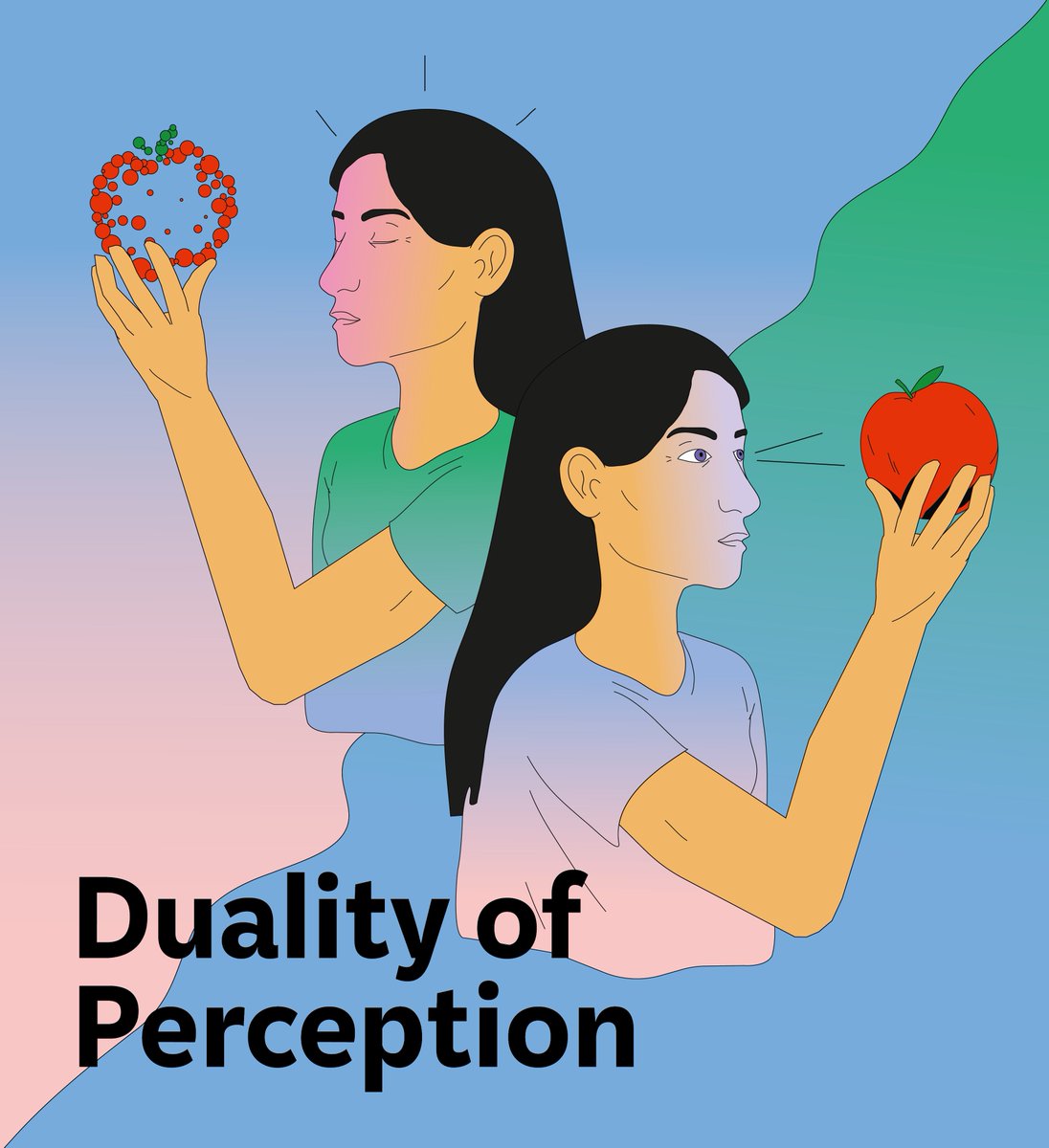
1/8 Our preprint is now a peer-reviewed paper :) Big thanks to our reviewers who pushed us to examine our results more carefully and Olivier Wyart (headquarter.paris) for the exquisite visual. science.org/doi/10.1126/sc…
VarunWadia tweet media
English
3
39
135
49.5K