
BdotE
5.7K posts


BdotE
@BdotE2
Retired USAF, Blockchain Technology/Cryptocurrency Advocate

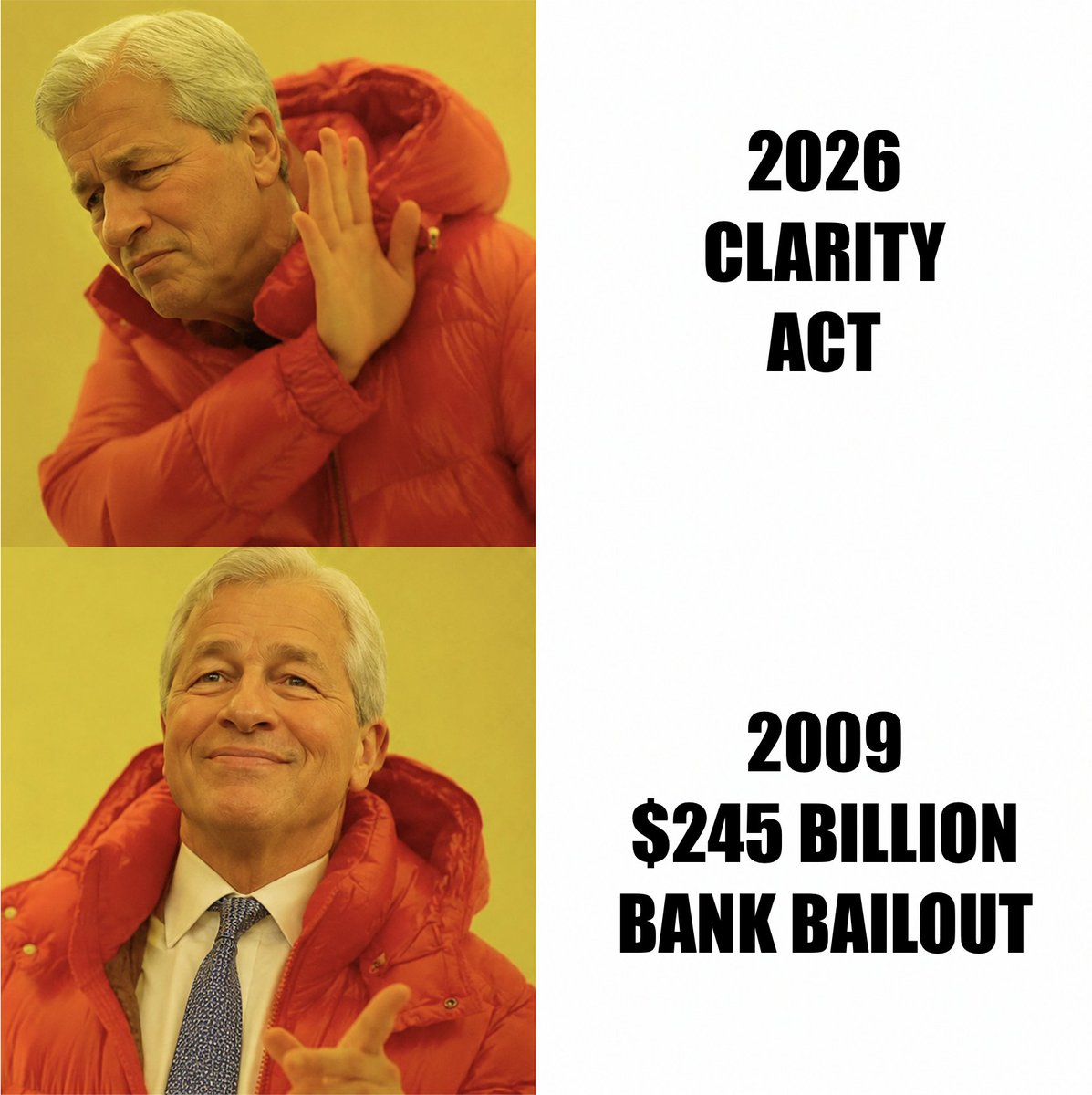
🏦 JPMorgan CEO Jamie Dimon warns stablecoins could become a "huge problem" and says he is not happy with the Clarity Act. 🎙️ When asked about Coinbase CEO Brian Armstrong representing the industry, Dimon said, "He's full of sh!t."

‘He’s full of s--t’: JPMorgan’s Dimon rips Coinbase CEO, escalates fight over crypto bill dlvr.it/TSnClG




Donald Trump is gutting a crypto watchdog so the Trump family and their friends can enrich themselves. We need crypto legislation that stops this corruption and protects Americans from getting scammed.


🚨NEW: President Trump says his administration is building a “future-proof” digital asset market structure that can’t be undone by “crypto haters.” This marks the first time the president has publicly weighed in on crypto market structure since March.




BTC bled. ETH bled. SOL printed zero. $XRP? 27 consecutive days of inflows. Not once did it stop. 👀 Cumulative ETF inflows: $1.409B This is what quiet accumulation looks like.
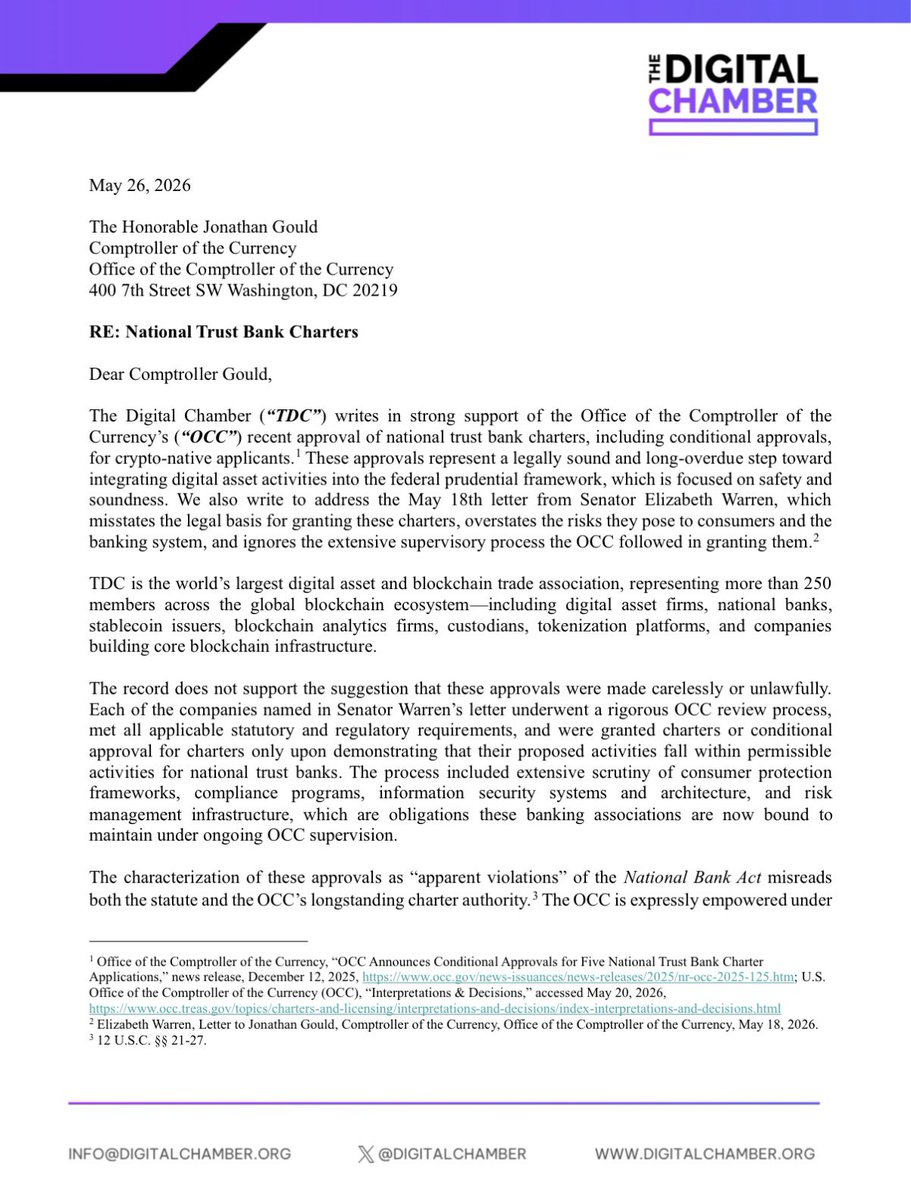

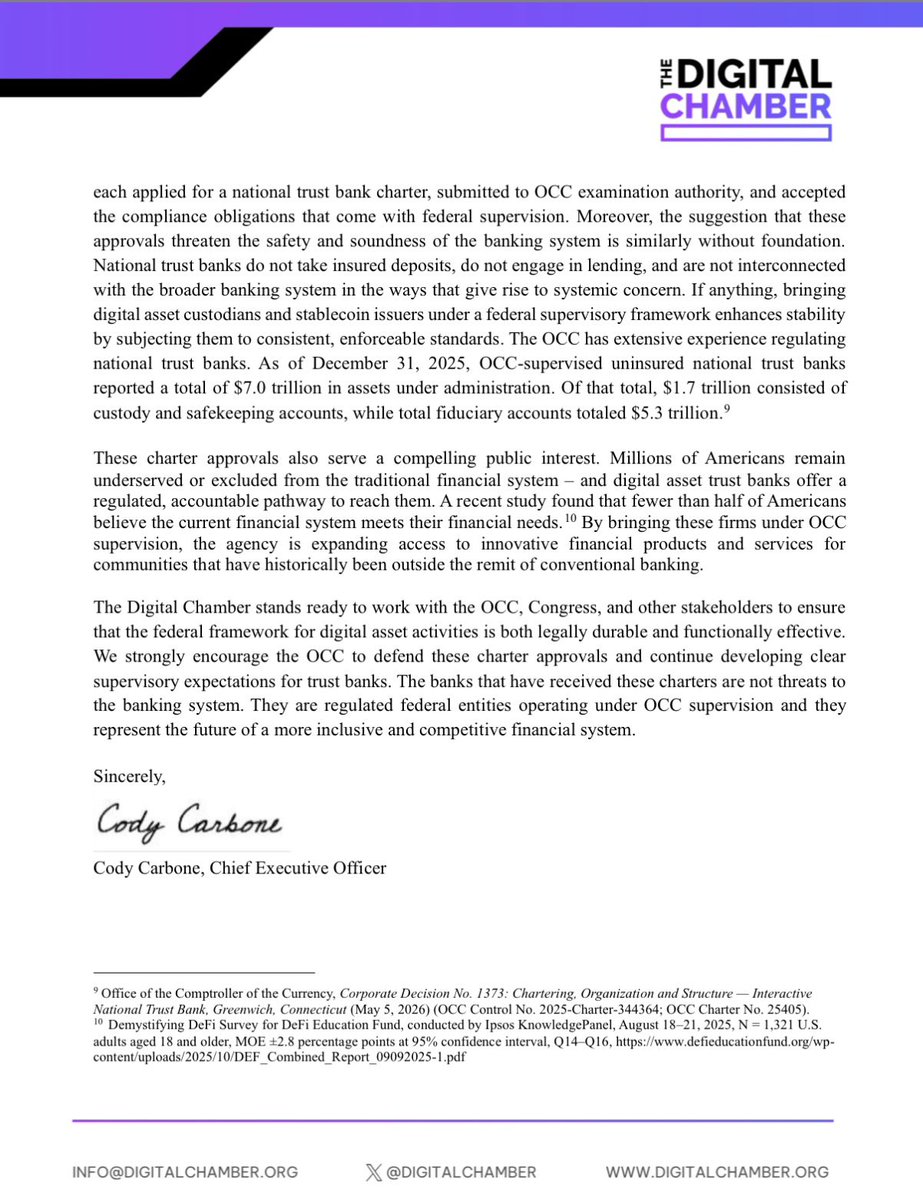


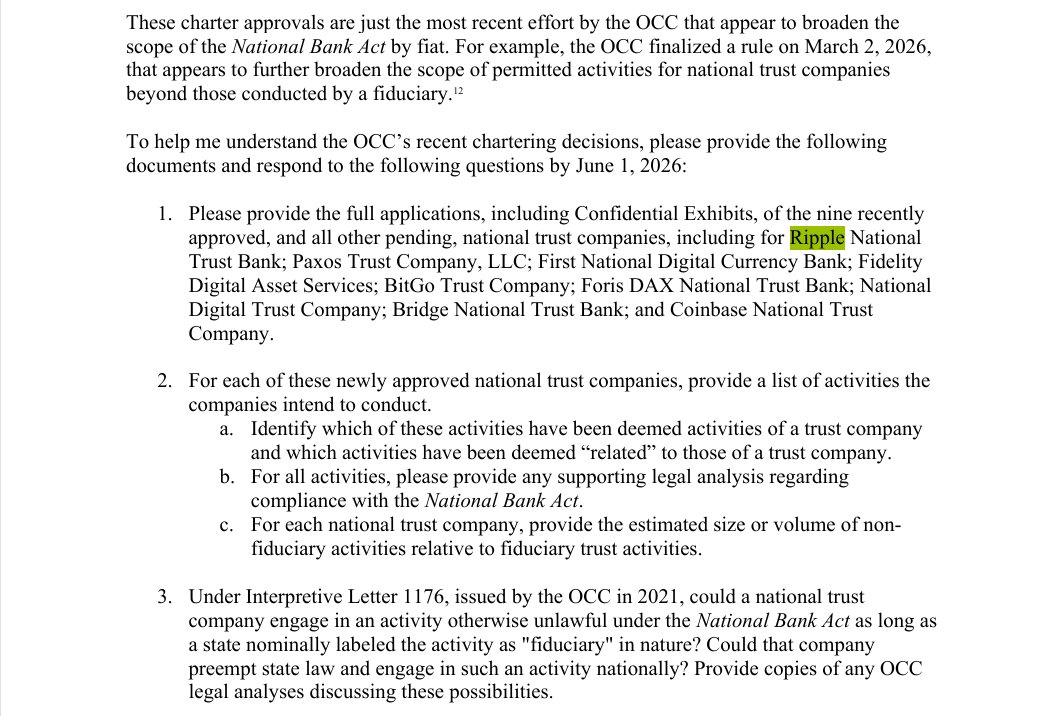
Crypto industry defends OCC charters for Ripple, Coinbase and others after Sen. Warren calls them unlawful theblock.co/post/402639/cr…
Our first obligation is to our members. When a US Senator mischaracterizes their work and questions the legality of a rigorous federal process they voluntarily submitted to, we have an obligation to set the record straight. These companies didn't evade regulation; they sought it. 👇👇 decrypt.co/369000/crypto-…

33 years ago today