Becky Graham

1.5K posts

Becky Graham banner
Becky Graham

Becky Graham

@BeckyLeeGraham

Former Reporter turned #Entrepreneur. Currently helping professionals slay #socialaudio conversations on @fishbowlapp.

San Francisco, CA Katılım Ocak 2009
1.4K Takip Edilen696 Takipçiler
Ryan RC Rea
Ryan RC Rea@volvoshine·
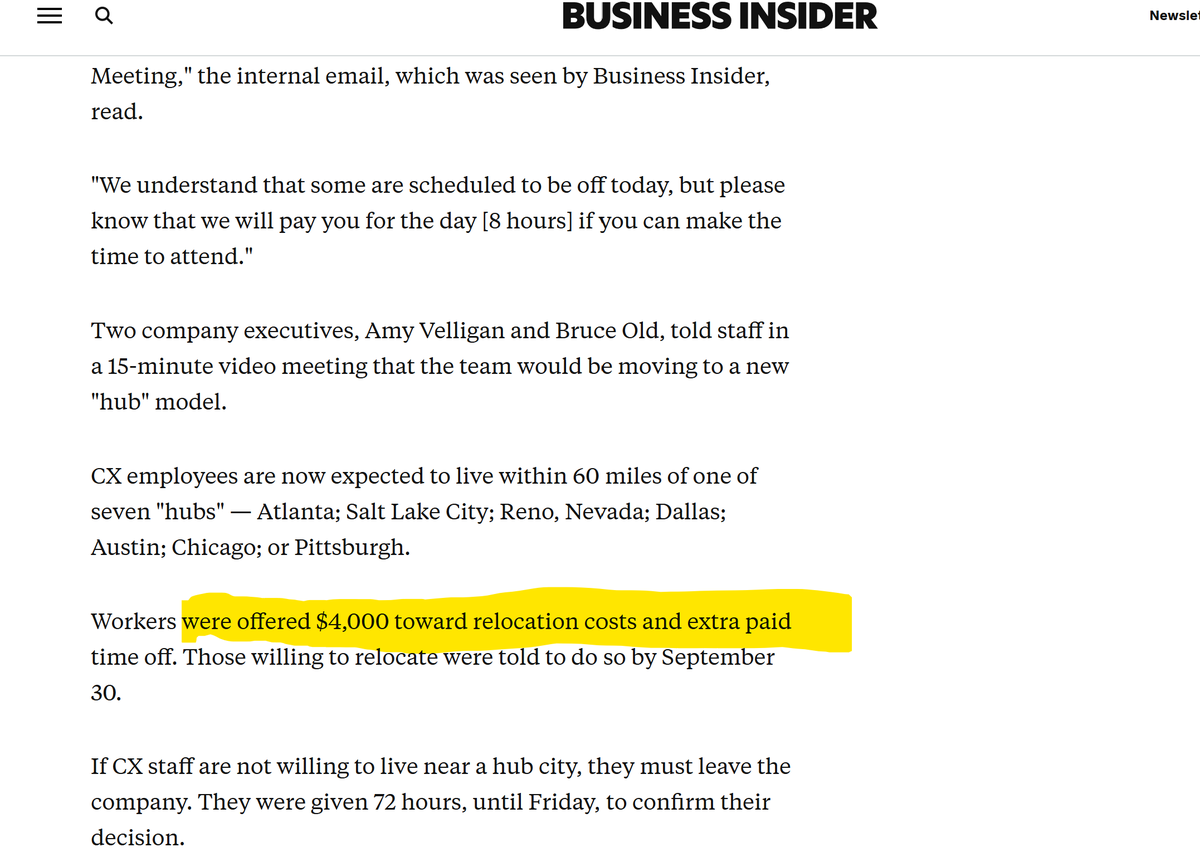
$4,000 to relocate across the country????? You need to add another 0 to that, baby. Companies are in their delulu era, I swear!
Ryan RC Rea tweet mediaRyan RC Rea tweet media
English
5
1
19
2.1K
Ryan RC Rea
Ryan RC Rea@volvoshine·
Alleged Bomb Threat on the Venetian Causeway 👀 #Miami
English
8
3
22
5.7K
Becky Graham
Becky Graham@BeckyLeeGraham·
@LaMoniRojas Thanks for sharing! What periodicals/books are you reading on community. Would love to check them out!
English
0
0
0
48
Monica
Monica@LaMoniRojas·
Spent the weekend reading up on communities. A few things stood out to me: - We no longer have the capacity to be active in more than three communities at a time. - We want to be part of communities that bring us energy or ROC (Return on Community), such as new friends, purpose, or financial rewards. - Micro-communities are the future of community. Humans naturally migrate into tribes, as they have for thousands of years. Think of nomads, biblical figures, etc. - Communities are places. The best communities have strong leaders who facilitate community-led initiatives and allow members to take on their own roles. Meme creators, artists, etc. - Nothing online (YET) can replace the power of in-person connections. Every community should have at least one annual meetup.
English
7
4
37
2.3K
Becky Graham retweetledi
Patricia Mou
Patricia Mou@patriciamou_·
anatomy of a hug 🥺
Patricia Mou tweet media
English
52
617
6.6K
1.3M
Becky Graham retweetledi
Sagar Radia
Sagar Radia@SagarRadia·
Industry Series 3, 11th August @HBO. We Back.
Sagar Radia tweet media
English
106
444
4.4K
586.6K
Becky Graham retweetledi
Codie Sanchez
Codie Sanchez@Codie_Sanchez·
Working smarter not harder is a beautiful lie. You will not know how to work smart until you've worked very hard for an irrationally long time.
English
128
888
4.4K
241.1K
Becky Graham retweetledi
Sean Sweeney
Sean Sweeney@seandsweeney·
Walkable urbanism is so underrated. Woke up, walked my daughters two blocks to pick up coffee, then walked to the the park one block in the other direction. Now sitting five blocks away watching them play at another park. Zero cars involved. Everyone should have this luxury.
English
164
87
1.7K
342.8K
Becky Graham retweetledi
Sahil Bloom
Sahil Bloom@SahilBloom·
A lot of problems are solved by doing the hard things on a daily basis: Wake up early, get cold, get hot, move fast, lift heavy stuff, focus, be present, have difficult conversations. Simple playbook to live well.
English
116
263
2.4K
536K
Cloey Callahan
Cloey Callahan@CloeyCallahan·
I've been recently promoted to Senior Reporter at Digiday's WorkLife 🥳🎉 I am so excited to continue to cover the future of work. 260 stories down at WorkLife over the past year or so and many more to go! Thank you to everyone that has worked with me during this time 😁
English
82
3
510
19.5K
Becky Graham retweetledi
Sahil Bloom
Sahil Bloom@SahilBloom·
In 2009, Stanford business professor Tina Seelig split her class into groups and issued a challenge: Each group had $5 and 2 hours to make the highest return on the initial money. At the end, they'd give a short presentation on their strategy. The results were fascinating... Most of the groups followed a basic approach: • Use the $5 to buy a few items. • Barter or resell those items. • Repeat • Sell final items for (hopefully) more than $5. These groups made a modest return on their initial $5. A few groups ignored the $5. They thought up ways to make the most money in the 2 hours of allotted time: • Made and sold reservations at hot restaurants. • Refilled bike tires on campus for $1 each. These groups made a better return on their initial $5. The winning group took an entirely different approach. They had three core realizations: 1. The $5 was nothing more than a distraction. 2. The 2 hours of time was not enough to make an attractive, outsized return with a mini-business (like selling restaurant reservations or filling bike tires). 3. The most valuable "asset" was actually the presentation time in front of a class of Stanford students. Realizing the value of this hidden asset, they offered the presentation time to companies looking to recruit Stanford students. They struck a deal to sell the time slot for $650, netting a monstrous return on the $5 of initial capital. The losing groups thought in linear, logical terms and achieved a linear, logical outcome. The winning group thought differently. So, what can we learn from this story? There are two types of problems: 1. Low-Stakes: Lower potential, linear rewards. Decisions are easily reversible. 2. High-Stakes: Higher potential, asymmetric rewards. Decisions are not easily reversible. With low-stakes problems, given the reward potential is low and the decisions are easily reversible, we can use shortcuts and heuristics to choose our path. We can take a logical, linear approach. With high-stakes problems, the high, asymmetric reward potential means we need to think differently. We want to take a creative, non-linear approach. Three steps to start thinking differently: Step 1: Avoid the Distraction There will always be an "obvious" solution that is simple, clear, and entirely wrong. In the challenge, the $5 was nothing more than a distraction. It was a trap. To find the best path, you have to avoid the distraction. Step 2: Ask Foundational Questions Ask and answer questions that expose and vet underlying assumptions and logic. • What's the real problem you are trying to solve? • What's your hypothesis? Why? • What are your core assumptions? Why? • What evidence do you have? • What are your core options? • What alternatives exist? This takes time, but it's an essential exercise when facing a problem with the potential for non-linear rewards. Step 3: Select the High Leverage Approach Slow down and evaluate the options on the table. Select the path most likely to generate the asymmetric, attractive risk-adjusted returns. If the story teaches us one thing, it's this: Creative, non-linear, asymmetric thinking generates creative, non-linear, asymmetric outcomes. If you enjoyed this or learned something, follow me @SahilBloom for more in future.
Sahil Bloom tweet media
English
273
2.2K
11.4K
2.8M
Becky Graham retweetledi
Alex Friedman 🤠
Alex Friedman 🤠@heyalexfriedman·
Tbh, I believe one of the biggest contributing factors to negative mental health today is this idea of "constant self-improvement." Most people read self-help books while consuming self-help content, while staring at pictures of or reading about people whose lives they want to live all day every day on social media. We aren’t meant to improve ourselves 24/7/365. Sometimes you have to take a moment to simply be happy and proud of where you are and how far you’ve already come.
English
72
50
457
83.6K
Becky Graham retweetledi
scott budman
scott budman@scottbudman·
A single person earning less than: $122,500 in San Francisco County $126,900 in Santa Clara County ...is now considered to be "low income." Source: @California_HCD
English
31
109
359
83.5K