

Ben Edsall
15 posts


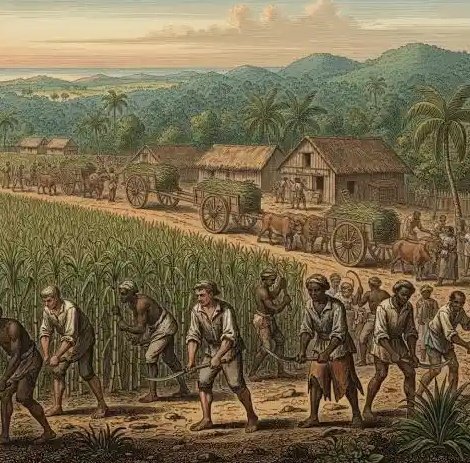
In mid-17th Century, Ireland suffered one of the most brutal upheavals in its history. The conquest led by Oliver Cromwell devastated the island through warfare, land seizures, and harsh political repression. Entire communities were displaced as the English Commonwealth imposed control.
Among the many consequences of this conquest was the forced transportation of Irish people overseas. Prisoners of war, political enemies, and civilians were shipped across the Atlantic. Many were sent to the Caribbean, where expanding plantations demanded large numbers of laborers.
These transported Irish were often bound as indentured servants. Though technically different from chattel slavery, their conditions were frequently severe. Many endured years of harsh labor on sugar plantations in unfamiliar and unforgiving environments.
Jamaica became one of the destinations where Irish laborers were sent during this period. Over time their descendants blended into the island’s population, leaving cultural traces that still appear in local place names and family histories.
English
@RonSimuell78 @histories_arch And Africa, and the Middle East, and Europe and pretty much everywhere!
English

@histories_arch Slavery in Roman era was different than the disgusting Chattel slavery practiced in the United States 🇺🇸
English

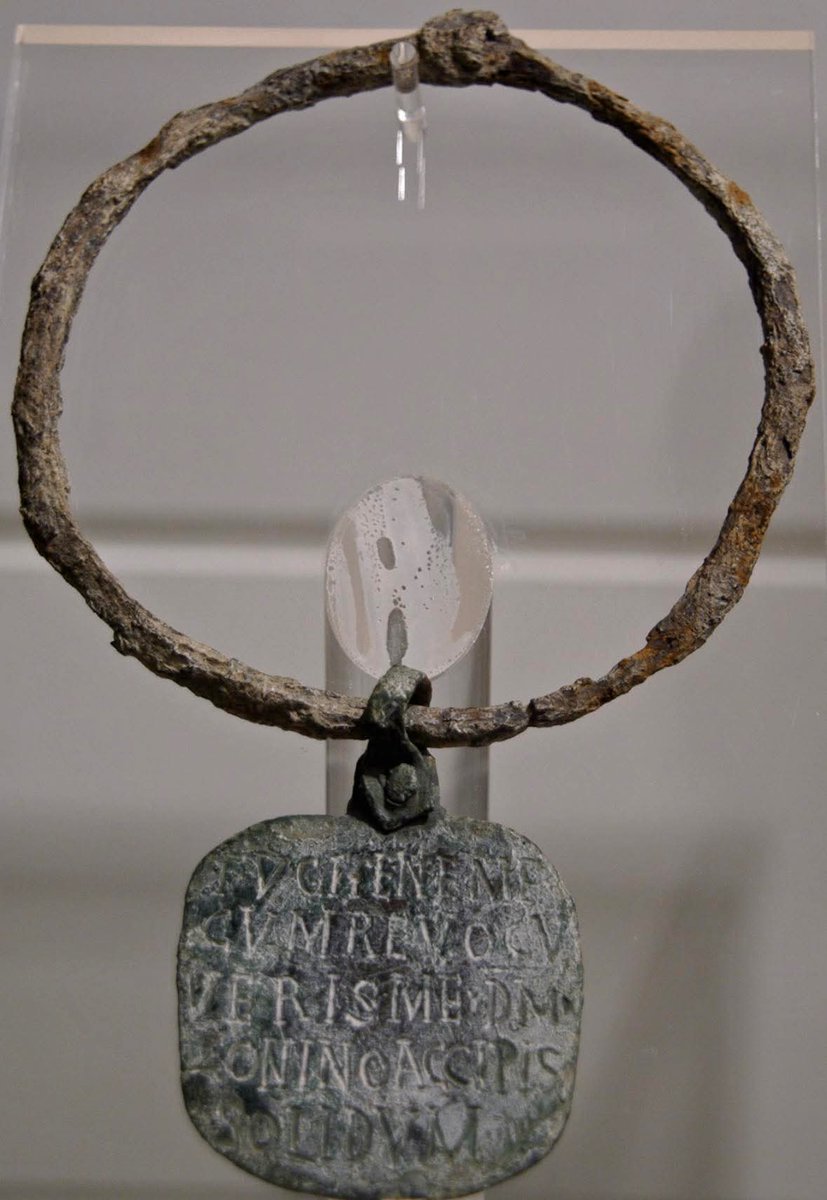
Roman slave collar with tag inscribed: “I have fled, seize me and return me to Zoninus for 1 gold coin.” The only known example discovered with its tag still attached....
This iron collar was meant for slaves in the Roman Empire. It has a bronze tag with an inscription that reads: “Fugi. Tene me. Cum revocaveris me, dabis solidum unum Zonino.” Translated, it means: “I have fled. Seize me. If you return me, you will receive one gold coin from Zoninus.” The tag served both as an identification marker and a bounty notice, ensuring that any attempt at escape was met with constant risk of capture.
Slavery was central to Roman society, with enslaved people working in households, workshops, fields, and mines. Collars like this, sometimes called vincula servorum (“chains of slaves”), were a brutal tool of control and dehumanization. They reduced a person’s identity to property, publicly displaying both their enslaved status and their owner’s authority.
What makes this artifact extraordinary is its survival in complete form, with both the iron collar and bronze tag still together. It offers rare, tangible evidence of the realities of slavery in the ancient world, beyond the accounts left by Roman writers.
#archaeohistories
English

@archaeologymag Human language was one, until it was confused into many, turning family trees into a forest of isolated languages at once.
English

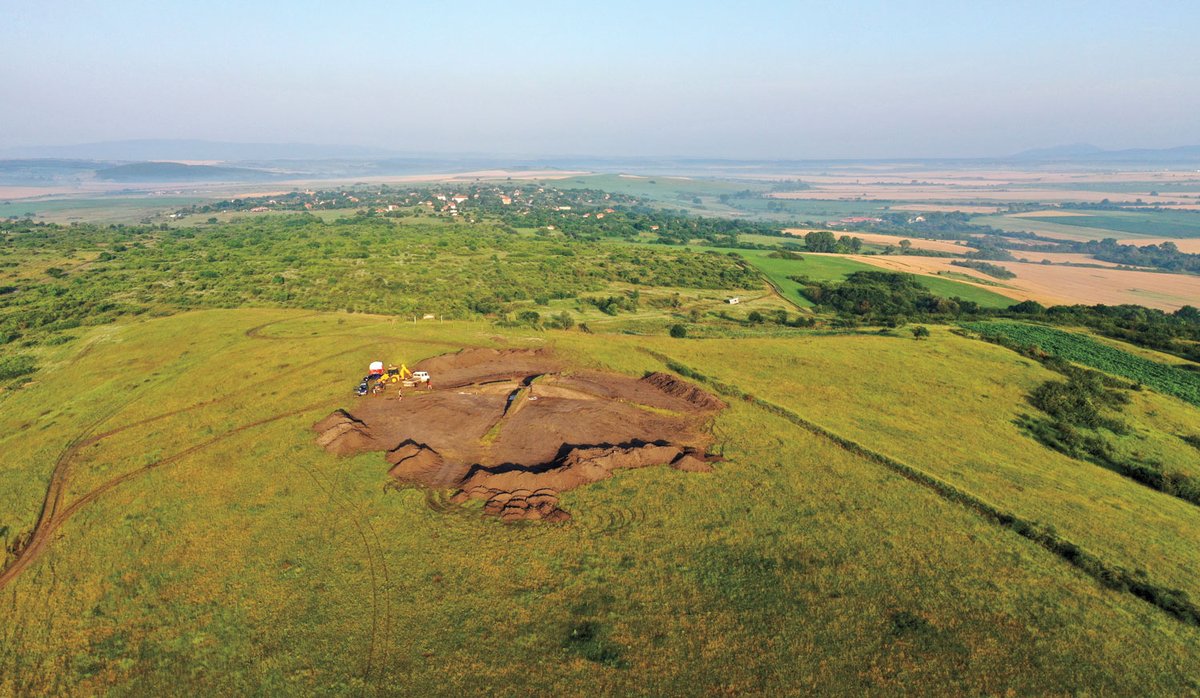
Ever since scholars understood that half the world spoke a language descended from Proto-Indo-European, they’ve asked: Who spoke it first? A team using archaeology and genetics has traced it to a small culture that thrived more than 6,000 years ago ...
archaeology.org/issues/january…

English

@histories_arch Now do a study of average intelligence overlaid over genetic diversity
English
Science does not support the idea of pure races with ancient origins. In the past few years, genetic sequencing of ancient and modern humans and related species has given us a flood of new information about how human populations have evolved.
The evidence reveals a history of ongoing genetic mingling, due to interbreeding between different populations and even species. Humans from different groups had children together, and even with Neanderthals and members of other now-extinct hominin species. This mingling occurred constantly in the long process of human migration across the globe. Europeans inhabit one region of a large genetic continuum and are no more or less “pure” than any other population.
▪︎ From Africa to the world:
The genetic history of humanity begins in what we now know as Africa. The exact location (or locations) of the first anatomically modern humans is debated, but there is a consensus they lived south of the Sahara desert between 100,000 and 200,000 years ago. A group or groups of these early humans migrated out of Africa and into the Middle East, as we now know it, some time between 50,000 and 70,000 years ago. Next, some went east into Asia while others headed west into Europe.
At some point, the wandering humans met and bred with Neanderthals. These now-extinct hominins had left Africa many thousands of years earlier. Modern Asians and Europeans still carry genetic signatures of Neanderthals, while sub-Saharan Africans do not.
The humans that migrated east into Asia also met and bred with other extinct species of hominins, including at least two major injections of genes from a group we call Denisovans. Early modern humans almost certainly bred with other ancient hominins as well, because interspecies breeding was likely common. The remains of a girl with a Neanderthal mother and Denisovan father have recently been discovered. Another recent study has shown some Neanderthals too carried traces of human DNA.
▪︎ Genetic diversity leads to greater fitness:
Genetic diversity, as measured by a metric called heterozygosity, decreases with geographic distance from Africa. Higher heterozygosity is generally associated with greater genetic fitness for survival. From this perspective it could be argued that, when the humans who walked away from Africa lost genetic diversity through living in small groups, they also lost genetic fitness. By the same argument, interbreeding between populations increases fitness.
In fact, Europeans probably benefited from picking up some Neanderthal DNA: these genes are thought to have diversified their immune systems and may have contributed to their lighter pigmentation. Humans who migrated west into Europe continued to meet and breed with other human populations.
Another wave of humans from what we call Anatolia (roughly modern-day Turkey) followed the initial spread of humans into Europe. The Yamnaya population from what we now know as the Russian steppe migrated west into Europe between 3,000 and 5,000 years ago. In fact, little genetic trace remains of the first human inhabitants of Europe, as they were continually supplanted by others.
Even the Roman civilisation, considered to be one of the historical foundations of European identity, was home to great genetic variety. A recent study looked at the genomes of 127 people from 29 sites across the past 10,000 years. It found an initial wave of hunter-gatherers had been supplanted by an Anatolian population, and during the age of Imperial Rome (27 BC to 300 AD) there were significant introductions of genes from what is now Iran and the eastern Mediterranean.
© Muhammad Asghar
#archaeohistories

English

MAHA Poll:
Should glyphosate be banned from being sprayed all over our farmland and food?
Yes or No?
Thoughts, America?
(Glyphosate—linked to cancer, gut issues, hormone disruption, and environmental harm—yet still sprayed on our crops, contaminating our food & water.)
English
@epaleezeldin @leemzeldin @EPA Make Gas Cans Great Again! #MGCGA The over engineering of gas cans has made them unusable!
English

I am launching @EPA's "Call it a Comeback" e-Newsletter this week so the American people can stay up to date on the latest work our agency is undertaking. We want MAX transparency with the public!
Use this link to sign up for the latest updates. public.govdelivery.com/accounts/USEPA…
English

Out of the 215K MAGA 🇺🇲 accounts following me, I often wonder how many of you actually exist.
Give me a Thumps-Up👍, if you see this.

English
English

This is a good question. What would you do?
DogeDesigner@cb_doge
You wake up tomorrow as the President. What’s the first change you would make?
English
English
@elonmusk
@realDonaldTrump
Prior to world war II, Japan was purchasing our scrap metal To build their war machines! Why are we allowing our enemies to buy our scrap metal While they are imposing new tariffs on aluminum exports?
alcircle.com/news/china-inc….
English
@zerohedge Here, sign up and you can get paid to be part of this invasion.
state.gov/fy-2023-notice…
English

"Mass Migration Blueprints" Reveal NGOs "Carefully Planned" US Migrant Invasion, Report Says zerohedge.com/geopolitical/m…
English

Ben Edsall retweetledi

BREAKING: @Pfizer Exploring "Mutating" COVID-19 Virus For New Vaccines
"Don't tell anyone this...There is a risk...have to be very controlled to make sure this virus you mutate doesn't create something...the way that the virus started in Wuhan, to be honest."
#DirectedEvolution
English
14 April, 2020, first time since they started the civil war that Democrats liked the 10th amendment! Thank you President Trump!
English
Ben Edsall retweetledi

Spent entirely too much time on this so if @realDonaldTrump doesn't RT I may quit the internet for good
English