Fred Spier

3.9K posts

Fred Spier banner
Fred Spier

Fred Spier

@BigHistory

Big history, the biosphere, our common future. Senior Lecturer Big History em. @UvA_Amsterdam, biochemist, cult. anthropologist, social historian, peruanista

Netherlands Katılım Mart 2009
475 Takip Edilen1.5K Takipçiler
Fred Spier
Fred Spier@BigHistory·
When I read the Club of Rome’s 'Limits to Growth' report in 1973, I concluded that if their numbers were reasonably correct, we would see around 2030 increasingly fierce competition for increasingly scarce resources, especially oil. That is what we are seeing now, I think.
English
0
0
1
61
Fred Spier
Fred Spier@BigHistory·
Remains very relevant today, or so it seems to me, almost one year after publication.
English
0
0
1
37
ArchaeoHistories
ArchaeoHistories@histories_arch·
Cato the Elder was known for a dramatic call that raised eyebrows and sent shivers down the spine of the Roman political stage. After passionately arguing on various topics in the Senate, he'd punctuate with a chilling demand: Carthago delenda est—Carthage must be destroyed. Imagine ending every conversation with such a grim insistence! It was more than just a phrase; it was a relentless call to arms, a chilling reminder of Rome's simmering tensions with its rival. To understand why Cato harped on about obliterating this city, we need to revisit the Punic Wars—a series of epic battles which had already scarred Rome deeply. Carthage, a thriving metropolis glowing with wealth and power, stood as the formidable opponent that Rome had to contend with. The grudge was personal, nationalistic, rooted in fear of losing power and prestige. Yet, Cato's constant refrain was as much about Rome as it was about Carthage. It was a rallying cry for unity among the Romans, urging them to put aside differences and face the specter of Carthage as one. This simple yet relentless call for destruction became a powerful motivator, eventually leading to the Third Punic War and the eventual annihilation of Carthage. At the height of the Roman Republic in the 2nd century BC, Carthage stood as a formidable power in the Mediterranean, a rival that Rome could neither fully conquer nor comfortably ignore. However, the Roman senator Cato the Elder made it his mission to change this. He famously concluded his speeches, regardless of the main topic, with a staunch insistence: "Carthago delenda est" or "Carthage must be destroyed." This repetitive demand the Roman resolve against Carthage following the Punic Wars. Cato the Elder was a statesman and philosopher who firmly believed that Rome could only secure its future by eliminating Carthage as a threat. The city, once a powerful adversary during the Punic Wars (264-146 BC), had rebuilt its wealth and influence. Despite peace treaties that aimed to limit Carthage's power, the city continued to thrive economically, which unsettled Roman statesmen like Cato. His call to destroy Carthage culminated from persistent Roman fears that Carthage could one day regain military strength. The persistence of Cato's message began swaying public opinion in Rome. Citizens and senators grew concerned about the long-term safety of the Republic. Cato’s relentless advocacy proved instrumental in igniting the flames of action. Eventually, the Third Punic War broke out in 149 BC, with Rome laying siege to Carthage. After a bitter struggle, the city fell in 146 BC, leading to its total destruction. By 146 BC, Carthage lay in ruins, securing Rome's dominion over the western Mediterranean but also setting a precedent for brutal conquest. What was initially meant to neutralize a rival instead expanded the narrative of Roman dominance through decisive and merciless action. The ruins of Carthage in modern-day Tunisia are a stark reminder of this ancient conflict. #archaeohistories
ArchaeoHistories tweet media
English
1
13
58
8.6K
Fred Spier
Fred Spier@BigHistory·
@konstructivizm Totally agree, well described! Saw them in action (from a distance) as an adolescent. Impressed me then, still impress me now.
English
0
0
5
347
Black Hole
Black Hole@konstructivizm·
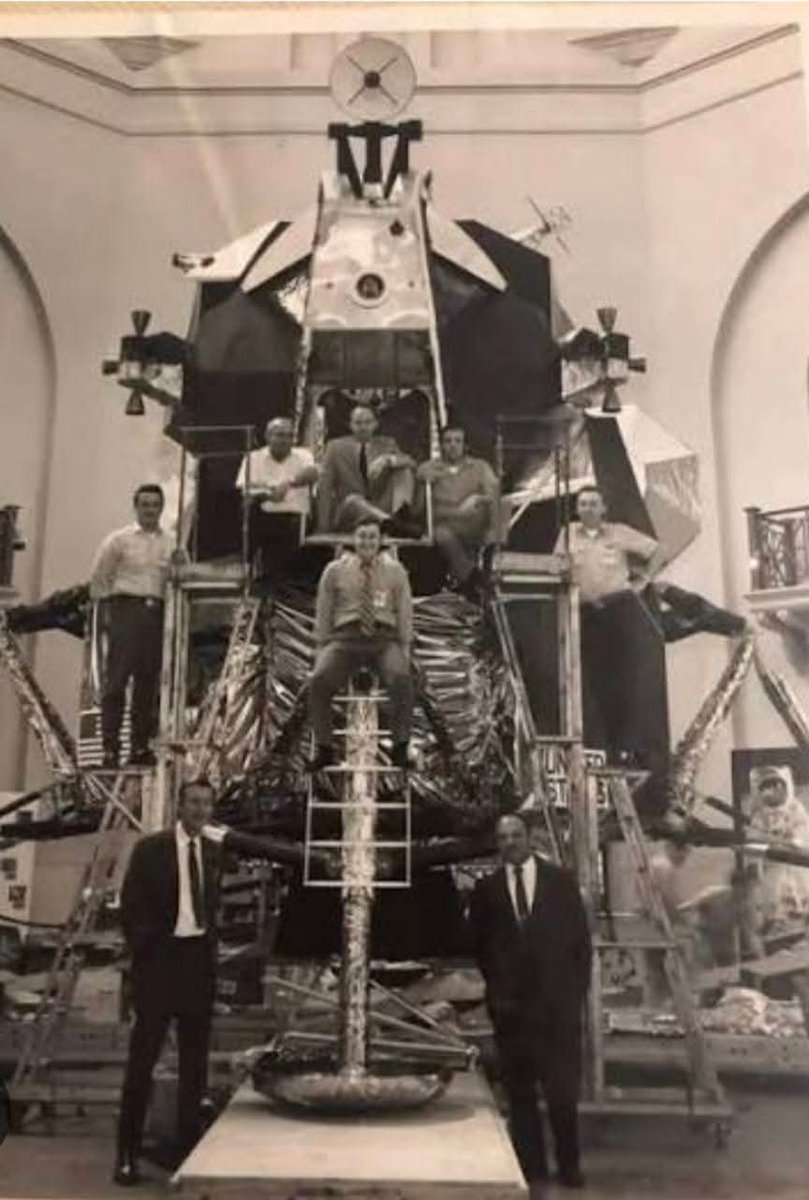
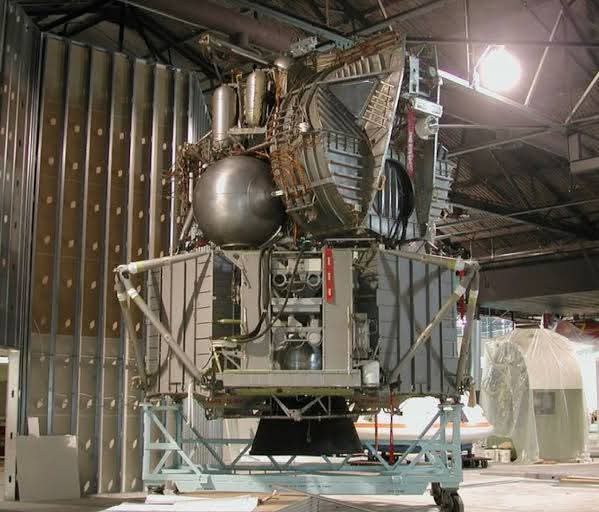
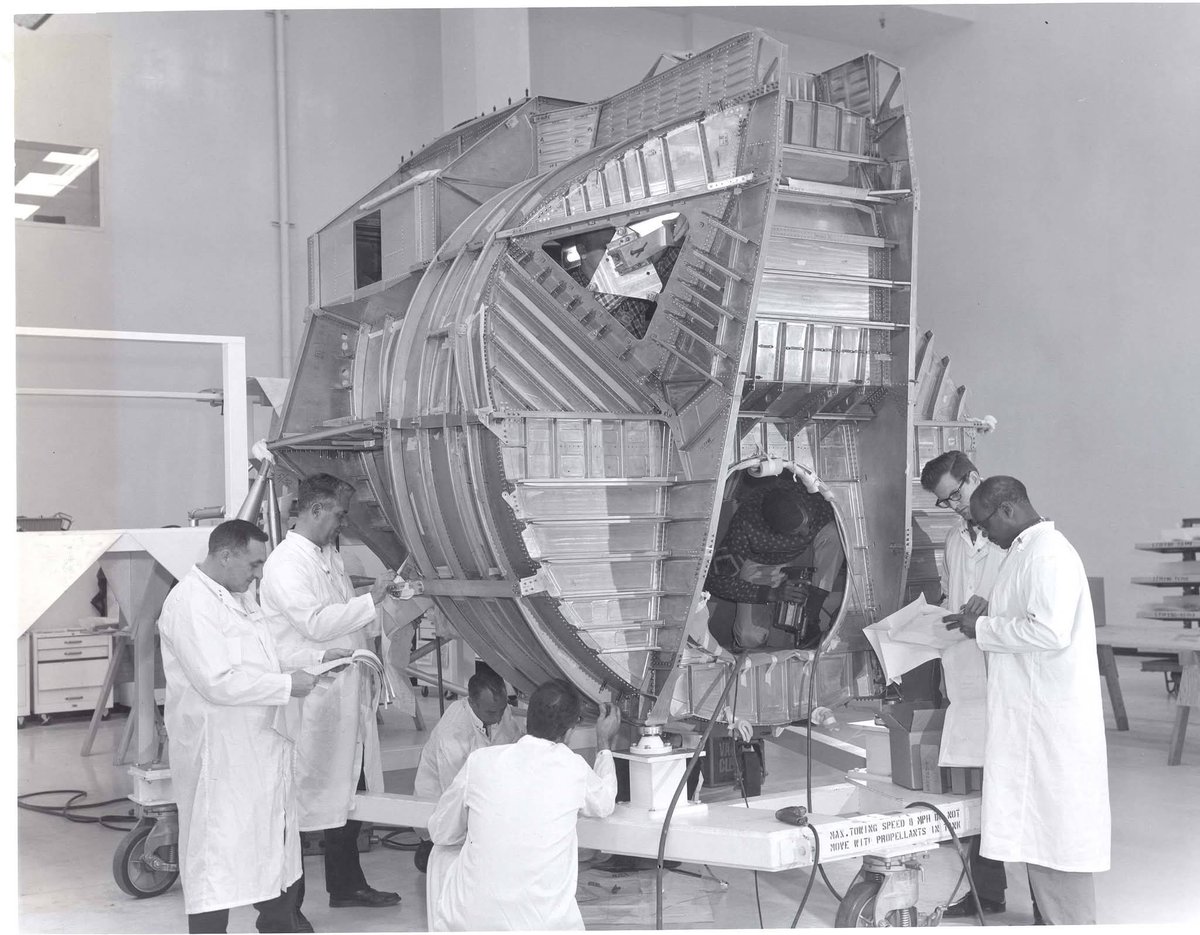
The Apollo Lunar Module (LM) was a masterpiece of engineering, optimized for its extreme mission rather than built to be rugged in an everyday sense. Its thin aluminum structure, gold foil insulation, and spindly legs gave it a delicate appearance, but that was deliberate: every gram saved meant more capability for landing on and returning from the Moon.Key Specifications(With minor corrections for precision based on NASA documentation):Total mass: Approximately 15,200 kg (fully fueled, standard missions; up to ~16,400 kg for extended "J-class" missions like Apollo 15–17). Descent engine: Throttleable from ~4,670 N (10% thrust) to 45,040 N maximum (operational full throttle often around 44,000 N). Ascent engine: Fixed thrust of ~15,600–16,000 N—and yes, it achieved 100% reliability across all missions, with no in-flight failures. Power: Silver-zinc batteries (4–5 depending on mission, providing reliable but limited energy). Computer: The Apollo Guidance Computer (AGC), a pioneering digital fly-by-wire system with core rope memory, radiation hardening, and real-time multitasking capabilities far ahead of its time. Structure: Primarily aluminum alloy with redundancies in critical areas. Thrusters: 16 reaction control system (RCS) thrusters for precise attitude control. The LM wasn't just engineered to survive—it was over-engineered for reliability where it counted most. Redundant systems (like dual guidance options in later missions via the Abort Guidance System), hypergolic propellants for instant ignition, and the ascent engine's simplicity (no throttle, no gimbal—pure reliability) ensured it could handle vacuum, radiation, ±160°C temperature swings, and the stresses of launch, descent, surface ops, and ascent.It performed flawlessly on six lunar landings, including saving the Apollo 13 crew by serving as a lifeboat.People unfamiliar with the constraints of spaceflight often misinterpret that lightweight, precision design as fragility. In reality, it was tough enough to do what no spacecraft had done before—or has done since.A true icon of human ingenuity.
Black Hole tweet mediaBlack Hole tweet mediaBlack Hole tweet media
English
13
107
525
20.7K
Fred Spier
Fred Spier@BigHistory·
[2512.09643] An [Earth lower] Orbital House of Cards: Frequent Megaconstellation Close Conjunctions [and increased risk of catastrophic consequences] arxiv.org/abs/2512.09643
English
0
0
0
43
Fred Spier
Fred Spier@BigHistory·
@Turbinetraveler This movie cannot possibly be of the first flight, because there are two pilots. Orville Wright alone piloted the first successful flight. During the first flight one photo was taken, no movie.
English
2
0
30
737
Turbine Traveller
Turbine Traveller@Turbinetraveler·
122 years ago today (December 17, 1903), the Wright brothers made their first flight. The Flyer traveled 120 feet in 12 seconds and was powered by a 4-cylinder engine producing 12 hp at 1025 rpm. It turned two fixed-pitch wooden propellers in opposite directions at 350 rpm, with a fuel capacity of 22 ounces.
English
38
353
1.4K
57.7K
Fred Spier
Fred Spier@BigHistory·
@BLackgold_5 Those two jet fighters landing on the carrier cannot possibly be from the 1960s.
English
0
0
1
79
durvesh
durvesh@BLackgold_5·
In 1963 the US tested landing C-130 Hercules onto an aircraft carrier .
English
95
318
7.8K
1.3M
Fred Spier
Fred Spier@BigHistory·
@JuanSanchez0x0 The captain may have flown the plane to the remotest point from land in the Indian Ocean, and have crashed it there hard, in doing so scattering it into a great many pieces. If so, no large remains will be found. This possible scenario fits the available empirical evidence.
English
0
0
2
690
JuanSanchez
JuanSanchez@JuanSanchez0x0·
Talked to a Boeing engineer about this flight, and they said it was a clear murder-suicide and that everyone knew it from the start. The pilot turned off the transponder and flew between radar coverage to hide where they were going. This pilot had been on the route many times and knew where the dead spots were. They flew to an area they couldn’t get out of. The plane ran out of fuel over the ocean and that was that. The sickest part of this event is how the media was allowed to lie to the public. From aliens, to new Chinese weapons, to political assassinations, to a 9/11 on Tokyo, to a wormhole into another universe, there wasn’t a story off limits. Meanwhile, everyone in the aviation industry knew it was just some guy with mental illness and the plane would splashdown. This was one of those stories where I realized the media was evil. They actively make the world a worse place, for profit. 🤢
Breaking911@Breaking911

Malaysia is set to resume the search for missing flight MH370, which went missing over a decade ago, with Ocean Infinity starting deep-sea operations on December 30, the New Straits Times reports, citing the transport ministry.


English
452
2.6K
31.8K
4.5M
Fred Spier
Fred Spier@BigHistory·
@IntEngineering The captain may have flown the plane to the remotest point from land in the Indian Ocean, and have crashed it there hard, in doing so scattering it into a great many pieces. If so, no large remains will be found. This possible scenario fits the available empirical evidence.
English
0
0
0
21
Interesting Engineering
Interesting Engineering@IntEngineering·
Renewed hunt for Malaysia Airlines Flight MH370 marks a major step in one of aviation's longest-running mysteries. bit.ly/4pyHXAN
Interesting Engineering tweet media
English
2
4
10
2.7K
Fred Spier
Fred Spier@BigHistory·
@ConversationUS Excellent study. Looks like the work of rivaling (family?) groups to me.
English
0
0
0
12
Fred Spier retweetledi
The Conversation U.S.
The Conversation U.S.@ConversationUS·
Drones, physics and rats: Studies show how the people of Rapa Nui made and moved the giant statues – and what caused the island’s deforestation #Echobox=1764732697" target="_blank" rel="nofollow noopener">theconversation.com/drones-physics…
English
1
2
1
461
Fred Spier
Fred Spier@BigHistory·
@JorgeSeniorUac Me pregunto si James Scott ha leído nuestros libros de big history, parece que no.
Español
0
1
1
22
Jorge Senior UAC
Jorge Senior UAC@JorgeSeniorUac·
Pablo Malo@pitiklinov

Un nuevo estudio, que citan aquí, explica por qué surgieron los primeros Estados hace 5.000 años y la causa no es la agricultura. La agricultura normal empezó hace 9.000 años, pero los Estados tardaron 4.000 años más en aparecer. Por lo tanto, la agricultura por sí sola no explica los Estados. La teoría que gana fuerza y explican aquí (de un tal James C. Scott) dice que los Estados surgieron casi siempre donde se cultivaban cereales (trigo, cebada, arroz, maíz). ¿Por qué? Porque los cereales: – Crecen a la vista (fácil vigilarlos). – Maduran todos a la vez (predecible). – Se almacenan años (perfectos para cobrar impuestos). Es decir, que son el cultivo ideal para que un estado pueda cobrar impuestos. Un jefe o banda armada puede llegar al valle, contar los campos, esperar la cosecha, llevarse el 20-30% del grano y guardarlo en almacenes. Con tubérculos no puedes: están bajo tierra, la gente los saca cuando quiere, se pudren rápido… imposible controlar y cobrar. Los autores probaron esto con cientos de sociedades antiguas y un árbol genealógico de lenguas del mundo y vieron que los cereales predicen fuertemente la aparición de Estados y de impuestos, que la agricultura intensiva (riego, abono) es más bien consecuencia del Estado que causa y que los cultivos difíciles de gravar (tubérculos, frutas, verduras) se abandonan cuando llega el Estado. También es importante que la escritura se inventó básicamente para llevar la cuenta de los impuestos y luego sirvió para crear leyes e instituciones que mantuvieran a una élite diminuta mandando sobre todos. En resumen, los primeros Estados no nacieron de la agricultura en general, sino de la posibilidad de cobrar impuestos fácil y de forma fiable gracias al grano. El resto (jerarquías, escritura, leyes) vino después para mantener el Estado. theconversation.com/the-real-reaso…

QME
1
0
1
94
Fred Spier
Fred Spier@BigHistory·
@shipbuildingtv In the video, on the stern the ship’s name is shown as “Atlante”.
English
0
0
13
1.7K
Ship Building TV
Ship Building TV@shipbuildingtv·
The Italian Navy’s second Vulcano-class Logistic Support Ship “Atalante” has been launched. ⚓️ 193 meters long with a displacement of 27,200 tons, she can reach a top speed of 20 knots when fully loaded.
English
29
271
2.9K
247.4K
A Cerbic
A Cerbic@a_cerbic·
The chines on the SR-71 extend all the way to the tip of the nose, and because they offer more-or-less a knife edge to the airstream, they increase directional (yaw) stability. With the YF-21, the chines end some way behind the nose, and the nose is circular in cross-section. This means that it offers a much greater surface for the air to push on from the sides, and thus reduces directional stability. That's why they had to add the ventral fins at the rear.
English
1
0
2
665
Habubrats SR-71
Habubrats SR-71@Habubrats71·
I love it when I can find a secret inside of a secret program. Here is another one.  NASA was not allowed to have an SR 71. The SR-71s were top secret clearance only. They were only allowed to have YF 12s so…. they just changed the name.  They used the SR 71 #951 and flew it along with YF-12 and said that they were the same airplane. The plan fooled almost everyone. But if you look closely, you can tell the difference between a YF 12 and an SR 71 I can …can you? So, This SR-71, the second off the production line, clearly has an identity problem. In 1971, #17951 was loaned to NASA to complete the testing of the YF-12A program (2 of the 3 YF-12s had already been lost in accidents). 951 was temporarily redesignated as a YF-12C (there being no B-model trainer for the YF-12 series) and given NASA#937. This number was chosen for two reasons: the Air Force didn't want anyone to know that NASA had an honest-to-goodness SR-71 in their possession and made up the "YF-12C" designation to hide the fact. Since the other 3 YF-12s bore numbers 934, 935, and 936, it made sense that the next aircraft in the series would be numbered 937. This SR 71 is the oldest surviving blackbird; the first one, the 950, crashed. She first flew on March 5, 1965, and served as a test bird for her whole career. With lots of test equipment and instrumentation aboard, she was too nonstandard for operational reconnaissance work. She first flew as the contractor test aircraft based at Air Force Plant 42 in Palmdale, CA. She would serve as a NASA propulsion test vehicle until October 27, 1978, when she was transferred back to the USAF. At that point, she regained her original designation. 951 made her final flight on December 22, 1978, rolling up a total of 796.7 flight hours. She remained in storage at Plant 42 until 1990, when she was disassembled and transported by road to Pima Air Museum. After a recent restoration, the aircraft stands proudly among one of the largest aerospace collections in the world. At Pima Air Museum, you can touch an original, classic blackbird. This photograph SR-71 #951 in flight under NASA colors; notice the red rectangular markings on the upper wing surfaces, the clearly visible anti-collision beacon near the center of the fuselage, and the pilot's white pressure suit -photo courtesy of NASA Linda Sheffield
Habubrats SR-71 tweet media
English
22
145
1.5K
72K