
Sabitlenmiş Tweet
Hapathy
11.9K posts


Hapathy
@Biitchpiitch
Getting weirder every year. I drew this. Go me.
Katılım Nisan 2013
904 Takip Edilen373 Takipçiler
Hapathy retweetledi

So close to kick off!!!!!
Super excited but fucked if I’m being corralled into using the new voting system. So grubby.
#Eurovision
English
Hapathy retweetledi
Hapathy retweetledi

Hapathy retweetledi


Hapathy retweetledi


Hapathy retweetledi


Hapathy retweetledi


Hapathy retweetledi

This is Lily. She's been accused of drinking her mom's slushie. Will not be taking any questions at this time. 14/10


English
Hapathy retweetledi

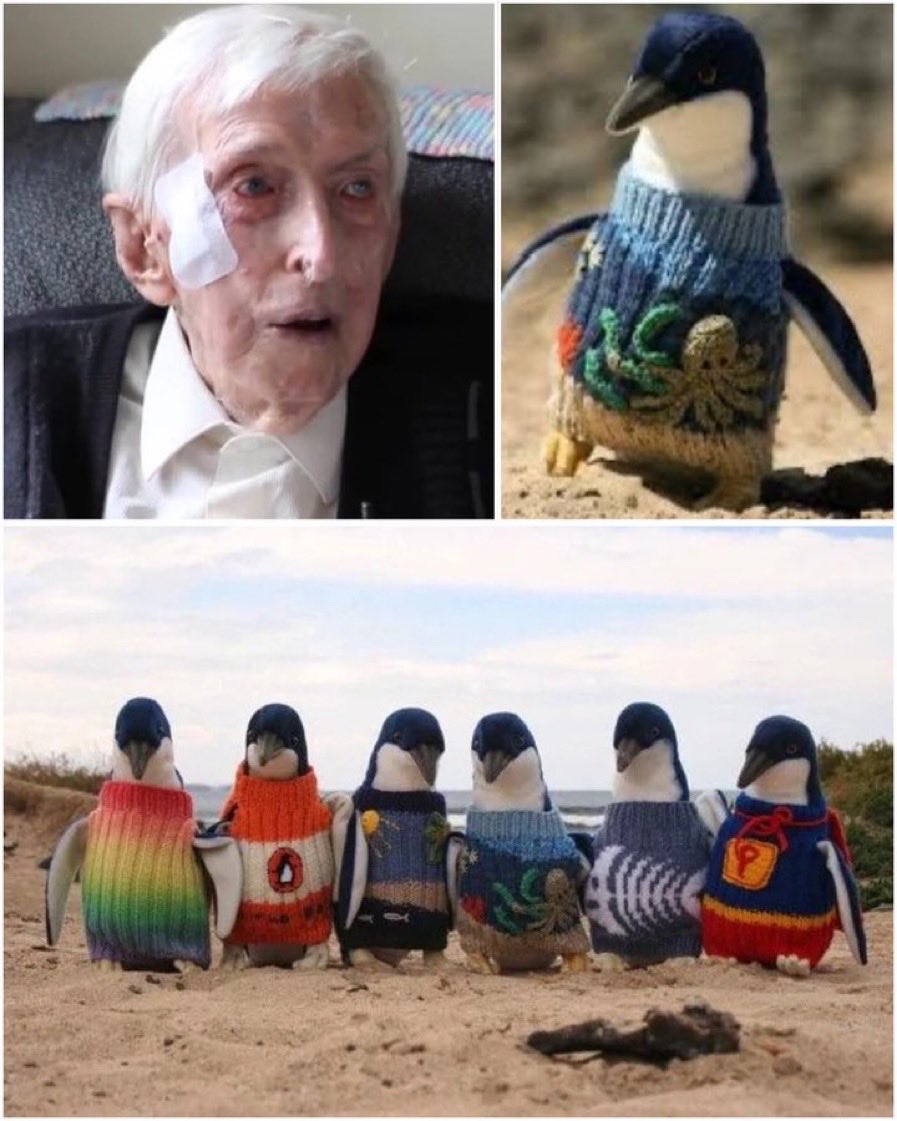
En Australia, un hombre llamado Alfie Date se mudó a una residencia de jubilados a la edad de 109 años. Alrededor de 12 horas después de su llegada, dos de las enfermeras fueron a su habitación y le preguntaron si sabía tejer. Sí sabía, lo hacía desde 1932.
Le contaron sobre un programa que pedía a voluntarios que tejieran diminutos suéteres de lana para una especie en peligro de extinción llamada pingüinos pequeños. Los suéteres evitan que las aves cubiertas de petróleo se limpien con sus picos durante un derrame, porque el petróleo es tóxico si lo tragan. Alfie dijo que sí. Pasó sus últimos dos años tejiendo cientos de ellos. Falleció en 2016, a los 110 años.
Español
Hapathy retweetledi

During a talk at the San Diego Zoo, staff brought the otters closer so families could see them.
One otter mom waddled up and proudly showed off her new baby, earning cheers from kids nearby.
Then her partner, who heard all the commotion, wanted his own moment in the spotlight.
So he stepped forward too, not with a pup, but with a smooth little rock held carefully in his paws.
He sat there as if waiting for applause. The keeper joked he was saying, “I brought something too,” noting that otters often grow attached to favorite rocks and carry them like treasures. 🥲❤️

English
Hapathy retweetledi


Hapathy retweetledi

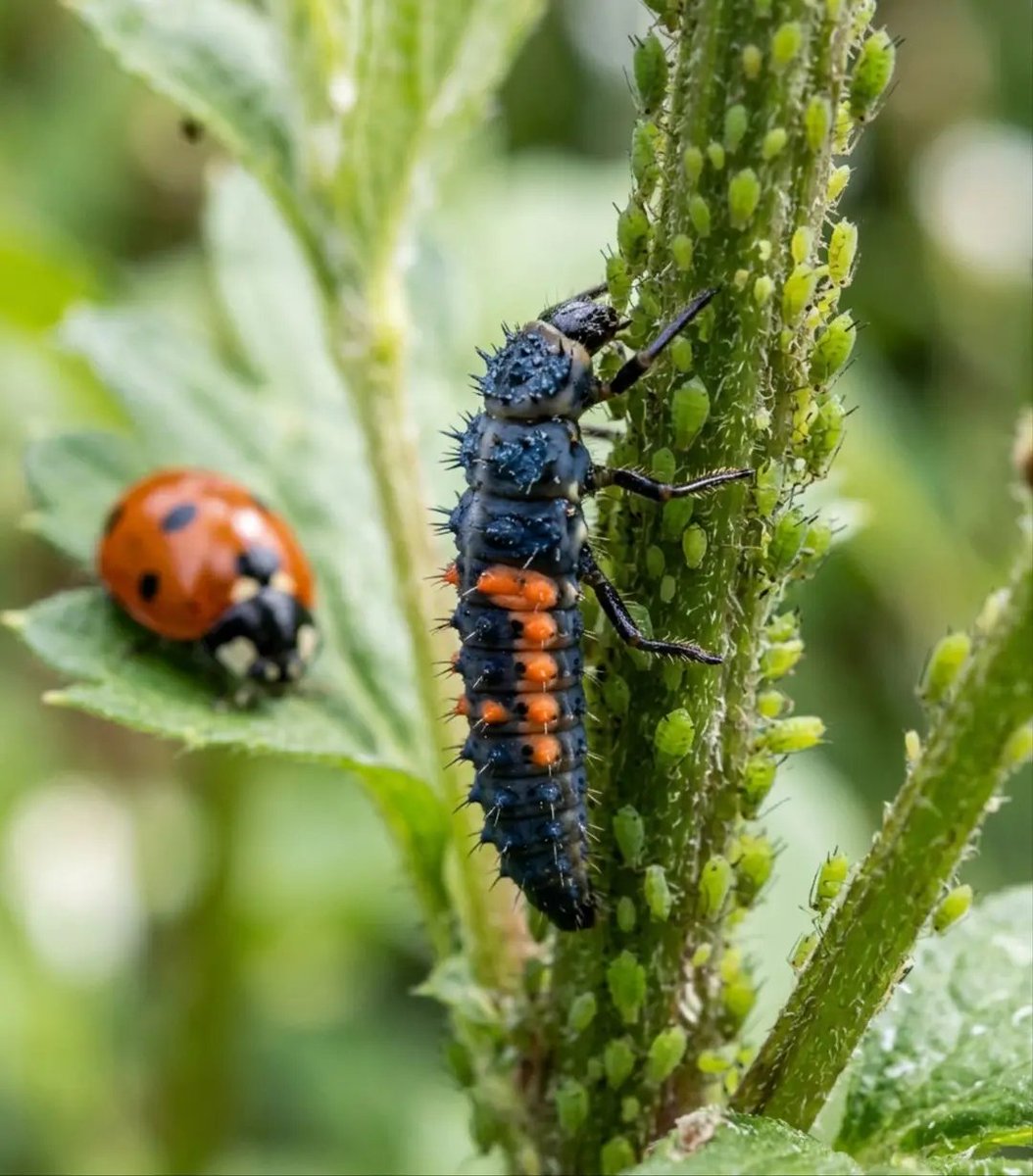
This is a ladybird larva. It looks nothing like a ladybird. It looks like a tiny black alligator with orange spots — and most gardeners crush it thinking it's a pest.
That mistake costs the garden dearly. An adult ladybird eats around 50 aphids a day. Its larva can devour up to 500 before it pupates. Ten times as many. That strange-looking creature working its way along your tomato stems is the most effective phase of a ladybird's entire life.
Once you know what to look for, the larva is unmistakable: an elongated blue-black body with six orange spots along the sides, six short legs, slow and methodical movement up and down stems. It doesn't fly, doesn't jump, doesn't hide. It moves from one aphid colony to the next and feeds continuously for two to three weeks before pupating.
The pupa looks like a small, still orange droplet fixed to a leaf — and it too gets removed during routine plant tidying. Inside it, the adult ladybird is forming.
If you find aphids on a plant and ladybird larvae among them, leave them alone. The biological control is already working.
🐞
English
Hapathy retweetledi

Watching Jet Li turn 63 yesterday, I caught this clip of him in a party hat, eyes closed, fully trusting his young daughter as she “helps” with the birthday cake… only for confetti to explode everywhere.
Here’s a guy who, at 11 years old, told President Nixon he didn’t want to guard one powerful man — he wanted to protect a billion of his own people. Who later walked away from massive Hollywood roles (including what became Chow Yun-fat’s part in Crouching Tiger) because his wife was pregnant and he’d promised to be there.
He just laughs. That big, genuine dad laugh. No flying kicks. No heroic poses. Just a man who once moved like lightning on screen, now completely at peace letting his little girl surprise him.
Jet Li (李连杰) was born on April 26, 1963. He turned 63 on April 26, 2026 (just yesterday relative to today). Birth sign: Taurus.
Birthplace: Beijing, China.
English
Hapathy retweetledi
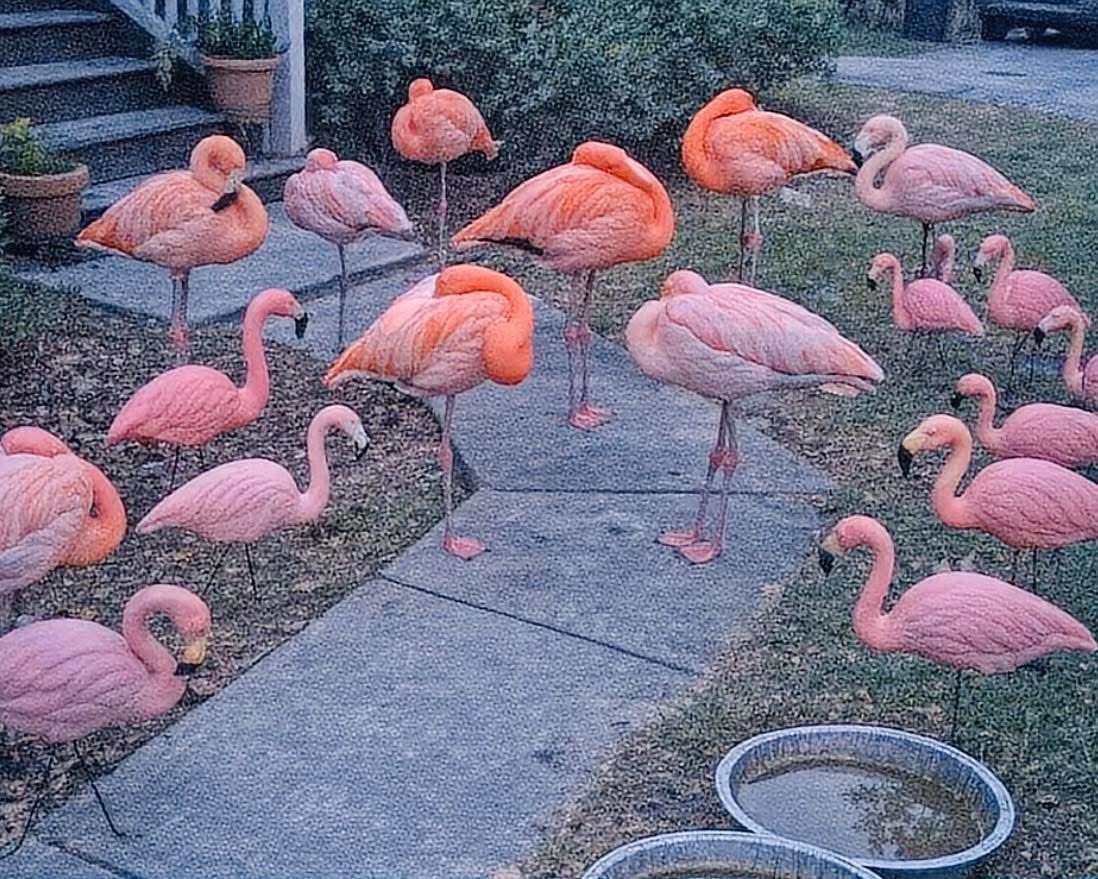
Pam Luongo bought six plastic flamingos at a garage sale in March 2019. She stuck them along her front walkway in Beaufort, South Carolina, and forgot about them. By September, seventeen real flamingos were standing in her yard. Wildlife officials couldn't explain it. Caribbean flamingos hadn't nested that far north in recorded history. A biologist from Clemson set up cameras. The birds were landing at dusk, tucking their heads, and sleeping between the plastic ones like they'd found family. Pam started leaving out shallow pans of brine shrimp. By 2021, the flock hit forty-three. The Audubon Society designated her quarter-acre lot a protected habitat. She still mows around them.
English
Hapathy retweetledi

Hapathy retweetledi

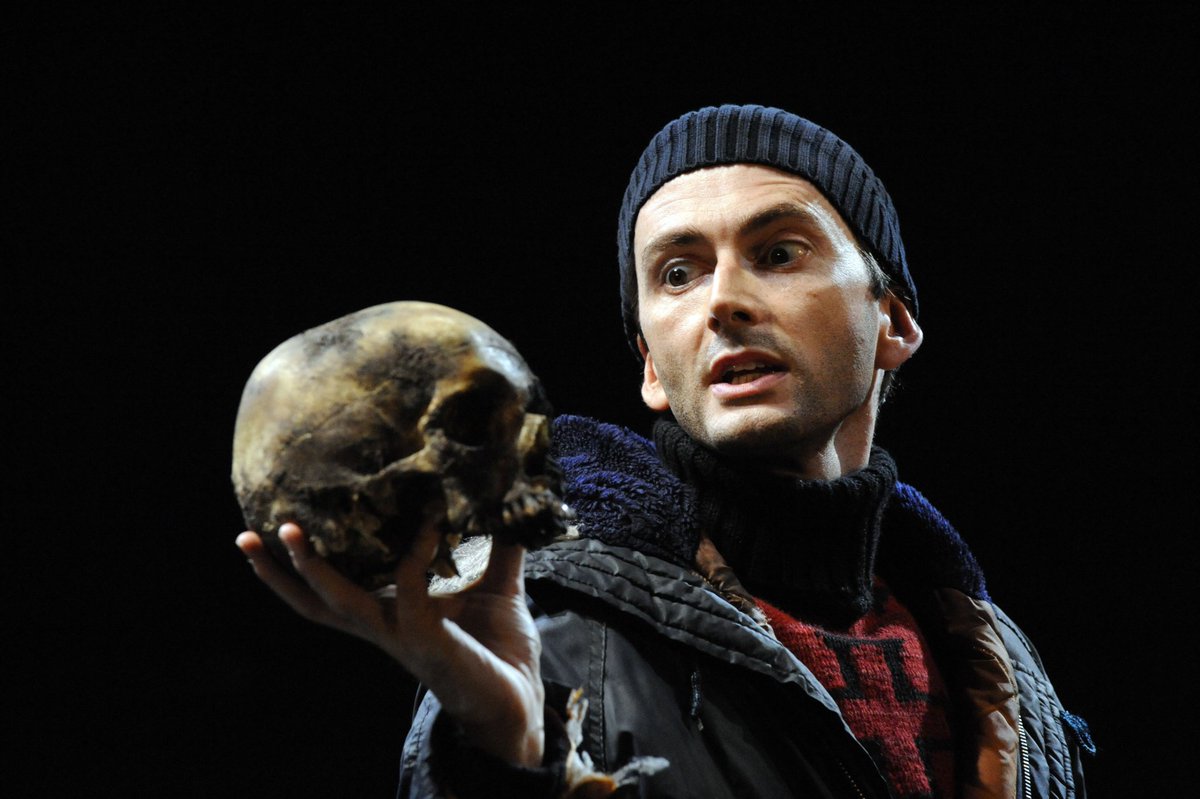
The skull in the Royal Shakespeare Company's props department has a name on the paperwork...
That name is André Tchaikowsky.
It is not the name he was born with.
He came into the world in Warsaw in 1935 as Robert Andrzej Krauthammer, the son of a Jewish family. He showed musical ability from early childhood, taught piano by his mother from the age of four.
In 1940 the Nazis arrived, and the family were moved into the Warsaw Ghetto. In 1942, when he was seven years old, he was smuggled out. The people who got him out gave him a new identity on forged papers. The papers said his name was Andrzej Czajkowski.
He was sent into hiding with his grandmother. They stayed hidden until 1944, when the Warsaw Uprising swept them up and deposited them in a transit camp, from which they were eventually released.
Robert Krauthammer did not survive the war. Andrzej Czajkowski did.
He went on to study piano, first in Lodz, then Paris, then Warsaw. He won prizes.
He emigrated to England in 1956. He changed the spelling of his name to André Tchaikowsky, the French form, the name by which he would be known for the rest of his life. He became a respected pianist and a passionate composer.
He was obsessed with Shakespeare. When he died of colon cancer in Oxford in 1982 at the age of 46, he left his body to medical research and his skull to the Royal Shakespeare Company, requesting in his will that it be offered for use in theatrical performance.
He never got to see it happen.
The RSC received the skull, dried it on a rooftop for two years, and then placed it in a tissue-lined box in the props department, where it stayed for 26 years. Directors took it out for rehearsals and then put it back. It was too much, they said. Too distracting.
Too real.
In 2008, director Gregory Doran retrieved it for his production of Hamlet starring David Tennant. For months, eight times a week, Tennant stood on stage at the Courtyard Theatre in Stratford-upon-Avon and held the skull aloft during the gravedigger scene. Audiences had no idea whose skull it was.
The image became one of the most reproduced photographs of the production. It ended up on a British postage stamp.
The name on that stamp, on the programmes, on the posters, is André Tchaikowsky.
The skull belongs to a boy who was handed a false identity in a ghetto in 1942 and kept it for the rest of his life and beyond it. Robert Krauthammer wanted to survive.
André Tchaikowsky wanted to play Yorick. In the end, both of them got what they were after.
#archaeohistories
English
Hapathy retweetledi
She kept finding women in laboratory photographs from the 1800s. Then she read the published papers—and every single woman had vanished. Someone had erased them from history.
Yale University, 1969.
Margaret Rossiter was a graduate student studying the history of science. She was one of very few women in her program.
Every Friday afternoon, students and faculty gathered for beers and informal conversation. One week, Margaret asked a simple question: "Were there ever any women scientists?"
The faculty answered firmly: No.
Someone mentioned Marie Curie. The group dismissed it—her husband Pierre really deserved the credit.
Margaret didn't argue. But she also didn't believe them.
So she started looking.
She found a reference book called "American Men of Science"—essentially a Who's Who of scientific achievement. Despite the title, she was shocked to discover it contained entries about women. Botanists trained at Wellesley. Geologists from Vermont.
There were names. There were credentials. There were careers.
The professors had been wrong.
But Margaret's discovery was just the beginning. Because as she dug deeper into archives across the country, she found something far more disturbing.
Photograph after photograph showed women standing at laboratory benches, working with equipment, listed on research teams.
But when she read the published papers, the award citations, the official histories—those same women had disappeared. Their names were missing. Their contributions erased.
It wasn't random. It was systematic.
Women who designed experiments watched male colleagues publish results without giving them credit. Women whose discoveries were assigned to supervisors. Women listed in acknowledgments instead of as authors. Women passed over for awards that went to male collaborators who contributed far less.
Margaret realized she was witnessing a pattern that stretched across centuries.
Women had always been present in science. The record had simply pushed them aside.
She needed a name for what she was documenting.
In the early 1990s, she found it in the work of Matilda Joslyn Gage—a 19th-century suffragist who had written about this exact phenomenon in 1870.
In 1993, Margaret published a paper formally naming it: The Matilda Effect.
The term captured something that had been hidden in plain sight for generations. Once you knew the term, you saw it everywhere.
Her dissertation became a lifelong mission.
For more than 30 years, Margaret researched and wrote her landmark three-volume series: Women Scientists in America. She examined letters, institutional policies, individual careers. She gathered undeniable evidence that women in science had been consistently under-credited and structurally excluded.
Her work faced resistance. Many dismissed women's history as political rather than academic. Others insisted she was exaggerating.
Margaret didn't argue emotionally. She presented data. Documented cases. Patterns repeated across decades and institutions.
Eventually, the evidence became undeniable.
Her research helped restore recognition to scientists who had been erased:
Rosalind Franklin, whose X-ray work revealed DNA's structure—credit went to Watson and Crick.
Lise Meitner, who explained nuclear fission—omitted from the Nobel Prize.
Nettie Stevens, who discovered sex chromosomes—received little credit.
Cecilia Payne-Gaposchkin, who discovered stars are made of hydrogen—initially dismissed.
And countless others whose names had nearly vanished.
Margaret changed the narrative. Science was no longer just the story of solitary male geniuses. It became a story of collaboration that included women who had been written out.
The Matilda Effect became standard terminology. Scholars used it to examine how credit is assigned, how authors are listed, who receives awards, who gets left out.
English
Hapathy retweetledi

I know I'm a pedant, but it is one of my areas of law so I'm going there. It's the Equality Act 2010. Feel free to leave off the 2010 bit, but it is 100% not “the Equalities Act”. There are not multiple equalities. Equality is a concept. It is singular. Thanks x
English
Hapathy retweetledi

“It appears I may have conveyed information of questionable veracity.”
🍂@Lovandfear
If you're a writer, write “I lied.” Without writing, “I lied.”
English
Hapathy retweetledi

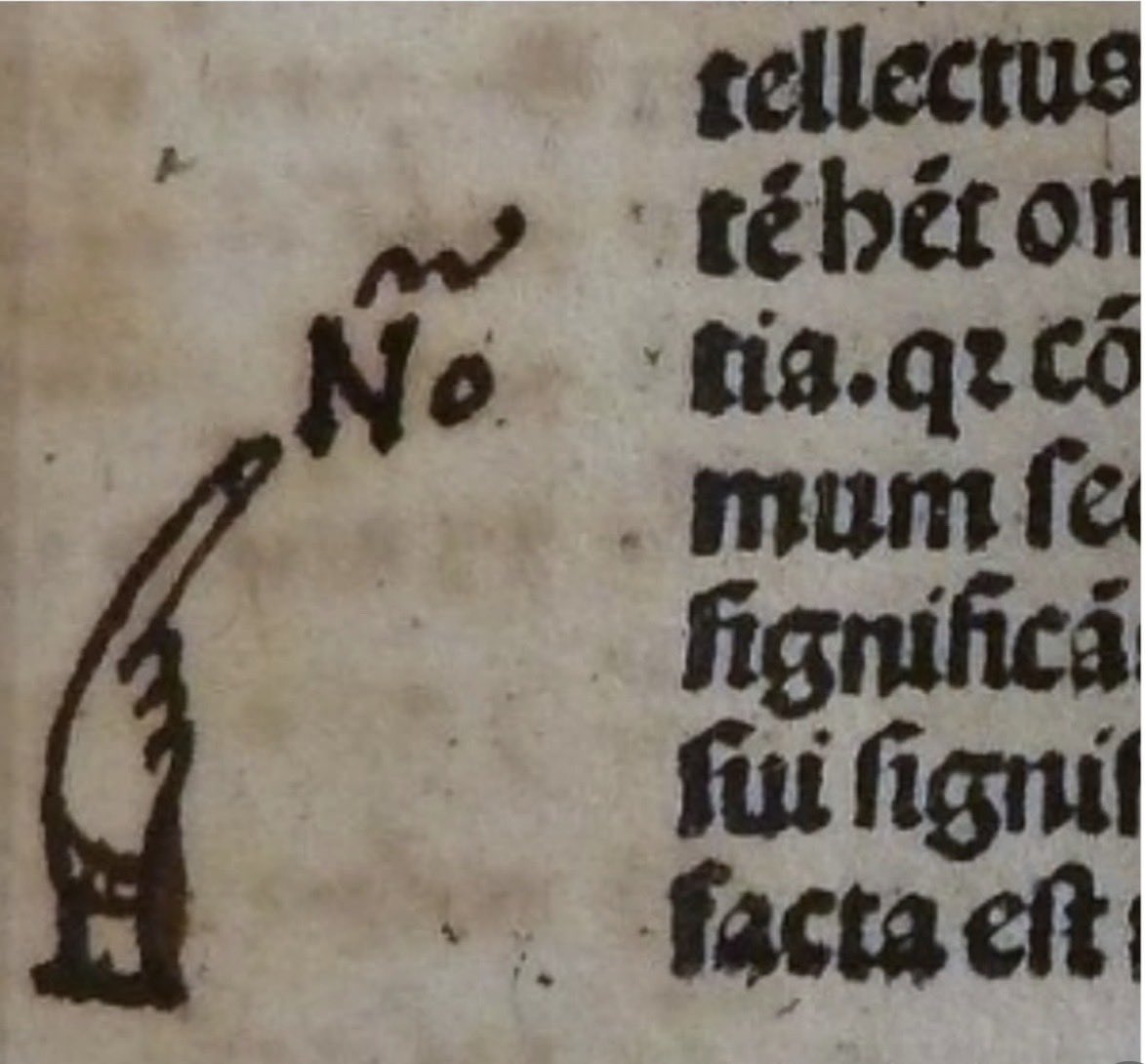
“Will you stop posting Medieval manuscripts?”
Me:
English