Khalid K. Alam ‎خالد كمال عالم

6.4K posts

Khalid K. Alam ‎خالد كمال عالم banner
Khalid K. Alam ‎خالد كمال عالم

Khalid K. Alam ‎خالد كمال عالم

@BiochemPhD

Biotechnologist.

Saint Louis, MO Katılım Mayıs 2011
1.5K Takip Edilen1.5K Takipçiler
Khalid K. Alam ‎خالد كمال عالم
“And now Trump wants $200 billion more for Israel. When was the last time he asked congress for $200 billion to improve your lives? When was the last time that any president, democrat or republican, did that?”
Propaganda & co@propandco

I made it to Iran safe and sound. I heard the F35 did not. It got me wondering… If Americans are so desperate to enter Iran, why don’t they come in peace instead of war? Come as tourists instead of soldiers. Haven’t you had enough fighting, killing and dying for Israel? Do you not have greater aspirations for yourselves or is it all just about expanding Israel’s borders? How is it that Iran has better infrastructure and cleaner cities than many cities in the United States? Why haven’t I seen a single homeless person in Iran while many US cities look like post apocalyptic war zones crawling with the walking dead? America has truly lost its way. The money hungry elite goyim slaves of Zionism loot the treasury of the hard working American people to fund a genocidal Jewish supremacist project in the Middle East instead of bettering the lives of the American people. Is this really what the founding fathers had in mind? Did George Washington march through the mud and snow to fight the British empire so that his descendants could kill themselves, and their nation, for Israel? And now Trump wants $200 billion more for Israel. When was the last time he asked congress for $200 billion to improve your lives? When was the last time that any president, democrat or republican, did that? Stop wasting your time, money, energy and lives on a part of that world that is truly sick and tired of you and your bullshit. Iran does not need or want your idea of freedom. Neither does Gaza, Yemen or southern Lebanon. They are already free. It’s us Americans that need freedom. Real freedom. From Zionism. - Ahmad Tabriz, Iran

English
0
0
1
179
Khalid K. Alam ‎خالد كمال عالم retweetledi
Cori Bush
Cori Bush@CoriBush·
Eid Mubarak to our Muslim community here in St. Louis and to all those who celebrate around the world. This Ramadan has been incredibly difficult, especially for those with family in Palestine, Lebanon, and Iran. Even amidst the violence and suffering, I’m hoping that this Eid can bring you joy. I pray for an end to war, oppression, and injustice and for a future of peace and liberation. I’m wishing you and your loved ones safety and resilience today and always.
English
0
62
528
11K
Khalid K. Alam ‎خالد كمال عالم retweetledi
State of Palestine
State of Palestine@Palestine_UN·
State of Palestine tweet media
ZXX
753
51.2K
164K
1.5M
Bilal Zuberi
Bilal Zuberi@bznotes·
Praying for peace for everyone! 🤍🕊️
Bilal Zuberi tweet media
English
14
3
149
2.7K
Khalid K. Alam ‎خالد كمال عالم retweetledi
Lowkey
Lowkey@Lowkey0nline·
The moment Israel targeted British journalist Steve Sweeney in southern Lebanon.
English
2.5K
42K
157.1K
15.6M
Khalid K. Alam ‎خالد كمال عالم retweetledi
Dr Nafeez Ahmed
Dr Nafeez Ahmed@NafeezAhmed·
Dear @NJ_Timothy You described mass ritual prayer in public places as "an act of domination." You said the adhān - the Muslim call to prayer - is "a declaration of domination." I think you are profoundly wrong, in ways that matter - not just for Muslims, but for every Briton who wants to live in a country where diverse expressions of reverence are still possible in public life. Let me tell you what you are actually looking at when you see Muslims pray. What the Qur'an actually teaches The Qur'an contains a verse (22:40) that is extraordinary in the history of religious scripture. It grants permission to those who have been wronged to fight back against persecution - and then it explains why such resistance matters. The reason given is this: "Had God not repelled some people by means of others, monasteries, churches, synagogues and mosques - in which God's name is much remembered - would have been destroyed." The Qur'an does not say: defend mosques. It says: defend monasteries, churches, synagogues and mosques. It places Christian, Jewish and Muslim houses of worship in a single breath, united by a single criterion - that they are places where God's name is remembered. The theological implication is breathtaking. The divine concern, in this verse, is the protection of all worship, not the supremacy of one form of it. The Qur'an goes further. In 2:62, it says: "Those who believe, and those who are Jewish, and the Christians, and the Sabians - whoever believes in God and the Last Day and does good - they shall have their reward with their Lord. They have nothing to fear, nor shall they grieve." In 5:69, the same promise is repeated almost word for word. The Qur'an also emphasises that salvation is not solely dependent on belief in any particular scripture, whether Islamic scripture, or the scriptures of 'People of the Book' (Jews and Christians). Rather, the criteria is sincere devotion to God: “If they argue with you [Prophet], say, ‘I have devoted myself to God alone and so have my followers.’ Ask those who were given the Scripture, as well as those without one, ‘Do you too devote yourselves to Him alone?’ If they do, they will be guided, but if they turn away, your only duty is to convey the message. God is aware of His servants.” (3:20) These verses say plainly that salvation is not the exclusive property of Muslims. In 3:113-115, the Qur'an describes the People of the Book - Jews and Christians - with striking tenderness: "Among the People of the Book is an upright community. They recite God's revelations throughout the night and they prostrate. They believe in God and the Last Day, and they enjoin what is right and forbid what is wrong, and they hasten to do good deeds. These are among the righteous. Whatever good they do, they will not be denied it." And in 5:82, the Qur'an says something remarkable about Christians specifically: "You will find the nearest of them in affection to the believers are those who say, 'We are Christians.' That is because among them are priests and monks, and because they are not arrogant." The Arabic word here - lā yastakbirūn -means they do not place themselves above others. What the adhān actually says You singled out the adhān as a declaration of domination because it contains the words "there is no god but God" and "Muhammad is the messenger of God." Let me offer you a different way to hear those words. "There is no god but God" - lā ilāha illallāh - is the foundation of tawhīd, the radical oneness at the heart of Islam. It is a statement that no finite thing is ultimate. Money. Power. Ego. Tribe. Race. Nation. Not even the self. Every idol - every false absolute that human beings construct and then bow before - is swept away in that single phrase. The point of the shahāda is liberation. It frees the human being from servitude to anything less than the Real, al-Haqq, another name of the Divine. The Arabic word Allāh, Nick, is simply the Arabic word for God - al-ilāh, the God. Arabic-speaking Christians use it in their liturgies. Arabic-speaking Jews use it in their prayers. The Maltese word for God - Alla - comes from the same root, and Malta is one of the most Catholic countries in Europe. When the adhān says Allāh, it is naming the same ultimate Reality that every monotheist reaches toward. As the Qur'an itself says (29:46): "Our God and your God is One." And "Muhammad is the messenger of God" simply places Muhammad in a chain of prophecy that the Qur'an honours at enormous length. "We surely sent a messenger to every community" (16:36). Abraham, Moses, Jesus, David, Solomon, Jonah, John the Baptist - the Qur'an names them all as messengers of the same God, carrying the same essential call. To say Muhammad is a messenger is to say he belongs to that company. It is an act of humility about the Prophet himself - he is a messenger, not the message. The adhān, in its entirety, is an invitation. Literally. It calls Muslims to turn away from whatever they are doing - buying, selling, eating, talking, working - and to stand before God in gratitude and surrender. It is a public announcement that the time for reconnection with the Real has arrived. It is addressed to Muslims. It is telling them: stop. Remember. You are not the centre of the universe. God is. What the Prophet actually built After the Prophet Muhammad migrated to Medina, he did something that has few parallels in the ancient world. He drew up what historians call the Constitution of Medina - a covenant between the Muslim community and the Jewish and pagan clans of the city, establishing a shared civic order across religious lines. Under this covenant, all communities retained the freedom to practise their faith and govern their own affairs. The principle was universal, even though the Jewish tribes were the primary non-Muslim signatories. And the language of the covenant is extraordinary: the Jews of Banū ʿAwf are "one community with the believers" - ummah wāḥidah ma'a al-mu'minīn - with "the Jews having their religion and the Muslims having theirs." One community with the believers. Not subjects, or a tolerated minority. One community bound together in a shared civic body, each retaining its own faith, its own law, its own courts. The Constitution of Medina established a framework of secular religious pluralism in which diverse communities coexisted under mutual obligation and shared civic belonging. That was the Prophet's model of governance, built in the first generation of Islam. The same principle extended beyond Medina. When a delegation from the Christians of Najrān came to the Prophet, he granted them a covenant protecting their churches, their clergy, and their right to practise their faith - and tradition records that he invited them to pray in his own mosque (huffpost.com/entry/pluralis…) And the Prophet reinforced this ethic with a warning that rings across the centuries. He said: "Whoever killed a mu'āhid" - a non-Muslim living under covenant protection - "shall not smell the fragrance of Paradise." The protection of religious minorities was so central to the Prophetic model that violating it could, in the Prophet's own words, cost a Muslim the hereafter. The Qur'an's own instruction on this point is unambiguous. "There is no compulsion in religion" (2:256). And in 3:64, it tells Muslims what to say when they encounter Jews and Christians: "Say: O People of the Book, come to a common word between us and you - that we worship none but God, that we associate nothing with Him, and that none of us takes others as lords beside God." Come to a common word is the Qur'anic posture toward other faiths - not domination, Nick, but invitation to shared ground. And in one of the most beautiful expressions of deliberate divine pluralism, the Qur'an says (5:48): "To each of you We have given a law and a way. Had God willed, He would have made you one community, but He tests you through what He has given you. So compete with one another in doing good." God could have made humanity uniform. He chose otherwise. And the response the Qur'an demands is that all communities, whatever their religion, race one another toward goodness. I wish you could hear that, Nick, before calling it domination. What prayer actually looks like The physical form of Muslim prayer - standing, bowing, kneeling, prostrating - is also not alien to the Biblical tradition. Genesis 17:3: "Abram fell on his face, and God talked with him." Joshua 5:14: "Joshua fell on his face to the earth and worshipped." Matthew 26:39: "He went a little farther and fell on his face, and prayed, saying, 'O my Father, if it be possible, let this cup pass from me.'" That is Jesus, in his most anguished hour, praying in the posture of sujūd - forehead to the ground. Psalm 95:6 calls the faithful to worship in exactly the language of Islamic prayer: "O come, let us worship and bow down; let us kneel before the Lord our maker." Jewish liturgical practice preserves this embodied grammar to this day. The Amidah - the central prayer of Jewish worship - is a standing prayer. Bowing remains integral to it. And on the High Holy Days, Yom Kippur above all, kneeling, bowing and forms of full prostration remain living elements of Jewish worship. When Muslims stand, bow, kneel and place their foreheads on the ground, they are doing what Abraham did. What Moses did. What Jesus did. What the Psalmist called all people to do. The form of prayer you find threatening is one of the oldest continuous practices of worship in the Abrahamic world. These prayer forms share striking similarities with yoga asanas and forms of Hindu worship practised over thousands of years. What sujūd actually means In sujūd - prostration - the forehead touches the earth. The highest point of the human body, the seat of reason and pride and self-regard, is brought to the lowest place. Dust meets dust. The ego, for a moment, is dissolved. This is surrender - islām, in its most literal meaning. Surrender of the will, the pride, the illusion that any human being is sovereign. The surrender of the egoic self - its greed, its cruelty, its hunger for dominance - to something immeasurably higher. In the Islamic tradition, what the worshipper surrenders to is spelled out in the Divine Names themselves: al-Wadūd, the Loving; al-Raḥmān, the All-Compassionate; al-ʿAdl, the Just; al-Karīm, the Generous. The ego bows so that love, compassion, justice and generosity can rise in its place. In sujūd, the Muslim enacts what every mystic tradition in every civilisation has always known: that the deepest freedom comes when the lower self yields to what is highest and most beautiful. That is what was happening when you saw Muslims praying in public, Nick. Hundreds of human beings, in the middle of a city that celebrates its diversity, placing their foreheads on the ground in an act of yielding the self to Love, to Mercy, to Justice. The body enacting humility. The forehead returning to dust. I wonder what it would take for you to see that. What public worship in Britain actually looks like It is worth noting, Nick, that public religious observance in Britain is not uniquely Muslim - nor is it new. Trafalgar Square has hosted major Christian prayer and worship gatherings, including the 2019 Pentecost event where thousands of Christians gathered in open prayer and praise. It hosts Vaisakhi on the Square each year, celebrating Sikh faith, culture and the founding of the Khalsa. A giant Chanukah menorah is lit there annually, recorded in London's official reports as a public celebration of Jewish life. The square already belongs to many communities. Christians have prayed there. Sikhs have worshipped there. Jews have celebrated there. Muslims are doing what everyone else has already done - bringing reverence into public life, openly, in a city that has long made room for it. The question is whether that room will continue to exist. Or whether, one public statement at a time, we will construct a Britain where some citizens are not welcome. Nick, perhaps you saw something unfamiliar and interpreted it through a framework of anxiety that is widespread in British public life - a framework in which Muslim visibility is automatically read as Muslim threat. But the tradition you described so confidently is one you do not appear to know very well. And that gap between confidence and knowledge is dangerous in a lawmaker, because it shapes policy, it shapes rhetoric, and it shapes the lives of real people, your constituents among them. If you genuinely want to understand the theological vision behind what you saw - tawhīd, love, pluralism, the Prophetic ethic of protecting difference rather than erasing it - I would warmly invite you to explore these ideas at Perennial Vision (perennialvision.org). The work there examines Islam's deepest teachings on the unity of the Divine, the dignity of every human being, and the sacred obligation to protect the worship and freedom of all communities, not only one's own. Britain is enriched when people bring reverence, gratitude into public life respectfully. It is diminished when every unfamiliar act of devotion is redescribed as conquest by those who have yet to understand what prayer is. With love, and in good faith, Nafeez
Nick Timothy MP@NJ_Timothy

Too many are too polite to say this. But mass ritual prayer in public places is an act of domination. The adhan - which declares there is no god but allah and Muhammad is his messenger - is, when called in a public place, a declaration of domination. Perform these rituals in mosques if you wish. But they are not welcome in our public places and shared institutions. And given their explicit repudiation of Christianity they certainly do not belong in our churches and cathedrals. I am not suggesting everybody at Trafalgar Square last night is an Islamist. But the domination of public places is straight from the Islamist playbook. Trafalgar Square belongs to all of us. It is a national memorial to our independence and our salvation. Last night was not like a televised football match or a St Patrick’s Day celebration. It was an act of domination and therefore division. It shouldn’t happen again.

English
43
77
265
48.9K
Khalid K. Alam ‎خالد كمال عالم retweetledi
Bilal R. Kaafarani
Bilal R. Kaafarani@BilalRKaafarani·
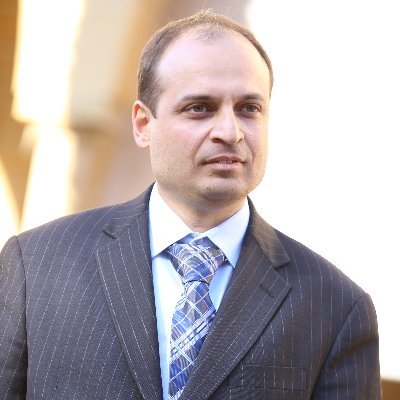
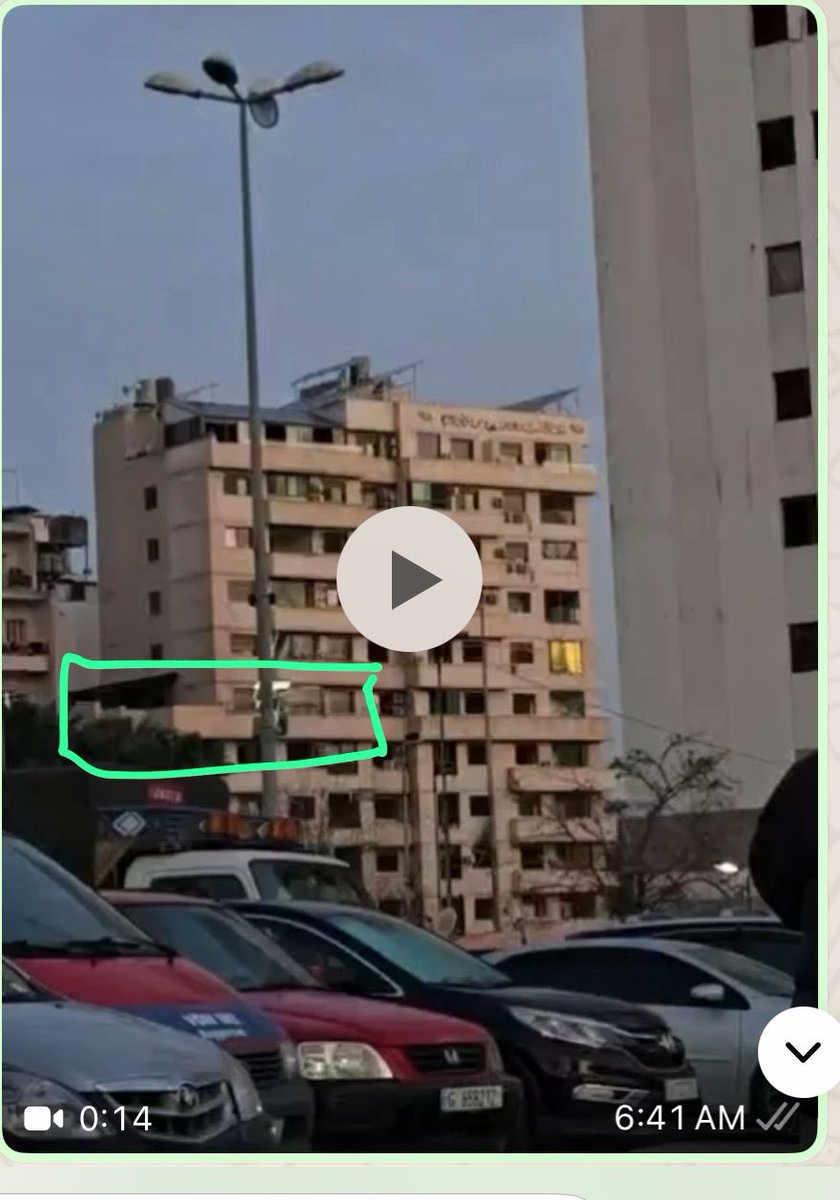
I have been deliberately silent on social media for a while. I use all my social media platforms to promote education & make dreams come true for young minds. I rarely post anything about family or politics. This morning, Israel demolished the building I have an apartment in. It took 22 years of my work here & 20 years of my wife’s work to own this apartment. This madness has to stop.
Bilal R. Kaafarani tweet media
English
814
17.8K
63.1K
5.5M
Khalid K. Alam ‎خالد كمال عالم retweetledi
Haytham Kaafarani
Haytham Kaafarani@hayfarani·
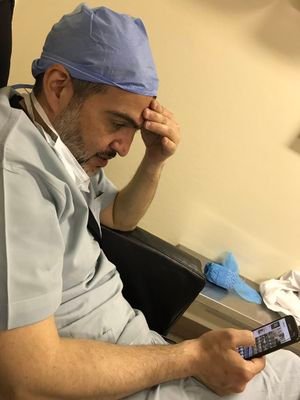
I am a US citizen & Surgeon who took care of the Boston Maraton Bombing victims in 2013. I paid for 7 years to own a small apartment in downtown #Beirut for my 3 kids to enjoy summers there. Today, #Israel reduced my dream home to rubble, with american weapons, paid by my taxes.
English
9K
46.5K
198.7K
9.1M
Khalid K. Alam ‎خالد كمال عالم retweetledi
David Dayen
David Dayen@ddayen·
No idea what's going to happen in Illinois tonight, but I think we can safely say that almost $100 million spent in a handful of primaries is a full-spectrum disaster for democracy
English
20
441
5K
100.2K
Khalid K. Alam ‎خالد كمال عالم retweetledi
Trita Parsi
Trita Parsi@tparsi·
First, the Omani FM came out and revealed that there was a deal on the table that met Trump's demands, but that he instead chose war. And now, it is revealed that the British National Security Advisor was also part of the talks, and he too attests to the fact that A) there was no imminent threat from Iran, B) Trump could have gotten a surprisingly good deal if he stuck to diplomacy. But the perhaps most damning quote in the story comes at the end, attributed to an unnamed diplomat: “We regarded Witkoff and Kushner as Israeli assets that dragged a president into a war he wants to get out of.” theguardian.com/world/2026/mar…
English
714
18.9K
40.8K
2.2M
Khalid K. Alam ‎خالد كمال عالم retweetledi
Joe Kent
Joe Kent@joekent16jan19·
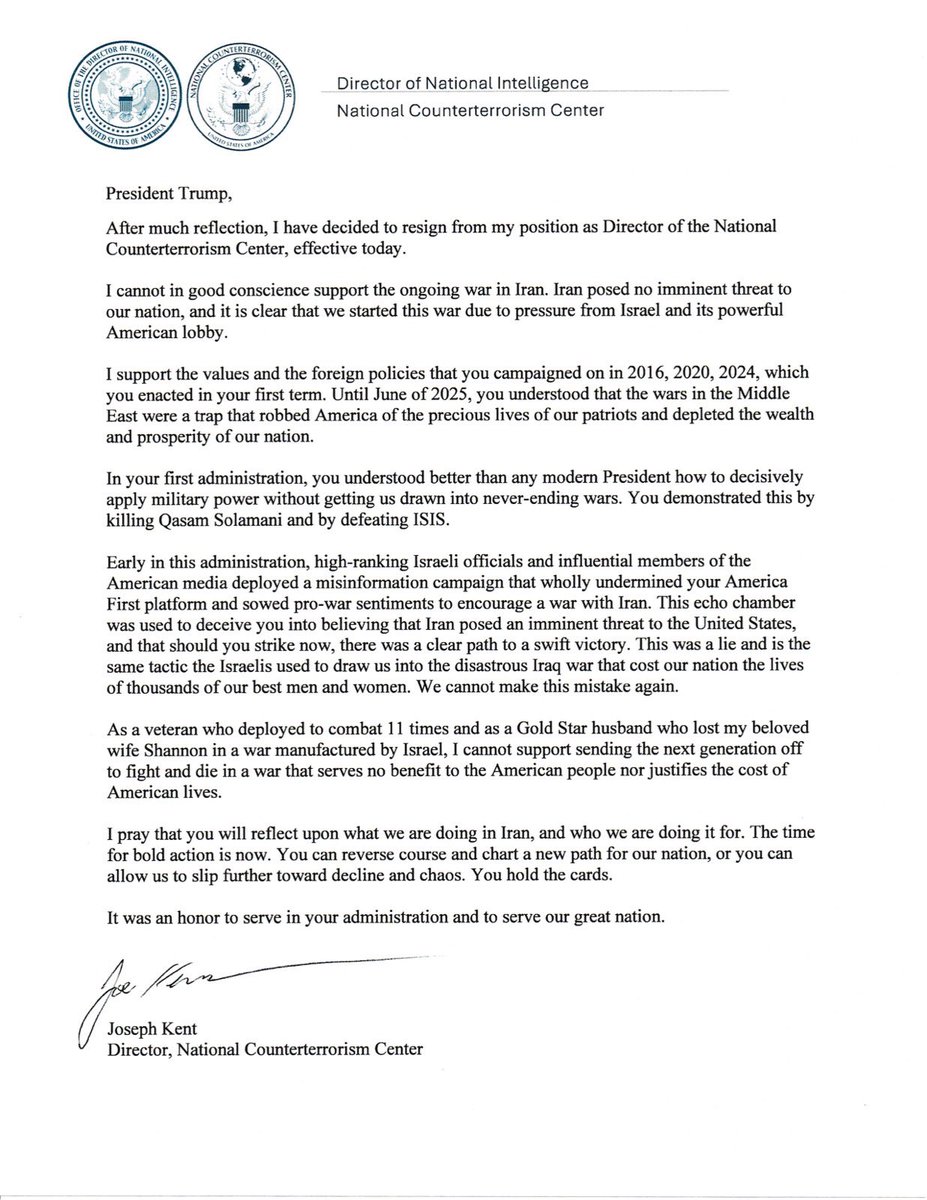
After much reflection, I have decided to resign from my position as Director of the National Counterterrorism Center, effective today. I cannot in good conscience support the ongoing war in Iran. Iran posed no imminent threat to our nation, and it is clear that we started this war due to pressure from Israel and its powerful American lobby. It has been an honor serving under @POTUS and @DNIGabbard and leading the professionals at NCTC. May God bless America.
Joe Kent tweet media
English
72.8K
219.9K
847.4K
99.7M
Khalid K. Alam ‎خالد كمال عالم retweetledi
Arya Yadeghaar
Arya Yadeghaar@AryJeay·
They are coming for us, one by one. While @X claims it’s combatting accounts that post AI slop, behind the curtains it’s banning accounts with valuable content. What a sad reality… imagine bombing us and we can’t even tell it to the world. @Support shame on you.
Arya Yadeghaar tweet mediaArya Yadeghaar tweet media
English
305
2.3K
7.6K
210.6K
Khalid K. Alam ‎خالد كمال عالم retweetledi
Marc Johnson
Marc Johnson@SolidEvidence·
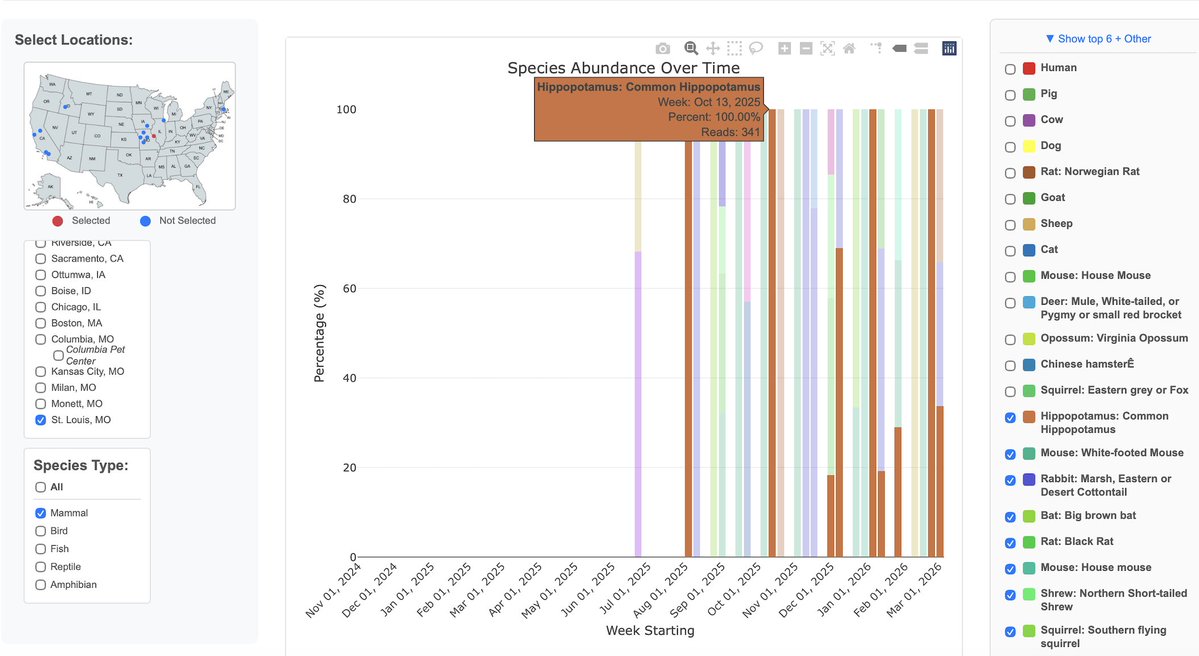
We added St Louis to our dashboards this week. The St Louis zoo clearly has Hippos. 1/
Marc Johnson tweet media
English
1
7
61
2.4K
Seth Bannon
Seth Bannon@sethbannon·
Been getting a lot of hate after criticizing Israel’s bombing campaigns. To those sending it: I assume you genuinely believe you're defending what’s right. I strongly disagree. I’ll keep saying so. But no animosity from me. Nothing but love.
English
10
1
102
5K