The Wernick Files@thewernickfiles
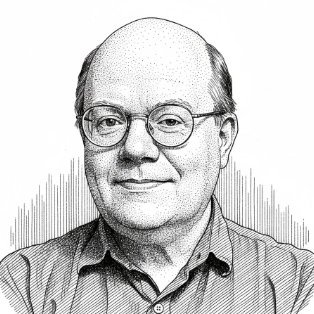
Larry Sanger, the cofounder who wrote Wikipedia's original neutrality rules, was just blocked from the site. The coverage is treating this as a story about a man. It is not. Sanger was raising arguments about governance and trust, that Wikipedia decides what the world may treat as reliable through a process with no real due process, no separation between accuser and judge, and no rule that binds the house as tightly as it binds the visitor. Those are serious claims, and they deserved to be argued on their merits.
They were not. The arguments were not answered. The man was removed, and the questions left with him. That is the older and quieter way to win a debate, dispose of the person so you never have to engage the point.
And notice what the manner of his removal proves. He argued that the platform lacks due process. They blocked him, by his account, with no due process. He argued there is no separation between accuser and judge. The accuser, the judge, and the certifier were the same body. The response to the charge was a demonstration of the charge. Whether or not Sanger is right about everything, an institution that answers a complaint about unaccountable process with an unaccountable process has told you something true about itself.
Normally that is Wikipedia's problem, and you can read around it. You cannot anymore, because the flaw Sanger named no longer stops at Wikipedia.
The AI models people increasingly treat as oracles, the chatbots now answering the questions we used to look up, are trained heavily on Wikipedia and built to treat it as an anchor, the thing other claims get measured against. So a judgment made there does not stay there. It is ingested at scale and handed back as fact.
On Wikipedia, a contested call is at least visible where it is made. There is an edit history. There is a talk page. You can see the fight. Feed the same call into a model and the seams vanish. It returns as a smooth, confident, sourceless sentence carrying the authority of the machine instead of the fingerprints of the editor who made it. The dispute is gone. The dissent is gone. The attribution is gone. The appeal was never on offer. A verdict that was at least arguable becomes a fact that is not.
That is laundering. Not of money, of authority.
People will tell you the machine corrects for this, that whatever the encyclopedia gets wrong is fixed later in training. Be careful with that comfort. A model can correct an error when the correction is somewhere in the data it was given. It cannot recover a view that was kept out of that data in the first place. There is nothing on the other side of the ledger to correct toward.
Some exclusion is only quality control, and a model is better for keeping genuine garbage out. The wrong is narrower and more specific. It is excluding a source for what it is rather than for what it gets wrong, and then never noticing the difference.
A source is judged by its name rather than its accuracy and shut out on that basis. The only account of it the machine ever sees is the one written by the people who shut it out. Ask the machine about it and you get its opponents' verdict, smoothed into neutral knowledge, with no trace that another account ever existed. The machine cannot speak for a perspective it was never permitted to hold, and it does not even register the silence, because absence leaves no mark in the output.
The machine's verdict becomes the authoritative public answer. The authoritative answer deepens the exclusion. The deepened exclusion keeps the source out of the next model's training. Each turn makes the next one easier, and at no point did anyone have to decide the excluded view was false. They only had to decide it was the wrong kind.
This is what relying on a flawed platform does once you automate it. It does not average the flaw out. It compounds it, hides it, and seals it, until a contestable human judgment has hardened into machine fact that answers to no one and cannot be appealed, while the view it buried is gone so completely the machine does not know it is missing.
And consider where this is happening. Not across a thousand independent encyclopedias a reader can play against each other, but inside a small number of large models that increasingly stand between most people and most answers. A defect in one reference among many is survivable, because you can read around it. The same defect, shared across the few systems nearly everyone consults, has nowhere left to be corrected from. The fewer the systems, the fewer the escapes. A bias you can route around is an inconvenience. A bias built into the chokepoint everyone passes through is something else, and the more the answering of questions concentrates into a handful of models trained on the same sources and making the same exclusions, the more a single blind spot becomes everyone's blind spot at once.
This is how a system fails all at once rather than one piece at a time. Not many independent judgments, but one shared judgment wearing many faces, with nothing uncorrelated left to catch the error when it comes.
So when an AI model hands you something with perfect confidence and no seam, the first question is not only whether it is true. It is what it was never allowed to read.