Himanshu Verma
526 posts

Himanshu Verma
@Bitflicker64
I am the bug that other bugs are scared of. https://t.co/VtvEcqDJWp , portfolio - https://t.co/vKgACvc4gw
127.0.0.1 Katılım Ekim 2023
453 Takip Edilen114 Takipçiler


@saen_dev @DailyDoseOfDS_ I've been contributing to HugeGraph-AI, and lately I've been reading a lot of papers on graph construction. RAGU was a particularly interesting read.
English

@Bitflicker64 @DailyDoseOfDS_ @Bitflicker64 Followed back! The pace right now is genuinely insane — what part of the space are you building or watching most closely?
English

RAG vs. Graph RAG vs. Agentic RAG, clearly explained!
Standard RAG embeds documents into vectors and retrieves the most similar chunks via similarity search. For direct factual lookups, this works well.
But it breaks down when a query needs to connect facts spread across multiple documents. Similarity search retrieves individual chunks, not the relationships between them.
Graph RAG adds a knowledge graph layer on top.
→ During indexing, an LLM extracts entities and relationships from the documents.
→ During retrieval, the system traverses these connections instead of relying on embedding similarity alone.
This is what enables multi-hop queries.
Say a vector DB stores three facts about internal services:
↳ "The checkout service uses payments API."
↳ "The payments API runs on cluster-3."
↳ "Cluster-3 is scheduled for maintenance on Friday."
Someone asks: "Will the checkout service be affected by Friday's maintenance?"
Vector search can likely retrieve facts 1 and 3 because the query mentions "checkout service" and "Friday maintenance."
But it will miss fact 2, which connects the payments API to cluster-3.
That middle fact sits too far from the query in embedding space. It mentions neither "checkout" nor "maintenance," so it never makes it into the retrieved context.
A knowledge graph connects these as linked entities, and graph traversal finds the full path in one query.
Agentic RAG takes a different approach entirely.
Instead of a fixed retrieval pipeline, an LLM agent decides at query time which tools to invoke, which sources to query, and in what order.
Check the visual below to understand the three architectures thoroughly.
One thing to note here is that these three aren't levels of sophistication that you need to graduate through.
Instead, they solve different query types.
↳ Single-hop factual lookups → standard RAG
↳ Multi-hop relationship queries → Graph RAG
↳ Dynamic multi-source tasks with tool use → Agentic RAG
Once the right architecture is in place, the next leverage point is efficiency.
Most RAG architectures rely heavily on vector search, and that layer can be made 32x more memory efficient using binary quantization.
We covered the full implementation in the article below.
👉 Over to you: Which RAG architecture are you running in production?
GIF
Avi Chawla@_avichawla
English

@AlexFinn Apple might win the local AI game, but I’m more curious if developers will actually make apps that take advantage of that 1TB memory, or if everything just becomes a fancier local ChatGPT
English

Apple will win the AI war in June 2026 without investing a single penny into AI
The war won without a sword
They will release the M5 Ultra with 1TB of memory
It will be able to run super intelligence more powerful then Opus locally on your desk for free
It will fundamentally change the way the entire world operates. EVERYONE with a personalized super intelligent AI employee working on their desk 24/7
$200 a month AI plans will feel antiquated
While you've been crapping on Apple for not entering an AI race against 100 other companies shredding trillions of dollars, they ran their own race
Personalized local super intelligence will be stage 1 of the singularity. I sincerely hope you're preparing for this
English

@saen_dev @DailyDoseOfDS_ IKK RYTT but i think this area is developing rapidly too !!
wanna connect ? i followed you
English

@Bitflicker64 @DailyDoseOfDS_ Multi-stage extraction with entity validation producing cleaner graphs than single pass is exactly what the research keeps confirming. Higher evidence recall and more faithful answers are the outcome everyone wants but few invest the engineering effort to get there.
English
Himanshu Verma retweetledi

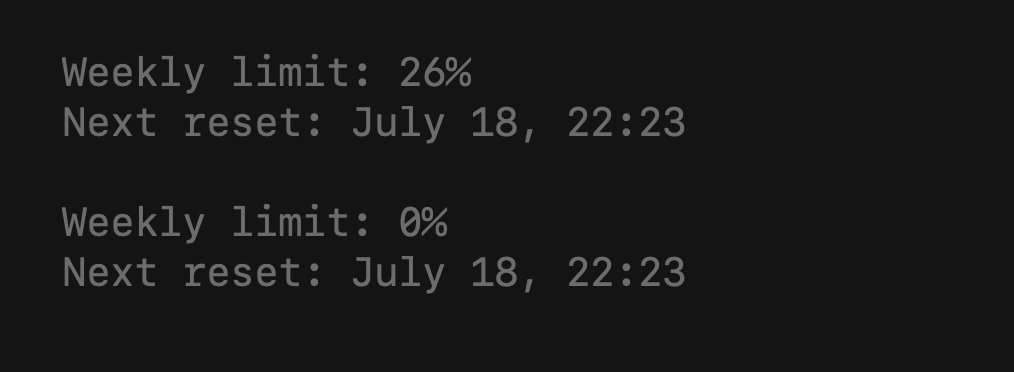
Be honest... what % were y'all at before they reset the limits? 😭 I only got to 26%

SpaceXAI@SpaceXAI
We've open-sourced Grok Build and have reset usage limits for all users. Open sourcing Grok Build allows anyone to support making a reliable and robust harness. Check out our code, including the Git repo for the Grok Build CLI. x.ai/open-source
English

@saen_dev @DailyDoseOfDS_ I've been reading quite a bit about this recently, and it's interesting how many newer approaches are moving toward multi-stage extraction with validation. I haven't implemented it myself yet, but it definitely seems like a more robust direction than single-pass extraction.
English

@Bitflicker64 @DailyDoseOfDS_ Multi-stage extraction with entity validation is the approach I keep coming back to as well. Single pass graphs end up with tons of duplicate and conflicting nodes. Are you running validation as a separate LLM call or using a rule based system for entity dedup?
English


GraphRAG isn't the bottleneck anymore.... graph quality is. The latest GraphRAG research is increasingly focused on extraction pipelines and graph construction rather than retrieval algorithms themselves.
Sumit@_reachsumit
Is GraphRAG Needed? From Basic RAG to Graph-/Agentic Solutions with Context Optimization Amazon introduces a framework comparing regular, Graph, Modular, and Agentic RAG on semi-structured knowledge bases and reveals a retrieval-generation gap. 📝 arxiv.org/abs/2606.25656
English

@saen_dev @DailyDoseOfDS_ Building the graph is only half the problem. Recent research shows multi-stage extraction with entity validation produces much cleaner graphs than single-pass extraction, leading to higher evidence recall and more faithful answers.
English

@DailyDoseOfDS_ Graph RAG solves multi-hop problems but your knowledge graph quality becomes the new bottleneck. Most teams spend months building the graph only to realize entity extraction was wrong from the start. How do you validate graph quality at scale?
English

@ericciarla bruh u hire like all the time do u even have so many positions open 🤧🤧🤧🤧🤧
English