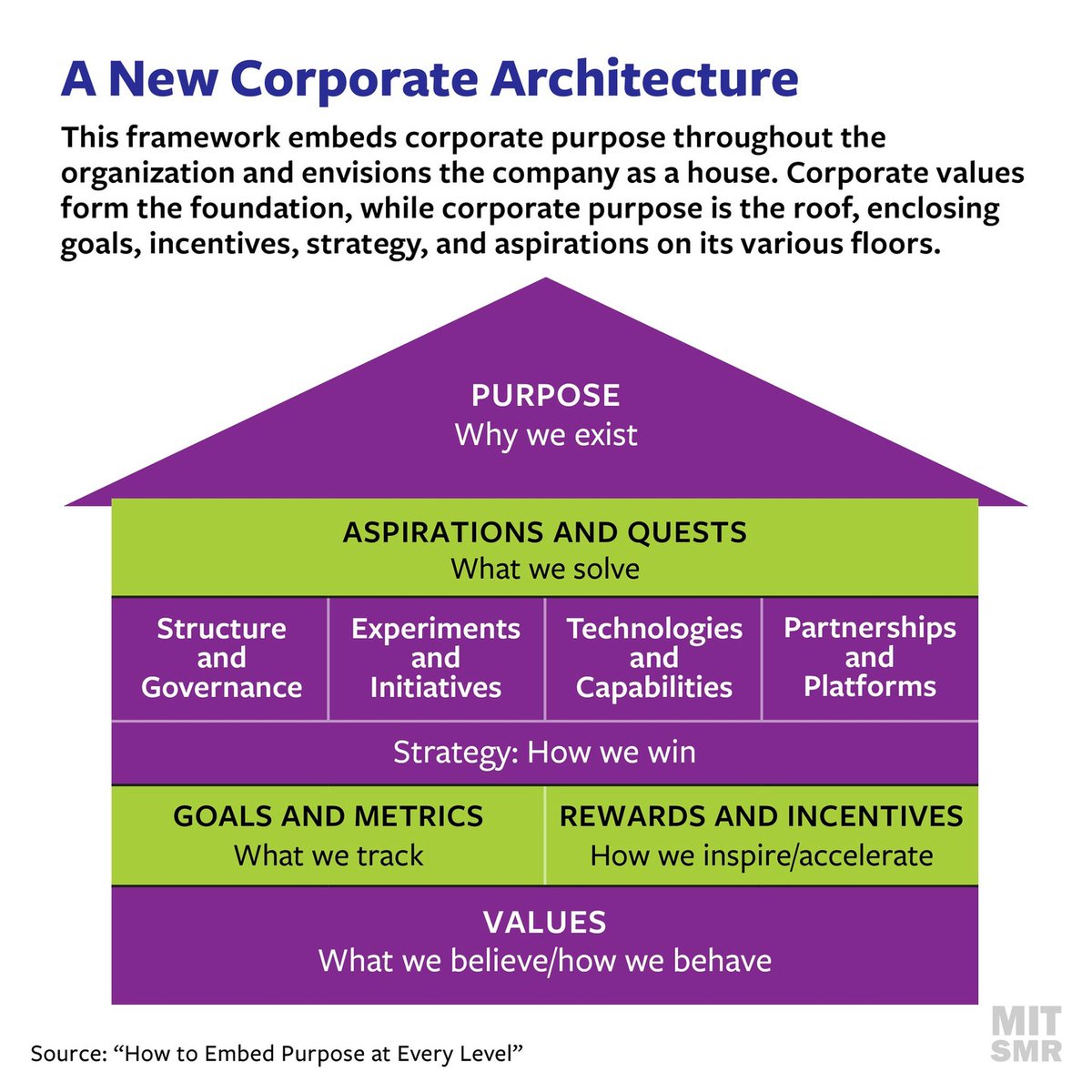
This framework imagines the company as a house. Corporate values form its foundation, and the corporate purpose is the roof, enclosing everything beneath. mitsmr.com/4kaECWi
Today, we launched @TraycerAI Ticket Assist. Get detailed implementation plans from AI right on your GitHub Issues. With a single click, import the plan into your favorite IDE.
Look forward to hearing your feedback 🙌
github.com/apps/traycerai
On Saturday at the Buildathon hosted by AI Fund and DeepLearning.AI, over 100 developers competed to build software products quickly using AI assisted coding. I was inspired to see developers build functional products in just 1-2 hours. The best practices for rapid engineering are changing quickly along with the tools, and I loved the hallway conversations sharing tips with other developers on using AI to code!
The competitors raced to fulfill product specs like this one (you can see the full list in our github repo; link in reply):
Project: Codebase Time Machine
Description: Navigate any codebase through time, understanding evolution of features and architectural decisions.
Requirements:
- Clone repo and analyze full git history
- Build semantic understanding of code changes over time
- Answer questions like “Why was this pattern introduced?” or “Show me how auth evolved”
- Visualize code ownership and complexity trends
- Link commits to business features/decisions
Teams had 6½ hours to build 5 products. And many of them managed to do exactly that! They created fully functional applications with good UIs and sometimes embellishments.
What excites me most isn’t just what can now be built in a few hours. Rather, it is that, if AI assistance lets us build basic but fully functional products this quickly, then imagine what can now be done in a week, or a month, or six months. If the teams that participated in the Buildathon had this velocity of execution and iterated over multiple cycles of getting customer feedback and using that to improve the product, imagine how quickly it is now possible to build great products.
Owning proprietary software has long been a moat for businesses, because it has been hard to write complex software. Now, as AI assistance enables rapid engineering, this moat is weakening.
While many members of the winning teams had computer science backgrounds — which does provide an edge — not all did. Team members who took home prizes included a high school senior, a product manager, and a healthcare entrepreneur who initially posted on Discord that he was “over his skis” as someone who “isn't a coder.” I was thrilled that multiple participants told me they exceeded their own expectations and discovered they can now build faster than they realized. If you haven’t yet pushed yourself to build quickly using agentic coding tools, you, too, might be surprised at what you can do!
At AI Fund and DeepLearning.AI, we pride ourselves on building and iterating quickly. At the Buildathon, I saw many teams execute quickly using a wide range of tools including Claude Code, GPT-5, Replit, Cursor, Windsurf, Trae, and many others.
I offer my hearty congratulations to all the winners!
- 1st Place: Milind Pathak, Mukul Pathak, and Sapna Sangmitra (Team Vibe-as-a-Service), a team of three family members. They also received an award for Best Design.
- 2nd Place: David Schuster, Massimiliano Viola, and Manvik Pasula. (Team Two Coders and a Finance Guy).
- Solo Participant Award: Ivelina Dimova, who had just flown to San Francisco from Portugal, and who worked on the 5 projects not sequentially, but in parallel!
- Graph Thinking Award: Divya Mahajan, Terresa Pan, and Achin Gupta (Team A-sync).
- Honorable mentions went to finalists Alec Hewitt, Juan Martinez, Mark Watson and Sophia Tang (Team Secret Agents) and Yuanyuan Pan, Jack Lin, and Xi Huang (Team Can Kids).
To everyone who participated, thank you! Through events like these, I hope we can all learn from each other, encourage each other, invent new best practices, and spread the word about where agentic coding is taking software engineering.
[Original text: deeplearning.ai/the-batch/issu… ]
I'm teaching a new course! AI Python for Beginners is a series of four short courses that teach anyone to code, regardless of current technical skill. We are offering these courses free for a limited time.
Generative AI is transforming coding. This course teaches coding in a way that’s aligned with where the field is going, rather than where it has been:
(1) AI as a Coding Companion. Experienced coders are using AI to help write snippets of code, debug code, and the like. We embrace this approach and describe best-practices for coding with a chatbot. Throughout the course, you'll have access to an AI chatbot that will be your own coding companion that can assist you every step of the way as you code.
(2) Learning by Building AI Applications. You'll write code that interacts with large language models to quickly create fun applications to customize poems, write recipes, and manage a to-do list. This hands-on approach helps you see how writing code that calls on powerful AI models will make you more effective in your work and personal projects.
With this approach, beginning programmers can learn to do useful things with code far faster than they could have even a year ago.
Knowing a little bit of coding is increasingly helping people in job roles other than software engineers. For example, I've seen a marketing professional write code to download web pages and use generative AI to derive insights; a reporter write code to flag important stories; and an investor automate the initial drafts of contracts.
With this course you’ll be equipped to automate repetitive tasks, analyze data more efficiently, and leverage AI to enhance your productivity.
If you are already an experienced developer, please help me spread the word and encourage your non-developer friends to learn a little bit of coding.
I hope you'll check out the first two short courses here! deeplearning.ai/short-courses/…
read it here: #heading=h.pxcur8v2qagu" target="_blank" rel="nofollow noopener">docs.google.com/document/d/1rs…
you can also pre-order on Amazon (published by Springer) and the royalties goes to Save the Children:
amazon.com/Agentic-Design…
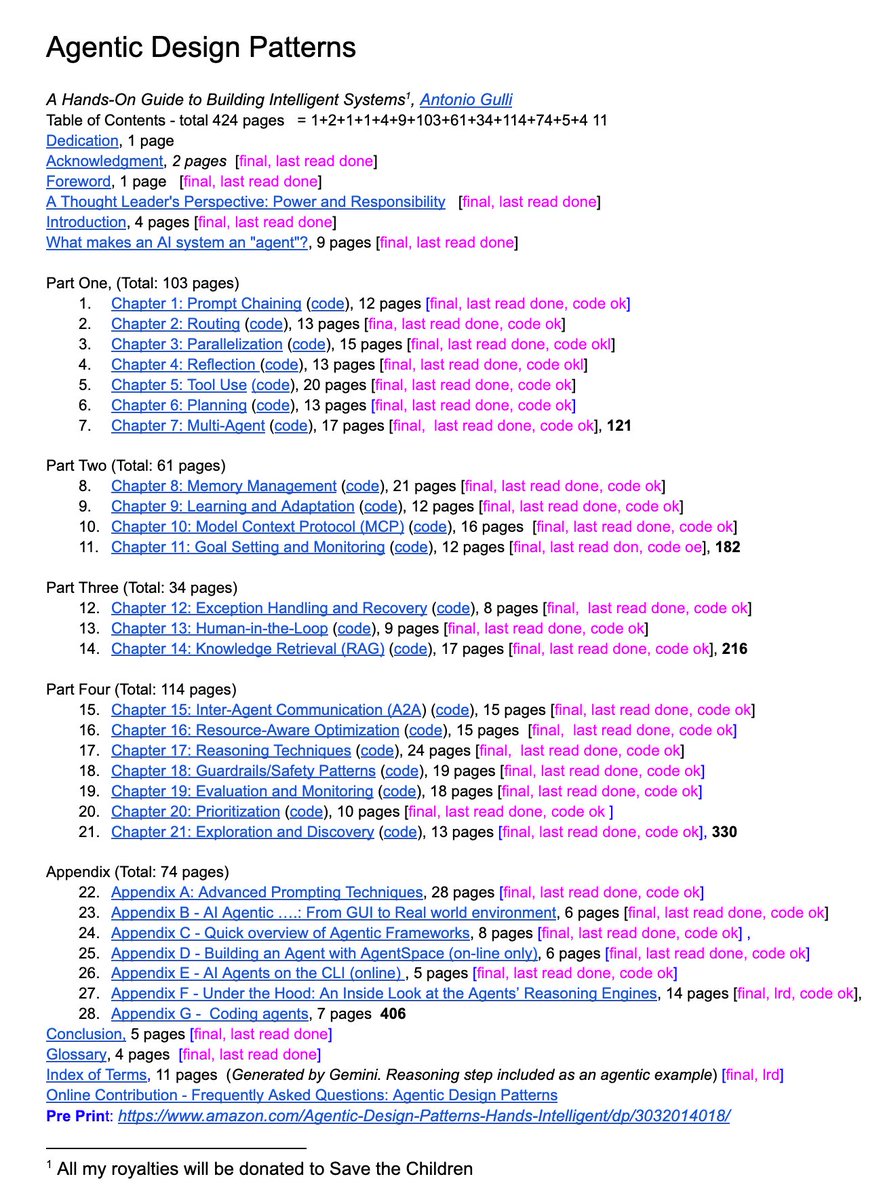
a senior engineer at google just dropped a 400-page free book on docs for review: agentic design patterns.
the table of contents looks like everything you need to know about agents + code:
> advanced prompt techniques
> multi-agent patterns
> tool use and MCP
> you name it