
Chase Coleman

1.4K posts

Chase Coleman banner
Chase Coleman

Chase Coleman

@BlkBoxEconomist

Forward Deployed AI Engineer @webai Prev: @AcrossProtocol/@UMAprotocol, PhD in Economics @NYUStern

Austin Katılım Şubat 2015
898 Takip Edilen885 Takipçiler
Chase Coleman retweetledi
RYAN SΞAN ADAMS - rsa.eth 🦄
This isn't an age verification bill. This is device level KYC. Every operating system would need proof of age which means gov ID + photo for every device connected to the internet. The lazy default implementation? Gov ID + selfie to Persona. The same KYC Discord and Anthropic just rolled out (yep, we're already moving to KYC for AI). This makes one giant honeypot for hackers and is a bow-wrapped gift to the corporate surveillance machine (and U.S gov surveillance who harvest data from them). There's no technical reason to build it this way. We already have zero-knowledge age verification that works at scale, @zkpassport lets you prove you're over 18 without revealing who you are. Data never leaves the device. The tech exists. But that's not the worst part. If every device is gated by gov ID, then revoking the ID revokes digital existence. Revoke passport = digital excommunication. Actually insane we have legislators considering this.
The Lunduke Journal@LundukeJournal

The full text for HR 8250, the proposed Federal law which would require all Operating Systems to implement Age Verification, has just been made publicly available. It is short, poorly written, clearly not at all thought out, and almost entirely devoid of specifics. Some key points: - The bill does not specify how age verification would work at all. It states that the Federal Trade Commission would have 180 days to specify the exact mechanism and requirements for Age Verification within the Operating Systems. - The Federal Trade Commission would also specify data storage protection requirements as well as requirements for how the Operating System must provide access to collected user data. - This bill would apply to ALL Operating Systems. Everything from Windows to Linux to embedded systems. Yes, even to a smart refrigerator. The “Operating System” definition is incredibly broad. - The law will be considered in effect 1 year from the date it is enacted. - Violations of the law will be handled under the Federal Trade Commission Act. - It is given the “Short Title” of “Parents Decide Act”. congress.gov/bill/119th-con…

English
119
1.1K
3.1K
122K
Chase Coleman retweetledi
Gergely Orosz
Gergely Orosz@GergelyOrosz·
If you use GitHub (especially if you pay for it!!) consider doing this *immediately* Settings -> Privacy -> Disallow GitHub to train their models on your code. GitHub opted *everyone* into training. No matter if you pay for the service (like I do). WTH github.com/settings/copil…
Gergely Orosz tweet media
English
394
924
5.2K
582.1K
Chase Coleman retweetledi
jamesrichardfry
jamesrichardfry@jamesrichardfry·
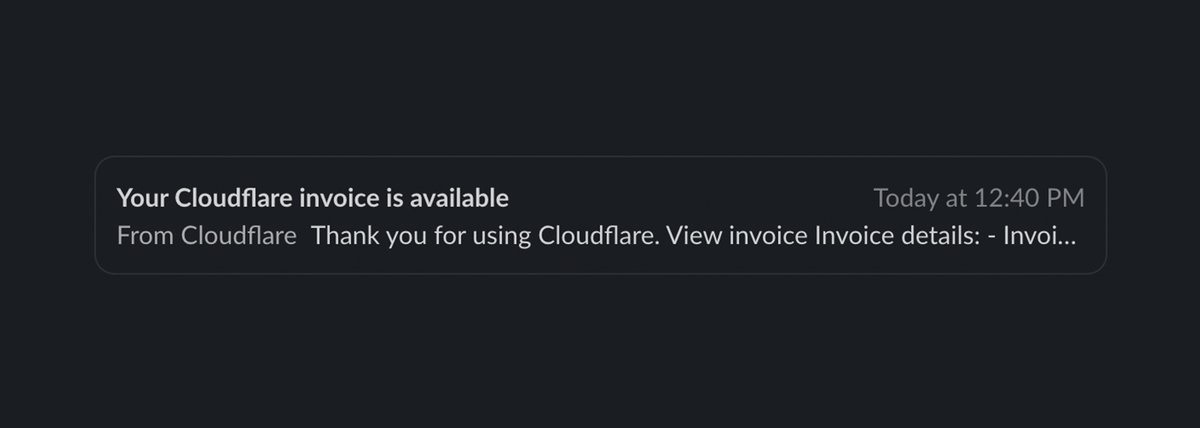
At least the Cloudflare invoicing system is still up and running.
jamesrichardfry tweet media
English
11
1
45
1.4K
Chase Coleman retweetledi
hantengri
hantengri@hantengri·
Kalshi guys using @Dune for their non-existent onchain stats:
English
26
17
337
19.8K
Chase Coleman retweetledi
Kevin A. Bryan
Kevin A. Bryan@Afinetheorem·
AI economists and AI researchers: this is *excellent*. Details below, but as I feel like I've said in every talk on this topic since my slides said "GPT-2", 1) AI technical capabilities are better and improving quicker than you think, 2) impact on economy *much* slower. 1/13
Kevin A. Bryan tweet media
English
13
95
730
92.7K
Chase Coleman retweetledi
bartek.eth
bartek.eth@bkiepuszewski·
This is, imo, such a dangerous take that I will take the liberty to respond in a more detailed and nuanced take as I think it's fundamental to everything we are trying to build in this space
Robert ⟠ | Polaris@0xluude

@bkiepuszewski I think its pretty clear by now users dont care about trust assumptions They value speed, execution and low fees above all else

English
33
19
160
13.7K
Temu Brian Armstrong
Temu Brian Armstrong@MrCampbell·
Lmao. I didnt have @therollupco doing investigative journalism on my 2025 bingo card.
Andy@andyyy

Reflections on today's candid interview with @storysylee: - S.Y. felt very very honest and authentic even though I was grilling him and not holding back - JZ was on his way out months ago and head wasn't in it - There is a lot of misinformation out there about Story as a result of Jason's announcement post - Optics are really what matter, its all about perception and managing perception is so important for brands - 5M+ impressions on an announcement post is pretty insane - S.Y. doesn't really care about CT, focused on a different audience - Left me more bullish on Story but still have a lot to prove & execute on

English
3
2
13
3.4K
Chase Coleman retweetledi
François Chollet
François Chollet@fchollet·
By the way, I don't know if people realize this, but the 2020 work-from-home switch coincided with a major productivity boom, and the late 2021 and 2022 back-to-office reversal coincided with a noticeable productivity drop. It's right there in the statistics. Narrative violation? Productivity growth is now back to pre-2020 levels.
English
48
146
1.5K
79.2K
Chase Coleman retweetledi
Across
Across@AcrossProtocol·
Across is now live on Solana. Bridging to and from @solana, powered by intents.
English
74
82
559
193.4K
Chase Coleman
Chase Coleman@BlkBoxEconomist·
Zed is honestly a great product. Very glad to see them get some funding. I appreciate that they were willing to start from scratch in order to build a high performance and user friendly text editor. It is a breath of fresh air among an exhausting number of VSCode clones.
Zed@zeddotdev

Zed has raised a $32M Series B, led by @Sequoia. We’re full speed ahead making a great editor, but there’s a bigger picture: we're building DeltaDB, a new kind of database for collaborative coding. Early days, but the vision is clear: zed.dev/blog/sequoia-b…

English
0
0
2
252
Chase Coleman retweetledi
Austin Campbell
Austin Campbell@austincampbell·
This sort of post is why I started the newsletter. @krogoff is actually a solid economist on areas where he has personal knowledge, but he also may be the single worst situated person in the entire world to understand the value of Bitcoin. Why do I say this? He's in America. He's at Harvard. He's rich. He's part of a politically favored class. He lives in the country with the reserve currency, and has easy access to that and banks. Our country has rule of law and things work (mostly - at least compared to many others). Why would he need USD stablecoins or Bitcoin, on a day to day basis? The reality is he doesn't. The marginal value of these things to Ken Rogoff is, essentially, zero. But where he talks about the "grey market" or "sensible crypto regulation" is where things go off the rails. Which grey market does he mean? International wire transfers, where you can wait 5 days, turn out to have paid multiple percentage points after FX, and then have your wire rejected half the time (just ask @malekanoms)? Maybe he means the grey market where women in Afghanistan are supposed to put their money in the bank so the Taliban can confiscate it because they aren't supposed to have independent accounts and that is seen as a good thing to happen, as our Harvard economist appears to be implying? Maybe he meant leaving the citizens of Venezuela locked in with the government inflating away the value of their currency on a minute by minute basis and impoverishing the whole country, and that providing them a way out is, of course, facilitating a grey market and not good regulatory policy? This is the sort of incredibly privileged Western viewpoint on crypto that is just so very tiresome. There's nothing smart about this. There's nothing useful about this. It's a statement of "I got mine so we're locking the door behind us, fuck the poors" when presented in such arrogant fashion. And yet people can't understand why the anti-crypto army was so repulsive to voters, especially minorities (hint: who did banks used to abuse in comically racist fashion?) and immigrants.
Kenneth S Rogoff@krogoff

Almost a decade ago I was the Harvard economist that said that bitcoin was more likely to be worth $100 than 100k. What did I miss? I was far too optimistic about the US coming to its senses about sensible cryptocurrency regulation; why would policymakers want to facilitate tax evasion and illegal activities? Second, I did not appreciate how Bitcoin would compete with fiat currencies to serve as the transactions medium of choice in the twenty-trillion dollar global underground economy. This demand puts a floor on its price, as I discuss at length in my new book Our Dollar, Your Problem. Third, I did not anticipate a situation where regulators, and especially the regulator in chief, would be able to brazenly hold hundreds of millions (if not billions) of dollars in cryptocurrencies seemingly without consequence given the blatant conflict of interest. cnbc.com/2018/03/05/bit…

English
46
61
406
81.5K
Chase Coleman retweetledi
niko
niko@saintniko·
new experiment just dropped see if you can beat unichain flashblocks (200ms) was really fun cooking this one up with the team :)
English
88
38
344
81.4K
Chase Coleman retweetledi
zak.eth
zak.eth@0xzak·
5/ Your .env hierarchy: - ✅ Public data: RPC URLs, contract addresses - ⚠️ Rotatable: API keys (but rotate after ANY suspicious activity) - ☠️ NEVER: Private keys, mnemonics, passwords If it's in .env and can drain a wallet, you've already lost.
English
1
3
29
3.7K
Chase Coleman retweetledi
Shai Shalev-Shwartz
Shai Shalev-Shwartz@shai_s_shwartz·
6/ Rather, contest problems, like those in CodeForces, are often constructed as follows: a human thinks of a really neat trick (or perhaps two), then builds a question around it. Once a contestant catches on to the trick, a short solution often immediately follows. This is also somewhat the case for the ‘shallow’ tier. In contrast, real world problems, as well as the ‘deeper’ and ‘deepest’ tiers, often involve many steps of uncertainty, and offer no simple shortcuts. x.com/shai_s_shwartz…
English
1
3
135
25.1K
Chase Coleman retweetledi
zak.eth
zak.eth@0xzak·
I've been in crypto for over 10 years and I’ve Never been hacked. Perfect OpSec record. Yesterday, my wallet was drained by a malicious @cursor_ai extension for the first time. If it can happen to me, it can happen to you. Here’s a full breakdown. 🧵👇
English
529
1.4K
8.8K
2.1M
Chase Coleman retweetledi
Andrej Karpathy
Andrej Karpathy@karpathy·
I'm noticing that due to (I think?) a lot of benchmarkmaxxing on long horizon tasks, LLMs are becoming a little too agentic by default, a little beyond my average use case. For example in coding, the models now tend to reason for a fairly long time, they have an inclination to start listing and grepping files all across the entire repo, they do repeated web searchers, they over-analyze and over-think little rare edge cases even in code that is knowingly incomplete and under active development, and often come back ~minutes later even for simple queries. This might make sense for long-running tasks but it's less of a good fit for more "in the loop" iterated development that I still do a lot of, or if I'm just looking for a quick spot check before running a script, just in case I got some indexing wrong or made some dumb error. So I find myself quite often stopping the LLMs with variations of "Stop, you're way overthinking this. Look at only this single file. Do not use any tools. Do not over-engineer", etc. Basically as the default starts to slowly creep into the "ultrathink" super agentic mode, I feel a need for the reverse, and more generally good ways to indicate or communicate intent / stakes, from "just have a quick look" all the way to "go off for 30 minutes, come back when absolutely certain".
English
762
749
10.3K
1M