Brian
171 posts


@markkaplan20 Homocysteine was very high until I took MethylGpc now it’s normal. Had two copies of mthfr 677 t/t
English

Genetic Lp(a) is one of the few cases where the conversation about medication is legitimate. PCSK9 inhibitors do reduce Lp(a). But I would still want to see your inflammation markers alongside it. Lp(a) in a low inflammation environment carries different risk than Lp(a) with elevated hs-CRP. Context matters. This is exactly what Week 4’s thread covers.
English

My doctor put me on a statin after my heart attack at 52.
I trusted him. I took the pill. I never asked a question.
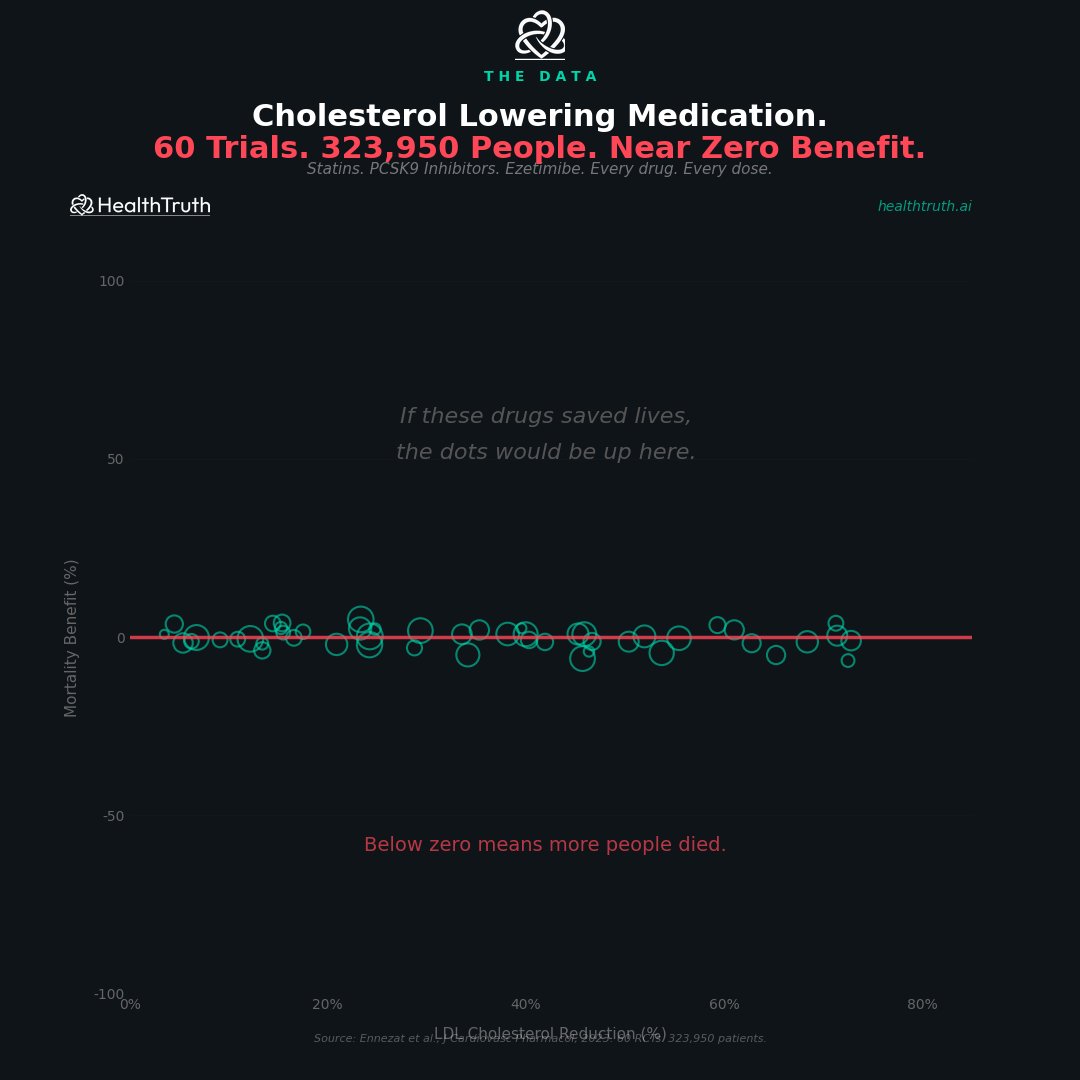
Then I found this study. 60 clinical trials. 323,950 people. Every cholesterol lowering drug ever made. Statins. PCSK9 inhibitors. Ezetimibe.
They measured how much each drug lowered LDL cholesterol. Then they measured whether people lived or died.
The line is flat.
It did not matter if they lowered LDL by 10% or by 70%. The death rate did not change. In some trials people died more.
323,950 people. Near zero benefit. Published in the Journal of Cardiovascular Pharmacology. 2023.
Nobody showed me this chart. Not my cardiologist. Not my pharmacist. Not the drug rep who visited my doctors office every month.
I had to find it myself. After the heart attack.

English

@CRUDEOIL231 @HFI_Research Which subscription on which site do you think is the best to follow the tankers?
English

It’s frankly nauseating to see ppl misleading the public with MarineTraffic’s free-tier data just bc they’re too cheap to pay for a $100 subscription.
Since everyone is obsessively posting MarineTraffic screenshots, I’ll step in and filter the noise myself—though I don’t typically rely on this platform.
To get a real picture, we need to ignore Handysize tankers as they are practically irrelevant here; I’m focusing only on MR tankers and above(MR: 40k–55k DWT, LR1: 55k–80k DWT, Aframax: 80k–120k DWT).
Under normal steaming conditions, MR/LR1s cruise at 12.5–14.5 knots, Aframaxes at 12–14 knots, and VLCCs at 13–15 knots. Speeds vary based on eco-speeding or load status—ballast vessels typically run about 1 knot faster than laden ones.
Since our focus is whether the market will be flooded with oil, we must look exclusively at laden tankers. Specifically tankers carrying cargo and transiting the Strait from West to East. We also need to exclude vessels drifting near ports or those at anchor; we only care about those actually underway.
While 12–15 knots is standard, given the current friction in the Strait, I’ve set a conservative filter of 6 knots or higher to capture only those vessels definitively in transit.
The results are exactly what you see in the image. I don’t believe AIS is the ultimate truth, but I have to ask: why are ppl posing as shipping experts when they don't even know the basics of what to look for?
Yes, product tanker traffic has ticked up—it looks higher than this week’s average. But for those curious about crude? Ask yourselves how much a few Aframaxes can truly move the needle.
Furthermore inbound transits remain extremely low—nowhere near the numbers required to support a meaningful restart in production. And one last thing: did anyone even bother to check the sanction status? I suppose that’s too much to ask.
#oott #iran

English

@GlobalMktObserv So what’s the real reason? Some really big entities are just going to slam it and “fake it until you make it”? At any point do these HAVE to converge?
English

🚨The physical oil market is flashing unprecedented stress:
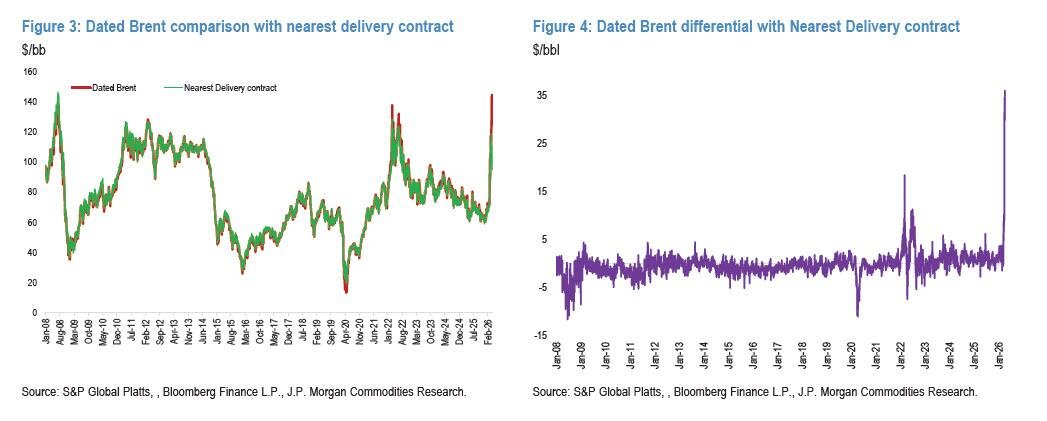
Dated Brent, the benchmark used to price physical crude worldwide, has officially exceeded the Great Financial Crisis peak.
At the same time, the nearest Brent futures contract for June delivery is trading at ~$100 per barrel.
The spread between the two has surged to ~$35 per barrel, compared to a historical norm of $1-2.
This comes as ~13 million barrels per day of supply remains missing from the market, forcing European and Asian refiners to compete aggressively for whatever cargoes are available.
The historic gap signals a market that cannot source enough barrels for immediate delivery, even as futures prices assume supply will normalize later.
The physical oil market is EXTREMELY TIGHT.

English

@stake_solid Cool! I’m not sure if we have that here but that sounds great! turbo ryu ftw
English

@Bnyc77 スト2には初代、ダッシュ、ターボ、スーパー、Xの5つのシリーズ(バージョン)があり、このハイパースト2はそれらすべてのシリーズのキャラクターが使えるゲームなんです!
実は海外では発売されていなかったですかね?
日本語

El Nino on lock by summer... "Super El Nino" is a growing possibility for the fall/winter.
Could be huge for Texas. The last super El Nino in 2015 brought nearly 60" of rain to Austin, our 2nd wettest year on record.
Philip Klotzbach@philklotzbach
NOAA has officially declared #LaNina over with ENSO neutral now present. They give a 90% chance of #ElNino for peak of Atlantic #hurricane season (August-October). El Nino typically reduces Atlantic #hurricane activity via vertical wind shear increases. cpc.ncep.noaa.gov/products/analy…
English

@FirstSquawk Prices don’t show anything remotely close to that headline. What gives?
English

@FreemyerGreg @zerohedge Yeah that was a stranded ship that’s finally trying to get out. Not a newly filled by Qatar energy ship
English


@FreemyerGreg @zerohedge “If Qatar can restart by May 1” is the issue with the math- polymarket has that at 6% chance right now
English

Re: why current LNG price hasn't exploded
For most countries (especially Europe) they would normally be buying LNG this time of year to regassify and put into underground storage.
So a tankerful in September is just as useful as a tankerful in March or April.
Qatar has 14 LNG trains as I recall. Only 2 have been reported damaged.
The other 12 will be back online a month after the Strait is opened.
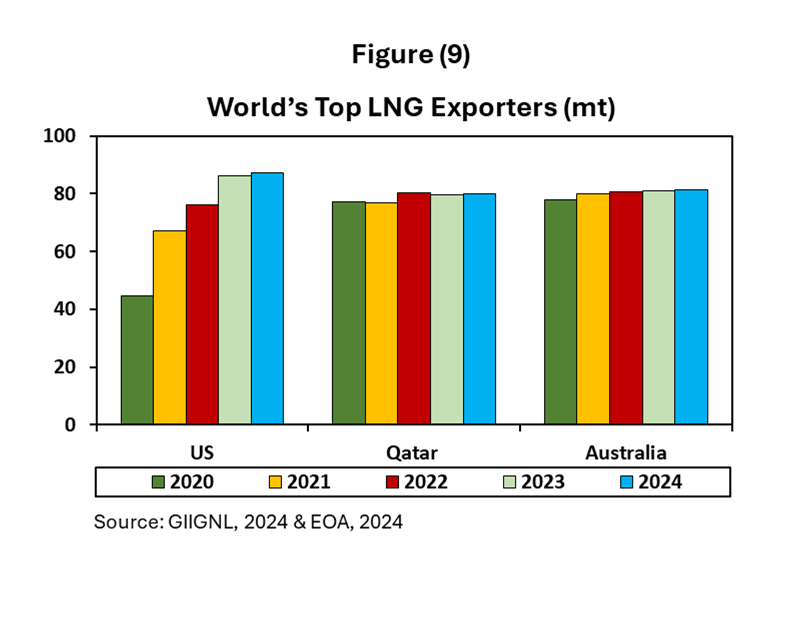
I think Qatar exported 88 million tonnes of LNG in 2025. The US was 111 mt.
If Qatar can start it's restart process by May 1, it might only be short 30mt or so for the year.
The US has added more capacity and might export about 125 mt in 2026.
125mt + 88mt -30mt = 183mt
183mt is more than US+Qatar exported in 2024.
The situation isn't dire yet.

English

Right. Im talking our exports so TTF and JKm (Asia) how are their prices just slightly elevated? We are talking about some of the worst physical conditions ever and how they’ve had to switch fuel sources. Why don’t they start by lifting whatever LNg is there? These prices are barely up considering the situation.
English

@RobertLTM @Bnyc77 WTI is up, so more swing Shale oil&gas production.
Tempatures are moderate, so less heating/cooling.
Export capacity maxed out (at this time).
There's also the Shale oil/gas gasification slope but that's above my pay grade.
English

@LNG_Investor_ Is the ban in April and June still going to happen on short term contracts?
English

🇷🇺Russia's pipeline gas exports to Europe jump 22% year-on-year in March amid Mideast crunch reuters.com/business/energ…
English

@FirstSquawk Does this mean they would possibly not export LNG? So we could make Qatar and Australia LNG and the LNg markets are mostly calm? What am I missing?
English

🧬🫀 Lp(a) is not just “another lipid.” It plays its own game.
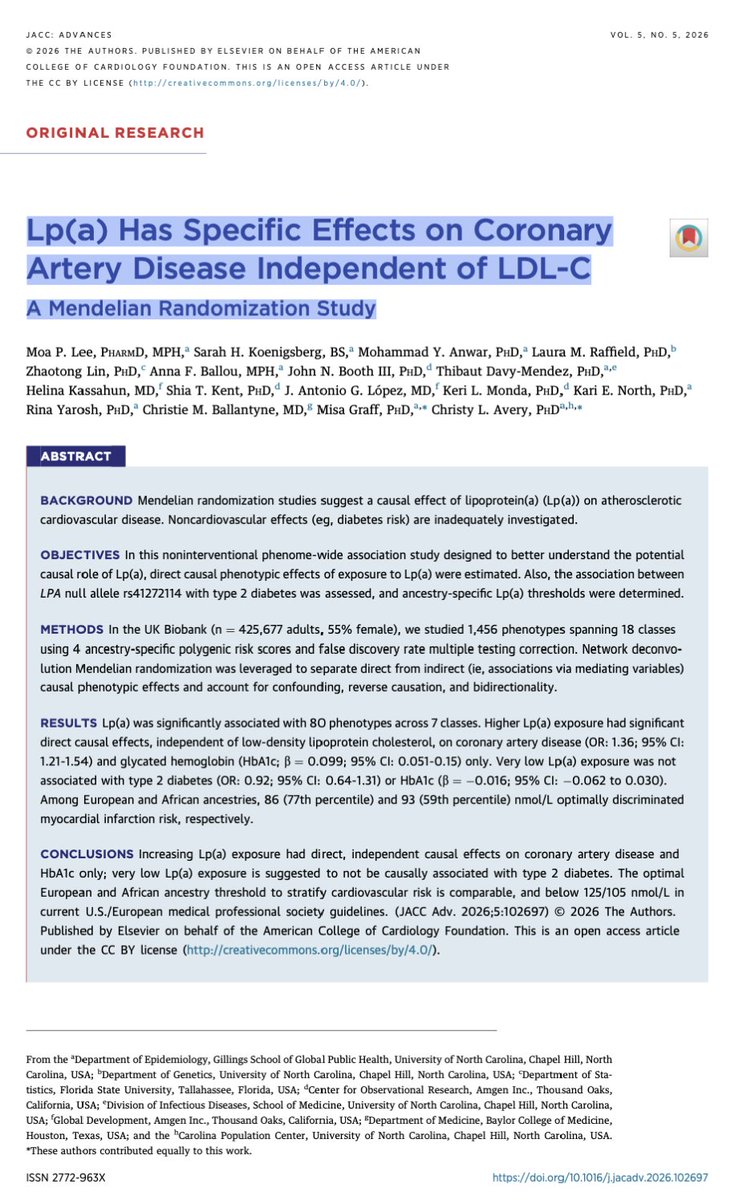
This Mendelian randomization study delivers a critical message:
👉 Lipoprotein(a) drives coronary artery disease independently of LDL-C.
Not alongside it.
Not through it.
👉 Independently.
📊 What does that actually mean?
Even when LDL-C is:
✔ Normal
✔ Controlled
✔ Optimally treated
👉 Lp(a) still increases CAD risk.
This is not correlation.
This is genetically anchored causality.
⚠️ Why this matters (and why we’ve been missing it)
For decades, we’ve built prevention strategies around:
✔️ LDL-C
✔️ Statins
✔️ Risk scores
But:
👉 Lp(a) is largely genetically determined
👉 Barely modified by lifestyle
👉 Not adequately reduced by standard therapies
So what happens?
➡️ Patients look “well-controlled”
➡️ LDL is low
➡️ Risk appears acceptable
❗ Yet atherosclerosis progresses.
💡 This paper reinforces a paradigm shift
We are not dealing with one axis of risk.
We are dealing with parallel biological pathways:
✔️ LDL-driven atherosclerosis
✔️ Lp(a)-driven atherosclerosis
👉 Same disease. Different engines.
🎯 Clinical implications
If you’re not measuring Lp(a):
👉 You are blind to a significant portion of residual risk.
At least once in a lifetime should become standard.
🚀 Bottom line
Lowering LDL is necessary.
But it is not sufficient.
Because:
👉 You can “win” on LDL and still lose on Lp(a).
And that’s exactly the patient we keep missing.

English

@ira_joseph @ColumbiaUEnergy Meaning the 58%+ was already on the water when it shut or somehow produced LNG after it shut?
English

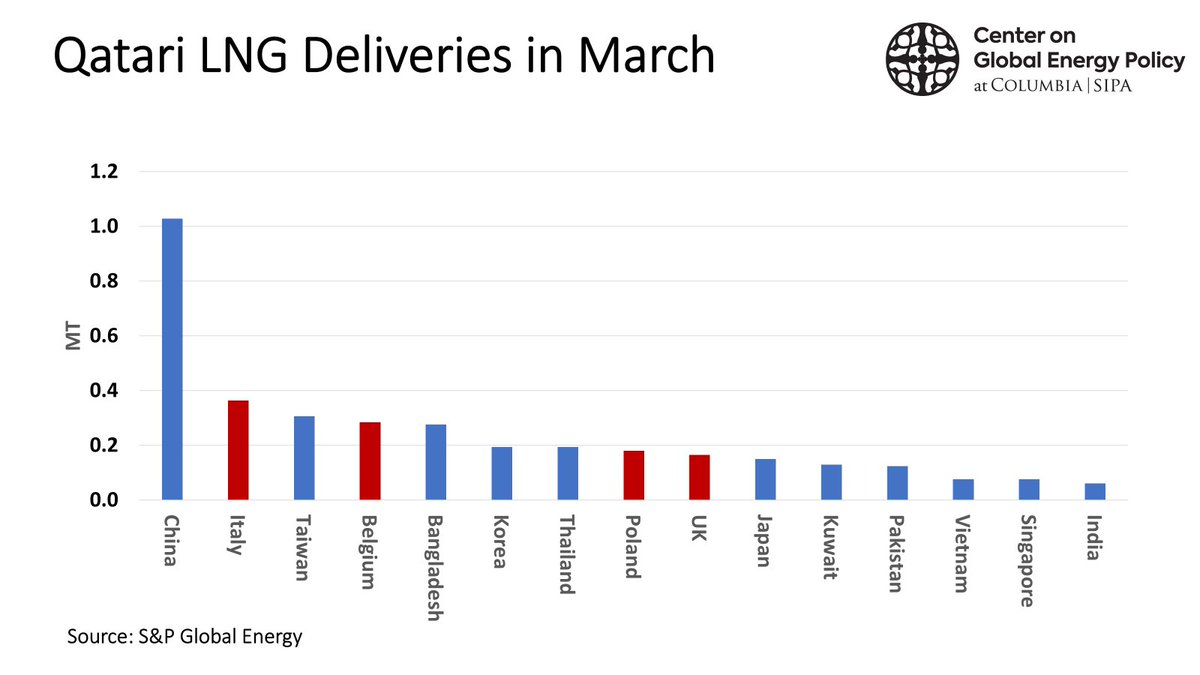
While Ras Laffan shut on March 2, Qatar managed to deliver 58% of its capacity in March and still has volumes on the water inside the Straits. China imported the largest amount despite its massive overall cut in imports. Asia accounted for 69% of the deliveries. @ColumbiaUEnergy

English

@energy_blogger With how spread out the fires were on the images, have a hard time believe 12 of 14 are ready to roll. Are they saying 2 are gone for sure but still complications to run the other 12 right now even if the strait was totally safe?
English

Very big if true! To damage all the Gas turbines, compressor, etc., must require a very very large strike!
Dan Murphy@dan_murphy
Iran attack wipes out 17% of Qatar’s LNG capacity for up to five years, QatarEnergy CEO says reuters.com/business/energ…
English

I was a year late on this, thought it was happening last off-season. It makes alot of sense financially but I hate the compensation. Good for the young man getting his bag.
Ian Rapoport@RapSheet
Sources: The #Texans and #Browns have agreed to terms on a trade to send starting RT Tytus Howard to Cleveland in exchange for a fifth-round pick. Much-needed OL help. Plus, Howard gets a new 3-year, $63M extension in a deal done by @malkikawa and Ethan Lock of @FirstRoundMgmt.

English