Ke Bo

948 posts

Ke Bo

Ke Bo

@Boke89707488

Neuroscience Post-doc in CANlab, @dartmouth. Phd in @UFBME Interest: Cognitive and affective neuroscience. EEG and fMRI. Computational model. Name 博克 in Chinese

Katılım Aralık 2018
427 Takip Edilen488 Takipçiler
Sabitlenmiş Tweet
Ke Bo
Ke Bo@Boke89707488·
Main thread: My first project in CANlab @torwager has finally been published in @NatureNeuro ! In this work, we aimed to take a new look at the brain mechanisms underlying emotion regulation from a slightly different perspective: #Ack1" target="_blank" rel="nofollow noopener">nature.com/articles/s4159…
English
8
45
172
21.5K
Zizhuang
Zizhuang@zizhuang_miao·
Excited to share my first-author paper now out in @natcomms (nature.com/articles/s4146…)! Here, we asked whether verbal narratives about social interactions engage the same brain areas as audiovisual presentations, and whether they overlap with theory of mind (ToM). (1/11)
English
2
2
15
443
Ke Bo retweetledi
Martin Picard
Martin Picard@MitoPsychoBio·
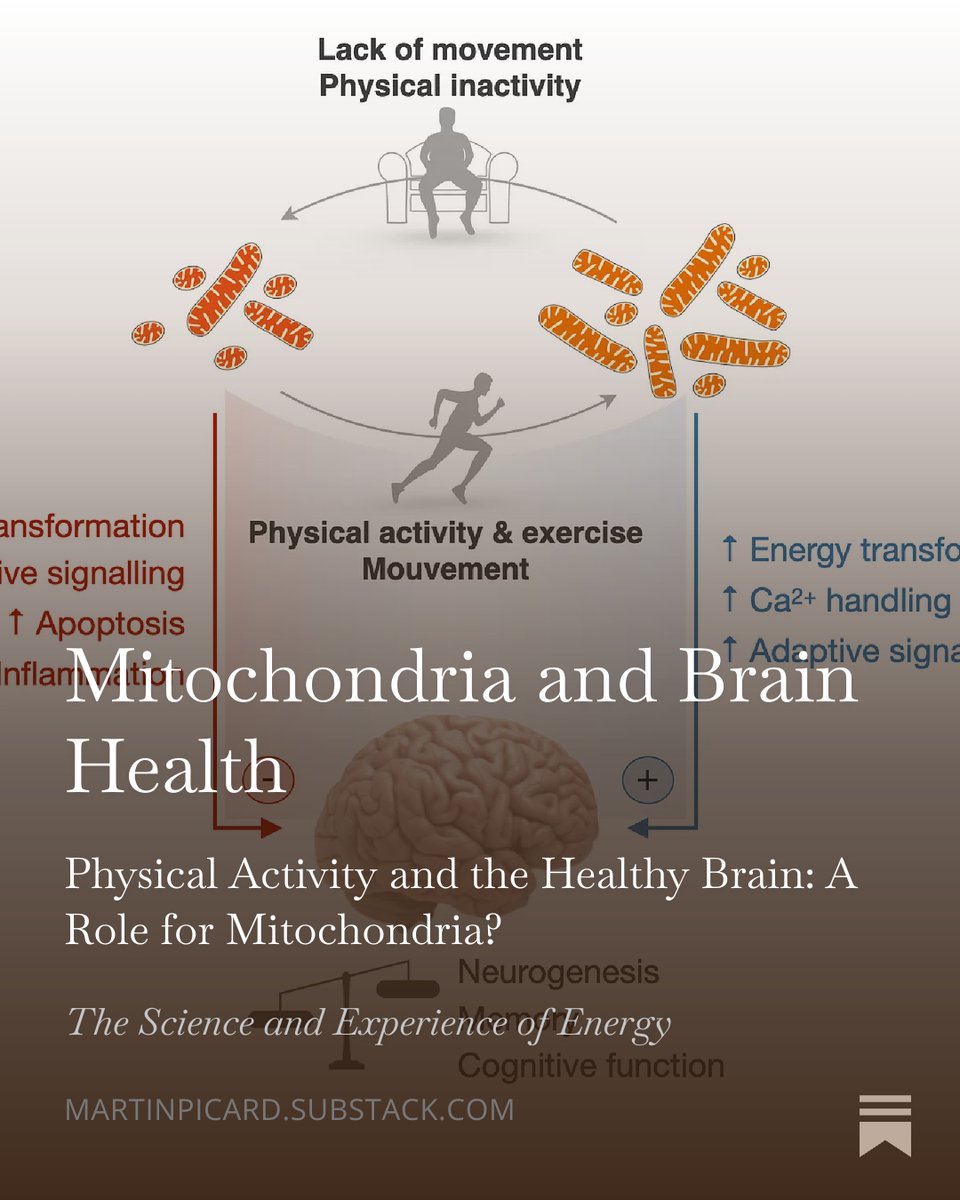
Exercise is good for the brain. But why? This morning in The Science and Experience of Energy we explore the effects of exercise on brain mitochondrial. And why making more mitochondria might in part be why moving keeps our brain healthy. martinpicard.substack.com/p/mitochondria…
Martin Picard tweet media
English
13
110
474
14.4K
Ke Bo retweetledi
Brandon Luu, MD
Brandon Luu, MD@BrandonLuuMD·
MRI-estimated brain age dropped by ~1 year after 1 year of moderate-to-vigorous aerobic exercise in a randomized trial of 130 adults aged 26 to 58.
Brandon Luu, MD tweet media
English
11
63
357
20.7K
Ke Bo retweetledi
Michael Okun
Michael Okun@MichaelOkun·
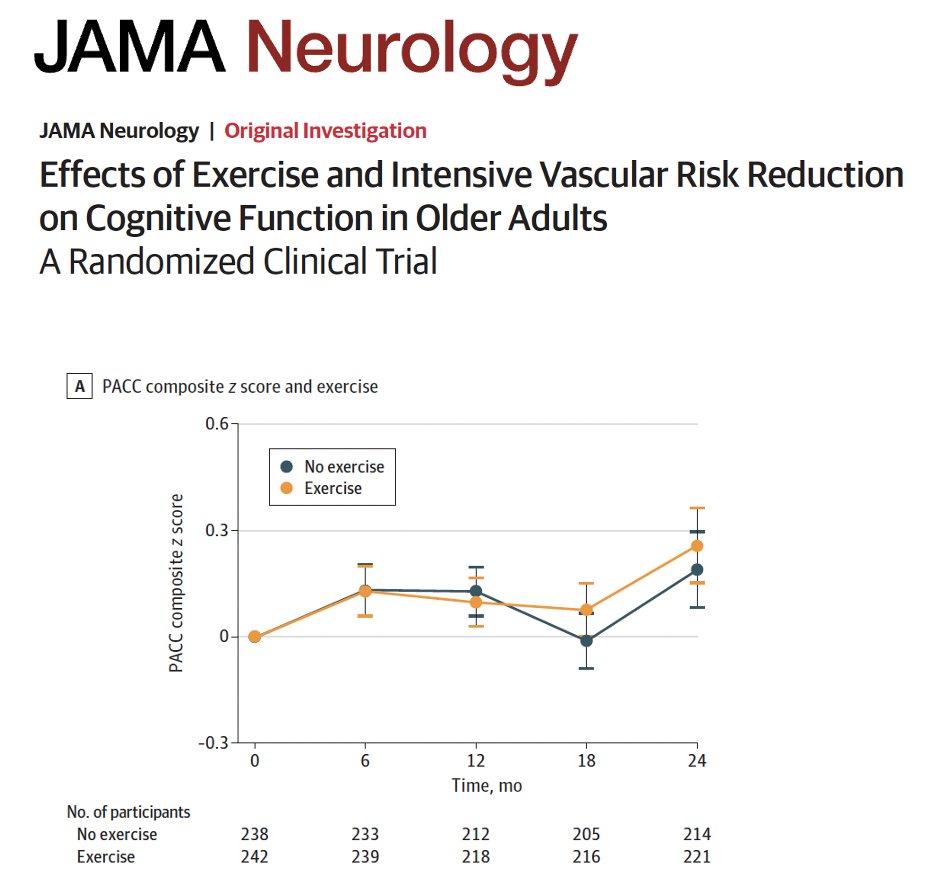
Can exercise and aggressive risk factor control protect your brain as you age? A new randomized trial provides important data. In a randomized clinical trial participants are assigned by chance to different treatments to in a 'more fair way' test what works. Rong Zhang and colleagues describe in a new paper in JAMA Neurology the effects of exercise and intensive vascular risk reduction on cognitive function in older adults at risk for dementia. Key Points: - Over 24 months, aerobic exercise, intensive blood pressure and cholesterol lowering, or both did not significantly improve overall cognitive scores compared to usual care. - Cognitive scores improved slightly across all groups, suggesting possible practice or participation effects rather than a true treatment benefit. - Intensive vascular treatment successfully lowered blood pressure and cholesterol, however this did not translate into measurable cognitive gains over the study period. My take: This is an important and humbling study. We all want a clear signal that exercise or aggressive risk reduction will sharpen cognition in the short term. However, biology is complex. Brain health may require longer timelines, earlier intervention, or more comprehensive strategies. This does not mean these approaches are not valuable. It means we need to better understand how and when they work. Here are 5 points that resonated w/ me: 1- Exercise remains critical for overall brain and body health, even if short term cognitive gains are not obvious. 2- Lowering blood pressure and cholesterol is essential for preventing stroke and vascular disease and likely still matters for long term brain health. 3- Not seeing a signal at 2 years does not mean there is no benefit over 5 or 10 years. 4- Brain health may require combining exercise w/ diet, cognitive training and social engagement rather than a single approach. 5- Folks should not stop healthy habits based on one study, instead this work should guide smarter and more personalized prevention strategies moving forward. cutt.ly/UtAAvAih @ParkinsonDotOrg @JAMANetwork @JAMANeuro
Michael Okun tweet media
English
0
2
14
1.2K
Ke Bo retweetledi
Leonardo Dalla Porta
Leonardo Dalla Porta@ldallap1·
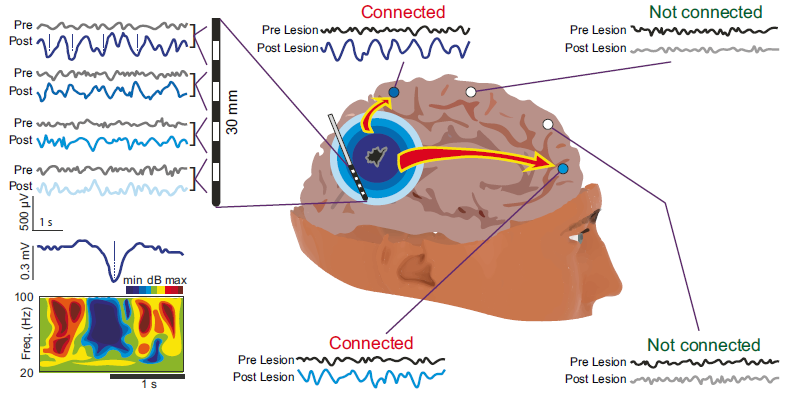
For more than a century, the study of brain lesions has been central to understanding cognitive processes and normal brain function (e.g., Broca’s studies). However, what electrophysiological signatures emerge following a brain lesion?
Leonardo Dalla Porta tweet media
English
1
29
110
7.3K
Ke Bo retweetledi
Ryan Yan
Ryan Yan@RyanYAN_98·
Job opportunity: The Symbiotic Project on Affective Neuroscience (SPAN) Lab (spanlab.stanford.edu), directed by Dr. Brian Knutson in the Department of Psychology at Stanford University, is seeking a Lab Manager / Research Coordinator to begin around June 2026.
English
1
1
3
456
Ke Bo retweetledi
XiaoboLiu-刘晓波
XiaoboLiu-刘晓波@XiaoboLiu29·
Our first work from my PhD period: biorxiv.org/content/10.648… In this study, we propose a computational model and theoretical framework for neural dynamics. This is only a starting point, but it also reflects our broader academic ambition.
English
1
16
93
6.9K
Ke Bo retweetledi
Dr. López-Gil
Dr. López-Gil@JFLopezGil·
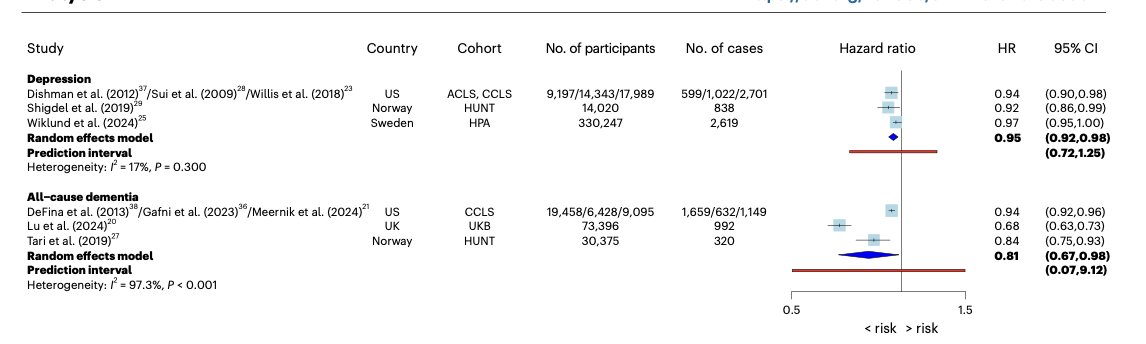
🚨Cardiorespiratory fitness may be one of the keys to mental and brain health Not an app. Not a therapy. Not a medication. 📊In our latest paper in @NatMentHealth (more than 4 million participants), a higher CRF🏃.‍.. ↓39% dementia ↓36% depression ↓29% psychotic disorders
Dr. López-Gil tweet mediaDr. López-Gil tweet mediaDr. López-Gil tweet media
English
5
40
135
9.8K
Ke Bo retweetledi
Nicholas Fabiano, MD
Nicholas Fabiano, MD@NTFabiano·
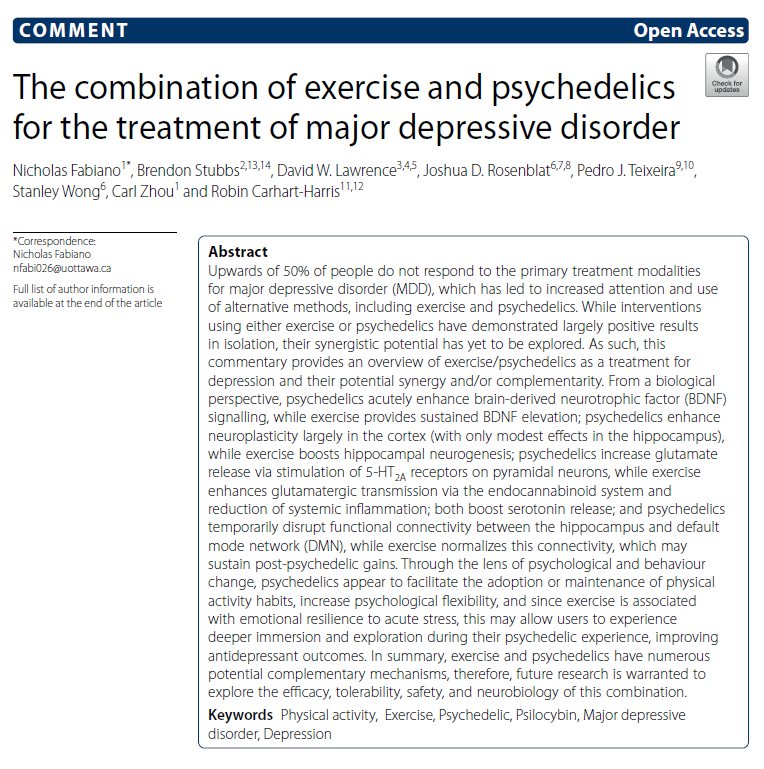
Exercise & psychedelics have untapped potential in the treatment of depression.
Nicholas Fabiano, MD tweet media
English
44
171
1.2K
288.2K
Ke Bo retweetledi
Yoni Ashar
Yoni Ashar@YoniAshar·
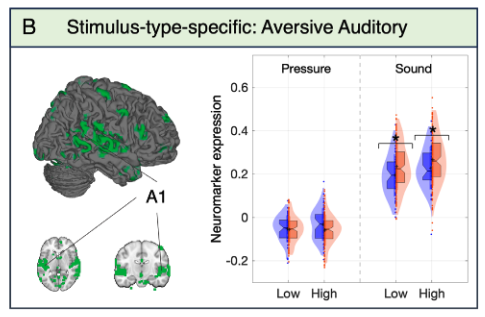
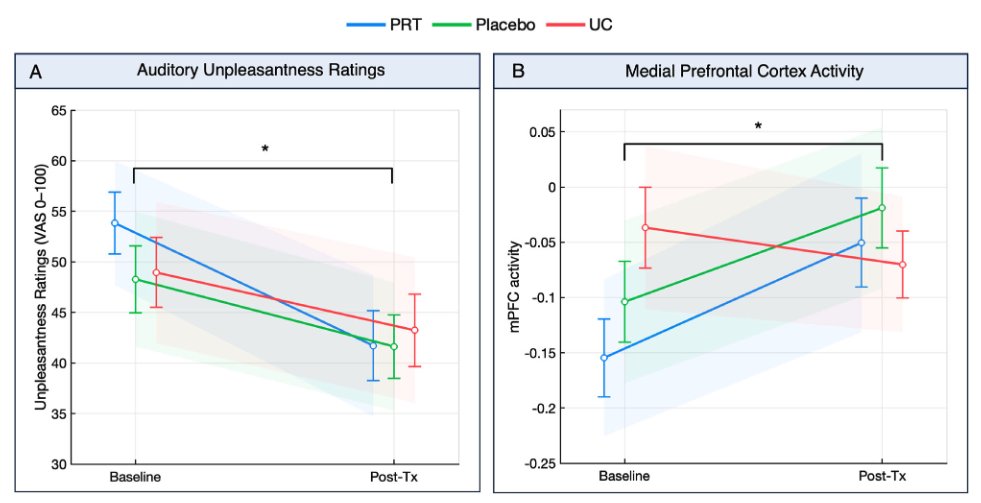
We know that chronic back pain is driven by brain amplification of sensory input -- but we haven't known how far this amplification extends In new work just published in Annals of Neurology, we show that people with chronic back pain also have substantial (d ~ 1.0) amplification of aversive auditory processing, and that this is - driven by hyper-responsivitiy in auditory cortex and insula - has overlapping mechanisms with fibromyalgia - partially reversible with treatment (pain reprocessing therapy), including stronger mPFC responses to aversive sounds onlinelibrary.wiley.com/doi/10.1002/an… Is this multi-sensory sensitization cause of consequence of chronic pain? collaboration with @torwager @AlinaPanzel @C_Buchel
Yoni Ashar tweet mediaYoni Ashar tweet media
English
0
4
13
943
Ke Bo retweetledi
Choong-Wan (Wani) Woo
Choong-Wan (Wani) Woo@choongwanwoo·
New paper w/ @_LeeJaeJoong_ in Nat Neurosci!🧠 We developed personalized fMRI predictive models tracking ongoing spontaneous pain in chronic pain patients, trained on 6+ mo. of densely sampled data. A true team effort. Deeply grateful to our participants! doi.org/10.1038/s41593…
English
4
36
103
5.7K
Ke Bo retweetledi
McGovern Institute
McGovern Institute@mcgovernmit·
How does the brain know which neurons to adjust during learning in order to optimize behavior? MIT researchers discovered that brains can use cell-by-cell error signals to do this — surprisingly similar to how AI systems are trained via backpropagation. mcgovern.mit.edu/2026/02/25/neu…
English
3
85
373
56K
Ke Bo retweetledi
Yuefeng Huang
Yuefeng Huang@Yuefeng_Huang·
Very excited to share the first fMRI RCT of MORE in OUD, providing mechanistic insight into cognitively enhanced mindfulness-based interventions for substance use disorders. @greg_kronberg
Ahmet O. Ceceli@aoceceli

Check out our new preprint documenting how Mindfulness-Oriented Recovery Enhancement rebalances neural responses to drug and natural reward cues in opioid use disorder! With @Yuefeng_Huang, @bic_ismms, @DrEricGarland et al @SinaiBrain @MountSinaiPsych medrxiv.org/content/10.648…

English
0
2
4
255
Ke Bo retweetledi
Shir Atzil
Shir Atzil@shiratzil·
New paper: The metabolic framework of reward We reframe reward as a computation of metabolic optimization. Dopamine and opioids, do not signal reward but act as physiological agents. Learning and behavior serve the brain’s goal of optimizing energy use. sciencedirect.com/science/articl…
Shir Atzil tweet media
English
2
36
142
7.9K