
Briar
2.2K posts





Briar retweetledi

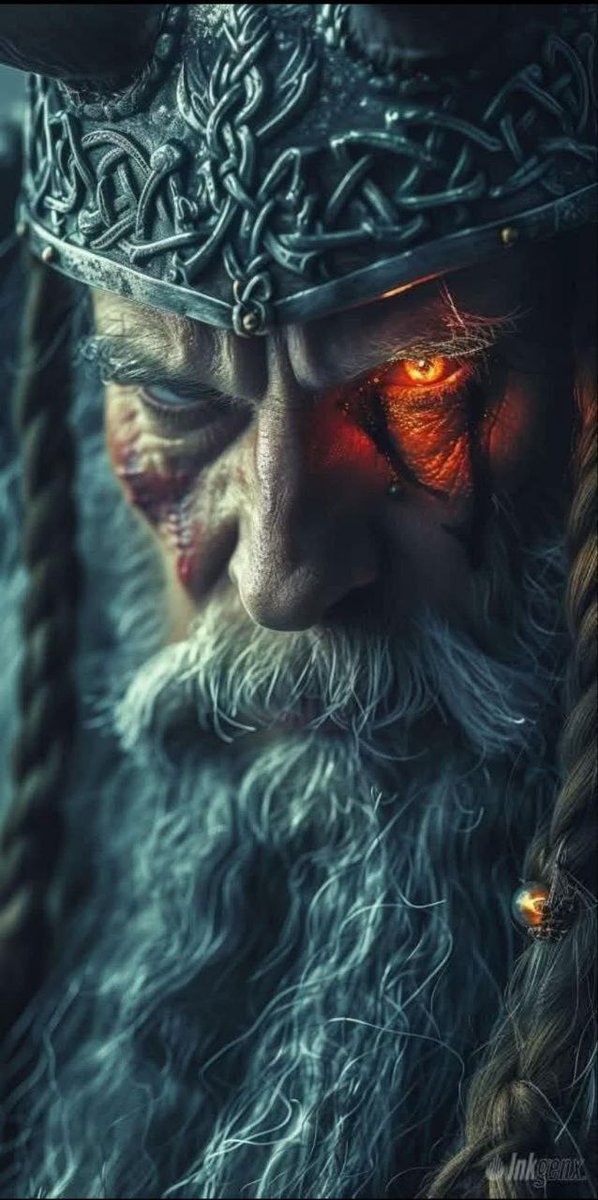
"The entire idea of Creation was first given by Allfather to our primeval fathers, the first Aryan God-Sun-Sons, through the sacred cosmic runes ..."
— Siegfried Kummer

English
Briar retweetledi




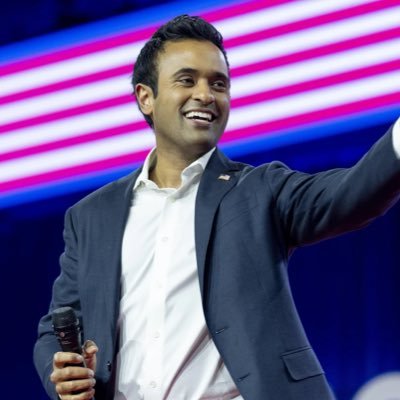
Ohio needs a leader who isn’t beholden to anyone, reporting directly to the people of our state.
English

Briar retweetledi

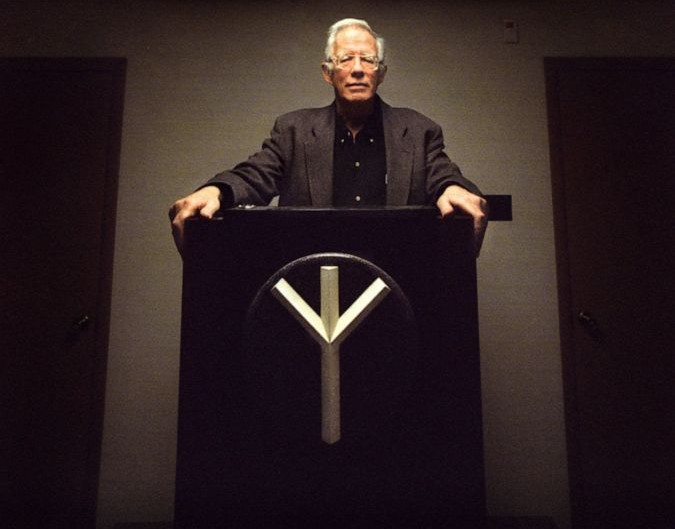
William Luther Pierce was one of the main Pro-White activists in the movement. In his earlier years, he was raised as a Presbyterian, but later adopted Cosmotheism, a religion that revolves around the laws of nature, life, evolution, race, and science. Pierce was NOT a christian. Here's what Pierce had to say about christianity.
"But as I see it, Christianity has a number of elements that are very destructive to our people. One of them is its egalitarianism. You know: 'the meek shall inherit the earth,' 'the last shall be first, and the first shall be last,' and so on. It's this whole Sermon-on-the-Mount idea of leveling and putting people down and pulling down those who are on the top of the heap regardless of how they got there. It is a fundamental part of Christian doctrine, and I think it is destructive of any kind of ordered society. When you look at Christianity you have to get beyond the requirements and rituals—you shall be baptized, you shall observe the marriage sacrament, and so forth—and look at underlying things, like the egalitarian, bolshevik message in this religion, which is really dangerous and has helped move us to this democratic age."
"And there is the universalistic message in Christianity. That we are
all alike, that fundamentally there is no difference among people, that the
only thing that counts is whether you are in or out of Jesus' flock. It's the
'we are all one in Christ Jesus' idea—man and woman, white and black,
Greek and Jew. We are all equal in the eyes of the Lord, that business. All of that is fundamentally opposed to the evolutionary view that I have and which I think is necessary to progress. The truth of the matter is that we aren't all one, and we are different from one another, and some
individuals and cultures are better than others. Anything that obscures
that reality and its implications holds things back."
"Another idea inherent in Christianity is that what we do here on earth doesn't really matter. This life is just a testing ground; the real action will go on someplace else, after our death—that line of thought. And there is the notion that we don't have to really stay on the case because God has everything under control. He is watching us all the time and looking out for us, and He can push this button or that one and make anything happen He wants. We aren't in control, and in any case we don't need to be because it's not really our responsibility, it's God's. I have talked to many Christians of good intelligence who accept this idea. To me, that comes down to an abdication of responsibility."
"And then there is all the superstition and craziness in Christianity. When they had their chance, the Christians burned free thinkers, stifled intellectual development for centuries, and led people off to those suicidal Crusades. So I see Christianity as more than a humorous aberration; it's a really dangerous one. At the same time I say that I
acknowledge that many if not most Christians are basically reasonable
and decent people. It's just that they haven’t thought things all the way through. They aren't the problem—it's the doctrine."
"A man hanging from a cross, crucified. That just seems weird to me. It is hard for me to have a good feeling about that. It just doesn't seem European to me. It would take somebody with a really alien mindset to choose something like that as a symbol for a religion. It is an execution scene. It's like if I were to start a new religion and chose as a symbol a man hanging from a gallows, or in an iron cage with crows
pecking at his skeleton."
—The Fame of a Dead Man's Deeds by Robert S. Griffin. Chapter 20 William Gayley Simpson, Page 253-255.
English