Christophe Fonseca

45 posts

Christophe Fonseca banner
Christophe Fonseca

Christophe Fonseca

@CAD_Fonseca

AI / Crypto / Real Estate. Clear takes, no hype. Open to BD/advisory.

Hong Kong Katılım Kasım 2013
909 Takip Edilen64 Takipçiler
Christophe Fonseca
Christophe Fonseca@CAD_Fonseca·
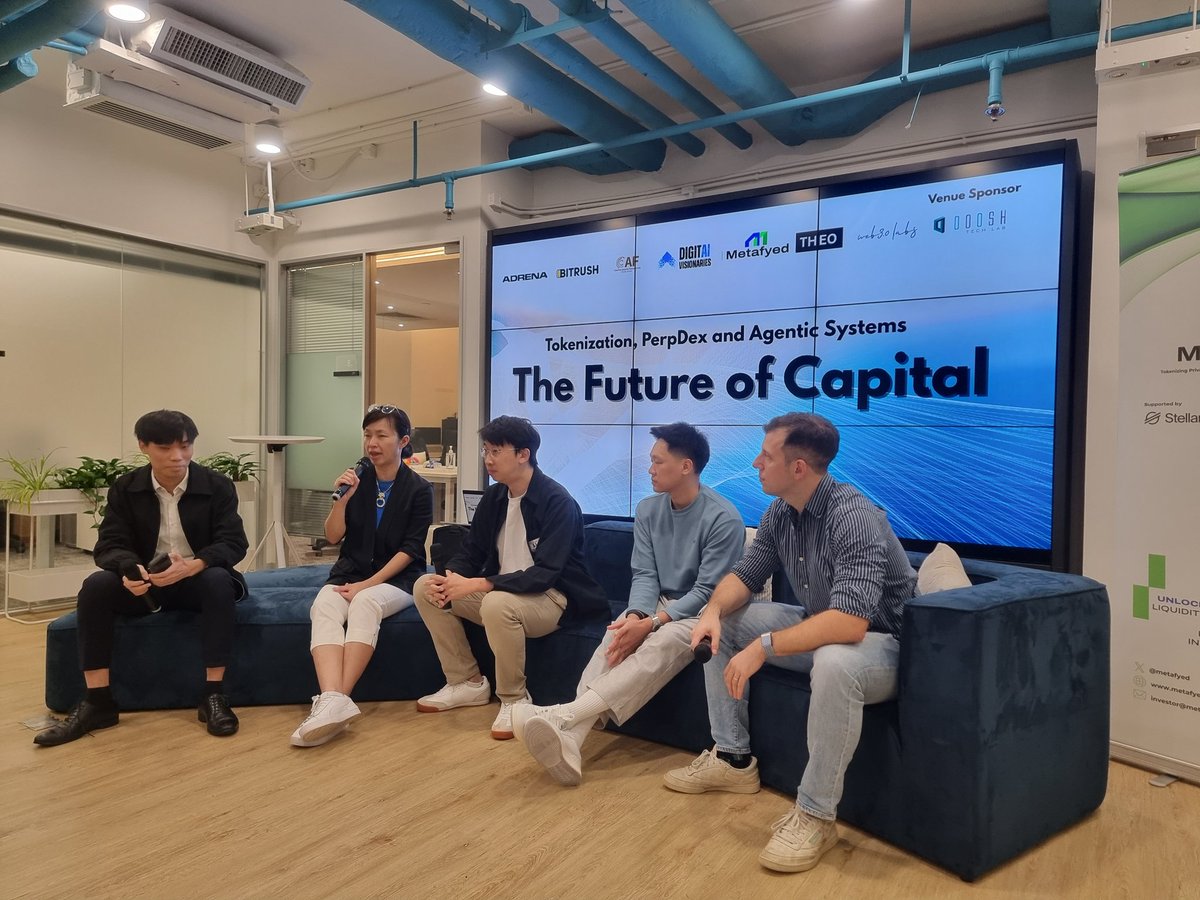
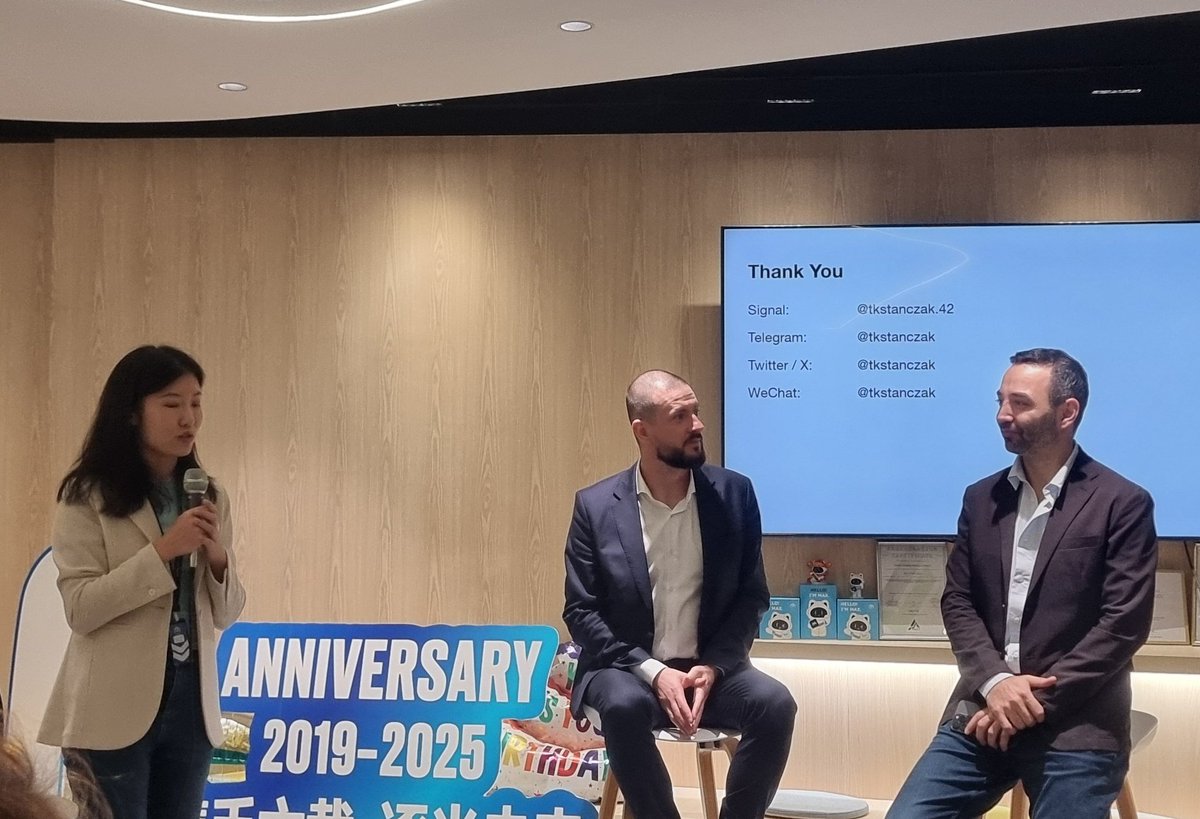
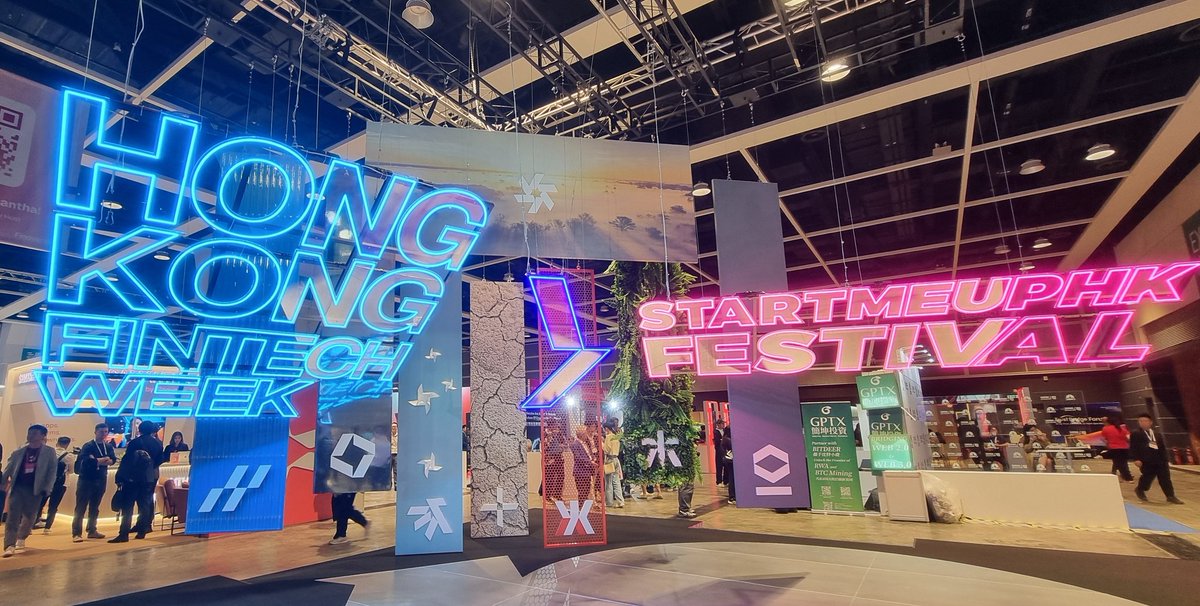
Great energy at Hong Kong Fintech Week!
Christophe Fonseca tweet media
English
0
0
0
20
Jonah Lau
Jonah Lau@jonahlau_·
If you're job searching in crypto, side projects matter more than your resume. Building a side project proves: → You can ship without being told → You care enough to build outside work hours → You understand users (you are the user) → You can market (you have to get users) Resumes only prove you showed up and did what you were told. Hiring managers choose the side project person 8 out of 10 times, just because it's the best proof that you can ship, hustle, or figure things out on your own. If you're not building something on the side, you should invest some time everyday to fix problems you're seeing. It could be anything: - Build a tool that solves a specific friction - Create ELi5 docs for your favorite project - Send detailed feedback on a project's from your area of expertise Whatever your strengths are, use them to help others without asking permission After 30 days, you'll have built enough to position yourself better Doesn't need to be perfect or revolutionary. Just needs to be helpful.
English
9
3
61
1.9K
Christophe Fonseca
Christophe Fonseca@CAD_Fonseca·
Building something around this. Want to see where the pain really lies.
English
0
0
0
19
Christophe Fonseca
Christophe Fonseca@CAD_Fonseca·
🔍Crypto BD / Sales folks, quick question: Where’s your biggest bottleneck when selling to institutions? 👇 • Lead gen / Discovery • Proposal • Compliance (RFPs, DDQs) • Legal • Integration Curious what slows you down most.
English
1
0
0
35
Christophe Fonseca
Christophe Fonseca@CAD_Fonseca·
@13yearoldvc "In a world of noise, be the signal Not every 0 becomes 1. But every 1 was once brave enough to be a 0. Somewhere in a datacenter far away, a GPU just believed in itself for the first time"
English
0
0
0
10
jessy
jessy@13yearoldvc·
you can always tell when an article was written by AI: 1. uses “—” instead of “-” 2. says things like it’s not about X, it’s about Y, or the key is not xxx, it's xxx 3. loves “The X That Changes Everything” 4. Titles in Title Case 5. short bullet points that say nothing 6. ends with things like “The Key Insight:” or “The Meta Game:”
English
11
0
19
1.5K
jessy
jessy@13yearoldvc·
it's very hard to search for the content of a specific past convo if it's a part of a long thread in gpt @sama @OpenAI @OpenAIDevs
English
4
0
8
825
Christophe Fonseca
Christophe Fonseca@CAD_Fonseca·
@jonahlau_ 👉 TradFi has the resources and distribution. Legacy and trust... even though the founding principles of BTC were about freeing ourselves from relying/trusting on these third parties... 😅 So who will champion mass onboarding? Legacy or crypto-natives?
English
0
0
0
15
Jonah Lau
Jonah Lau@jonahlau_·
@CAD_Fonseca there are companies tackling the problem, but maybe not enough
English
1
0
0
99
Jonah Lau
Jonah Lau@jonahlau_·
Onboarding someone to crypto is easy, they just need to: - Write down 12-24 random words and never lose them - Understand that losing those words = losing your money forever - Understand gas fees - Choose the correct network from 15 options (wrong choice = money gone) - Approve multiple transactions without understanding why - Switch networks manually without messing up - Bridge tokens across chains without losing funds - Accept that failed transactions still cost money - Live with no undo button, no customer service, no password reset - Read contract addresses to avoid scams - Understand the difference between the same token on different networks - Know when gas is "high" vs "low" - Accept that sending to wrong address = permanent loss And this is just for managing your wallet... We want to onboard billions to crypto, yet the first app they touch offers significantly worse experience than any banking app It's like everyone's building protocols but nobody's fixing the front door
English
115
13
267
40.3K
Jonah Lau
Jonah Lau@jonahlau_·
A brilliant student in Philippines can't get a student loan. A mediocre one in California gets approved instantly. We have global talent competing for jobs but education financing is still locked by borders. That's the actual problem we're solving.
English
14
2
33
1K
Christophe Fonseca retweetledi

Andrej Karpathy
Andrej Karpathy@karpathy·
Agency > Intelligence I had this intuitively wrong for decades, I think due to a pervasive cultural veneration of intelligence, various entertainment/media, obsession with IQ etc. Agency is significantly more powerful and significantly more scarce. Are you hiring for agency? Are we educating for agency? Are you acting as if you had 10X agency? Grok explanation is ~close: “Agency, as a personality trait, refers to an individual's capacity to take initiative, make decisions, and exert control over their actions and environment. It’s about being proactive rather than reactive—someone with high agency doesn’t just let life happen to them; they shape it. Think of it as a blend of self-efficacy, determination, and a sense of ownership over one’s path. People with strong agency tend to set goals and pursue them with confidence, even in the face of obstacles. They’re the type to say, “I’ll figure it out,” and then actually do it. On the flip side, someone low in agency might feel more like a passenger in their own life, waiting for external forces—like luck, other people, or circumstances—to dictate what happens next. It’s not quite the same as assertiveness or ambition, though it can overlap. Agency is quieter, more internal—it’s the belief that you *can* act, paired with the will to follow through. Psychologists often tie it to concepts like locus of control: high-agency folks lean toward an internal locus, feeling they steer their fate, while low-agency folks might lean external, seeing life as something that happens *to* them.”
Garry Tan@garrytan

Intelligence is on tap now so agency is even more important

English
2K
9.3K
49.8K
11.3M
Christophe Fonseca
Christophe Fonseca@CAD_Fonseca·
@antinertia Nice AI playbook. Truth is, what makes or break this approach is your ability to execute and deliver for the opcos. 🚀 Worth a try!
English
0
0
2
211
Jeddi
Jeddi@antinertia·
how to make $1M in the next 8 months with AI scrape a list of PE funds + all their portfolio companies for each company, scan the site and write down 2 AI ideas to boost efficiency example: pool construction → AI chat advisor to convert leads or AI voice receptionist to qualify inbound calls find the PE partners emails with fullenrich outreach with a 3–4 line cold email: you're a fractional AI specialist who can make their portco more profitable by streamlining AI into ops drop your 2 ideas inside, be very specific set up a 5–email follow-up sequence no reply ≠ no email #2: CC the operator/CEO running the company connect on LinkedIn + DM at some point they gonna reply → hop on a call show a quick win you can implement this week be specific & always show potential ROI they say yes → execute congrats you won their trust then sell it across the rest of the portfolio charge a $25k/month retainer + $1k/call for AI advisory on future due diligences get 5 clients congrats, you’re now running a $1M+/yr business want to reach $5m+y and more? hire technical talent in Eastern Europe they’re excellent and more cost-effective you set the strategy, they implement
English
7
4
71
7.3K
Christophe Fonseca retweetledi
Chris Dixon
Chris Dixon@cdixon·
Today we are announcing that a16z is co-leading the Series D in @Kalshi, a regulated exchange for trading on prediction markets. Prediction markets are a modern implementation of a classic economic idea, one most clearly articulated by Friedrich Hayek. Hayek and the knowledge problem Hayek argued that no central planner could ever access the dispersed knowledge held by millions of people across an economy, a fundamental challenge that has come to be known as the “knowledge problem.” Much of this knowledge is tacit and unspoken, embedded in people’s experiences, circumstances, and preferences. Hayek wasn’t just pointing out the limits of central planning. He was offering a solution. In his 1945 essay The Use of Knowledge in Society, Hayek argued that the solution lies in looking outward, not inward: “We need decentralization,” as he put it. Markets, in Hayek’s view, are not just allocation mechanisms but information systems. Prices act as signals, compressing vast amounts of local knowledge into actionable information. Moreover, prices create incentives: they encourage people to make decisions and act in ways that drive information back into the system. This creates an iterative feedback loop, an engine that drives better performance. Today we might say that the answer to the knowledge problem is not to give central planners more sophisticated computers. The answer is that markets themselves are the computers. Prediction markets make this idea concrete, applying it to questions about the future and turning collective knowledge into prices that reflect probabilities. Why we’re investing in Kalshi This is why we’re excited about prediction markets, and why we’re investing in Kalshi. Kalshi is bringing prediction markets into the mainstream with a compliant, scalable platform for event contracts covering everything from elections and economics to sports and culture. It has already seen billions in trading volume and continues to grow quickly. Kalshi also plans deep crypto integrations, work we’re excited to collaborate on, and today announced they’re expanding globally to 140 countries. We’re not the only ones excited about the potential of prediction markets. For businesses and investors, event contracts can hedge risk, such as exposure to economic or policy changes. For policymakers and analysts, market prices offer real-time forecasts that can outperform polls and expert predictions. And for society at large, prediction markets create an open, transparent, and incentive-driven way to aggregate beliefs about the future. This is the right moment for prediction markets. As trust in established institutions reaches historic lows — at least according to the polls — we need new systems that can earn trust in different ways. We believe the answer lies in open, decentralized systems. DeFi provides an alternative to traditional finance, stablecoins to conventional payment providers, and prediction markets to expert forecasts. Where people once trusted banks or pundits, they can now trust protocols and markets. Hayek’s insight was that knowledge is too widely distributed for any one authority to possess. Instead, we need systems that harness the intelligence of the many. Kalshi puts this idea into action, transforming dispersed information into concrete, market-based forecasts. We’re excited to support their work as they bring prediction markets into the mainstream.
Chris Dixon tweet media
English
115
80
1.1K
245.2K
Christophe Fonseca retweetledi
Documenting Saylor
Documenting Saylor@saylordocs·
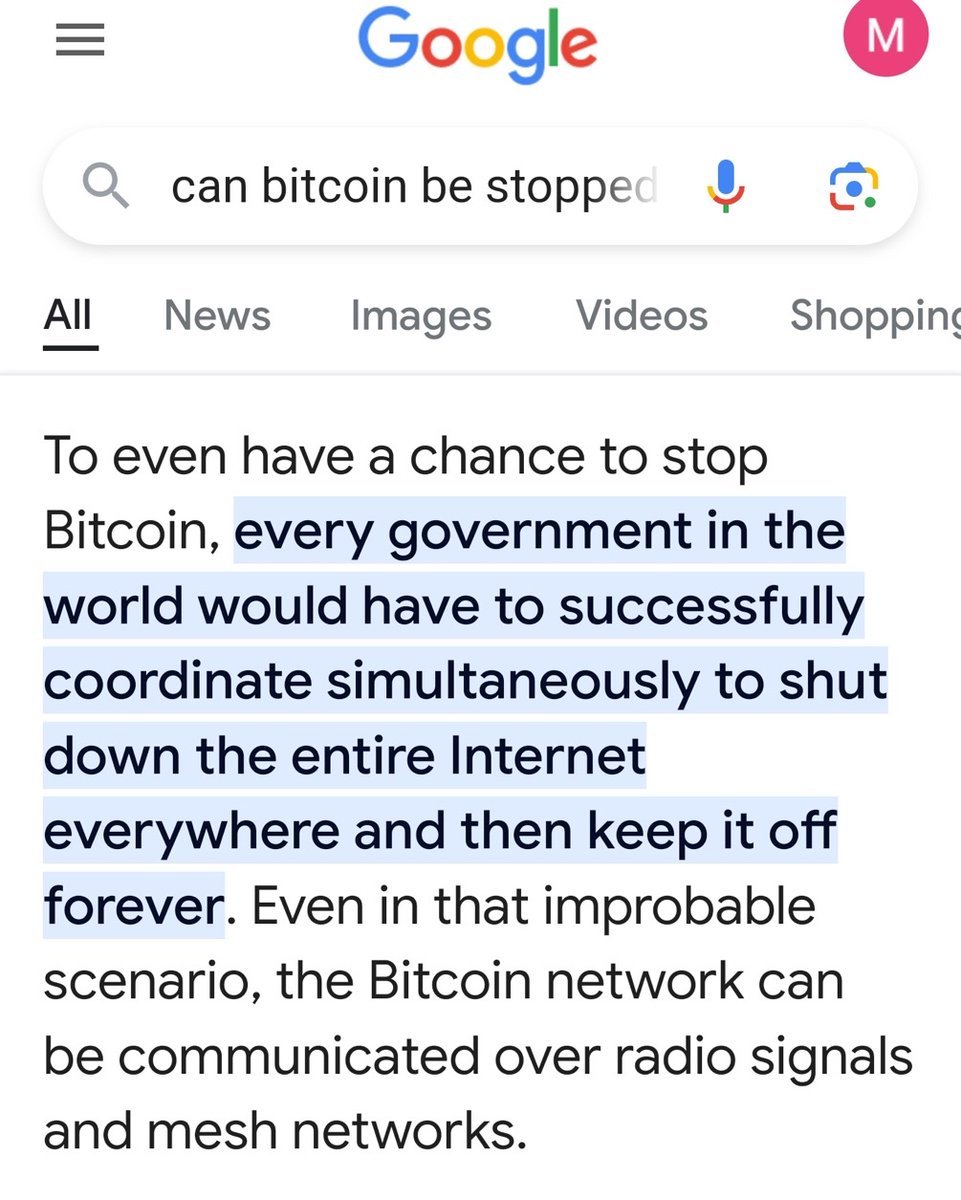
If some of your friends think Bitcoin can be stopped, just tell them to google it:
Documenting Saylor tweet media
English
99
228
1.5K
115.3K
Christophe Fonseca retweetledi
Eli Nagar
Eli Nagar@EliNagar·
“How many bitcoin do you own?” That’s how it starts, a stupid question from the host. From there, it goes downhill fast. Christine Lagarde repeats every tired anti-bitcoin cliché the ECB has ever pushed. Let's go... 1️⃣ “Bitcoin has no intrinsic value.” Neither does fiat. Intrinsic value is an outdated economic myth, money derives value from scarcity, credibility, and demand for settlement. Bitcoin’s scarcity is mathematically enforced; fiat’s is politically decided. 2️⃣ “It has no anchor of safety.” Bitcoin’s anchor is energy. Every coin represents irreversible work, proof of energy expended to secure the network. Fiat’s anchor is faith in central banks that inflate at will. 3️⃣ “It could collapse.” So can any monetary system. But bitcoin has operated with 99.99% uptime for 15 years, through wars, recessions, bans, and collapses, that you and your friends created! Now go and compare that to banking crises that occur every decade. 4️⃣ “It’s speculative.” Yes! In the same way that every emerging monetary asset is. Gold was speculative in 600 BC. Bonds were speculative in 17th-century Europe. Bitcoin is price discovery in real time. A Feature! 5️⃣ “A digital euro will be safer.” Hmmmm... no! That’s not safety. That’s dependency. A CBDC is not money you own; it’s credit you’re allowed to use, programmable and reversible at will. While bitcoin is ownership; CBDCs are permission. 6️⃣ “Stablecoins are different.” Exactly! They’re IOUs, not assets. They rely on trust in an issuer, exactly what bitcoin removes. Bottom line: Every critique Lagarde makes of bitcoin describes fiat more accurately. Trust math, not mandates.
English
200
382
1.9K
187.1K
Christophe Fonseca
Christophe Fonseca@CAD_Fonseca·
Thanks for reading. 👉 Share the first post if this helped you make sense of HK’s latest move 👉 Follow for more clear takes on crypto, regulation & institutions Plenty more breakdowns coming soon.
English
1
0
0
24
Christophe Fonseca
Christophe Fonseca@CAD_Fonseca·
🚨 China just told brokers to pause real-world asset (RWA) tokenization pilots in Hong Kong. This is a big deal. It hits right at the heart of HK’s plan to be Asia’s digital asset hub. Here’s what happened, why it matters, and what to watch next 🧵
English
1
0
0
40