Carson Dyle

212 posts

Carson Dyle

Carson Dyle

@CDyle0000

Katılım Mart 2025
53 Takip Edilen70 Takipçiler
Seren
Seren@Seren040·
@CDyle0000 @SpencerGuard @ctindale We did win Vietnam. By every single metric of winning a war. The fact that you don't realize that tells me you arnt qualified to have an opinion.
English
1
0
0
23
John Spencer
John Spencer@SpencerGuard·
The common counterargument, often driven by anti-Trump narratives, is that because the United States has not seized control of the Strait of Hormuz, it therefore cannot, and that Iran is somehow demonstrating a lasting strategic advantage it will carry forward. That logic is deeply flawed. The absence of a U.S. operation to fully secure the Strait is not evidence of military incapability. It is evidence of political restraint and strategic calculation. Just because the President has not ordered a combined air, naval, and ground campaign to seize and secure the Strait does not mean the U.S. military lacks the capability to do so. It means there are economic, diplomatic, escalation-management, and broader strategic reasons such an operation has not been ordered. The United States has spent decades building the exact naval, airpower, logistics, ISR, mine-clearing, amphibious, and strike capabilities required to dominate chokepoints like Hormuz if directed. Confusing political decision-making with military capability is a common uniformed mistake. Iran’s threats to shipping, harassment operations, mining efforts, or missile attacks do not demonstrate that the United States is unable to secure the Strait. If anything, they reinforce why freedom of navigation operations and deterrence have been central pillars of American power for decades. The question has never been whether the United States could impose control over the Strait. The question has always been whether the political leadership believes the costs, escalation risks, and global economic consequences of doing so outweigh the benefits at a given moment.
John Spencer@SpencerGuard

x.com/i/article/2053…

English
133
304
1.1K
146.7K
Anas Alhajji
Anas Alhajji@anasalhajji·
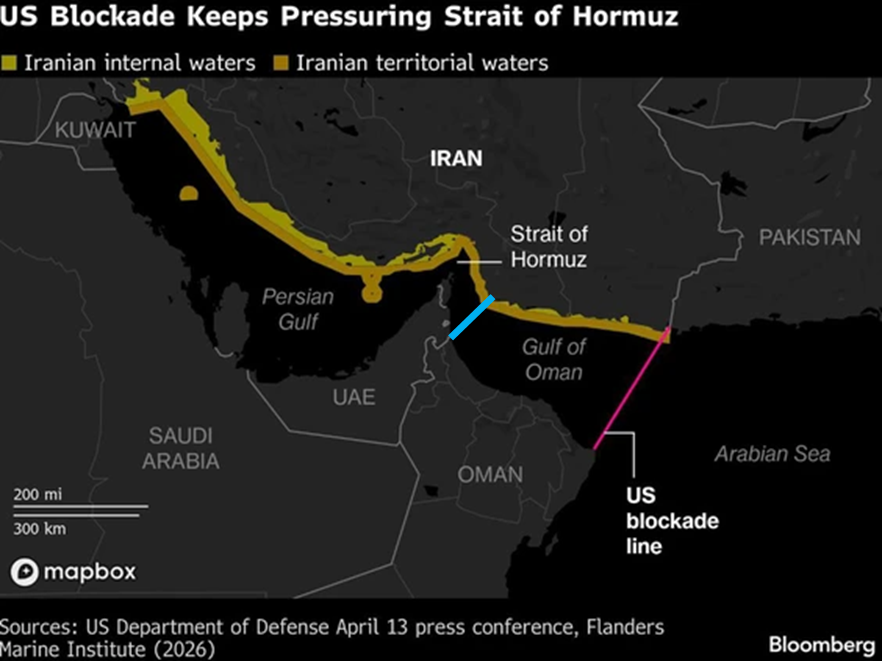
Notice where the US blockade and Navy are positioned (the Red Line). Why the blockade did not take place where the blue line is? (I added the blue lien to the original Bloomberg map) Will the US Navy actually enter the Gulf and Strait of Hormuz — making them easy targets for Iranian ground attacks? Is President Trump hoping for such a strike to justify another war? Or is this just electronic “guidance” of ships from afar? Either way, what about insurance? Who pays if the ships get hit? “we have told these Countries that we will guide their Ships safely out of these restricted Waterways, so that they can freely and ably get on with their business.” President Trump posted on President Trump post on Truth Social post, as the Asian market opened! 😉 Oil prices are virtually flat! Notice that even if it happens, this is not to open the Hormuz Strait, this is just to get the stranded ships of certain countries out! The more I think about the details of the post, the more I think it is about nothing except trying to prevent oil prices form rising further!
Anas Alhajji tweet media
English
16
92
471
66.9K
Carson Dyle
Carson Dyle@CDyle0000·
@StateDept I see. So you’re saying Iran would be a “stupid country” if it didn’t shoot back at the U.S.
English
0
0
0
117
Department of State
Department of State@StateDept·
SECRETARY RUBIO: Only stupid countries don’t shoot back when you’re shot at. And we’re not a stupid county. The redline is clear – if Iranian boats threaten Americans, they’re going to get blown up. 🔥🔥🔥
English
4.4K
12.2K
70.5K
1.6M
Carson Dyle
Carson Dyle@CDyle0000·
@LukeGromen Oh, one other thing. Win, lose, or draw, Vietnam wasn’t and isn’t a threat to the United States of America 🇺🇸
English
0
0
1
6
Carson Dyle
Carson Dyle@CDyle0000·
@LukeGromen Important to remember what happened after the Paris accords were signed. U.S. troops were out in 2 months, immediately followed by ceasefire violations. Full scale war resumed within a year and N. Vietnamese tanks crashed through the gates of the presidential palace a year later.
English
1
0
1
116
Luke Gromen
Luke Gromen@LukeGromen·
When the US & Vietnam finally agreed to peace talks in 1968, it took months for the two sides to agree where to hold the talks, & then, once that was decided, another 10 weeks to decide the shape of the negotiating table & who would sit where. This reminded me of that story👇
Luke Gromen tweet media
English
40
67
505
33.8K
Carson Dyle
Carson Dyle@CDyle0000·
@ctindale @anasalhajji Today the Secretary of War said, “We’re not looking for a fight.” So, what are they looking for? The fact is, Trump can’t afford to lose a ship any more than the P&I carriers. Let’s not forget, November lies around the corner.
English
1
0
0
40
🇦🇺Craig Tindale
🇦🇺Craig Tindale@ctindale·
Trump doesn’t look like he’s trying to open it . He is trying to evacuate trapped shipping, suppress the oil panic, and leave Iran holding the blame for the closure. It’s theatre for the oil market while he waits in the lobby . He’s playing for time , maybe Irans main weakness is time not bombardment
English
2
5
50
3.2K
Carson Dyle
Carson Dyle@CDyle0000·
@DrJStrategy This is not an Iranian war. It’s a proxy war between the U.S. and China. Sun Tzu said, “The supreme art of war is to subdue the enemy without fighting". Let’s see what happens. 😊
English
0
0
2
1.1K
James E. Thorne
James E. Thorne@DrJStrategy·
For the record. Iran’s Historic Mistake Carl von Clausewitz wrote that war is “the continuation of politics by other means.” President Trump grasped this from the start: Operation Epic Fury exists to stop Iran’s nuclear march and restore deterrence, not to pursue the familiar neocon fantasy of occupation and nation-building. Epic Fury is peace through strength in action: credible force applied decisively when adversaries mistake restraint for weakness. By weaponizing the Strait of Hormuz, Iran committed a strategic blunder of historic proportions. Tehran meant to punish America. Instead, it exposed every power built on imported energy, vulnerable sea lanes, and the delusion that globalization repealed geography. China is exposed. Europe is exposed. Britain is exposed. Iran has created a world where hard resource power decides outcomes. Start with China. Beijing’s industrial machine depends on imported oil and gas moving through vulnerable maritime chokepoints, the old Malacca dilemma in modern form. A great power reliant on long, exposed sea lines cannot be secure, regardless of economic scale. The Hormuz shock forced China to scramble for alternatives, proving that size is not resilience. Europe and Britain face the same problem. After escaping Russian dependency, they traded one vulnerability for another, leaning on imported LNG and maritime flows exposed to coercion. When chokepoints tighten, they absorb shocks rather than project strength. European criticism says less about American failure than about discomfort with a world where hard power still matters. Iran’s mistake is that once Hormuz becomes structurally unreliable, the world builds around it. That means bypass corridors, revived pipeline politics, and urgent planning for routes linking Aqaba to Mediterranean outlets near Gaza and the long-stalled Basra-to-Aqaba pipeline. The old energy order is cracking. The UAE’s OPEC exit signals cartel discipline giving way to national advantage under pressure. Trump deserves credit, not European scolding. Operation Epic Fury struck thousands of targets, degraded Iran’s offensive capabilities, and shattered assumptions that the West would absorb escalation without response. The administration acted while others lectured. It restored deterrence in the only language Tehran understands. The larger lesson matters more. Secure natural-resource hard power is what the Western Hemisphere possesses in abundance. The United States, Canada, and the Americas command hydrocarbons, LNG, farmland, freshwater, critical minerals, and strategic depth on a scale import-dependent Europe and Asia cannot match. This crisis clarified, not weakened, the Americas structural position. The financial dimension reinforces the point. Demand for Federal Reserve swap lines during crisis proves King Dollar remains supreme. When stress hits, governments run toward dollar liquidity, not away from it. Hard resource power and monetary power reinforce one another, and the United States sits at the center of both. That is Epic Fury’s real significance. Clausewitz wrote that “the political view is the object, war is the means.” Trump understood that. Iran tried to weaponize geography, Trump turned the confrontation into a demonstration of who is exposed and who is not. The Trump administration deserves far more praise than it has received, and history will likely judge that Iran’s greatest miscalculation was not merely closing Hormuz, but revealing which powers still command the real sources of strength.
James E. Thorne tweet media
English
576
2K
6.4K
703.1K
Carson Dyle
Carson Dyle@CDyle0000·
@loofymectin @ctindale @LukeGromen For America to survive as it is today, the fiat dollar must remain the dominant global currency. If the dollar falls, America’s standard of living falls and, along with it, any remaining pretense of consensus. Après cela, le déluge.
English
1
0
2
22
Luke Gromen
Luke Gromen@LukeGromen·
Interesting read:
Luke Gromen tweet media
English
67
75
675
73K
Carson Dyle
Carson Dyle@CDyle0000·
@ctindale @LukeGromen I’m afraid you confuse domination with survival. The former is not necessary to the latter.
English
1
0
0
46
🇦🇺Craig Tindale
🇦🇺Craig Tindale@ctindale·
Hegemonies do what they do to survive . To suggest that any of these nation states has a moral code or ever had one misunderstands the world . The only code is physics of survival and power . We’ve never had a time in human history where this wasn’t the playing field of geopolitics , we are all the descendants of power , otherwise our genes wouldn’t exist . These harping moral essays might appeal to those who are provoked by narrative but they don’t provoke change toward our individual expressions of morality . Mao , Stalin , Hitler all thought they were moral actors Nation-states don’t possess morality in the way individuals do. Even then most individuals moral codes are environmentally conditional . They use moral concepts to organize loyalty, justify violence and stabilize power. Survival and power are the underlying constraints of geopolitics, but legitimacy, ideology and moral narrative shape how power is pursued, resisted and remembered. Calling a nation state pirates ignores that all nation states are pirates with the right incentives . The reality is that they manufacture moral codes flexible enough to excuse whatever survival requires.
English
12
5
51
3.4K
Carson Dyle
Carson Dyle@CDyle0000·
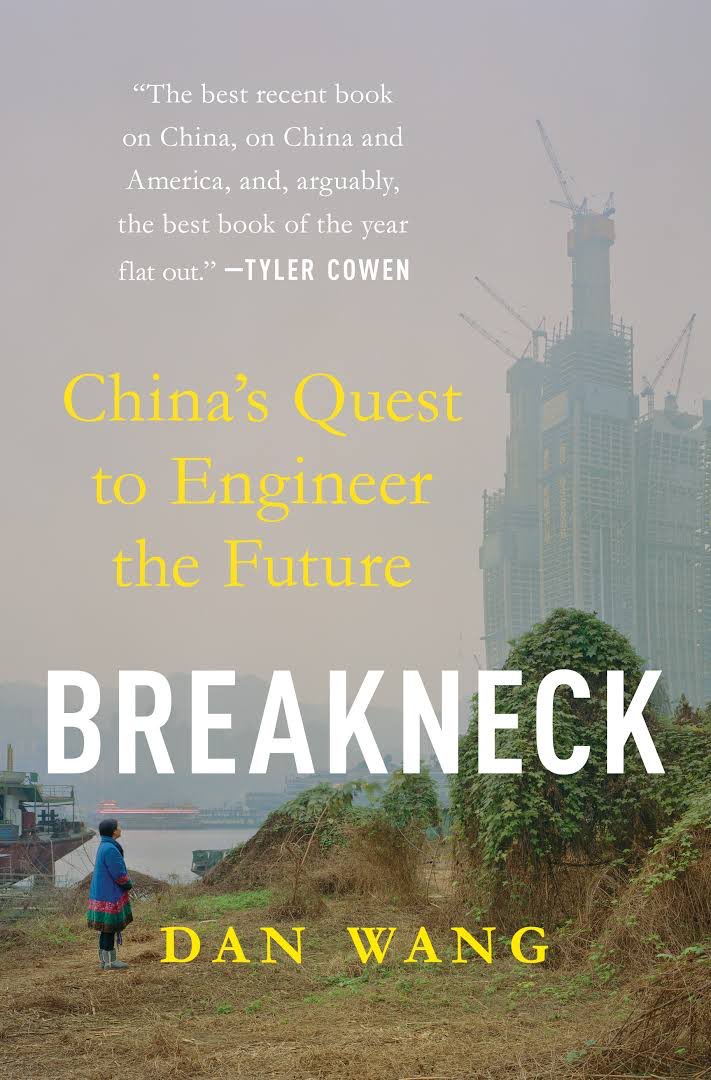
@ShangguanJiewen @KingKong9888 The reason is simple. America’s run by lawyers. China’s run by engineers. Lawyers can’t fix potholes. Engineers don’t care about laws. Recommend you read this book.
Carson Dyle tweet media
English
3
2
16
939
Jason Smith - 上官杰文
Jason Smith - 上官杰文@ShangguanJiewen·
Americans: Can we please get this pothole fixed? Meanwhile in China 👇
English
200
1.3K
5.8K
119.1K
Carson Dyle
Carson Dyle@CDyle0000·
@SecScottBessent What’s the point of this nonsense? Do you actually think childish invective of this sort works as a negotiating tactic?
English
0
0
0
815
Treasury Secretary Scott Bessent
Treasury Secretary Scott Bessent@SecScottBessent·
It is very difficult for rats in a sewer pipe to know what’s going on in the outside world. Some color for the Iranian Leadership as they literally sit in the dark: 1. The United States has complete control of the Strait of Hormuz. 2. There is a hard currency, i.e. U.S. dollar, shortage. 3. Food and gasoline rationing are in place. 4. The entire international community has turned against you. 5. The BLOCKADE will continue, until there is pre-February 27 Freedom of Navigation.
The Wall Street Journal@WSJ

The U.S. Navy’s blockade is revealing a hole in Tehran’s strategy of guerrilla warfare and controlling the Strait of Hormuz on.wsj.com/4951PoE

English
3.7K
6.3K
33.4K
2.6M
Carson Dyle
Carson Dyle@CDyle0000·
@Amena__Bakr Appreciated your recent conversation with @Rory_Johnston. Clearly the U.S. blockade is porous. Any knowledgeable estimates of how much Iranian crude is getting through?
English
0
0
0
7
Carson Dyle
Carson Dyle@CDyle0000·
@f4Rhino @Gary_Brode @grok 1) the Iranian navy was destroyed “within days” according to various members of the Trump Administration. 2) @aeberman12 is the one I listen to. Follow him. You might learn something.
English
1
0
0
18
Phantom Phlyer
Phantom Phlyer@f4Rhino·
@CDyle0000 @Gary_Brode 1) Because Iran had a Navy back then. We now have destroyed their “Blue Water” Navy, including a sinking by a submarine, first time since. WWII. This is a phased campaign. Trust the process. 2) what experts? Everybody on Social Media seems to be an expert.
English
1
0
3
54
Gary Brode
Gary Brode@Gary_Brode·
The Strait of Hormuz Reverse Uno Card When Raji Khabbaz and I were running Silver Arrow Investment Management, whenever we were trying to figure out why something happened, he was unsatisfied the explanation that people are sometimes stupid and institutions are often stupid. He correctly thought that people usually have a good reason (at least to them) for doing something even if it appears to make little sense to an outsider. More importantly, he thought that “sometimes people are stupid” was a lazy answer that was dismissive. As investors, it was our goal to understand what was happening, not to ignore it. Recently, I’ve written that many of President Trump’s critics are making the same error. When Iran closed the Strait of Hormuz, the narrow waterway that previously transported 20% of the world’s oil supply, the price of oil rose. Gas prices in the US have risen in response. Many screamed that this was an obvious move by the Iranian regime and insisted President Trump should have known it was something they’d do. How could he not know?! In 2002, the US Navy conducted war games they called the Millennium Challenge. One side represented Iran. The other represented the technologically superior US Navy and included an aircraft carrier, warships, and cruisers. The US Navy side had a substantial advantage in firepower. Retired Marine Corps Lieutenant General Paul K. Van Riper used asymmetric warfare tactics to wipe out the US side in one day. Had this been a real fight, the US would have lost 20,000 servicemen. The result was such an embarrassment that the Navy re-floated the sunk ships, changed the rules of engagement to ensure a US victory, and started the challenge again. These games were not a secret. They have been widely covered in the mainstream media and have been the subject of a New York Times documentary. Over the past two decades, I have seen the Millennium Challenge discussed in my daily financial news reading at least a dozen times. The event has its own Wikipedia page. Regardless of your opinion of President Trump, do you really believe that neither he, nor anyone in the White House, nor any of his military advisors, nor Secretary of War, Hegseth knew about this? I realize that many of you reading this have strong negative emotions regarding President Trump. I’m not asking you to like or respect him. I’m just suggesting that “he’s stupid and has no idea what he’s doing” is not good analysis. This is a point I’ve made in this space in the past. Early in the war, Iran closed the Strait which placed economic pressure on the rest of the world. Despite the fact that it was Iran mining the Strait and shooting at the ships that attempted to navigate it, many countries expressed anger at the US and Israel. This was the outcome Iran wanted. Then, the regime decided to allow friendly ships to pass if they paid a fee. The fees were about $1/barrel of oil, or about $2MM per large container vessel. (Many of these fees were paid in Bitcoin, something macro analyst, @peruvian_bull, explained in an excellent post within the past week.) This looked like worst-case scenario for the US. Iran succeeded in closing the Strait and causing economic problems all over the world, then found a way to profit from their own actions. Then, President Trump played his “reverse uno” card. He correctly realized that it wasn’t just the rest of the world that depended on free passage through the Strait of Hormuz, and that it was Iran that had the most exposure. Iran is a big oil producer, and oil exports account for 80% of Iran’s exports, 60% of government revenue, and 25% of its GDP. It turns out that Iran has more economic exposure to this narrow waterway than anyone else. President Trump sent the US Navy to form a blockade. He closed the Strait himself ensuring no more $2MM/vessel charges and an inability for Iran to export oil. Iran is close to filling its own storage. Once its oil tanks are full, the regime has two choices, either capitulate and come to an agreement with the US, or to stop producing from its own wells. The problem with the second choice is that it’s difficult to reverse. Stopping production on an active oil well tends to damage it and it’s hard to re-start later. Iran now has a limited amount of time to find a course of action before 25% of its GDP becomes permanently(ish) impaired. While no one in the US likes paying more for gas, prices were much higher just four years ago in 2022 and around $4/gallon in 2008, 2011, and 2012 when $4 had more purchasing power than it does now. The US is a net energy exporter with an economy that has survived higher prices in the past. Foreign ships are turning away from the Strait of Hormuz and sailing to Texas and other southern US ports to fill up at premium prices. I’m not suggesting that this is great for the US; but rather, that the US is well-suited to manage the situation while Iran is about to be faced with a massive long-term problem. Finally, Iran maintains control of the country using extensive human infrastructure. There are police everywhere monitoring protests, internet usage, the attire of citizens, and the hair of Iranian women. That level of control is expensive and the government just lost 60% of its revenue. I’m wondering how long they’ll keep doing their jobs without paychecks. I don’t know how this conflict will end. What I do know is that President Trump and the US Navy have turned Iran’s biggest strategic strength into a giant weakness. Sometimes people do stupid things. And sometimes, we just aren’t seeing the reasoning behind those actions. Last week, one of DKI’s interns wrote, ”The bottom line is that (financial analysis) can tell you what the market’s pricing in, but it’s your job to figure out why”. Right now, the mullahs are facing a difficult decision. It will be interesting to see what comes next.
English
120
278
1.4K
591.7K
Carson Dyle
Carson Dyle@CDyle0000·
Let’s put things in perspective. According to @grok, “1-2% or less of #China’s total primary energy consumption comes from #Iran”. With that setup on the board, I’d resign if I were playing a game of 4D Chess aimed at starving the Chinese economy.
English
1
0
3
75
Carson Dyle
Carson Dyle@CDyle0000·
@silverguru22 CME needs more suckers. Anyone who plays in that casino deserves to get fleeced.
English
0
0
0
50
Carson Dyle
Carson Dyle@CDyle0000·
@KingKong9888 The potty is portable, but the contents come from definite locations.
English
1
0
1
59
Eric Yeung 👍🚀🌕
Eric Yeung 👍🚀🌕@KingKong9888·
🚨Dollar Milkshake Theory vs. the Dollar Portapotty Theory: The Dark Evolution Many in macro still worship BJ Milkshake’s classic Dollar Milkshake Theory (DMT)🤭: 🔥The USD acts like a giant straw plunged into the global milkshake of liquidity. In crises or during Fed tightening, the world’s reserve currency relentlessly sucks in capital, dollars, and excess liquidity from everywhere else. Result? Perpetual relative dollar strength and unchallenged US financial dominance. Tasty, right? 🔥Enter its satirical successor: the Dollar Portapotty Theory (DPT). Same core plumbing — massive global flows of capital, debt, and liquidity get funneled straight into the dollar system. But the contents have changed. Instead of sipping a delicious milkshake, the dollar has quietly become the world’s giant portable toilet — the ultimate dumping ground for excess liabilities, toxic financial waste, unwanted hot money, and all the global problems others want to offload. What flows in must eventually back up. The suction power is still real, but now it’s plumbing pressure, not benign monetary gravity. Overflow, blockage, or a very messy crisis isn’t a bug — it’s the logical endpoint. Key differences: ⭕️DMT = Optimistic USD bull case: Endless strength through superior attraction. ⭕️DPT = Dark-humor bearish long-term view: The inflows are foul. US debt explosion, eroding petrodollar deals, foreign central banks slashing Treasury holdings, visible dollar weakness vs. RMB and others — these are all signs the portapotty is filling up fast. 🎯DPT doesn’t deny the dollar’s exceptional “straw” power. It simply updates the theory for 2026 reality: the flavor of what’s being sucked in has soured dramatically. Those still clinging to the old milkshake narrative may soon realize they’re no longer drinking premium liquidity… they’re drinking from the Dollar Portapotty. As the theory puts it: same straw, much messier contents. Credit where it’s due — the Dollar Portapotty Theory was coined and popularized by the sharp mind behind the #AmericaOnly movement: @BankerWeimar (🤠AI Rabbi Weimar Silver Baron). He’s been dropping these red pills on X, and the meme has caught fire in gold, silver, macro skeptic, and de-dollarization circles for good reason. It perfectly captures the shift from “America sucks in the good stuff” to “America is absorbing everyone’s financial waste.” 🎯Bottom line: The dollar’s reserve status gives it incredible draw — but these days, that draw is pulling in a lot more crap than cream. DPT explains recent cracks better than the original milkshake ever could. Still happily sipping the milkshake… or starting to smell something off? 👀🚽 What do you think — Milkshake forever, or has the Portapotty era begun? #DollarMilkshake #DollarPortapotty #USD #Macro #DeDollarization #Gold #Silver 🎯🔥
Eric Yeung 👍🚀🌕 tweet media
English
11
32
158
18.8K
fred hickey
fred hickey@htsfhickey·
Must be (Taco) Tuesday. Headline: "Trump extends ceasefire in Iran, citing ‘seriously fractured’ Iranian government" Don't have a clue what the markets will do tomorrow - but extending the shutdown of the Straight of Hormuz even longer is not good news. We're now on day 54. 54 days divided by 7 = 7.7 weeks - far longer than the 4-6 weeks of war length expected by the Trump administration. The damage to the global economy just keeps on piling up and there is no clear end in sight for the Strait's closure. One has to wonder how Wall Street/investors can continue to swallow the imminent "great" deal's coming tomorrow! pronouncements (virtually every day) much longer. cnbc.com/2026/04/21/tru…
English
23
20
142
23.4K