CapOrbit

10.5K posts

CapOrbit

CapOrbit

@CapOrbit

Active investor with interest in funda. analysis, quant. approaches. Views are strictly personal. Views are not investment recommendations.

Katılım Ağustos 2012
1K Takip Edilen3.5K Takipçiler
CapOrbit retweetledi
Chirag
Chirag@chirag·
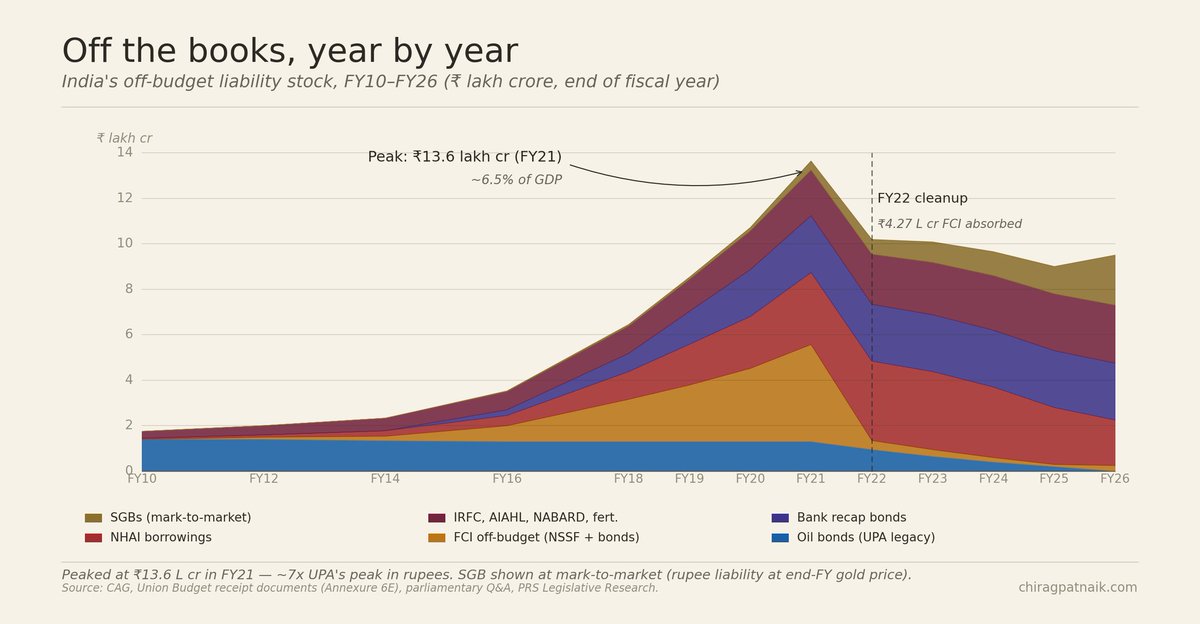
India's off-budget borrowing, FY10–FY26. - Flat under UPA. Steep buildup through Modi-1 and Modi-2. Peak ₹13.6 lakh cr in FY21. Still ~₹9.5 lakh cr off the books today. assets.chiragpatnaik.com/off-the-books
Chirag tweet media
English
3
76
118
4.5K
CapOrbit
CapOrbit@CapOrbit·
Conclusion Indian stock markets exhibit no statistically significant response to insider trading enforcement, in contrast to the negative abnormal returns documented in the US and UK. This result is robust across SEBI final orders and SAT appellate decisions..... Do read
Ajay Shah@ajay_shah

Arjun Gupta, Sonam Patel and Renuka Sane have a pretty article on The Leap Blog, 11 May 2026, measuring the stock market impact upon firms where SEBI issues insider trading orders. Before you peek, ask yourself, what do you expect will happen? blog.theleapjournal.org/2026/05/market…

English
0
0
0
319
CapOrbit
CapOrbit@CapOrbit·
@kapil_tandon See us 30 yr triangle too on right of monthly chart. New high past 07 mark already
English
0
0
0
90
CapOrbit
CapOrbit@CapOrbit·
Us 30 yr. Has impact on asset classes. Look at that nice triangle on the right...
CapOrbit tweet media
English
0
0
0
95
CapOrbit
CapOrbit@CapOrbit·
In all the debate on international investing vs. investing in India, it is a bit amusing to hear takes in media and influencers where "international = US exposure". This framing itself is wrong. There's way beyond the US or Korea or China even.
English
0
0
0
135
CapOrbit retweetledi
Craig Fuller 🛩🚛🚂⚓️
Craig Fuller 🛩🚛🚂⚓️@FreightAlley·
Yesterday, I spoke with the CEO of a mega fleet, who said most of his truckload business was doing well, except for one segment: food & beverage. He called the lack of volume from this segment "unusual." I told him we believed GLP-1s were causing a significant slowdown in food and beverage shipments, as we had just completed a market study on GLP-1's impact on freight shipments. Our study, now published in a SONAR Sitrep, available online, estimates that 851k truckloads have been removed from the market due to GLP-1s, and this number could ramp to 1.95m by 2030. Not only are Americans getting skinnier. Their truckloads are as well.
Craig Fuller 🛩🚛🚂⚓️ tweet media
English
175
280
1.9K
390.9K
Jared L Kubin
Jared L Kubin@JaredKubin·
Risk Management 101 | Episode 5: When Books Get Chaotic (22m) When positioning gets whippy, most people freeze. The best PMs have a process In my intro series Episode 5 I break down; how to know if your thesis is actually broken (vs. just noise), how Tier 1 multi-manager PMs handle "red boxes" when positions go against them, and the four things I check every single day 🎯 Timestamps 03:11 Is my thesis broken? 06:15 Multi-manager "red boxes" 12:26 Four things I watch every day 16:50 What to actually do **Many of you asked for a YouTube channel. It's under construction. Organized playlists on way**
Jared L Kubin@JaredKubin

RISK MANAGEMENT 101 | EPISODE 4: Risk Budget Before the Fight (21m) Risk management processes help you survive what the past can teach you. Judgment helps you survive what the past never saw. Continuing our beginner intro series....In Episode 4, I break down why position sizing is really a risk decision, not just a capital allocation decision -why funds use risk budgets -the main types of risk budgets -why volatility budgets became the most common framework -and where history helps... but eventually runs out of road

English
7
4
108
76.9K
CapOrbit retweetledi
Brian Willott Farms
Brian Willott Farms@BrianWillott·
They should change the name to "Strait of Schrödinger". It's both open and closed at the same time.
English
897
14.4K
82.5K
2M
CapOrbit retweetledi
Bart 🌊⚓️
Bart 🌊⚓️@BartGonnissen·
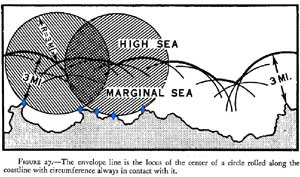
1/x Let's dive into maritime zones. Back in the day, territorial waters were just 3 nautical miles out, based on the "cannon shot" rule: as far as you could fire from shore. Made sense in the 1700s, right?
Bart 🌊⚓️ tweet media
English
13
38
258
43.1K
CapOrbit retweetledi
Internet Freedom Foundation (IFF)
Internet Freedom Foundation (IFF)@internetfreedom·
Statement by the Internet Freedom Foundation : On remarks by Shri Nishikant Dubey regarding Community Notes on X and the Standing Committee on Communications and Information Technology In reference to the post published on X by Shri Nishikant Dubey, Hon'ble Chairperson, Standing Committee on Communications and Information Technology (x.com/nishikant_dube…) At the outset, IFF wishes to emphasise that a Parliamentary Standing Committee is presumed to function as a non-partisan forum in which Members of Parliament deliberate across party lines and record their recommendations through reports laid before the House. A review of the reports presented by the Standing Committee on Communications and Information Technology during the 18th Lok Sabha discloses no specific recommendation concerning Community Notes on X (formerly Twitter). It is, further, a settled rule of procedure and a convention of strict parliamentary privilege that public statements touching upon the conduct of committee proceedings are to be treated as confidential until the relevant report is laid on the Table of the House. Legal inaccuracy Turning to the substance of the statement in question, IFF notes that it contains a material inaccuracy. The only proximate reference appears to be a report of the Standing Committee on Communications and Information Technology dealing with the review of mechanisms to curb fake news, a subject whose administrative nodal ministry is the Ministry of Information and Broadcasting, and not, as asserted, the Ministry of Electronics and Information Technology. Crucially, that report does not cite Australia's Treasury Laws Amendment (News Media and Digital Platforms Mandatory Bargaining Code) Act 2021, a screenshot of which the Hon'ble Chairperson has circulated. That enactment operates in an entirely distinct field: it requires designated digital platforms to negotiate commercial arrangements with registered Australian news businesses for the right to make news content available through feeds and search results. No Australian statute treats a "Community Notes”, style feature as converting a platform into a "publisher" liable to any levy or tax. We would welcome any further information from the Hon’ble Chairperson in this regard. On how Community Notes actually work On X's own published documentation, Community Notes are collaboratively authored by users and become publicly visible only where contributors holding diverse prior viewpoints rate a note as helpful, through an open-source, algorithmically mediated bridging-based ranking system. The notes thus remain, on X's own account, user-generated material that the platform hosts and ranks through system design. That is categorically distinct from X itself authoring each note in the manner of a publisher in the ordinary legal sense. At its highest, it demonstrates that X structures the environment within which user speech appears. Indian intermediary liability jurisprudence from Shreya Singhal v. Union of India (2015) 5 SCC 1 onwards, and as elaborated in relation to Section 79 of the Information Technology Act, 2000 and Rule 3 of the Intermediary Guidelines has never treated mere hosting, ranking, or the provision of a service layer around user content as, by itself, fatal to the statutory safe harbour. This protection ultimately exists to safeguard the freedom of speech and expression of users under Article 19(1)(a). On the wider concern Beyond these departures from parliamentary practice and from factual accuracy, IFF must note that the Standing Committee's report contains several recommendations that advance an expanded censorship architecture, framed in the vocabulary of "regulation" of social media intermediaries and, troublingly, of individual online creators and influencers. IFF acknowledges that the regulation of social media platforms and large technology companies acting as gatekeepers is a real and pressing problem. However, these genuine issues must be addressed through legislative action that does not cause censorship of users and that is instead aimed at transparency and interoperability. Even with our scarce resources and limited staff, IFF remains open and willing to engage with the Standing Committee on these questions, and will continue to provide inputs and analysis with objectivity and rigour, in service of the fundamental rights of internet users under the Constitution of India. New Delhi, 11 April 2026
Dr Nishikant Dubey@nishikant_dubey

हमारी कमिटि यानि संसद की स्थायी समिति संचार और सूचना प्रौद्योगिकी ने सर्वसम्मति से @GoI_MeitY भारत सरकार को यह कहा है कि @XCorpIndia के उपर कम्यूनिटी नोट पब्लिशिंग का काम है नाकि मध्यस्थ / intermediary का,या तो social media platforms अपने कम्यूनिटी नोट को बंद करे,अन्यथा ऑस्ट्रेलिया के क़ानून के अनुसार हमें publishers का टैक्स भरे।


English
21
328
1.1K
61.3K
CapOrbit
CapOrbit@CapOrbit·
Out of syllabus like we would say in college days. Petronas will turn from an exporter to an importer as the war in the Middle East continues... theedgemalaysia.com/node/798666
English
0
0
0
270
CapOrbit retweetledi
Ritika Chopra
Ritika Chopra@RitikaChopra__·
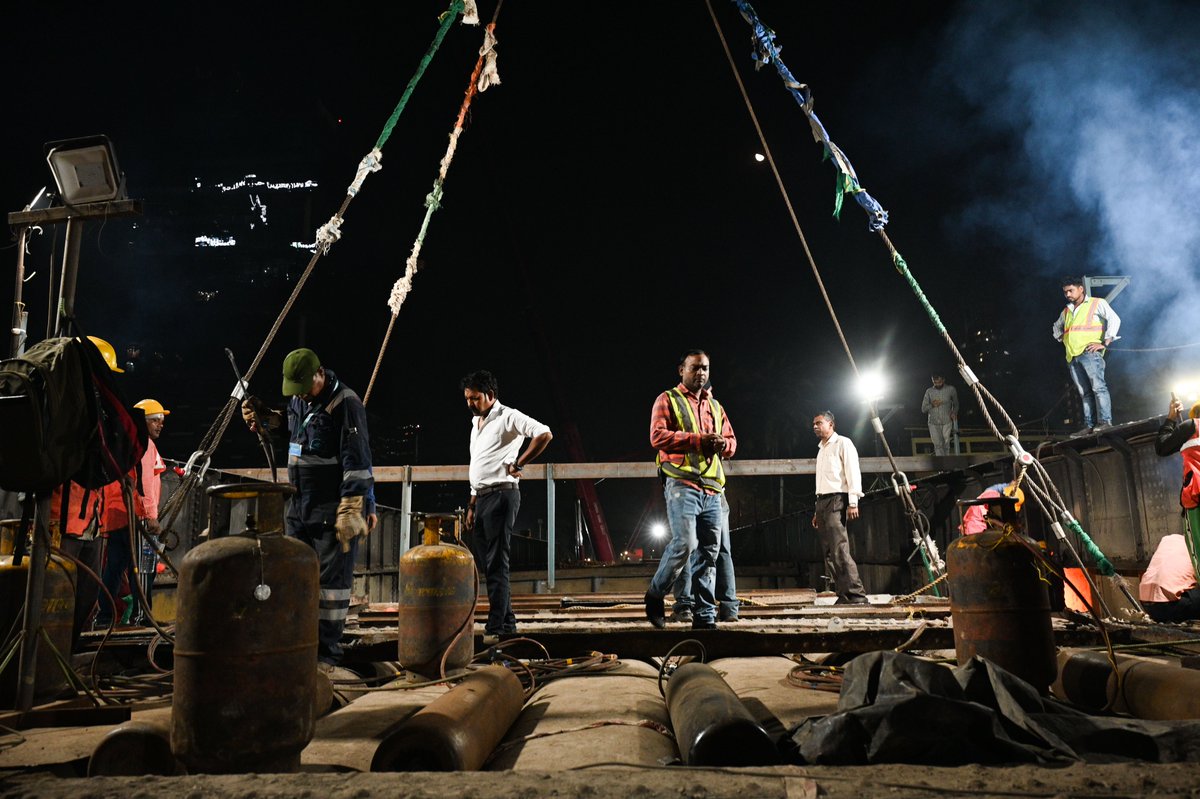
The Strait of Hormuz is blocked. Cargo ships are taking longer routes. And Mumbai's biggest public infrastructure projects are now feeling it. Contractors on THREE projects - Sewri-Worli Connector, Metro Line 6, Thane bullet train depot - have invoked force majeure, warning that LPG shortages & rising material costs could delay deadlines & push up costs. The @IndianExpress' Mumbai team has been tracking the ripple effects of this conflict across the city, from restaurants curtailing hours & menus, to migrants boarding trains home because they couldn't find a gas cylinder. Now it's hitting the city's biggest infrastructure push in decades. @sabahvir reports indianexpress.com/article/cities…
Ritika Chopra tweet media
English
6
59
172
30.3K
CapOrbit retweetledi
Nikhil Pahwa
Nikhil Pahwa@nixxin·
I sat down with my team two weeks ago to discuss what we can do that AI cannot replace. The archive we spent two decades building - my lifes work - has already been stolen by AI. Anything that can be indexed has already been extracted. RAG has made extraction continuous and invisible. What remains is what hasn’t been created. On‑ground reporting, digging, interpretive opinion attached to a trusted identity, live community moments that require simultaneous presence... these are expensive to produce and impossible to simulate. These are Realtime. I've come to the realisation that AEO and GEO will not solve the problem. Realtime is the last defensible moat because the present is being generated every moment. Monetization lies in the period between when things happen and AI captures it... If you gate it to prevent capture. Full analysis at Reasoned (link in comment)
English
4
19
95
13.4K
CapOrbit retweetledi
Da Nang Expat
Da Nang Expat@Carlosa_DaNang·
#Vietnam seeks jet fuel supplies amid Middle East Crisis My special report on Vietnam's jet fuel production, imports and the current situation. Vietnam produces ~25% of its jet fuel consumption after years of explosive air travel fueled by massive tourism booms, surging domestic flights, and relentless economic growth. The war with Iran has disrupted supplies from the Middle East and caused a tripling of jet fuel prices (hitting peaks over US$200/barrel), which are much more volatile than standard fuels as I'll explain later. Vietnam has enough jet fuel until the end of March, so if no new supplies are obtained, air travel could start to have issues in early April. The CAAV has already warned airlines (Vietnam Airlines, VietJet, etc.) to prepare for flight cuts/reductions starting April. As a result of the crisis, China banned exports of jet fuel outright and Thailand did the same except for exports to Laos and Myanmar. Vietnam's PM Chinh held phone talks with Chinese and Thai leaders to request some jet fuel sales to Vietnam as a special measure amid the crisis. There are no reports yet about the results of those talks. Singapore and Malaysia are still exporting jet fuel and Vietnam is trying to secure some supplies from them, but everybody in the region is also bidding aggressively for those limited barrels. Vietnam Airlines also just opened a big international tender for jet fuel supply at overseas airports for 2026-2028 (deadline end of March). Vietnam imports ~75% of the jet fuel it consumes. Before the crisis, ~60% of imports came from China and Thailand (Vietnam was China's 3rd-largest jet fuel buyer last year). The rest came mainly from Singapore. The big importers are Petrolimex Aviation and Skypec (Vietnam Air Petrol). Vietnam has two oil refineries: Dung Quat and Nghi Son. They do produce Jet fuel A-1 (aviation kerosene), but they're under heavy pressure to crank out more gasoline, diesel, and other fuels. The Dung Quat refinery produces ~5,300 barrels per day of jet fuel, projected to increase to ~13,100 bpd once the current upgrade/expansion project ends in early 2028. The Nghi Son refinery produces an estimated range of 10,000 to 20,000 bpd of jet fuel, so I estimate an average of ~15,000 bpd (The Nghi Son refinery doesn't give jet fuel stats, but they say it's about 8-15% of crude output, so it's 10,000 to 20,000 bpd). This gives a jet fuel domestic production of ~20,000 bpd average. Vietnam's jet fuel use before the crisis is estimated to be at around 80-85,000 bpd, so imports are about ~75% on average. 🔷Vietnam's Jet fuel use: ~85,000 bpd 🔷Domestic refineries: ~20,000 bpd (23%) 🔷Imports needed: ~65,000 bpd (77%) Another reason jet fuel prices are much more volatile than other fuels in crisis situations: it's far more complicated to store long-term, so strategic reserves are limited. Jet fuel short-term storage (days/weeks) in proper airport tanks is fine, but long-term storage (months +) in bulk tanks requires extra steps like biocides, dry tanks and regular testing. Jet fuel (Jet A-1, basically highly refined kerosene) is more complicated than gasoline or diesel. It's not just "fuel"; it has super strict specs for aviation safety, and that makes storage, handling, and supply chains trickier. Key reasons: ▪️Oxidation and aging: It reacts with oxygen over time, forming gums, resins, acids, and particulates that can clog filters, nozzles, and engines. This happens faster with heat, light, or metal contact. ▪️Water contamination: Jet fuel holds dissolved water; temperature swings cause condensation. Water freezes at high altitudes (~-47°C), risking line blockages/flameouts. It also promotes microbial growth at the water-fuel interface, creating sludge/corrosion. ▪️Microbial growth: Bugs thrive in the interface; untreated fuel can foul systems in weeks/months. ▪️Strict purity standards: Aviation fuel must meet exact specs (tiny contaminant traces max). Poor storage can render batches unusable—airlines/airports can't risk it. That's why parked planes during COVID had major fuel issues—many needed draining or treatment. So, jet fuel is a sensitive commodity that is kept in short supply, since it's difficult to store, and in a time of crisis, it's the first fuel to run out and prices reflect that fast.
Da Nang Expat tweet media
English
5
15
117
9.7K
CapOrbit retweetledi
Soutik Biswas
Soutik Biswas@soutikBBC·
'The gap between what people earn and what life costs has to be filled. Increasingly, it is being filled with borrowed money. India's non-housing household debt as a share of income now exceeds that of US and China.' India's middle class is under strain. bbc.com/news/articles/…
English
3
148
335
12.4K