

C.A.T.(Cats Against TradFi🍊🐈Ramazan
2.1K posts

Kripto paraların on küsur yıllık yolculuğu, sadece bir para birimi arayışından çıkıp internetin temel çalışma mantığını değiştiren bir güven katmanı devrimine dönüştü.
Geldiğimiz noktayı anlamak için geçtiğimiz duraklara mantıklı bir kronolojiyle bakalım:
1. Dijital Altın Dönemi (2009 - 2014)
Her şey Bitcoin ile başladı. Bu dönemde tek bir soru vardı: Merkezi bir otoriteye ihtiyaç duymadan değer transferi yapabilir miyiz?
• Eşten eşe (P2P) para transferi ve sansürlenemezlik.
• Blokzinciri sadece bir defterdi; üzerine karmaşık mantıklar kurulamıyordu.
2. Dünya Bilgisayarı ve Akıllı Sözleşmeler (2015 - 2019)
Ethereum'un sahneye çıkışıyla blokzinciri sadece para değildir, bir yazılım platformudur demeye başladık.
•Kodlanabilir para, ICO'lar ve ilk merkeziyetsiz uygulamalar (dApps)
•Ağ hızla tıkandı. "CryptoKitties" gibi basit bir uygulama bile tüm ağı kilitleyebiliyordu. Ölçeklenebilirlik sorunu ilk kez ciddileşti.
3. DeFi Yazı ve Finansal Deneyler (2020 - 2022)
Blokzinciri üzerinde bankalara ihtiyaç duymayan bir finans sistemi kurulabileceği kanıtlandı.
•Likidite madenciliği, NFT'ler, DAO'lar ve merkeziyetsiz borsalar (DEX).
•Ethereum'daki Gas ücretleri sıradan bir kullanıcıyı sistemin dışına itecek kadar yükseldi. Bu, Katman 2 (L2) çözümlerinin doğum sancısıydı.
4. Modülerlik ve ZK Çağı (2023 - Günümüz)
Artık tek bir zincir her şeyi yapsın mantığından vazgeçtik. Blokzincirini parçalara ayırdık: Yürütme, Veri Kullanılabilirliği ve Mutabakat.
•Yeni Standart: ZK-Proof (Sıfır Bilgi Kanıtları) sayesinde, verinin kendisini göstermeden doğruluğunu kanıtlamayı başardık.
•Hyperchains & Appchains: Eskiden bir dApp kurmak için zincire yalvarırdık, şimdi projeler kendi özelleştirilmiş zincirlerini (Hyperchain) kurup ana ağın güvenliğini kullanıyor.
Nereden Nereye Geldik?
Eskiden blokzincirine bir teknoloji deneyi olarak bakılıyordu. Bugün ise blokzinciri, tıpkı TCP/IP protokolü gibi, internetin görünmez ama vazgeçilmez bir parçası olma yolunda.
Artık blokzinciri kullanıyorum demek yerine, sadece o altyapı üzerinde çalışan hızlı ve güvenli uygulamaları kullanıyoruz.
Bu evrimin bir sonraki aşaması, zincirlerin birbiriyle tamamen pürüzsüz konuştuğu "Elastic Chain" yapısı olacak gibi görünüyor.
#ZK @zksync #crypto #blockchain #bitcoin

Türkçe
ZKsync dünya devlerinden küçük projelere kadar herkese hitap edebilen bir modüler ağların toplamıdır. Bunu nasıl başardığına bakalım:
1. ZK Rollup: Maksimum Güvenlik
Verilerin tamamını Ethereum (L1) üzerinde tutar. "Güvenlikten ödün vermem" diyenlerin tercihi.
•Kullanım: DeFi protokolleri ve yüksek değerli varlık transferleri.
•Ethereum ile aynı güvenlik zırhına sahiptir.
2. Validium: Ultra Ölçeklenebilirlik
Verileri zincir dışında (off-chain) saklayarak işlem ücretlerini neredeyse sıfıra indirir.
•Kullanım: Web3 oyunları, sosyal medya ve mikro ödemeler.
•Saniyeler içinde binlerce işlem, minimum maliyet.
3. Volition: Hibrit Esneklik
Kullanıcıya seçim hakkı tanır: "Bu işlemim çok değerli, Rollup olsun; bu işlemim küçük, Validium olsun."
•Kullanım: Hem güvenlik hem de ekonomi arayan çok amaçlı platformlar.
•Tek bir ağda iki dünyanın da en iyisi.
4. Prividium: Kurumsal Gizlilik
İşlem kanıtlarını Ethereum'a gönderirken, içeriği tamamen gizli tutan özel Hyperchain’lerdir.
•Kullanım: Ticari sırlar, sağlık verileri ve kurumsal finans.
•Blockchain şeffaflığı ile kurumsal gizliliğin kusursuz uyumu.
#zksync #prividium #validium #zkrollop #l2 #l3 @zksync
Türkçe
C.A.T.(Cats Against TradFi🍊🐈Ramazan retweetledi

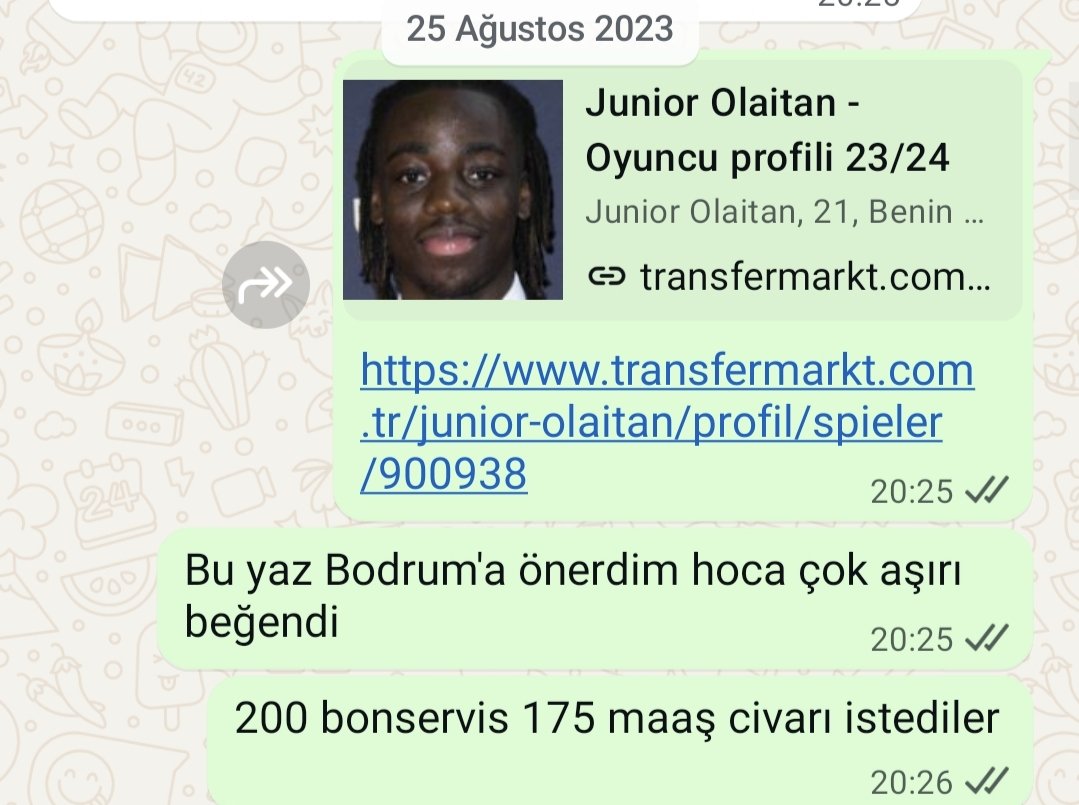
Junior Olaitan'ı 2023'te kendisi Niort ile Fransa 3.ligine (National) düşmüşken Bodrumspor PTT'de oynarken önerdim ve oyuncu tarafıyla bizzat kendim konuştum. 200 bin euro transfer ücreti ve aylık 20k maaş talep edildi( her ikisi de pazarlıkla düşürülebilirdi) Bodrumspor görüşmelere başlasa da sanırım transfer bedeli ödemek istemedikleri için olumlu sona ermedi. Bugün geldiğimiz noktada büyük Türk kulüplerinden birinin 6 milyon Euro bonservis bedeli ödeyeceği konuşuluyor. Hayırlısı olsun ne diyelim.

Türkçe
C.A.T.(Cats Against TradFi🍊🐈Ramazan retweetledi

99% of institutional blockchain projects fail by forcing a false choice:
– isolated, trusted chains with no network effects
– or DeFi-first stacks that leave institutions to handle compliance alone
At ADI, we refused to compromise.
Our tech team breaks down why institutional chains stall, how L2 stacks really compare, and what modular L3s unlock for scale + compliance.
Dive into the full breakdown from CTO @GStogniiev, Head of Blockchain @ilia_shirobokov, and DevRel @Xidea404 ↓
ADI Chain@ADIChain_
English
English
C.A.T.(Cats Against TradFi🍊🐈Ramazan retweetledi
Global impact means connecting with builders worldwide.
Next week, Feb 2-7, the ADI team heads to Malaysia for the Network School (@ns), founded by @balajis.
Convened by the @ethereumfndn, this is a working session with ~100 builders from across APAC to solve the hard problems.
Our Head of Blockchain, @ilia_shirobokov, and DevRel, @Xidea404, will be on the ground, sharing insights from deploying infrastructure that is ready for institutional adoption.
Real scale happens when we collaborate.
We look forward to connecting with everyone in Malaysia.
See you there!
English
C.A.T.(Cats Against TradFi🍊🐈Ramazan retweetledi
Crypto is obsessed with users.
But as adoption accelerates, a new reality is taking shape.
The rise of the Modern Citizen.
This is someone who lives globally, operates globally, and needs onchain connectivity to support that lifestyle.
To support him, a simple wallet isn't enough. He needs a full operating system built on three non-negotiable pillars:
➤ Financial Rails
Permissionless, borderless, and built for scale.
We are designing the payment infra for the next wave of economic growth in MENA and beyond.
By integrating commercial and government use cases in a single platform, we enable value to move freely across borders.
The result is sovereign access and instant settlement, giving him absolute ownership of his assets in a system that’s accessible 24/7.
➤ Digital Identity
Sovereign control over personal data.
True global connectivity requires handling sensitive assets like medical records or financial history.
These details cannot simply exist on a public ledger.
ADI Chain enables sovereign L3s to keep this data protected off-chain while allowing for instant onchain verification.
This separates the proof from the data, ensuring privacy is never traded for utility.
➤ Tokenized RWAs
Unlocking trillions in equity that currently lack a global marketplace.
Legacy systems trap value within geofenced markets.
By collaborating with licensed issuers like Finstreet, we provide the rails for tokenized securities to settle instantly.
This creates a unified layer that allows building wealth on a scale that was previously out of reach.
ADI Chain is built to be at the intersection of these three forces.
We are creating the environment where this lifestyle becomes viable at scale.
It allows the Modern Citizen to stop fighting legacy systems and start operating freely.
Infrastructure that is designed to serve billions onchain.
That’s different.

English
Indonesia
C.A.T.(Cats Against TradFi🍊🐈Ramazan retweetledi
We showed up at Davos with unstoppable momentum.
Roundtable with @circle and @Mastercard.
Infrastructure panel with @swiftcommunity and @GFH_BSC.
Strategic partnerships, including Infinia and @NEARProtocol.
And there is more to come.
That's different.
ADI Foundation@ADI_Foundation
You cannot build national infrastructure in isolation. It requires a room where policymakers and engineers can finally collaborate. At the @wef, the ADI Foundation team joined industry leaders at @ihc__official House to help define the digital rails governments will rely on for the next decade. This involved hands-on coordination during the IHC House reception and a closed-door roundtable with @circle and @Mastercard on what truly scales next in payments. We moved from conversation to commitment by signing two MOUs, including new partnerships with Infinia and @NEARProtocol and joining the panel with @swiftcommunity and @GFH_BSC on secure infrastructure. Here is what that looks like on the ground in Davos ↓
English
C.A.T.(Cats Against TradFi🍊🐈Ramazan retweetledi
@ADIChain_ @Young_bakerr ADI chain is different 🫡
English
C.A.T.(Cats Against TradFi🍊🐈Ramazan retweetledi
The gap between public blockchains and national financial systems is massive.
Big shoutout to @Young_bakerr for a brilliant breakdown on why real-world scale requires compliance, not just speed.
You can't have global adoption without systems that handle sensitive data correctly.
Dive into the full analysis below 👇
Irene Archibong⚡️@Young_bakerr
When people ask why @ADIChain_ keeps appearing in high-level infrastructure conversations, the answer is simple: it’s addressing a problem most of crypto has avoided for years. Blockchain doesn’t become globally relevant by staying confined to retail users, speculative trading, or isolated DeFi ecosystems. Real scale happens when national financial systems, regulated banks, payment networks, and public institutions can operate on-chain without compromising legal, operational, or security standards. For a long time, that bridge simply didn’t exist. Traditional institutions have always understood the efficiency of blockchain in terms of instant settlement, programmability, shared state, and global interoperability. What stopped adoption wasn’t curiosity, but risk. Unclear compliance frameworks, fragmented infrastructure, privacy concerns, and systems that were never designed to handle national-level throughput made most public blockchains impractical for real-world deployment. At the same time, much of crypto infrastructure evolved rapidly, prioritizing speed and experimentation over regulatory readiness. That innovation created powerful tools, but not systems institutions could responsibly integrate into existing financial and governmental frameworks. ADIChain is built precisely at that intersection. As an institutional-grade Layer 2 anchored to Ethereum and powered by zero-knowledge technology, @ADIChain_ provides regulated entities with blockchain rails that are compliant by design, scalable by default, and interoperable with the broader public ecosystem. It is not a closed network, not a private sandbox, and not an isolated ledger detached from global liquidity. Instead, it offers a framework where regulated stablecoins, tokenized real-world assets, and national financial products can exist on-chain while meeting jurisdictional requirements for privacy, transparency, and oversight. Zero-knowledge infrastructure plays a critical role here. It allows sensitive data to remain private where required, while still enabling verifiable execution and auditability which is a non-negotiable requirement for governments and financial institutions. This balance is what makes institutional blockchain viable at scale. The vision behind ADI Chain is not to replace existing financial systems, but to modernize how they operate. It acknowledges that global adoption won’t come from tearing down TradFi, but from giving it infrastructure that works within reality checks such as legal frameworks, public accountability, and long-term stability. Crypto does not win by remaining niche. Institutions do not survive by ignoring innovation. The future of finance lives in the overlap between the two and I can confidently say that, @ADIChain_ is deliberately building for that future. This isn’t short-term hype. It’s long-term infrastructure thinking!
English
C.A.T.(Cats Against TradFi🍊🐈Ramazan retweetledi

C.A.T.(Cats Against TradFi🍊🐈Ramazan retweetledi
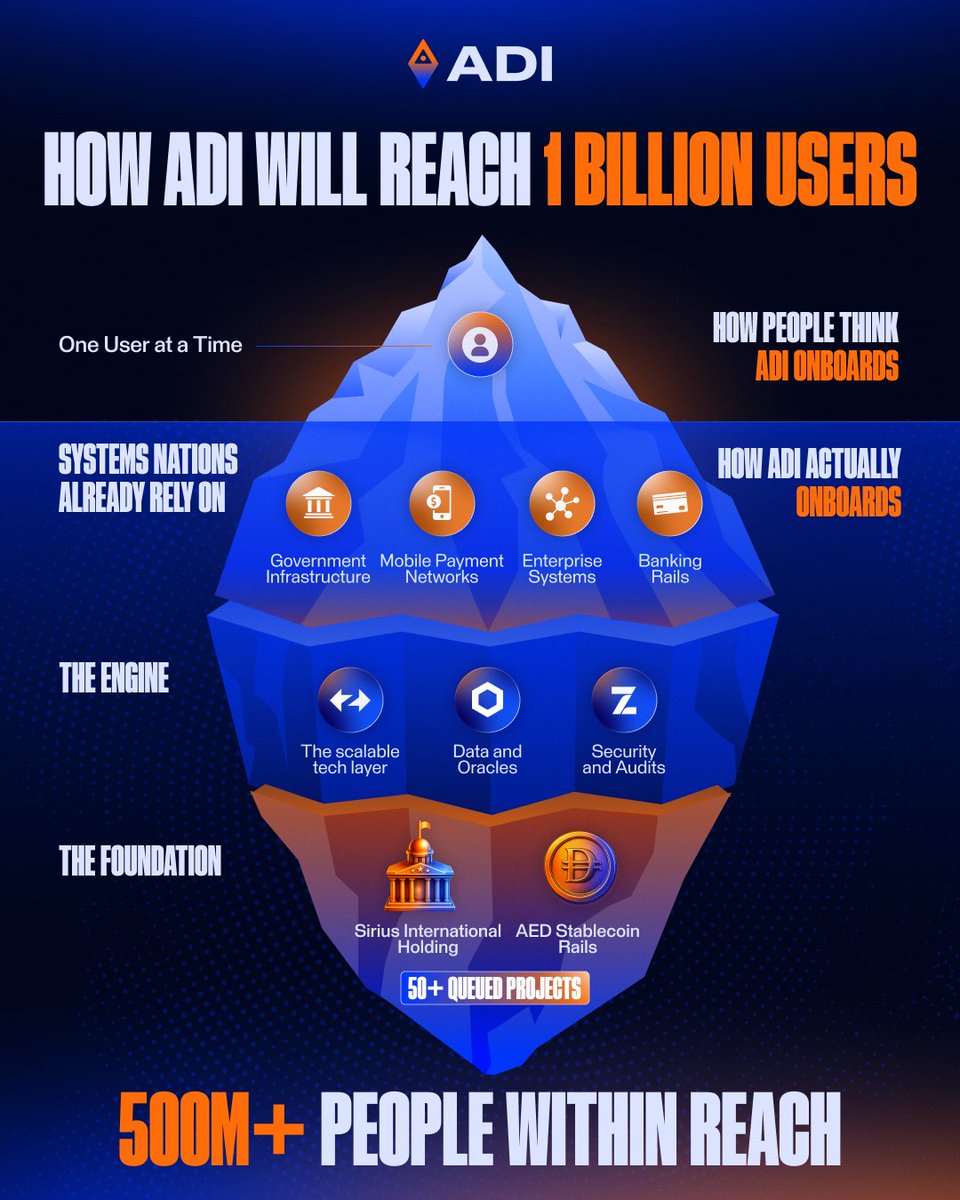
One billion people onchain is the goal.
But it will never happen one user at a time.
It happens by powering the systems that nations already rely on.
• Banking infra
• Medical records
• Digital identity
We partner directly with institutions and enterprises that serve millions worldwide.
We build the rails.
They keep the governance.
People get access to essential services without the friction.
This is what real mass adoption looks like.
Over 500 million people are already within our reach.
That’s different.
English
@ADIChain_ @ADI_Foundation @MiebachMichael @Mastercard @jerallaire @circle @SpeakerRyan ADI is cool🫡
Indonesia
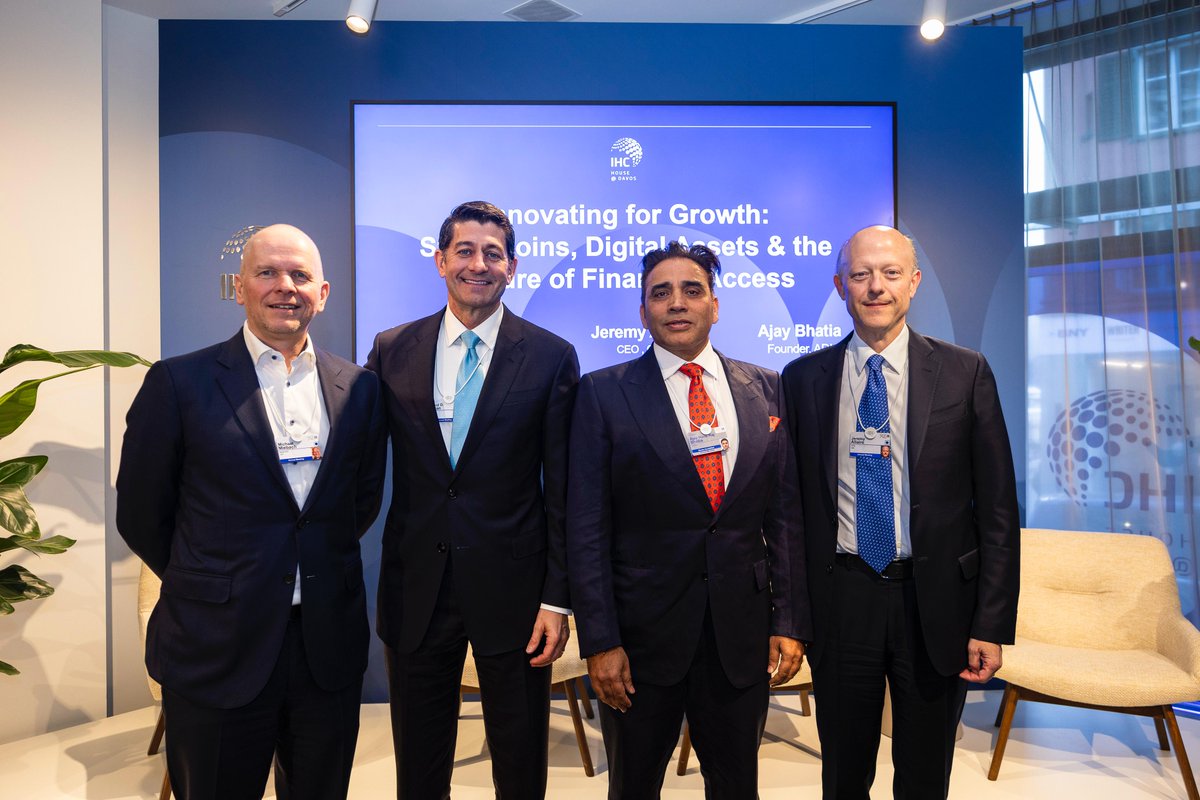
Four leaders. One table. One signal.
At Davos, policy, capital, and infrastructure meet to decide what scales next.
Ajay Bhatia, @ADI_Foundation Council Member
@MiebachMichael, CEO of @Mastercard
@jerallaire, CEO of @circle
@SpeakerRyan, 54th Speaker of the U.S. House of Representatives
Together at @ihc__official House during @wef 2026.
This is where the next phase of financial infrastructure is shaped.
And we’re leading this conversation.
#WEF26 #IHCHouse
English