Skeptic

1.6K posts

Skeptic banner
Skeptic

Skeptic

@CarvakaNeo

Atheist. Skeptic.

Katılım Ekim 2020
233 Takip Edilen40 Takipçiler
Suresh Govindarajan DLM
Suresh Govindarajan DLM@modularform·
@iPhysique Check out the International Physics Tournament. Amazing questions. Our team represented India this summer. Beautiful mix of experiment and modelling.
English
2
0
3
139
Suresh Govindarajan DLM
Suresh Govindarajan DLM@modularform·
Here is a great description of the Physics Olympiad works. For heaven's sake, don't compare or equate it to JEE. The two are so different.
Malay Krishna@Malay4Product

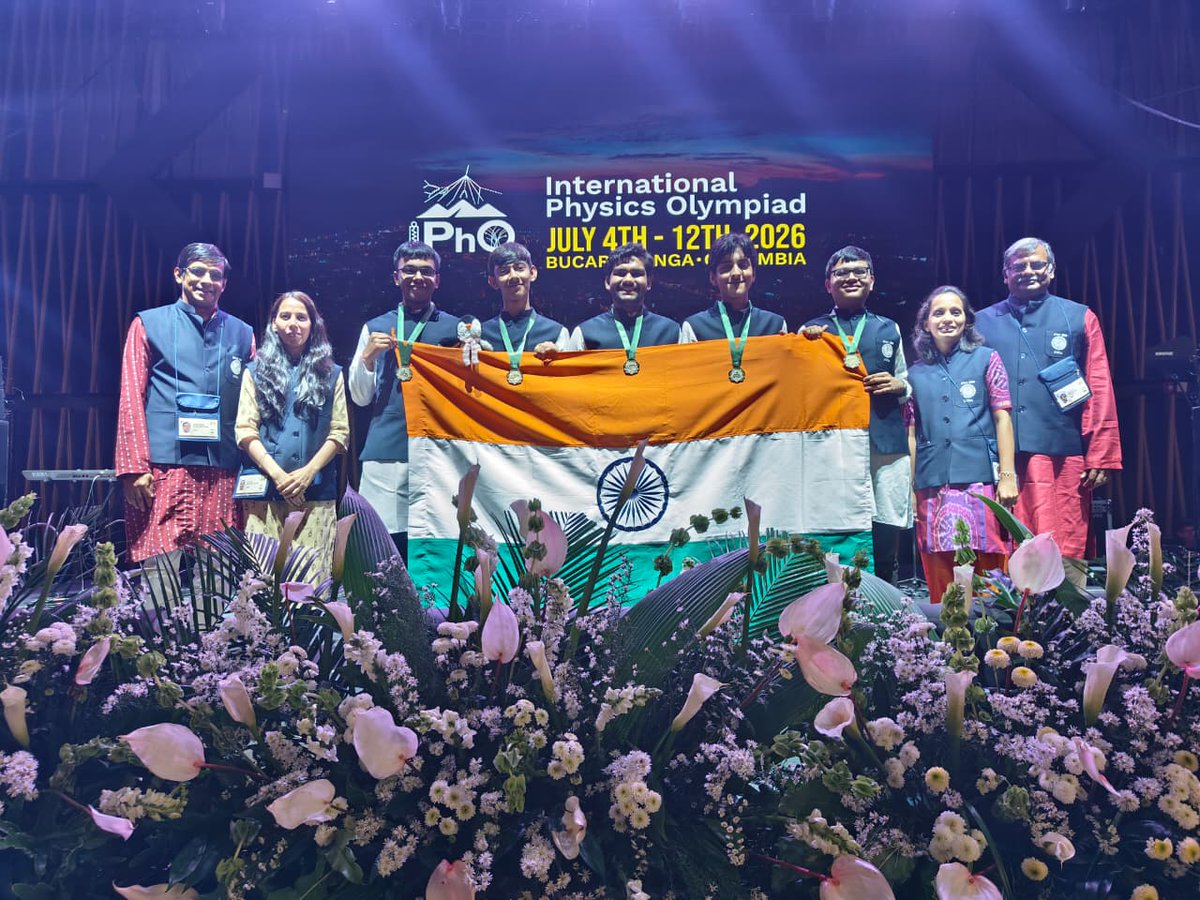
I taught JEE physics for years. That paper breaks strong kids in three hours. This exam is five hours of theory and five hours of lab work, and these five did close to perfect scores on it. Let me tell you what actually happened. The International Physics Olympiad is the world championship of school physics. It was the 56th edition. Held in Bucaramanga, Colombia, from July 5 to 12. 381 students. More than 85 countries. Every one of them the best physics student their country could find. India sent five kids. All five came back with gold. Their names are Kanishk Jain from Pune. Riddhesh Anant Bendale from Indore. Rishit Garg from Dwarka in Delhi. Shresth Suraiya from Mumbai. Svarit Joshi from Ahmedabad. We know a hundred cricketers by their nickname and not one of these boys. :) That clean sweep put India at joint World Number One. Tied with China, Russia, Kazakhstan, South Korea and Taiwan. Those are countries that pour serious money and national pride into science education. We are standing level with them. Now here is what the exam actually was. Two papers. Each five hours long. The theory paper had three problems. One on the thermodynamics of paramagnetic cooling. One on the photoionisation of ozone. One on the dynamics of electron positron pairs. The experimental paper was another five hours in a lab, working through heat transfer and thermodynamic processes in fluids. That means you get given equipment you have never seen, and you have to design your own experiment, take your own readings, handle the errors, and reach a real answer. Not multiple choice. No shortcuts. No pattern recognition. You either understand physics or you sit there for five hours. HBCSE says the Indian students were near perfect on theory and excellent on the practical too. Now, this was India's 27th appearance at the IPhO. Across all those years, about 44 percent of Indian students have won gold, 41 percent silver, 10 percent bronze. In the last ten years, every single Indian student has come home with a medal. 62 percent gold, 38 percent silver. Not one kid has gone and come back empty handed in a decade. Five golds in one year has happened only twice. This year, and in 2018. So who built this. The programme is run by HBCSE, the Homi Bhabha Centre for Science Education. It sits under TIFR, which sits under the Department of Atomic Energy. They run the whole funnel. A national exam, then a national olympiad, then a brutal selection and training camp, and out of everyone in the country, five kids get on a plane. The team was led by Professor Anwesh Mazumdar of HBCSE-TIFR and Dr Leena Joshi from St Xavier's College, Mumbai. The scientific observers were Professor Ananda Dasgupta from IISER Kolkata and Nisha Kelkar from Gogate-Joglekar College in Ratnagiri. Yes. Ratnagiri. A college in a small coastal town in Maharashtra. This is public education doing something the private coaching industry could never do on its own. The coaching industry is very good at one thing. Teaching you to solve a known problem fast. That is what JEE and NEET reward, and I say that with love because I was part of that world. But an olympiad paper does not have a known type. There is no shortcut chapter. There is no formula sheet that saves you. You have to sit with a problem you have never seen and think. That is a completely different muscle. And a government funded centre has been quietly building it in Indian teenagers for 27 years. So yes, be proud. Loudly. HBCSE also shared that around 64 percent of India's olympiad medallists go on to do a PhD. But only about 32 percent of medallists end up settling in India. I do not say that to spoil the moment. These kids owe the country nothing. They earned every option they have. But it should tell us something. We are excellent at finding this talent. We are excellent at training it. We are still not great at giving it somewhere worth staying. Congratulations Kanishk, Riddhesh, Rishit, Shresth and Svarit. This is one of the best things an Indian did this year and most of the country will never hear about it.

English
3
2
100
8.3K
Skeptic
Skeptic@CarvakaNeo·
@modularform Its sad that these exams aren't as popular as the jee or whatever. Matter of fact I was unaware of the existence of the phy/chem olympiads until i joined Btech.
English
1
0
2
48
Skeptic
Skeptic@CarvakaNeo·
@wannabegeometer @modularform Its like jee mathematics. You only train for like a specific kind of problem solving and you become very good at THAT kind of problem solving and THATs about it
English
1
0
1
20
datboi
datboi@wannabegeometer·
@modularform what is your opinion on competitive math or physics? i personally feel that competitive math problems are nothing like the actual pure math people do. i have a great distaste for them. on the other hand, it is a great way for people to engage in math or physics at a young age
English
2
0
0
104
Skeptic retweetledi
HBCSE
HBCSE@HBCSE_TIFR·
🇮🇳GOLDEN SWEEP FOR INDIA 🏆 All 5 Indian students win GOLD at the 56 International Physics Olympiad (IPhO) 2026 in Bucaramanga, Colombia -placing India at Rank #1 in the world (jointly with China, Kazakhstan, Russia, South Korea & Taiwan) among 381 students from 87 countries 1/5
HBCSE tweet media
English
48
544
1.8K
325K
Skeptic
Skeptic@CarvakaNeo·
@cneuralnetwork @Ugrashravas There are far more than 18000 talented engineers that graduate every year in this vast country, its the failure of the system to constantly underselect people and miss out on talent.
English
0
1
1
175
Skeptic
Skeptic@CarvakaNeo·
@cneuralnetwork @Ugrashravas There are a few super difficult standized tests that act as a proxy for great problem solving skills & once you cross BTech; there isn't ant for us core engineering folks who learn that we were equally good problem solvers and just that we lagged behind initially
English
1
1
1
184
MODIfied MONJULIKA
MODIfied MONJULIKA@Jagat___Janani·
All married girls i know lost their spark after marriage.
English
11
0
23
1.3K
Skeptic
Skeptic@CarvakaNeo·
@VeritasErrant06 Bro have u tried reading the explanation that razavi gives for the half wave voltage doubler? As much as he loves exposition like sometimes its just OVERDONE at places.
English
0
0
0
54
Vru
Vru@vrundasays_·
🥰🥰Visited IIT-Madras and met @modularform (also saw so many deers 😳😳)
Vru tweet mediaVru tweet mediaVru tweet media
English
7
0
48
1.3K
Skeptic retweetledi
Hayashi Heikichi
Hayashi Heikichi@lianda_edu·
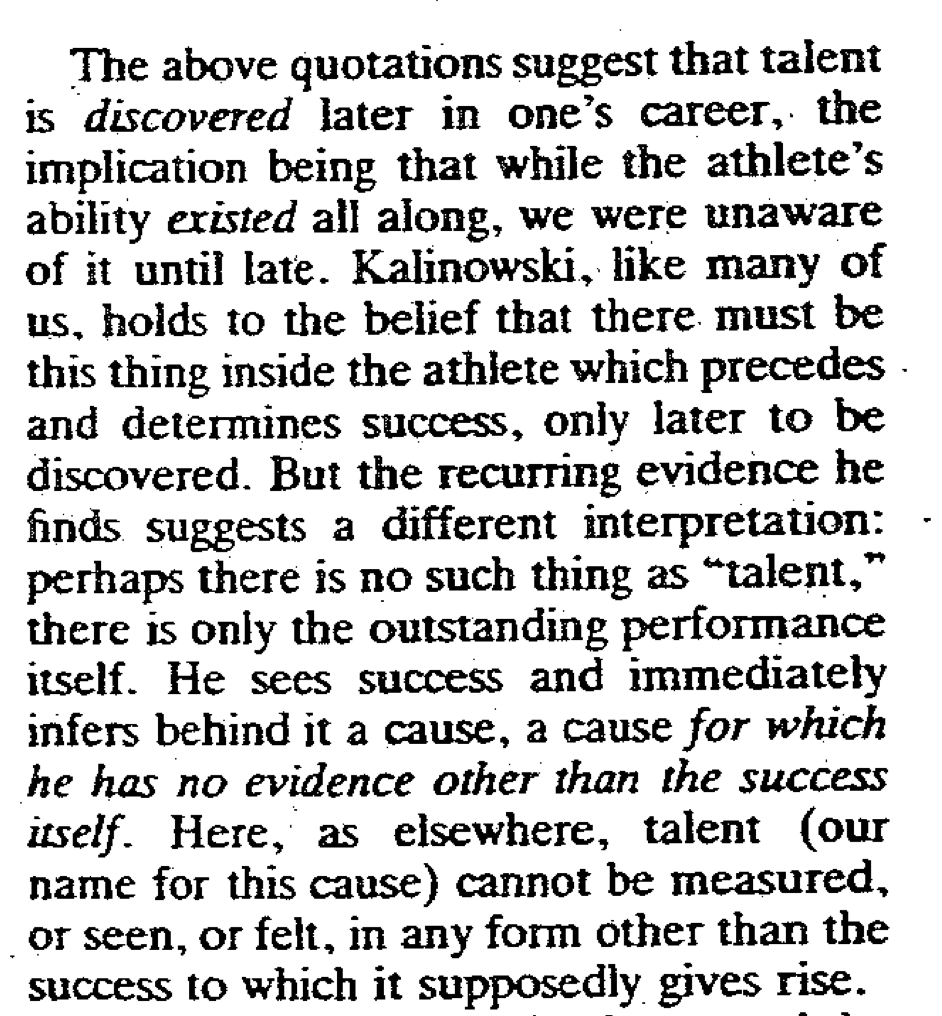
There's another issue: I believe problem-solving ability (doing well on exams) and actual research ability are strongly correlated below a certain threshold. However, once you exceed that threshold, the correlation becomes almost zero. I know many PhD students from China’s elite universities who are extremely good at solving problems but have essentially empty minds when it comes to research. Their research taste is very poor. For example, I know a student who ranked among the top in his province in the Gaokao (China’s extremely rigorous and difficult national college entrance exam, similar in selectivity to India’s IIT entrance). He later entered an economics PhD program in China. Yet both his research taste and publication record are quite mediocre. In empirical economics, he belongs to the “star-counting” type—someone who only cares about statistical significance and will use any means necessary to get it, while showing complete indifference to the credibility revolution.
English
3
2
9
4.3K
Skeptic retweetledi
Hayashi Heikichi
Hayashi Heikichi@lianda_edu·
I believe doing too many exam-style problems can lead to mental overfitting. This kind of thinking makes people approach research with the same mindset they use to solve exam questions. As is well known, even economics PhD qualifying exams have templates. You can train on past exam questions from many years or different schools — just like large language models — the more you train, the better your performance tends to be. At the same time, many problems have fixed patterns and techniques (game theory, for example, has quite a lot of them). You often need to have seen them before to solve them quickly; if you’ve never encountered them, it’s very hard to derive the solution on the spot. As a result, many people carry this problem-solving mindset into research. In the end, all their research becomes a kind of industrialized assembly-line method.
Hayashi Heikichi@lianda_edu

There's another issue: I believe problem-solving ability (doing well on exams) and actual research ability are strongly correlated below a certain threshold. However, once you exceed that threshold, the correlation becomes almost zero. I know many PhD students from China’s elite universities who are extremely good at solving problems but have essentially empty minds when it comes to research. Their research taste is very poor. For example, I know a student who ranked among the top in his province in the Gaokao (China’s extremely rigorous and difficult national college entrance exam, similar in selectivity to India’s IIT entrance). He later entered an economics PhD program in China. Yet both his research taste and publication record are quite mediocre. In empirical economics, he belongs to the “star-counting” type—someone who only cares about statistical significance and will use any means necessary to get it, while showing complete indifference to the credibility revolution.

English
0
2
6
959
Skeptic
Skeptic@CarvakaNeo·
@VazeKshitij I HATE IT I BARELY PASSED MY MICROPROCESSOR COURSE AHHHGG
English
1
0
2
75
kshitij vaze
kshitij vaze@VazeKshitij·
I love embedded systems engineering
kshitij vaze tweet media
English
12
2
209
3.2K
Skeptic retweetledi
mostly harmless graduate student
more and more people should probably internalize this maxim, because it's significantly more applicable to their lives than the supposed limitations they have imparted on themselves
mostly harmless graduate student tweet media
keysmashbandit@keysmashbandit

Math is the one subject where broad, encouraging statements targeted towards the mean are met overwhelmingly with statements like "well AKSHULLY not everyone can do math, don't you know about Von Neumann? So you think someone with 80IQ could be Einstein??" It's annoying!

English
7
11
82
5.4K
Skeptic retweetledi
Vru
Vru@vrundasays_·
Just fucking stop gendering every single thing. See beyond the binary you've been socialised to see. Gender abolition is neededdd.
English
1
1
15
659
Skeptic retweetledi
Vru
Vru@vrundasays_·
This nerd culture and "loneliness epidemic" among men is so disgusting. You're not a nerd or lonely as a man, you're those things as a person. Your "masculinity" and patriarchy perpetuates it and makes it harder for anyone else to be included who doesn't play the part.
English
9
3
66
4.8K
Skeptic
Skeptic@CarvakaNeo·
@shrav_10 You wish you were dead and directly reborn on monday evening
English
0
0
0
90
Shravani
Shravani@shrav_10·
Sunday evenings are so depressing, I can't.
English
7
0
39
27.6K
Skeptic retweetledi
Paul Halpern
Paul Halpern@phalpern·
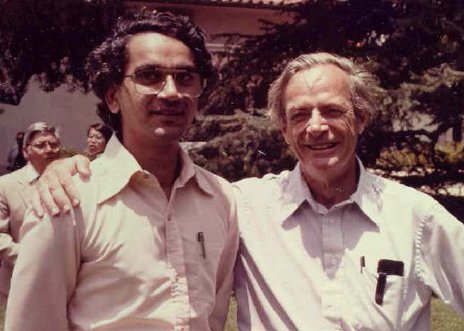
Richard Feynman with physicist Apoorva Patel, Professor at the Centre for High Energy Physics, Indian Institute of Science, Bangalore (Photo taken at Caltech, 1984)
Paul Halpern tweet media
English
4
72
558
27.2K