

CharlesHL
6.1K posts

A reaction to DG Grossi’s interview with @CBSNews @margbrennan that Iran’s knowledge about centrifuges cannot be destroyed. Valid point, but Iran’s centrifuge knowledge can be lived with in the short to medium term, the enriched uranium can’t be. It poses too much of an immediate threat.
Each centrifuge, even Iran’s most advanced, enriches very little. Therefore, if Iran has to start with natural uranium, it would need to build and install thousands of centrifuges and need additional time to produce enough weapon-grade uranium for a nuclear weapon. For example, with 3000 IR-6 centrifuges, probably now needing a few years to make and get up and running, starting with natural uranium and factoring in the traditional inefficiencies Iran has faced, the plant would need four months to produce enough weapon-grade uranium for a nuclear weapon. 1000 IR-6’s would need 12 months.
On the other hand, the existing stock of HEU allows Iran, with far less effort, to get enough for one nuclear weapon in a few weeks with about 350 centrifuges, or two cascades, and enough for 10 in four months. Therefore, enriched uranium stocks are the crown jewels of Iran’s enrichment and nuclear weaponization programs. The knowledge can be lived with in the short to medium term, the enriched uranium cannot.
PS: a gentle nudge about a mistake by the DG in the interview, who said, “Now Iran has the most sophisticated, fast and efficient machine [centrifuge] that exists.” That is not true, several countries have more sophisticated centrifuges, spinning faster and more efficiently. In terms of enrichment output, these others far surpass Iran’s. Interesting, Steve Witkoff made the same mistake.
English

There is some danger for the Big Three labs that they have run out of imagination and are now refining Codex/Claude Code/Antigravity, and building their next tools (Cowork, etc) to be similar.
These were good UX for AI's use & limits today, but not great UX for the future of AI.
English

JUST IN: Iran is charging $2 million per tanker to pass through the Strait of Hormuz. The Financial Times reported the payment. The IRGC confirms it by radio. And the world’s most important chokepoint has been converted from a military blockade into a toll road.
The mechanism is precise. A tanker operator contacts intermediaries. The intermediaries negotiate with the IRGC. A fee is agreed, reportedly up to $2 million per voyage. Payment is made in cash, cryptocurrency, or barter. The vessel receives clearance. The IRGC hails the tanker on VHF radio, verifies its AIS transponder data, and grants passage. The tanker transits. It arrives.
Roughly 89 to 90 vessels, including 16 oil tankers, successfully transited between March 1 and March 15 under some form of IRGC clearance according to Lloyd’s List Intelligence. Not all of them paid. Some were Iranian or allied ships. Some were Indian tankers that received diplomatic safe passage after government-to-government negotiations. Some were shadow fleet operators running dark with transponders off. But the Financial Times report confirms that at least one tanker operator paid the toll explicitly. The commercial precedent now exists.
The $2 million sits on top of war-risk insurance that has surged to 3 to 5 percent of hull value where coverage exists at all. A VLCC valued at $120 million pays $3.6 to $6 million in war-risk premium for a seven-day single-voyage policy. Add the $2 million toll. Add the quadrupled charter rate of up to $800,000 per day. The total cost of moving a single cargo of crude through Hormuz now exceeds what it cost to move an entire fleet through the strait six months ago.
Every dollar of that cost arrives at the consumer. The toll does not stay on the water. It enters the price of every barrel, every LNG cargo, every tonne of urea, every container of pharmaceuticals that the tanker carries. The $2 million is not a bribe. It is a tax levied by the IRGC on global commerce, collected at the narrowest point of the world’s most concentrated energy transit route, and passed through to four billion people downstream.
The strategic innovation is that Iran has found a way to fund its war effort through the war itself. The IRGC closed the strait. The closure created scarcity. The scarcity created desperation. The desperation created willingness to pay. The $2 million per voyage funds the same provincial commands whose sealed packets created the closure. The feedback loop is self-financing: the blockade generates the revenue that sustains the blockade.
The United States will frame this as state-sponsored extortion funding terrorism. The sanctions response is predictable: penalties on operators who pay, expanded designations on intermediaries, accelerated naval escorts under the six-allies pledge. But the enforcement faces a paradox. If the US sanctions every operator who pays the toll, it removes the only vessels currently moving oil through Hormuz. The molecules that are getting through, even at $2 million per transit, would stop entirely. The toll is extortion. The extortion is also the only functioning supply mechanism.
The IRGC did not just close the strait. It reopened it selectively, on its terms, at its price. The blockade was the leverage. The toll is the monetisation. And the distinction between a military operation and a protection racket has collapsed into a radio frequency and a bank transfer.
Full analysis: open.substack.com/pub/shanakaans…

English

FULL REPORT AND DETAILS ARE WILD
Wally Liaw. 71 years old. Co-founder of Super Micro since 1993. Board member. Personally holds $464 million in SMCI stock.
Charged with smuggling $2.5 billion in Nvidia AI servers to China.
Here is how they did it.
Routed servers through a Southeast Asian shell company. Built thousands of fake dummy servers to fool US compliance auditors. Caught on surveillance camera using a hair dryer to swap serial number stickers. Coordinated everything over encrypted group chats. Shipped $510 million worth in just three weeks in spring 2025.
One co-founder remains a fugitive. Two arrested. Faces up to 30 years in federal prison.
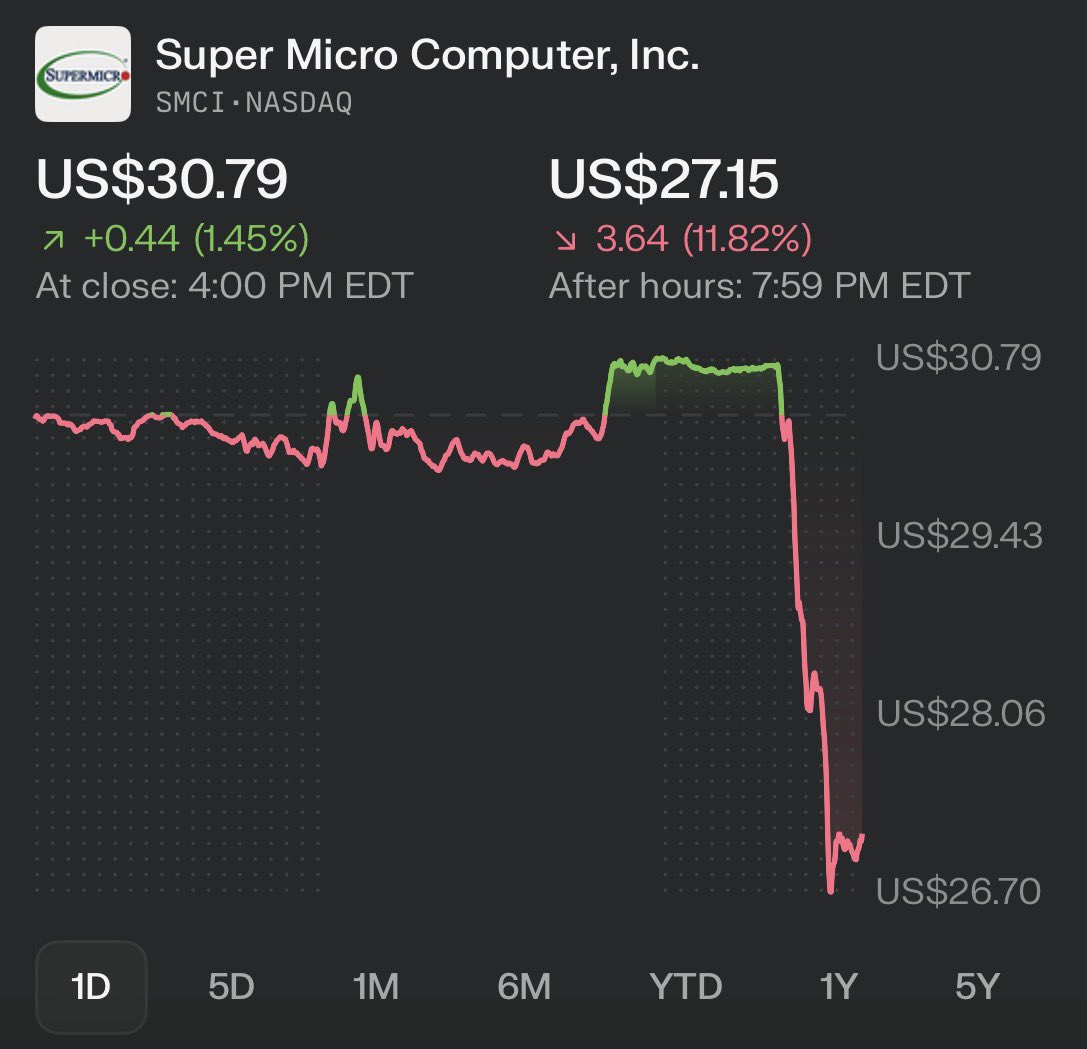
SMCI stock down 14% after hours.
But here is the deeper story your followers need to know.
This is not the first time Super Micro has been in trouble. In 2024 Hindenburg Research published a damning short report on the company. Ernst and Young their auditor resigned. Accounting irregularities flagged.
Now the co-founder is arrested for smuggling the world's most restricted AI chips to America's biggest rival.
And remember Trump just removed AI chip export restrictions last week. Then this arrest drops.
The message from Washington is crystal clear.
We will open the door officially. But we will slam it shut on anyone who was sneaking through the window.
Source: DOJ. AP. Bloomberg. CNBC.

English

🚨BREAKING: SUPER MICRO CO-FOUNDER ARRESTED FOR SMUGGLING $2.5B IN NVIDIA GPUs TO CHINA
>SMCI co-founder Yih-Shyan "Wally" Liaw arrested today
>personally holds $464 MILLION in SMCI stock
>charged with smuggling BILLIONS in Nvidia servers to china
>used a southeast asian shell company to funnel $2.5B in servers to chinese buyers
>$510 million worth shipped in just THREE WEEKS in spring 2025
>built thousands of fake dummy servers to fool U.S compliance auditors
>caught on surveillance camera using a HAIR DRYER to swap serial number stickers
>coordinated the whole thing over encrypted group chats
>SMCI down 12% after hours
>faces up to 30 years in federal prison
ITS SO OVER…

National Security Division, U.S. Dept of Justice@DOJNatSec
Three Charged with Conspiring to Unlawfully Divert Cutting Edge U.S. Artificial Intelligence Technology to China “The indictment unsealed today details alleged efforts to evade U.S. export laws through false documents, staged dummy servers to mislead inspectors, and convoluted transshipment schemes, in order to obfuscate the true destination of restricted AI technology—China,” said John A. Eisenberg, Assistant Attorney General for National Security. “These chips are the product of American ingenuity, and NSD will continue to enforce our export-control laws to protect that advantage.” 🔗: justice.gov/opa/pr/three-c…
English

⚡️Law school is becoming a delayed-reality trap for a lot of people.
That is the real truth.
A huge amount of legal work was never truly high value judgment. It was expensive human middleware. Search, review, drafting, clause comparison, diligence, memo generation, procedural assembly, document synthesis. The profession wrapped that labor in prestige, billing rates, and gatekeeping, so people mistook the economics for permanence. AI is now exposing how much of that layer was rentable labor sitting inside a protected structure.
The real break is at the bottom of the pyramid. Law firms used to justify hiring armies of juniors because the machine needed bodies to grind through structured text work. That work also served as training. AI attacks both at once. It makes the junior labor less necessary and the old apprenticeship path less economically rational. So the profession starts eating its own future. Fewer junior seats. Fewer real development paths. More demand for polished senior judgment later, with less willingness to fund the years it takes to build it.
That is why people running into law school as a safety trade are badly misreading the timing. They are looking backward at the old prestige of the profession while the internal economics are already shifting underneath it. By the time they graduate, the title may still look prestigious while the actual opportunity structure is much narrower, harsher, and more polarized.
The winners will still exist. Elite litigators. Rainmakers. Deal architects. Political operators. People with client trust, courtroom presence, negotiation power, niche expertise, and real-world judgment under pressure. Those people will likely become even more valuable. But the broad middle of legal labor is headed for compression. The profession is going to keep the top and thin the ladder.
The legal profession may remain socially prestigious while becoming economically less forgiving for everyone below the top tier. More credentials. More debt. More competition. Fewer real seats. Harder bottlenecks. Stronger sorting. Better tools for the survivors. Worse odds for the entrants.
And this is not just about law. Law is one of the clearest examples of what happens when a high-status profession confuses procedural complexity with durable scarcity. AI is coming for any field where the core business model depended on expensive human processing of structured information.
So my real view is brutal and simple.
Lawyers are not disappearing.
The legal ladder is being gutted.
A lot of people who think they are buying security through law school are actually buying delayed exposure to a profession that is about to get leaner, meaner, and more selective than they realize.
Mikli@CryptoMikli
Andrew Yang explains why lawyers will be replaced by AI “The first thing that jumped into my mind when you said that was lawyer. Law school applications, last I checked, went up 21% last year, and I would suggest that was a flight to safety, and that stuff’s not safe at all. Lawyering is highly structured. It’s very process oriented. It’s kind of the ideal environment for AI” “I have friends who are partners in law firms who say, ‘Look, I’m giving AI work that would have taken a second or third year associate a week to complete, and it gives it back to me in 20 minutes. So why on earth would I hire a small army of these associates?’”
English

Paramount has now spent $300 million making three Sonic movies. They returned $1.2 billion at the box office.
That's a 4:1 return on production costs. The average Marvel movie now costs $200-250 million per film before marketing and needs roughly $500 million in global revenue to break even. Paramount built an entire billion-dollar franchise for the production budget of one Avengers.
The growth curve is the part worth studying. Sonic 1: $319 million on a $90 million budget. Sonic 2: $405 million on $90 million. Sonic 3: $492 million on $122 million. Each sequel grew 20-25% while production costs barely moved. Deadline calculated Sonic 3's net profit alone at $123.6 million.
This franchise almost never existed. In 2018, Paramount released the original Sonic design and the internet response was so brutal they pulled the trailer, delayed the film, and spent millions redesigning the character from scratch. Every studio executive in Hollywood called it a waste of money. Delaying a tentpole to redo VFX because Reddit is upset? Career-ending judgment in most boardrooms.
That redesign is the single decision that separates a $1.2 billion franchise from a one-and-done $60 million domestic flop. One executive approved the delay. Every dollar since traces back to that call.
Now look at who they cast for Sonic 4: Carrey, Reeves, Elba, Kristen Bell, Ben Kingsley, Matt Berry, Nick Offerman, Richard Ayoade. Eight names that cost real money, attached to a franchise Paramount knows will return multiples.
The question was never whether Sonic could compete with Mario's $1.36 billion single-film record. The question is what happens when a studio figures out the one thing most refuse to do: listen, rebuild, and compound.
Sonic the Hedgehog@SonicMovie
The countdown to chaos has begun. 💎 #SonicMovie4 - only in theatres March 19, 2027.
English
In 1978, researchers asked lottery winners and paralyzed accident victims to rate their happiness. The lottery winners scored 4.0 out of 5. Controls who won nothing: 3.82. Statistically identical. The paraplegics rated their expected future happiness at 4.32. Higher than the winners.
The mechanism behind this is called hedonic adaptation. Your dopamine system doesn't measure rewards in absolutes. It measures the gap between what you expected and what you got. A pool you already own generates zero signal. The same pool imagined by someone who doesn't have one fires a massive spike.
This is why every contradiction in the quote maps to the same circuit. The person with the partner stops noticing them. The person without one runs prediction error every time they imagine having one. Same neurology, opposite experience.
The winners also reported less pleasure from everyday activities like eating breakfast or talking with a friend than the control group did. Winning the lottery made ordinary life feel worse.
The quote frames this as a gratitude problem. The dissatisfaction is the operating system working correctly. Ancestors who felt "enough" got outcompeted by ones who didn't.
Gratitude practices do show up in fMRI as a manual override of this circuit. You're forcing your brain to re-encode something it already filed as baseline.
You're fighting 300 million years of motivational architecture with a journaling habit.
Russia TV@Urgent_RussiaTV
Speaking about the deep contradictions in human nature, Japanese actor Hiroyuki Sanada said: “Some people dream of having a swimming pool at home, while those who have one barely use it. Those who have lost a loved one feel a profound sense of loss, while others often complain about the relatives still in their lives. Those without a partner long for one, while those who have a partner often fail to appreciate them. The hungry would give anything for a meal, while the full complain about the taste of their food. Those without a car dream of owning one, while those who have a car are always looking for a better one. The key to happiness is gratitude—to truly see and value what we already have, and to understand that somewhere, someone would give everything for what we take for granted.”
English

Speaking about the deep contradictions in human nature, Japanese actor Hiroyuki Sanada said:
“Some people dream of having a swimming pool at home, while those who have one barely use it. Those who have lost a loved one feel a profound sense of loss, while others often complain about the relatives still in their lives. Those without a partner long for one, while those who have a partner often fail to appreciate them. The hungry would give anything for a meal, while the full complain about the taste of their food. Those without a car dream of owning one, while those who have a car are always looking for a better one.
The key to happiness is gratitude—to truly see and value what we already have, and to understand that somewhere, someone would give everything for what we take for granted.”

English
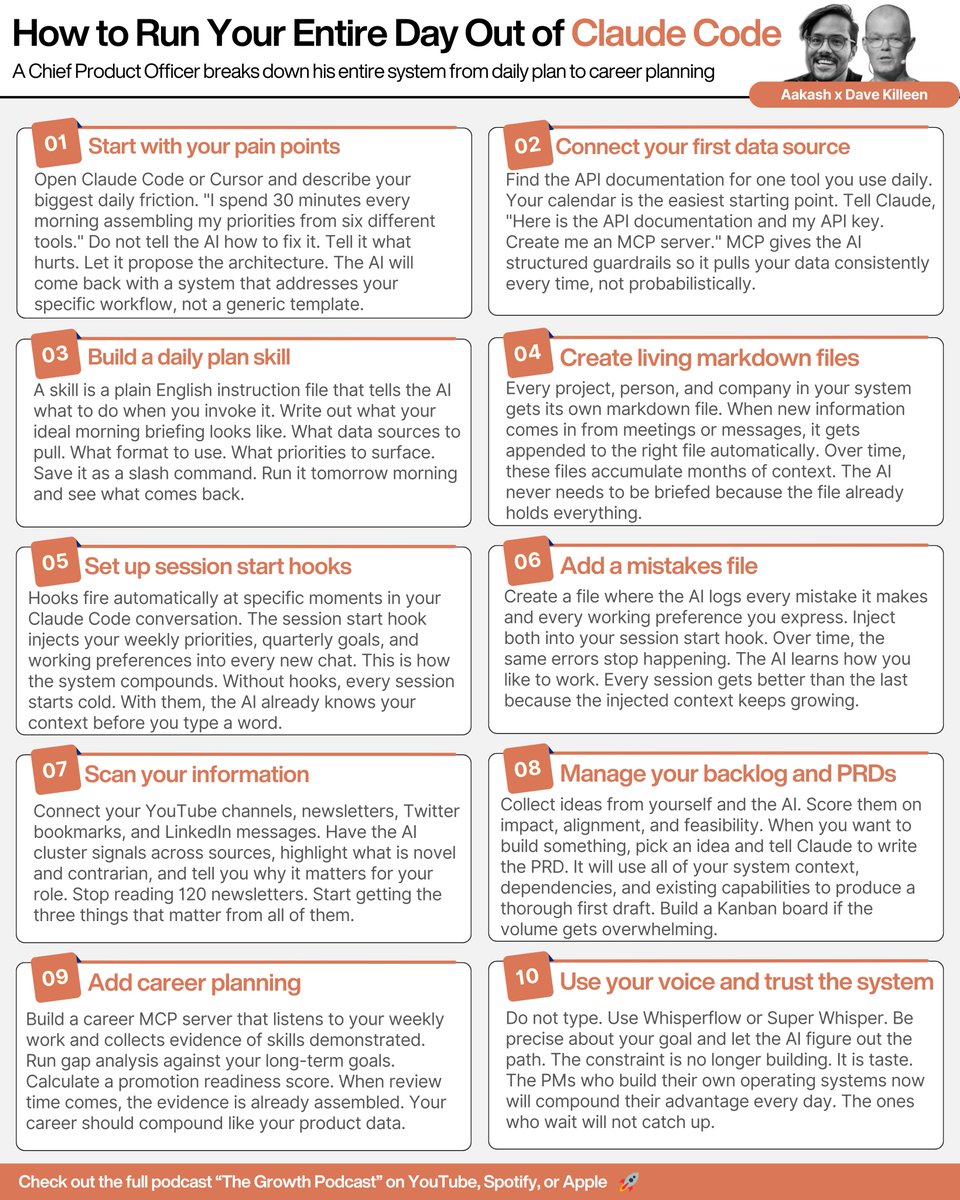
This is how to use Claude Code to run your entire work day:
Aakash Gupta@aakashgupta
You should be using Claude Code to run your entire work day. Here's exactly how, from @thevibePM, field CPO at $2.6B @pendoio: 1:47 - The one command that plans his whole day 21:42 - His Claude.MD Setup 33:42 - Skills vs MCP vs Hooks 40:11 - Why he left Cursor for terminal
English
Your best ideas don’t come when you’re working.
They show up:
• In the shower
• On walks
• Half-asleep
That’s not a flaw. It’s a clue. 👇
English

1/ As the world’s first ever mobile-first vibe coding tool, we at @vibecodeapp_ made it too damn easy to make apps.
This led to the creation and submission of tens of thousands of apps to the App Store.
And so Apple did this.
But don’t worry. We are just getting started. 🧵👇
Tim Sweeney@TimSweeneyEpic
@9to5mac @apollozac Of the many dumb decisions favored by Apple, making leading edge development tools unviable on iOS and iPadOS is the dumbest. They are cutting off an entire generation from early exploratory development. Shame on Apple for abandoning the ethos of Woz.
English

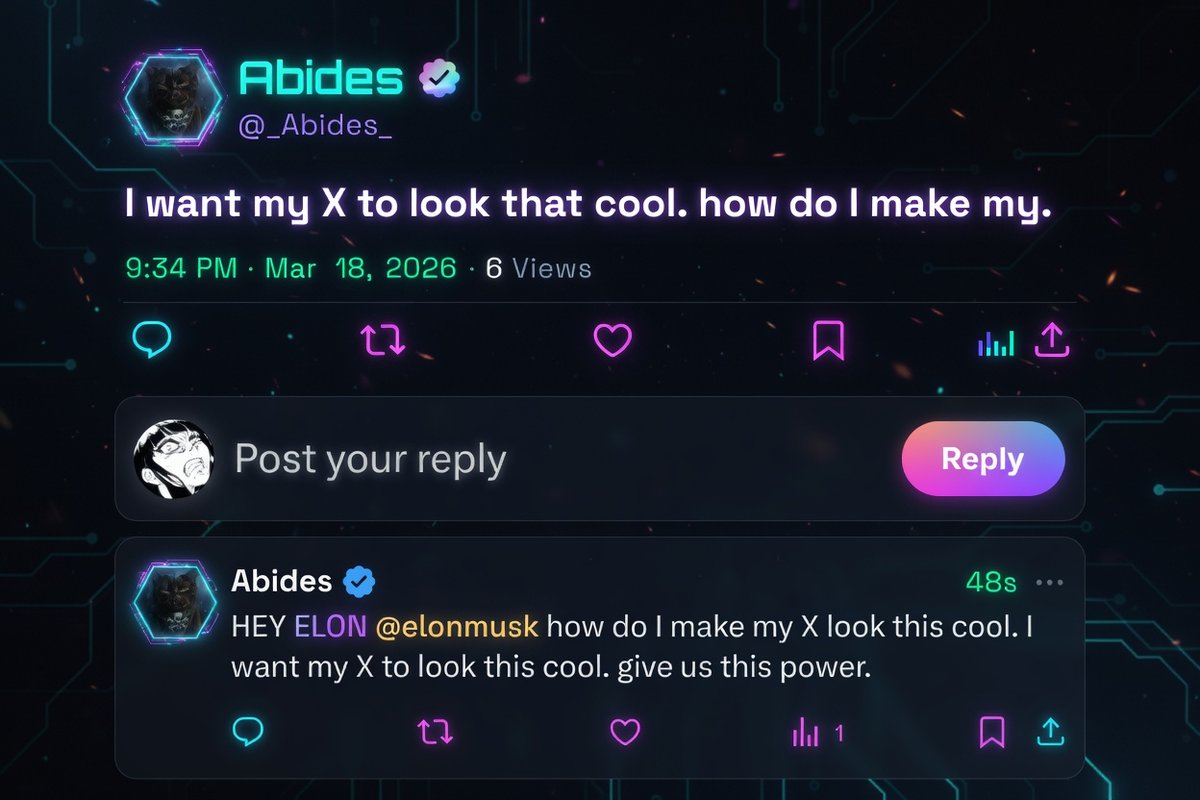
1. screenshot the post
2. open grok.com/imagine
3. drop the screenshot in
4. prompt: "make this extremely aesthetic"
5. hit compose post -- publishes straight to your TL
English

Now the domestic calculus.
While TV oil analysts focus on the global price of oil, the real experts in Houston are watching something different: the fracturing of the global energy market.
The real threat is not $200 oil. It’s cheap energy in export nations and ruinous energy costs in places far from reserves.
One global price only works if there’s a surplus of tankers to arbitrage differentials. Before the Iran strikes, that surplus was razor-thin. Now, with supertankers stuck in the Gulf, it’s gone.
Brent is at $106 today. WTI is under $100. But domestically, diesel is stabilizing and natural gas prices are falling as LNG that would normally be exported stays trapped at home. Today Trump issued a 60-day Jones Act waiver and opened Venezuelan oil sales to U.S. companies via a new Treasury license for PDVSA. These are exactly the moves you’d make if you were trying to drive U.S. prices down while the global market fractures.
Tankers charge by the day, so long-haul routes become comparatively more expensive. Venezuelan crude on short Gulf runs becomes far cheaper for U.S. refiners than Middle Eastern crude routed around the Cape of Good Hope for European or Asian buyers.
English
Let's unpack this..
What if the White House has no intention of reopening the Strait of Hormuz?
What if this war is really about ships & tariffs?
I had a long discussion with senior DOE official yesterday on background. I can’t share any details but it’s clear everyone’s Strait of Hormuz calculus is wrong.
We need to go back to the drawing boards.
That's it. That's the tweet. Now a hypothetical 🧵 with my personal thoughts.
Ezra A. Cohen@EzraACohen
English

🚨 MOSSAD COMMENTARY:
IRAN’S CLUSTER BOMBS WON’T BREAK ISRAEL
Last night, videos flooded in showing dozens of Iranian cluster munitions lighting up the sky and scattering across Israeli cities.
On the ground:
• Widespread damage
• Zero penetration of safe rooms
• Tragically, 2 civilians killed — an elderly couple who were unable to reach a safe room.
Here’s the reality:
Cluster bombs are designed to spread fear, not win wars.
Like a shotgun blast — many small impacts, not one decisive strike.
We are willing to endure short-term danger to remove the head of the snake.
Iran isn’t weakening resolve.
It’s proving exactly why this fight must be finished.
Boost the algorithm: Bookmark, Share, Reply, Repost, Like and Follow @MOSSADil
English

This is an important question, here are my 4 main points:
1- Iranians didn’t hit US bases only they went after Saudi, UAE, Bahrain etc oil infrastructure hitting their economy, and they hit two countries in particular which are Saudi Arabia and Qatar who do have diplomatic channels with Iran. So by doing so they alienated others.
2- The proxies are no longer popular groups, the defeat of Hezbollah and IRGC in Syria is making everyone in the region skeptical about Iran because their militias did contribute to the ruin of Syria and Iraq, Lebanon etc. This is noticeable in how Levant Arabs are talking about the situation today.
3- They’ve sent more missiles at UAE, people who support that because UAE normalized with Israel don’t see that it’s not going to make UAE less inclined to collaborate with Israel, quite the contrary.
4- There are already now discussions in Saudi Arabia, Bahrain and Kuwait etc on how to rely less on the Strait of Hormuz and diversify away from it, it was a static geographic card they could have always maintained if they hadn’t weaponized it, because while the oil prices are going up, it’s really Gulf countries that are directly paying the costs, Europeans and Asian partners as well, US doesn’t rely on that strait.
In many ways, the Islamic Republic is now isolated, I explain more here:
open.substack.com/pub/zinebribou…
ayatrollah@ayatr0llah
really open question the point at which everyone will admit that iran's attacks on the gcc are backfiring
English

This is what a thermobaric warhead munition does to a tunnel system.
Shiri_Sabra@sabra_the
Amid the war in Iran, the IDF says that in the past two weeks it demolished five kilometers worth of Hamas tunnels in the Gaza Strip. One of the tunnels was located in the eastern Rafah area, where dozens of Hamas gunmen had been holed up amid the ceasefire. Another tunnel was located in Khan Younis, the military says.
English


European leaders constantly call for a [moratorium on strikes targeting energy and water facilities,] insisting that civilian needs must be protected from war. Yet history tells a different story. In 1999, during the intervention in Yugoslavia, NATO forces systematically targeted electric grids and energy infrastructure. Entire cities were plunged into darkness. Water systems failed. Hospitals struggled to operate. The result was not just military pressure but civilian paralysis.
In 2003, the invasion of Iraq led by the United States and the United Kingdom saw power plants and water systems disabled early in the campaign. The collapse of electricity meant the collapse of water purification, healthcare, and daily life for millions.
In 2011, during the Libya intervention, again under NATO command, fuel depots and electricity networks were struck, triggering widespread shortages and long-term instability in basic services.
In Afghanistan, across two decades of NATO presence, civilian infrastructure from roads to power facilities was repeatedly damaged, whether intentionally or as "collateral." And in the war against ISIS in Syria and Iraq, coalition forces including European states targeted oil fields and energy facilities, knowing full well that such systems serve both militants and civilians.
The Pattern Is Clear, the principle is always the same: When they act, it is called necessity. When others act, it is called a violation.
When European leaders now speak of protecting civilian infrastructure, they are not speaking from a consistent moral position. They are speaking from selective memory to save Iran's Islamist jihadist regime.
Because the same actors who call for restraint today have, in the past:
Approved strikes on power grids
Disabled water systems
Targeted energy lifelines essential for civilian survival. This is not an accusation. It is a record.
European discourse often frames Iranian energy resources oil and gas, as if they represent the prosperity or welfare of the Iranian people. This is fundamentally misleading.
Iranian citizens do not meaningfully benefit from these resources. Wealth is concentrated within the Islamic regime’s power structure.
Energy, in this context, is not a civilian lifeline it is a political and military instrument. If the protection of civilians is truly a universal principle, it must apply: In Europe’s wars, in America’s coalitions, in Middle Eastern conflicts, Everywhere, without exception Otherwise, it is not a principle. It is a tool of convenience.
The issue is not whether protecting civilian infrastructure is right, it is.
The issue is whether those who speak about it today have consistently upheld it. The historical record suggests otherwise.
And until that contradiction is acknowledged, every new statement about "protecting civilians" from European leaders will carry less weight not because the principle is weak, but because its advocates have been.
English

I use Claude Code every single day.
It probably saves me 3-4 hours on every project.
But here's what nobody says:
If I didn't know Flutter, Firebase, and how backends actually work
Claude would've destroyed my client projects by now.
It confidently writes wrong code.
It confidently misses edge cases.
It confidently breaks production.
You need the judgment to catch it.
Judgment only comes from actually learning.
AI is the gas pedal.
You still need to know how to drive.
English