Charlie Parry

9.8K posts

Charlie Parry

Charlie Parry

@CharlieParry15

Mainly renewable energy and boxing stuff. All opinions and mundane thoughts are my own.

Katılım Mayıs 2011
1.8K Takip Edilen262 Takipçiler
Brett
Brett@brett_finance·
I gave @tryshortcutai and Claude for Excel the same test: build a long term personal financial model. I gave them both the same inputs - my short term excel budget model. The results were wildly different. @tryshortcutai won by a mile. The simplest explanation I can give is that Claude in Excel is like hiring someone out of college with Excel skills and access to the internet. But shortcut is like hiring someone who has worked as a financial analyst for 5 years. Both can get the job done but the difference is felt every step along the way. Shortcut definitely did a better job of planning and asking questions to know what mattered versus didn't - which is the reason I'll end up deleting the model that Claude built and keeping the one Shortcut built. This was only test 1 and was pretty basic in terms of capability (no connections, no heavy research, etc.) - just a financial model. We'll see what happens as the tests get more FP&A-focused.
English
9
3
31
10.5K
Charlie Parry
Charlie Parry@CharlieParry15·
@mikebeckhamsm As a non coder, having those pull and merge requests, triggers such a dopamine hit!
English
0
0
0
5
Mike Beckham
Mike Beckham@mikebeckhamsm·
I’ve probably spent 150 hours in the last month working with AI. One thing has become crystal clear to me: The tight feedback loops release so much dopamine that it is easy/enjoyable to build. It does feel like playing a game. But I have something to show for it at the end.
Cody Plofker@codyplof

Just realized why I’m so addicted to Claude Code. It’s literally a video game for adults. You get stuck on a level, try everything you can to beat it, and eventually break through. And every level you stack skills and get stronger.


English
55
38
795
75.7K
Tommy Geoco
Tommy Geoco@designertom·
Working deeply with AI creates a mental crash I'm learning to navigate. Pre-AI, a solid 6-hour sesh meant 1-2 meaningful cycles of work. A cold start + a messy middle + the dopamine hit of finishing something. Done. Now I'm running 50-100 of those cycles a day. Each one has the same emotional weight: ramp up, grind through the hard part, feel the rush when it works. Repeat. That's 100x the tax on your nervous system. Huberman talks about the pain of learning - how the brain actually experiences cognitive load as discomfort. Working with AI stacks that discomfort 100 times by dinner. The end-of-day crash is real. I'm still figuring out what "deep rest" means when you've compressed a month of mental cycles into a single afternoon.
English
69
33
554
44.7K
gian
gian@giansegato·
kinda ironic how the average work day is getting _harder_, as we progressively automate the easier parts of our daily jobs offloading them to agents. net result is that the average complexity of the tasks we still get to do is actually increasing insofar as we decide to still work the same number of hours (if not more), the more we offload to agents the harder our days will get lots of obvious confounders so not exactly direct causality, but since opus 4.5 i feel so much more tired. i get to accomplish crazy more - probably now doing what last year would've considered 3-4 distinct jobs, all at the same time. but at what price? pretty sure the current general anxiety in tech is not just that. could quite simply be lots of tiredness as we no longer get to code for hours in quiet flow, and have to uniquely narrow our focus to only the hardest pieces (or maybe i'm just projecting because this race is killing me lmao)
English
59
62
1.6K
225.3K
Allie K. Miller
Allie K. Miller@alliekmiller·
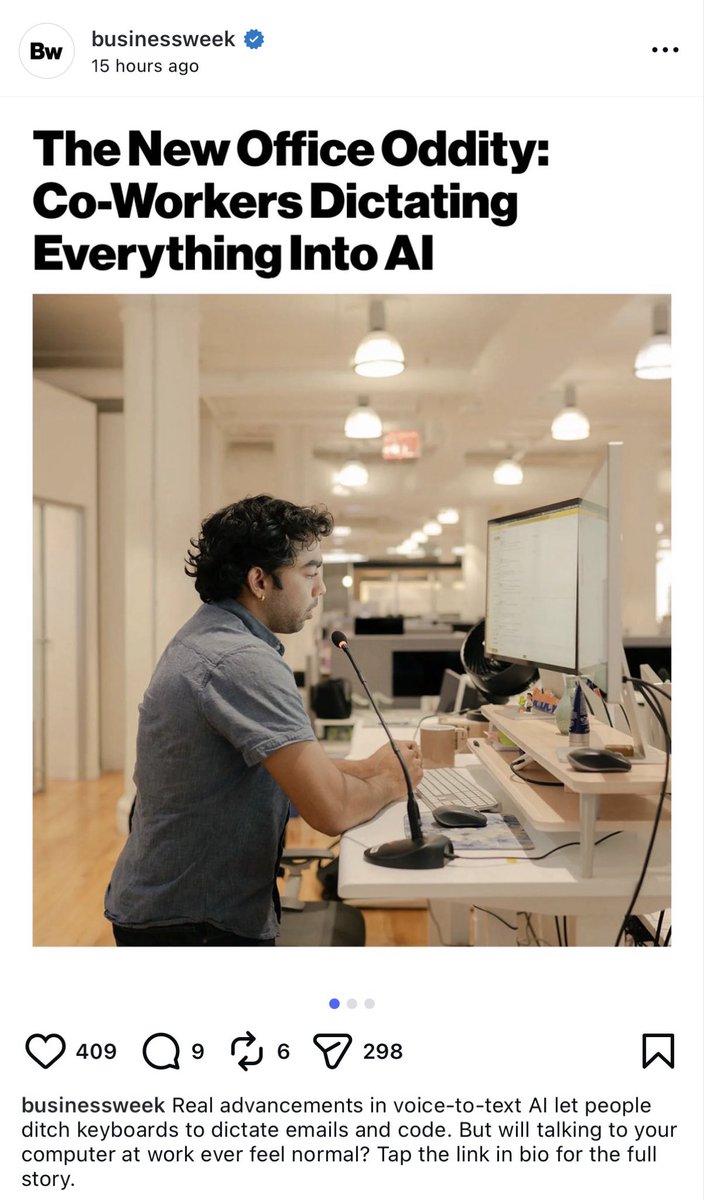
Voice is exploding. I talk to Claude Code and other tools almost exclusively in voice and screenshots. Office spaces are changing and will continue to change because of it. I can’t work for long periods at certain places because I can’t dictate. New devices will be voice-first. Zero question in my mind this transition is underway. …and you guys said I was crazy.
Allie K. Miller tweet media
Allie K. Miller@alliekmiller

Voice AI is going to explode in 2026. Here’s what I’m seeing: 1. Dictation has completely changed how I work I go on walks where I dictate to Otter for 40min. I built an app this weekend while lifting weights. The productivity gain is real. 2. Phone booths everywhere I visited the offices of two large AI companies last week. They have phone booths everywhere. I watched someone walk into one, dictate, then walk right back out. That’s it. 3. Microphones at every desk I visited Wispr Flow’s headquarters in October (see pic). Every single employee had a $60 microphone on their desk and can whisper tasks all day long to AI. You cannot hear them even if you’re at the neighboring table. 4. OpenAI says typing is the bottleneck Alexander Embiricos, head of product for Codex, just went on the @lennysan podcast that the “current underappreciated limiting factor” to AGI-level productivity isn’t model capability, it’s human typing speed. We are literally being held back by our fingers.

English
50
30
259
39.1K
Charlie Parry
Charlie Parry@CharlieParry15·
@alliekmiller A colleague today described it as going from Model T, to Ferrari in one jump!
English
0
0
0
17
Allie K. Miller
Allie K. Miller@alliekmiller·
I advise some of the biggest C-suite folks on AI, and I’ll say this: Agentic platforms (Claude Code, Codex, OpenClaw) are the most positive energy I’ve seen in those rooms since ChatGPT launched. Enterprise adoption will be slower than solo/startups, but these leaders are quickly seeing there is no ceiling right now.
English
74
13
181
14K
Harry Stebbings
Harry Stebbings@HarryStebbings·
I am often asked how has AI changed the way that I work. Two ways: I do not ever type emails. @WisprFlow perfectly transcribes them. Structures them. Spelling of names is perfect. Could not live without Wispr both on iOS and desktop. Every single 20VC show we now run the same prompt into Gemini, Claude, ChatGPT and Grok to help us create questions and schedules for the show. 12 Months Ago: (Best to Worst) 1. ChatGPT 2. Claude 3. Grok 4. Gemini Today: (Best to Worst) 1. Gemini (By far) 2. Grok 3. Claude 4. ChatGPT Btw, I use Flow to do the best and most detailed prompts on all of the above. The times they are a changing…
English
22
15
145
39.1K
Garry Tan
Garry Tan@garrytan·
So addicted to Claude Code, I stayed up 19 hours yesterday and didn't sleep til 5AM
English
775
219
6.8K
986.9K
Charlie Parry
Charlie Parry@CharlieParry15·
@businessbarista Its fantastic. Just talknthoughta, and chatgpt, Gemini, claude synthesises them. Easiest 250wpm ever. My wife, a dentist, has set up shortcuts and a dictionary and is now saving multiple hours a week writing notes, and the reception team freeing up more time for patient tasks.
English
0
0
0
70
Alex Lieberman
Alex Lieberman@businessbarista·
Wispr Flow is a top 3 favorite AI tool for me. I was a skeptic initially. "AI talk-to-text? This has existed for years, I can do it on my iPhone already, and there is tons of competition. Who in their right mind would pay for it?" Says the guy who now pays for it. I put this product in the bucket of something "that just works." Voice dictation is simple. Pulling off great voice dictation is exceptionally difficult. I literally do not use my fingers to type anymore. I'm just a yapping machine at this point.
English
47
9
142
19.6K
Charlie Parry
Charlie Parry@CharlieParry15·
@brett_finance Claude Chrome desktop app can run research to gather input data too. Then upload it into excel, and get the Excel off and cracking.
English
0
0
2
49
Brett
Brett@brett_finance·
@CharlieParry15 Was just playing with it. It’s pretty wild.
English
1
0
1
62
Brett
Brett@brett_finance·
I've ignored AI for FP&A the last couple years because it all felt like hype. People who get paid per impression saying things like "Excel is dead" or "Replace your team with one GPT". But I actually think we're at an inflection point now with where the tech/tools are sitting that will make meaningful AI improvements available for everyone. So I'm stepping back in. Over the next few months, I'm testing AI across the entire FP&A OS to see what's real. Here's what I'm seeing so far... The Problem My gut says that the average corporate finance team is at level 1 or 2 for AI awareness when other departments are 6-8 (marketing). My favorite example from an enterprise executive recently: "Let's run our P&L through AI and see if it forecasts better than the team." This is wrong for so many reasons that I'll explain later. So where do I think we'll find the most AI gainz? Analysis - Don't outsource your brain This is where I have the strongest take. Ask any AI "what should I do with AI in finance?" and it'll tell you: automate your monthly variance analysis. I think this is terrible advice. Our primary job in FP&A is to understand what's happening in the business and communicate our opinion about what to do differently. Outsourcing any of those? You're toast. My bet: Finance professionals who let AI do their variance analysis will plateau in 3-5 years. But AI as a supplement? Different story. Use it to connect hard-to-see dots. Process large datasets. Skip from hypothesis directly to insights. That's where it works - that's where I'll focus. Forecasting - Where the real bottleneck lives This is where most of the LinkedIn slop lives too. Building a DCF from a prompt is a fun party trick. But it's not our bottleneck. Here's what actually kills us: Forecasting revenue across dozens of channels/products/geographies or Managing expense budgets with thousands of transactions we barely understand or Actually understanding why our forecast accuracy sucks Most enterprise teams are forecasting hundreds of thousands of data points and constantly rebuilding models as the business evolves. This is where AI might actually help process or review all that information. AI as a safety net is compelling idea for me. People - The 1-for-3 multiplier Executives want to hire 1 person who can do the work of 3. That has never changed but is now more possible than ever. However, my spicy take is that you'll get more efficiency from a good FP&A tool than from AI right now. That's why I'm not changing how I hire. Still looking for people who can do more with less and communicate complex ideas simply. But if your entire value prop is VBA/Excel wizardry? Start thinking about what finance looks like in 10 years. But 2026 will be the year I peel off 10% of my brainpower to ask "how can AI improve this for my team?" Reporting - The jigsaw approach Reporting in the age of AI won't be one-size-fits-all. Reporting as a topic goes super deep: - Financial reporting versus operational reporting - Standardized reporting versus ad hoc reporting - Something that should be a report versus something that shouldn’t - Use-case reporting versus user-based reporting - Dashboards versus static reports Each of these topics likely needs to be handled differently - I'm excited to dig deep on each one. More to explore here, but it's clear the old playbook doesn't work anymore. What's next? I'm testing everything to figure out where it actually works, where it's just hype, and what you need to have dialed in before it's even worth trying. Over the next few months, I'll share what I find - the good, the bad, and the absolute slop. I'm no expert. I'm just a regular guy working in FP&A who wants to get better. Follow along if you want the real story, not the LinkedIn version.
English
10
2
72
9.4K
Charlie Parry
Charlie Parry@CharlieParry15·
@GergelyOrosz Or for now they're focused on building new commercial products for their core biz? Would not be surprised to see middle / back office infra solutions next.
English
0
0
0
37
Gergely Orosz
Gergely Orosz@GergelyOrosz·
The company that created Claude Code and Claude Cowork must have obviously built their own HR solution from scratch with these tools, right? No: they use Workday. Understand why this is, and you'll understand why enterprise SaaS could be doing better than ever, thanks to AI
English
126
153
3.4K
1.2M
Charlie Parry
Charlie Parry@CharlieParry15·
@DallasAptGP Its insane isn't it. That's so good. Been having the same realisation last free days
English
0
0
1
74
Barrett Linburg
Barrett Linburg@DallasAptGP·
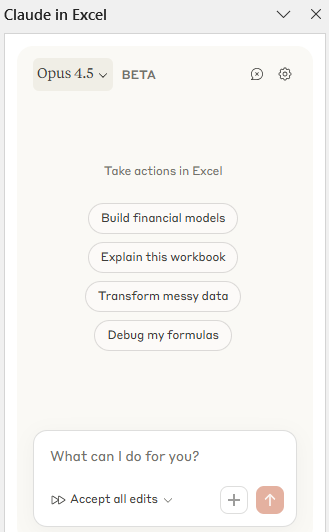
I downloaded Claude in Excel on Friday night and didn't stop until I hit my Claude Max limits. Multiple times. My Excel skills are average at best. But I understand real estate. I understand taxes, Opportunity Zones, depreciation, compounding, waterfalls. I know when the numbers are right and when they're wrong. So I talked Claude through building a model that had only ever existed in my head. The result: a 30-year Opportunity Zone fund model with capital recycling. One of the most complex financial structures you can build in a spreadsheet. 14 interconnected sheets. 360-month engine. 378 rows × 114 columns tracking 13 deals simultaneously, month by month. Here's what makes this hard: Dynamic deal triggering. Deals aren't hardcoded. They auto-generate when cumulative refinance proceeds hit a funding threshold. The model decides when to deploy capital based on what's actually available. 13 stacked, interdependent deals. Each has its own timeline: construction → stabilization → refi → refi 2 → exit. The timing of one deal triggers the next. Miss one link and the whole chain breaks. Multi-phase waterfall. Pref → return of capital → GP catch-up → 80/20 split. The LP/GP economics flip mid-stream. The model tracks allocations across both phases. OZ tax basis tracking. Original deferred gain. 10% basis step-up at Year 5. Deferred gain tax due Year 6. K-1 losses flowing through annually. Full exclusion of appreciation after Year 10. All tracked separately for LP and GP. Depreciation allocation differently before and after the waterfall flip. The model knows the difference. After-tax IRR. Most models stop at pre-tax returns. This one calculates true after-tax performance including K-1 loss utilization, deferred gain payments, and OZ exclusion benefits. 8 automated validation checks. All passing. I built it in a weekend by having a conversation.
Barrett Linburg tweet media
English
122
107
2K
419.2K
Charlie Parry
Charlie Parry@CharlieParry15·
@petergyang Add Wispr. Fantastic dictation tool, straight into any text fiels.
English
0
0
0
18
Peter Yang
Peter Yang@petergyang·
The voice mode for AI apps is still bad: Claude: Still makes me tap the screen to talk and doesn’t support hands free mode. Also tends to be extremely terse in its responses. Actually suggested I go back to text chat to continue the conversation. Gemini: Voice mode seems to have no access to memory or my Google Drive - knows nothing about me. Such a missed opportunity.
English
56
3
136
47.3K
@jason
@jason@Jason·
cancelled our corporate @OpenAI account today; We were spending ~ $10k a year @xai is better for real time data @Gemini is better for travel, local YouTube & @claudeai is much better for corporate (Cowork and Project features specifically) ChatGPT isn’t keeping up imo — and I don’t trust them with my corporate data Long game, but I think ChatGPT is 4th place now
English
1.2K
993
18.9K
1.4M
Techsaleshackz
Techsaleshackz@techsaleshackz·
A couple of thoughts for those who are looking to join early-stage start-ups This will probably be very helpful for young bankers/consultants who are looking to make pivots In start up land you either Sell or you build Sell of build. So many young talented people want to be generalist They want to do strategy and ops The reality is that junior strategy and ops roles hardly exist in the start up world As companies raise series C's and beyond, that is when you might see some of these roles open up Series B even. Especially big series B's But early on, you either sell or build So if you want to join the best best teams, you need to have the skillet or be willing to learn how to sell or build Working w/ a couple sequoia backed start ups right now that are looking for sellers/ops folks Feel free to reach out if that's you
English
5
1
22
2.1K
Maurizio
Maurizio@themgmtconsult·
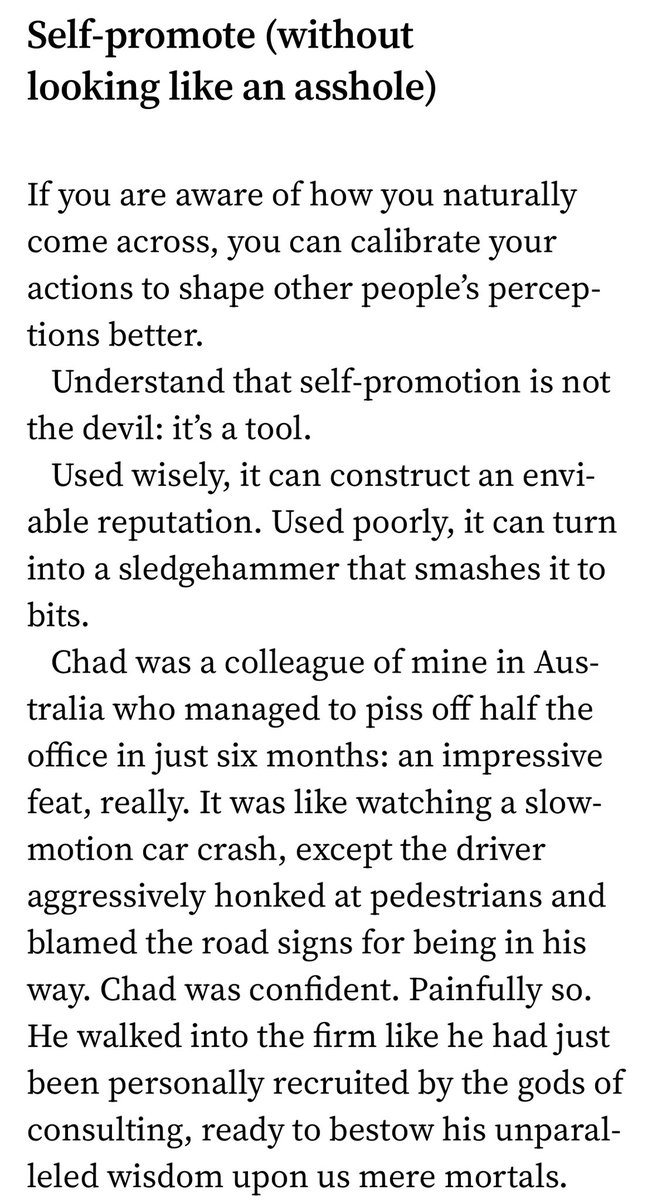
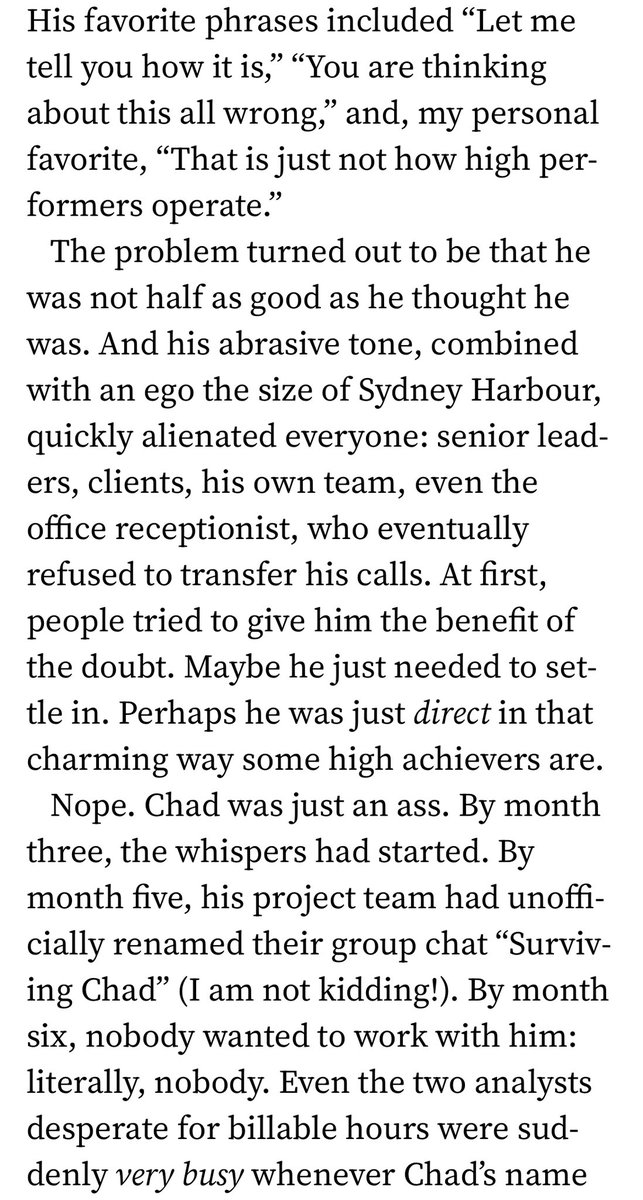
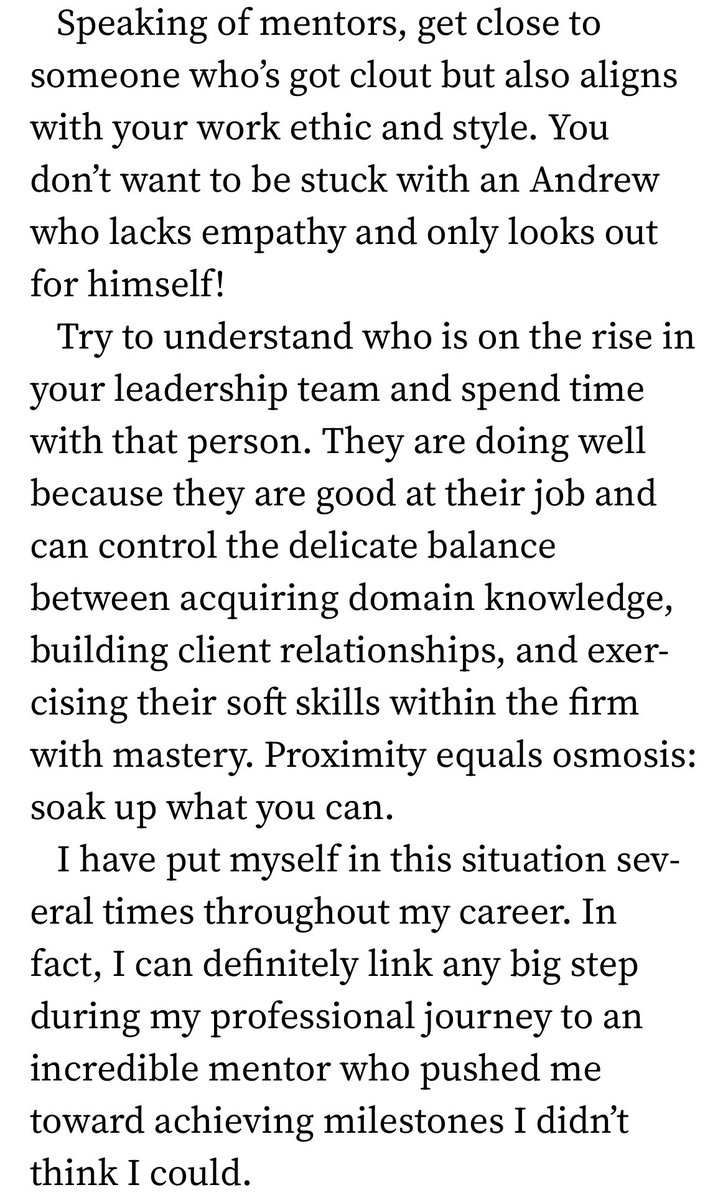
Worked 2 decades in in consulting. Made Partner in my 30s. Led teams of 100+ people. Run 9-figure client portfolios. Lived and worked in 4 continents. To grow fast, I had to learn practical ways to "narrate reality" to my leaders, without turning into the loudest guy in the office. 3 UNDER-DISCUSSED WAYS TO SELF-PROMOTE 1) Run "impact debriefs" after every meaningful piece of work, and make them impossible to ignore. A lot of people finish a project… and move on. They think "Well, my boss saw how hard I worked. They know." No they don't. After every major milestone (eg, a workshop, a turnaround, a nasty delivery save) write a one-page impact note and send it to the people who matter. Frame it as a story of change: what was broken, what you changed, what business risk or cost you removed, what decision you unlocked, etc Use numbers, but lead with stakes. An exec doesn't care about "I consolidated 3 misaligned streams" but they get interested with "I prevented a $4M regulatory exposure by getting 4 execs to align on a single approach"... The right people remember evidence. ⸻ 2) Translate your work into executive language, even if nobody asked you to. Early in your career you think work is about doing, but later you realize careers are built on how your work is interpreted. Every month, force yourself to rewrite what you did in a language an exec would respect: Risk reduced. Revenue unlocked. Delay avoided. Optionality created. Take the complex thing you did in the trenches and narrate it as cause-and-effect. For example: "I built a dashboard" is output. "I gave the CFO a single source of financial truth and eliminated three weeks of reconciliation activities per quarter" is impact. Then drip-feed that language in conversations, performance reviews, 1:1s, town halls. You are simply making reality visible at the altitude where decisions are made. IMPORTANT!!! If you do not narrate it, someone else will, and they will narrate themselves into your work. ⸻ 3) Build a small internal audience and teach them what you are learning. All right, this is the highest-leverage move. Once a quarter, run a short learning session inside your team or practice: teach a principle that emerged from your work. Explain the context and trade-offs, give details, so that people start seeing you not as a deliverable machine but as a person who creates understanding. Understanding is political capital. Executives hear about people who create understanding. Careers move around those people. ⸻ Let me be even more explicit: doing important work in silence is romantic, but in reality, silence gets mistaken for irrelevance. Be an high achiever, but don't be a QUIET high achiever. Narrate what is true: do it with restraint, precision, and respect for the craft. I wrote a chapter in "Beyond Slides" with more suggestions on how to "self-promote without looking like an asshole", so have a read at the below extract! All the best!!
Maurizio tweet mediaMaurizio tweet mediaMaurizio tweet mediaMaurizio tweet media
English
53
445
3.9K
320.7K