

Chris Calton
1.6K posts

Chris Calton
@ChrisCalto91066
Historian, Research Fellow in Housing and Homelessness @IndependentInst.
Katılım Ağustos 2023
253 Takip Edilen248 Takipçiler

@DouglasCarswell @PepperCrutcher Yeah but we fixed your bad spelling.
English

@PepperCrutcher To be fair yall copied our language. Sort of
English
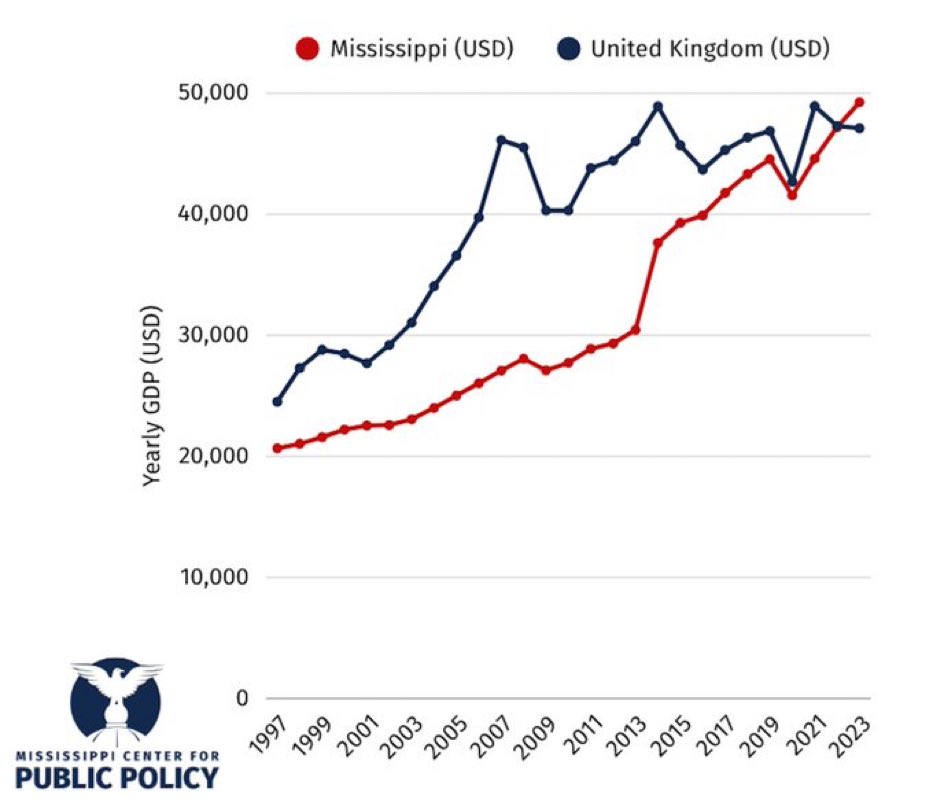
How Mississippi overtook the UK. Free markets work.
English
@PhilWMagness I’ve been to the house Marx was born at in Germany, but I was 13 and it wasn’t a girl so I didn’t care.
English
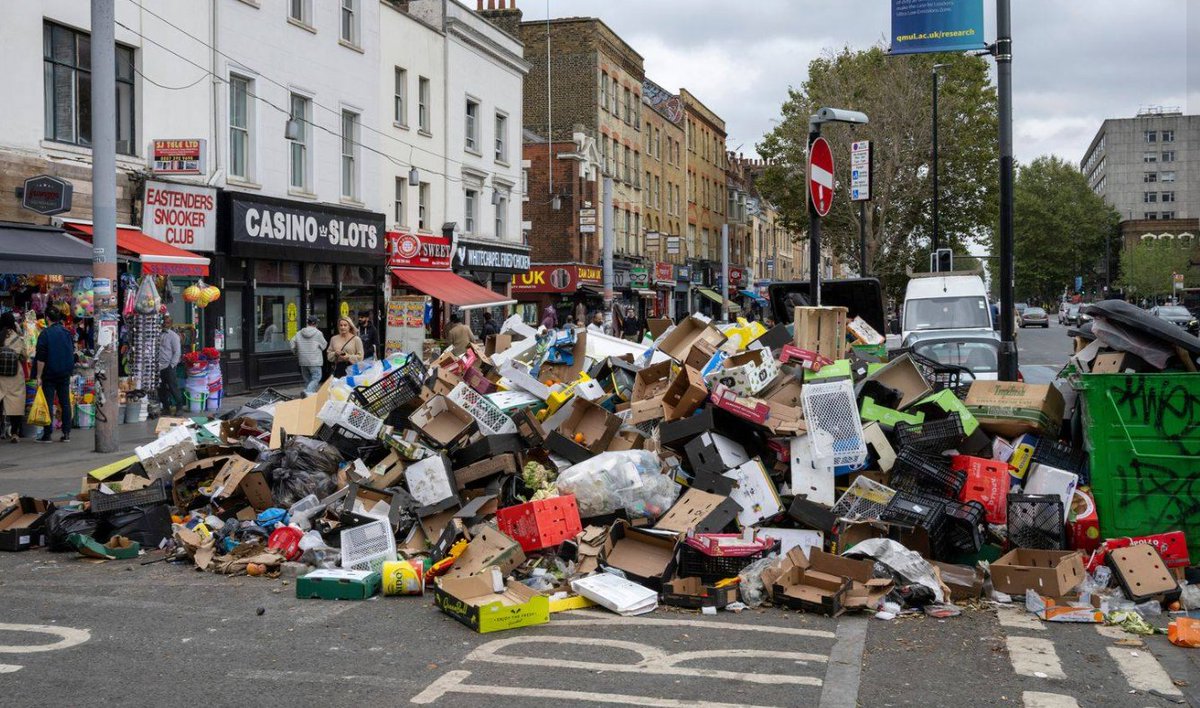
On my various trips to the UK I have seen Adam Smith's house and John Maynard Keynes's house. The next one I need to check off: Karl Marx's house.
English
Chris Calton retweetledi

More than 140,000 fake citations across four research repositories were identified in papers and preprints published in 2025 alone
go.nature.com/4uH7o54
English
Chris Calton retweetledi

I also started studying chess (partly for fun and partly for brain exercise, since my grandparents all got dementia, though I still have some time before I need to worry about that.
But yes, there is a 2019 study title “chess practice as a protective factor for dementia” that supports this strategy.
English

I am slightly neurotic about being in my 50s -- I still have so much I want to do, and I want to stay in the best health I can. I also don't want my brain capacity to deteriorate.
So I ask you, dear X people, whether there's any scientific basis for what I'm doing for the ol' noggin.
My approach is this: keep my brain active in a bunch of different ways. So not just in my daily reading and writing, but also in learning a musical instrument, studying great chess games (I'm working my way through what Bobby Fischer called his 60 memorable games), and learning a foreign language.
Yes, of course a language has practical use, but just as important to me is that it gives my brain a different kind of workout from anything else I do.
I have no ironclad proof that this will lower my chances of Alzheimer's. But it makes sense. Opinions?
English
@brandan_buck Absolutely not. Paperback books are far more comfortable to read.
English

Chris Calton retweetledi

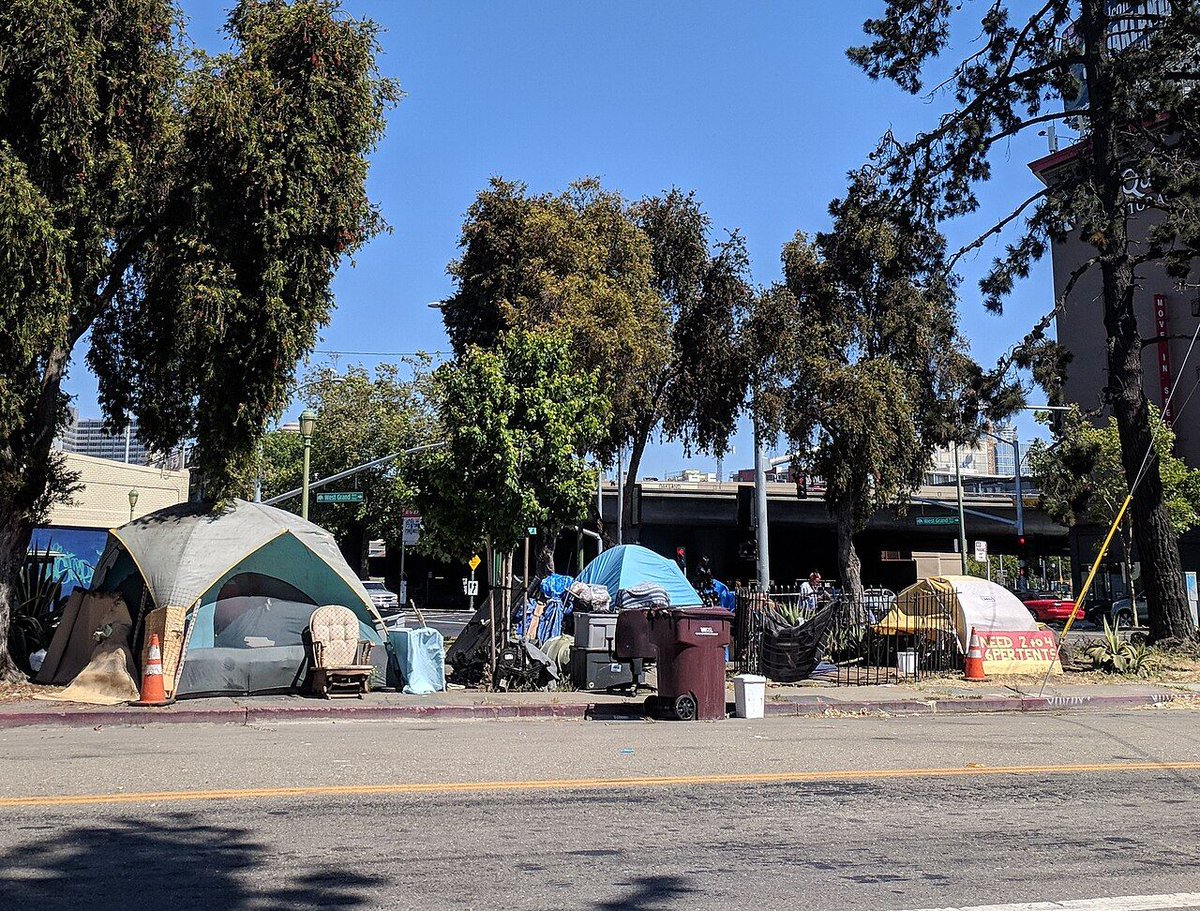
Housing First promised to reduce homelessness and lower public costs. Instead, homelessness spending has exploded while chronic homelessness continues to rise.
A new essay contrasts “Million-Dollar Murray,” the famous case used to justify Housing First, with “Million-Dollar Draper,” a fentanyl addict in San Francisco whose subsidized housing has done little to address the addiction and medical crises driving repeated hospitalizations at taxpayer expense. | @ChrisCalto91066
English
This is an astonishingly bad take on history.
"Prohibition failed because in its later years . . ."--Year 2. We're talking about year 2 in this context.
The corruption you describe in that paragraph supports my point, not yours. Corruption follows money. It always has.
Al Capone's tax evasion conviction was a means of enforcing prohibition laws. It made it easier to get a conviction because it's difficult to make things stick to people higher up on the totem pole in organized crime. This isn't for lack of enforcement, it's because effective enforcement is nigh impossible when dealing with highly lucrative black markets.
Lower-level bootleggers got arrested all the time, but they're easily replaceable, and incarceration rates rose dramatically during prohibition. Historian Lisa McGirr wrote an entire book demonstrating how alcohol prohibition gave birth to the foundation of the carceral state because it was the first period of significant prison expansion as the federal and state governments had to do something about overcrowding.
"The heels of the great depression" was a boom economy. They did not face resource constraints, even after the crash. The Bureau of Prohibition's annual budget was initially $4.4 million but it peaked at $13 million in the depression years (and the Coast Guard spend another $13 million on trafficking enforcement on the waters. State and local governments also spent significant sums enforcing prohibition.
"wildly profitable" and "contributes to secondary crime" again supports my point, not yours.
I have no clue how you reached the conclusion that "prohibition did work." That statement conflicts with information you actually provided in the post, as well as a wealth of evidence you ignore, such as
(1) the fact that alcohol consumption spiked back up to normal levels after 1921
(2) the fact that the consumption of harder liquors increased dramatically during prohibition and fell back down after repeal
(3)the fact that both bootleggers and the government poisoned the alcohol supply, which increased potency and led to nasty side effects. Go do a search for "rum deaths" on newspapers(dot)com and you can easily see how much more deadly alcohol became during the prohibition years.
(4) the fact that homicide rates skyrocketed during prohibition but dropped back down after repeal.
Prohibition has been studied extensively, and the evidence is pretty clear that prohibition failed enormously by literally every measure.
The "record low" rate of alcohol consumption today is still pretty much within the normal range historically. In 2025, 54% of Gallup respondents said they consumed alcohol, which breaks the 1958 record of 55% and the 1989 record of 56%. The results of this survey fluctuate every year, but we have not yet seen any kind of unprecedented drop in consumption.
The jobs created by the alcohol industry are irrelevant to our debate over the effects of prohibition.
"The amount of alcohol related tragedies occur each year is not worth it in the long run,"--this is not an argument, it's a blind assumption that prohibition will have the effect of reducing these tragedies, and my entire argument (which is actually based on evidence) is that prohibition has historically only ever exacerbated tragedies related to alcohol (and drugs).
You're falling for the classic fallacy of judging policy by its intent, rather than its outcomes. The world may be a much better place if nobody drank alcohol, but prohibition simply does not provide that outcome. It only leads to harmful unintended consequences.
English

So let's break it down now.
Prohibition failed because in its later years, so many of the local mayors, judges, cops, etc were being bribed by the bootleggers (due to how much money they was allow to generate) that local government refused to cooperate with federal government. It was so bad, police were acting as private security to some bootleggers to raid OTHER bootleggers as payroll. Police/politicians were making 2x-5x annual salary doing this.
It's also important to remember Al Capone was never even indicted on any prohibition or violent crimes. He was convicted of TAX EVASION. Because they thought a jury would either be paid off or unsupportive of a prohibition violation charge.
It's also important to remember the period of its repeal was right on the heels of the great depression. So federal government said well at this time, we don't have the resources to fight this, and since it's
A. An unpopular restriction
B. Wildly profitable
C. Contributing to secondary crime
We will cut the middlemen syndicates, get revenue via taxes, and garner public support.
So again, prohibition *did* work. There's no caveat about that. It stopped working solely due to not enforcing the law and allowing it to grow to an insane level. Aggressively pursuing and punishing corruption would have prevented its growth.
None of these influencing factors would be an issue today. The industry is at an all time low because gen Z doesn't like alcohol. The jobs it creates is negligible especially in an AI age. And the amount of damage alcohol related tragedies occur each year is not worth it in the long run
There parallels to be drawn from this to modern immigration issues but that's another topic.
English

NEW: Michigan man starts bawling as he is sentenced to at least 30 years in prison for murdering his best friend on his wedding night.
24-year-old Michigan James Shirah killed his friend and groomsman Terry Taylor, 29, by deliberately hitting him with an SUV.
Shirah and his wife, Savannah Collier, had exchanged vows just hours before the incident.
Shirah had reportedly been drinking during the day and later got into an argument with Taylor. He then left and returned with the car, hitting Taylor.
Collier pleaded guilty to one count of accessory after the fact.
Shirah was sentenced to at least 30 years in prison for second-degree murder and has to pay $334 in fines.
English
@Yubie0 @CollinRugg Oh that is more clear, thank you.
The answer is that they did. Many cops were on the take, of course, but that happens with prohibition. Nonetheless it was aggressively enforced, and this is pretty common knowledge. How do you not know this? Have you never heard of Al Capone?
English
@ChrisCalto91066 @CollinRugg Let me be more clear then: why did law enforcement not aggressively pursue the prosecution of bootleggers in the later years of prohibition prior to its repeal.
English
@Yubie0 @CollinRugg Prohibition always looks like it works immediately because it takes time for markets to adjust. But it always leads worse outcomes. And your question uses the passive construction so it’s not clear who is supposed to be doing the “pursuing.”
English
@ChrisCalto91066 @CollinRugg So it did work initially, lets keep this going. Why were black markets not aggressively pursued
English
@Yubie0 @CollinRugg There was a drop in the first year of prohibition before drinking rose back up after black markets filled the void. The difference was now the alcohol trade came with a significant spike in violent crime from bootleggers and black market alcohol became more dangerous.
English
@ChrisCalto91066 @CollinRugg More or less than when it was wholesale commercially available? I eagerly await your conclusion.
English
@Yubie0 @CollinRugg This is going to blow your mind, but people actually still got drunk all the time during prohibition.
English
@CollinRugg Smoldering hot take: Alcohol should be illegal again. Bring back prohibition.
Nothing good in history has ever come from someone being drunk.
Why would you allow a retarded or ill person to ingest something that makes them more retarded and ill?
English
America’s 70+ disastrous regime changes have given us a wealth of useful experience to ensure that this one will be different.
John Bolton@AmbJohnBolton
There has to be regime change in Iran. Anything that the current regime agrees to is just a piece of paper that they will ignore. We’ve put terrific pressure on the regime, let’s keep going.
English
@asymmetricinfo Hantavirus doesn’t spread person-to-person, but science doesn’t matter to petty authoritarians, I guess.
English
People who want to blow off Hantavirus because COVID turned out to be no big deal: COVID had a fatality rate of 1%, concentrated among the elderly. Hantavirus has an incubation period of up to 8 weeks and kills 30-40% of people who show symptoms. Whole different beast. It’s not pandemic yet and probably won’t be, but if it were, the rational action would be—lockdown
English
What’s the logic behind imposing lockdowns for a virus that does not spread person-to-person, other than simply to exercise control over others?
Megan McArdle@asymmetricinfo
People who want to blow off Hantavirus because COVID turned out to be no big deal: COVID had a fatality rate of 1%, concentrated among the elderly. Hantavirus has an incubation period of up to 8 weeks and kills 30-40% of people who show symptoms. Whole different beast. It’s not pandemic yet and probably won’t be, but if it were, the rational action would be—lockdown
English
Chris Calton retweetledi

Ronald Reagan signed CEQA in 1970 to require environmental reviews for government projects. A judge expanded it to cover private housing. By 1976, California produced four times as many environmental impact reports as the entire federal government. @ChrisCalto91066
English
@rushicrypto I’d rather Jeff Bezos get another yacht than to give even more money to America’s war machine. But if you love dropping bombs on children on the other side of the globe, your desire to raise taxes on the rich makes sense.
English
