Christoffer Baustad Nilsen 🐈‍

6.5K posts

Christoffer Baustad Nilsen 🐈‍ banner
Christoffer Baustad Nilsen 🐈‍

Christoffer Baustad Nilsen 🐈‍

@ChristofferBN

Sisyphus? Give the man a hoop and a winch! // Substack: https://t.co/9Ev7S1vig2
Norway Katılım Mayıs 2013
445 Takip Edilen581 Takipçiler
Kiwi·in·Oz
Kiwi·in·Oz@kiwi_in_oz_·
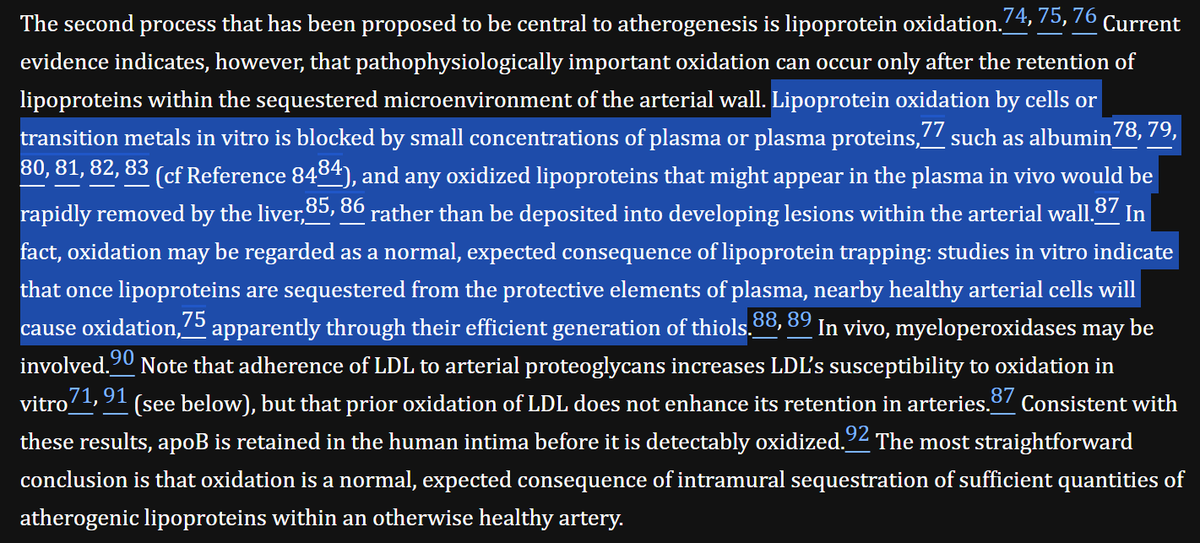
@cremieuxrecueil Which LDL are you referring to? The large bouyant LDL, or the small oxidised LDL?
English
3
0
6
825
Crémieux
Crémieux@cremieuxrecueil·
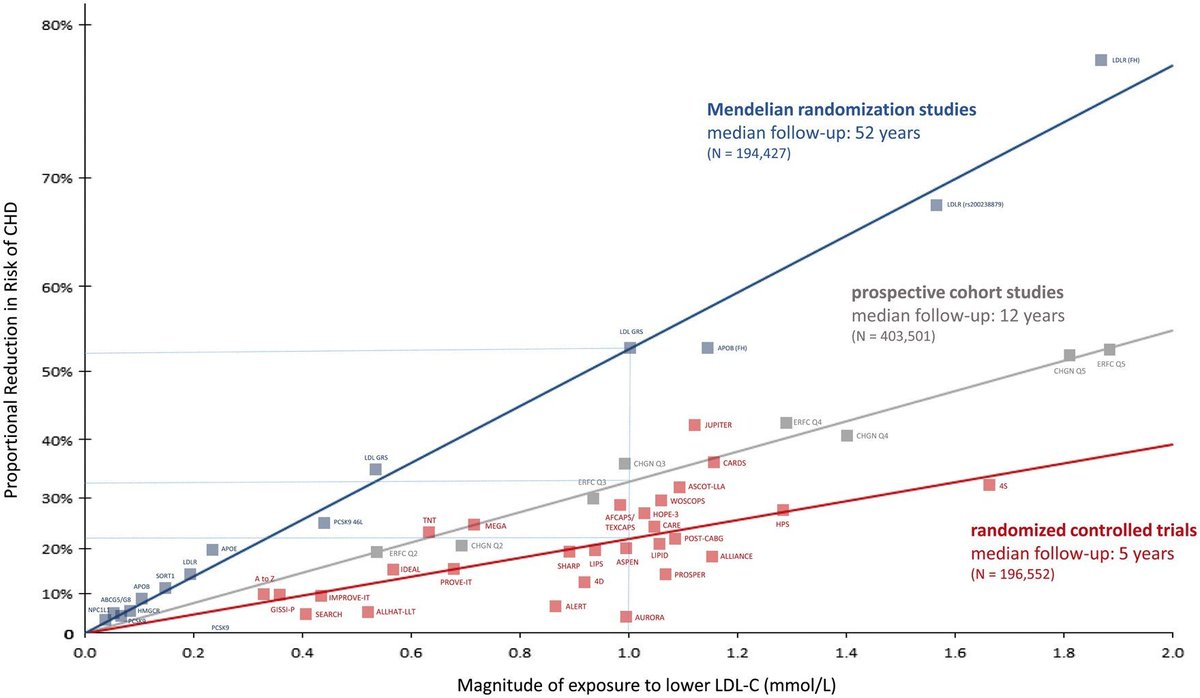
Lowering LDL will extend lifespans. The trials, the genetic studies, and even the prospective cohort studies all agree that the more you lower LDL, the greater the reduction in your risk of heart disease. This is one of the clearest chronic disease prevention findings there is.
Crémieux tweet media
Crémieux@cremieuxrecueil

This is good! More people should be on statins. They are basically a wonder-drug. They have very few side effects and almost no serious ones, and they deliver huge reductions in cardiovascular risk and extension in lifespans, for $2 to $10 per month.

English
71
102
836
184.6K
Christoffer Baustad Nilsen 🐈‍
"The use of ALA labelled with radioisotopes suggested that with a background diet high in saturated fat conversion to long-chain metabolites is approximately 6% for EPA and 3.8% for DHA. With a diet rich in n-6 PUFA, conversion is reduced by 40 to 50%." pubmed.ncbi.nlm.nih.gov/9637947/
English
0
0
1
106
Christoffer Baustad Nilsen 🐈‍ retweetledi
Crémieux
Crémieux@cremieuxrecueil·
If mechanistic reasoning was sufficient to understand drugs, medicine, and diet, then drugs would not fail in expensive clinical trials. Yet they do in >90% of cases, despite always having a mountain of mechanistic and preclinical evidence to support them.
English
32
61
814
74.9K
Christoffer Baustad Nilsen 🐈‍ retweetledi
Dr Andrew Greenland
Dr Andrew Greenland@DrAGreenland·
This is an important signal, but it needs careful framing rather than polemics. Statins do robustly reduce ASCVD risk via LDL lowering - that’s not in dispute. But they are pleiotropic drugs, and pleiotropy cuts both ways. There is now reproducible human data showing certain statins (including atorvastatin) reduce circulating GLP-1 and can worsen glycaemic control in a subset of patients - consistent with the well-described increased diabetes risk seen in large meta-analyses. That doesn’t “invalidate” statins, but it does matter clinically, especially in insulin-resistant or prediabetic patients. In practice, this argues for phenotype-guided therapy, not dogma: • ASCVD risk decrease via LDL reduction • Metabolic risk may increase in some • GLP-1 signalling, insulin sensitivity, muscle symptoms, and gut effects deserve monitoring - not omission Good medicine isn’t pro- or anti-statin. It’s about weighing net benefit for the person in front of you, adjusting dose, drug choice, timing, and co-interventions (diet, exercise, sometimes GLP-1s themselves). Transparency about trade-offs strengthens trust - it doesn’t weaken evidence.
English
0
1
3
956
Christoffer Baustad Nilsen 🐈‍ retweetledi
Steve Stewart-Williams
Steve Stewart-Williams@SteveStuWill·
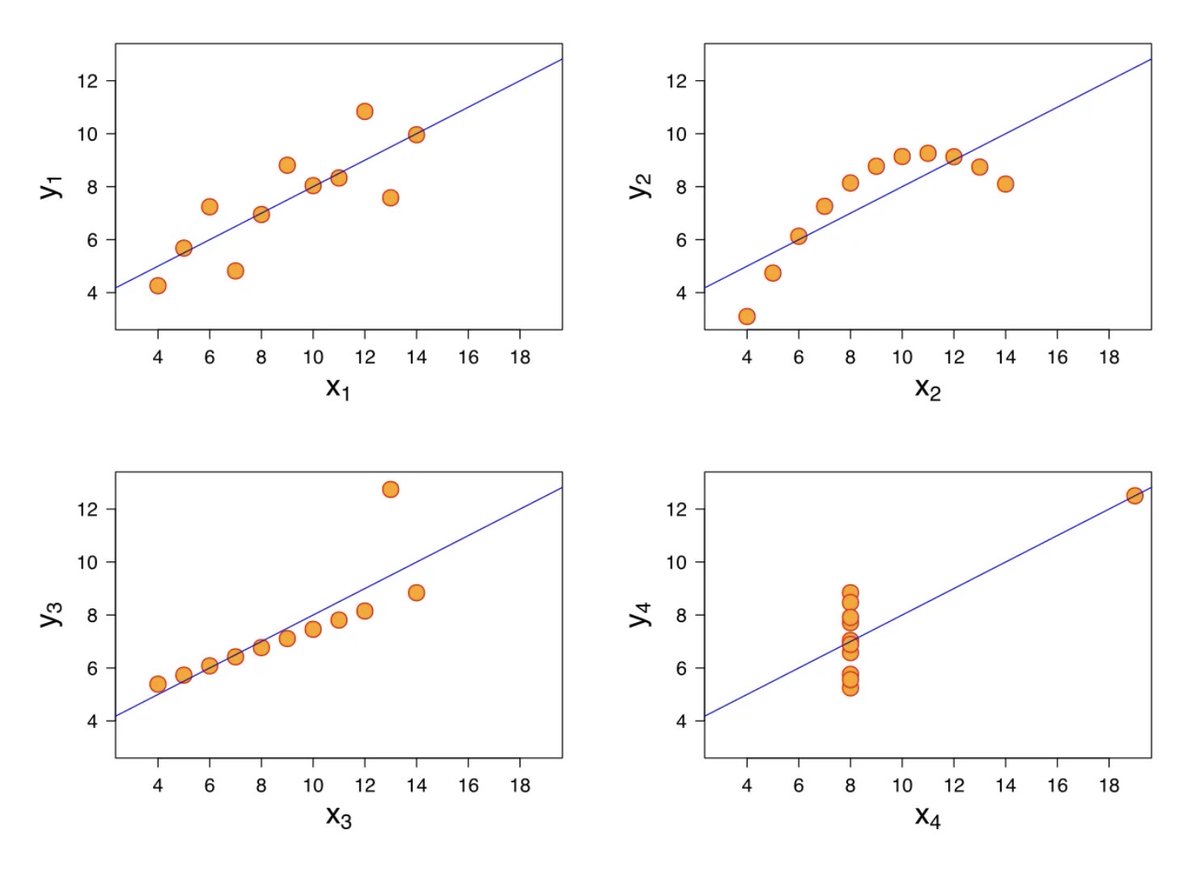
Your regular friendly reminder: These four datasets all have the same mean, median, and variance. Moral of the story: Always visualize your data! [Link below.]
Steve Stewart-Williams tweet media
English
108
1.1K
10.6K
327.6K
Christoffer Baustad Nilsen 🐈‍ retweetledi
Dr Sudhir Kumar MD DM
Dr Sudhir Kumar MD DM@hyderabaddoctor·
Why does ApoB outperform LDL-C, triglycerides & TG:HDL-C ratio with regards to predicting future risk of heart attack and stroke? 1. ApoB directly counts atherogenic particles ▪️Each atherogenic lipoprotein particle (LDL, VLDL, IDL, Lp(a)) carries exactly one ApoB molecule. ▪️ApoB therefore reflects the number of artery penetrating particles, not just the cholesterol content. ▪️Atherosclerosis is particle-driven, not cholesterol-mass driven. 2. LDL-C measures cholesterol, not particle number ▪️LDL-C quantifies how much cholesterol is inside LDL particles. ▪️Two individuals can have the same LDL-C but very different numbers of LDL particles. ▪️Higher particle number → more arterial wall entry → higher risk. ▪️ApoB captures this risk; LDL-C often misses it. 3. Small, dense LDL is fully captured by ApoB ▪️Small, dense LDL particles carry less cholesterol per particle. ▪️LDL-C underestimates risk when LDL particles are small and numerous. ▪️ApoB counts them accurately, regardless of size. 4. Triglycerides are an indirect and unstable marker ▪️Triglyceride levels fluctuate with: Recent meals, Alcohol intake, Exercise, and Insulin sensitivity ▪️ApoB is biologically stable and reflects long-term atherogenic burden. 5. TG:HDL-C ratio is a surrogate, not a causal measure ▪️TG:HDL-C ratio estimates insulin resistance and metabolic risk. ▪️It does not directly measure atherogenic particle burden. ▪️ApoB directly quantifies the particles that cause plaque formation. 6. ApoB integrates all atherogenic lipoproteins Unlike LDL-C, ApoB includes LDL, VLDL remnants, IDL, and Lipoprotein(a). These particles all enter the arterial wall and drive plaque growth. 7. ApoB predicts risk even when LDL-C is “normal” ▪️Many cardiovascular events occur in people with “acceptable” LDL-C. ▪️Discordance scenarios: Normal LDL-C + high ApoB → high residual risk ▪️ApoB consistently predicts events in these individuals. 8. Superior risk prediction across populations ApoB outperforms LDL-C and non-HDL-C in: Diabetes, Obesity, Metabolic syndrome, Chronic kidney disease, and South Asians (high particle number at lower LDL-C) 9. Treatment response tracks better with ApoB ▪️Statins, ezetimibe, and PCSK9 inhibitors reduce events in proportion to ApoB reduction, not LDL reduction. ▪️Residual risk correlates with residual ApoB. 10. Atherosclerosis is a particle-retention disease ▪️The initiating event in plaque formation is retention of ApoB-containing particles in the arterial wall. ▪️ApoB is therefore mechanistically causal, not just associative. ✅Summary ApoB measures the number of atherogenic particles, the true drivers of atherosclerosis, making it the most accurate single predictor of future heart attack and stroke. Dr Sudhir Kumar @hyderabaddoctor
English
26
67
362
39.5K
Christoffer Baustad Nilsen 🐈‍ retweetledi
Pablo Corral MD
Pablo Corral MD@drpablocorral·
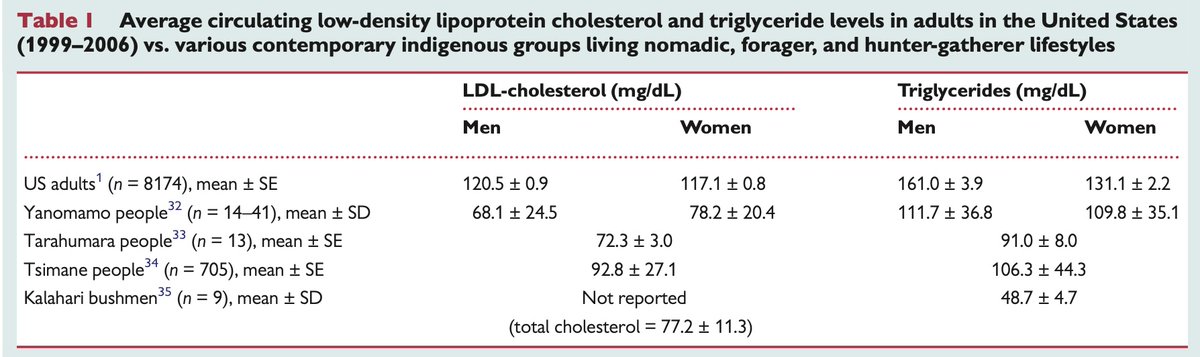
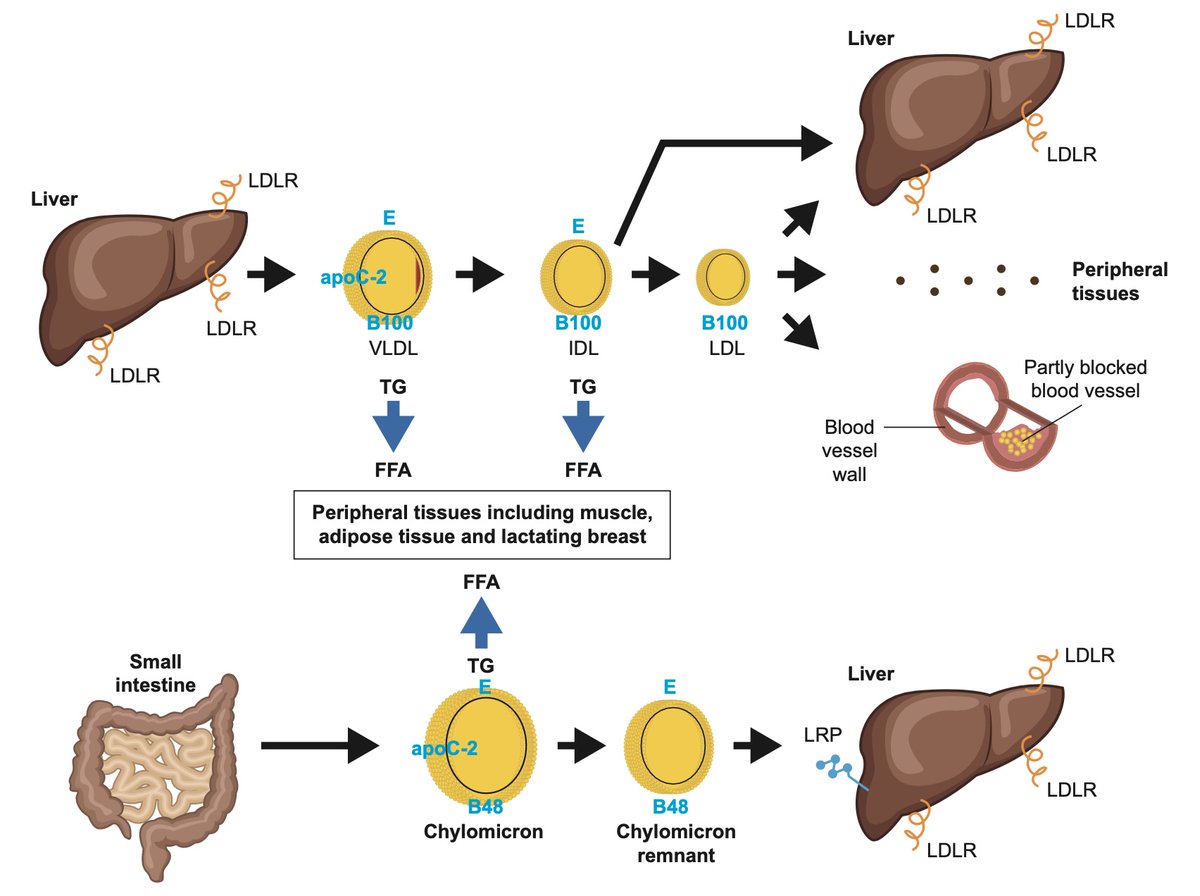
🤔 Why Is Hypercholesterolaemia So Prevalent? 🧬An Evolutionary Perspective 🔍 Key Points 👉 LDL is an evolutionary by-product, not a purposeful cholesterol-delivery system. It arises from VLDL—our ancestral engine for energy transport and survival during famine. 👉 Our genes were shaped for scarcity, not abundance. Traits that once promoted energy efficiency now drive hypercholesterolaemia, obesity, and ASCVD in high-calorie, low-activity societies. 👉 Ancestral LDL-C levels were ~50–70 mg/dL, far below today’s “normal” values (~120 mg/dL), and much closer to the levels associated with minimal atherosclerosis. 👉 APOE4 is the quintessential thrifty allele—adaptive for energy retention in harsh environments, maladaptive in modern lifestyles. 👉 Natural selection won’t correct this problem. Hypercholesterolaemia causes disease after reproductive years, so evolution has no incentive to eliminate it. 👉 Infants’ LDL-C levels (20–40 mg/dL) reflect our physiological baseline, supporting the safety—and evolutionary coherence—of aggressive LDL-lowering today. 👆Takeaway Hypercholesterolaemia isn’t a coincidence—it’s a mismatch. Our Stone-Age biology meets a modern environment it wasn’t built for. Only prevention, lifestyle, and targeted lipid-lowering therapy can bridge that evolutionary gap. 🔗academic.oup.com/eurheartj/arti… @society_eas @ehj_ed
Pablo Corral MD tweet mediaPablo Corral MD tweet media
English
19
63
213
25.3K
Christoffer Baustad Nilsen 🐈‍ retweetledi
Michael Mindrum, MD
Michael Mindrum, MD@MichaelMindrum·
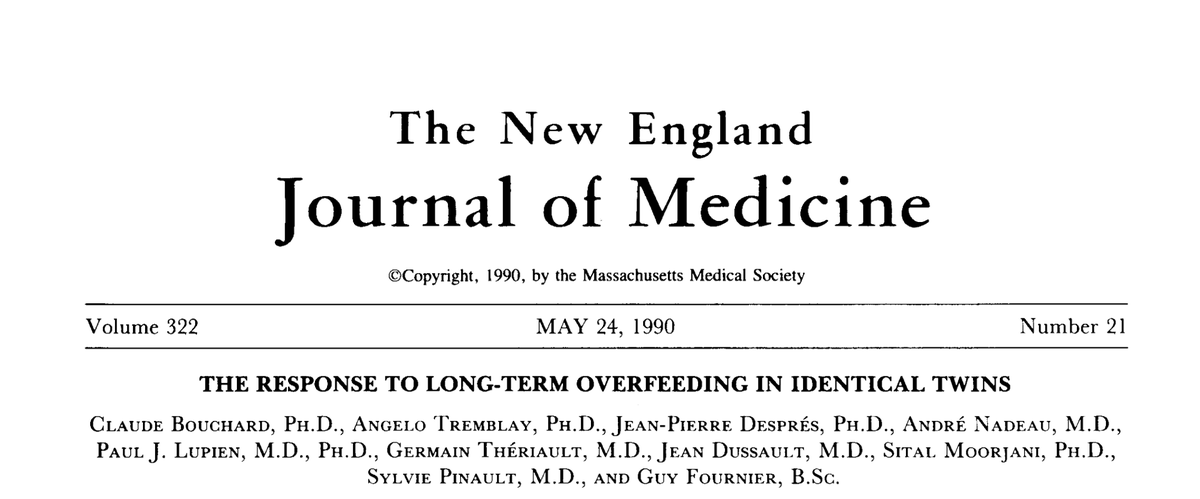
1. If you & your friend (same size, age, weight) ate the same 1,000-calorie surplus every day for 3 months, will you gain the same amount of weight? A landmark experiment on identical twins helps us answer this question and that our 🧬 direct the body's response to overeating 🧵
Michael Mindrum, MD tweet media
English
40
184
1.3K
448.1K
Christoffer Baustad Nilsen 🐈‍ retweetledi
Richard H Thaler
Richard H Thaler@R_Thaler·
Perhaps the greatest failure of the economics profession has been our inability to sell the idea that we should tax "bads" like congestion and pollution. One reason building is so expensive is that we have so many regulations instead of just prices.
Erik Brynjolfsson@erikbryn

Source: bloomberg.com/news/articles/…
English
69
201
1.5K
299.9K
Marit Kolby
Marit Kolby@MaritKolby·
"Higher intake of high-fat cheese and high-fat cream was associated with a lower risk of all-cause dementia, whereas low-fat cheese, low-fat cream, and other dairy products showed no significant association" pubmed.ncbi.nlm.nih.gov/41406402/
English
2
1
17
678
Crémieux
Crémieux@cremieuxrecueil·
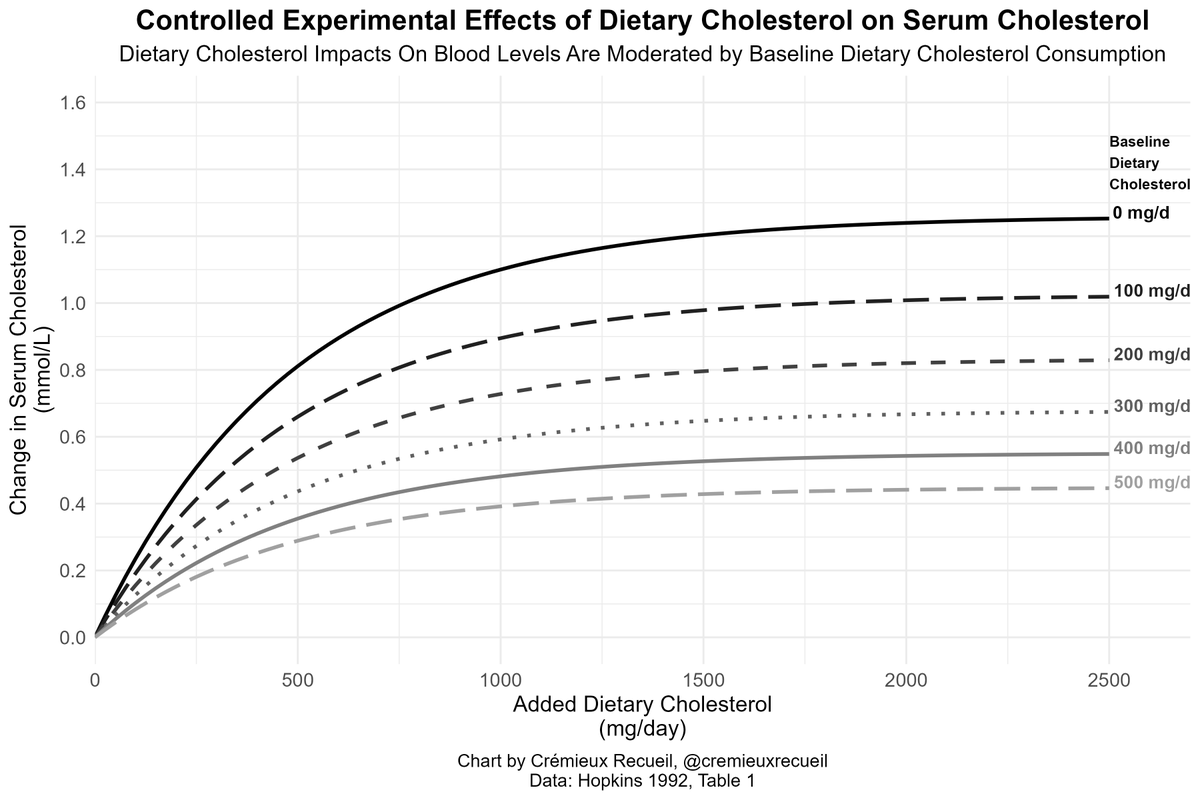
The fact that your baseline dietary cholesterol intake affects the effects of dietary cholesterol intake has confused so many people into thinking nonsense things like "eggs don't raise your cholesterol". This even fools many researchers, despite this being known for decades!
Crémieux tweet media
English
40
14
263
42.9K