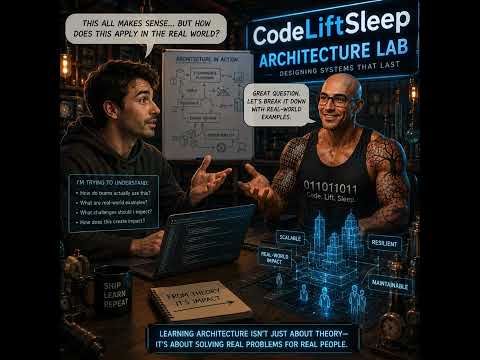
CodeLiftSleep
1.6K posts

@codeliftsleep
Author 'Grokking Software Architecture' - Manning | Sr. SWE @ Blackboard | SnorkelAI Expert Contributor | Code. Lift. Sleep. Repeat.


Hmm...I think 2 things: 1) It is filling in gaps that have been around for a long time between where college/bootcamps leave off and where companies expect you to be when you start out, and that gap is widening at a faster and faster rate. 2) It's written in a fun, engaging tone that's accessible to the level they are at and doesn't require them to have previous knowledge. What's being taught can be applied literally the day they read it and every day moving forward.


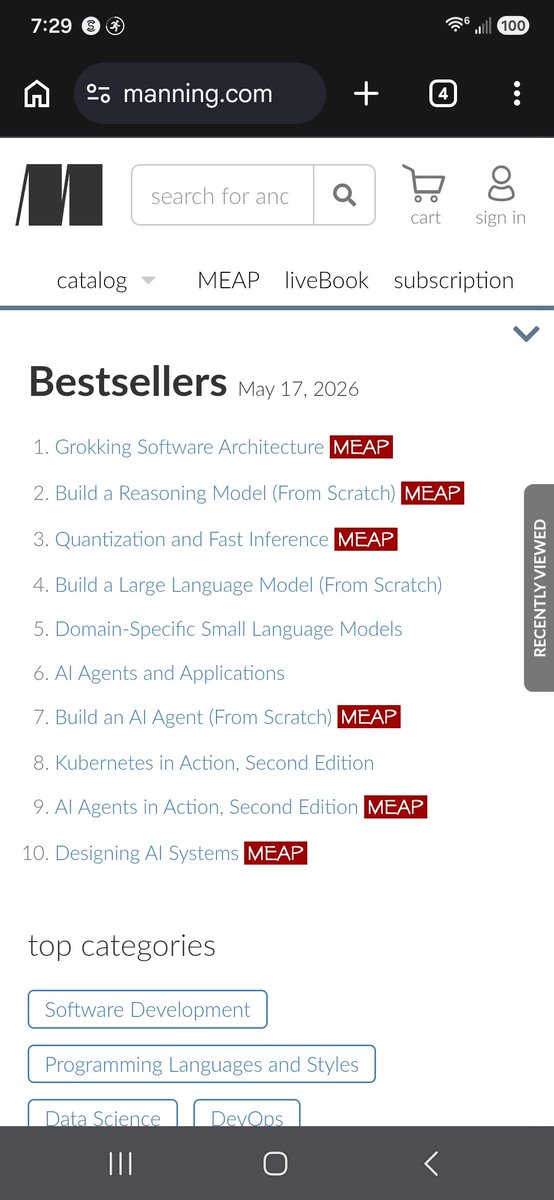
So humbled and grateful that my book, Grokking Software Architecture, for the 2nd straight week tops the Bestseller list at @ManningBooks With the Memorial Day sale going on through today, it would be a great time to get a great book at 50% off! hubs.la/Q04dH6BX0


If I had 6 months to become an Applied AI Engineer. I’d do this. Stage 1: Python + Production APIs FastAPI, async, error handling, webhooks, REST/GraphQL, third-party SDKs. Stage 2: LLM Fundamentals for Production Tokens, context windows, model routing, embeddings, cost/latency tradeoffs. Stage 3: Prompt Engineering + Structured Outputs System prompts, few-shot chains, Pydantic/JSON validation, prompt versioning, unit evals. Stage 4: RAG + Knowledge Grounding Chunking strategies, hybrid search, rerankers, vector DBs, metadata filtering, citation tracking. Stage 5: AI Workflows + Orchestration Tool calling, state machines, human-in-the-loop, retry logic, fallback chains, session memory. Stage 6: Build Production-Ready Apps Domain-specific copilots, automation pipelines, streaming UIs, graceful degradation, rate limiting. Stage 7: Evaluation + Reliability Accuracy scoring, hallucination detection, RAGAS/DeepEval, regression testing, A/B output validation. Stage 8: AI Infrastructure + Optimization vLLM, Ollama, quantization, KV caching, response streaming, token cost tracking, edge deployment. Stage 9: Deployment + Observability Docker, CI/CD, cloud hosting, distributed tracing, structured logging, alerting, canary releases. Stage 10: AI Security + Guardrails Input/output filtering, prompt injection defense, PII redaction, compliance checks, sandboxing. Stage 11: Open Source + Portfolio Ship end-to-end apps publicly, write architecture docs, record demo walkthroughs, publish eval reports. Stage 12: Apply Applied AI Engineer, GenAI Developer, AI Integration Engineer, LLM Solutions roles. Most people stay stuck watching tutorials. Builders get hired.


Q: How are job postings for software engineers rising rapidly despite AI agents automating coding? A: Because there’s far more code to manage than ever before. We’re already seeing a 14x YoY increase in GitHub commits, and it’s accelerating. AI has dramatically lowered the cost of writing code, so it’s now being used across far more businesses, applications, and use cases. We’re at the beginning of a massive productivity boom driven by the proliferation of bespoke software throughout the entire economy. Coding has been AI’s breakout use case this year. The fact that it’s increased demand for software engineers — rather than decreased it — should call into question the entire “AI will cause mass job loss” narrative.


Best practices only get you so far. Architecture decisions usually live in the gray areas. If you want sharper instincts around tradeoffs, system design, modernization, and distributed architecture, gaining that foundation is crucial. These Manning books are a strong place to start (links in the thread): • Grokking Software Architecture by @codeliftsleep • Kafka for Architects by Katya Gorshkova • Architecture Modernization by Nick Tune and @jgperrin • Microservices Patterns, Second Edition by @crichardson All 50% off in our Memorial Day sale. If you prefer access to everything, Manning Online is 20% off through Monday too. liveProjects and liveVideos are still on sale for $10 too. Find everything at hubs.la/Q04hHYx60

Best practices only get you so far. Architecture decisions usually live in the gray areas. If you want sharper instincts around tradeoffs, system design, modernization, and distributed architecture, gaining that foundation is crucial. These Manning books are a strong place to start (links in the thread): • Grokking Software Architecture by @codeliftsleep • Kafka for Architects by Katya Gorshkova • Architecture Modernization by Nick Tune and @jgperrin • Microservices Patterns, Second Edition by @crichardson All 50% off in our Memorial Day sale. If you prefer access to everything, Manning Online is 20% off through Monday too. liveProjects and liveVideos are still on sale for $10 too. Find everything at hubs.la/Q04hHYx60


C++ is not for freshers, core ML is not for freshers, DevOps is not for freshers, Web3 is not for freshers and now even web dev is apparently not for freshers. Every “entry level” role somehow needs 2-3 years of experience already. What exactly do companies want people to start with anymore? The market genuinely felt more accessible before AI turned every hiring expectation insane.