Collin Kettell

1.2K posts

Collin Kettell banner
Collin Kettell

Collin Kettell

@CollinKettell

Founder & CEO of Palisades Goldcorp $PALI.V, New Found Gold Corp $NFG.V $NFGC , Nevada King Gold Corp $NKG.V $NKGFF. Gold investor & enthusiast.

Katılım Ağustos 2012
479 Takip Edilen4.8K Takipçiler
Collin Kettell
Collin Kettell@CollinKettell·
This information is courtesy of my good friend @TheDailyGold who puts out some of the best content for the miners.
English
1
0
6
944
Collin Kettell
Collin Kettell@CollinKettell·
Last week, mining stocks were up 20%! The other three biggest one week gains in gold miners since 2002 were at the significant lows in 2008, 2016, and 2020, each marking the start of a major move up.
English
2
0
19
1.2K
Collin Kettell
Collin Kettell@CollinKettell·
@Mark_IKN Guy who makes a living peddling newsletter to retail investors calls retail investors dumb. Quick @Mark_IKN, scurry back atop your moral high ground. P.S. Thanks for the free publicity.
English
4
0
1
9.9K
Mark
Mark@Mark_IKN·
This type of stunt is specifically designed to repel anyone with mkt experience. Stocks like $PALI.v actively search for dumb retail money, they don't want seasoned mkt brains watching. If you can"t see how badly the playing field is inclined against you, so much the better(2/2)
English
2
1
11
7.4K
Mark
Mark@Mark_IKN·
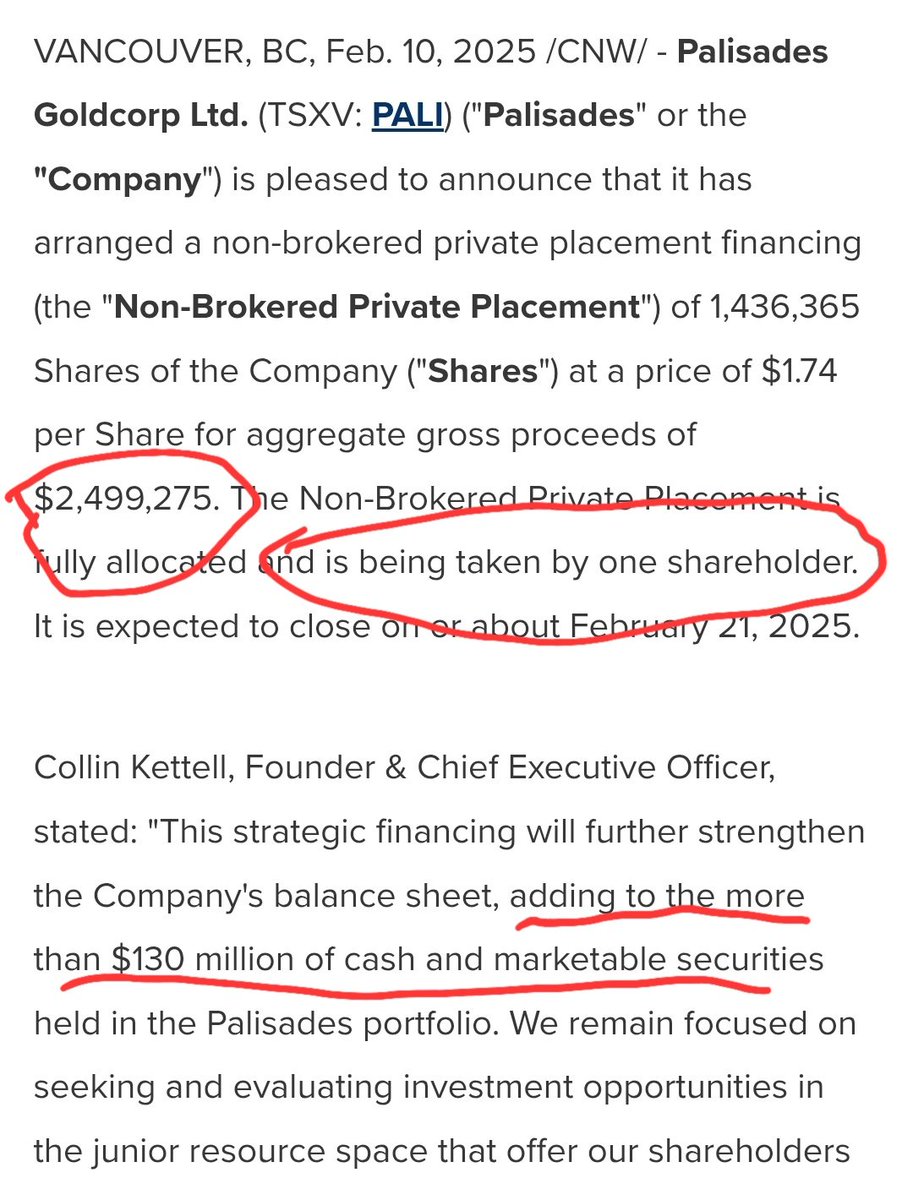
Let's "make it make sense", @CollinKettell. The reason a company with $130m in cash&mktables runs a $2.5m placement at $1.74 on a $2.04 stock for a sole investor? The gameplan benefits a chosen few & rugpulls retail at any given moment. Laughing at the suckers behind backs (1/2)
Mark tweet media
Mark@Mark_IKN

Has to be my fave comment of the week 👇👇. Ladies & gents, I give you @CollinKettell and the intellectual capacity of the modern mining CEO. Apparently, being paid by mining cos to write about mining cos is the same as being paid by readers to write on mining cos.

English
2
2
36
9.9K
Collin Kettell
Collin Kettell@CollinKettell·
@Mark_IKN Person who makes a living selling newsletters attacks newsletter for selling... make it make sense.
English
1
0
7
8.3K
Otavio (Tavi) Costa
Otavio (Tavi) Costa@TaviCosta·
If precious metals companies were a sector, they would have the highest cash flow margins in the S&P 500 index today.
Otavio (Tavi) Costa tweet media
English
26
285
1.1K
109.9K
Bill Ackman
Bill Ackman@BillAckman·
I don’t think Biden has blinked once during the entire debate. His mouth is stuck open. Can a doctor explain what is going on?
English
3K
4.5K
86.6K
11.4M
Mark
Mark@Mark_IKN·
...would be 100% virtual & interactive. I'd do online webcasts, events, Q&As, I'd spend all my time in two places, 1) Home or 2) Project. When at project i'd take videocalls 24/7 from ppl, showing them around & i'd invite one and all to visit, but >>on their own dime<< (2/2).
English
6
0
42
3.2K
Mark
Mark@Mark_IKN·
If i were a young, ambitious, up & coming CEO of a Canadian Jr exploreco in 2024, I wouldn't spend a penny (or waste a single hour) on in-person conferences, in-person marketing tours, events etc. It's dinosaur level, wastes time and money. Instead my investor outreach (1/2)...
English
7
1
39
15.1K
Collin Kettell
Collin Kettell@CollinKettell·
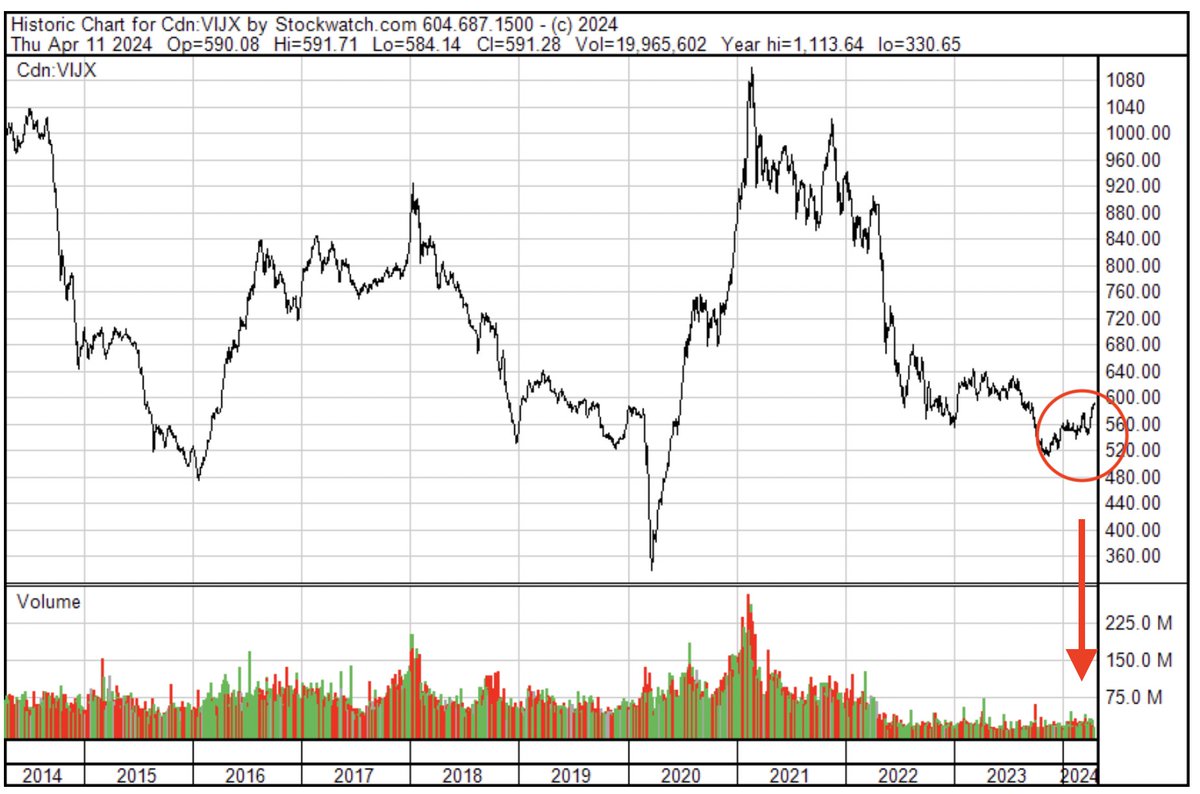
@KatusaResearch Indeed! 2 months ago investors didn’t know they wanted gold. While volumes are low in Canadian juniors today, it may be a different story a few months from now.
English
1
0
3
391
Collin Kettell
Collin Kettell@CollinKettell·
Gold is approaching $2,400 and the junior gold miners have barely moved. Get ready for a wild ride.
Collin Kettell tweet media
English
44
66
425
40.6K
Collin Kettell
Collin Kettell@CollinKettell·
@KatusaResearch US listings are not viable for a set of companies with $5-million market caps 🤣.
English
1
0
4
1K
Katusa Research
Katusa Research@KatusaResearch·
@CollinKettell Volume in Canada is non-existent. US (and intl) investors want US traded equities.
English
1
0
3
1.2K
Grizzle Bear
Grizzle Bear@grizzlebear100·
@CollinKettell Can't believe the lack of momentum on $NFG Mind you, $PALI had a nice move this week!
English
1
0
3
1.2K
Collin Kettell
Collin Kettell@CollinKettell·
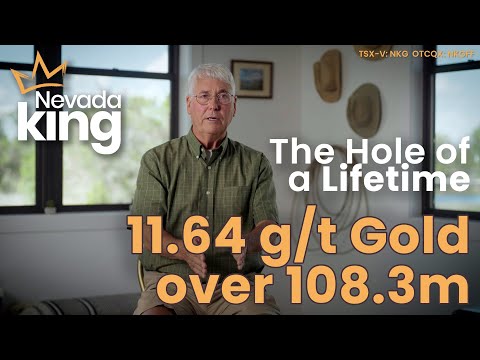
Our Atlanta Gold Mine Project is turning out to be one of the most significant discoveries in Nevada in many years and it is all thanks to a brilliant geologist I have tremendous respect for - the man in this video, Cal Herron. @NevadaKingGold $NKG.V youtu.be/Ab0ljheX7IY?si…
YouTube video
YouTube
English
2
3
17
3.4K
Collin Kettell
Collin Kettell@CollinKettell·
Some Keats magic to accompany today's move up in gold. VG just uncovered today at the trench @newfoundgold $NFGC $NFG.V
Collin Kettell tweet media
English
7
2
57
5.1K
Collin Kettell
Collin Kettell@CollinKettell·
Standing right above the spot where it all started with the father-son team who started it all, Al & Kevin Keats ⁦@newfoundgold
Collin Kettell tweet media
English
5
3
49
8.3K
Collin Kettell
Collin Kettell@CollinKettell·
@BillAckman Your thesis also seemingly supports gold. Curious if you have any thoughts on how the yellow metal will perform should the above play out?
English
1
0
2
814
Bill Ackman
Bill Ackman@BillAckman·
I believe that long-term rates, e.g, 30-year rates, will rise further from here. As such, we remain short bonds through the ownership of swaptions. The world is a structurally different place than it was. The peace dividend is no more. The long-term deflationary effects of outsourcing production to China are no more. Workers and unions’ bargaining power continues to rise. Strikes abound, with more likely to come as successful walkouts achieve substantial wage gains. Energy prices are rising rapidly. Not refilling the SPR was a misguided and dangerous mistake. Our strategic assets should never be used to achieve short-term political objectives. Now we must refill the SPR while OPEC and Russia cut production. The green energy transition is and will remain incalculably expensive. And higher gas prices will raise inflationary expectations. Just ask your average American. They see the prices at the pump and in the grocery store and don’t believe inflation is moderating. Our national debt is $33 trillion and rising rapidly. There is no sign of fiscal discipline by either party or by the presumptive presidential nominees. And each debt ceiling is an opportunity for our divided government and its most extreme actors to get media attention, and for our nation to threaten default. This is not a good way to recruit the many new buyers we need for our bonds. The government is selling hundreds of billions of bills, notes and bonds weekly. China and other foreign nations, historically major buyers of our debt, are now selling. And the QT unwind experiment has barely begun. Imagine trying to do a massive IPO where the underwriter, insiders and short sellers are all selling at once, competing to hit every bid on the way down while the analysts downgrade their ratings to ‘Sell.’ Our economy is outperforming expectations. Major infrastructure spending is beginning to contribute to economic growth and the supply of additional debt. Recession predictions have been pushed out beyond 2024. The long-term inflation rate is not going back to 2% no matter how many times Chairman Powell reiterates it as his target. It was arbitrarily set at 2% after the financial crisis in a world very different from the one we live in now. I bumped into the CIO of one of the world’s largest fixed income asset managers the other night and asked him how it was going. He looked like he had had a tough day. He greeted me by saying: ‘There are just too many bonds’ — a veritable tsunami of new issuance each week. I asked him what he was going to do about it. He said: ‘The only thing you can do is step away.’ I have been surprised at how low long-term rates are. I think the best explanation is that bond investors thought of 4% as a high rate of interest because rates hadn’t breached 4% for nearly 15 years. When investors saw the ‘opportunity’ to lock in 4% for 30 years, they grabbed it as a ‘once-in-their-career opportunity,’ but today’s world is very different from the one they have experienced up until now. The long-term inflation rate plus the real rate of interest plus term premium suggests that 5.5% is an appropriate yield for 30-year Treasurys. And query whether 0.5% is a sufficient real long term rate in an increasingly risky world. And the technicals could cause yields to go even higher, particularly in the short term. We saw the beginnings of that today. It wasn’t that long ago that a previous generation thought five percent was a low rate of interest for a long-term, fixed-rate obligation. But I could be wrong. AI might save us.
Bill Ackman@BillAckman

I have been surprised how low US long-term rates have remained in light of structural changes that are likely to lead to higher levels of long-term inflation including de-globalization, higher defense costs, the energy transition, growing entitlements, and the greater bargaining power of workers. As a result, I would be very surprised if we don’t find ourselves in a world with persistent ~3% inflation. From a supply/demand perspective, long-term Treasurys (T) also look overbought. With $32 trillion of debt and large deficits as far as the eye can see and higher refi rates, an increasing supply of T is assured. When you couple new issuance with QT, it is hard to imagine how the market absorbs such a large increase in supply without materially higher rates. I have also been puzzled as to why the @USTreasury hasn’t been financing our government in the longer part of the curve in light of materially lower long-term rates. This does not look like prudent term management in my opinion. Then consider China’s (and other countries’) desire to decouple financially from the US, YCC ending in Japan increasing the relative appeal of Yen bonds vs. T for the largest foreign owner of T, and growing concerns about US governance, fiscal responsibility, and political divisiveness recently referenced in Fitch’s downgrade. So if long-term inflation is 3% instead of 2% and history holds, then we could see the 30-year T yield = 3% + 0.5% (the real rate) + 2% (term premium) or 5.5%, and it can happen soon. There are many times in history where the bond market reprices the long end of the curve in a matter of weeks, and this seems like one of those times. That’s why we are short in size the 30-year T — first as a hedge on the impact of higher LT rates on stocks, and second because we believe it is a high probability standalone bet. There are few macro investments that still offer reasonably probable asymmetric payoffs and this is one of them. The best hedges are the ones you would invest in anyway even if you didn’t need the hedge. This fits that bill, and also I think we need the hedge.


English
917
2.3K
12.1K
6.2M
Collin Kettell
Collin Kettell@CollinKettell·
@j3rryhuang Looks beautiful! Don’t forget a jacket, getting chilly this time of year.
English
0
0
1
176
Collin Kettell
Collin Kettell@CollinKettell·
@real_MikeBarnes Hey Mike, we @newfoundgold are always here to answer questions. Our “journalist” and “expert” friends here have formulated a lot of opinions but never once have spent the time to talk to us. I prefer to follow the money over people who make money by selling newsletters.
English
3
1
10
641
Mike Barnes aka Cashcosts
Mike Barnes aka Cashcosts@real_MikeBarnes·
I know we are supposed to believe that $NFGC Newfound Gold is supposed to be a scam of some sort bc the people are "bad" but it's really hard to argue with these continued spectacular drill results IMO.
English
10
1
11
5.4K
Tommy Humphreys
Tommy Humphreys@tommyhump·
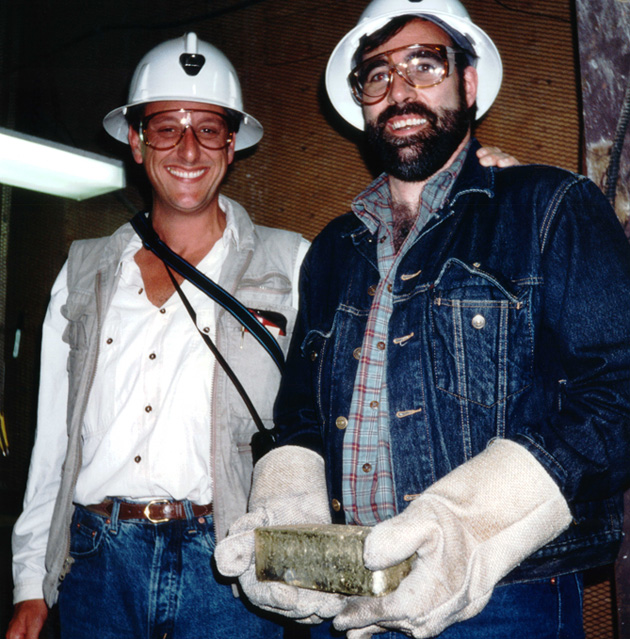
How to Strike it Rich in Mining without Discovering Anything This is the amazing story of how a tiny junior stock achieved a 27000% return, soaring from $0.10 to $27 in just 3 yrs. The firm became so popular that a founder was even approached for autographs in Germany apparently. But only a few yrs before, the founders were so drained from mining that they relinquished control of a company with $25M in the bank. In the late 1980s, Ian McDonald, a stockbroker from Toronto, & Kerry Knoll, a reporter for Northern Miner, decided to try their luck in the mining industry. Despite setbacks, they eventually succeeded in building gold mines in Canada & Nicaragua. After narrowly surviving the late ‘90s mining downturn, McDonald & Knoll controlled a $2 million company called Patent Enforcement & Royalties Ltd or PEARL. In late ‘04, they invested $400K into it at $0.10 per share. PEARL quickly paid $75K to acquire Davidson, an undeveloped molybdenum deposit near Smithers, BC first discovered in 1944 with high-grade potential. PEARL also agreed to pay $950K within 150 days & a 2.75% royalty to the sellers. Molybdenum was once an overlooked metal with prices hovering around $2/lb in ‘02. Most of its supply comes as a byproduct of copper mines, & moly does not have a substitute in its industrial uses. However, by mid-05, prices were nearing $45/lb due to Chinese mine closures & capacity bottlenecks, leading to a frenzy in the market known as "Moly Mania." BLE's acquisition of Davidson was timely. The day after PEARL began trading again in early ‘05, it announced a new resource estimate which attracted a $10.3M financing (less 7% broker fee). Investors got a share at $0.60, plus a ½ warrant at $0.70 for 2 years. Now trading at $0.78, PEARL was worth $31M, & rebranded as Blue Pearl ("BLE"), after moly’s blue-grey colour. Less than a yr later, the stock reached $3.60 following positive drill results. Now Blue Pearl was worth over $120M. Then came the big moment. On Feb 27, ‘06, BLE made a deal with the privately held Thompson Creek Metals (TCM), North America’s largest moly miner. BLE paid $5M for the rights to use TCM's infrastructure to build a mill. The executives evidently got along well, as they soon began discussing a merger. On Aug 31, ‘06, BLE informed investors that it was in talks to acquire an operating company, but didn't disclose which one. Even so, BLE's shares doubled to $6.86, valuing the company at $346M. A day later, BLE announced a US $575 million bid for TCM, which included 2 mines, 2 concentrators, & other assets. UBS orchestrated a US $450M debt deal, while C$230M equity went @ $5.50 per share with a 1 yr ½ warrant at $9. In an event resembling a minnow swallowing a whale, BLE, a small pre-revenue company with just 3 full-time employees, acquired TCM, with $323 million net income in '05, for less than 2X earnings. McDonald described it as a "transmogrifying" experience for Blue Pearl, which took the name of TCM soon after. TCM's stock quickly surpassed $27, putting its valuation over $3B. As the share price skyrocketed from 10 cents in less than 3 yrs, some insiders began selling their stakes & who could blame them? - At $27, every $1 invested in @ $0.10 = $270 - Every $1 invested @ $0.60 = $64.3 with warrants - Every $1 invested @ $5.50 = $6.40 with warrants But as with many mining companies, TCM's fortunes were cyclical. By 2011, the stock traded @ $6.94 despite $116.8M Q2 earnings. Excess debt & weakening commodity prices took their toll (moly prices fell to $5 /lb in 2015), & the company was eventually acquired by Centerra Gold in 2016 with a share price of $0.64. But let's not focus on TCM's downfall. Instead, let’s remember what’s possible when skilled, ambitious entrepreneurs seize opportunities in the commodities upswing. McDonald & Knoll's shrewd investment of just $75K in a historic moly project resulted in one of the greatest returns of the cycle, securing their place in mining history.
Tommy Humphreys tweet media
English
36
163
1.3K
921.6K