Jan Nieuwenhuijs

54.3K posts

Jan Nieuwenhuijs banner
Jan Nieuwenhuijs

Jan Nieuwenhuijs

@JanGold_

Gold analyst. I mostly tweet about economics and financial markets.

Katılım Şubat 2011
1.2K Takip Edilen59K Takipçiler
Sabitlenmiş Tweet
Jan Nieuwenhuijs
Jan Nieuwenhuijs@JanGold_·
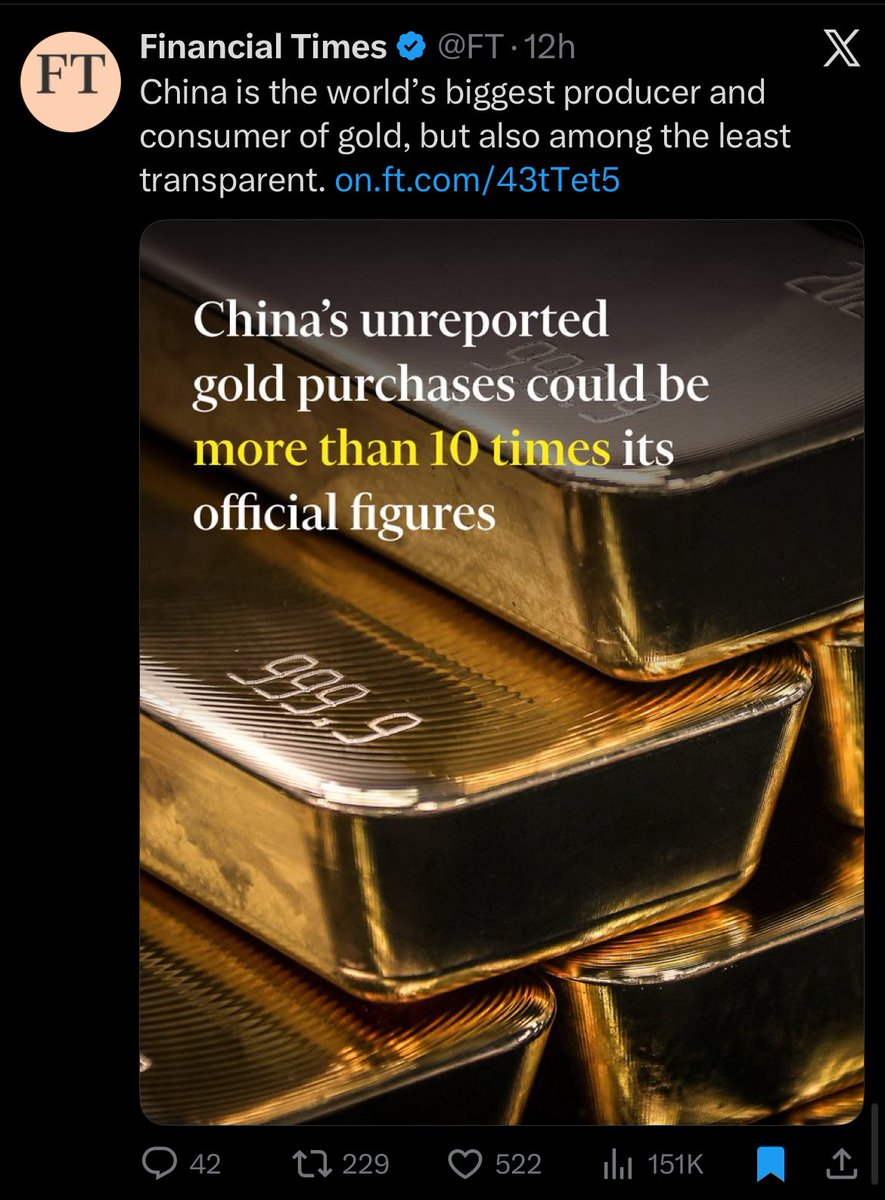
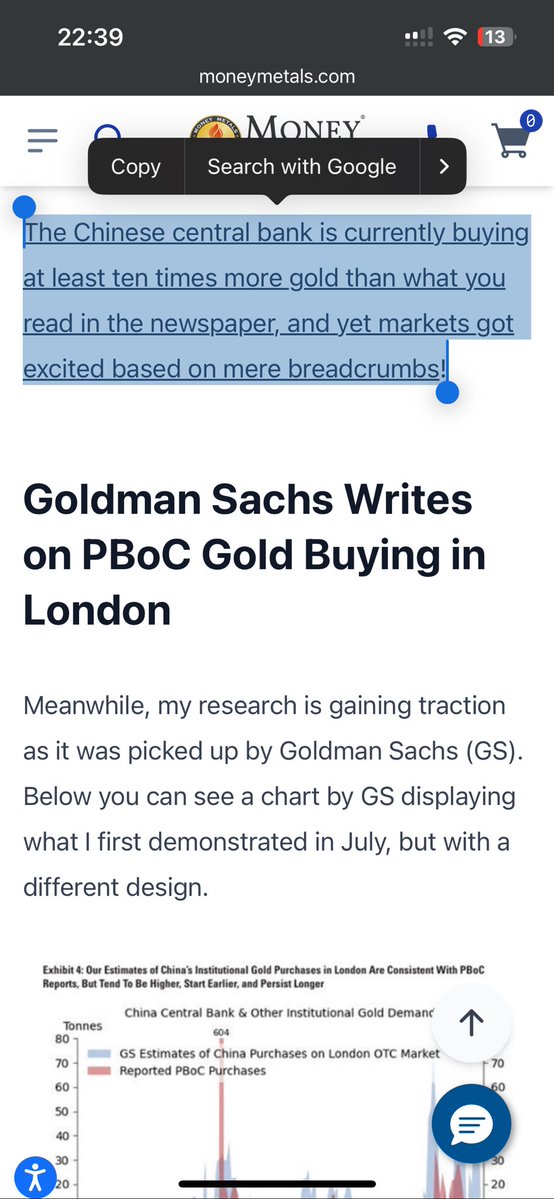
Me, Dec ‘24: “The Chinese central bank is currently buying at least ten times more gold than what you read in the newspaper” Newspaper (FT), Nov ‘25: “China’s unreported gold purchases could be more than 10 times its official figures.” tinyurl.com/fjjjzws9 tinyurl.com/ms3ruk4y
Jan Nieuwenhuijs tweet mediaJan Nieuwenhuijs tweet media
English
10
53
274
40K
Jan Nieuwenhuijs retweetledi
80s&90sFootball ⚽
80s&90sFootball ⚽@80s90sfootball·
Remembering Johan Cruyff, who sadly passed away ten years ago today Sensational player who revolutionised football ❤️🙏
English
32
379
1.5K
85.5K
Tracy Shuchart (𝒞𝒽𝒾 )
yes, gold and silver prices have taken a dive, but try and get the physical, 4-6 weeks for delivery (the physical market is still tight)
English
15
74
931
113.9K
Quintin Schevernels
Quintin Schevernels@Quintin24·
Ik acht de kans bijzonder klein maar als ik ooit een politieke partij zou oprichten dan zou de naam en het voornaamste thema zijn "gezond verstand" #keepitsimple
Nederlands
7
0
6
1.6K
Jan Nieuwenhuijs retweetledi
naiive
naiive@naiivememe·
calming down bro who fomo bought into Silver at $120 this year and now it’s $68
English
161
741
11.4K
815K
Jan Nieuwenhuijs
Jan Nieuwenhuijs@JanGold_·
@pesla En dat terwijl we nét hebben gezien hoe Duitsland een onafhankelijke energiebron voorgoed afkoppelt, en de gevolgen daarvan.
Nederlands
0
0
4
581
Jan Nieuwenhuijs retweetledi
Gilbert Verdian
Gilbert Verdian@gverdian·
A decade in the making, we have published an ISO standard for blockchain interoperability. This is a milestone I've been working towards since 2015, Remitt was founded with the conviction that blockchains could transform financial services but only if the industry solved interoperability and harmonised around global standards. Without that, blockchain would remain fragmented, siloed, and locked out of mainstream institutional adoption. In April 2016, we published what was the world's first proposal for a blockchain standard (remitt.com/blog/2016/04/2…) a bold move at a time when the industry was still largely focused on proofs of concept and competing protocol narratives, not standardisation. The idea was simple but ambitious: if blockchains were going to serve global markets, they needed a common framework that transcended any single protocol or vendor. Central to this thinking from the very beginning was the concept of a multi-gateway architecture, leveraging the know-how of 20 years of experience in cybersecurity to frame the principle that interoperability shouldn't depend on a single bridge or point-to-point connection, but on a layered gateway model that could abstract away the differences between underlying DLTs and connect them through a common interface. This was the architectural foundation of what would become Overledger, and it was also the design philosophy we brought to the standards process. The belief was that a viable international standard for blockchain interoperability had to be protocol-agnostic and gateway-driven, enabling any DLT to communicate with any other DLT (any-to-any) and with existing networks, without requiring those ledgers to change how they operate. The standard and the technology were born from the same insight. That same year, I worked closely with the team from @standardsaus (Standards Australia), who had the foresight in 2015 to champion the initiative at the international level. Together, we pushed for ISO to establish a dedicated Technical Committee for blockchain and not to be absorbed into an existing committee, but to stand on its own as a recognition that this technology warranted its own global standards programme. The industry demand was there, the use cases were multiplying, and the fragmentation was becoming a real barrier. In September 2016, the New Work Item Proposal (NWIP) received global approval, and ISO formally gave the green light to establish a new Technical Committee (remitt.com/blog/2016/09/1…). TC 307 — Blockchain and Electronic Distributed Ledger Technologies — was born (remitt.com/wp-content/upl…). The inaugural meeting was held in Sydney in April 2017, and from that moment the real work began. As the standards work progressed internationally, the mission at Remitt was evolving too. What started as an effort to use blockchains for financial services and solve interoperability grew into something far larger, a full enterprise infrastructure platform for connecting any blockchain to any network. Remitt became Quant, and we built Overledger, the world's first blockchain operating system to deliver on that original vision. The multi-gateway architecture that informed the standards thinking became the core of Overledger's design: a technology layer that sits above all blockchains, providing institutions with a single integration point to access any DLT, any network, and any existing system. The interoperability challenge that drove the standards work was the same challenge we set out to solve commercially and the two efforts reinforced each other throughout. For close to a decade since TC 307's formation, subject matter experts across the world have contributed their time and expertise to Working Group 7 — Interoperability is the committee I chair. International standards are not built quickly they are built through consensus, technical debate, and relentless refinement. The same methodology and rigour that created the Internet, through publishing standards. The result is a published international standard for blockchain interoperability. 🔗 iso.org/standard/82098… A huge thank you to @isostandards as the international standards developing organisation, to the team at @standardsaus who started the initiative in 2015 and worked tirelessly to get TC 307 approved and established globally, and to every subject matter expert who contributed to Working Group 7 over the years. This would not exist without that collective effort. From a blog post proposing the world's first blockchain standard in 2016, to a published ISO standard in 2026 and from Remitt to Quant, from an architectural concept of multi-gateway interoperability to Overledger and a global standard, this has been a decade-long journey of building both the standards and the technology to make blockchain interoperability a reality for institutions worldwide. There is still much more work ahead. More standards to develop, more to evolve, and more to build. But today, we mark a significant milestone. #Blockchain #ISO #Interoperability #Standards #TC307 #DLT #Quant #Overledger
English
112
394
1.4K
193.3K
Jan Nieuwenhuijs
Jan Nieuwenhuijs@JanGold_·
@AndreasSteno @TheBTCTherapist Still pipelines up north would force cooperation and add alternative to the strait of hormuz. Aren’t the Chinese preparing for something similar re the strait of Malacca?
English
0
0
1
73
Andreas Steno Larsen
Andreas Steno Larsen@AndreasSteno·
@JanGold_ @TheBTCTherapist Sure, but that was not what he suggested. The other problem is that the entire region is under threat, not just the strait, so it won’t solve anything
English
1
0
4
392
Sebastian!
Sebastian!@SebasP49474734·
So Lenna Russ just confirmed @quantnetwork is involved in everything involving future financial infrastructure… Cmon man! If this doesn’t make you bullish AF I don’t know what does….
Sebastian! tweet media
English
14
26
181
6.4K
Andreas Steno Larsen
Andreas Steno Larsen@AndreasSteno·
@TheBTCTherapist On a serious note: it would take 10.000 trucks pr VLCC It would require a logistical exercise of bibilical proportions Next suggestion please
English
25
4
149
10.3K
Jan Nieuwenhuijs retweetledi
Jan Nieuwenhuijs
Jan Nieuwenhuijs@JanGold_·
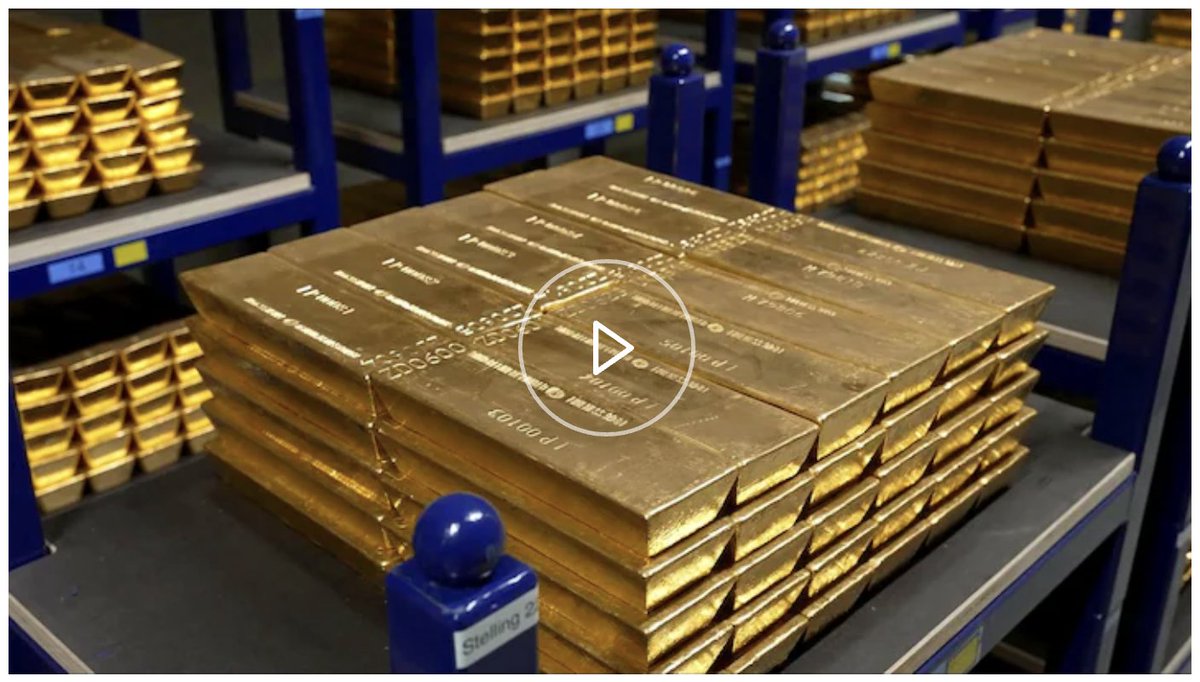
Today, on July 2, 2024, the central bank of the Netherlands (DNB) invited 12 journalists to have a look inside its new gold vault at the Dutch army base near Zeist. DNB stores 190 tonnes (one third) of its gold in this vault. The central bank states it invited the journalists to show the gold is there, how it is safeguarded and serves as the asset of last resort ("insurance"). Journalists couldn't bring cameras but video images were provided by DNB. rb.gy/dzyd85 Earlier, in May 2023, DNB said "gold is the ultimate anchor of trust. If the entire financial system collapses, you still have the gold and the gold retains its value." rb.gy/fduoz4 In October 2022, DNB Governor Klaas Knot mentioned, "the balance sheet of the Dutch central banks is solid because we also have gold reserves and the gold revaluation account is more than 20 billion euros," in response to a question about DNB's losses due to unconventional monetary policy. rb.gy/vcxpgx In April 2019 it read on DNB's website: "Gold is the perfect piggy bank – it's the anchor of trust for the financial system. If the system collapses, the gold stock can serve as a basis to build it up again." Although this statement was removed several years later, it can still be read on the Internet Archive. rb.gy/tekm3i DNB allowed journalist with their own cameras in its previous vault in Amsterdam in April 2016. rb.gy/g9fbpz This was a little while after DNB had repatriated 120 tonnes from Federal Reserve Bank of New York in November 2014. shorturl.at/Ur1ZI DNB (as well as other European and Asian central banks) is clearly pro gold and prepared for a new gold standard. rb.gy/ex9flx
Jan Nieuwenhuijs tweet media
English
66
195
671
172.8K
Jan Nieuwenhuijs retweetledi
PiQ
PiQ@PiQSuite·
“I started trading oil this week, and it’s been a very steep learning curve.” ~ Taylor Swift
PiQ tweet media
English
71
366
2.9K
247.6K
Jan Nieuwenhuijs retweetledi
Toby Young
Toby Young@toadmeister·
Ursula von der Leyen has called abandoning nuclear power "a strategic mistake" and said Europe should "lead the world" in the technology – 15 years after supporting the nuclear phase-out. We are led by imbeciles. dailysceptic.org/2026/03/10/urs…
English
603
2.9K
13.4K
209.2K
Jan Nieuwenhuijs retweetledi
Financial Times
Financial Times@FT·
FT Exclusive: Pressure on the Gulf states’ budgets could cause them to review their overseas investments and future commitments as they consider options to ease the financial strain caused by the US-Israeli war against Iran. ft.trib.al/3Kk0Kcg
Financial Times tweet media
English
119
1.2K
2.6K
1.6M