We just raised $6.3M seed to help dev teams build and deploy MCP Servers for AI Agents and MCP Apps for ChatGPT / Claude
Our open source SDKs crossed 4M downloads when we recorded this video (now already 6M+).
Our mission is to build tools that enable humans to build software for agents, as agents will be the primary consumers and manipulators of digital information.
We make building with MCP effortless.
Create MCP servers or MCP Apps with mcp-use SDK.
Preview and iterate with mcp-use Inspector.
Connect your GitHub repo to our Manufact Cloud.
Instantly make your MCP Server available to billions of AI agents and 800M+ users of ChatGPT / Claude.
Congrats to @GolpoAI on the $4.1M seed!
Golpo is an AI video generator that turns documents, prompts, and scripts into complete, editable whiteboard-style explainer videos in minutes. It automatically structures the story, generates visuals, animates scenes, and adds voiceover.
businessinsider.com/golpo-brothers…
.@PirisLabs delivers low-latency, low-cost AI inference by eliminating the memory wall using full-stack optical interconnects and a purpose-built software stack.
Congrats on the launch Ali & Keyvan!
ycombinator.com/launches/PQd-p…
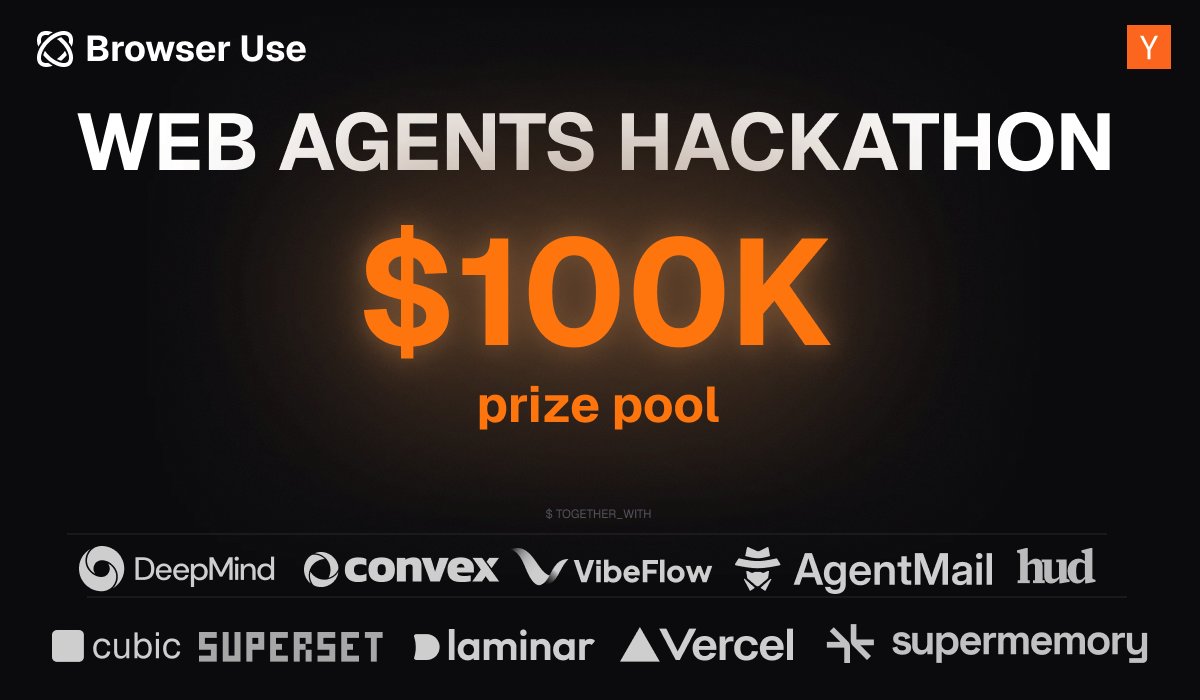
We are hosting the biggest browser YC agents hackathon🔶
$100k+ in prizes. Winners get a guaranteed YC interview. A week of free stay in our hackerhouse with sauna + much more💰💰
Automate anything. Scrape any website. QA test your website generations. Build whatever you want.
February 28 - March 1, Y Combinator office, San Francisco 🌁
register🔗↓
Our first reactor? @TungstenSeanide and I built it from Home Depot parts in three weeks. Rented a lab behind Dallas Love Field, had to rip out the ceiling panels to fit it. That machine started a multibillion-dollar company. People keep trying to throw it away. It still works.
A year earlier I was 26, doing my MD/PhD, studying how pancreatic cancer hides from the immune system using chemistry. The mechanism? Cancer cells were producing hydrogen peroxide to blind immune cells. But the enzyme doing it? It was more efficient than anything in industrial chemistry.
Cancer was outperforming a $6 trillion industry.
A few months later, I was at a poker game in med school. Got seated next to Sean, an MIT chemical engineering PhD. He was studying hydrogen peroxide production at massive industrial scales. I told him his approach was techno-economically insane. Traditional chemical engineering: heat, pressure, heterogeneous catalysis. The whole industry operates at 20% yield and considers that acceptable. I'd just watched cancer cells hit 90%+. I was a cancer biologist. He was a chemical engineer.
What if we married our two worlds?
Six months later we pitched enzyme-based chemical production at MIT's 100K. We lost, taking second place for $10,000. I thought: "Either this works or I go be a doctor." So we drove Sean's Subaru to Home Depot and bought the biggest PVC pipe that we could find. They cut it so it would fit in the trunk. Three weeks later we had a leaking prototype, held together with zip ties, producing chemicals at 4x the industry average yield.
That prototype made us the peroxide kings of Dallas.
Two float spa owners saw our MIT pitch and shared it in their Facebook group. Suddenly we were supplying an entire niche we didn't know existed. We spent the next months driving around Houston, hand-delivering product. Made $10,000 a month from that PVC reactor. We had profitably miniaturized the chemicals industry. Same thing Nucor did for steel: decentralized production. That was 2016.
Today:
- Bioforges in Houston, Texas
- Shipped 150M lbs of chemicals last year
- DoD contracts for critical chemical precursors
- Shipping container reactors deploying internationally
- DOE Loan Programs Office funding (same program that backed Tesla)
- Almost $1 billion raised from Founders Fund, Blackrock, Temasek, GIC, Baillie Gifford
People have no idea how huge the chemical industry is.
One of our customers: An 80-person water treatment company in rural America, quietly doing $250M annual revenue, with $150M spent just on chemicals. And there are thousands more like them. This is why it's a $6T market. And the supply chains are fragile. America has zero domestic TNT production until 2028. We import dozens of critical chemicals needed for semiconductor manufacturing. COVID and tariffs made it obvious: We don't make the chemicals we need to make the things we need.
Much is learned in the making of things.
You can read all the papers, draft business plans, theorize. But you don't know if it works until you're tearing out ceiling panels to fit a reactor and hand-delivering product to float spas at 6 AM. The gap between theoretically possible and actually manufacturable is where companies live or die. I keep finding that the hardest problems in one industry have already been solved in another, or by nature. Cancer biology solved industrial chemistry for us. Nucor proved the business model.
Materials science is what unlocks Kardashev.
Energy abundance needs materials breakthroughs. Defense needs domestic supply chains. AI scaling needs physical infrastructure. Physical bottlenecks determine whether we can actually build the future we're betting on. It all comes back to atoms. Here I share what I learn: the cross-industry connections, the weird market dynamics, the supply chain vulnerabilities nobody's talking about, and the (sometimes) boring technology that makes it happen.
If you're building in the world of atoms, I want to hear from you.
You can just do things.
Today, startups aren't winning by hiring faster, but by automating as many internal functions as possible.
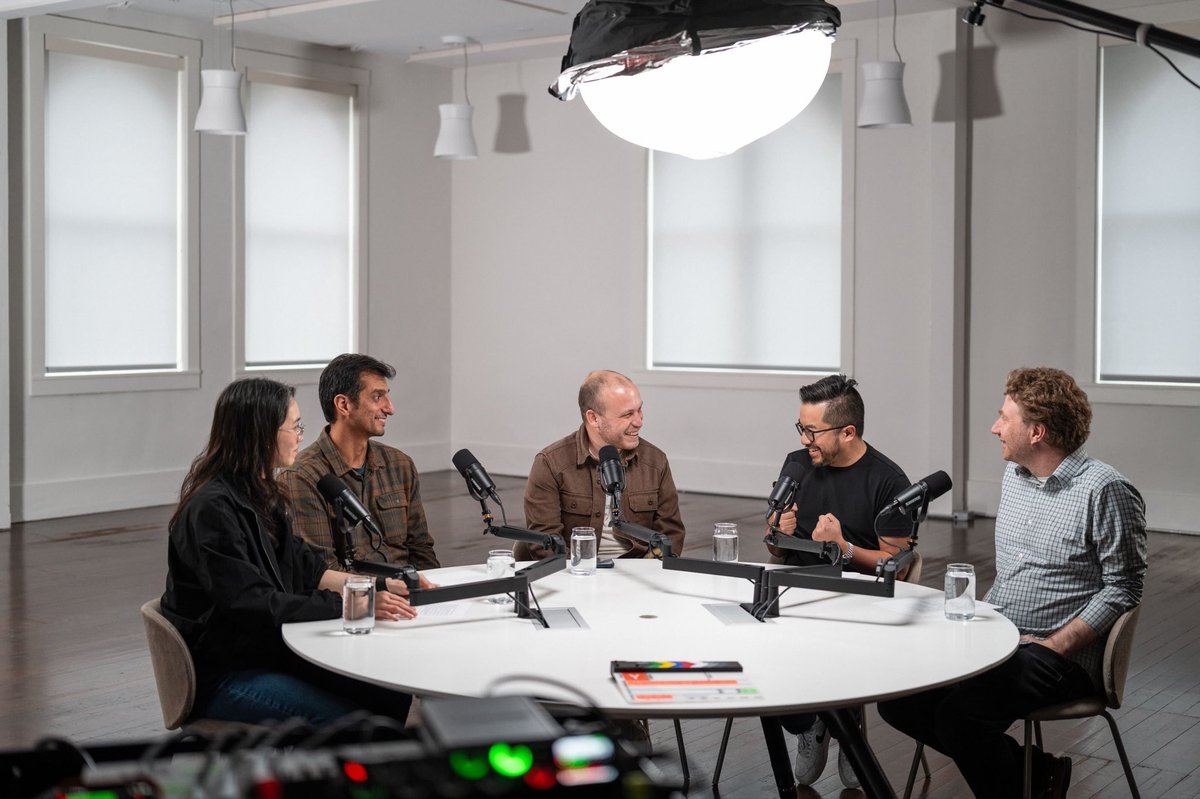
In this episode of Main Function, @garrytan breaks down how tiny teams are beating companies 20x their size by building automations into every workflow, from engineering to ops to customer support.
Prediction: In the AI age, taste will become even more important. When anyone can make anything, the big differentiator is what you choose to make.
paulgraham.com/taste.html
Thanks for having me on the pod @garrytan!
I joined a YC startup back in the early days of YC in 2011. It’s crazy how much has changed for founders building today vs back then. Small teams (and their Claudes) can do so much now!
Clam is building enterprise-grade data security for AI frameworks like OpenClaw through their “Semantic Firewall”, a security checkpoint at the network level.
Congrats on the launch @anshulpaul30 and @vaibagra!
ycombinator.com/launches/PRf-c…
Agent apps don’t win on the model, they win on the harness. But creating that harness is painful.
@terminaluse is hosting infrastructure for background agents built for iterating: fork filesystems and try multiple agents in parallel.
The platform is CLI-first, which allows your coding agents like Claude Code & Codex to help you debug, hypothesize improvements, and analyze outputs.
Congrats on the launch @v_raja_, @stavros_fil, and @filbalu!
ycombinator.com/launches/PSJ-t…
Convert your github into a live resume
Use this shortcut to turn your work into a resume and get discovered for what you've actually built
github[dot]com/username -> skillsgithub[dot]com/username