
Matt Dane
279 posts

Matt Dane
@CompelFitness
Founder and president of Compel Fitness. Football addict. Buckeye and Bengals fan.
Cleveland, OH Katılım Mayıs 2011
494 Takip Edilen266 Takipçiler

Matt Dane retweetledi

There's an unfortunate game theory to a large civilization in that it requires hard work, ethical behavior, and deferral of gratification to build. But then eventually people start to forget that and think "why would I work hard when theres all this stuff here already? I should just be hedonistic". Slowly, the civilization starts to decay causing it to take care of people less, which causes more people to defect ("why should I take care of a system that doesn't care for me? Especially when there's so much fun to be had by neglecting it"), until eventually it collapses because everyone has defected.
🥥 𝙇𝘼𝙏𝘼𝙈 🥥@TheLatamGuy
it's getting harder to show up for work each day knowing there are unemployed men in Colombia with 3 girlfriends doing motorcycle wheelies at 2 am
English
Matt Dane retweetledi

Elon Musk avait dit un truc qui m'avait marqué sur l'allocation de ressources. En substance : passé un certain niveau de richesse, l'argent n'est plus de la consommation, c'est de l'allocation de capital.
Cette phrase change tout.
L'économie, dans le fond, c'est juste un problème d'allocation. Tu as des ressources finies et des usages infinis. Qui décide où va quoi ?
Imagine une cour de récré. 100 enfants, des paquets de cartes Pokémon distribués au hasard. Tu laisses faire. Très vite, un ordre émerge. Les bons joueurs accumulent les cartes rares, les collectionneurs trient, les négociateurs trouvent des deals. Personne n'a planifié. Et pourtant chaque carte finit dans les mains de celui qui en tire le plus de valeur. Le système maximise le bonheur total de la cour. C'est ça, la main invisible.
Maintenant fais entrer la maîtresse. Elle trouve ça injuste. Léo a 50 cartes, Tom en a 3. Elle confisque, redistribue, impose l'égalité. Trois effets immédiats. Les bons joueurs arrêtent de jouer, à quoi bon. Les mauvais n'ont plus de raison de progresser, ils auront leur part. Les échanges s'effondrent. La cour est égale, et morte. Elle a maximisé l'égalité, elle a détruit le bonheur.
Le problème de la maîtresse, c'est qu'elle ne peut pas avoir l'information que la cour avait collectivement. C'est le problème du calcul économique de Mises, formulé en 1920. L'URSS a essayé de le résoudre pendant 70 ans avec le Gosplan. Résultat : pénuries, queues, effondrement. Pas parce que les Soviétiques étaient bêtes, parce que le problème est mathématiquement insoluble en mode centralisé.
Quand Musk a 200 milliards, il ne les consomme pas, il les alloue. SpaceX, Starlink, Neuralink, xAI. Chaque dollar est un pari sur le futur. Et lui a un track record. PayPal, Tesla, SpaceX. Il a démontré qu'il sait identifier des problèmes immenses et y allouer des ressources avec un rendement spectaculaire.
L'État aussi a un track record. Hôpitaux qui s'effondrent, éducation qui décline, dette qui explose, services publics qui se dégradent malgré des budgets en hausse constante. Le marché identifie les bons allocateurs, la politique identifie les bons communicants.
Le profit n'est pas une finalité, c'est un signal. Il dit : tu as alloué des ressources rares vers un usage que les gens valorisent suffisamment pour payer. Plus le profit est gros, plus la création de valeur est grande. Quand Starlink est rentable, ça veut dire que des millions de gens dans des zones rurales ont enfin internet. Quand un ministère est en déficit, ça veut dire qu'il consomme plus qu'il ne produit. L'un crée, l'autre détruit, et on appelle ça redistribution.
Dans nos sociétés il y a deux catégories d'acteurs. Les entrepreneurs et les bureaucrates. L'entrepreneur prend un risque personnel pour identifier un problème, mobiliser des ressources, créer une solution. S'il se trompe il perd. S'il a raison, ses clients gagnent, ses employés gagnent, ses fournisseurs gagnent, l'État collecte des impôts. Il est la cellule de base du progrès humain.
Le bureaucrate ne prend aucun risque personnel. Son salaire est garanti. Au mieux il maintient une rente existante. Au pire il la détruit par excès de réglementation, mauvaise allocation forcée, incitations perverses qui découragent ceux qui produisent. Mais dans aucun cas il ne crée.
Regarde les 50 dernières années. iPhone, internet civil, SpaceX, Tesla, Google, Amazon, Stripe, mRNA, ChatGPT. Toutes des inventions privées, portées par des entrepreneurs, financées par du capital risque. Pas un seul ministère n'a inventé quoi que ce soit qui ait changé ta vie au quotidien.
La France est devenue le laboratoire mondial de la dérive bureaucratique. 57% du PIB en dépenses publiques, record absolu. Une administration tentaculaire, une fiscalité qui pénalise la création de richesse. Résultat : décrochage face aux États-Unis, à l'Allemagne, à la Suisse. Fuite des cerveaux. Désindustrialisation. Dette qui explose.
Et le pire c'est que la mauvaise allocation s'auto-renforce. Plus l'État prélève, moins les entrepreneurs créent. Moins ils créent, moins il y a de base fiscale. Plus l'État s'endette et taxe. Boucle de rétroaction négative parfaite. La maîtresse pense qu'elle aide, et chaque année la cour produit moins.
Dans nos sociétés, ce sont les entrepreneurs, toujours, qui font avancer la civilisation. Les bureaucrates au mieux maintiennent une rente, au pire la détruisent. Aucune société n'a jamais progressé en taxant ses créateurs pour subventionner ses gestionnaires.
La question n'est jamais qui a combien. C'est qui alloue le mieux la prochaine unité de ressource pour maximiser le futur de l'humanité. La réponse depuis 200 ans n'a jamais changé. Ce ne sont pas les fonctionnaires.
Français
Matt Dane retweetledi

Milton Friedman on 4 ways to spend money:
1) Your money on yourself (you’re careful about both cost and quality)
2) Your money on others (you care about cost, less about quality)
3) Someone else’s money on yourself (you care about quality, not cost)
4) Someone else’s money on others (you care about neither)
The last one is how government spending works.
English
Matt Dane retweetledi
Hello Julia, sans aucune ironie, c'est top que tu prennes le temps de te renseigner. Mais le problème quand on lit Marx aujourd'hui, c'est qu'on prend pour acquis sa prémisse de départ, alors qu'elle a été démontée scientifiquement il y a plus de 150 ans.
Toute la pensée de Marx repose sur la théorie de la valeur-travail. L'idée que la valeur d'un bien vient de la quantité de travail nécessaire pour le produire. Si tu acceptes cette prémisse, alors oui, tout son raisonnement tient. Le capitaliste "vole" la plus-value du travailleur, l'exploitation est mathématique, la révolution est inévitable.
Sauf qu'en 1871, trois économistes (Menger en Autriche, Jevons en Angleterre, Walras en Suisse) découvrent indépendamment la même chose : la valeur n'est pas objective, elle est subjective et marginale.
Un verre d'eau dans le désert vaut une fortune. Le même verre à côté d'une rivière ne vaut rien. Le travail incorporé est identique. Donc le travail ne détermine pas la valeur. C'est le consommateur qui valorise un bien selon son utilité marginale dans un contexte donné.
Exemple concret : tu peux passer 1000 heures à tricoter un pull moche que personne ne veut. Selon Marx, ce pull a énormément de valeur (beaucoup de travail incorporé). Selon la réalité, il ne vaut rien. Parce que personne n'en veut.
À l'inverse, Bernard Arnault crée des milliards de valeur non pas parce qu'il "exploite" mais parce qu'il a su anticiper et organiser des désirs humains à grande échelle. La valeur est créée par la coordination, pas extraite par le vol.
Cette découverte (la révolution marginaliste) a invalidé tout l'édifice marxiste. Pas pour des raisons idéologiques, pour des raisons scientifiques. C'est pour ça que plus aucun département d'économie sérieux au monde n'enseigne Marx comme un cadre d'analyse valide. On l'enseigne en histoire de la pensée.
Maintenant, le truc important. Si ton intention en lisant Marx c'est d'aider les pauvres (c'est une intention noble), alors tu vas être surprise par ce qui suit.
Regarde les chiffres de la Banque mondiale. En 1820, 90% de l'humanité vivait dans l'extrême pauvreté. Aujourd'hui, moins de 9%. Cette chute historique ne s'est PAS produite dans les pays qui ont appliqué Marx. Elle s'est produite dans les pays qui ont libéralisé leur économie.
Chine post-1978, Vietnam post-1986, Inde post-1991, Pologne post-1989. À chaque fois qu'un pays libéralise, des centaines de millions de gens sortent de la pauvreté en une génération. À chaque fois qu'un pays applique Marx (URSS, Cambodge, Corée du Nord, Venezuela), c'est la famine et les goulags.
Ce n'est pas une opinion, c'est l'expérience la plus massive jamais menée en sciences sociales. Plusieurs milliards de cobayes humains, sur un siècle.
Donc paradoxalement, si tu aimes vraiment les pauvres, la position la plus cohérente n'est pas d'être marxiste. C'est d'être pour la liberté économique. Parce que c'est empiriquement la seule chose qui a jamais sorti massivement les gens de la misère.
Pour creuser, je te recommande trois lectures qui vont changer ta vision :
"La Loi" de Frédéric Bastiat (court, lumineux, gratuit en ligne)
"La Route de la Servitude" de Hayek
"Économie en une leçon" de Henry Hazlitt
Bonne lecture, et vraiment chapeau de chercher à comprendre plutôt que de rester dans tes certitudes. C'est rare.
Julia ひ@lifeimitatlife
Depuis tout à l'heure je me renseigne sur les idées de Karl Marx sincèrement je n'arrive pas à comprendre comment on peut être pour le capitalisme et même plus généralement être de droite
Français
Matt Dane retweetledi

Read this if you’re swimming in the ocean this summer:
How to spot rip currents in the ocean
It’s usually where it looks easiest (and safest) to enter the sea.
Look for darker, narrow gaps of water heading off shore between breaking waves and whitewater.
They can appear as darker paths heading out through the surf so look for gaps in the lines of breaking waves
Unless you’re surfing, DO NOT enter the ocean here.
If you get caught in a rip current (you’ll know because you’ll get moved from your location and it will be impossible to swim against it), STAY CALM.
Swim across the rip current. Not against it.
Example:
Rather than trying to swim through the shore, swim parallel to the beach. Once you’re out then you swim to shore.
Please share this with your friends and educate your family when visiting the beach.
You might save a life by doing so.

Tyler Todt@tyromper
My dad warned my sister there was a high tide & the ocean would be really dangerous before they left. One day a few years ago in North Carolina a HORROR STORY happened & within the blink of an eye my families life changed forever.
English
Matt Dane retweetledi
Every training camp I had at Washington State University, Coach Leach would share the same story.
The story of two kids. The rich kid and the poor kid.
The rich kid has two choices. He can become spoiled, entitled, lazy, and expect everything to be handed to him because he has been given more. Or he can take every advantage of what he has been given—resources, coaching, opportunities—and use it to become even better.
The poor kid has two choices too. He can say, “I never had a chance. Nobody gave me anything. The world is against me.” He can feel sorry for himself and use it as an excuse. Or he can say, “I may not have what they have, but I am going to outwork everybody.” He can become tougher, more driven, and more relentless than everybody else.
It was a powerful message in a locker room full of people from different backgrounds, different families, and different life experiences. Some guys came from wealth. Some came from almost nothing. Some had every opportunity. Others had to fight for every inch.
But despite all of those differences, everybody still had the same choice.
You can take ownership and use what you have as fuel.
Or you can become victim-minded. You can look for excuses, blame your circumstances, become entitled, and convince yourself that because of what you have—or because of what you do not have—you cannot become what you want to be.
It is not about how you start. It is about what you choose to do with how you start.
The rich kid can waste what he has been given or use it to build something greater. The poor kid can use his circumstances as an excuse or as fuel.
In the end, greatness does not come from starting with more or less. It comes from which person inside of you that you choose to feed.
If you like these Mind Strength Messages, click below to join our free newsletter and get a new Mind Strength Message every Monday to start your week on the right foot.
coachlukefalk.com/email-newslett…
#MindStrength

English
Matt Dane retweetledi

Because we get asked a lot.
The Technological Republic, in brief.
1. Silicon Valley owes a moral debt to the country that made its rise possible. The engineering elite of Silicon Valley has an affirmative obligation to participate in the defense of the nation.
2. We must rebel against the tyranny of the apps. Is the iPhone our greatest creative if not crowning achievement as a civilization? The object has changed our lives, but it may also now be limiting and constraining our sense of the possible.
3. Free email is not enough. The decadence of a culture or civilization, and indeed its ruling class, will be forgiven only if that culture is capable of delivering economic growth and security for the public.
4. The limits of soft power, of soaring rhetoric alone, have been exposed. The ability of free and democratic societies to prevail requires something more than moral appeal. It requires hard power, and hard power in this century will be built on software.
5. The question is not whether A.I. weapons will be built; it is who will build them and for what purpose. Our adversaries will not pause to indulge in theatrical debates about the merits of developing technologies with critical military and national security applications. They will proceed.
6. National service should be a universal duty. We should, as a society, seriously consider moving away from an all-volunteer force and only fight the next war if everyone shares in the risk and the cost.
7. If a U.S. Marine asks for a better rifle, we should build it; and the same goes for software. We should as a country be capable of continuing a debate about the appropriateness of military action abroad while remaining unflinching in our commitment to those we have asked to step into harm’s way.
8. Public servants need not be our priests. Any business that compensated its employees in the way that the federal government compensates public servants would struggle to survive.
9. We should show far more grace towards those who have subjected themselves to public life. The eradication of any space for forgiveness—a jettisoning of any tolerance for the complexities and contradictions of the human psyche—may leave us with a cast of characters at the helm we will grow to regret.
10. The psychologization of modern politics is leading us astray. Those who look to the political arena to nourish their soul and sense of self, who rely too heavily on their internal life finding expression in people they may never meet, will be left disappointed.
11. Our society has grown too eager to hasten, and is often gleeful at, the demise of its enemies. The vanquishing of an opponent is a moment to pause, not rejoice.
12. The atomic age is ending. One age of deterrence, the atomic age, is ending, and a new era of deterrence built on A.I. is set to begin.
13. No other country in the history of the world has advanced progressive values more than this one. The United States is far from perfect. But it is easy to forget how much more opportunity exists in this country for those who are not hereditary elites than in any other nation on the planet.
14. American power has made possible an extraordinarily long peace. Too many have forgotten or perhaps take for granted that nearly a century of some version of peace has prevailed in the world without a great power military conflict. At least three generations — billions of people and their children and now grandchildren — have never known a world war.
15. The postwar neutering of Germany and Japan must be undone. The defanging of Germany was an overcorrection for which Europe is now paying a heavy price. A similar and highly theatrical commitment to Japanese pacifism will, if maintained, also threaten to shift the balance of power in Asia.
16. We should applaud those who attempt to build where the market has failed to act. The culture almost snickers at Musk’s interest in grand narrative, as if billionaires ought to simply stay in their lane of enriching themselves . . . . Any curiosity or genuine interest in the value of what he has created is essentially dismissed, or perhaps lurks from beneath a thinly veiled scorn.
17. Silicon Valley must play a role in addressing violent crime. Many politicians across the United States have essentially shrugged when it comes to violent crime, abandoning any serious efforts to address the problem or take on any risk with their constituencies or donors in coming up with solutions and experiments in what should be a desperate bid to save lives.
18. The ruthless exposure of the private lives of public figures drives far too much talent away from government service. The public arena—and the shallow and petty assaults against those who dare to do something other than enrich themselves—has become so unforgiving that the republic is left with a significant roster of ineffectual, empty vessels whose ambition one would forgive if there were any genuine belief structure lurking within.
19. The caution in public life that we unwittingly encourage is corrosive. Those who say nothing wrong often say nothing much at all.
20. The pervasive intolerance of religious belief in certain circles must be resisted. The elite’s intolerance of religious belief is perhaps one of the most telling signs that its political project constitutes a less open intellectual movement than many within it would claim.
21. Some cultures have produced vital advances; others remain dysfunctional and regressive. All cultures are now equal. Criticism and value judgments are forbidden. Yet this new dogma glosses over the fact that certain cultures and indeed subcultures . . . have produced wonders. Others have proven middling, and worse, regressive and harmful.
22. We must resist the shallow temptation of a vacant and hollow pluralism. We, in America and more broadly the West, have for the past half century resisted defining national cultures in the name of inclusivity. But inclusion into what?
Excerpts from the #1 New York Times Bestseller The Technological Republic: Hard Power, Soft Belief, and the Future of the West, by Alexander C. Karp & Nicholas W. Zamiska
techrepublicbook.com
English
Matt Dane retweetledi

We actually have some very close friends at the College Board and apparently the executive team is in full panic mode that this video is spreading on the Internet. Sorry, not sorry.
Jeremy Wayne Tate@JeremyTate41
Neuroscientist explains how the SAT is redefining education
English
Matt Dane retweetledi

Matt Dane retweetledi

I built CourtWatch.us — a free public database for American citizens who deserve safer communities.
You can track which judges released defendants who then got rearrested, skipped court, or violated their release conditions. All public records. All free.
I started with Orange County FL and will be expanding to all 67 Florida counties and eventually every state in the country. This first batch of info is from 2024 and since public reports are released in March/April for the previous year, data is behind. But I wanted to see if this is plausible. After adding 2024,I'll add 2025 and then figure out how to get real-time-data uploaded.
It's in beta — would love to know what you think 👇
Numbers don't lie, but criminals do.
courtwatch.us
@bennyjohnson @jockowillink @GrantCardone @LauraLoomer @nickshirleyy @j_fishback

English
@gmiller @RonDeSantis And help them to make money is sales and sales management/ leadership.
English

As a psychology professor who's taught thousands of college students, I'll just say this:
- much of what is taught in psych classes at many universities is false, outdated, irrelevant, unreplicated, and/or politically biased to support Blank Slate Leftist ideologies
- many students might do better in narrowly economic terms (ROI) if they majored in other STEM topics -- assuming they can handle more rigorous quantitative training
However,
- understanding human nature and human relationships more deeply can have lifelong benefits that aren't captured by narrow ROI analyses of expected future income; a few areas of psychology can give these kinds of genuine, inspiring, empirically valid insights
- these insights aren't just fluff -- they can help people find their soulmates faster, lead to earlier and better marriages, lead to better parenting and families, and improve people's lives as citizens and as stewards of our civilizational traditions.
English
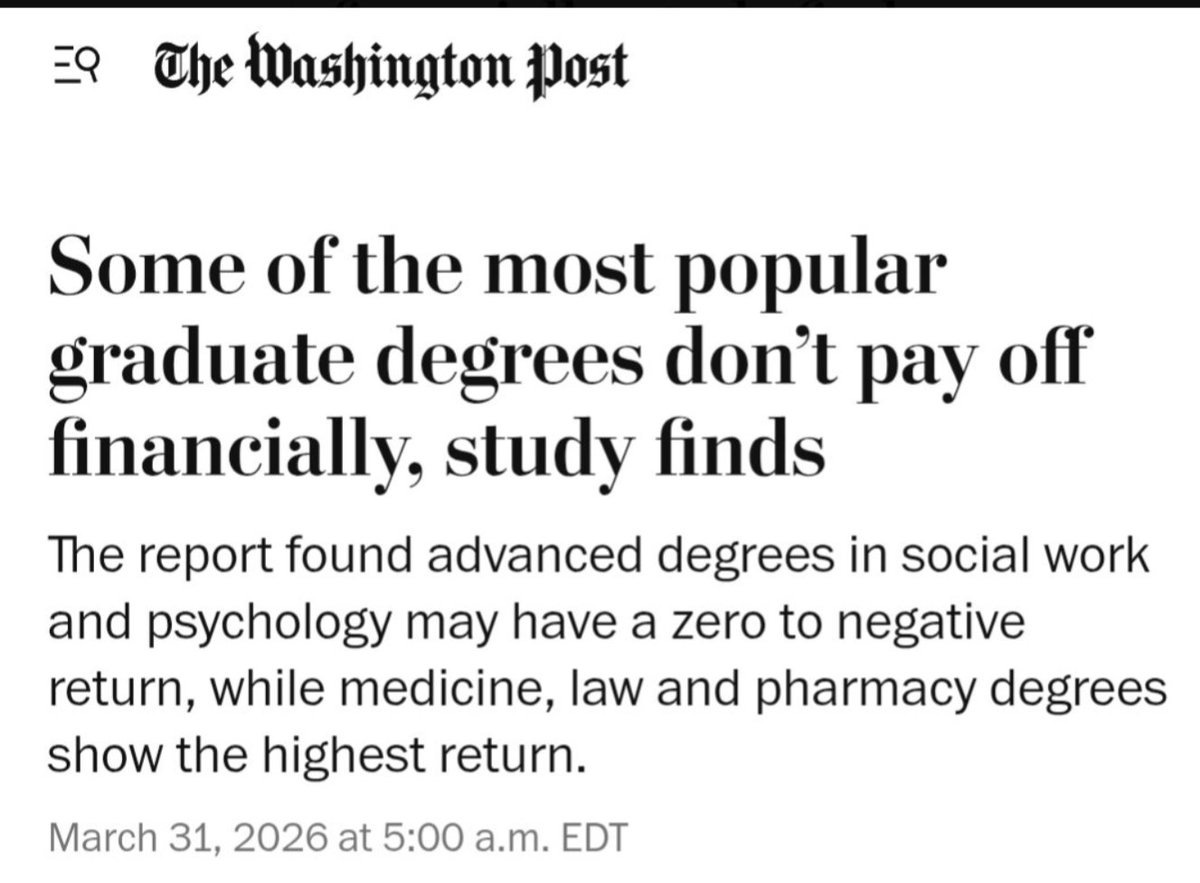
Was it necessary to do a study to figure out that advanced degrees in social work and psychology have zero or negative ROI?
English
Matt Dane retweetledi

He really compressed 4 years of therapy into 60 seconds.
English
Matt Dane retweetledi

To all the members of Congress that voted today to continue to conceal Congress’s sexual harassment slush fund, go home and tell your daughters what you’ve done.
English
Matt Dane retweetledi

Matt Dane retweetledi

Matt Dane retweetledi

I introduced the No Immunity for Glyphosate Act.
Thank you @chelliepingree, @RepBoebert, @RepNancyMace, @RepRoKhanna for sponsoring.
If we’re Making America Healthy Again, government shouldn't be promoting glyphosate and providing liability immunity for corporations making it.
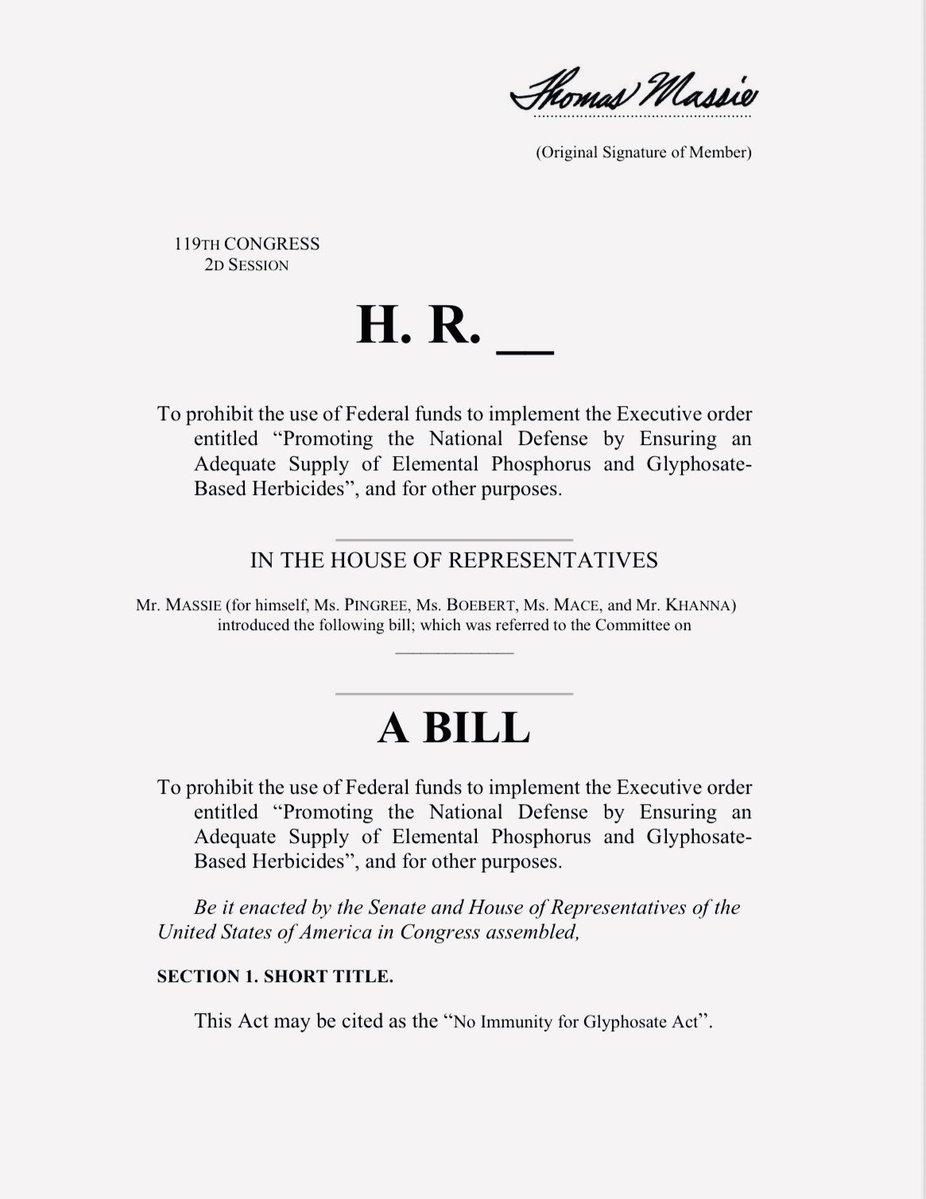
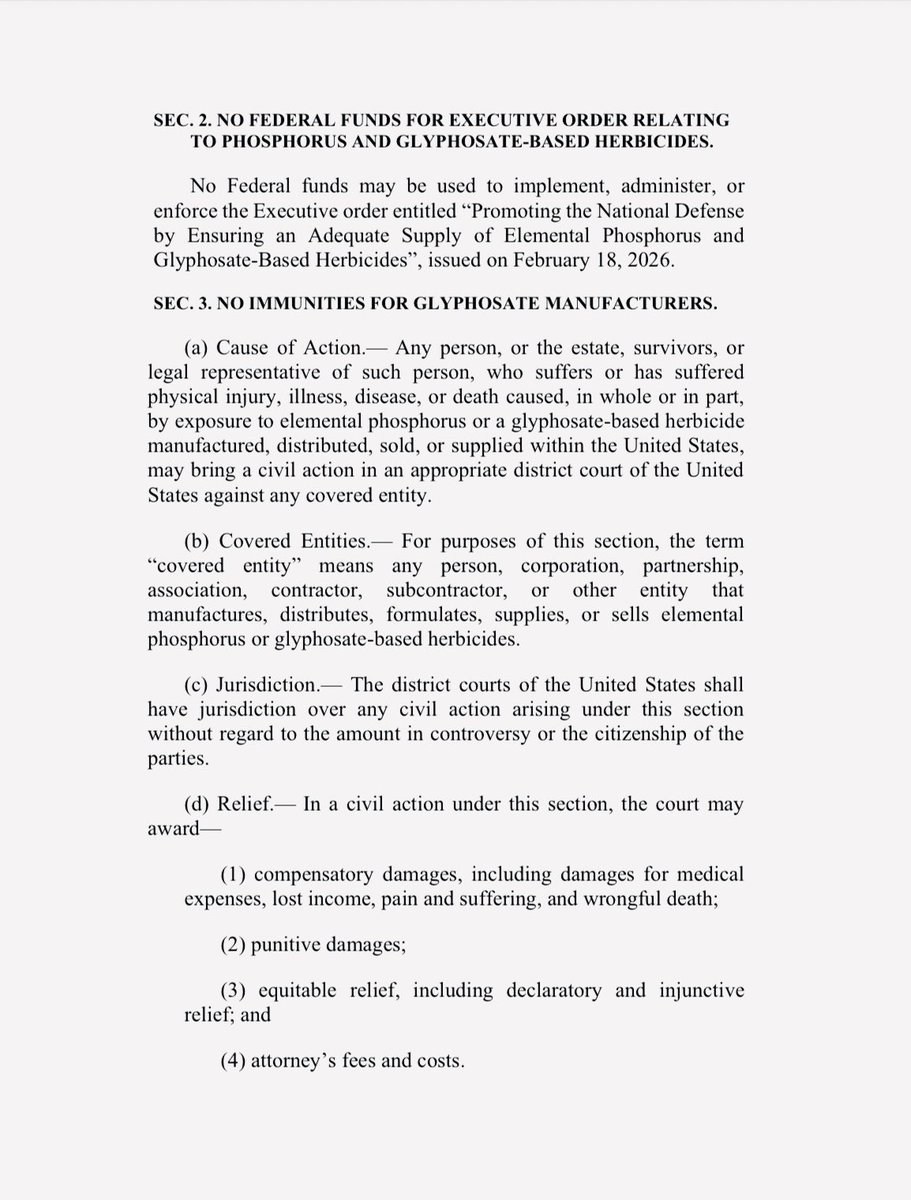
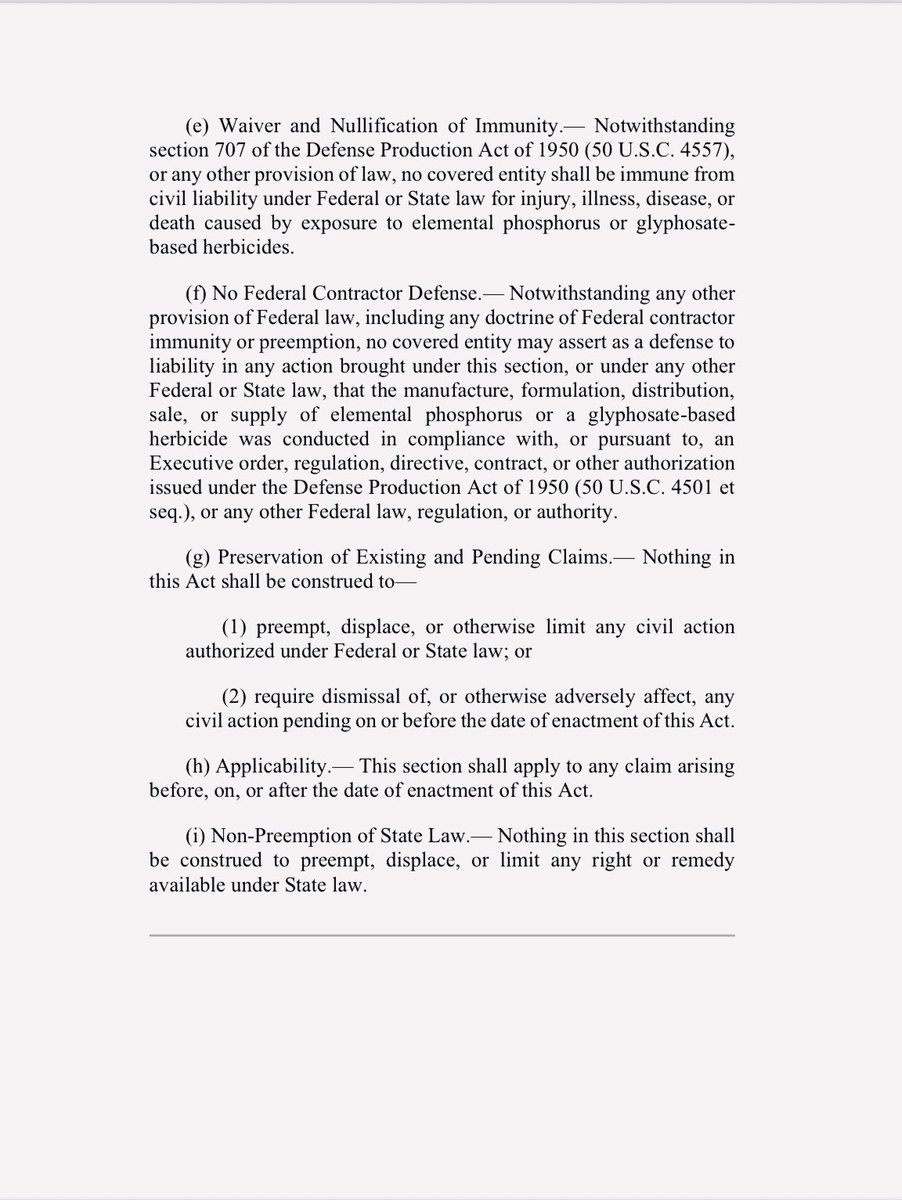
English
Matt Dane retweetledi

Matt Dane retweetledi

Bill Maher fires back at Billie Eilish and leftist “kids” who “don’t know what the f*ck” America is about.
“I want to… say something about Western civilization. Kids, you don’t know what the f*ck it is.”
“They think Western means white—and white means bad. First of all, everything bad that white people did, people of color did it, too. The Japanese before World War II and during World War II. And Genghis Khan, and I could go on and on.”
“The left is very down on America, very down on the West. And it’s ironic because the West has also given us everything that makes your life good here. Don’t ask Billie Eilish or Chappell Roan about what the Western values are, because they’ll just say it’s about oppression.”
“But it’s not about oppression. It’s about rule of law. It’s about respect for minorities. It’s about democracy. It’s about scientific inquiry. These are all good things that came from the Western world. I wish that schools would teach that again.”
English

If your child becomes a reader, about 80% of the educational job is already done. That's our honest assessment, based on many of us working in education for over three decades. Everything else is secondary. Most parents think science education is important. Yes, it is. But if you can't read the biology textbook, you're not going to learn biology.
Reading is the meta-skill that enables all other skills. History requires reading. Science requires reading. Even math increasingly requires reading as it becomes more sophisticated. The child who reads voraciously will figure out everything else. The child who doesn't will struggle with everything.
English