

Counterplay.flow
1.1K posts

Counterplay.flow
@Counterplay700
Collectibles | UAL 🎓
Katılım Mayıs 2021
1K Takip Edilen1.3K Takipçiler

@0xnobi Isnt it worse tax treatment if it’s classified as collectible art though ?
English


@spinotron @darrenrovell An unpublished study with no disclosure of who funded it cannot be considered a study
English

Private consigned study by DR @darrenrovell: Youth collectors have collections 95% of which are non-digital.
Meanwhile Art Basel + UBS report says 51% of high networth individuals in 2025 have bought digital collectibles.
Which hill are we dying on? Discuss.
x.com/opensea/status…

Darren Rovell@darrenrovell
We just did the most massive study in collectibles for a Fortune 500 company. The youth collector, who spends all day on his or her phone, has a collection that is at least 95% physical. The NFT boom and bust did collosal damage to the hope of digital collecting.
English

Something I think "traditional" collectors completely miss with digital is what is actually considered collectible by each generation.
I've almost exclusively seen "digital" used to describe platforms like Panini Blockchain, NBA Top Shot and other NFT projects.
I don't think that comes even close to capturing what is being "collected" by younger generations and mostly limits the scope to a digital asset of something we typically associate with something physical (art, cards).
Why has the community completely ignored categories like collectible cosmetics in video games?
Ignoring these types of collectibles — and they are absolutely viewed as such by their owners — dismisses markets that have proven to be worth billions.
Franchises such as Counter-Strike, Fortnite, Call of Duty, League of Legends and many, many more have become so profitable because of how robust the digital collectible market is for their cosmetics and even items that provide in-game utility.
If we limit the scope to items like trading cards, yes, younger collectors are more than likely going to have largely physical collections.
But if we ask the youngest generations about -all- of their collectibles, I think you'll find much more value tied up into Roblox and Minecraft accounts than you might have guessed.
The younger generation is collecting a -massive- amount of digital assets, they just don't look like what many "traditional" collectors expected.
Darren Rovell@darrenrovell
We just did the most massive study in collectibles for a Fortune 500 company. The youth collector, who spends all day on his or her phone, has a collection that is at least 95% physical. The NFT boom and bust did collosal damage to the hope of digital collecting.
English
@austinio Small fish compared to the Lemieux scandal from last year. The sports card hobby has never been the same
espn.com/espn/story/_/i…
English

no offense, but i'd never buy any physical trading card or physical collectible.
good luck out there
Sports Card News@SportsCardNews
🚨 $1 MILLION+ BECKETT FRAUD RING🚨 Here's what's happening: According to @renoipgp, a guy in China sold 10,000+ FAKE autographs on eBay for over $1 MILLION. Tom Brady jerseys. Wayne Gretzky jerseys. Lionel Messi. All FAKE. **But here's the scary part...** They all came with "authentic" Beckett certificates. You scan the code? It says VALID. Why? Because the scammers are using REAL Beckett numbers on FAKE items. Beckett has no photos in their system. So they literally CAN'T tell if it's real or fake. **Translation: The sticker means NOTHING.** One collector paid $860 for a fake Brady jersey. Another got a fake Gretzky for $660. And a similar scam already happened before — Brett Lemieux scammed collectors out of **$350 MILLION** doing the same thing. He offed himself before being arrested, but the FBI told Sports Card Radio the investigation is STILL OPEN. **Bottom line:** Those 10,000+ fakes are being resold RIGHT NOW as "real" on eBay, Facebook Marketplace, card shows — everywhere. Check your stuff. Full article in comments👇
English
@GlomsCards @BrokeBullishSOL The only reason it‘s worth collecting static pictures of athletes
English

@BrokeBullishSOL You do realize people collect autographs and game used patches, cant do that with bullshit digital cards 😂
English

👀🚀🔥 Physical sports card collectors don’t want to hear this… but the hobby is moving on.
The Panini Blockchain cards ecosystem exposes just how flawed physical collecting really is.
Thread 🧵👇
1️⃣ **Grading is subjective**
Two identical cards can get different grades depending on the day, the grader, or the company.
That’s not scarcity. That’s inconsistency.
2️⃣ **Population manipulation**
With physical cards you constantly hear:
“New cases found.”
“Warehouse inventory surfaced.”
“Reprints.”
Meanwhile blockchain cards have **provable supply forever**.
3️⃣ **Damage risk**
Corners. Scratches. Centering. Shipping damage.
Collectors spend thousands just protecting cardboard.
Digital cards don’t degrade.
4️⃣ **Slow market**
Want to sell a physical card?
• Ship it
• Wait for grading
• Wait for auction
• Pay fees
Blockchain trading = instant global liquidity.
5️⃣ **Fake cards exist**
Counterfeits and altered cards are everywhere in physical collecting.
Blockchain ownership is verified on-chain.
6️⃣ **The irony**
The same company producing physical cards — **Panini America** — already proved the future with blockchain.
Many collectors just aren’t ready to admit it.
7️⃣ **Market inefficiency**
Some 1/1 blockchain cards sell for less than random physical parallels.
That gap won’t last forever.
Early collectors understand this.
The next generation of the hobby is digital.
Tagging hobby voices — curious where everyone stands on blockchain vs physical:
@PaniniAmerica
@PaniniBlockchain
@darrenrovell
@SportsCardRadio
@CardPurchaser
@CardHobbyist
@blowoutbuzz
@Lelandsdotcom
@PWCCmarketplace
@GoldinCo
@KenGoldin
@SlabStox
@CardLadder
@CGCCards
@PSAcard
@beckettcollect
What do you think the hobby looks like in 10 years?
#PaniniBlockchain #SportsCards #CardCollector #NFTCards #nft
English
@TheCheeseHarvey @BrokeBullishSOL That‘s like saying I’m printing my own trading cards, my clueless buddy🥹
English

@BrokeBullishSOL You’re likely invested early. Physical cards will always be better. I can screen shot a blockchain card and own it for free.
English
@CardAficionado @kenny_kellan7 Just counter with the argument that you can print your own trading cards too 👀 this usually shuts them up real quick
English

It's kind of crazy you still have physical collectors going with "lol, right-click save" regarding digital collectibles.
It's such a stupid argument. Here's why:
* They already understand the nature of value exceeding the underlying asset. They spend thousands on printed cardboard.
* They already understand that ownership is the key to the whole thing.
* They already understand that if someone takes a screenshot of the card they have in a vault, prints out a photo they posted to brag about their stuff, or took the card and made a photo-quality copy of it that person would not have the same thing as the card.
* They even understand that some cards made from the same material, depicting the same image, but created after the card was originally made (aka, reprint) has a different value than the first one.
Their entire collection is based on the exact same foundation as digital collectibles. I know this because I've collected physical for almost 45 years.
And they still go with that.
Just be honest and say "Digital isn't for me" or express their fear about considering digital. I can at least respect that argument.
English
@oryno4 @BrokeBullishSOL And collecting cardboard of static pictures isn’t? 😂
English

@DannyDailyNote @coingecko „Dead“ lol
Meanwhile we hear nothing about ETH NFTs…. 📉📉📉
NBA Top Shot@NBATopShot
Wow. THEMECCA just picked up the LeBron James From The Top, Legendary, serial #1/59, for $19,500. That's a grail. 👑
English

@coingecko This kind of price action usually triggers a sharp reversal as older holders use the new liquidity to exit positions.
$Flow ecosystem also lacks any new killer app capable of replacing NBA Top Shot which has been effectively dead since 2023.
English


Counterplay.flow retweetledi

GIF
English

Still got NBA, NFL, Disney, Ticketmaster building on Flow.
Still got nodes run by Samsung, T-systems, Coinbase, Dapper Labs.
Still got the lowest tx fees, the most scalable tech, the most advance architecture.
Still got the team that has broken through to mainstream twice before.
English

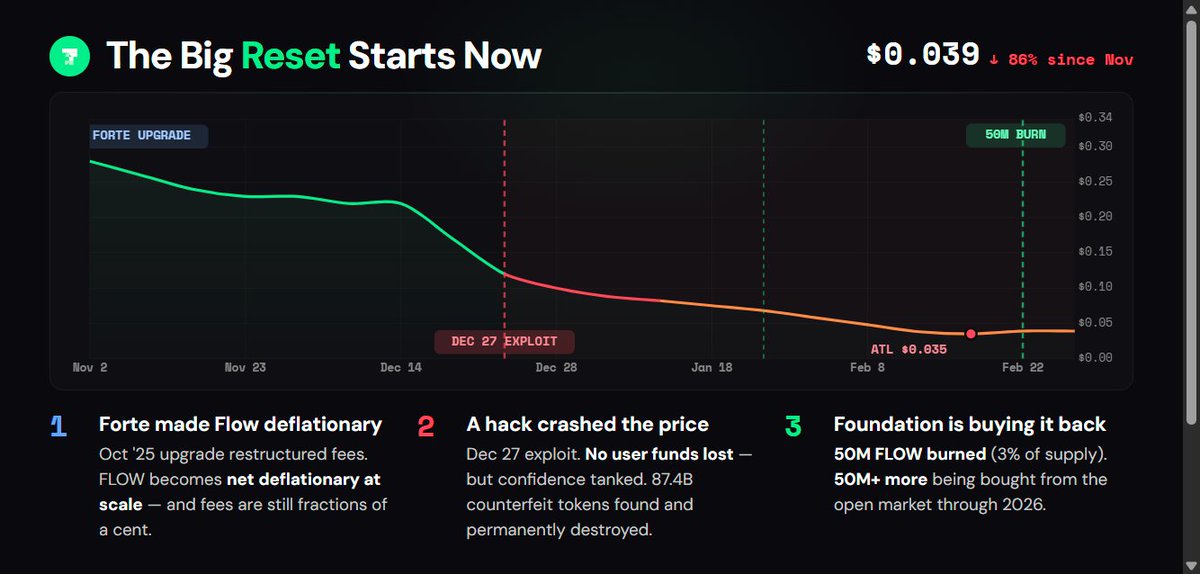
2 days ago Flow Foundation committed to removing 100M+ FLOW from circulation.
50M already burned (3% of total supply). 50M+ more being acquired from open market through 2026.
The hack that caused this? Zero user funds lost onchain. Every legitimate balance was untouched.
$120M+ in NFT market cap. Disney, NBA, NFL still shipping. Deflationary at scale.
This is a $0.039 token. The risk/reward here is wild.
Flow.com@flow_blockchain
Flow Foundation is permanently burning 50,343,896.87 FLOW today at 12:00 PM PT. In the coming months, an additional 50M FLOW will be acquired for the long-term treasury. These initiatives are part of a wider commitment towards $FLOW from the Foundation flow.com/post/flow-foun…
English
@SAPNFTBULL @KingsofCardio Did it really? Never paid attention to this trash s0lana chain, and I’m glad I didn’t.
English

@Counterplay700 @KingsofCardio I wasn’t defining relenvance. The total market cap of solana NFTs exceeded flow NFTs. Not trying to disagree with you. Just stating facts.
English
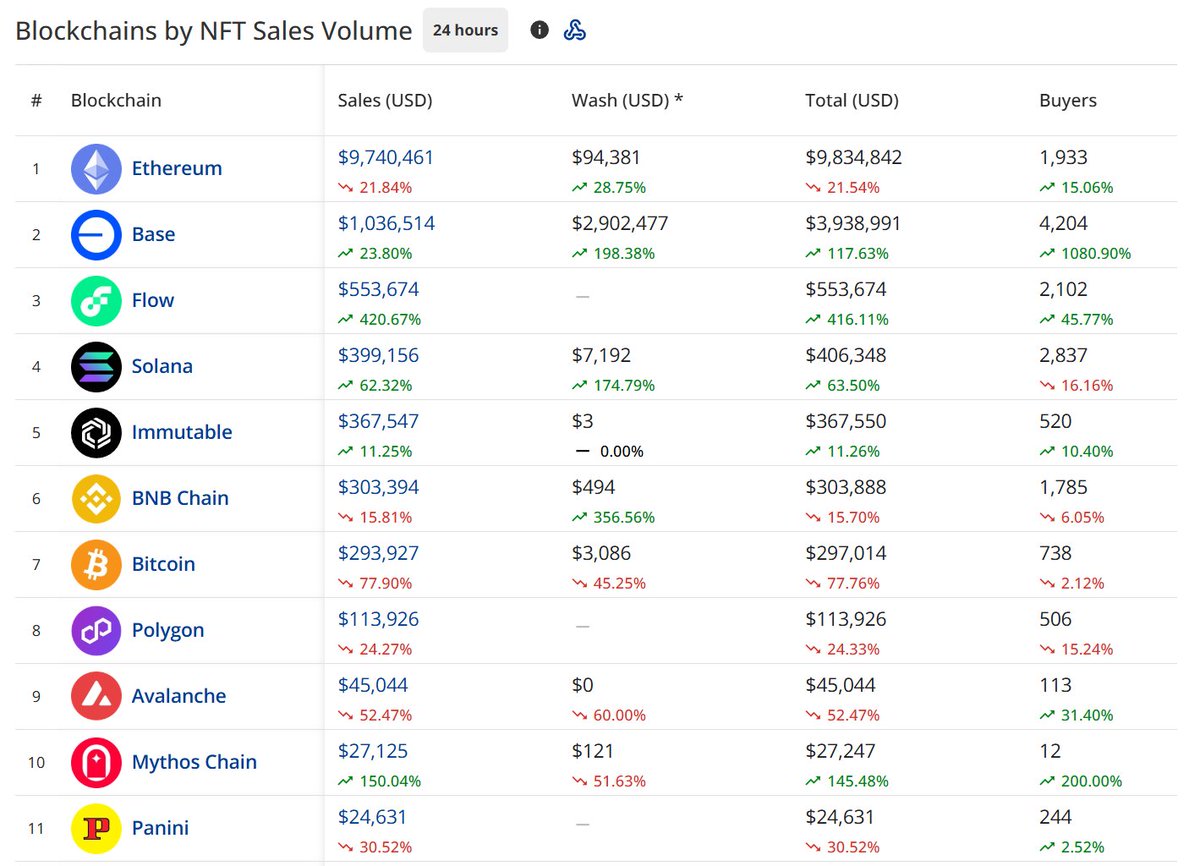
@SAPNFTBULL @KingsofCardio Short term hype is not the definition of relevancy.
And hardly disagree, nothing can be compared to the good old TS Days in 2021 when I comes to nft mania (maybe BAYC).
Unlike BAYC though, TopShot is still relevant today
English
@Counterplay700 @KingsofCardio Solana summer was bigger than prime flow days. There were just 1,000x more projects on solana. Degods, solana monkey business, and madlabs are some of the more well known ones…
English
@SAPNFTBULL @KingsofCardio Name one relevant nft project on Solana, because I can’t.
English
@KingsofCardio It’s wild that flow is still up there and above even solana. Wild…..
English
English

@RyanSAdams Every Layer 2 will eventually fade away 🪦 📉
English

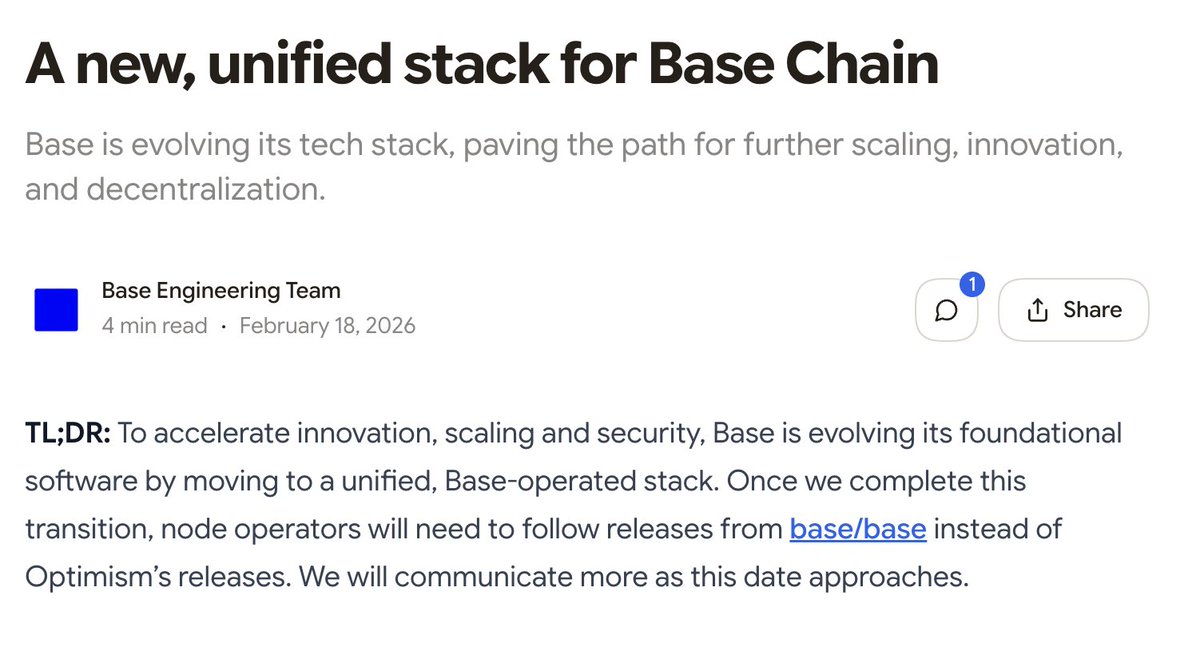
Base leaving Optimism.
End of an era.
There once was the dream of a superchain. Not enough glue to hold it together.
English
@KingsofCardio I’ve never seen more obvious shillbids than at this Goldin Lot….
English

"The people complaining will never be my customers in the first place."
Ken, the ONLY people complaining are those in your gravity arc. Nobody else cares!
cllct@cllctMedia
Ken Goldin SOUNDS OFF on anyone who doubts the legitimacy of the $16.5 million Pikachu Illustrator sale 😳
English
Counterplay.flow retweetledi

English

@LaPetiteADA @flow_blockchain has been doing this from the get-go too.
English

It seems like Ethereum is adopting Cardano’s approach. 👀🦋🍄
Ethereum's scaling strategy didn’t work out:
• L2s aren’t true ETH
• Most don’t have enough security
• ETH’s L1 has to scale on its own
Cardano was built this way from day one:
• L1 security first
• No bridged assets as a foundation
• Scales without breaking L1 trust with:
✅ Hydra: high-speed, low-cost tx (1M TPS)
✅ Leios: higher L1 throughput, same security
vitalik.eth@VitalikButerin
There have recently been some discussions on the ongoing role of L2s in the Ethereum ecosystem, especially in the face of two facts: * L2s' progress to stage 2 (and, secondarily, on interop) has been far slower and more difficult than originally expected * L1 itself is scaling, fees are very low, and gaslimits are projected to increase greatly in 2026 Both of these facts, for their own separate reasons, mean that the original vision of L2s and their role in Ethereum no longer makes sense, and we need a new path. First, let us recap the original vision. Ethereum needs to scale. The definition of "Ethereum scaling" is the existence of large quantities of block space that is backed by the full faith and credit of Ethereum - that is, block space where, if you do things (including with ETH) inside that block space, your activities are guaranteed to be valid, uncensored, unreverted, untouched, as long as Ethereum itself functions. If you create a 10000 TPS EVM where its connection to L1 is mediated by a multisig bridge, then you are not scaling Ethereum. This vision no longer makes sense. L1 does not need L2s to be "branded shards", because L1 is itself scaling. And L2s are not able or willing to satisfy the properties that a true "branded shard" would require. I've even seen at least one explicitly saying that they may never want to go beyond stage 1, not just for technical reasons around ZK-EVM safety, but also because their customers' regulatory needs require them to have ultimate control. This may be doing the right thing for your customers. But it should be obvious that if you are doing this, then you are not "scaling Ethereum" in the sense meant by the rollup-centric roadmap. But that's fine! it's fine because Ethereum itself is now scaling directly on L1, with large planned increases to its gas limit this year and the years ahead. We should stop thinking about L2s as literally being "branded shards" of Ethereum, with the social status and responsibilities that this entails. Instead, we can think of L2s as being a full spectrum, which includes both chains backed by the full faith and credit of Ethereum with various unique properties (eg. not just EVM), as well as a whole array of options at different levels of connection to Ethereum, that each person (or bot) is free to care about or not care about depending on their needs. What would I do today if I were an L2? * Identify a value add other than "scaling". Examples: (i) non-EVM specialized features/VMs around privacy, (ii) efficiency specialized around a particular application, (iii) truly extreme levels of scaling that even a greatly expanded L1 will not do, (iv) a totally different design for non-financial applications, eg. social, identity, AI, (v) ultra-low-latency and other sequencing properties, (vi) maybe built-in oracles or decentralized dispute resolution or other "non-computationally-verifiable" features * Be stage 1 at the minimum (otherwise you really are just a separate L1 with a bridge, and you should just call yourself that) if you're doing things with ETH or other ethereum-issued assets * Support maximum interoperability with Ethereum, though this will differ for each one (eg. what if you're not EVM, or even not financial?) From Ethereum's side, over the past few months I've become more convinced of the value of the native rollup precompile, particuarly once we have enshrined ZK-EVM proofs that we need anyway to scale L1. This is a precompile that verifies a ZK-EVM proof, and it's "part of Ethereum", so (i) it auto-upgrades along with Ethereum, and (ii) if the precompile has a bug, Ethereum will hard-fork to fix the bug. The native rollup precompile would make full, security-council-free, EVM verification accessible. We should spend much more time working out how to design it in such a way that if your L2 is "EVM plus other stuff", then the native rollup precompile would verify the EVM, and you only have to bring your own prover for the "other stuff" (eg. Stylus). This might involve a canonical way of exposing a lookup table between contract call inputs and outputs, and letting you provide your own values to the lookup table (that you would prove separately). This would make it easy to have safe, strong, trustless interoperability with Ethereum. It also enables synchronous composability (see: ethresear.ch/t/combining-pr… and ethresear.ch/t/synchronous-… ). And from there, it's each L2's choice exactly what they want to build. Don't just "extend L1", figure out something new to add. This of course means that some will add things that are trust-dependent, or backdoored, or otherwise insecure; this is unavoidable in a permissionless ecosystem where developers have freedom. Our job should make to make it clear to users what guarantees they have, and to build up the strongest Ethereum that we can.
English
@PrintorRekt @mert You almost had me in the first half 💀
English

@mert We shouldn't fudding anything mert. We should act mature with all cryptos
Xrp doing something thats why there is people buying selling it
As like solana, zec eth others cryptos
English
