Of course your club coach is going to tell you how amazing you are, how your HS coach is hating on you and how they can “get you to the next level”. You keep paying them thousands of dollars every year to be on their team…
Travel baseball has turned into:
Pay tons of money to play.
Pay to travel.
Pay to stay.
Pay to watch your own kid.
And somehow… this became normal. Will it ever change or just get worse?
Ever notice
Teams with loudmouth parents in the stands usually have loudmouth players and coaches?
Teams with classy parents in the stands usually have classy players and coaches?
Why is this?
It's all about alignment.
FAILING TO HOLD PEOPLE ACCOUNTABLE:
- erodes your team's culture
- undermines your team's standards
- weakens your leadership credibility
- frustrates people who do the right thing
- destroys your team's chances of success
IF YOU WANT TO WIN,
YOU MUST HOLD PEOPLE ACCOUNTABLE.
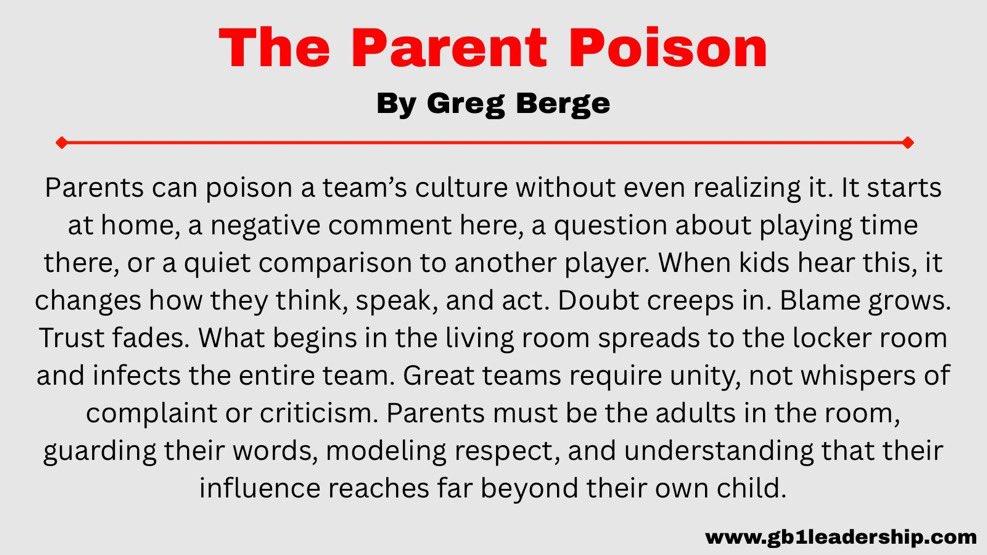
The Parent Poison…
Most parents want the best for their kids.
But sometimes, without realizing it, they slowly poison the very team their child is part of.
It rarely starts with something dramatic.
It starts small.
A comment in the car ride home.
“Why didn’t the coach play you more?”
A comparison.
“You’re better than that kid.”
A quiet complaint at the dinner table.
“That coach doesn’t know what he’s doing.”
Kids hear everything.
And when they hear it, something changes.
Doubt creeps in.
Blame grows.
Trust fades.
The mindset shifts from team first to me first.
What begins in the living room eventually shows up in the locker room.
You see it in body language.
You hear it in conversations.
You feel it in the culture.
Instead of unity, there are whispers.
Instead of accountability, there are excuses.
Instead of growth, there is resentment.
Great teams cannot survive that environment.
Because the best teams are built on three things:
Trust.
Sacrifice.
Shared purpose.
When players start believing the problem is everyone else, those things disappear.
Parents play a powerful role in a team’s culture whether they realize it or not.
The healthiest teams have parents who:
Support the program.
Encourage resilience.
Teach their kids to handle adversity.
They remind their children:
Work harder.
Be a great teammate.
Control what you can control.
They don’t feed excuses.
They build character.
And here’s the truth most people miss:
A parent’s influence extends far beyond their own child.
It affects the locker room.
It affects the culture.
It affects the entire team.
Great teams require unity, not whispers of criticism.
So the challenge for parents is simple.
Be the adult in the room.
Guard your words.
Model respect.
Support the team.
Because what starts at home always finds its way onto the court, the field, or the locker room.
And the best parents don’t poison the culture.
They protect it.
Youth sports isn’t dying from lack of talent. It’s dying from overload. No free play, rest, recovery, off-seasons. Too many showcases & tournaments. Not enough development. Parent ego + social media pressure fuel the fire. We don’t need more exposure. We need better environments.
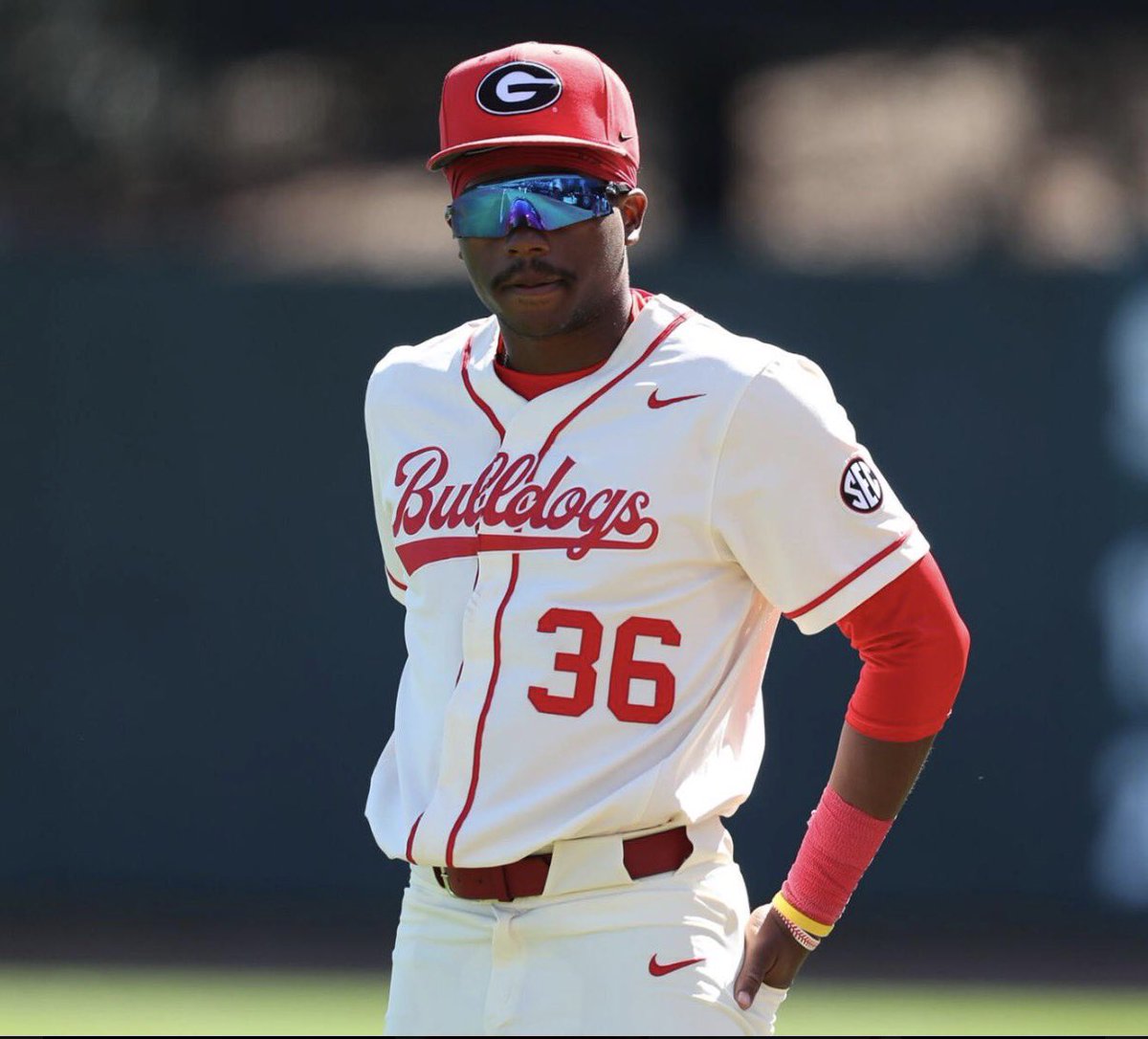
Starting a petition to force Georgia Baseball to wear these cream unis once per weekend.
Absolutely gorgeous and far better than the usual home whites. #GoDawgs
My dad used to say: "You should never be outworked or out-prepared."
There will always be people smarter than you and more talented than you.
But you control the effort and the prep.
Don’t be the player who is too cool to go hard. Whether in a workout or a game, 100% is the bare minimum. Cool has no place in the game. Cool won’t impress anyone, won’t get you more playing time, won’t ever get you better. Cool will keep you on the bench. Cool will get you beat!
This transfer stuff in high school has to stop. Here is a novel idea, grow and develop where your feet are. Learn work ethic, accountability, and leadership skills instead of running away when you don't get your way. This also goes for parents. The grass isn't always greener
Well Coached Teams.
Compete.
Back up bases.
Take aggressive turns.
Take the extra base.
Throw to the right place.
Pitch and play with tempo.
Play with class.
Make the routine play look routine.
Play with energy.
Take smart tough gritty at bats.
Line up correctly defensively.
Don't run their mouths.
Take pride in their facilities.
Wear their uniform and hat the right way.
Add to the list.
Kid showed up 10 minutes late to practice last Thursday.
Freshman.
Third week on the team.
Still learning how everything works.
I didn't say anything.
Just moved the practice forward without him.
He jogged up, quiet, and slid into the back of the group.
Everyone kept moving.
During the cool-down, I saw two of our leaders pull him aside by the fence.
Couldn't hear what they said.
Didn't need to.
Just watched them talk — calm, serious, no raised voices.
The kid nodding.
Listening.
Thursday afternoon, 4:47 PM, my phone buzzes:
"Won't happen again, Coach. My bad."
I never tell new coaches this is what's possible because they don't believe me.
They think you have to enforce everything.
Make the call on every situation.
Be the one who holds the line.
But when your architecture is clear — when everyone understands what the goal demands — the team regulates itself.
Those leaders weren't doing me a favor.
They were protecting something they built.
I don't police alignment.
The standard does.