Sabitlenmiş Tweet

CryptoCat.🇺🇦
4.3K posts

@CryptoCatVC
Pedantic complainer, savage satirist, crypto veteran, ETH maxi & defi OG yield hacker. I meme in production. Pet cat @egirl_capital

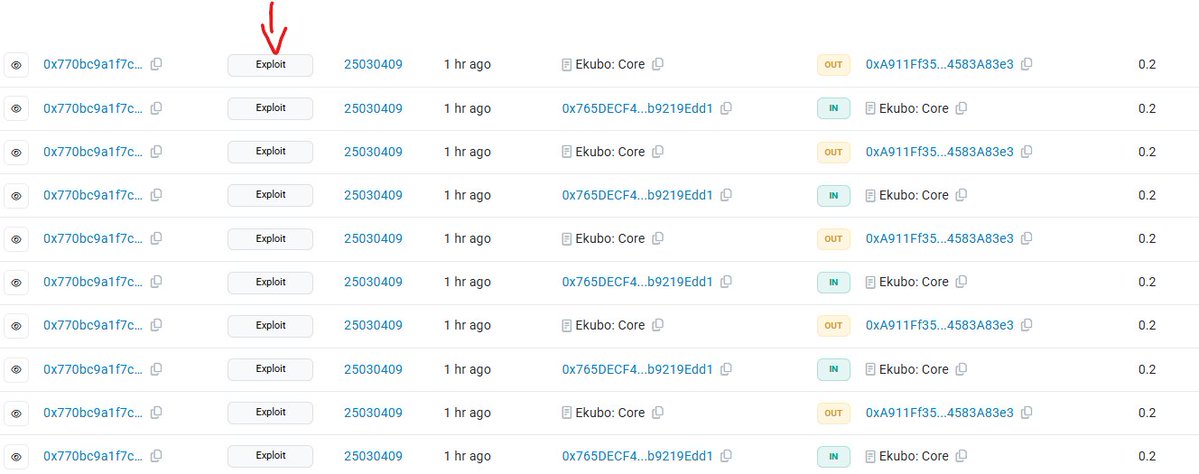
There is an active security incident on Ekubo swap router contract on EVM chains only. Liquidity providers are not affected. Starknet is not affected. We are investigating the scope of the issue, but to be safe revoke all outstanding approvals: revoke.cash


There is an active security incident on Ekubo swap router contract on EVM chains only. Liquidity providers are not affected. Starknet is not affected. We are investigating the scope of the issue, but to be safe revoke all outstanding approvals: revoke.cash


Update on rsETH incident: According to our analysis, rsETH on Ethereum mainnet is fully backed. Out of an abundance of caution, rsETH remains frozen across Aave V3 and V4 and exposure to the incident is capped. WETH reserves also remain frozen across affected markets including Ethereum, Arbitrum, Base, Mantle, and Linea. Aave is actively validating information and assessing potential resolutions.

USDC and USDT on Aave are pinned at 100% utilization. Lenders can't withdraw. So why is the yield only 13.5%? Under the old model, a pool hitting 100% utilization would send supply APY to 40%, 60%, sometimes 80%+ within minutes. That's what everyone remembers from the 2022 USDT squeeze on Aave V2. Rate goes vertical. Borrowers get liquidated. Suppliers feast. That's not happening this time. Here's why. Aave rolled out something called the Slope2 Risk Oracle earlier this year. Instead of rates spiking instantly when utilization pins, the curve escalates GRADUALLY based on how long the pool stays stressed. A 1-hour spike barely moves the rate. A 24-hour spike moves it some. A 72-hour spike starts to hurt. The ceiling is also lower. Stablecoin slope2 now targets 10-12%. Used to be 22-35%. So instead of a panic rate explosion, you get a slow burn. Who wins from this design? Borrowers. Including the attacker still sitting on $236M in WETH debt, paying a fraction of what they'd be paying under the old curve. Who loses? Lenders. The "your pool is frozen but at least you're earning 40% APY" trade is dead. Now it's "your pool is frozen and you're earning 13.5%." This was meant to prevent deleveraging cascades during stress events. It's doing that. It's also suppressing the market signal that usually tells lenders to supply more liquidity and borrowers to repay fast. Every design choice is a tradeoff. This one just got tested live, with $200M of bad debt on the line.

Update on KelpDAO rsETH: Funds were indeed stolen and not minted. The attack is consistent with a failure in a single-DVN verification setup (@LayerZero_Core), releasing pre-funded rsETH on the destination chain (Ethereum), without any source side (Unichain) debit. Rather than dumping >$200M of rsETH into thin liquidity, the attacker deposited into Aave to borrow WETH, avoiding slippage and extracting immediate WETH liquidity. My original post assumed that these positions were backed. Now we know that collateral did exist on Ethereum and was accepted by Aave, but given the funds were drawn from the bridge’s pre-funded inventory and now KelpDAO has paused withdrawals, my original assumption breaks. If rsETH can’t clear at par, there’s bad debt risk. So, the question now remains: who takes the loss? Aave? (Bad debt) rsETH holders? If Aave ends up with bad debt, this becomes a real stress test for Umbrella. Waiting on Aave, Kelp, and/or LZ comms.

Update on rsETH incident: According to our analysis, rsETH on Ethereum mainnet is fully backed. Out of an abundance of caution, rsETH remains frozen across Aave V3 and V4 and exposure to the incident is capped. WETH reserves also remain frozen across affected markets including Ethereum, Arbitrum, Base, Mantle, and Linea. Aave is actively validating information and assessing potential resolutions.

Update on rsETH incident: According to our analysis, rsETH on Ethereum mainnet is fully backed. Out of an abundance of caution, rsETH remains frozen across Aave V3 and V4 and exposure to the incident is capped. WETH reserves also remain frozen across affected markets including Ethereum, Arbitrum, Base, Mantle, and Linea. Aave is actively validating information and assessing potential resolutions.