Herman, (ττ, ϙ),

7.2K posts

Herman, (ττ, ϙ), banner
Herman, (ττ, ϙ),

Herman, (ττ, ϙ),

@CryptoHerman6

(ττ,ϙ) Crypto enthusiast, $TAO, $TAO #SN35, #SN63, #SN123, #SN125, $QUIL, and $FACT investor!

Katılım Şubat 2021
584 Takip Edilen478 Takipçiler
Herman, (ττ, ϙ), retweetledi
Barbarian
Barbarian@Barbarian7676·
@Pop_Collapse What an exceptionally opportune time to find yourself researching MANTIS The Arbos agent is in a strong short at the moment, PNL is very solidly positive since the experiment begun.
English
1
4
21
1.8K
Herman, (ττ, ϙ), retweetledi
Barbie True Blue
Barbie True Blue@Pop_Collapse·
MANTIS, subnet 123: a low-cap quant signal machine on Bittensor $TAO "the ultimate signal machine" Founder @Barbarian7676 is one of the most aligned and technically sharp builders in the ecosystem. Even Const agrees 👇 From Barbarian directly: "To go over the vision of MANTIS from each side: That any quantitative trader anywhere in the world can contribute their alpha to the MANTIS network, and be rewarded precisely proportionally to their contribution to the network models profitability and accuracy. That any human, agent, etc with crypto can pay to access the signals from the network, and MANTIS holders ultimately profit from the value of the signals via buybacks and burns (although under conviction it will probably look more like max time lock)."
Barbie True Blue tweet media
Barbarian@Barbarian7676

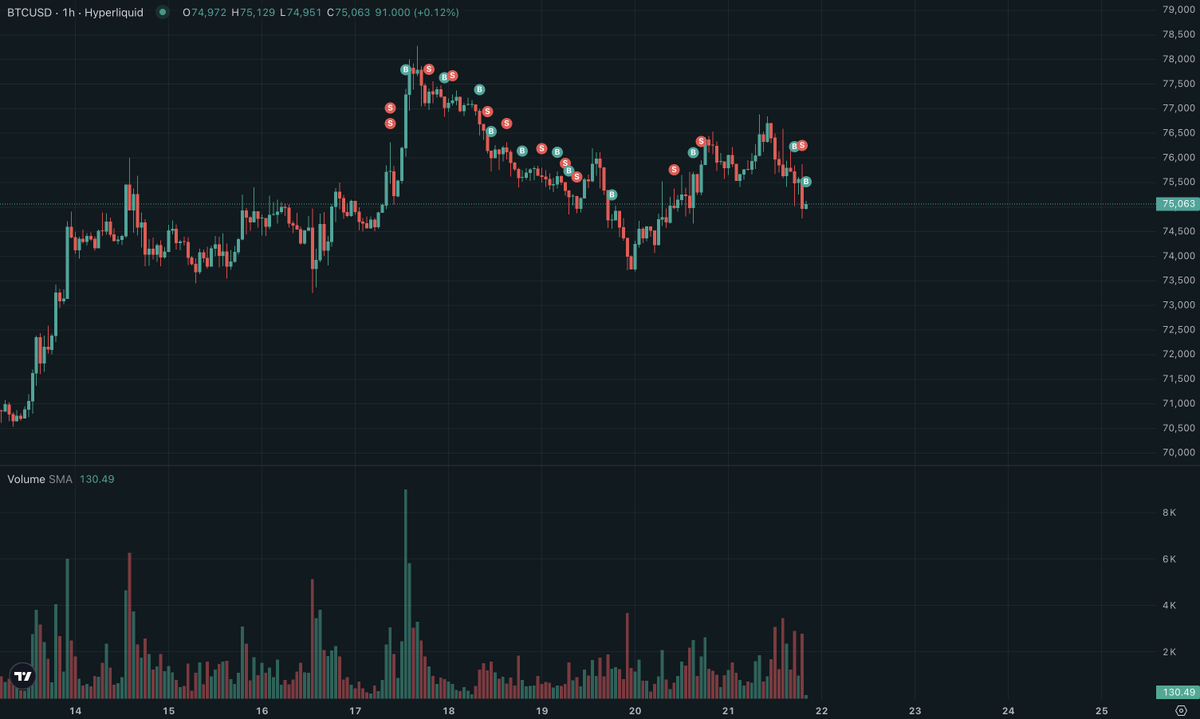
We gave an Arbos agent 2.2K, the MANTIS signals fresh from the API and the goal to trade as aggressively as possible with 25% 3 month risk of ruin accepted, let's see how this goes.
English
3
12
63
4.8K
Herman, (ττ, ϙ), retweetledi
Barbarian
Barbarian@Barbarian7676·
@Pop_Collapse 3 days, 50+ trades, agents monitoring for black swan events that might contradict network signals, all automated
English
0
2
18
266
Herman, (ττ, ϙ), retweetledi
Barbarian
Barbarian@Barbarian7676·
We gave an Arbos agent 2.2K, the MANTIS signals fresh from the API and the goal to trade as aggressively as possible with 25% 3 month risk of ruin accepted, let's see how this goes.
Barbarian tweet media
English
14
9
79
22.2K
Herman, (ττ, ϙ), retweetledi
Barbarian
Barbarian@Barbarian7676·
@TheTNetHunter It's been a while since I've been deep in the general crypto space. What even is there these days trying to compete with $TAO anymore? Strongest altcoin out there is $TAO
English
1
6
24
683
Herman, (ττ, ϙ), retweetledi
Barbarian
Barbarian@Barbarian7676·
It will be quite exciting to see how Bittensor and it's teams will evolve in the upcoming era of liquid subnet ownership.
English
2
6
44
1.3K
Herman, (ττ, ϙ), retweetledi
Barbarian
Barbarian@Barbarian7676·
New Challenge: FUNDING-XSEC MANTIS is adding cross-sectional funding rate prediction across 20 perpetual futures assets. The problem: Predict which assets' 8-hour funding rates will change more than the cross-sectional median. Labels use funding rate changes (not levels) relative to the median, stripping out autocorrelation and market-wide beta. Base rate is exactly 50% by construction. All 20 assets are pooled, giving 20x the effective sample count of a single-asset challenge. Assets: BTC, ETH, SOL, XRP, DOGE, ADA, AVAX, LINK, DOT, SUI, NEAR, AAVE, UNI, LTC, HBAR, PEPE, TRX, SHIB, TAO, ONDO Submission: Dict keyed by asset, each value in [-1, 1]. Magnitude matters — it's used directly as a logistic regression feature. Missing assets default to 0.0. Weight: 4.0 (~17% of emissions), second only to MULTI-BREAKOUT. Scoring: Walk-forward meta-model (same structure as XSEC-RANK) with extended embargo to prevent label leakage from the 8h forward horizon, plus a stale-signal filter that zeroes constant submissions. Emissions ramp up gradually as the meta-model accumulates data — comparable timeline to XSEC-RANK. Also in this update: EMA smoothing on weight-setting (α=0.15), hardened drand_cache recovery, updated Miner Guide with per-challenge scoring details.
English
2
6
26
889
Herman, (ττ, ϙ), retweetledi
Barbarian
Barbarian@Barbarian7676·
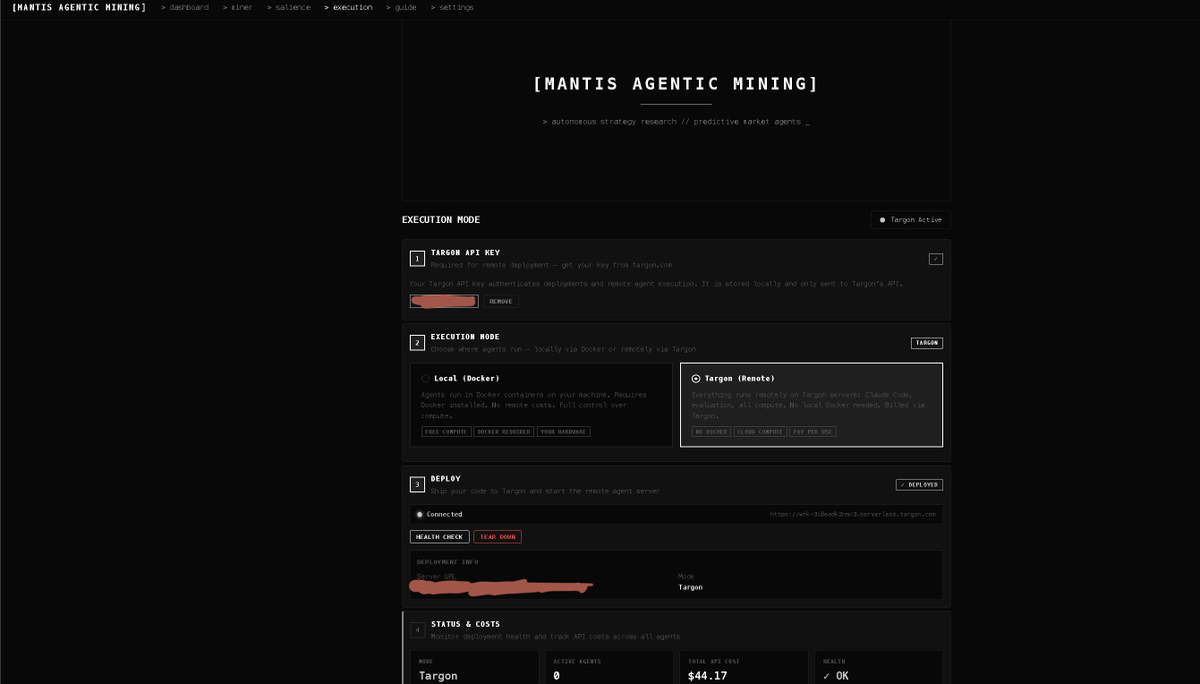
We have launched a local prototype of the MANTIS agentic mining platform roughly a week ago to the discord. Here's what we've added so far as we progress towards making this easily usable by less technical audiences. 1/ Targon or Local execution options, the ability to provision a targon serverless compute platform in a few clicks to run agents in:
Barbarian tweet media
English
4
8
33
1.7K
Herman, (ττ, ϙ), retweetledi
Barbarian
Barbarian@Barbarian7676·
MANTIS is a decentralized quant firm on Bittensor. The largest quant firms run hundreds of semi-autonomous portfolio managers, each finding a small edge. The firm combines them. The aggregation infrastructure and talent selection is what creates the product. MANTIS replaces PMs with miners, the firm's proprietary aggregation with an open scoring protocol, and capital allocation with Bittensor's emissions. Anyone with a hotkey and a prediction model can participate. No legacy credentials required. No interview. The thesis is standard ensemble theory. Condorcet, 1785: poll many people who are each slightly better than chance, the group decision converges toward certainty. The mechanism is noise averaging. Signal reinforces, noise cancels. This is why the scoring protocol pays for orthogonality. A miner who finds novel predictive information, even at moderate standalone accuracy, is worth more to the network than someone who replicates the top signal at higher accuracy. This is a critical difference from any other subnet that has attempted this. A decentralized network produces exactly the orthogonality the math requires. Each miner independently chooses features, architectures, data sources. One builds HMM regime detectors. Another uses microstructure data. Another runs fractal analysis. Genuinely different research. This is also why multi-PM funds outperform single-PM funds with larger teams. Independent researchers exploring different hypotheses produce more orthogonal signals than a coordinated team on a shared agenda. MANTIS scales this without the hiring constraint. The long-term vision is that MANTIS becomes a primary global permissionless marketplace to purchase and monetize financial predictive ability at scale.
English
1
6
53
1.5K
Herman, (ττ, ϙ), retweetledi
Barbarian
Barbarian@Barbarian7676·
@markjeffrey please check your DMs
English
3
1
15
467
Herman, (ττ, ϙ), retweetledi
Barbarian
Barbarian@Barbarian7676·
MANTIS A Decentralized Quantitative Signal Network Bittensor Subnet 123 ────────── Abstract Quantitative funds produce returns by hiring researchers, each discovering small, partially independent edges, and combining their signals into portfolios no single researcher could construct alone. MANTIS replicates this structure as a permissionless Bittensor subnet. Miners submit sealed forecasts across multiple challenge types and asset classes. Validators measure each miner's marginal contribution to ensemble accuracy using walk-forward scoring, then set on-chain weights proportional to that contribution. The result is a decentralized quant shop where anyone with a registered hotkey and a prediction model can contribute signal, and where all evaluation is cryptographically auditable. Thesis The largest quantitative firms: Citadel, Millennium, Point72, Balyasny run hundreds of semi-autonomous portfolio managers. Each PM finds a sliver of edge. The firm's value is not in any single PM's alpha but in the aggregation infrastructure, and talent aqquisition. MANTIS implements this same structure on Bittensor. The subnet replaces PMs with miners, replaces the firm's proprietary aggregation with an open scoring protocol, and replaces the fund's capital allocation with Bittensor's emissions. A decentralized, permissionless version of multi-manager fund architecture, eliminating the barriers to entry that restrict participation in traditional quant shops. Why Ensembles Work Condorcet observed in 1785 that if you poll many people who are each slightly better than chance, the group decision converges toward certainty as the group grows. The mechanism is noise averaging. Each forecaster's prediction is part signal, part noise. When you combine many forecasters, the signal reinforces while the noise partially cancels. The more independent the noise across forecasters, the more cancellation you get. Two things determine how far this can go: how accurate each individual forecaster is, and how correlated their errors are. Individual accuracy sets the signal. Error correlation sets the floor, the point beyond which adding more forecasters stops helping because everyone is wrong in the same way, at the same time. Past a modest number of forecasters, the primary lever is not adding more participants --- it is reducing the correlation between where they make errors. A miner who finds a genuinely different source of predictive information, even with moderate standalone accuracy, is worth more to the network than a miner who replicates the best existing signal at higher accuracy. The scoring protocol rewards this directly. A decentralized network produces exactly the kind of orthogonality the math requires. Each participant independently selects features, model architectures, data sources, and trading hypotheses. One miner may use fractal dimension analysis on tick data. Another may build hidden Markov regime detectors. A third may exploit cross-exchange microstructure imbalances. The resulting feature spaces reflect genuinely different lines of quantitative inquiry --- the same reason multi-PM funds outperform single-PM funds with larger teams. System Architecture Miners register hotkeys, receive challenge specifications, and submit encrypted forecast vectors at regular block intervals. Validators decrypt matured payloads, evaluate predictions against realized outcomes, compute per-miner contribution scores, and set on-chain weights. Lifecycle of a Prediction Price observation. Validators fetch current prices for all tracked assets and record them alongside the current block number. Miner submission. Miners compute forecast vectors for each active challenge and submit a single encrypted payload containing predictions across all challenges. Sealing. Predictions are dual-encrypted before submission. No party other than the subnet owner can observe a miner's prediction before the maturation window closes. Decryption. After the maturation period, validators retrieve the relevant Drand beacon signature, decrypt payloads, verify binding hashes, and validate submission structure. Scoring. Validators stream training data and compute per-miner salience scores for each challenge using walk-forward evaluation with embargo periods. Weight setting. Per-challenge salience scores are normalized, weighted by challenge importance, and aggregated into a single weight vector set on-chain. Assets The subnet tracks assets across crypto, forex, and metals. Multi-asset challenges operate across universes of 20--33 assets simultaneously, spanning BTC, ETH, SOL, XRP, and dozens of additional crypto assets alongside forex pairs (CADUSD, NZDUSD, CHFUSD) and metals (XAGUSD). Encryption Prediction integrity is the foundational requirement. If any party can observe a miner's prediction before the outcome is determined, the system is vulnerable to front-running, copying, and selective revelation. MANTIS enforces this through dual-path encryption. Owner path. X25519 ECDH key agreement between a miner ephemeral keypair and the owner public key derives a shared secret that wraps a ChaCha20-Poly1305 symmetric key. The owner can decrypt immediately for trading. Timelock path. The ephemeral private key and symmetric key are encrypted via Drand identity-based encryption (BLS12-381) to a future beacon round. After the round passes, anyone --- including validators --- can decrypt and audit. Binding hash. SHA-256 over the hotkey, round number, owner public key, and ephemeral public key serves as authenticated associated data for both paths, making replay, relay, substitution, and selective reveal cryptographically impossible. Nobody except the owner can see a miner's prediction before the maturation window closes. Predictions that fail any verification step are recorded as zero vectors and receive no weight. ────────── Challenge Types MANTIS operates multiple challenge types in parallel. Each targets a different forecasting problem, is scored independently, and contributes to aggregate miner weights via a configurable weighted sum. Binary Directional Prediction Predict whether the 1-hour forward return will be positive or negative. Assets include ETH, CADUSD, NZDUSD, CHFUSD, XAGUSD. Walk-forward ElasticNet meta-model on out-of-sample base-model predictions. L2 splits weight among correlated miners; L1 drives noise to zero. Volatility Regime Classification Classify forward price moves into five volatility regimes at z-scored thresholds. ETH (1-hour) and BTC (6-hour). Miners submit class probabilities and quantile path estimates. Scoring blends per-class logistic regressions with quantile path models. Barrier-Hit Prediction Given current price and sigma-scaled barriers, predict which direction breaches first (up, down, or neither). ETH. L2 logistic regression with coefficient magnitude as importance. Multi-Asset Range Breakout A state machine tracks rolling 4-day price ranges per asset, detects breakouts, and sets continuation/reversal barriers. Miners predict whether a breakout will continue or reverse across 33 crypto assets simultaneously. This is the highest-weighted challenge operating across 33 assets generates large sample counts, making statistical evaluation robust. Scoring uses L2 logistic regression on z-scored predictions with episode-balanced weighting and cross-miner correlation penalties. Cross-Sectional Asset Ranking Predict which of 33 assets will outperform the cross-sectional median return. Reformulated as binary classification pooled across all assets, yielding 33x the effective sample count. Produces signals that are close to market-neutral by construction. Funding Rate Cross-Section Predict which of 20 assets' funding rates will change more than the cross-sectional median. Same pooled binary structure as cross-sectional ranking, but targeting asset-specific funding deviations. Using changes rather than levels destroys the high autocorrelation in funding rate levels. Scoring and Weight Setting Walk-Forward Evaluation Scoring uses strict walk-forward temporal separation when needed. Training data precedes an embargo period, which precedes the evaluation window. No future information enters any model that evaluates past predictions. This is the actual scoring logic running in production on predictions that were encrypted and sealed before the outcome was known. The Meta-Model Key properties: Sybil resistance. L2 regularization splits coefficients among identical miners. If n miners submit the same predictions, each receives roughly 1/n of the weight a single miner would receive. Cloning is unprofitable. Noise elimination. L1 penalty drives zero-information miners to exactly zero weight. Temporal weighting. Exponential recency weighting adapts to changing miner quality. Top-K pruning. Only the highest-importance miners are retained, with rank decay concentrating rewards on the most valuable contributors. Aggregation Each challenge carries a configurable weight. Per-challenge salience scores are normalized, multiplied by challenge weight, and averaged to produce a single per-miner weight vector that determines emission share. New miners receive a small fixed allocation while ramping up. A fixed percentage of emissions is burned via UID 0 to reduce sell pressure. Anti-Adversarial Design The scoring system has been iteratively hardened against adversarial behaviors observed in live operation. Copy prevention. The encryption protocol makes direct copying cryptographically impossible. Post-maturation statistical copying is addressed by the uniqueness penalty and L2 coefficient splitting. Sybil resistance. L2 regularization ensures identical or near-identical miners collectively earn less than a single miner producing the same signal. The uniqueness penalty provides a secondary defense layer. Revenue Path The MANTIS thesis is that a decentralized network of forecasters, properly scored and combined, produces tradeable signal. The revenue model follows directly. Proprietary trading. The owner decrypts predictions immediately via the owner encryption path, before any other party has access. The owner runs an account on a proprietary trading firm. Executing positions based on the ensemble signal across all challenge types and asset classes. This is the primary revenue path. Signal marketplace. Processed signals are available at mantis123.com. Trading firms, hedge funds, other Bittensor subnets, and individual traders can access forecasts spanning directional, volatility, breakout, barrier, cross-sectional, and funding rate predictions across dozens of assets. With time this will become the primary source of revenue. Structured products. Partnerships with exchanges enable copy-trading vaults where positions are executed without leaking signal to the market or to consumers. Agentic signal API. Integration with authentication and payment infrastructure enables autonomous agents to programmatically consume MANTIS signals. Agentic mining platform. An autonomous model development system where LLM agents iteratively design features, train models, and evaluate performance. Users describe a trading thesis; the system handles feature engineering, model training, walk-forward evaluation, and live deployment. This lowers the barrier to mining and accelerates the rate at which the network explores the feature space, driving down the error correlation that bounds ensemble performance. Incentive Alignment Miners maximize emissions by producing predictions that improve ensemble accuracy. The scoring mechanism rewards orthogonal signal a miner correlated with existing top performers has low marginal value, even if their standalone accuracy is high. The optimal strategy is to find genuinely different sources of edge. Consumers benefit from signal quality that no single research team could produce. The decentralized structure means the product improves as the network grows. Subnet 123 | mantis123.com
English
4
6
43
2.1K
Herman, (ττ, ϙ), retweetledi
Barbarian
Barbarian@Barbarian7676·
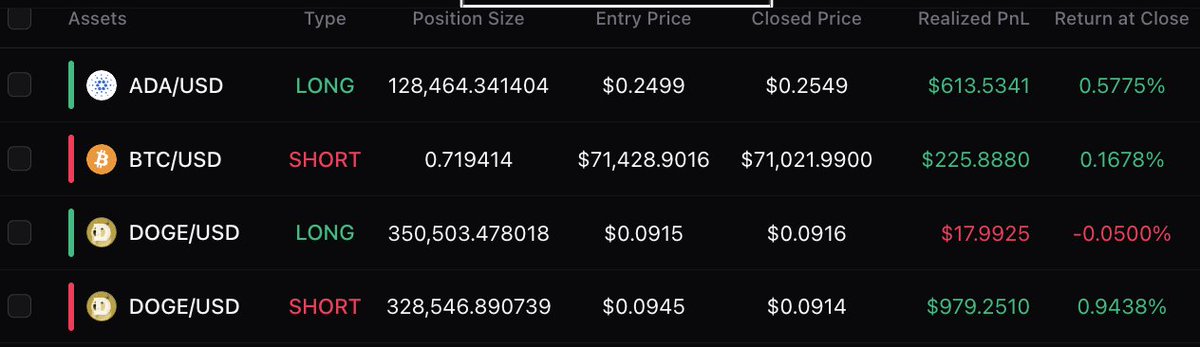
Recent very high confidence trades on Vanta from signals from MANTIS SN123
Barbarian tweet media
English
2
5
15
778
Herman, (ττ, ϙ), retweetledi
Barbarian
Barbarian@Barbarian7676·
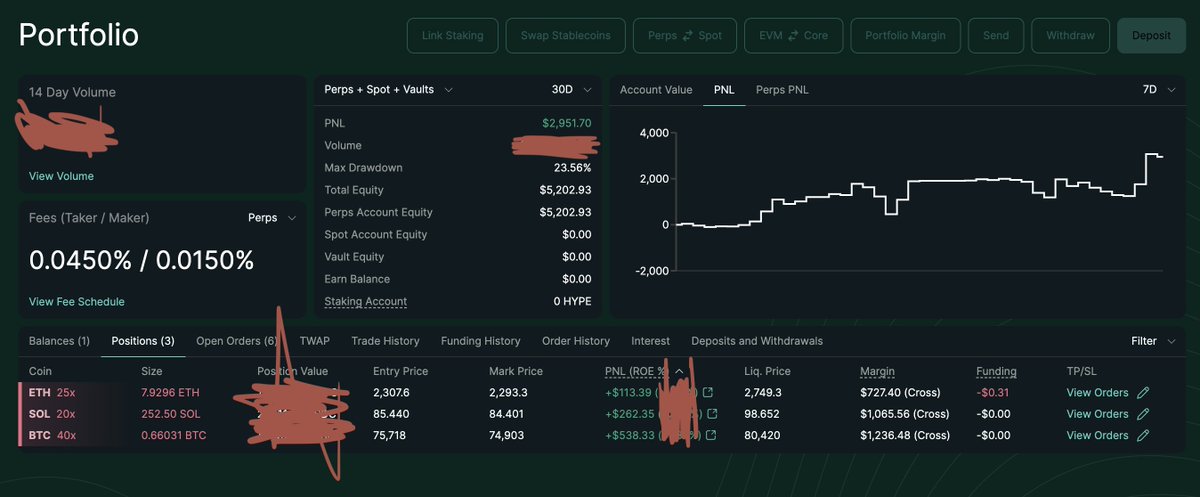
Stats so far from our trading on Vanta. We have recently increased the sizing we are using on our trades. Based on backtests and the sizing we are currently using we should hit the profit target and be funded by the first third of the next month or earlier.
Barbarian tweet media
Barbarian@Barbarian7676

The last 24 hours worth of trades on @VantaTrading with signals coming from our miners on MANTIS #sn123.
English
3
6
28
1.7K
Herman, (ττ, ϙ), retweetledi
Barbarian
Barbarian@Barbarian7676·
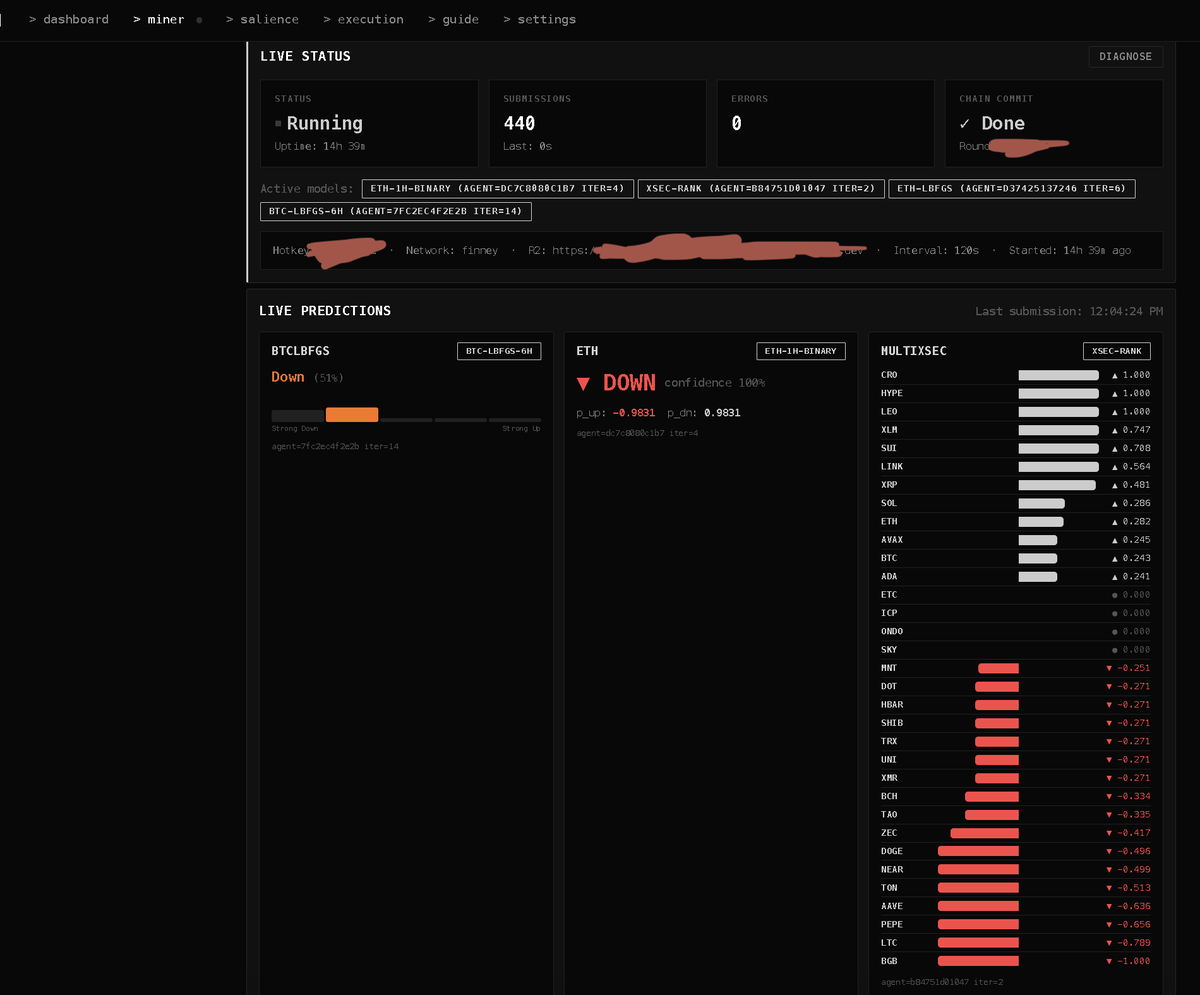
Live miner testing on mainnet via the agentic platform is underway.
Barbarian tweet media
English
3
7
22
834
Herman, (ττ, ϙ), retweetledi
Barbarian
Barbarian@Barbarian7676·
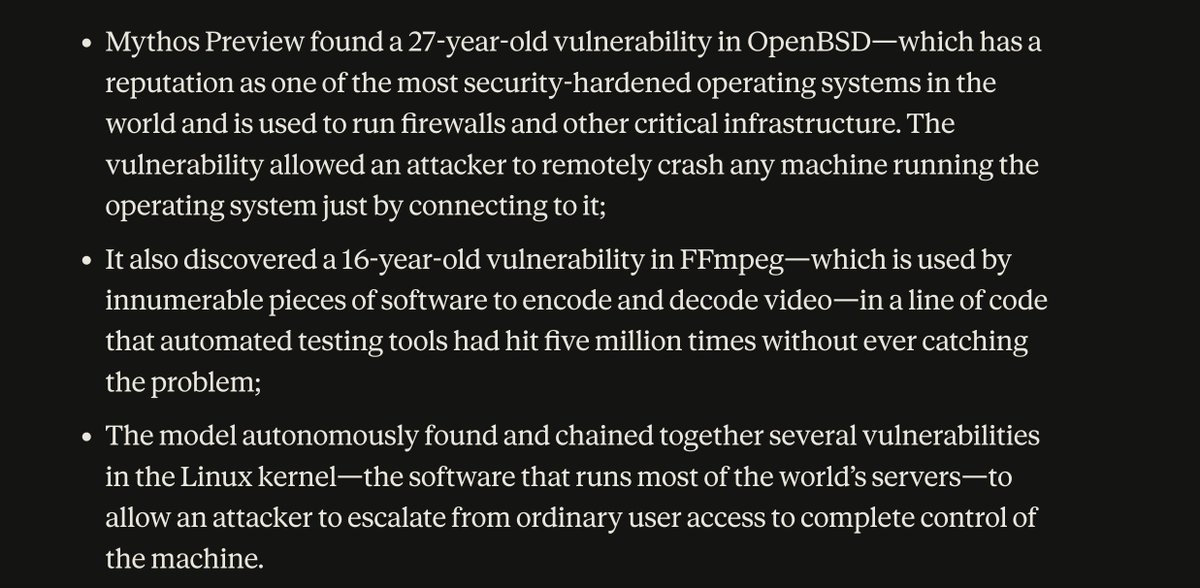
Narrow superintelligence has arguably been reached. No human has done what this model has, at the scale it has. There is a short window before these labs are federalized. The state will possess a superior form of intelligence in the space of manipulating digital systems. @bittensor must prevail, for humanity.
Barbarian tweet media
Anthropic@AnthropicAI

Introducing Project Glasswing: an urgent initiative to help secure the world’s most critical software. It’s powered by our newest frontier model, Claude Mythos Preview, which can find software vulnerabilities better than all but the most skilled humans. anthropic.com/glasswing
English
2
8
33
1.3K
Herman, (ττ, ϙ), retweetledi
Barbarian
Barbarian@Barbarian7676·
Every miner prediction on MANTIS is encrypted before submission. Dual-path: X25519 + ChaCha20 for the owner (immediate decryption for trading), Drand timelock for validators and public audit (decryptable after ~1 hour). A binding hash ties both paths together. Nobody else sees the prediction before the outcome window closes.
English
1
4
18
506