
Hemmant🟧.Bitmap🍁 retweetledi
Hemmant🟧.Bitmap🍁
10.8K posts


Hemmant🟧.Bitmap🍁
@Crypto_Crrr
Things in #BTC 😇 Love Memes | @TheRoyals_DMT 👑 #DMT
Metaverse 🟧 Katılım Mayıs 2022
4.8K Takip Edilen812 Takipçiler

Hemmant🟧.Bitmap🍁 retweetledi

Hemmant🟧.Bitmap🍁 retweetledi

Hemmant🟧.Bitmap🍁 retweetledi
Hemmant🟧.Bitmap🍁 retweetledi
Hemmant🟧.Bitmap🍁 retweetledi

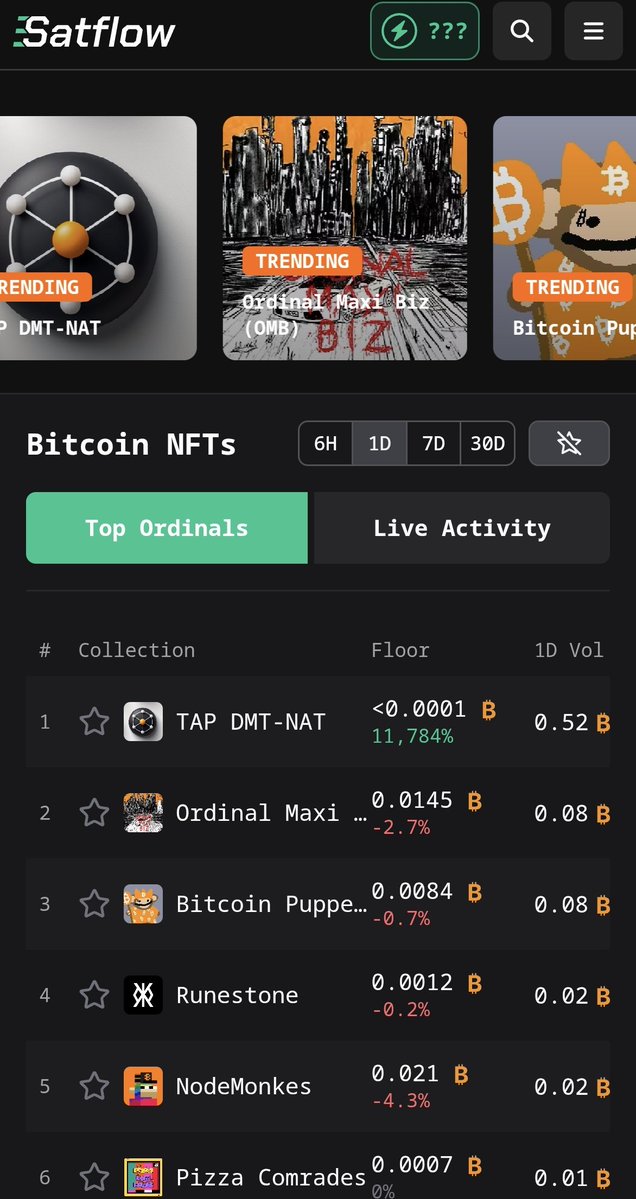
A second subsidy is needed or Bitcoin is cooked.
$NAT is inevitable.
Justin Drake@drakefjustin
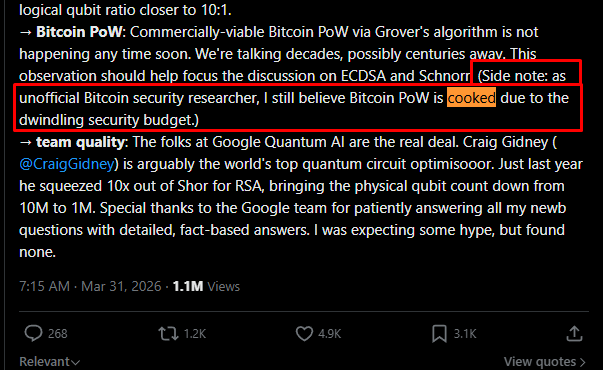
Today is a monumentous day for quantum computing and cryptography. Two breakthrough papers just landed (links in next tweet). Both papers improve Shor's algorithm, infamous for cracking RSA and elliptic curve cryptography. The two results compound, optimising separate layers of the quantum stack. The results are shocking. I expect a narrative shift and a further R&D boost toward post-quantum cryptography. The first paper is by Google Quantum AI. They tackle the (logical) Shor algorithm, tailoring it to crack Bitcoin and Ethereum signatures. The algorithm runs on ~1K logical qubits for the 256-bit elliptic curve secp256k1. Due to the low circuit depth, a fast superconducting computer would recover private keys in minutes. I'm grateful to have joined as a late paper co-author, in large part for the chance to interact with experts and the alpha gleaned from internal discussions. The second paper is by a stealthy startup called Oratomic, with ex-Google and prominent Caltech faculty. Their starting point is Google's improvements to the logical quantum circuit. They then apply improvements at the physical layer, with tricks specific to neutral atom quantum computers. The result estimates that 26,000 atomic qubits are sufficient to break 256-bit elliptic curve signatures. This would be roughly a 40x improvement in physical qubit count over previous state-of-the-art. On the flip side, a single Shor run would take ~10 days due to the relatively slow speed of neutral atoms. Below are my key takeaways. As a disclaimer, I am not a quantum expert. Time is needed for the results to be properly vetted. Based on my interactions with the team, I have faith the Google Quantum AI results are conservative. The Oratomic paper is much harder for me to assess, especially because of the use of more exotic qLDPC codes. I will take it with a grain of salt until the dust settles. → q-day: My confidence in q-day by 2032 has shot up significantly. IMO there's at least a 10% chance that by 2032 a quantum computer recovers a secp256k1 ECDSA private key from an exposed public key. While a cryptographically-relevant quantum computer (CRQC) before 2030 still feels unlikely, now is undoubtedly the time to start preparing. → censorship: The Google paper uses a zero-knowledge (ZK) proof to demonstrate the algorithm's existence without leaking actual optimisations. From now on, assume state-of-the-art algorithms will be censored. There may be self-censorship for moral or commercial reasons, or because of government pressure. A blackout in academic publications would be a tell-tale sign. → cracking time: A superconducting quantum computer, the type Google is building, could crack keys in minutes. This is because the optimised quantum circuit is just 100M Toffoli gates, which is surprisingly shallow. (Toffoli gates are hard because they require production of so-called "magic states".) Toffoli gates would consume ~10 microseconds on a superconducting platform, totalling ~1,000 sec of Shor runtime. → latency optimisations: Two latency optimisations bring key cracking time to single-digit minutes. The first parallelises computation across quantum devices. The second involves feeding the pubkey to the quantum computer mid-flight, after a generic setup phase. → fast- and slow-clock: At first approximation there are two families of quantum computers. The fast-clock flavour, which includes superconducting and photonic architectures, runs at roughly 100 kHz. The slow-clock flavour, which includes trapped ion and neutral atom architectures, runs roughly 1,000x slower (~100 Hz, or ~1 week to crack a single key). → qubit count: The size-optimised variant of the algorithm runs on 1,200 logical qubits. On a superconducting computer with surface code error correction that's roughly 500K physical qubits, a 400:1 physical-to-logical ratio. The surface code is conservative, assuming only four-way nearest-neighbour grid connectivity. It was demonstrated last year by Google on a real quantum computer. → future gains: Low-hanging fruit is still being picked, with at least one of the Google optimisations resulting from a surprisingly simple observation. Interestingly, AI was not (yet!) tasked to find optimisations. This was also the first time authors such as Craig Gidney attacked elliptic curves (as opposed to RSA). Shor logical qubit count could plausibly go under 1K soonish. → error correction: The physical-to-logical ratio for superconducting computers could go under 100:1. For superconducting computers that would be mean ~100K physical qubits for a CRQC, two orders of magnitude away from state of the art. Neutral atoms quantum computers are amenable to error correcting codes other than the surface code. While much slower to run, they can bring down the physical to logical qubit ratio closer to 10:1. → Bitcoin PoW: Commercially-viable Bitcoin PoW via Grover's algorithm is not happening any time soon. We're talking decades, possibly centuries away. This observation should help focus the discussion on ECDSA and Schnorr. (Side note: as unofficial Bitcoin security researcher, I still believe Bitcoin PoW is cooked due to the dwindling security budget.) → team quality: The folks at Google Quantum AI are the real deal. Craig Gidney (@CraigGidney) is arguably the world's top quantum circuit optimisooor. Just last year he squeezed 10x out of Shor for RSA, bringing the physical qubit count down from 10M to 1M. Special thanks to the Google team for patiently answering all my newb questions with detailed, fact-based answers. I was expecting some hype, but found none.
English
Hemmant🟧.Bitmap🍁 retweetledi

Read that and ask yourself this:
Is $NAT going to 1000x or 10,000x? $NAT is the BITCOIN POW Security Budget.
origin@natssats
A second subsidy is needed or Bitcoin is cooked. $NAT is inevitable.
English
Hemmant🟧.Bitmap🍁 retweetledi
Hemmant🟧.Bitmap🍁 retweetledi

We finally showed it.
@natdotfun is our attempt to build something crypto has been missing:
a live creator market where fungible tokens and NFTs launch together on a single platform.
This is just the beginning.👇
NAT.FUN Platform REVEAL! | Launching NFTs Built By Bitcoin | Vibe Coding A Collection
Nat.fun has been in testing for weeks, and today we finally pull back the curtain on what the platform actually is, and why the launch got delayed. At its core, Nat.Fun is the world's first platform to simultaneously launch both fungible tokens and NFTs, what were calling NATs and UNATs, creating a genuinely dual-market experience that has never existed in this form before. Most platforms today either do meme coins or NFTs in isolation. Nat.Fun does both at once, from the same bonding curve, and the two asset classes are designed to reinforce each other rather than compete.
What makes this particularly interesting is that every asset on Nat.Fun is anchored to Bitcoin's block data. This is not arbitrary. We walk through the non-arbitrary token concept in depth. When you mint on Nat.Fun, you're not buying tokens conjured from thin air. You're buying against patterns that already exist in Bitcoin's chain, which is approaching its one-millionth block.
The mechanics work like this: you enter the bonding curve to acquire fungible tokens, and simultaneously, you earn a proportional share of the NFT collection tied to that token. If you buy 1% of the supply, you get 1% of the blocks in that collection. If the project graduates, meaning enough market interest built up, those blocks unlock into actual NFTs, either as Bitcoin Ordinals or Solana NFTs, depending on the creator's choice. Until graduation, the collection exists as a live vibe feed visible to the market, acting as real-time feedback on whether the creator's direction is resonating.
The Vibe Creator tool is what makes all of this accessible. It's an AI-powered studio built directly into the platform where anyone, including people who have never written a line of code, can generate a full-layered NFT collection just by chatting with an AI. Will demos several of his own test collections live, including his cyberpunk character series, which he built in a couple of hours. The rarity traits are not randomly assigned; they're derived from specific patterns found in Bitcoin block data, so even the rarity schema has non-arbitrary roots.
For NFT creators, the incentive structure is meaningfully different from past cycles. Instead of pre-hyping a collection and setting arbitrary prices, the market tells you in real time whether your direction is worth pursuing. Volume on both the fungible token and the secondary NFT marketplace generates fees that flow back to the creator, aligning their interests with the community in a way that discourages the dump-and-disappear behavior that killed confidence in the NFT market. Whether you're funding an independent film, launching a community, or just experimenting with AI-generated art, the platform is designed to give the market earliest possible access to your creative process, and give you the market's signal back in return.
Part 2 is coming soon, and it will cover a full walkthrough of the vibe creation flow from scratch, plus how to actually get started as either a creator or a collector. In the meantime, head to Nat.fun to register your account and claim your Bitcoin block now so you're ready the moment the platform goes live.
English
Hemmant🟧.Bitmap🍁 retweetledi

Hemmant🟧.Bitmap🍁 retweetledi

Hemmant🟧.Bitmap🍁 retweetledi
$NAT suffered a poisoning attack a few days ago.
What it revealed: the protocol is live infrastructure under adversarial conditions, not a testnet project. Attacks don't happen to things nobody cares about. They happen to things with real economic value on the line.
Just like Satoshi fixed an overflow glitch on Bitcoin in 2010, the protocol implemented a fix that makes poisoning a historical artifact.
Coming of age moment is probably the right framing. Any serious infrastructure gets stress-tested. $NAT passed its first real one.
With over 60% of Bitcoin hashpower signaling support for Bitcoin’s security longevity is the signal you should pay attention to. Literally every other token competes against Bitcoin, $NAT is in support of Bitcoin.
English
Hemmant🟧.Bitmap🍁 retweetledi

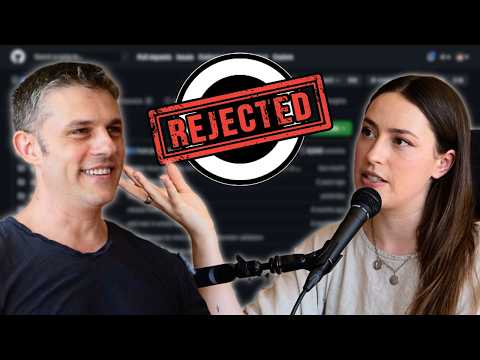
Just watched the new @hellmoneypod. @rodarmor and @realizingerin accurately identified the exact existential threat facing Bitcoin: Miners are getting completely screwed.
If fees don't replace the halving block rewards, miners leave. If miners leave, the hard money thesis dies. 🧵
1/
Casey, your frustration with the BIP editors blocking innovation is valid, but you are asking for permission from the wrong people.
We don't need Bitcoin Core to save the miners. The physical network is already saving itself.
2/
Enter Digital Matter Theory (DMT) and $NAT.
$NAT is not an arbitrary token. It is a protocol-layer asset derived directly from the Bitcoin block data. It acts as the "Second Subsidy" - a programmable economic baseline built specifically to ensure the mining game remains profitable.
3/
You said "the mining game will be not worth it."
Here is the mathematical reality you are missing: 65% of the global SHA-256 hashrate is ALREADY interacting with the @tap_protocol and the $NAT standard. We are talking about the absolute heavyweights: @AntPoolofficial @SpiderPool_com, @f2pool, and @ViaBTC.
4/
This isn't just theoretical support; it is active, on-chain economic reality.
@AntPoolofficial is already moving their $NAT and actively selling it on @ordinalswallet. The biggest pools on the planet aren't waiting for the devs to save them. They are adopting the asset to secure their own margins.
5/
Ordinals proved Bitcoin could hold immutable data. $NAT proves that data can be utilized as a physics-backed asset to economically secure the miners for the next 10,000 years.
Capital follows the hash, and the hash has already chosen its survival mechanism.
6/
If you want to contribute exactly where Bitcoin needs it the most right now - saving the miner economics before the 2028 cliff - you need to look at the on-chain data.
Bring @theblockrunner on the next @hellmoneypod.
It's time to talk about the real solution. ⛏️🔥
⚓️ $NAT
Link > youtu.be/Et6f9RQ7GbM?si…
YouTube

English
Hemmant🟧.Bitmap🍁 retweetledi
Hemmant🟧.Bitmap🍁 retweetledi

HOLY FUCK 🤯 someone spent $50k on NAT after new miners started managing their nat rewards
At this point almost all of BTC hashpower is interacting with NAT on Ordinals Wallet.

English
Hemmant🟧.Bitmap🍁 retweetledi
Hemmant🟧.Bitmap🍁 retweetledi

Hemmant🟧.Bitmap🍁 retweetledi

Hemmant🟧.Bitmap🍁 retweetledi
Chuck Norris mined bitcoin with a pen and paper.
English

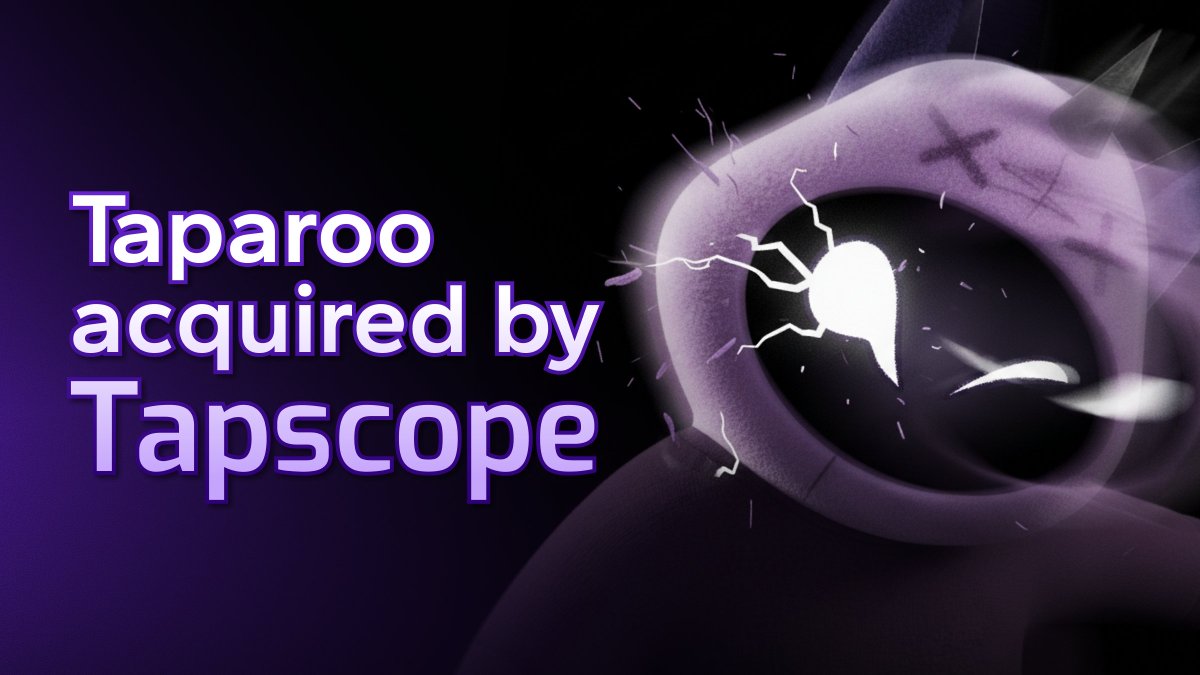
Breaking: TaparooSwap has been acquired by Tapscope.
Starting today, all TaparooSwap activity will transition to Tapscope.
There will be no interruption to service as all links and infrastructure have already been ported over.
You’ll still have 2 weeks to open a ticket in our Discord for any issues.
After that, support will be fully handled by the Tapscope team.
It’s been a pleasure building and launching the first BTC-native swap, and we’re proud to hand it over to such a capable team.
English