
CSWDurhamGeog
4K posts

CSWDurhamGeog
@CswGeog
Northern geographer, Himalayan PhD, HoD, Head of Middle School , Dendrophile, UN Climate Change teacher, maps, wild places, litter collector, own views.
Durham, England Katılım Ekim 2015
3.4K Takip Edilen1.8K Takipçiler
Sabitlenmiş Tweet

Geography teachers... Shall we have a David Attenborough day and all show it to all our pupils? We could then follow it up with emails /letters to local MPs and post pictures of it being shown in classrooms all over the UK 😊 #geographyteacher
theguardian.com/media/2023/mar…
English
CSWDurhamGeog retweetledi

Jamaica is responsible for less than 0.05% of global CO2 pollution.
That it's about to be destroyed by a monster hurricane is climate injustice — aka climate colonialism, aka global capitalism — in action.
#ClimateChange #ClimateCrisis #EndClimateSilence

Met4Cast - UK Weather@Met4CastUK
Hurricane Melissa is a record breaker. 210kt gust recorded above the surface setting a new world record, previous was 209kts by Typhoon Megi (2010) The eye is now down to -5.21 making it the driest eye in Atlantic basin history, the world record is -5.00. What a beast.
English

CSWDurhamGeog retweetledi

Baobab, a prehistoric species which predates both mankind and splitting of continents over 200 million years ago. Baobabs (Adansonia) are distinctive trees with incredibly large trunks. They can store tremendous amounts of water, as their trunks noticeably swell during the rainy season.
Tree is native to African savannah, where climate is extremely dry and arid, it is a symbol of life and positivity in a landscape where little else can thrive. African baobab (A. digitata) has a vast range throughout the arid parts of Africa; six additional species are native to the Indian Ocean island of Madagascar, off south-east Africa; and an eighth species is native to north-west Australia. The largest known living baobab is the Sagole Big Tree, a specimen of A. digitata located in Masisi, Vhembe, South Africa, near the border with Zimbabwe. Based on its most recent measurements, Sagole has an extremely large base that covers 60.6m², a height of 19.8m and a total wood and bark volume of 414m³. Its aboveground dry mass is estimated to be 54 tonnes.
Baobab trees grow in 32 African countries. Tree known for its longevity and some specimens in Africa have been dated to between 1100-2500 years old and reach up to 30m high and up to an enormous 50m in circumference. Baobab trees can provide shelter, food and water for animals and humans, many savannah communities made their homes near Baobab trees. Baobab also looms among ancient mounds and remains scattered around them are invariably early medieval or Portuguese.
Until 2018, the largest living baobab was sacred Tsitakakoike Baobab, a specimen of the endangered species Adansonia grandidieri, which grew near Andombiro in the Ambiky Forest of south-west Madagascar. The incredibly stout and compact tree had a cylindrical trunk with a base that covered 59.6m², a height of 14.6m and a total volume of 455m³ - 380m³ of which was trunk and 75m³ of which was canopy. It partially broke and collapsed in February 2018 leaving about 40% of the tree still standing, but this was expected to also collapse soon after.
An even larger African baobab tree (A. digitata) alive during 21st Century was the Platland/Sunland Tree of Modjadjiskloof, South Africa, with a base of 67.9m², height of 18.9m and a total wood and bark volume of 448m³. Unfortunately, a large portion of the Platland Tree collapsed and died in 2016, leaving the Sagole Big Tree to claim the top spot.
Baobabs have among the lightest wood for any tree. Balsa wood is well known to model aeroplane makers as one of the lightest and softest woods with a wood density that averages around 0.15g/cm³, yet baobab wood is even lighter, averaging 0.13 g/cm³. As a result, the aboveground dry mass of the Platland baobab was estimated at only 58 tonnes and about 59 tonnes for Tsitakakoike. In terms of mass, giant gum trees (Eucalyptus) of Australia are the largest hardwood trees.
The Sagole Big Tree has been carbon-dated to 800 years old, the Platland Tree to 1100 years and Tsitakakoike to 1270 years.
📷 : This is sacred Tsitakakantsa, (Adansonia Grandidieri), the largest baobab in Madagascar 🇲🇬
#archaeohistories

English
CSWDurhamGeog retweetledi

Whatever you think of religious slaughter, I think it’s abhorrent and should be outlawed, why are so many companies selling it?! Schools serving it? Why is it often covert?
Catherine Blaiklock@blaiklockBP
What percentage of your ready meals are made with religiously slaughtered meat @marksandspencer ? All processed meals have no slaughter house code so the meat is untraceable. @RupertLowe10 @RobinTilbrook @lambsscreams
English
CSWDurhamGeog retweetledi

🌋This city is thriving in the shadow of an active volcano.
🇯🇵 Kagoshima, Japan, lies only 4km away from one of the country's most active volcanoes. In the face of constant exposure to risk its people have woven resilience into their daily lives.
➡️ preventionweb.net/quick/96732
English
CSWDurhamGeog retweetledi

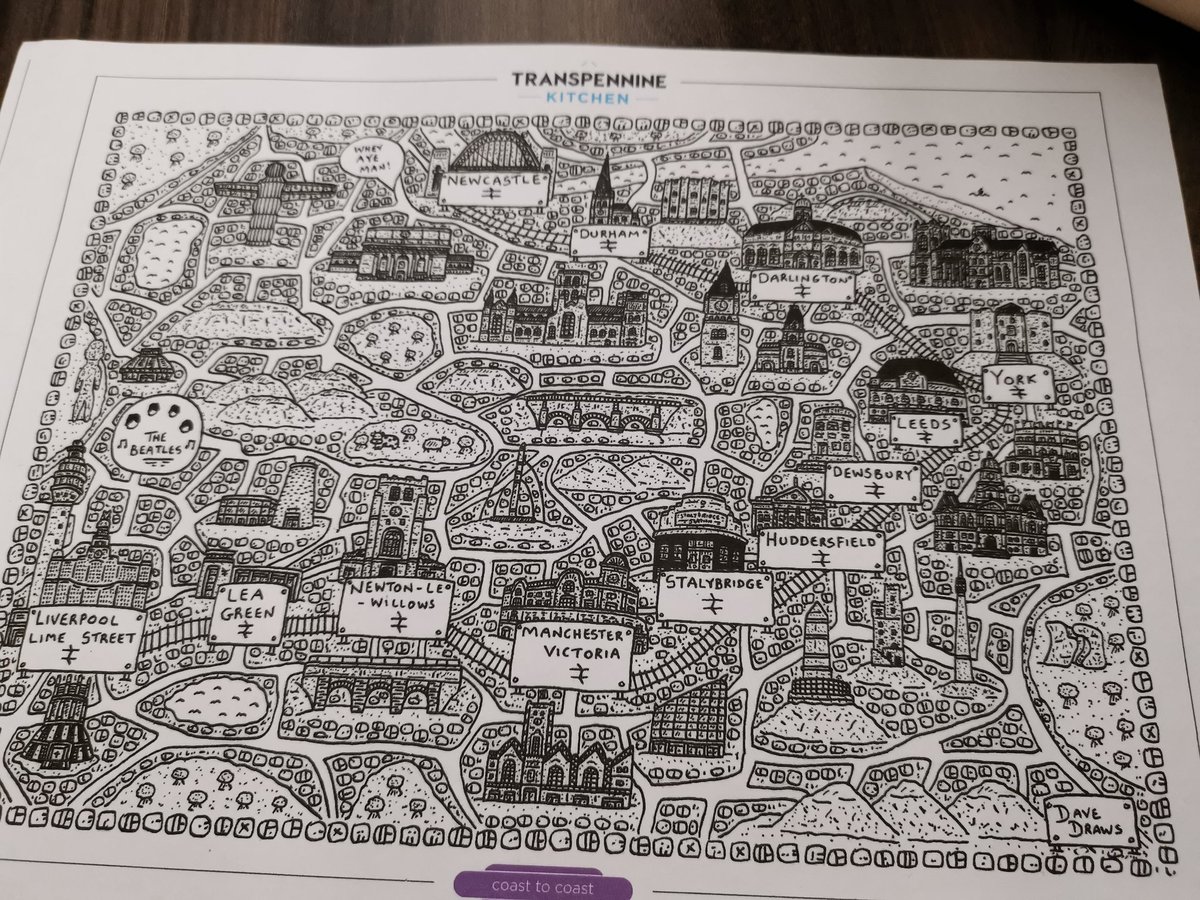
@TPExpressTrains Geography teacher here loving the map for the trans pennine kitchen! Will be taking mine with me to use as a classroom resource 😊

English
CSWDurhamGeog retweetledi

There is no doubt that the planning bill in its current form allows catastrophic environmental damage. Anyone claiming otherwise is either ignorant or deliberately misleading you.
Wildlife can’t fight this bill but you can!! Email your MP today
#email-your-mp" target="_blank" rel="nofollow noopener">homesforeveryone.org/#email-your-mp

English
CSWDurhamGeog retweetledi

UK gardens cover c270,000 hectares – more than all the country's National Nature Reserves. And nature-friendly gardens – even small ones – can form a huge network of green spaces that are havens for wildlife.
More: littlegreenspace.org.uk/features/Wildl…


English
CSWDurhamGeog retweetledi

If you want to help the #hedgehogs living in your garden, make sure they have access to clean, unfrozen water!
🦔 💧 💚
Add shallow dishes of water to your garden all year round, with a few pebbles so insects and small birds can safely perch to have a drink too!
📹 Paul Bunyard
English
CSWDurhamGeog retweetledi

England playing Afghanistan heralds a day of unmitigated shame. For all the Taliban’s obscene misogyny, cricket’s male-dominated governing bodies lack the gumption to refuse to play. My piece telegraph.co.uk/cricket/2025/0…
English
CSWDurhamGeog retweetledi

Fossil fuel capitalists have been deliberately killing us for half a century & governments gift them $TRILLIONS in subsidies every year.
And now a wannabe-dictator-president plans to steal Greenland & drill drill drill.
January 2025 is showing us exactly where we’re heading.
Volcaholic 🌋@volcaholic1
Malibu....
English
CSWDurhamGeog retweetledi

bsky.app/profile/csdurh…
If you haven't already made a profile... Bluesky is waiting. I've just joined up and instantly found the climate group /nature and all things planet earth 🌎😍

English

Geography teachers... Shall we have a David Attenborough day and all show it to all our pupils? We could then follow it up with emails /letters to local MPs and post pictures of it being shown in classrooms all over the UK 😊 #geographyteacher
theguardian.com/media/2023/mar…
English
CSWDurhamGeog retweetledi

Wonderful to see @durhamcathedral adorned with miners banners from across the coalfield.
The ‘Solidarity Forever’ exhibition opened today, marking 40 years since the Miners' Strike. It runs until November 7.
Here's a selection of the banners on display…
(1/11)

English
CSWDurhamGeog retweetledi