Curtis Ryan

14.9K posts

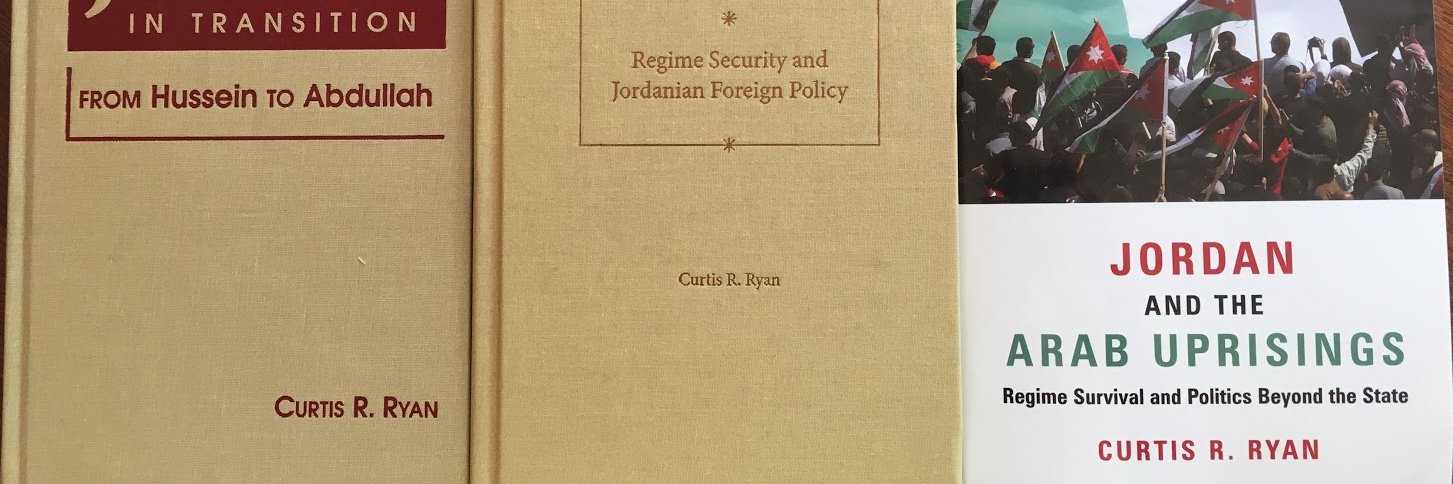
Curtis Ryan banner
Curtis Ryan

Curtis Ryan

@Curtisryan1

University Professor, Political Scientist, Music Fanatic. Obsessed with Arab and Middle East politics.

Katılım Temmuz 2009
2.1K Takip Edilen4K Takipçiler
DelanaV
DelanaV@DelanaV·
@Curtisryan1 Always appreciate your scholarly and heartfelt posts on this part of the world you clearly love. Reposting.
English
1
0
2
20
Curtis Ryan
Curtis Ryan@Curtisryan1·
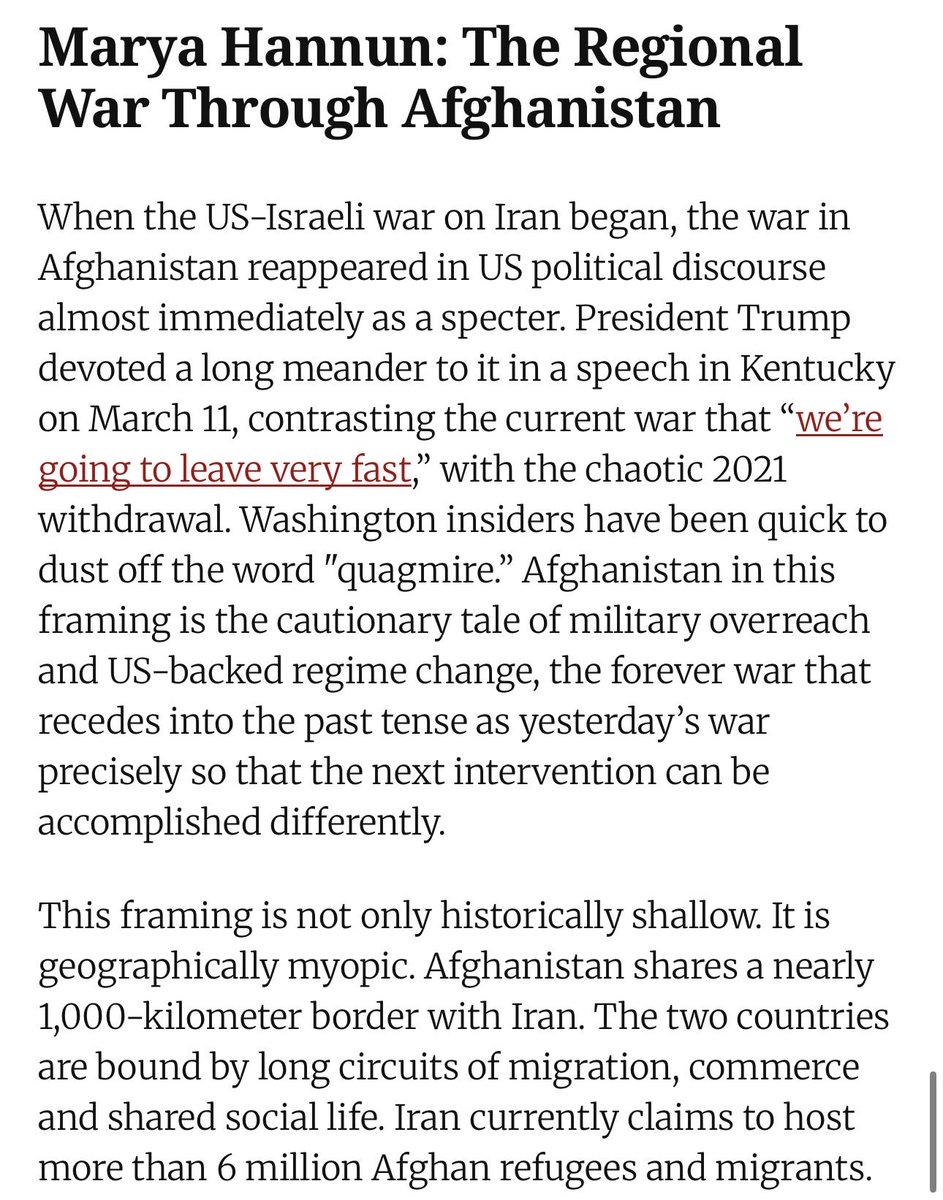
#Jordan remains in a difficult spot in this completely necessary #Iran war brought on by its own allies and supposed “peace partners” — (Meanwhile I forgot how much the new algorithms basically bury posts, so if you circulate this piece, thanks in advance)
Curtis Ryan@Curtisryan1

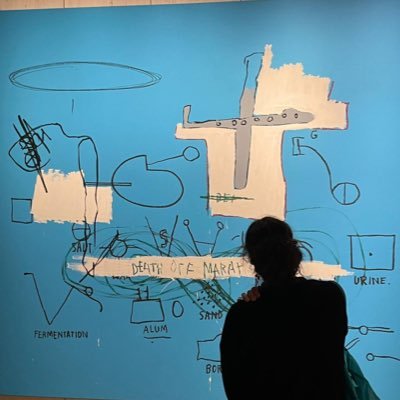
I wrote here on Jordan’s concerning situation as the US and Israeli war with Iran continues to expand — ‘Jordanian Security and the US-Israel War on Iran’ arabcenterdc.org/resource/jorda…
English
1
0
4
369
Curtis Ryan retweetledi
Rosemary Kelanic
Rosemary Kelanic@RKelanic·
This great piece by @ishaantharoor, in which I'm quoted, gets the 1956 Suez War history right and explains its echoes for the Iran War. Increasingly I fear that Trump's massive strategic error will damage U.S. power and prestige far more than Suez hurt Britain and France. The UK/France gambit to take the canal backfired spectacularly. The *war itself* prompted Nasser to block the canal -- the outcome the UK/Fra was trying to prevent. It heralded the final decline of Britain from great power to "has been" status. The analogies to Trump's Iran debacle are legion. But an especially overlooked similarity is how the Suez War dramatically strengthened Nasser's power and influence throughout the region -- much like Trump how Trump's war has perversely *strengthened* the Islamic Republic of Iran. The war has provoked an entirely predictable (in fact, predicted) nationalistic response among many Iranians -- including those who hate the regime but now hate the U.S. and Israel more for bombing universities, threatening the electric grid, and blanketing Tehran with toxic rain following the explosion at a nearby refinery. Not only has the regime consolidated power, but it is now filled with hardliners after Israeli assassinations have killed off relative pragmatists like Ali Larijani. Courtesy of Trump, Iran has also discovered it can paralyze oil shipping through the Strait of Hormuz and collect "tolls" in exchange for freedom of passage. Iran is now trying to institutionalize its newfound leverage, which could be a lasting unintended consequence of this foolish war. I've argued before that Trump's Iran war is already the U.S.'s "Suez Moment" in terms of signifying U.S. strategic decline -- especially a decline in our ability to make sound national security decisions. But the Iran War could turn out considerably worse than Suez because the US has no one to check us from our own strategic excesses. This war will unfold as badly as Trump decides to make it, and the indications are that he intends to escalate, making it worse. Russia and China are sipping champagne while they watch the U.S. self-destruct from the sidelines. In 1956, both the U.S. and the USSR leaned heavily on Britain and France to withdraw. The Soviets even made blatant nuclear threats to compel UK/Fra to quit Suez. In 2026, there is no higher power. Only the U.S. itself can course-correct before making a bad situation even worse with further escalation. But Trump's impenetrable hubris and poor decision-making don't inspire confidence that the U.S. will retrench. @defpriorities @NewYorker newyorker.com/news/the-lede/…
English
35
399
867
96.4K
Curtis Ryan retweetledi
Rosemary Kelanic
Rosemary Kelanic@RKelanic·
WSJ GIFT LINK: Trump might end the war without trying to forcibly open Hormuz. It stinks, but this is likely the least bad choice in a situation of all bad options. Ending the U.S. war is a necessary condition, but possibly not a sufficient one, for Iran reopening the strait. I get that it feels irresponsible for the U.S. to simply leave after creating a mess. It’s maddening, but might be for the best. Hear me out. Trump created a global public bad by attacking Iran and prompting the regime to close the strait. It was a colossal mistake that has caused pain in the U.S. and beyond. But cutting U.S. losses in a failed war makes more sense than continued fighting for a lost cause. And if the U.S. keeps fighting, no doubt Iran will continue to threaten the strait. If the U.S. quits the war, that would increase the political pressure on Iran to reopen the strait now that hostilities are over. Iran may try to extract “tolls” and if the Tehran Tollbooth persists after the war, it will be a lasting reminder of U.S. policy failure. But the tolls themselves aren’t that high — $2 million on a VLCC carrying 2 million barrels is just a $1/barrel surcharge, amounting to a 1% tax. Not great, but better than what oil prices are doing now. It would also incentivize Iran to keep traffic moving securely through Hormuz by monetizing safe transit. Yes I know it rewards bad behavior and morally it stinks for an odious regime to profit, but that’s the reality that Trump’s blunderous war has bestowed on us all. There’s a reason most of us don’t worry about Egypt (today) closing Suez or Panama closing its canal — the profit motive is powerful. Overall if Trump ends the war (which he should) with the Tollbooth intact, we are all worse off than we were on February 27, but better off than where we are now, and better than where we could be if the war stretches on for months or years. I know it’s not a satisfying ending but it’s pragmatic and we don’t live in the best of all possible worlds. There is one problem, though: Israel. Trump will almost certainly need to restrain Israel from continuing its war for Iran to reopen the strait. It should be a no-brainer: Israel is the junior partner and Trump should have the leverage to make them stop, given how much military aid the U.S. gives to Israel. But it’s not clear Trump will use it. @defpriorities wsj.com/world/middle-e…
English
266
348
1.1K
322.4K
Curtis Ryan retweetledi
Vali Nasr
Vali Nasr@vali_nasr·
Iran has asked for guarantees in any deal with US. Word is that Pakistan Foreign Minister is going to Beijing to get a guarantor for the potential deal. Likely that is Iran’s condition for talks with US. And FM would not be going to China without having floated the idea with both Washington and Beijing. No guarantees of China biting but Beijing is now the frontline in the diplomatic effort
English
323
1.8K
7.9K
1.4M
Curtis Ryan retweetledi
Democracy Now!
Democracy Now!@democracynow·
Despite U.S. and Israeli assassinations of Iranian leadership, the country's "institutions have not collapsed," says Iranian scholar @MAliKadivar. Instead, Iran's new leadership is "more hard-line and hawkish" than ever before.
English
17
68
158
21.4K
Curtis Ryan
Curtis Ryan@Curtisryan1·
I wrote here on Jordan’s concerning situation as the US and Israeli war with Iran continues to expand — ‘Jordanian Security and the US-Israel War on Iran’ arabcenterdc.org/resource/jorda…
English
0
3
5
531
Curtis Ryan retweetledi
Trita Parsi
Trita Parsi@tparsi·
The Omanis are famously cautious. The Omani FM going on CBS to reveal what has actually been achieved in the negotiations is quite unprecedented. And what has been achieved is significant - Trump can indeed declare victory. Listen to this segment - it goes way beyond what Obama achieved. But everything indicates that Trump won't take yes for an answer. That he will start a war of choice very soon. Which is probably why the Omani FM decided to go public. So that the American people knew that peace was within reach when Trump instead opted for war.
English
674
4K
11.4K
1.4M
Curtis Ryan retweetledi
Jomana Karadsheh Scott
Jomana Karadsheh Scott@JomanaCNN·
#Jordan military says its air defenses successfully intercepted 2 ballistic missiles targeting the kingdom. Amman residents tell me blasts heard & felt much louder & more intense than interceptions in the past. There’s a significant U.S. military presence in Jordan. #Iran
English
0
12
6
3.7K
Curtis Ryan retweetledi
Glenn Thrush
Glenn Thrush@GlennThrush·
Two decades ago we vigorously debated the justification for attacking Iraq — whether Saddam had WMD. The 2026 attack on Iran rests on 3 assertions that are either false or exaggerated. (Plus hyped-up claims related to election interference) nytimes.com/2026/02/26/us/…
English
5
52
117
17.5K
Curtis Ryan retweetledi
Sanam Vakil صنم وكىل
Sanam Vakil صنم وكىل@SanamVakil·
Iran’s strategy for war with the US by Bilal Saab @CH_MENAP en.majalla.com/node/329830/po… The strategy for Iran in a potential confrontation with the United States is simple: withstand the first volley of US strikes, respond by targeting symbolic US and allied assets in the region, inflict casualties on US forces, and drag out the conflict. The purpose of Iran’s response would not be to confront the United States directly and try to degrade its capabilities— that’s suicidal and unrealistic—but to exact a high enough political price on Trump to compel him to abort the war effort
English
0
7
25
9.2K
Curtis Ryan retweetledi
Gregg Carlstrom
Gregg Carlstrom@glcarlstrom·
Strategic goal for Iran in striking Gulf states is for them to pressure Trump to halt the war As @aalrashed says, it could backfire: the GCC could also respond by lifting restrictions that prevent America from using Gulf bases to strike Iran Iran would probably continue hitting them anyway, but at that point it becomes less about strategy and more the Iranian "Samson option"
عبدالرحمن الراشد@aalrashed

خيارات رد الدول الخليجية على الهجمات الإيرانية على أراضيها.. من بينها رفع القيود التي وضعت على استخدام القواعد والأصول الاميركية والممرات الجوية التي أعلن عنها قبل الحرب

English
26
129
338
141K
Curtis Ryan retweetledi
Hamidreza Azizi
Hamidreza Azizi@HamidRezaAz·
The first hours of the current strikes against #Iran already show important differences from the 12-Day War; in timing, objectives, coordination, and the scale of escalation. What we know so far: 🔹The attacks began with explosions reported across Tehran. Early reports indicated ~30 targets in the first wave, including leadership residences, intelligence facilities, and reportedly even the Supreme Leader’s office. 🔹Unlike the 12-Day War, which began with nighttime strikes, this operation started early in the morning, on the first day of Iran’s calendar week. The timing suggests an attempt to maximize operational disruption and leadership exposure from the outset. 🔹Target selection points to a decapitation strategy. Initial strikes appear aimed at leadership nodes and Iran’s security apparatus rather than purely military infrastructure. 🔹U.S. involvement marks a major shift. This time, Washington appears directly engaged from the beginning, with American officials reportedly describing the campaign as extensive and closely coordinated with Israel. 🔹Donald Trump framed the operation as defending Americans and removing immediate threats, but his remarks supporting the Iranian people against the regime strongly suggest regime change is an underlying objective. 🔹The operational concept appears phased: early missile strikes targeting leadership and air defenses, including sites in southern Iran such as Chabahar, likely intended to clear the way for later air force operations against missile bases and strategic assets. 🔹Iran’s response has been unusually rapid. Missile launches reportedly began within a couple of hours, with reported strikes in Tel Aviv and Haifa. The Iranian statements signaled that no “red lines” remain and that full-force retaliation is underway. 🔹This suggests predelegated response authority: rather than waiting for centralized coordination, Iranian forces appear instructed to maintain continuous firepower against Israel from the outset. 🔹Another key difference: Iran has already expanded the confrontation beyond Israel. Reports of explosions in GCC states indicate strikes targeting U.S. bases, signaling direct confrontation with Washington from the start. 🔹This contrasts sharply with June 2025, when Iran’s strike on Al Udeid in Qatar was largely symbolic and designed to facilitate de-escalation before a ceasefire. 🔹Meanwhile, Yemen’s Houthis have announced renewed attacks in the Red Sea, meaning the conflict has already begun evolving into a multi-front regional confrontation. 🔹Overall, the early pattern suggests a far more coordinated, expansive, and escalatory conflict than the 12-Day War, with regime decapitation, direct U.S. participation, rapid Iranian retaliation, and immediate regional spillover. 🔹The key question now: whether escalation stabilizes into controlled exchanges or whether the removal of previous “red lines” pushes the conflict into a prolonged regional war.
English
1
869
2.9K
975.8K