
Sabitlenmiş Tweet
DN Comply
2.5K posts


DN Comply
@DNComply
Author of the Bitcoin Basics: https://t.co/hbLhQXJBso Follow me on Nostr: npub15xswk9ez5ezdhlpgvhq580g0v8vg3m56cn8slu6detxy8nupdrls80jz22
Katılım Mart 2023
726 Takip Edilen668 Takipçiler

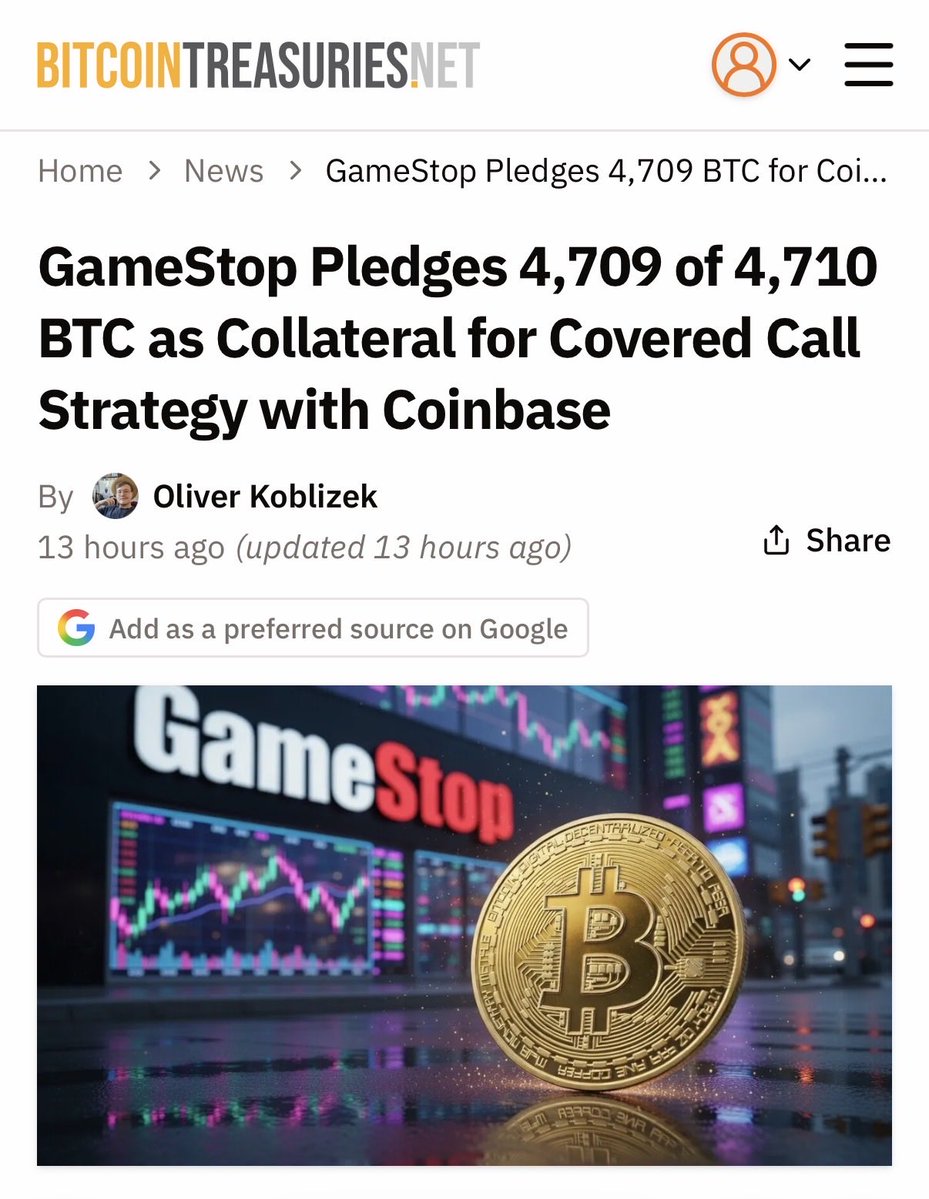
@StrategyMaxi @TheBTCTherapist That isn't rehypothecation, it's a binding contract enabling the purchaser to buy the coins at the strike price if BTC exceeds that price before expiration.
English

@TheBTCTherapist I remember you were shilling this over Strategy.
Time to go $MSTR. Rehypothecation sucks.
English


@JakeLearyInvest I liked the book, but I feel like if you don’t already have a significant understanding of World War I, there are too many historical references that are not adequately explained.
English

When Money Dies - This book illustrates how hyperinflation destroys society. Without functioning price signals, exchange collapses and social order deteriorates.
It exposes that "safe" investments aren't. Cash and cash derivatives obviously fail. But housing and equities can too. A house in a country with rent controls, price controls, and rapid inflation loses real purchasing power fast. A business that can't operate effectively becomes worthless. The currency nominally rises while purchasing power crashes.
English
My favourite 3 money related books:
The Theory of Money and Credit - @mises
When Money Dies - Adam Fergusson
Layered Money - @timevalueofbtc
Why? 👇
English

proof of personhood will make everything better, we’ll just have to give up a little more freedom again.
Tuki@TukiFromKL
🚨 Do you understand what this man just pulled off.. > a guy from North Carolina used AI to generate hundreds of thousands of songs.. uploaded them to Spotify, Apple Music, Amazon.. then botted billions of streams on his own tracks and walked away with $8 million > 660,000 fake streams per day.. spread across thousands of AI songs so nobody noticed.. $1.2 million a year.. for music no human ever actually listened to real artists are out here grinding for 0.003 cents per stream.. promoting on TikTok.. begging for playlist placements.. and this guy just had AI make the music AND the audience first-ever criminal streaming fraud case.. he's paying back $8 million.. but the playbook is out there now.. and AI just got better since he started the music industry spent 10 years fighting piracy.. now they have to fight songs that don't exist being listened to by people who don't exist.
English
@gladstein Given that it took the USA 205 years to hit its first trillion dollars of debt, we shouldn’t hit $40 trillion in our lifetimes, right?
English

@sudoaptupdater @kekmaximusk I wish this tweet struck me as nonsensically silly.
English

The 'Stranded' term should be coming up soon.
The 'Stranded' would be defined as: the numerous displaced people that will be stuck wherever they are as the infrastructure/support systems seize-up and folks lose the desire to support it and/or be employed.
// To everyone: Make sure if you travel- you have a guaranteed way to return home. If on a long trip by car, take a change of clothing and basic survival items with you. Think a bug-out mini bag for each person traveling with you. //
Good luck.
English
@BitcoinNewsCom Crypto deserves every bit of scorn and mockery. It could possibly receive. But every such piece should draw a clear line between crypto and bitcoin.
English

Vanity Fair went deep into the lore on this new crypto hit piece.

English

@hillerydan/note/c-229380409?utm_source=notes-share-action&r=1uuaqd" target="_blank" rel="nofollow noopener">substack.com/@hillerydan/no…
ZXX
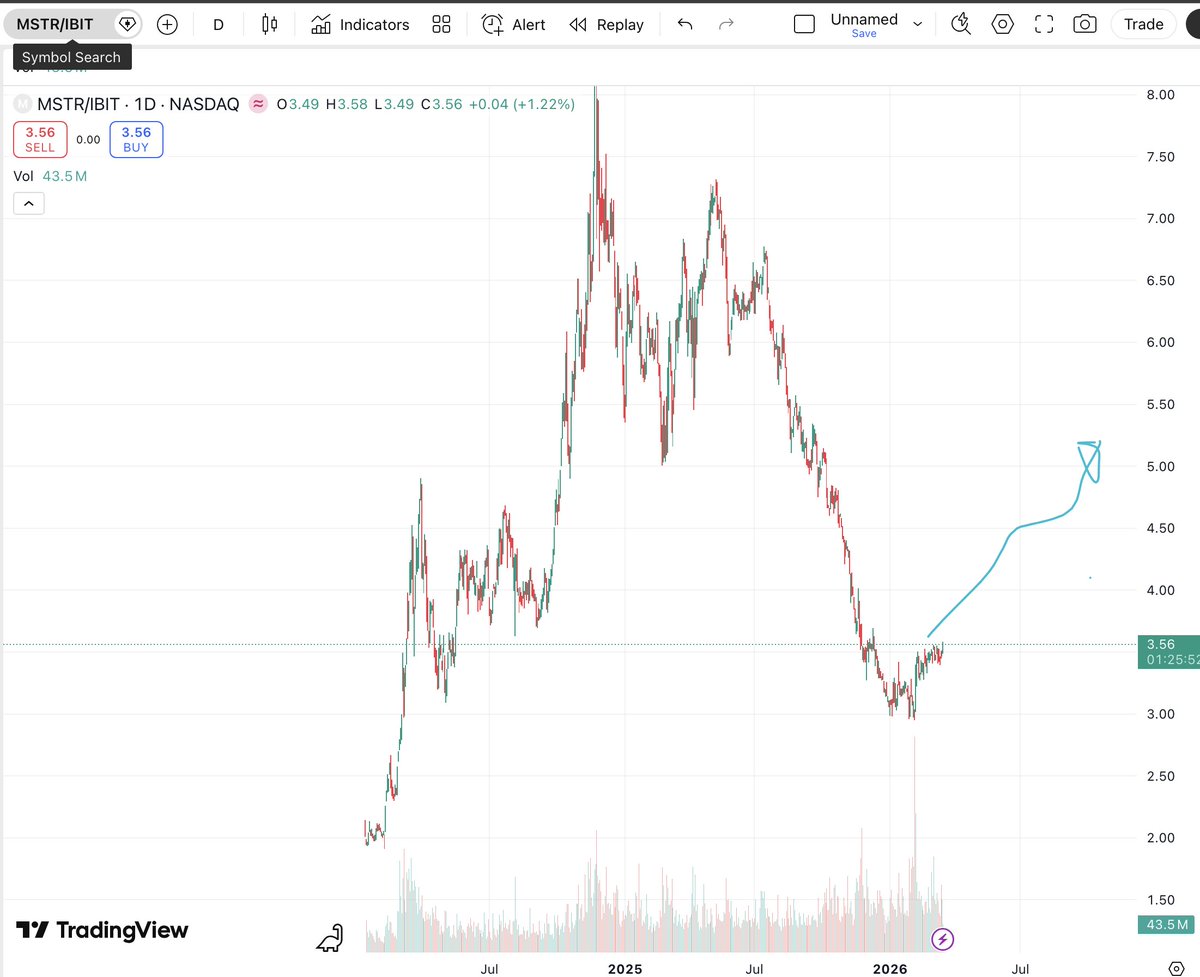
@hillery_dan Where are the lines? It’s not real TA unless you draw lines.
English
Polski

🏀 #2 @jack vs #15 @kit_sats
Saylor Region | Razor thin: Dorsey +3
@bitcoin_bugle handed me a mountain of data from their pods & tweets and we made Maxi Matchup analytics for the madness!
#MaxiMadness2026 #Bitcoin

English
@Excellion Everyone who held MSTR through this unexpected bear market will be the beneficiary of Saylor fearlessly scooping up loads of artificially cheap corn.
English

Discounted Bitcoin was never going to last forever. It was too good to be true for the Bitcoin treasury companies.
It was inevitable that demand would take all of the cheap BTC off market forever.
Samson Mow@Excellion
Dips are a discount. How long will the market let Strategy and other Bitcoin treasury companies bring down their average cost? I would guess not that long. Treasury companies are price insensitive buyers. There’s no need to let them buy at a discount.
English
@notgrubles I expect stablecoins to be a far better store of value than Ethereum over the coming decade.
English

@MarJJhodl @knutsvanholm It wasn’t obvious to me that I needed to look back over your Twitter timeline to see the tweets making up what you had referenced. I didn’t know where to look!
English

@DNComply @knutsvanholm It could be done :)
any preference on the structure?
Also, what do you mean with "finding what you referenced"? The main sources where the two books mentioned above.
English
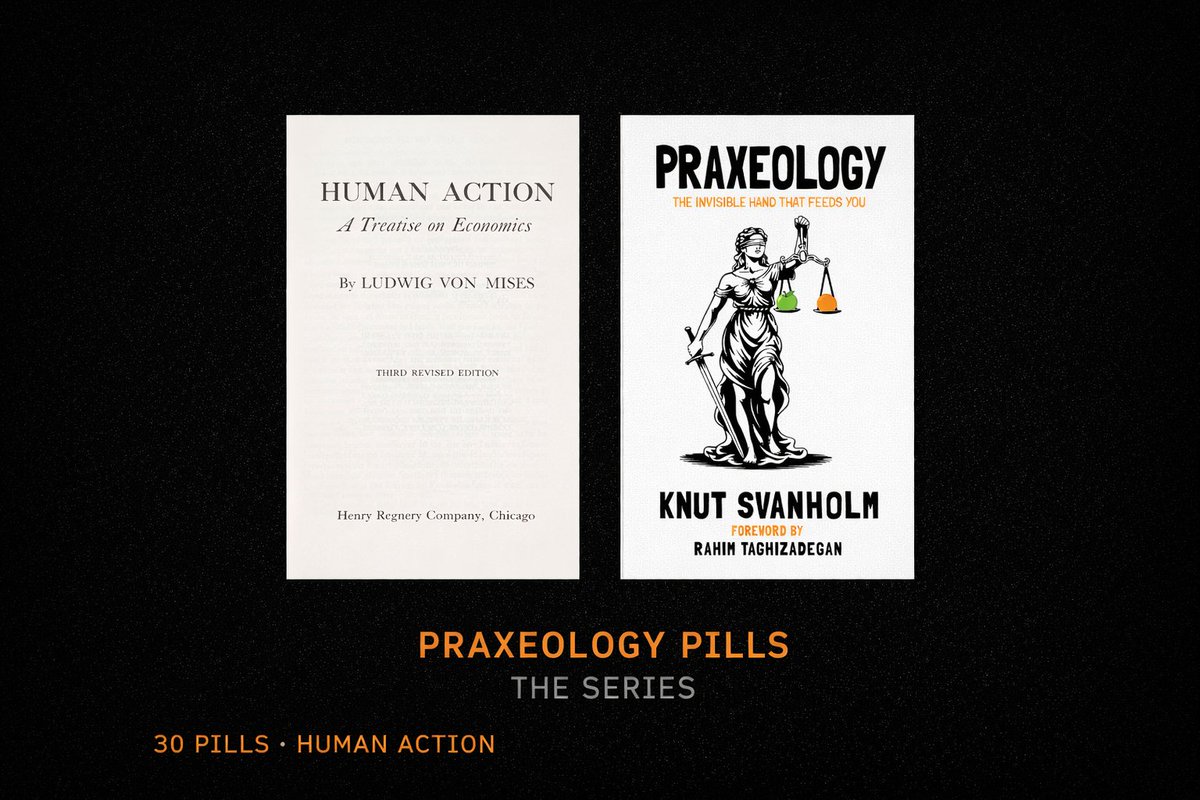
That's a wrap!
A whole month of pills, to make "Human Action" by Mises accessible to everyone.
The series was inspired by @knutsvanholm's "Praxeology", where he explains these concepts in a very simple way.
In arrivo la versione italiana. Stay tuned!
#praxeology #pill
English


Meta layoffs might impact 20% or more of the company - sources. $META
FinancialJuice@financialjuice
🔴 Meta plans new round of layoffs across the company - sources. $META
English
Reason #346 that I do not have any accounts for Meta products and I would never install any of their apps on my phone. Whatever money they have for this sort of lobbying won’t be coming from me!
TFTC@TFTC21
Meta spent $26.3 million lobbying for "age verification" bills in 45 states. But the bills don't regulate social media. They regulate your operating system. Someone traced $2 billion in nonprofit grants and lobbying records. Here's what they found: 1. Meta's lobbyist wrote Louisiana's age verification law. The sponsor confirmed it. It forces OS-level surveillance. Meta's platforms? Zero new requirements. 2. Meta covertly funded an astroturf "child safety" group to push these bills nationally. It has no EIN, no incorporation records. It doesn't legally exist. 3. $70M+ into state super PACs, deliberately fragmented across databases to dodge centralized tracking. 4. On every social media bill, Meta fights. On the one bill regulating operating systems, Meta just "monitors." 5. The EU solved this with zero-knowledge proofs. No biometrics. US bills mandate vendors that send your face to third-party clouds. Meta profits from harvesting data. They wrote laws forcing every device to broadcast your identity through a system-level API. They built the surveillance. They wrote the mandate. They exempted themselves. Every claim sourced from IRS filings, Senate disclosures, and state lobbying records.
English
@EricBalchunas Also, always check Google Maps reviews for whatever hotel you want to stay at. Booking.com does a remarkable job of burying their negative reviews. Just this past week, I discovered that a hotel I wanted to book using Booking.com was actually a love hotel.
English

I feel his pain tbh. This is why whenever I travel for work or vaca bf booking I always go to the hotel’s trip advisor page and search reviews for the words “noise” and “sleep.” This system has yet to let me down.
CONSEQUENCE@consequence
Morrissey has canceled his concert in Valencia, Spain scheduled for Thursday night due to a poor night's sleep caused by a noisy hotel he was staying at. A statement announcing the show's cancelation said that "the experience has left Morrissey in a catatonic state." Morrissey himself added that "it will take me one year to recover. And that is an understatement."
English
If you think there's a lapse in Tim's logic, I'd love for you to point it out!
Tim Kotzman@TimKotzman
🧵 1/ The market is still underestimating what’s happening with Bitcoin treasury companies. When Michael Saylor talks about a “delay between when we buy Bitcoin and when it goes to the moon,” he’s not talking about timing the market. He’s talking about capital pipelines. And they’re just getting started.
English
DN Comply retweetledi

Coinbase's CEO, Chief Policy Officer and VP of US Policy all came out & claimed a combination that this report was "misinformation", "totally false", "a total lie", and, "categorically false". Problem is it's true. When @TFTC21 stood by its reporting, they all went radio silent!
TFTC@TFTC21
Coinbase is quietly lobbying to kill Bitcoin's de minimis tax exemption. The company reportedly told legislators that "no one is using Bitcoin as money" and that a Bitcoin de minimis exemption would be "DOA." Meanwhile, they're pushing for the exemption to apply only to stablecoins, specifically regulated, dollar-pegged stablecoins like USDC. Coinbase made $1.35 billion in stablecoin revenue in 2025, up 48% year over year, almost entirely from interest earned on U.S. Treasuries held in USDC reserves. Bloomberg estimates that number could surge 7x under the GENIUS Act. Every person who uses USDC for payments instead of Bitcoin is a person whose dollars are sitting in Coinbase's reserve pool generating risk-free yield for Coinbase. A de minimis exemption for Bitcoin would let people spend it freely for everyday purchases without triggering a taxable event. That makes Bitcoin a direct competitor to USDC as a payment method. Coinbase doesn't want that competition. They want you locked into their centralized stablecoin ecosystem where they clip yield on every dollar you park there. The irony is that a de minimis exemption doesn't even make sense for stablecoins. They're pegged to the dollar. They don't fluctuate in value. There's no capital gain to exempt. The exemption matters for Bitcoin precisely because it does fluctuate, and without it, every coffee purchase becomes a taxable event. Senator Lummis proposed a $300 de minimis exemption that would cover Bitcoin. The House framework only covers stablecoins under $200. The Bitcoin Policy Institute has already warned that Bitcoin is being deliberately excluded from these talks. A de minimis exemption that covers stablecoins but not Bitcoin isn't a tax framework. It's a subsidy for Coinbase's treasury management business disguised as consumer protection.
English