
David Yang
54 posts
David Yang
@DYangMD
Radiation Oncologist at @DanaFarber @BrighamWomens @harvardmed and Research Fellow in @VanAllenLab. All views are my own.
Boston, MA Katılım Aralık 2009
444 Takip Edilen319 Takipçiler
Excited to share our work on immune microenvironmental features in prostate cancer!
Eli Van Allen@VanAllenLab
In our latest, a surprise - thanks to computational pathology - about immune cell clustering in prostate cancer and new ways to understand tumors, their neighborhoods, and clinical outcomes ... congrats @DYangMD et al! (link below)
English
Deeply grateful to my coauthors, the patients and loved ones who made this work possible, and @PCFnews for supporting this study 7/n
English
Together, our findings nominate immune spatial clustering as a potential biomarker of clinically meaningful immune enrichment in high-grade localized prostate cancer 6/n
English
These immune clusters were also associated with molecular features suggestive of a T cell-mediated antitumor response 5/n
English
We found that immune cell quantity alone was not associated with outcomes. Instead, a higher burden of spatially dense immune clusters was associated with a lower risk of distant metastasis in two independent cohorts 4/n
English
We leveraged deep learning analysis of H&E images (obtained as part of routine care) to evaluate whether immune features were associated with outcomes after prostatectomy 3/n
English
Growing evidence suggests that a subset of prostate cancer is immune-enriched, but the clinical consequences of immune enrichment were largely unknown 2/n
English

I’ve been worried about overtx w extending ADT based solely on MRI T3, especially grade 1
Tyler Seibert - tmp account. Go follow @TylerSbrt@TylerSbrt7
11 ▶️95% of EPE was pattern 3 extending beyond capsule ❌30% of SVI had crib+ cells in SV Implications: ⛔️Obsessing about EPE on MRI prob. not v helpful ✅We want to detect SVI, GG3, and cribriform‼️ @Adam_Weiner535 @LondonProstate1 @DoctorMargolis @Dr_RaviMadan
English

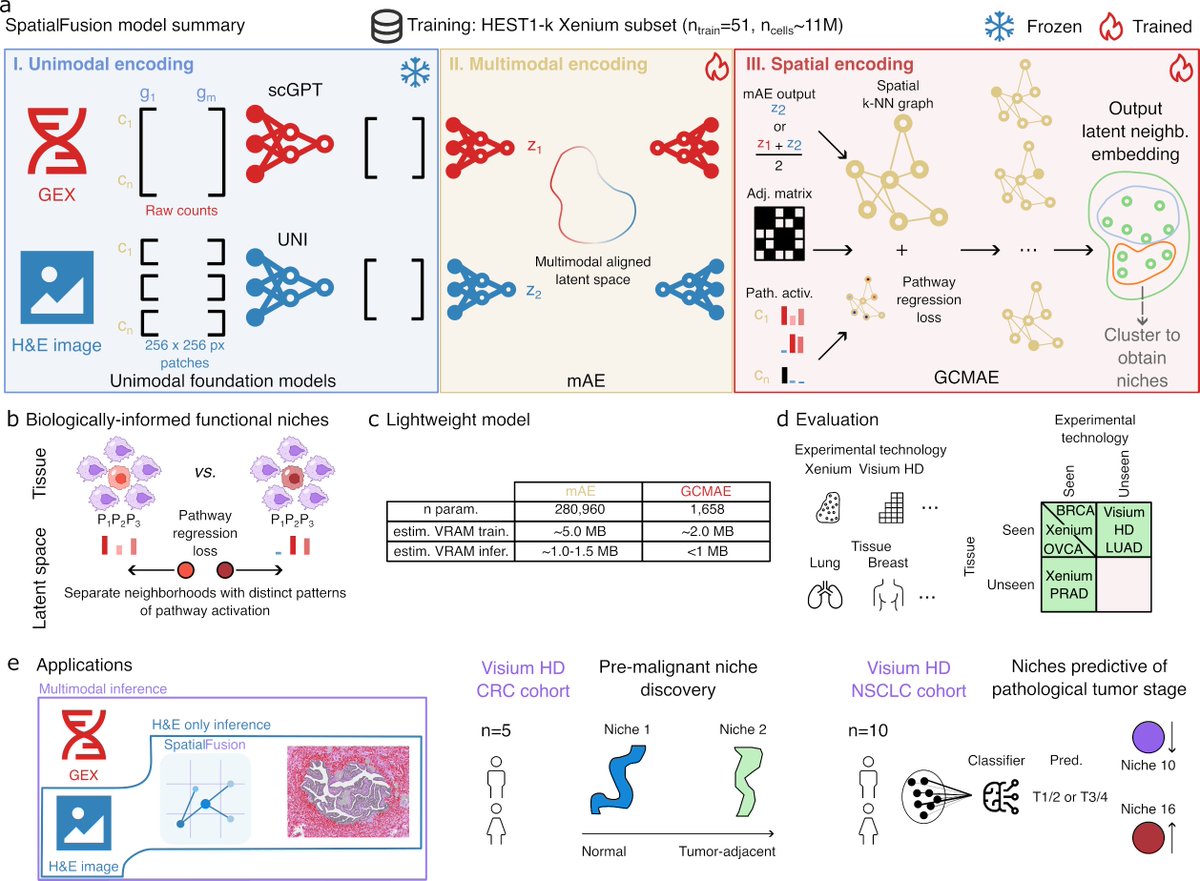
🧵 Introducing SpatialFusion: a lightweight #multimodal #FoundationModel for pathway-informed spatial #niche mapping.
📄 doi.org/10.64898/2026.…
It combines #histopathology and #SpatialTranscriptomics to identify functional microenvironments in tissue.
Here’s what we found 👇
English

Big news: the thymus may be critical for adult health
What if we missed something fundamental about the immune system?
In two back-to-back papers in Nature, we show thymic health (AI on 30,000+ CT scans) links to longevity, disease risk & immunotherapy outcomes.
English

@DrChoueiri @DanaFarber_GU @MDAndersonNews @Clara__Steiner @lilli_ash @ChadTangMD @DrYukselUrun @yekeduz_emre KIM-1 and ctDNA (next-generation, genome-wide assay) are complementary in oligometastatic RCC, and the K-COMPASS model identifies patients with best outcomes after metastasis directed therapy. @ChadTangMD @PavlosMsaouel Check it out in @EUplatinum: sciencedirect.com/science/articl…
English
The KIM-1 story continues with this joint effort between
@DanaFarber_GU @VincentWenxinXu and @MDAndersonNews
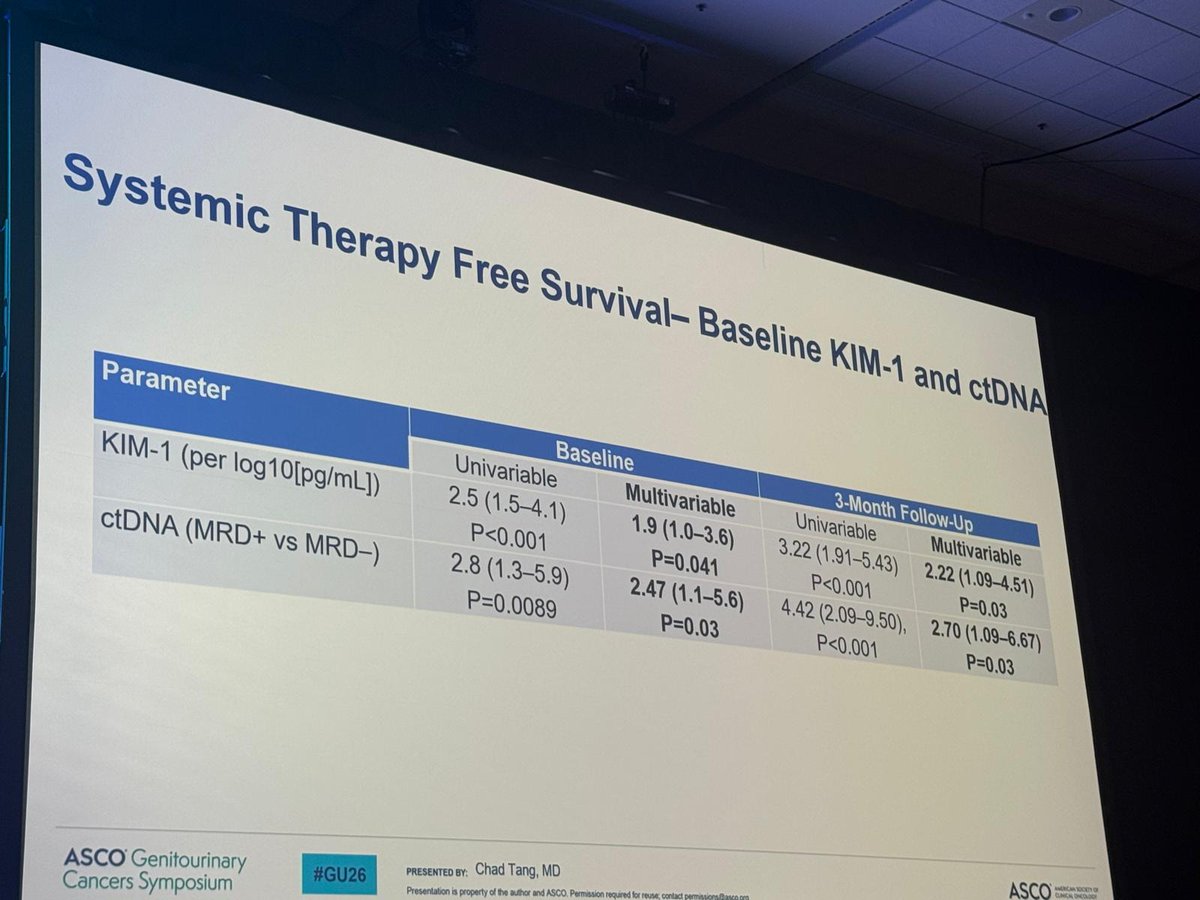
@ChadTang presented the K-COMPASS model, integrating circulating KIM-1 + ctDNA MRD to risk-stratify oligometastatic ccRCC treated with MDT.
- KIM-1 and ctDNA independently associated with systemic therapy-free survival (baseline and 3 mo)
- Higher KIM-1 tracked with worse outcomes (baseline PFS HR 2.2 / OS HR 5.1; 3-mo PFS HR 3.5 / OS HR 5.0)
- Model performance: C-index 0.76; online tool available (trialdesign.org)
Promising integrated blood-based + clinical risk model for risk-adapted decisions.
Happy to share that the full publication is now available on @EUplatinum: 10.1016/j.eururo.2026.01.004
#GU26
#RCC
@OncoAlert



English
English
1/11 Excited to share our study of polyamines in prostate cancer in @CR_AACR! We found that, in models of advanced PCa, supraphysiological androgens (SPA) drive production of polyamines that help the cancer survive. @PCF_Science @AACR @hopkinskimmel aacrjournals.org/cancerres/arti…
English
Congrats Filipe! An incredible honor and so well-deserved!
Urology Care Foundation@UrologyCareFdn
We are excited to announce @CarvalhoFilipeL as our 2025 Rising Stars in Urology Research Awardee! His groundbreaking work targets immune cells that hinder bladder cancer treatment, paving the way for more effective, personalized therapies. Read more 👉 bit.ly/47m3Zic
English
English
@VanAllenLab @val_boeva @DanaFarber @CSatETH We hope this serves as a foundational resource for the EAC & broader cancer research community.🧬 Full paper here: cell.com/cell-reports-m… (9/9)
English
Thrilled to share our new paper out today in Cell Reports Medicine! @VanAllenLab @val_boeva We map cell states & neighborhoods across clinical stages of esophageal adenocarcinoma (EAC) using single-cell, epigenomic & spatial data.🔗cell.com/cell-reports-m… (1/9)

English

🚀Excited to share our new paper, now published in @NatureComms! ✨
We present BEANIE, a nonparametric method that reduces false positives when analyzing differential gene signature expression in multi-patient clinical scRNA-seq cohorts @VanAllenLab 🧪🧵nature.com/articles/s4146…
English

Thrilled to receive the Presidential Early Career Award for Scientists and Engineers (PECASE)! Could not have done this without my amazing lab members and mentors.
whitehouse.gov/ostp/news-upda…
English
English

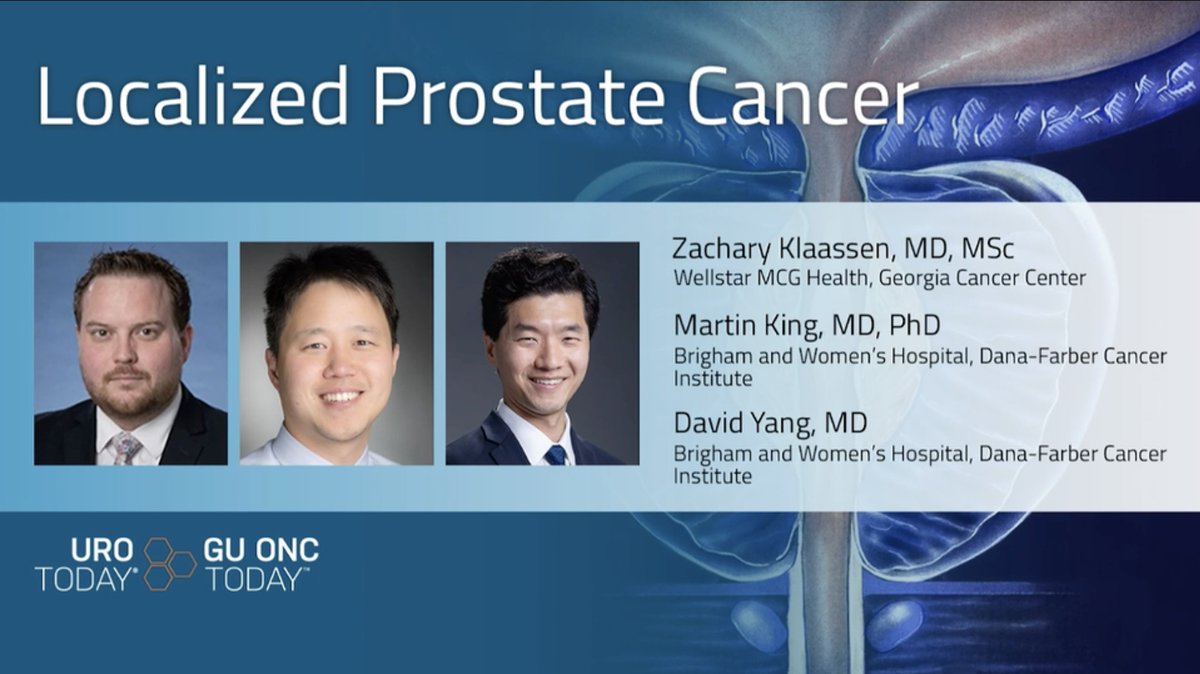
Researchers Drs. Martin King & @DYangMD discuss AI's potential to automate and standardize prostate tumor assessment. Could this revolutionize clinical decision-making in #oncology?
Watch the full discussion on @urotoday - bit.ly/4fNC9O7
English
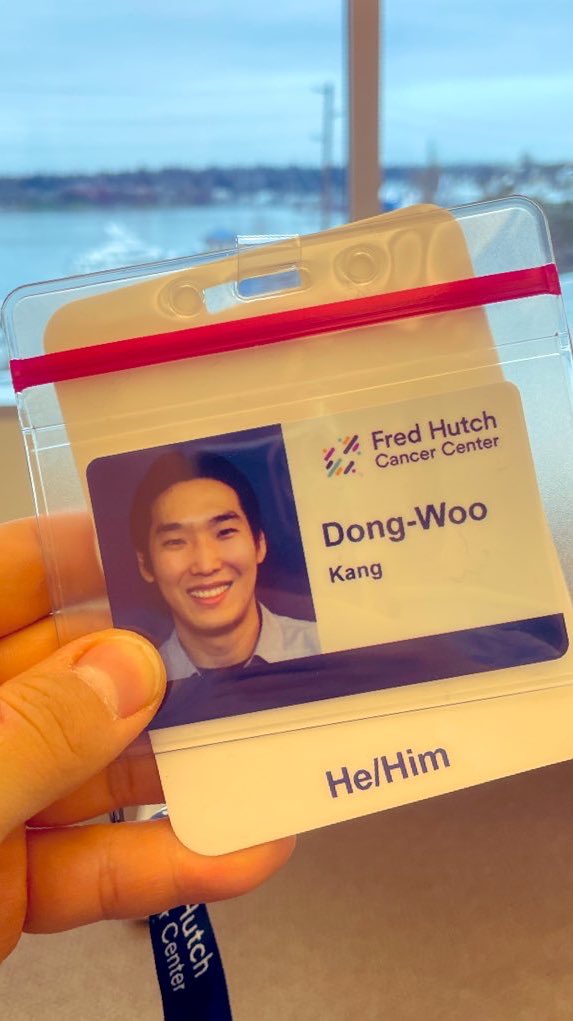
Off to a new start at @FredHutch as Assistant Professor - I can’t be grateful enough to my incredible mentors/colleagues/friends at
DFCI for their support. It’s hard to leave them behind, but I’m looking forward to exploring new
opportunities at FH! #ExerciseOncology
English
David Yang retweetledi

Tonight we sit with the cherished memories of a truly unforgettable individual who changed the lives of so many fighting cancer.
Tomorrow we stand and get back to the fight against the terrible disease that took one of our best, brightest, and kindest.
Love you forever, Felix.
English