daniel

372 posts

daniel banner
daniel

daniel

@Daniel03187025

energy storage will solve everything

San Diego, CA Katılım Kasım 2021
2.9K Takip Edilen257 Takipçiler
daniel
daniel@Daniel03187025·
@alex_fasulo The '$1,000/MW fee' you're calling a kickback is an intervenor fund, 75% goes to the host town to hire lawyers to fight the developer. The 3/4 ft removal depth comes from NY Ag & Markets, not ORES. Decommissioning is bonded at 125% with no salvage credit. You Keep making shit up
English
0
0
0
185
Alex Fasulo
Alex Fasulo@alex_fasulo·
After the foreign solar and wind corporations get their subsidies and credits, and the Office of Renewable Energy Siting (ORES) makes its MW fees ($1,000/MW) that is not publicly audited or disclosed to the public, they allow the solar corporations to abandon equipment in the ground when it's decommissioning time. One of the biggest financial hiccups for solar developers is decommissioning. It's very expensive to take apart these solar complexes. It costs 5-15x more per panel to try and recycle its parts than it does to simply dump them on landfills. In order for ORES to court these foreign developers, they have to make the decommissioning process as pain-free as possible for these conglomerates out of Spain, Canada, and Denmark. Per the DPS documents uploaded specifically for Fort Edward Solar, it says this: "all buried and embedded cables will be removed to at least 3 feet below ground surface in non-agricultural areas and at least 4 feet below ground surface within agricultural areas." The plan considers removal of project components to 4 feet below grade in agricultural areas and 3 feet below grade in non-agricultural areas. That's it. Anything beyond the 3 and 4 foot mark is abandoned in place. Do you know what will remain? - Medium-voltage cables that connect panel rows to inverters/substations - Conduit (PVC or HDPE) encasing those lines - Grounding system (copper grid/wires) - Steel posts that hold the panels are often driven 6–10+ feet into the ground. ORES allows the developer to "cut" the piles off below grade instead of full extraction. - Transformer pads or inverter pads - Subgrade material - Trenches themselves (filled back in) remain as disturbed soil layers All of this is available for public viewing inside of any ORES solar or wind complex in New York State. That's what will remain in the soil they tell you can be "farmed again." It's a LIE. This land will be ruined for the remainder of our lives, and they know that. They're counting on you to go on with your day and not open the ORES docket where they have to admit the evils of these ecological detention centers inside of DPS documentation. All for a commercial power that generates at 15% of its potential, and 0% of its potential when we need it most: during blizzards.
Alex Fasulo tweet media
Malta, NY 🇺🇸 English
22
298
535
21K
daniel
daniel@Daniel03187025·
@alex_fasulo Lol I build solar assets in NY for a living. Work for an American company btw. If you have any questions on how the process works I'm happy to answer it for you
English
2
0
0
36
Alex Fasulo
Alex Fasulo@alex_fasulo·
@Daniel03187025 Sounds like you’re a little obsessed with me? 🤣 spend some time learning about how ORES functions today. You don’t know nearly as much as you think.
English
1
0
2
107
Alex Fasulo
Alex Fasulo@alex_fasulo·
Foreign solar developers don’t plan to pay for decommissioning. Decommissioning solar complexes costs millions of dollars. Not to mention, landfills in New York classify solar panels as hazardous waste due to heavy metals and grass shards. The solar developers will either 1) sell or exchange the LLC 2) file bankruptcy or 3) post an insufficient bond that won’t cover a fraction of the decommissioning costs or 4) include a clause that removes them from decommissioning if there is a “natural disaster.” The decommissioning costs will fall on the landowner. When the landowner can’t afford the total cost, the decommissioning will fall on the municipality… AKA the tax-paying citizens of that town.
J C Adams@Grampsknos

@alex_fasulo The landowner is left with responsibility to clean up later. Solar corporations as LLCs simply declare bankruptcy and shareholders move on.

English
22
178
395
9.9K
daniel retweetledi
John Bistline
John Bistline@JEBistline·
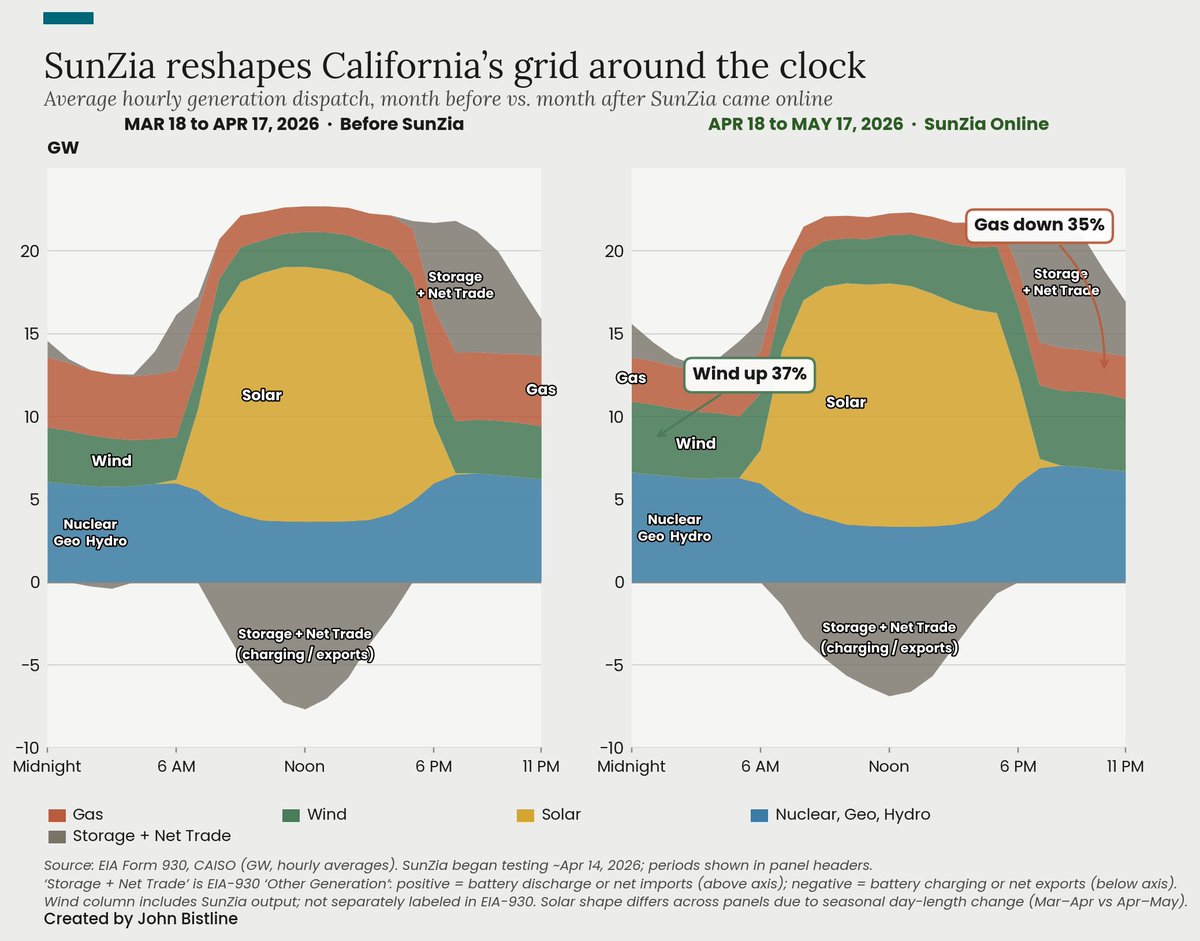
Does new transmission actually move the needle on clean energy? Here's a month of California data before and after SunZia came online. Wind is up by a third, and gas down by a third. Judge for yourself.
John Bistline tweet media
English
21
101
458
51.1K
daniel
daniel@Daniel03187025·
@OilCoIntern @clawrence I'm telling you right now no one is selling projects for 40x the amount of cash they have in the project dude lmfao.
English
1
0
0
49
Oil Co Intern
Oil Co Intern@OilCoIntern·
They sell projects for 40X, on average, of the cash they have in it. They ARE getting rich on tax credits. The only reason their business works is because of tax credits. Those juicy tax credits (which will be claimed by the buyers) are making up a large majority of the project value.
English
2
0
2
122
Oil Co Intern
Oil Co Intern@OilCoIntern·
❌“The Inflation reduction act just extended tax credits that have been in place nearly continuously for decades.” False. It didn’t “just” extend tax credits, it inflated the tax credits in massive ways in addition to extending them. • Prevailing wage + apprenticeship (PWA) bonuses: Major uplift of +24% for ITC or equivalent for PTC) for larger projects • Domestic content bonus: +10% (ITC) or +0.3¢/kWh (PTC) if a required portion of components is U.S.-made • Energy community bonus: +10% (ITC) or +0.3¢/kWh (PTC) for projects in former fossil fuel areas (e.g., coal mines, closed plants, Oil Co Intern’s playground, etc.) • MOST IMPORTANT OF ALL: Transferability and direct pay options allow monetization (selling credits or getting direct payments for tax-exempt entities). ❌“And if your friends don’t bring any projects to completion, they aren’t getting any tax credits.” Tax credits can be claimed once the project is put into service, yes. But do do you know what happens when the project meets the requirements for continuity via construction commencement? The massively beneficial IRA rates stay with that project for life, no matter who finishes it. Based on my post, could it be hypothesized that my friends find high-tax-credit areas for their projects (historically powered by fossil fuels, undereducated, ethnic minority, etc.) and then flip them for huge profits between acquisition and project completion? Yes. Because that’s what they’re doing. I look forward to updating this post in a few years when they sell out completely. ❌“I believe you just made this up, or your friends are committing tax fraud. Which is it?” My friends are receiving the benefits of tax credits without receiving the tax credits directly. They are getting paid for them via high sales prices when they flip projects. Either an oil & gas intern knows more about how the solar sausage is made than a “clean” energy investor, or you thought this would be an easy dunk on someone who doesn’t know ball. Which is it?
Craig Lawrence@clawrence

The Inflation reduction act just extended the tax credits that have been in place nearly continuously for decades. And if your friends don’t bring any projects to completion, they aren’t getting any tax credits. I believe you just made this up, or your friends are committing tax fraud. Which is it?

English
2
3
12
2.6K
Xiao Wang
Xiao Wang@xiaowang1984·
I have no idea why some people keep repeating "batteries will eat gas" as if the battery owners were all on one team that share revenue as opposed to independent investments all trying to max their own returns. In this context batteries are MUCH more able to eat their own returns before they start cutting into gas. And outside of California there probably isn't an unlimited appetite to keep subsidizing the "free" fuel for them to charge from.
Darth Trader@ISOTraderGeorge

Batteries have been tremendously successful in accelerating the race to zero on revenue...which also makes for a horrible business model. A significant number of batteries are going to make more money for their 2nd owners when they're sold for pennies on the dollar after some companies get liquidated in the next 3-5 years.

English
7
4
35
5.3K
daniel
daniel@Daniel03187025·
@xiaowang1984 @forrest_f_ Being in the queue and getting a long term contract to finance your gas plant are two completely different things
English
1
0
0
28
Xiao Wang
Xiao Wang@xiaowang1984·
@forrest_f_ Wdym isn't there a ton of new gas in the pjm queue. Are we talking Texas here?
English
1
0
0
38
daniel
daniel@Daniel03187025·
@SlBrandin Alright if we keep adding variable production shouldn't there be a long runway before merchant storage facilities keep eating their own margins?
English
1
0
0
50
Sam
Sam@SlBrandin·
The whole reason you operate on a merchant basis is because you believe there is economic rent you can capitalize on before the market reaches equilibrium true for wind/solar/gas/crypto mining/producing corn/wheat/pork/operating a lemonade stand/any commodity
English
3
1
7
315
daniel retweetledi
Object Zero
Object Zero@Object_Zero_·
The Electricity Grid I post a lot of stuff about the electricity grid, here the CEO of the largest grid in America (PJM) lays it out pretty clearly. • What worked for 2 decades… no longer works • This is structurally different from history • You are facing an era of scarcity • The situation is not tenable PJM are facing a demand explosion. Now a demand explosion in some industries is +500% demand. But this is infrastructure, this is tens of trillions of dollars of assets and it takes time to mobilise and deploy things at this scale. In infrastructure, when demand growth shifts from +1-2%/yr to +8%/yr, then you suddenly need to be building 4-8 times more assets per year, than you previously did. If you were deploying $1 trillion / yr to grow at 1%, you now need to deploy $8 trillion / yr to grow at 8%. Suddenly you need to deploy many trillions of dollars per year to meet this growth. If you cannot get it done, prices will rocket for everyone. Failure leads to inflation. This is not a PJM problem, this is not even a US problem, this is a global problem. PJM are formally validating what some people have been saying for a while now. This is not temporary, we cannot uninvent the technologies that have precipitated this change. The world has changed and we must adapt. Global retail electricity sales are about $3.6 trillion per year, of that, around $900 billion goes to transmission and about $2.7 trillion goes to wholesale generation. The transmission system many developed countries have is the wrong system going forward. Our transmission systems in the West are built for transporting power from big coal plants to power big towns. That’s not what we are doing now. We have replaced most of the coal plants with two largely decentralised but highly correlated fleets of intermittent generators (wind and solar), that are growing like fracking wells because they are also quick to deploy. Their quickness to deploy new generation projects is massively destabilising for the grid. The grid was designed for coal plants. The grid is a $50 trillion machine. It is by far the biggest asset in any country. It isn’t something you can toss away, it isn’t something you can swap out overnight. We also have new categories of industrial demand (hyperscalers) that will capture an increasing share of GDP. This new demand category is going to set the marginal price of electricity for everyone else, and these guys are not as price sensitive as your widowed grandmother. This is a difficult problem to address because of: i) the scale ii) the capital intensity It’s also a global problem, because it’s born out of a new technological paradigm. It will not spread around the world at equal pace, but everywhere is going to eventually face it down. Some people are fleeing to space for solutions to avoid this snafu, but that’s only a temporary fix. Once the hyperscalers have their demand satisfied, the next demand explosion immediately follows, and this second wave is 20x the scale of the current problem. The second wave is how do you power billions and billions of robots and billions of autonomous machines, doing work that currently can’t be done? This industrial revolution is very much a two stage revolution, first you power up the chips, then you power up the actuators. Chips scale down, actuators scale up. There’s no Moore’s Law for actuators, they obey Newton’s Laws of motion instead. This is the crux of the energy problem facing our civilisation. The energy system we have today is the one we wanted 20 years ago. The energy system we will have in 20 years from now, is the one we start building today. It’s time to build this solution.
Object Zero tweet media
English
49
220
976
185K
daniel retweetledi
Brendon Slotterback
Brendon Slotterback@bslotterback·
Shapiro calls for utilities to use public financing, which can be much cheaper than what utilities usually seek, to reduce the cost of building infrastructure for the grid.
Stephen Caruso@StephenJ_Caruso

Per four sources, Gov. Josh Shapiro sent a letter to an unknown number of "utility leaders" yesterday asking for more cost-effective financing and more transparency when requesting rate hikes. His office does not exercise control over rates but does hold a vast bully pulpit.

English
5
9
61
25.2K
daniel retweetledi
daniel
daniel@Daniel03187025·
@ShanuMathew93 If electrical capacity is the constraint and Blackwell does 10-15x the work per watt vs A100, every rack still running A100s is wasting 90-93% of its potential output. Wait until they have to swap these out. The depreciation write-downs are going to be brutal.
English
7
0
60
6.5K
daniel
daniel@Daniel03187025·
@fredstaffordcs You asked why ConEd's 9.5% ROE is the problem but NRG's 12-15% isn't. I answered. One is guaranteed on a monopoly, the other is earned in a competitive market. What am I misunderstanding?
English
1
0
0
37
Fred Stafford
Fred Stafford@fredstaffordcs·
@Daniel03187025 You're misunderstanding the question, which is not asking what the difference between competitive and non-competitive markets is. And once again why do you assume I don't know about POUs? I really don't get it.
English
1
0
0
29
Fred Stafford
Fred Stafford@fredstaffordcs·
If an investor-owned utility like NYC's Con Ed gets a ~9.5% return on equity for their projects, and if independent power producer NRG, which seems poised to develop a new gas plant in NYC and tried to repower one several years ago, expects a minimum of 12-15% return on equity for any projecys, why would it be "those profit-loving dastardly utilities" if Con Ed were allowed to build the gas plant but not "those profit-loving dastardly independent power producers" if NRG does?
Fred Stafford@fredstaffordcs

This historical trend in investor-owned utility returns on equity does not exactly match what current progressive rhetoric implies is an unprecedented profit extraction by utilities. Source is LBNL/Brattle retail price trends 2026 update.

English
8
5
24
12.3K
daniel
daniel@Daniel03187025·
@fredstaffordcs Unbelievable you don't understand the difference between competitive and non-competitive markets and you regularly pontificate on energy twitter? There is ZERO value add a publicly traded utility company offers that a non-profit utility financed with tax-exempt bonds doesn't
English
2
0
0
45
daniel
daniel@Daniel03187025·
@fredstaffordcs I can't buy power from anyone else in NYC. ConEd is making a double digit rate of ROE with no risk with a fucking monopoly. NextEra delivers that IRR selling into a competitive market. If their power is too expensive their investors get smoked. How are you not understanding this?
English
2
0
1
68
Duncan S. Campbell
Duncan S. Campbell@duncancampbell·
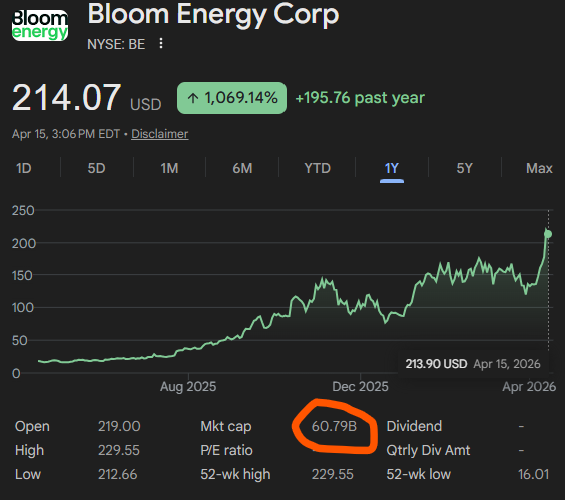
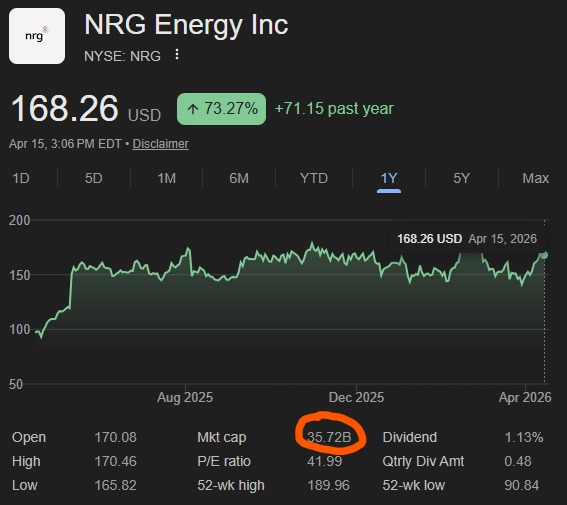
Bloom Energy's market cap is larger than NRG's.
Duncan S. Campbell tweet mediaDuncan S. Campbell tweet media
English
16
3
77
16K
daniel retweetledi
Marty Caswell
Marty Caswell@MartyCaswell·
Padres catcher Luis Campusano on what's been the biggest difference for him @FriarTerritory
San Diego, CA 🇺🇸 English
52
89
1.6K
351K
daniel retweetledi
Brian Bartholomew
Brian Bartholomew@BPBartholomew·
The world's electricity infrastructure, mapped.
English
72
409
2.9K
384K