Daniel Sansom

419 posts

Daniel Sansom

Daniel Sansom

@DanielSansomAI

AI Operations Expert | Building automated systems on Palantir to simplify Business. Co-founder Aplos Innovation

Columbus, OH Katılım Ocak 2015
912 Takip Edilen157 Takipçiler
Daniel Sansom
Daniel Sansom@DanielSansomAI·
Awesome! “Building a new class of spacecraft to provide transport and maneuver meant designing it from the ground up. KULR had the best solution on the market for a battery that met our unique needs for performance, reliability, and cost. We’re excited to work with them on our first, our next, and our future spacecraft.” – Kirby Carlisle, Argo Chief Operating Officer.
English

0
1
1
112
Options selling with Christian
Honest question to $PLTR investors What if Claude Mythos completely removes the moat Palantir has? Is it possible? I’m asking for an honest standpoint. I don’t know enough about the sector or palantir but from what we are hearing it seems like a legit threat?
English
118
4
91
47.9K
Chris Orlob
Chris Orlob@Chris_Orlob·
At Gong we had a saying: "Hire missionaries. Not mercenaries." Mercenaries sell for the paycheck. Missionaries sell because they believe. The difference shows up in discovery. Missionaries ask better questions because they genuinely care about solving problems. Mercenaries pitch features because they just want to close. Hire accordingly.
English
5
1
55
2.9K
amit
amit@amitisinvesting·
$PLTR This is one of the coolest interviews I've ever done with a Palantir customer. Mixology is not only a small business, but they are a small business that tried many things before they found Palantir. Once they did, everything changed. Thank you to CEO @JordanEdwards7 for taking the time to sit down and explain why working with Palantir created magic-like results for your business!
English
33
63
649
62.5K
Ashlee Vance
Ashlee Vance@ashleevance·
Best places to eat in Cleveland?
English
42
0
46
36.1K
Garcia
Garcia@GarciaCap·
I present to you Japan’s greatest export to the United States:
GIF
English
4
0
43
1.8K
Antonio Linares
Antonio Linares@alc2022·
I have completed the seasonal migration to the Mediterranean. Someone has to do it. Thank you for your attention to this matter.
English
8
0
46
8.9K
Daniel Sansom
Daniel Sansom@DanielSansomAI·
@johnkonrad Don't sleep on party schools if she's interested in business. She'll learn more there than in class.
English
0
0
2
91
A Soldier's Whisper
A Soldier's Whisper@SoldiersWhisper·
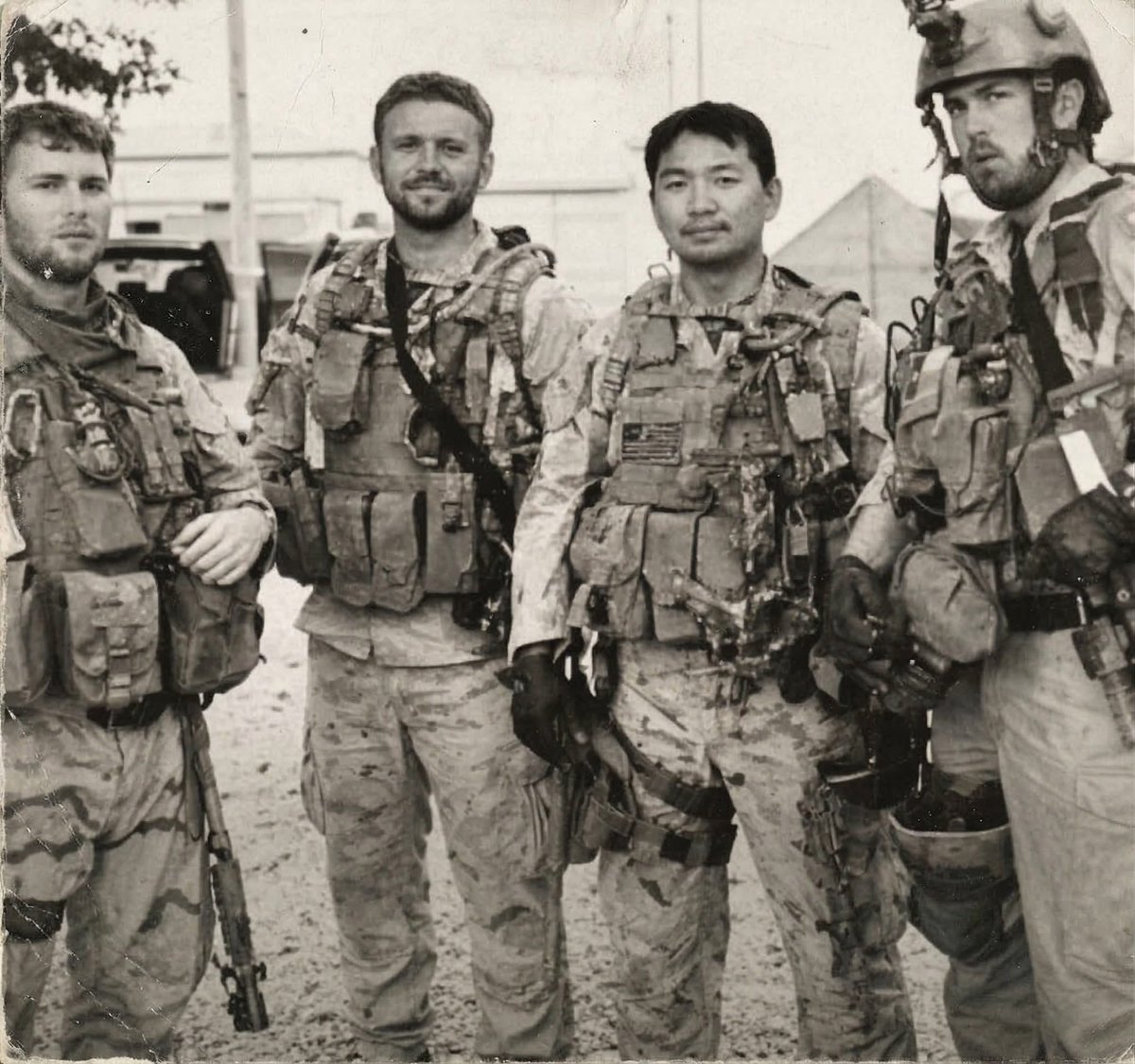
Four Navy SEALs climbed into the Hindu Kush mountains with a mission. It was June 2005. They were discovered by goat herders. The decision to let them go as an act of mercy, which sealed their fate. Soon, they were surrounded and outnumbered fifty to one. Radio calls bounced off the mountains into silence. No extraction was coming. What happened next wasn't tactics. It was instinct forged by brotherhood. Michael Murphy, Danny Dietz, Matt Axelson, and Marcus Luttrell fought not as a team executing a plan, but as brothers refusing to let go. Murphy climbed into the open, exposing himself to enemy fire, just to get a signal—to call for help he knew might not arrive in time. Dietz and Axelson held the line while their bodies broke. They didn't retreat when they could have or scatter when survival demanded it. They stayed. Because they chose to cover each other until there was no one left to cover. Marcus Luttrell survived, just barely. Days later, he was found by Afghan villagers who risked everything to protect him. He was alone with broken ribs and shattered leg. Lieutenant Michael Murphy was posthumously awarded the Medal of Honor—the first since Vietnam for the Navy.
A Soldier's Whisper tweet media
English
154
794
5.5K
392.1K
Geo
Geo@TheGeoMethod·
Most salespeople will be stuck in the hamster wheel forever. Some eventually end up owning the company. Here’s how you become the latter: 1. First, learn to produce revenue. Commission builds income and proves you can create value. 2. Then understand the business behind the pitch. Study margins, operations, and cash flow until the numbers make sense. 3. Build relationships with clients as if they might become partners one day. That network eventually turns into deal flow. 4. Save aggressively. The best opportunities pass you by while you scramble to raise capital. 5. Watch how the founders above you think. Their decision-making matters more than the product they sell. 6. Step into responsibility early. Advisory roles and board seats force you to think like an owner. 7. Remove your ego. Ownership requires long-term thinking, not short-term wins. 8. Start evaluating businesses long before you can afford one. By the time you’re ready, the skill will already be there. Sales can be a career. Or it can be the training ground for ownership. People who end up building wealth treat it as the second option.
English
8
2
35
1.8K
Ayman Al-Abdullah 🧱
Ayman Al-Abdullah 🧱@aymanalabdul·
Every great CEO walks the factory floor If you're not getting your hands dirty, don't be surprised when things fall apart I learned this while making $10.50/hour at Home Depot Every 90 days, the district manager would show up with a white glove. Checking storage racks. Shifting pallets of cement. Testing if our inventory was accurate The week before his visit? Pure chaos. We'd scramble to groom, organize, and price everything correctly That's when it hit me: The only reason we kept standards was because someone checked Fast forward to AppSumo at $40M Every Monday, I blocked 30 minutes. Non-negotiable My digital factory floor inspection: - Open 5 random support tickets - Test the products we were launching (actually buy and use them) - Review ad performance line by line - Find ONE thing working and ONE thing broken per department - Slack both observations immediately The team thought I had eyes everywhere Here's what they didn't know: I was terrified of becoming one of those CEOs who loses touch The uncomfortable truth about scaling: $1M: You're still in the weeds. Walking the floor IS your job $10M: You've hired leaders. Easy to think "they've got it." Wrong. This is when those 30 minutes matter most $100M: Your job shifts. Now you ensure your leaders walk THEIR factory floors. You walk together quarterly, showing them the standard you expect "But my time is worth $10,000/hour. Why would I do support tickets?" Because that one angry customer email will teach you more about your business than 10 board meetings Because your team's standards become YOUR standards when you're not watching Because excellence is a habit, not a memo One year, I caught a stripe bug blocking legitimate customers from purchasing during my Monday “walk”. It incorrectly flagged them as fraud. Had been happening for weeks Cost of my 30 minutes: $5,000 (at my “hourly” rate) Cost of not catching it: $180,000 in lost sales But the real cost? A team that thought nobody was watching The pattern is clear: When the cat's away, the mice will play. So be the cat that never fully leaves. Your $100M business isn't built in boardrooms. It's built in the details everyone else thinks are beneath them See you on the factory floor 🤝
English
21
55
528
48.2K
John Ʌ Konrad V
John Ʌ Konrad V@johnkonrad·
Hegseth says the Navy is performing better than expected. He says the Navy had a comprehensive plan for the Strait of Hormuz. He says we have the best warships in the world. He says we have enough munitions. All of that can be true. And yet the Strait is still closed. The real problem isn’t capability. It’s capacity. The U.S. Navy has 74 destroyers. Roughly a third are in maintenance and another third are between deployments. That leaves about 24 ready ships for the entire planet. Those ships aren’t sitting idle waiting for Hormuz. They defend carrier strike groups, support amphibious forces, and cover global commitments. The Iwo Jima Amphibious Ready Group in the Caribbean ideally should have several destroyers. It reportedly has one. Another amphibious group in Okinawa likely has only one as well. Carrier groups consume even more. Traditionally you’d assign three destroyers and a cruiser to protect each carrier. But the cruisers are being scrapped, so destroyers now fill that role too. The Ford reportedly has 4 DDGs. The Lincoln has 3. The George Washington in Japan likely has at least 3. Now we’re down to roughly a dozen destroyers left for everything else the US Navy does worldwide. And that’s before anything goes wrong. The fleet structure makes things worse. We eliminated most of our smaller frigates & we’re scrapping the cruisers. So destroyers are forced to do everything from missions too small for them to missions too big. Then there’s physics. Warships can’t teleport. A destroyer’s top speed is under half the average highway speed. Moving them across oceans can take weeks. Each destroyer carries about 96 vertical-launch missiles. But they aren’t all air defense. Roughly 1/3rd are Tomahawks, a third anti-submarine, & 1/3 anti-air. That leaves about 32 air-defense missiles per ship. When those run out, the ship has to sail to port to reload. The Navy eliminated most at-sea missile reload capability, so the round trip.. transit, reload, & return.. can take weeks. During the Red Sea operation typically 3 weeks. In practical terms, a destroyer escorting convoys may spend most of a month cycling through reloads. So your “12 destroyers” quickly becomes something closer to three on station at any given time. 3 ships. Roughly 96 air-defense missiles total. If Iran can launch 97 per week, missiles or drones, they overwhelm the defense. Yes, destroyers also have backup systems like their guns & CIWS. But those are last-ditch defenses. CIWS literally means Close-In Weapon System. Close is the key word. To use it effectively, the destroyer has to stay very close to the merchant ships it’s defending. That shrinks the defensive umbrella and forces convoys to be smaller. Small convoys don’t move much oil. The Strait of Hormuz is about 100 nautical miles long. A destroyer could sprint through it in roughly three hours but convoys move at the speed of the slowest ship. Supertankers average about 12 knots. 100 nautical miles at 12 knots is about eight hours. Then the escorts have to turn around and bring empty tankers back out. Even in optimistic scenarios, say one destroyer protecting four supertankers carrying two million barrels each, you’re moving roughly eight million barrels per convoy cycle. And that assumes no mines, no drones, no delays, no damaged ships, no orders from cautious admirals. With two destroyers taking serious risk while one reloads CWIS & fuel at sea… & everything going perfectly, you might move most of the oil. But my napkin math has more assumptions than a block of dollar store Swiss cheese. Option 2 Pull the carriers, send the airwings to Dubai airport & free up 7 destroyers for convoy duty. But carriers without air or DDG would have to go far from shore around Africa to get home. American supercarriers sailing home empty cover wouldn’t exactly project strength. P.S. that’s why we 💯 need Battleships. Large guns = wider umbrella and lots more ammo/fuel storage.
John Ʌ Konrad V tweet media
English
272
374
2K
252.1K
Keith Fitz-Gerald
Keith Fitz-Gerald@fitz_keith·
$PLTR doubter are running outta arguments!  Palantir just held its 9th AIPCon 👏 Some of the highlights from customers operating in the world’s highest stakes environments include: • Navy expanding AI across the fleet. Real sovereign deployment, not a slide deck. • GE Aerospace doubling down: agentic AI predicting failures, clearing supply snarls, freeing engineers from spreadsheets. • Centrus stitching classified/unclassified systems to restart American nuclear enrichment. That’s not a “pilot.” • Nvidia sovereign AI OS stack: hardware-to-deployment, edge-ready, secure-by-design. • LG CNS pushing deeper enterprise adoption. If you’re still on the fence, I get it but please, don’t kid yourself. Palantir has returned 1,400% since going public in 2020, even after all the recent selling. Keith’s Investing Tip: Pay attention when customers grab the mic and prove the point.
Palantir@PalantirTech

x.com/i/broadcasts/1…

English
6
24
179
10.7K
Joseph Carlson
Joseph Carlson@joecarlsonshow·
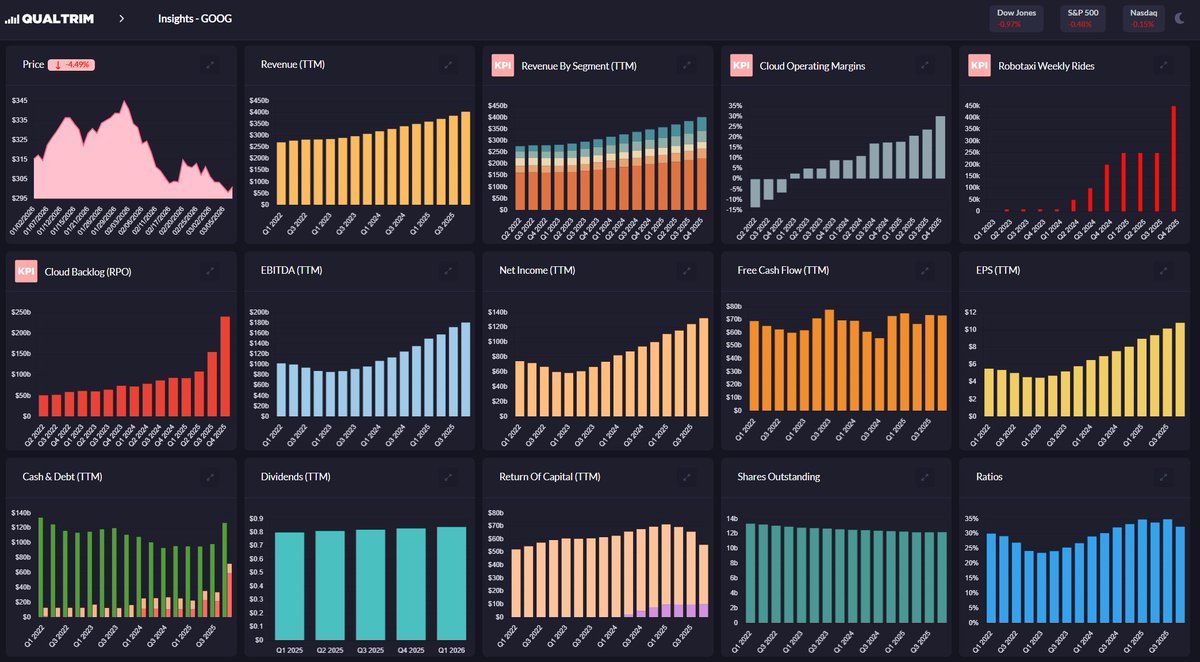
30 years of financials, on a quarterly basis, all at a glance. Hundreds of key KPI's for each major company. Advanced chart-building that's easy to use. A full weekly earnings calendar, earnings call summaries, Simple DCF Calculator, much more, all for $8/month. Thanks to the 13,000+ paying members! The scale of members has allowed us to grow with zero outside investment. This has been a self funded project from day 1. Now the snowball is rolling quickly. We have huge features coming out soon that you can't get anywhere else.
Joseph Carlson tweet media
English
45
11
569
36.7K
Ole Lehmann
Ole Lehmann@itsolelehmann·
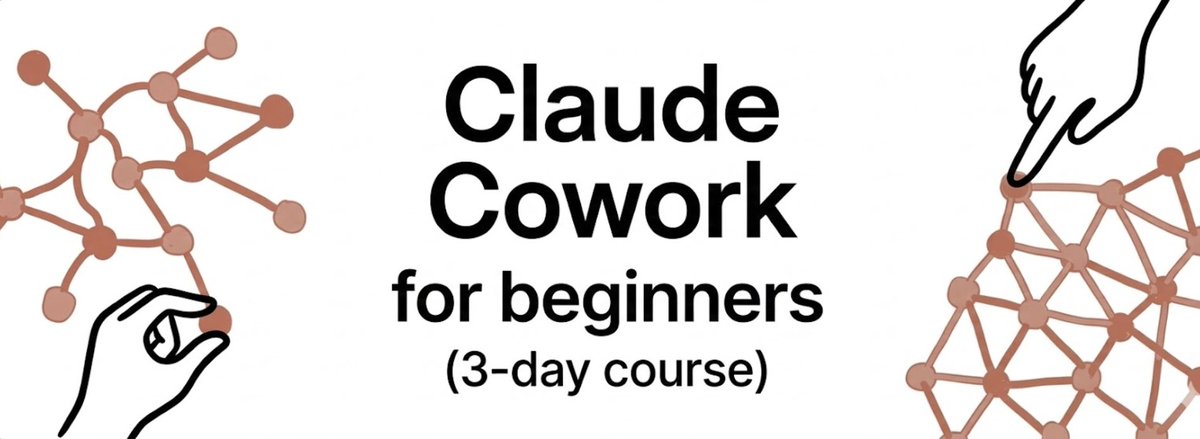
i made a 3-day Claude Cowork for Beginners course, and it's yours for free by the end, you'll have a personalized AI teammate on your computer that: • knows your style • connects to your tools • and produces finished work you can send immediately here's what you get: day 1: install cowork, set global instructions, and run your first real task (15 min) day 2: workflows that replaced hours of my week, including building landing pages from a description and running full competitive analyses in one prompt day 3: skills, plugins, and connectors so cowork actually knows how you work and can access your tools + copy-paste prompts so you can follow along as you read like + comment "COWORK" and i'll DM it to you
Ole Lehmann tweet media
English
1.8K
180
2.9K
175.1K
David Perell
David Perell@david_perell·
My Twitter feed is filled with nostalgic videos like this. They're edited to make the past look joyful, charming, and filled with life. Every trend of this sort is a reaction to something. Some gripe, some longing, some frustration. These clips resonate because the modern world feels heavy, sterile, and joyless by comparison. The rise of Nostalgia Culture has been brewing up for some time now. We see it in the obsession with JFK Jr.'s fashion, products like ModRetro, and the way teenagers carry point-and-shoot cameras so they can take blurry photos. Aesthetics always precede language. They're leading indicators. A register of cultural change. Through aesthetics, we say what we aren't yet able to put into words. These videos are a way of rejecting the present we're in and the future that's being sold to us. And it's not just AI. It's also gambling, optimization culture, the viral murders we keep seeing on the timeline, the sloppification of just about everything, the way smartphones keep everyone on edge, and in the case of the video below... a low-trust society where shop owners no longer know their customers' names. Underneath the nostalgia and retro cheeriness is an undercurrent of revolt against the world we're building.
RetroBayArea@RetroBayArea

San Francisco in the 1980s. Scenes of North Beach in 1982. Whenever I see older folks in neighborhoods like this, it makes me miss my grandparents and all the other people that were a part of my life when I was growing up. I miss the all the shopkeepers who knew your name and the neighbors who always looked out for each other. The stories they shared, their daily routines, and even the smallest gestures once felt ordinary but now seem invaluable. I think about them often, and whenever I catch glimpses of that kind of community, like the one North Beach had back then, it brings all those memories back. In 1982, North Beach maintained its reputation as San Francisco’s bohemian and Italian neighborhood. It was defined by old-school cafés, Beat-era history, and a growing nightlife scene. Broadway was packed with jazz clubs, dive bars, and strip clubs, while Mabuhay Gardens and The Stone were drawing punk and metal crowds. source footage 🎥: KTVU

English
16
15
209
55.3K