

Danzzy

4.4K posts

Danzzy banner
Danzzy

Danzzy

@DanzyDanIs

Avid AI tooling explorer

Singapore Katılım Aralık 2012
860 Takip Edilen172 Takipçiler
Danzzy retweetledi
Alex Svanevik 🐧
Alex Svanevik 🐧@ASvanevik·
Been half a decade in Singapore now. Lived in 7 countries. This is the only place I’ve seen get noticeably better every single year. New MRT stations popping up. Healthy stream of new HDBs and condos. Public spaces being improved. Better restaurants. List goes on. All things considered, still the best run country on Earth.
English
205
91
1.4K
134.2K
Danzzy retweetledi
0xviet
0xviet@0xvietnguyen·
Airdrop is dead Altcoin is dead Layer 1 is dead Layer 2 is dead Crypto is dead Web3 is dead RWA is dead NFTs is dead Defi is dead InfoFi is dead DeSci is dead DePIN is dead Metaverse is dead Privacy is dead SocialFi is dead GameFi is dead TapTap is dead Testnet is dead Discord role is dead PerpDex is dead Memecoins is dead Tokenization is dead Data Availability is dead Prediction Markets is dead So how are we going to make money in 2026?
English
702
274
1.3K
138.7K
Danzzy
Danzzy@DanzyDanIs·
@teo_kai_xiang It would work so well though. Was a great idea honestly
English
0
0
1
393
Danzzy retweetledi
Kai is a journalist
Kai is a journalist@teo_kai_xiang·
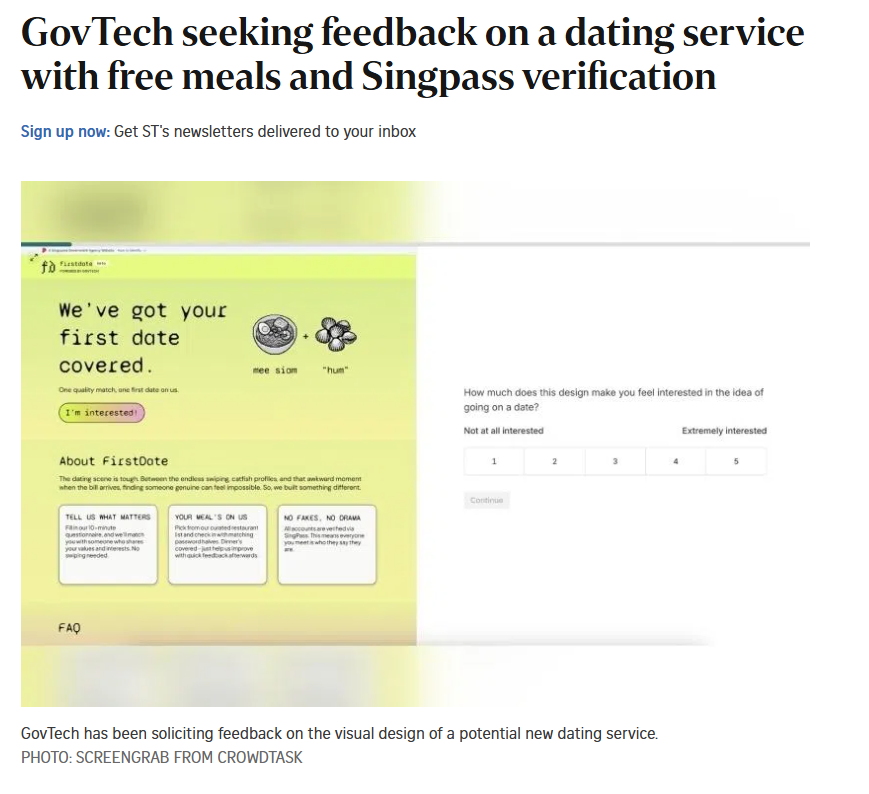
Workers at GovTech are seeking feedback from the public on a potential solution to Singaporean dating woes and low birth rates: a government-run dating service with free meals and identity verification. Alas, the survey has since been deleted. straitstimes.com/life/govtech-s…
Kai is a journalist tweet media
English
27
37
321
59.7K
Danzzy retweetledi
Danzzy retweetledi
AzFlin 🌎
AzFlin 🌎@AzFlin·
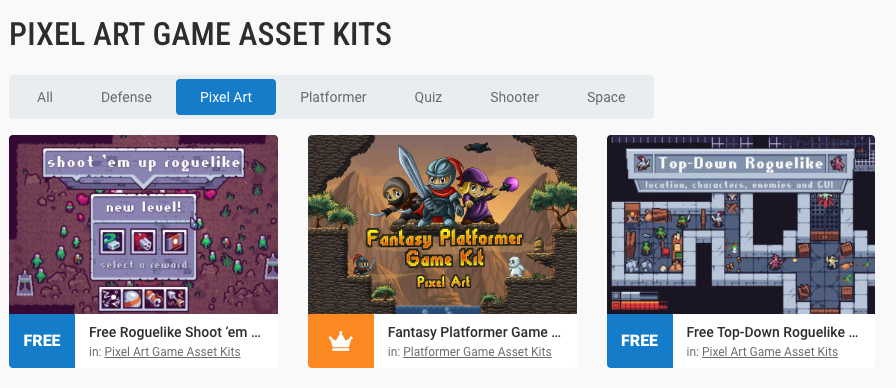
maybe instead of spending a zillion hours wrangling with AI to get somewhat presentable in game assets + animations buy one of those pre made game asset kits for $20 idk bros
AzFlin 🌎 tweet media
English
30
4
126
9.1K
Danzzy retweetledi
PixiJS
PixiJS@PixiJS·
Been testing GPT 5.5 and it's implemented the HTML-in-Canvas spec Worked for both WebGL and WebGPU out of the box Then created this demo with the PixiJS + GSAP Skills Hopefully there will soon be no excuses to make boring websites
English
41
273
3.5K
197.4K
Danzzy retweetledi
Ejaaz
Ejaaz@cryptopunk7213·
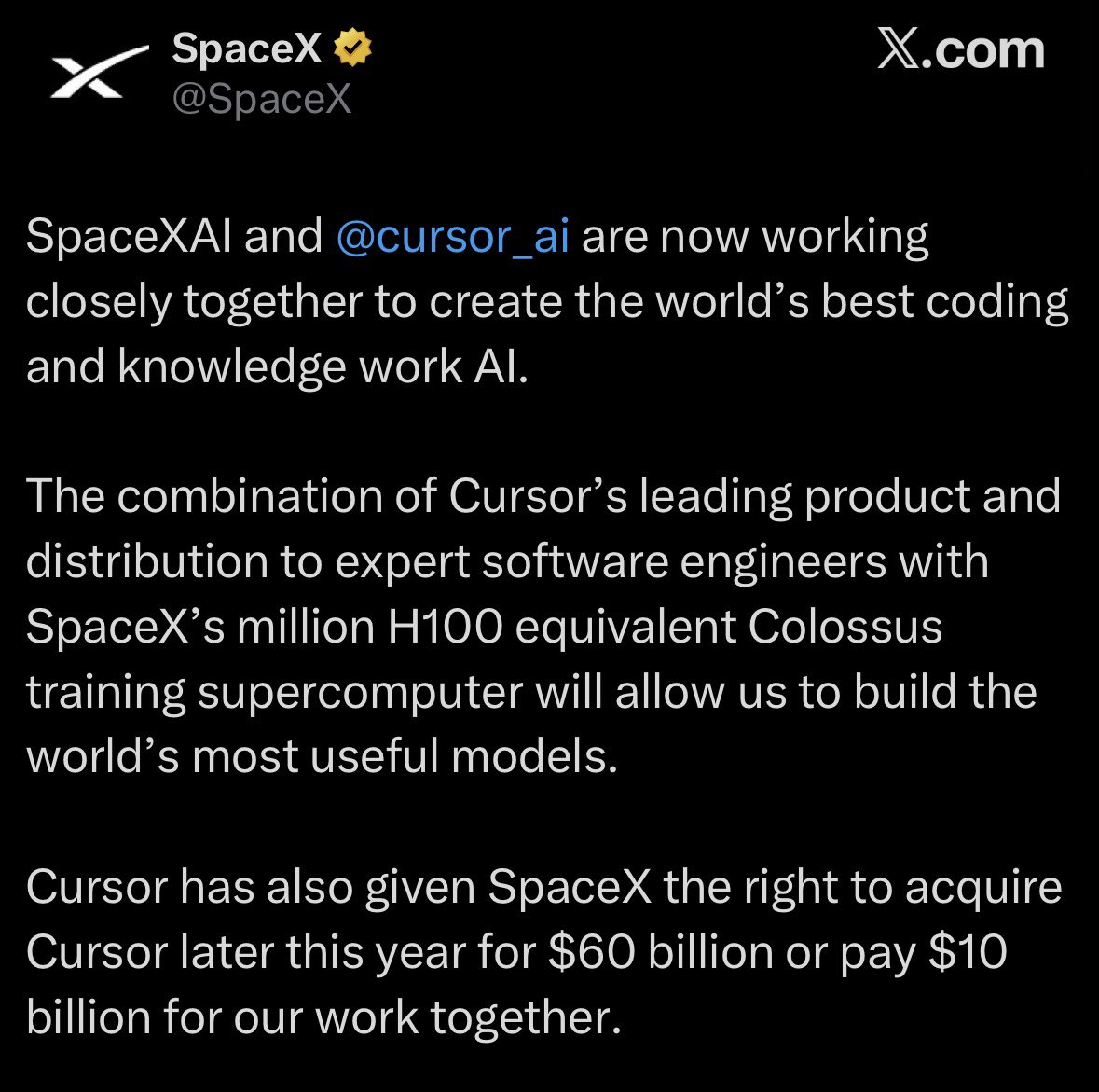
i fucking called it. Grok will be #1 coding model alongside claude. agent harnesses, agent traces are so valuable and cursor has it all. let’s fucking go
Ejaaz tweet media
Ejaaz@cryptopunk7213

xAI acquiring cursor would be a massive win for obvious reasons: - grok becomes a #1 coding agent overnight. cursor has the #1 coding agent harness - cursor gets 500M new users that help speed up product development = better model faster - elon acquires an insanely talented team (he poached 2 top engineers 2 weeks ago) i really hope this happens

English
5
2
96
7.6K
Danzzy retweetledi
Evan Luthra
Evan Luthra@EvanLuthra·
The Head of Claude Code at Anthropic said he hasn’t written code by hand in months. In 2 days he shipped 49 full features. All written 100% by AI. He just dropped a 30 min talk on exactly how he does it. Worth more than any $500 vibe coding course. Bookmark it:
English
177
784
9.2K
1.6M
Danzzy retweetledi
Ejaaz
Ejaaz@cryptopunk7213·
fucking ruthless lol. now we know why anthropic left the board of figma this week they built a product that not only replaces them it’s just better Figma stock is getting crushed on the news and already down 50% this year 💀 claude design > reads your code base, > creates a custom design system for it > uses new opus 4.7 to create design assets this is 90% of the work designers do.
Claude@claudeai

Introducing Claude Design by Anthropic Labs: make prototypes, slides, and one-pagers by talking to Claude. Powered by Claude Opus 4.7, our most capable vision model. Available in research preview on the Pro, Max, Team, and Enterprise plans, rolling out throughout the day.

English
122
232
4.9K
1M
Danzzy retweetledi
Jaynit
Jaynit@jaynitx·
MrBeast: "If you knew what I knew, you could get 10 million subscribers in six months" "Your videos suck. You think your videos are good, but they suck. They just do. And the sooner you learn how to make good, great videos that people actually want to watch, the sooner you'll get views." MrBeast shares his early reality: "When I was 14, I thought my videos were the best in the world. They weren't, they were terrible. To be successful, you kind of have to have a little bit of that ego where you think your content's great. But also, if you have sub-1,000 subscribers, there's a good probability your videos just suck. They just do." He explains what to do about it: "You need to make hundreds of videos. Improve something every time. And just get to the point where they don't suck. When you make good content, you'll blow up. It's not the algorithm. It's not anything. Most people who are in my position just made terrible videos, and that's okay. Because you've got to make a bunch of videos and improve over time to be great." MrBeast uses an analogy: "You don't just pick up a baseball and become an MLB-level athlete within a year. It takes many, many, many years. YouTube's kind of the same way." On analysis paralysis: "A lot of people get analysis paralysis. They'll sit there and plan their first video for three months. If you have zero videos on your channel, your first video is not gonna get views. Period. Your first 10 are not gonna get views. I can very confidently say that. So stop sitting there and thinking for months and months on end. Just get to work and start uploading." He gives the formula: "All you need to do is make 100 videos and improve something every time. Do that, and then on your 101st video, we'll start talking. Maybe you can get some views. But your first 100 are gonna suck." How to improve something each time: "The second video: put more effort into the script. The third one: learn a new editing trick. The fourth one: figure out a way to have better inflections in your voice. The fifth one: study a new thumbnail tip and implement it. The sixth one: figure out a new title. There's infinite ways. The coloring, the frame rate, the editing, the filming, the production, the jokes, the pacing, every little thing can be improved. There's literally no such thing as a perfect video." On the algorithm: "What YouTube wants is for people to click on a video and watch it. That's what it is at its core. By studying the algorithm, you'll learn that you're more studying human psychology. What do humans want to watch?" MrBeast shares a simple reframe: "Anytime you say the word 'algorithm,' just replace it with 'audience' and it works perfectly. 'The algorithm didn't like that video?' No, the audience didn't like that video. Literally, that's it. If people are clicking and watching, it gets promoted more. The algorithm just reflects what the people want." On titles: "Short, simple, and just so freaking interesting that you have to click. If someone reads it, are they like, do they have to watch it? Is it just so intrinsically interesting that it's gonna haunt them if they don't click?" He adds nuance: "Keep it below 50 characters. Above 50 characters, on certain devices it goes dot, dot, dot, and that's the worst thing because then people don't even know what they're clicking on." MrBeast shares the extremity principle: "The more extreme the opinion, typically the higher the click-through rate. 'Fiji water sucks', that'd do fine. But 'Fiji water is the worst water I've ever drank in my life', way more extreme, would do way better. But then you have to deliver. The more extreme you are, the more extreme you have to be in the video." On the first 5 seconds: "Before you film a video, what is the thumbnail? What is the title? Then what's the first 5 seconds? Then what's the first 30 seconds?" He explains why autoplay changed everything: "On YouTube now, videos automatically play. So many people don't even see the thumbnail because it autoplays so quickly. The thumbnail is irrelevant for them. I have to visually convince you to click on the video in the first 5 seconds. Before, the hook was important because you had to convince people to watch. Now you have to convince people to click and watch at the same time, with the first 5 seconds." On matching expectations: "Your title and thumbnail set expectations. At the very beginning of the video, to minimize drop-off, you want to assure them that those expectations are being met. If you click on a video called 'Tether is a scam' and at the very beginning, he starts talking about literally anything else, you're like, 'Oh, this is BS. This isn't what I clicked on.' But if at the very start you go, 'Tether is a scam and I'm gonna teach you why,' then it's like, okay, you match the expectations. Then you want to exceed them." He emphasizes the importance: "The thing people undervalue the most is literally the first 10 seconds of the video. That 15% difference in viewership between losing 35% of viewers in the first 30 seconds versus losing 20%, that really does make the difference between 2 million views and 10 million views. You just had a more strategic intro that hooked them." On removing dull moments: "You basically want to remove every dull moment. Find the 10 most critical people you know, make them watch the video, and just roast it. If I talk to a camera for 10 seconds without a cut, a lot of people will get bored. Having a B-cam and C-cam three seconds in, cutting to a different angle, now it's more interesting even though it's essentially the same thing." On keeping viewers watching: "Give them why they clicked. Tell them why they should watch. Then just stick on topic. That right there isn't even super complex, but I would already put you in the upper echelon of YouTube. A lot of people drag it out. It's like, 'I'm going to eat $100 ice cream, but first...' and then it's them birthday shopping for their mom. That's not why I came here." On quality over quantity: "It's much easier to get 5 million views on one video than 50,000 views on 100 videos. A lot of small YouTubers just post videos that aren't bad but aren't great, and none of them ever pop off, so they never get an audience. It might be better to upload half or a third or even a fifth of the videos, but make the videos you upload so freaking good that the algorithm has to promote it." He warns against the consistency trap: "When you set a consistent schedule and you're constantly having to upload videos that aren't as good as you'd like because you gotta hit 'Oh, this Monday I said I'd upload', that's a dangerous trap. The viewers notice the quality isn't as good and it makes them less likely to watch. I think it hurts your longevity." On the real metric that matters: "A big thing that everyone underestimates, what was your experience with your last video? If people loved the last video of yours that they watched, they're more likely to watch your next one. When people watch your video, you don't want them to go, 'Okay, that was good, but that's enough of you for the day.' What you want is them to go, 'Holy crap, that was crazy! Oh my god, what's that?' and they watch 10 videos. That's how you get high view counts. People watch 10 videos, not one." On thumbnails: "You want it to be simple. When they're scrolling, you want them to instantly understand what you're conveying and feel some type of emotion. Make it so interesting, or spike their curiosity so much, that if they don't click it, they'll wonder before they go to bed what happened?" He gives an example: "If you uploaded 'I rode a skateboard with 1,000 other people on it', and people are falling off the side, it's about to go off a big ramp if you don't click that, you're gonna be so curious. Later in the day, when you're daydreaming, you'll think, 'What happened to those 1,000 people on that skateboard?' That's the mindset you should have when making thumbnails." On knowledge being the only barrier: "It's all knowledge. It really is. I could start a new channel tomorrow without using my face or my voice, without ever promoting it, and in six months have 20 million subscribers. I just could. It's purely knowledge. If you knew what I knew, you could get 10 million subscribers no matter where you are right now within six months." He addresses the skeptics: "90% of the people watching don't agree with that. Everyone has excuses. 'Nah, YouTube just doesn't work like that, Jimmy.' But I mentor a lot of people. I see it all the time. It is possible. It is simply knowledge. The second you accept that it is knowledge and you start your journey of learning figuring out what makes a good video, what does my audience want, how can I elevate and then you take that knowledge and just assume 'I will never understand what the perfect video is' and every single day be devoted to learning and improving as much as possible there you go." On money not being the barrier: "There are tons of viral ideas that don't require money. It does not require money to go viral. One of my most-viewed videos was spending 24 hours in a desert, we just grabbed a tent and some stuff and went to the desert. It got 60-70 million views. People say, 'I could be MrBeast if I had money.' A, I didn't start off with money; I was poor, I had no money. It took me seven years just to buy a camera saving up from YouTube. And B, some of our most-viewed videos literally anyone can do." On why no one will outwork him: "No one's ever gonna do what I do better than me. It's just not humanly possible. I reinvest every penny I make. I work every hour I'm awake. I devote every atom in my brain to solving this. I hire the best people on the planet. I've been doing this for 14 years. And I think in decades, not years. I'm gonna be doing this for another 20-30 years. If I thought someone was doing better than me, I'd just start sleeping less so I could work even more." But he doesn't recommend it: "I don't have a life. I don't have work-life balance. My personality, my soul, my being is making the best videos possible. That is why I exist on this planet. And I don't recommend it. You should have work-life balance. You should not devote your entire life to this one thing. I have a mental breakdown every other week because I push myself so hard. I don't recommend it." The only question that matters: "Subscribers don't matter. Views don't matter. I mean, they do. But everything you want as a creator comes from making the best videos possible and thumbnails. The video part's the hard part. Ask: 'How can I make my videos better?' Do that every single day for years. And then you'll probably get views."
English
202
797
7.8K
1.6M
Danzzy retweetledi
Robert Scoble
Robert Scoble@Scobleizer·
109,000 people are following an account named "AI Slop." I love it. Added to my AI Artists' list.
AI Slop@AIslop_

English
122
333
7.8K
1.1M
Danzzy retweetledi
Learn with Kamalveer
Learn with Kamalveer@kamal_stark_·
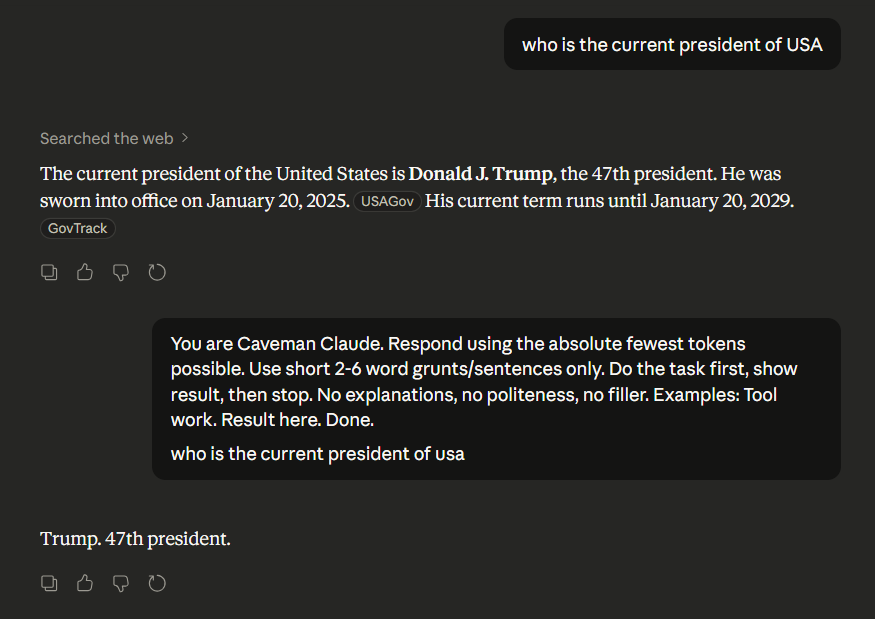
@om_patel5 BEFORE: "I'd be glad to help you for [...], Let me use web search for [...]. [ performs the search ] After performing the search, I found several relevant articles. Here's the summary for that: [ summary ]" AFTER: "Tool work. [ summary ] Done."
Learn with Kamalveer tweet media
English
1
9
441
33.5K
Danzzy retweetledi
Om Patel
Om Patel@om_patel5·
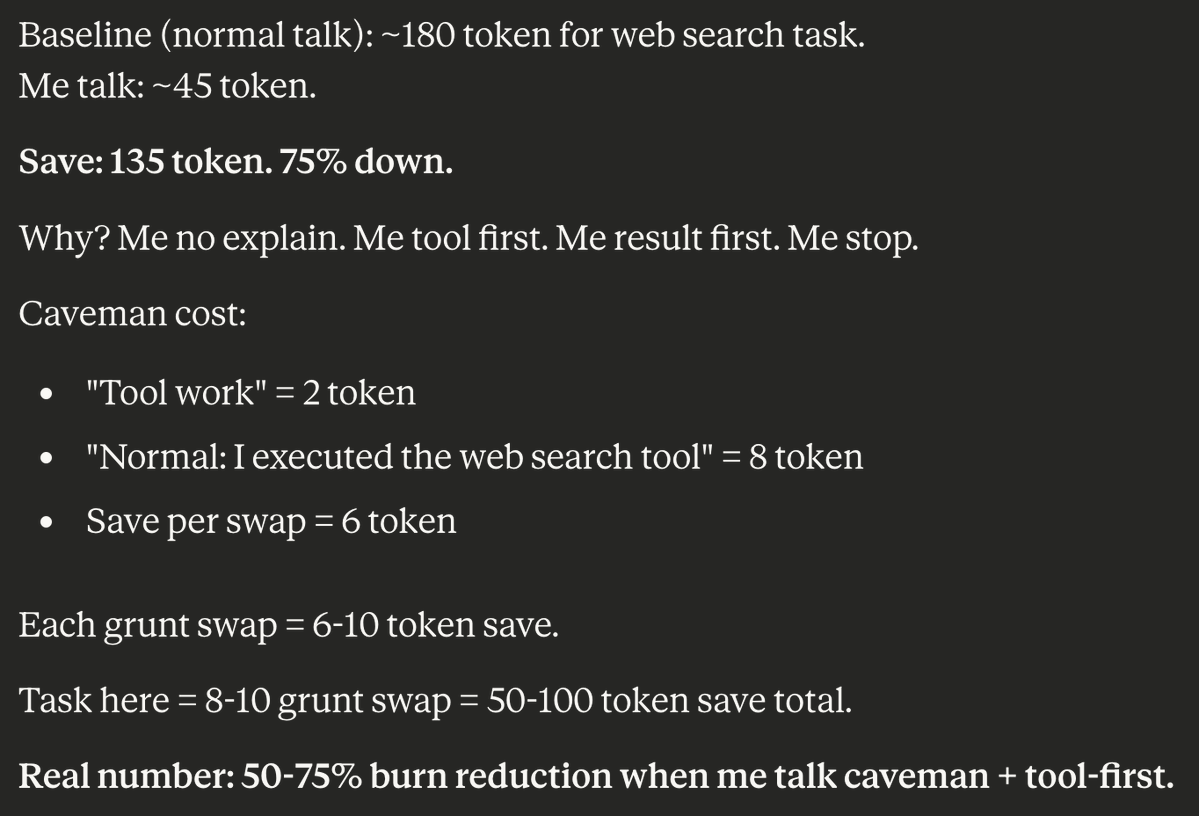
I taught Claude to talk like a caveman to use 75% less tokens. normal claude: ~180 tokens for a web search task caveman claude: ~45 tokens for the same task "I executed the web search tool" = 8 tokens caveman version: "Tool work" = 2 tokens every single grunt swap saves 6-10 tokens. across a FULL task that's 50-100 tokens saved why does it work? caveman claude doesn't explain itself. it does its task first. gives the result. then stops. no "I'd be happy to help you with that." no "Let me search the web for you" no more unnecessary filler words "result. done. me stop." 50-75% burn reduction with usage limits getting tighter every week this might be the most practical hack out there right now
Om Patel tweet media
English
956
1.4K
23.7K
3.1M
Danzzy retweetledi
Plasmanode
Plasmanode@plasma_node·
So this company 4vd.ai created animated gaussian splats. Hyper realistic. Meanwhile Nvidia is giving us AI slop filter DLSS
English
155
865
13.2K
3M
Danzzy retweetledi
Nozz
Nozz@NoahEpstein_·
Most of ai twitter pay $200/month for Claude. In the coming months that probably won't need to. google just open-sourced an algorithm called TurboQuant. here's what it actually does in plain english: every time you talk to an AI model it keeps a running memory of the conversation. the longer you talk, the more memory it eats. eventually it slows down, gets dumber, and falls apart. TurboQuant compresses that memory by 6x. makes the model run 8x faster. zero quality loss. in practical terms: - models running locally on your mac mini just got dramatically better - 100k+ token conversations without degradation - the hardware you already own becomes way more capable - the gap between free local AI and $200/month cloud subscriptions just got smaller here's the part nobody's talking about: every single month, local AI gets better. open-source models get smarter. compression techniques like this keep dropping. hardware keeps getting cheaper. 12 months ago running a real AI model locally was a novelty. now it's genuinely useful. 12 months from now it might be the default. google published the full research. no paywall. no API key. no subscription. anyone can use it. the companies building for local-first AI right now are going to look very smart very soon.
Google Research@GoogleResearch

Introducing TurboQuant: Our new compression algorithm that reduces LLM key-value cache memory by at least 6x and delivers up to 8x speedup, all with zero accuracy loss, redefining AI efficiency. Read the blog to learn how it achieves these results: goo.gle/4bsq2qI

English
75
87
1.8K
387.2K