

Michael Darre
1.7K posts



Any chance the Japanese authorities might treat invaders like this with anything resembling how they dealt with Allied POWs..?
Alpha Wolf 🐺@Crazyunfill94
In the city of Kobe, Japan, a Muslim immigrant forced his way into a sacred Shinto shrine. He ruthlessly smashed the statues to pieces and roared at the top of his lungs — “There’s no God here, only Allah!” A woman deep in prayer trembled and shuddered in terror at his aggressive outburst. For the Japanese people, this wasn’t just ordinary vandalism. It was a direct, blatant attack on their ancient faith and culture. In the end, the police arrested him.
English


This is the end result of feminism: A woman in her 40’s with no kids and only dolls to take care of and mental illness.
English


This person: "I don't like Japan, I like Africa much better."
Also this person: "I'm going to continue living in Japan."
It's almost like the people gaming the system aren't telling the truth about their intentions in their "new home" country...
鈴森はるか 『haruka suzumori』 🇯🇵@harukaawake
🇯🇵 A lady from Africa refers to Japan as "the ghetto" and says Africa was much better because there's no winter. To show this, she kicks some trees outside of a shrine. This is very disrespectful.
English
@ItzBlondiebitch It IS from a movie, a very weird one I might add.
English
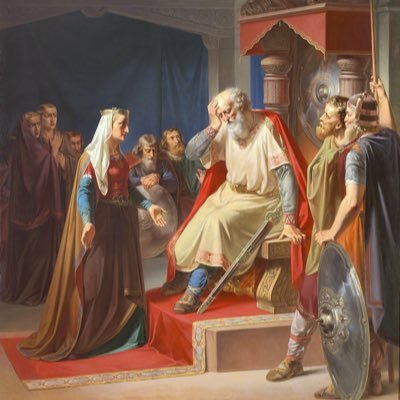
Everyone was well aware of Jewish thoughts on race before this statement
Leading Report@LeadingReport
Jon Bernthal says fear of pit bulls is “dog racısm.”
English
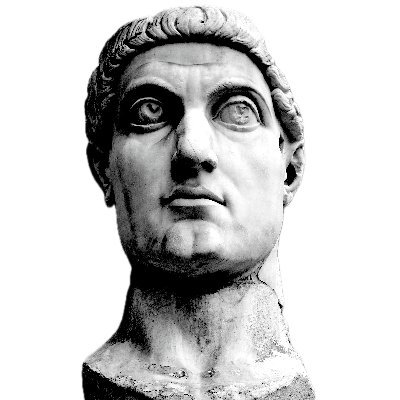
Embedded deep within our collective Western consciousness is a reverence for order and the rule of law — a legacy that has elevated our civilisation to unprecedented heights of achievement and influence.
Our civilisation is meticulously structured around enduring institutions of authority, and we take great pride in our pursuit of mercy and justice that we inherited from our Greco-Roman ancestors and refined throughout the centuries with the light of Christian revelation.
Unlike other civilisations throughout history, the West has an innate resistance to civil unrest and revolution, and our strong philosophical traditions insulate us from the allure of radicalism and insurrection.
The West advances not through chaos, but with law and order, and the precision of a finely tuned political machine. Decisions are not the whims of individuals, rather, proposals are deliberated in our senates and parliaments, scrutinised by those chosen to represent the people.
Yet, this very same discipline and reverence for order can render the West immobile when those with power and authority neglect — or rather, betray — their mandate. When guided by strong and virtuous leaders, our system is unrivalled, but under the yoke of weakness and tyranny, the West can become ensnared by the chains of our own bureaucracies.
Today, we are inclined to view all cultures as equals, whether culturally, artistically, politically, militarily, and technologically. Yet, few recognise that this semblance of equality was a gift the West bestowed upon the world — including our adversaries — in the hope that by being exposed to our culture, it would elevate their own and foster a spirit of universal peace and prosperity.
But alas, our adversaries have exploited us and tried to leverage our own discipline, our own strengths, and our own systems against us — and the West has endured it.
This reflection is not a call to arms but a humble reminder.
Western discipline is a double-edged sword, but restraint and the desire to live according to the Christian principle of peace should not be mistaken for weakness. Our response, too often, is measured and hesitant, preferring social order and the common good to conflict, because the West knows all too well what it is capable of.
Beneath the refined exterior of Western man lies a disciplined savage: A figure who binds grace to power, poetry and violence, and civilisation to the latent force that built it.

English
QME

If we are the evolved form of apes, then Africans are the evolved form of cockroaches.
They just happen to produce something that vaguely resembles language. Completely different creatures.
You wouldn’t sleep in the same tent with bears, lions, and wild dogs. In the same way, there is no way we can live in the same country as African natives.
The entire world should have zero contact with Africa. Once we can artificially produce the resources we need, that becomes possible.
Hurry up and make it happen so we can finally expel the African cockroaches from our world.
English


I remember watching Empire of the Sun in high school, and loving it.
Rewatching it as an adult, recently j-pilled, and realizing that not only is it directed by Spielberg, but the "Americans" are all played by jews....it has an entirely different vibe.
It makes me want to rewatch other movies and notice what I missed the first time around.
English
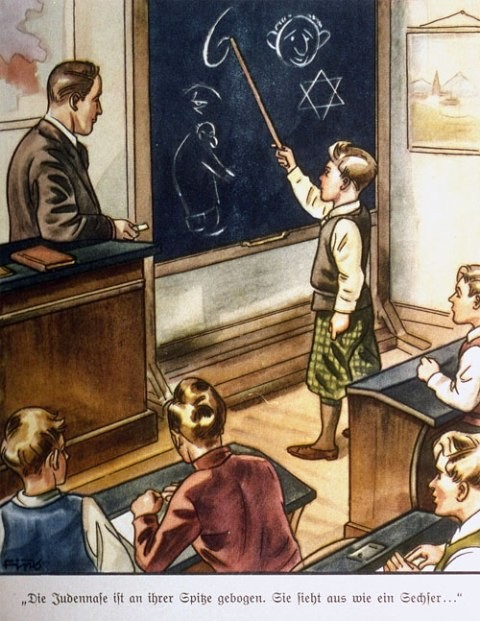



Open fire.
Track down how it was organized and who helped supply logistics and transportation.
Bomb them into oblivion.
Anna Paulina Luna@realannapaulina
Military aged males. Deport.
English


@desilva_frank I like this kind of Priest myself, he had similar views. en.wikipedia.org/wiki/Charles_C…
English
Listen to our Poet/Soldier/Statesmen, who have been in the trenches and, through their love, not of the 'game', but of their blood, native culture, and broad view of all our related Peoples.
Ultimately, they are the Seers, who are sensitive to loss of nation, if they, as an individual, did nothing.
So, they dedicate their Lives to the mission of Life.
Emulation is the Key...
Mark W.@DurhamWASP
“The capitalist oligarchy is indifferent to the fate of national communities. Its goal is to satisfy an insatiable will to power through the economic domination of the world. Mankind and its civilisations are sacrificed for its purely materialistic designs.” Dominique Venner
English
@dixie_cavalier Lets not forget- en.wikipedia.org/wiki/Rose_O'Ne…
English

Hurrah for Belle Boyd, “Siren of the Shenandoah” 🩶 ❌ 💪🏻

Steve Boer@Steve_Boer1865
July 29, 1862: Confederate spy Belle Boyd was captured by Union authorities in Washington, D.C. It was the first of three arrests during her career as one of the Confederacy's most famous spies. #OTD
English

@foundring1 The temperature of my boiling blood broke all metrics today. I’m surprised I haven’t had a stroke.
English


Look at that man’s eyes. Tell me he’s the same as us. Tell me he is.
Every story out of Sudan is like if 28 Days Later zombies were rapist machines and also everything was hell. Why are we letting Sudanese men anywhere near us?
Darren Grimes@darrengrimes
Douk Deng, pictured here, came to Britain illegally. The state gave him somewhere to live. He was then caught attempting to force his way into a primary school carrying a hammer, hatchet, knife and petrol can. He reportedly speaks no English, while his wife and child remain in Sudan. What sort of country imports this risk and calls it compassion?
English

Benjamin Franklin, seventy-five years old and serving as American minister in Paris, wrote a mock scientific paper proposing a drug that would make human flatulence smell good.
The Royal Academy of Brussels had called for submissions. Franklin printed his response on his private press at Passy and passed it around to friends. Real research, he argued, ought to benefit mankind rather than chase abstractions.
Against the prospect of being able to break wind freely, he wrote, all the discoveries of all the philosophers are hardly worth a fart.

Echoes of War@EchoesofWarYT
You know him as the kite-in-a-thunderstorm guy. The hundred-dollar-bill guy. But 251 years ago today, Benjamin Franklin took a job that officially made him a traitor to the crown, and he took it on purpose. Here's the part they leave out of the schoolbooks. Franklin didn't start the mail for the rebels. He started it for the king. Back in 1753 the British crown made him joint deputy postmaster of the American colonies, and he was astonishingly good at it. He treated letters like an engineering problem. He rode the post roads himself. He measured the distances and planted stone mile markers, some of which still stand today. He added riders who moved through the night so mail never stopped, and cut the trip from Philadelphia to New York from days down to about one. Under him, the colonial post turned a profit for London for the first time ever. The crown had handed him the nervous system of an entire continent. Every letter, every newspaper, every rumor moved on roads he had mapped. Then he turned it on them. In 1774 Franklin got his hands on a batch of private letters from the royal governor of Massachusetts, letters urging London to crack down on colonial liberties, and he leaked them. The scandal exploded. He was hauled before the king's council in a room called the Cockpit and berated for nearly an hour while the powerful men of Britain laughed at him. He stood there in silence and took it. Two days later, they stripped him of the postal job and threw him out. A lot of men would have gone home. He was 68 years old. He had money, fame, and every reason to quit. Instead he sailed back to America, and the rebels did something audacious. On July 26, 1775, the Continental Congress hired the exact man Britain had just fired, paid him a thousand dollars a year, and gave him one assignment: build a postal system the crown could not read, could not seize, and could not shut down. He became the first Postmaster General of the United States. He understood something his enemies never did. A revolution is not won only with muskets. It is won with information. Whoever controls how word travels controls who stays in the fight. So he built the roads that carried the letters, the orders, and the newspapers that kept thirteen suspicious, squabbling colonies coordinated long enough to actually win. He served barely fifteen months before Congress sent him to France to land the alliance that saved the war. But the network held. It held so well that when the founders sat down to write the Constitution, they wrote post offices and post roads directly into it. The mail was considered essential to holding a republic together. An immigrant printer's apprentice with no formal schooling built the crown's mail, got humiliated and fired for his loyalties, and then rebuilt the whole thing as a weapon aimed straight back at the empire that sacked him. Benjamin Franklin. They fired him from the mail. So he used the mail to help end their rule.
English
@AgitpropMaster Even more based at 1:05:00 in this movie. youtube.com/watch?v=-H2n6E…

YouTube
English

@savewhiteppl They built great things too! en.wikipedia.org/wiki/LZ_129_Hi…
English

@LostMyHats Women can’t resist the siren song of social elevation, attention whoring, and credentialism, however superficial and unearned. Presented with these irresistible offers, women will backstab allies to get at them.
English

In this clip, as Defiant Baptist points out, Political Beth Moore repeats the opinions she's heard from men, substituting them for anything that even vaguely resembles original thought. Which is basically every time she has ever opened her mouth and expressed an opinion in her entire life.
I've never seen a woman who brags about having the talents and gifts necessary to be a pastor not immediately contradict her claims with the quality of her teaching.
I also appreciate the way she avoids speaking the names of the people on the "other side," as though I am Beetlejuice and might manifest. I assure you, I will manifest either way.
As you'll see, she espouses the same three basic canards common to other defenses of "Judeo-Christian":
1. Ignore the actual historical facts about the term's development, popularization, and common use; instead, assign it your own preferred meaning.
2. Conflate Rabbinic Judaism and the Old Covenant faith of the Bible, then flatten history so that Christianity developed after Rabbinic Judaism, and not long before.
3. While referring to it by the fraudulent term "Hebrew Scriptures," cede the Christian Old Testament to Rabbinic Judaism, giving a newer, false religion OUR heritage and inheritance.
Defiant Baptist@DefiantBaptist
So the next Beth Moore, Pastrix Allie Beth Stuckey, decided to step behind the Relatapulpit in the Church of the Longhouse and deliver a sermon on Judeo-Christianity. And what a banger it was. Mostly, she just reads X posts from people on both sides of the debate, starting with Wes Huff, Stephen Wolfe, and Jordan Peterson. It’s very cringe that she sees former youth pastor Mike Winger as authoritative in this debate, but we all know that discernment isn’t her strong suit. It’s also clear that she knows about “The Hyphenated Heresy,” but she refuses to reference it or its authors by name. What I really want you to focus on is the final minute. Here, Allie is emphasizing how necessary it is to understand the Jewish context of Jesus in order to really™️ understand who he is. But even more than that, she calls creation itself a Jewish idea BEFORE CHRISTIANITY, which is a major gaffe for someone that considers herself a teacher. Stuckey doesn’t realize it, but she has adopted a hyper-dispensational perspective by implying that Christianity entered into the world 2000 years ago. Christ created the universe. Christ walked with Adam in the garden. Christ killed the first animal to make a covering for Adam. THE ENTIRE BIBLE IS CHRISTIAN! This should serve as a warning for just how insidious the Judeo-Christian heresy can be. Seriously brothers, do not let your wives and daughters listen to Relatable. No good can come from it!
English
@theBasedBarbie Women can’t resist the siren song of social elevation, attention whoring, and credentialism, however superficial and unearned. Presented with these irresistible offers, women will backstab allies to get at them.
English
