WILLIAM DARAN(daranwilliam.bsky.social)

4.8K posts

WILLIAM DARAN(daranwilliam.bsky.social) banner
WILLIAM DARAN(daranwilliam.bsky.social)

WILLIAM DARAN(daranwilliam.bsky.social)

@DaranWilliam

An Aspiring GENETICIST l PhD student ( 2023-2027) in Human genetics. Genetics (evolutionary,psychiatry, behavior,complex traits)+ MS (GWAS&GxE).NEFELIBATA I AM.

Novara, Piemonte, Italy. Katılım Ocak 2021
1K Takip Edilen108 Takipçiler
WILLIAM DARAN(daranwilliam.bsky.social) retweetledi
Richárd
Richárd@krichard121212·
LMAO. High IQ genes are basically just "willing to study more" genes nature.com/articles/s4146…
Richárd tweet media
English
58
249
2.9K
117.2K
WILLIAM DARAN(daranwilliam.bsky.social) retweetledi
Michael 英泉 Eisen
Too many threads on going on, so going to try to consolidate. I don't think anyone objects to the core principle nominally at play here that if you put science out into the world, you are responsible for that work. This is what science is. I don't want to get distracted by questions of authorship or how responsibility is apportioned amongst authors - that's an orthogonal issue. The expectation that you can trust the scientific outputs (and I'm intentionally broadening this beyond papers) of others is really a defining feature of science as a collective endeavor. And obviously, if a paper contains hallucinated references, fake citations, placeholder text, or obvious autogenerated junk, it’s hard to argue the authors exercised even minimal scholarly care. People have tried to paint me and the others who have expressed concern about the new arXiv policy as somehow questioning this. We're not. To me something deeper shift is represented by that move, and I think it warrants at least acknowledgment - and IMO deeper discussion. The value of preprint servers to the research community comes from them being fast, open, effectively unfiltered, and agnostic about correctness. A lot of great science is published first on arXiv and other preprint, and so is a lot of science that is poorly executed and often poorly presented. Since the existence of the later doesn't devalue the former, it's a bargain most people are happy with. One of the things that kept this model afloat was the fact that producing a paper required some non-trivial effort, and therefore people inclined to produce works that could en masse disrupt the ecosystem could not actually produce them at scale. AI has obviously shattered any remnant of connection between things that look like papers and scholarly output and effort (mind you, I think this is a good thing, but that's also a somewhat separate topic). **But the response to it has also broken something.** arXiv (and other preprint servers) have always had to impose some kind of screening to keep out obviously inappropriate stuff, and I think most of us agree that asking "Is this an actual work of science?" before posting something is a reasonable thing for a preprint server to do (provided that the definition of what a work of science is is intentionally fairly broad). However, the new policy is explicitly changing that bargain. The question is no longer "Is this a relevant scholarly work?" Rather it is becoming "Can we trust this authorial process?". That is a HUGE shift. Look, I understand why moderators feel existential pressure - the system isn't architected in infrastructure, processes or modes of use with a massive flood of AI-generated papers. But there are some real risks in the new direction. 1) The thing that makes preprint servers different from (and better than) journals is that there is no gatekeeping. The new policy threatens this. Once moderation becomes about inferring authorial integrity, the boundary between “quality control” and “editorial policing” gets blurry. The fact that one of the 'punishments' is to force people to go through peer review before posting to arXiv (an idea too absurd to even mock), suggests that current leadership has a comfortable relationship to journal peer review that makes the risk that arXiv will become a journal in every meaningful sense more of a risk. 2) “Incontrovertible evidence” sounds, well, incontrovertible, but moderation systems take on a life of their own via various forms of procedure, precedent and social signaling. Today it’s hallucinated references. Tomorrow it could become stylistic mimicry. Slippery slope here. 3) The policy misdiagnoses the real problem. As I've said elsewhere, the issue is not “AI use” but the system that leads people to think it will benefit them to push slop onto arXiv. LLMs may amplify the negative effects of metric-driven academia, but they didn't create it. To me we are at a fork in the road moment. There is a world within our grasp where an alignment of preprinting and AI actually breaks the toxic stranglehold that traditional publishing has on science. A world where actual communication (not the facsimile of it we have today) takes place between people, between machines and from people to and from machines, around data and ideas in science. But there is also a world where the preprint servers we love collapse in fear and a lack of imagination into irrelevancy and we lose to moment. I'm not saying this policy itself will cause that. But I am saying that it's not a good sign.
Thomas G. Dietterich@tdietterich

Attention @arxiv authors: Our Code of Conduct states that by signing your name as an author of a paper, each author takes full responsibility for all its contents, irrespective of how the contents were generated. 1/

English
22
15
88
27.9K
WILLIAM DARAN(daranwilliam.bsky.social) retweetledi
David Bessis
David Bessis@davidbessis·
The fall of the software economy
Deedy@deedydas

The vibes in SF feel pretty frenetic right now. The divide in outcomes is the worst I've ever seen. Over the last 5yrs, a group of ~10k people - employees at Anthropic, OpenAI, xAI, Nvidia, Meta TBD, founders - have hit retirement wealth of well above $20M (back of the envelope AI estimation). Everyone outside that group feels like they can work their well-paying (but <$500k) job for their whole life and never get there. Worse yet, layoffs are in full swing. Many software engineers feel like their life's skill is no longer useful. The day to day role of most jobs has changed overnight with AI. As a result, 1. The corporate ladder looks like the wrong building to climb. Everyone's trying to align with a new set of career "paths": should I be a founder? Is it too late to join Anthropic / OpenAI? should I get into AI? what company stock will 10x next? People are demanding higher salaries and switching jobs more and more. 2. There’s a deep malaise about work (and its future). Why even work at all for “peanuts”? Will my job even exist in a few years? Many feel helpless. You hear the “permanent underclass” conversation a lot, esp from young people. It's hard to focus on doing good work when you think "man, if I joined Anthropic 2yrs ago, I could retire" 3. The mid to late middle managers feel paralyzed. Many have families and don't feel like they have the energy or network to just "start a company". They don't particularly have any AI skills. They see the writing on the wall: middle management is being hollowed out in many companies. 4. The rich aren’t particularly happy either. No one is shedding tears for them (and rightfully so). But those who have "made it" experience a profound lack of purpose too. Some have gone from <$150k to >$50M in a few years with no ramp. It flips your life plans upside down. For some, comparison is the thief of joy. For some, they escape to NYC to "live life". For others still, they start companies "just cuz", often to win status points. They never imagined that by age 30, they'd be set. I once asked a post-economic founder friend why they didn't just sell the co and they said "and do what? right now, everyone wants to talk to me. if i sell, I will only have money." I understand that many reading this scoff at the champagne problems of the valley. Society is warped in this tech bubble. What is often well-off anywhere else in the world is bang average here. Unlike many other places, tenure, intelligence and hard work can be loosely correlated with outcomes in the Bay. Living through a societally transformative gold rush in that environment can be paralyzing. "Am I in the right place? Should I move? Is there time still left? Am I gonna make it?" It psychologically torments many who have moved here in search of "success". Ironically, a frequent side effect of this torment is to spin up the very products making everyone rich in hopes that you too can vibecode your path to economic enlightenment.

English
3
6
114
24.7K
WILLIAM DARAN(daranwilliam.bsky.social) retweetledi
David Bessis
David Bessis@davidbessis·
If you want to clarify your thoughts on a complex topic, nothing beats teaching and public speaking. This conversation in February forced to me articulate my ideas on math and AI—most of the substance for my "theorem economy" piece crystallized as I was mentally preparing for it.
David Bessis@davidbessis

"Mathematics in the age of AI"—a one-hour conversation I had earlier this year, for an audience of machine-learning graduate students at Université Paris-Saclay. [In French] youtube.com/watch?v=_dTbfL…
English
3
6
100
6.2K
WILLIAM DARAN(daranwilliam.bsky.social) retweetledi
David Bessis
David Bessis@davidbessis·
I'm glad Chinese readers are enjoying my jokes🥰
David Bessis tweet mediaDavid Bessis tweet media
English
46
35
907
149.5K
WILLIAM DARAN(daranwilliam.bsky.social) retweetledi
Jay Joseph @jayjoseph22.bsky.social
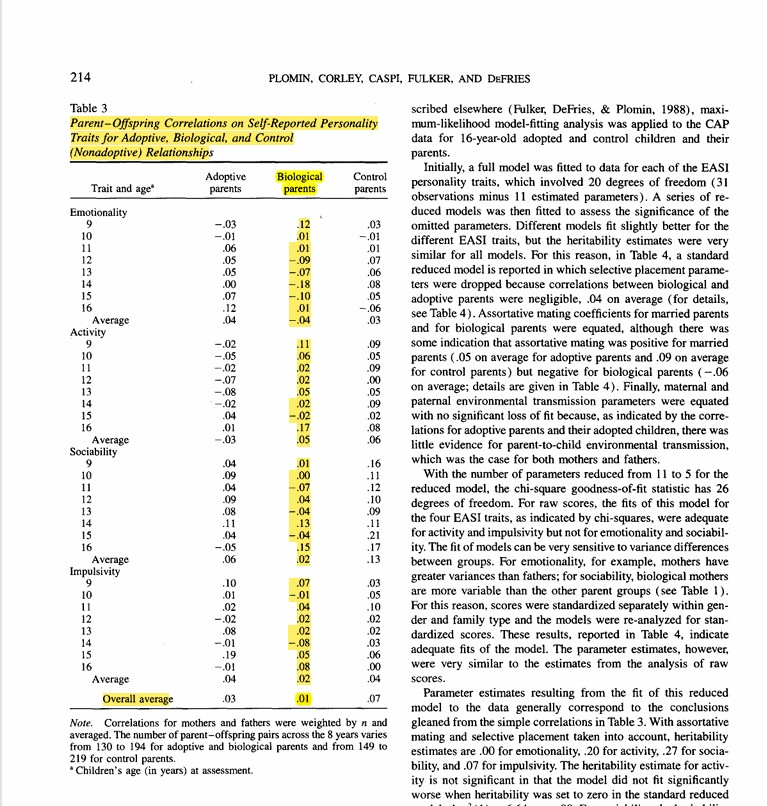
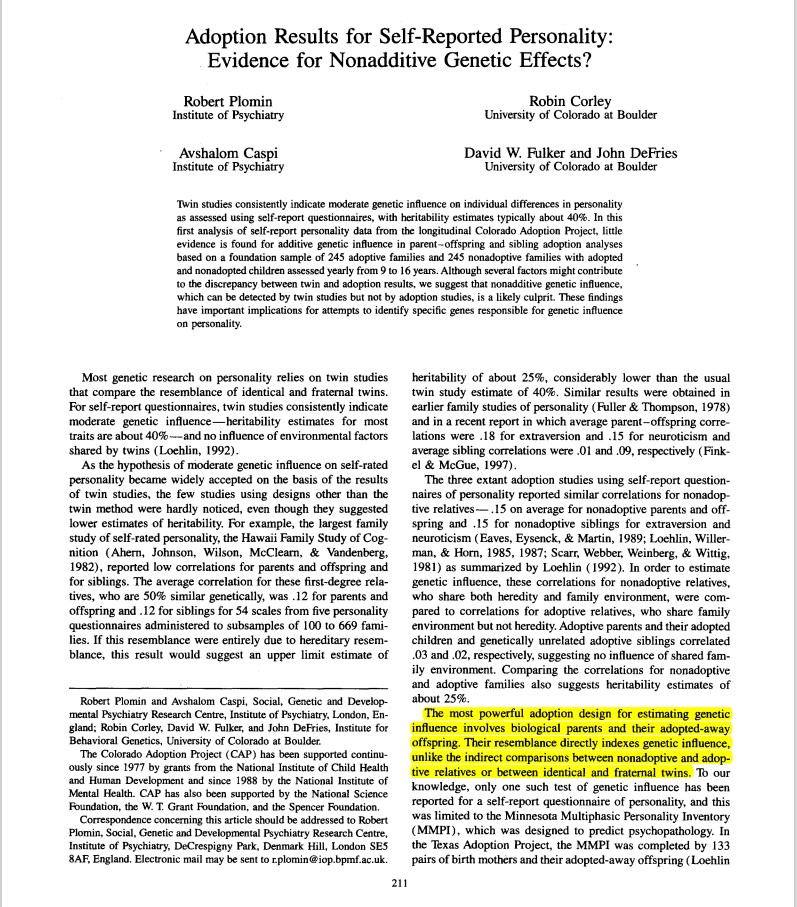
Counterpoint. Robert Plomin's 1998 Colorado adoption study "directly influenced genetic influence" and found no personality test score correlation between birthparents and their 240 adopted-away 16-year-old biological offspring.
Jay Joseph @jayjoseph22.bsky.social tweet mediaJay Joseph @jayjoseph22.bsky.social tweet media
Adam Grant@AdamMGrant

When you blame your personality on your parents, it's more from their genes than their actions. 62 studies, 100k+ people: extraversion, reactivity, agreeableness, conscientiousness & openness are ~40% heritable. You don't choose your traits. You do choose how you express them.

English
1
7
28
1.5K
WILLIAM DARAN(daranwilliam.bsky.social) retweetledi
Veera Rajagopal 
Veera Rajagopal @doctorveera·
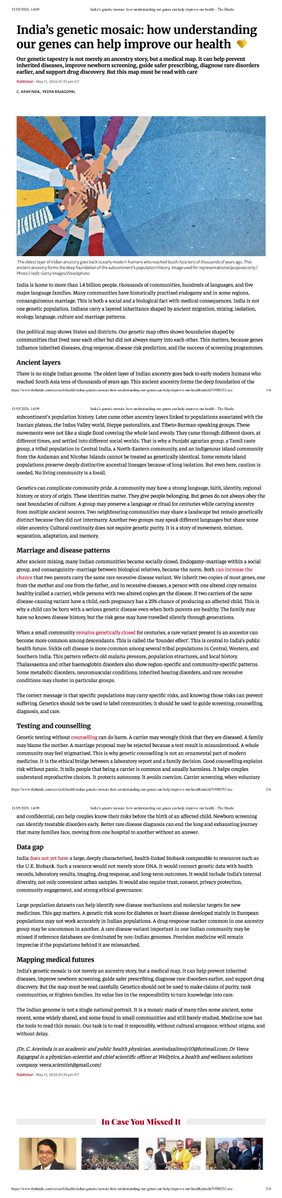
A recent article in The Hindu I wrote with Aravinda Chinnadurai (a public health physician and fantastic writer) - a primer on India's genetic diversity, shaped by ancient migration, endogamy, and consanguinity, and why it matters for medicine. thehindu.com/sci-tech/healt…
Veera Rajagopal  tweet media
English
5
13
50
3.3K
WILLIAM DARAN(daranwilliam.bsky.social) retweetledi
Sasha Gusev
Sasha Gusev@SashaGusevPosts·
Wow, I wonder if grad students produce additional value to the university that could justify this salary or even a higher one. No way to know I guess, and probably better not to think about either.
Ashvin Gandhi@ashdgandhi

I'm a former Harvard PhD student. Based on my experience, current social science students probably make a bit over $250k + healthcare over 5 years, with just 784 hours of required TA work. That's almost $320/hour for the "work" and the rest is classes and your own research.

English
15
13
640
82.5K
WILLIAM DARAN(daranwilliam.bsky.social) retweetledi
Marios Georgakis
Marios Georgakis@MariosGeorgakis·
Meta-analyzing Olink data from SCALLOP (1,194 proteins) and UK Biobank (1,463 proteins), we now have the largest publicly available (N=78,664) pQTL resource for the plasma proteome 👉5,040 significant cis- & 19,698 trans-pQTLs for 1,116 proteins
Marios Georgakis tweet media
English
1
23
82
16.8K
WILLIAM DARAN(daranwilliam.bsky.social) retweetledi
David Bessis
David Bessis@davidbessis·
There are many older Platonists. By default, all mathematicians are Platonists. I used to be one to. Most stay Platonists until they die, because it is very rare for mathematicians to invest serious thinking into the foundations of math. When they do, it hurts. youtube.com/watch?v=tYgiVn…
YouTube video
YouTube
English
5
10
63
6.8K
WILLIAM DARAN(daranwilliam.bsky.social) retweetledi
Veera Rajagopal 
Veera Rajagopal @doctorveera·
I recently vibecoded this plot in D3.js for a presentation. The funnel plot visualizes the attrition across different stages of drug development and the costs involved. The data and the concept behind this plot are now fairly common knowledge in the field. However, making this plot helped me find a few insights that may not be readily obvious in discussions about drug development costs and failures. Before I share my insights, let me briefly walk through the plot for context. The plot visualizes the journey of a set of 22 nominated candidates, back-calculated from attrition rates needed to reach one approved drug, through the phases of development. The midline spine marks the stages along with cost labels from DiMasi et al. 2016 (pubmed.ncbi.nlm.nih.gov/26928437/), the industry-standard reference, expressed per approved drug. The upper area curve is the cumulative cost (in 2013 dollars). The lower area curve shows the transition rates based on data from BIO/Informa (2021) (x.com/doctorveera/st…), Paul et al. (2010) (nature.com/articles/nrd30…) & Waring et al. (2015) (nature.com/articles/nrd46…) Nat Rev Drug Discov. Cost of failures, not success The most quoted number in drug development is also the most misunderstood one. When people say it costs billions to develop a drug, they picture a single molecule being shepherded from lab bench to pharmacy shelf at enormous expense. That is not what the number means. The billions are not the cost of one success. They are the cost of failures--all the failures that were necessary to produce that one success. Every candidate that got nominated, tested and quietly abandoned contributed to that figure. The billion-dollar headline is a measure of failures a company must stomach for one success. The invisible part of the funnel Most widely discussed failure rates in drug development start the clock at Phase I. That is actually a generous starting point. Before a drug ever touches a human, it survives a brutal pre-clinical filter that never gets a mention. Based on the limited data available, around 40% of formally nominated drug candidates never make it to human trials. The famously quoted "1 in 10" drug success rate does not count the preclinical attrition. If you factor it in, the odds of success drop from 1 in 10 to 1 in 22. And even 1 in 22 is still optimistic as it starts counting only from formal nomination. Before that there are phases like target exploration, hit identification and lead optimization. That earlier funnel, from first exploration to nominated candidate, is almost impossible to quantify at an industry level. It lives inside company R&D pipelines and remains proprietary. The nominated candidate is already a survivor before it enters the visible funnel. The true odds are therefore likely worse than 1 in 22. Pre-clinical costs rival clinical Clinical trials, especially late-stage, have a reputation for being expensive. DiMasi et al. estimates $255M per candidate entering Phase III versus $59M in Phase II and $25M in Phase I. That steep cliff before Phase III is exactly what makes the "funnel". Every gate before III exists to prevent quarter-billion-dollar mistakes. But here is what that framing misses. Pre-clinical development is invisible in most cost discussions, yet in aggregate it is not cheap. DiMasi reports $430M out-of-pocket pre-clinical spend per approved drug, which is an aggregate cost spanning the entire pre-human pipeline. The data does not allow a per-compound breakdown. Now compare that to our portfolio-level trial costs: 7 entering Phase II at $59M each is $413M, 2 entering Phase III at $255M each is $510 M. The most expensive phase per trial and the most invisible phase in the pipeline cost roughly the same. And nobody talks about the second one. The Phase II graveyard If you look closely at the transition rates, one number will stand out: 29% of drugs from Phase II make it to III, the narrowest part of the funnel. The killer here is not safety, it's efficacy. Waring et al. found that pre-clinical failures are dominated by toxicology (59%) and Phase I failures by safety signals (25%), which makes sense as we have reasonably good early tools for catching dangerous compounds before they cost too much. But Phase II failures are led by efficacy (35%), because there is no pre-clinical substitute for asking whether a drug actually works in humans at therapeutic doses. That question can only be answered in Phase II, expensively, after millions have already been spent getting there. The implication here is to invest disproportionately in early efficacy signals not because safety does not matter, it does. But it usually declares itself early. Efficacy ambushes you late during the most expensive phase before III, and by then the bill is already large. Buying the race, not the winner We often come across news of billion dollar acquisitions in the biotech field, which might make you wonder how all that we discussed so far applies there. A company that began with just one target successfully navigated their way into late stages of trials and got acquired for billions of dollars. On the surface it might look like one company is being bought for their one success. But that's not the full story. That company is just one survivor out of dozens if not hundreds of parallel single-target companies that ran a similar race and quietly failed. They never show up at the deal table, but in reality they are all priced in. The buyer is not paying for what that one company spent. It's also paying for what other failed companies spent in that target space. The truth is the market ran a portfolio experiment across many bets, and this acquisition settles the tab. Whether the winner got there by conviction or pure luck does not matter. What matters is the buyer bought their way to the end of the funnel by paying what it would have cost to run the race themselves across hundreds of candidates. Not broken. By design. It is worth stepping back and wondering if the funnel reflects a broken system that needs fixing. Of course, not. The shape you see is not a failure of the system, it is rather a deliberate design of drug development. The logic is front-loading of attrition: fail cheap, fail fast, and invest heavily only in the survivors. Pre-clinical cuts are inexpensive. Phase I cuts are manageable. By the time you reach Phase III and spend a quarter of a billion per compound, make sure your earlier gates have done brutal and honest work. The funnel is not broken. But its shape does raise an uncomfortable question: are early filters aggressive enough? Every weak candidate that slips through the early gates carries an expensive price tag before it eventually fails anyway. The cost of a leaky funnel is not just the money. It is the time, the patients enrolled in trials for drugs that should not have made it that far, and the opportunity cost of resources not spent on better candidates.
Veera Rajagopal  tweet media
English
3
14
68
8.9K
WILLIAM DARAN(daranwilliam.bsky.social) retweetledi
Marios Georgakis
Marios Georgakis@MariosGeorgakis·
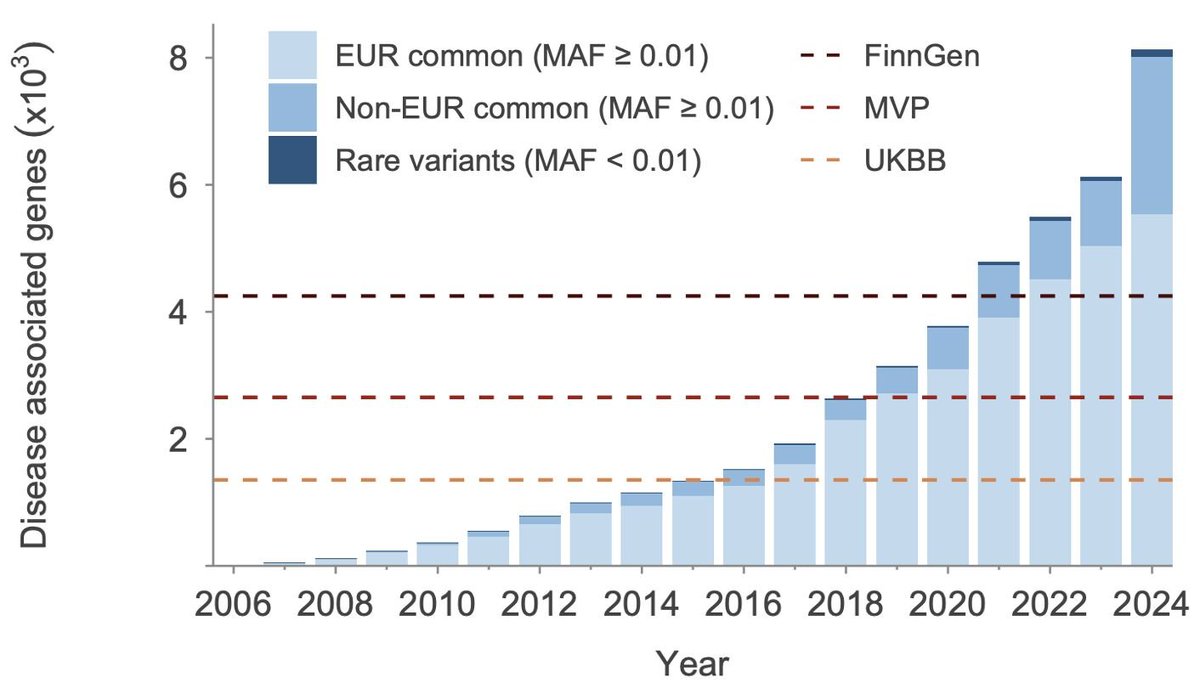
This new preprint by Open Targets is one of the most comprehensive efforts to date to connect the dots across all available (>100K) GWAS datasets that have been generated over the last two decades👇
Marios Georgakis tweet media
English
4
21
85
6.6K
WILLIAM DARAN(daranwilliam.bsky.social) retweetledi
Nassim Nicholas Taleb
Nassim Nicholas Taleb@nntaleb·
Those who treat humans as machines are also treating machines as humans.
English
160
1.2K
6.1K
187.5K
WILLIAM DARAN(daranwilliam.bsky.social) retweetledi
Veera Rajagopal 
Veera Rajagopal @doctorveera·
A monumental moment in medical history: the first gene therapy for genetic hearing loss is now FDA approved. As a former Regeneron scientist, I feel very proud. I had the opportunity to hear about this programme while it was still in development. It’s one of the few programmes that, every time you came across it, you felt the medical breakthrough in your bones and privileged just to be there while it was happening. At this moment, it’s important that we look 30 years back when researchers mapped a locus on chromosome 2 to congenital deafness in a Lebanese family (pubmed.ncbi.nlm.nih.gov/8789454/). They named it DFNB6 (later DFNB9) with no clue about the responsible gene. Three years later, the causal gene came to light: OTOF, encoding a protein called otoferlin (nature.com/articles/ng049…). Seven years after that, in 2006, pioneering work by Christine Petit revealed that otoferlin is a calcium sensor in the inner hair cell membrane, acting as a molecular trigger that converts sound into electric signals that the brain can read (pubmed.ncbi.nlm.nih.gov/17055430/). Twenty years fast forward, we now have a successful treatment. Thirty years from discovery to medicine. OTOF-related deafness is congenital, caused by complete deficiency of otoferlin. In these children, the cochlea is structurally intact, hair cells are there, the mechanics of sound transmission work. It’s just that final step, where hair cells hand off the signal to the auditory nerve through neurotransmitter release, that doesn’t happen. Sound arrives and dies at the synapse. It’s deafness due to a defect in the synapse caused by the absence of a single protein, which is what made this a beautiful, clean target for gene therapy. The treatment itself is a feat of molecular engineering. OTOF is too large to fit in a single AAV capsid. The team solved this elegantly by delivering the gene in two halves separately, which then get spliced to produce the full functional protein. A single surgical injection into the cochlea, a molecular miracle unfolds. Results from the CHORD trial were striking: of 20 evaluable patients, including children as young as 10 months, 80% showed meaningful hearing improvement, and by 48 weeks, 42% had achieved normal hearing including the ability to hear whispers. Otarmeni is not only the first gene therapy for deafness, it’s also the first dual-AAV therapy to be approved by the FDA. There are very few things in medicine that come close to giving back a sense like vision, hearing, or touch that a human never had from birth. It’s almost God’s work. A parent witnessing their child who was born deaf hearing their voice for the first time, it’s a joy that no words can describe. Multiply that by the fact that it came from a single injection, a repaired gene, and 30 years of science. We are truly in the golden era of medicine. Regeneron press release: investor.regeneron.com/news-releases/… Below video is from the NEJM publication of CHORD trial (Valayannopoulos et al. NEJM 2025) nejm.org/doi/full/10.10…
English
9
76
265
59K
WILLIAM DARAN(daranwilliam.bsky.social) retweetledi
Chris Stringer
Chris Stringer@ChrisStringer65·
Genomic approaches for understanding the evolution of the human brain | Nature Neuroscience nature.com/articles/s4159…
English
2
19
68
5.2K
WILLIAM DARAN(daranwilliam.bsky.social) retweetledi
Veera Rajagopal 
Veera Rajagopal @doctorveera·
Embryo selection using polygenic risk scoring has been a hot topic recently, with startups investing millions into the idea. Previous studies on embryo screening have reported relative risk reductions of up to 50%. The high risk reduction estimates are, however, based on the assumption that each IVF cycle produces 2 to 5 viable embryos, all having a similar chance of a successful live birth. Sadly, that’s not the reality. In a new preprint, the authors analyzed data from 6,944 real IVF cycles from 4,452 infertility patients. The reality of the IVF pipeline: on average, each cycle produced just 0.88 euploid embryos and 0.17 live births. You cannot select the lowest-risk embryo when most cycles don’t give you a choice. Next, the authors simulated how disease risk reduction fares in this realistic scenario. The relative risk reduction ranged from under 0.5% across all cycles to just 1–3% in cycles that resulted in a live birth, far below the previously predicted 50%. It’s worth noting there is one setting where risk reduction reached a reasonable level of ~20%: egg donor cycles, where viable embryos tend to be many due to young donors. Even here, the estimate is a fraction of prior predictions. The findings raise an important question: who is polygenic embryo screening actually for? It’s designed for patients with multiple viable embryos, all birth-ready, in a single cycle. Those patients don’t exist in most clinics. The reality is that this technology is being built for healthy, fertile individuals with plenty of financial resources, doing IVF electively to have designer babies. Klausner et al. medRxiv 2026 medrxiv.org/content/10.648…
English
9
28
144
26.9K
WILLIAM DARAN(daranwilliam.bsky.social) retweetledi
Iosif Lazaridis
Iosif Lazaridis@iosif_lazaridis·
Your ancestors aren't who you think they are | David Reich: Full Interview youtube.com/watch?v=a0uKLW…
YouTube video
YouTube
English
7
26
114
16.7K